Comparing
the two categories may elucidate the artistic consistency underwriting Ham’s
thematic motifs. A comment from Sumi Kang, a reviewer who wrote many articles
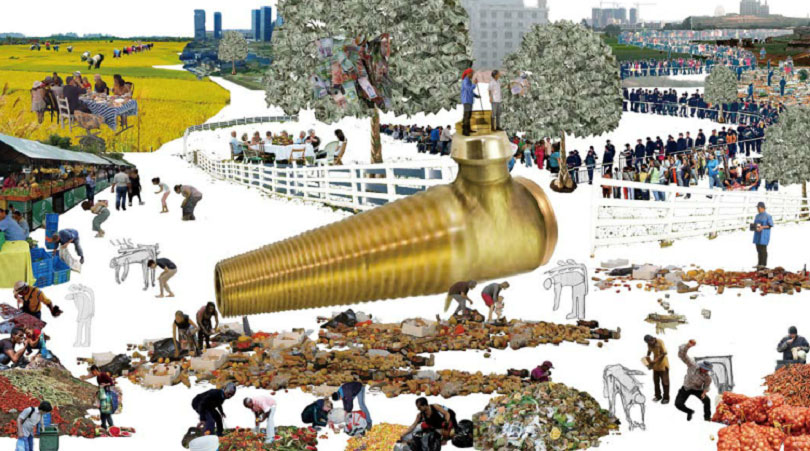
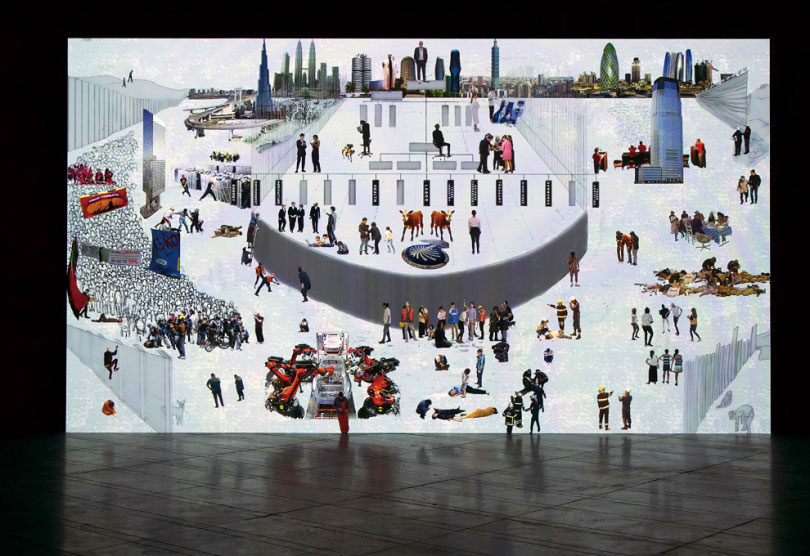
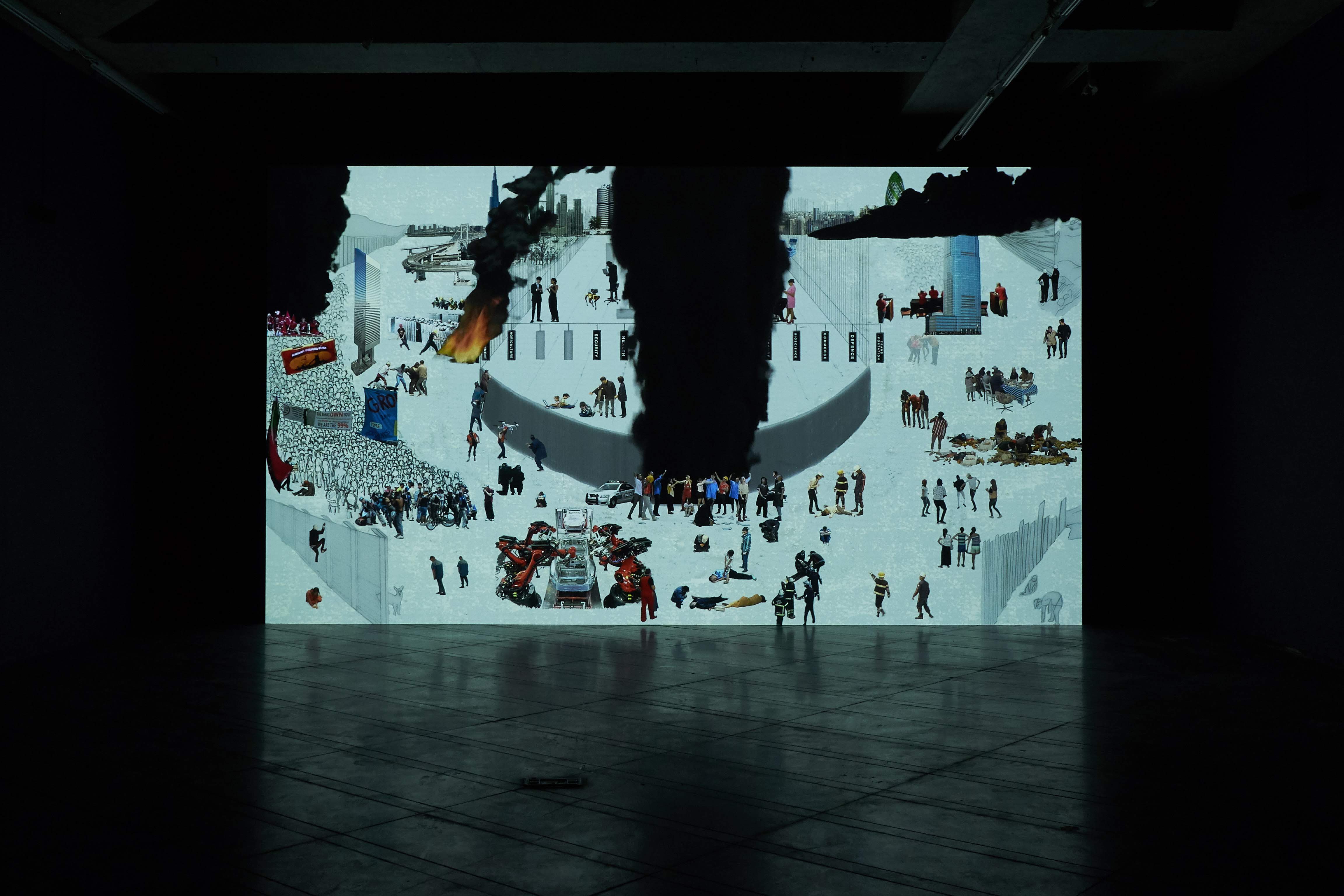
regarding Yang Ah Ham’s works, helps with such an endeavor. Kang described 〈Nonsense Factory〉 as a project that “reveals
the underlying structure and hidden attributes of contemporary life, as well as
the systematic relationship between people and society”1). Ji Yoon
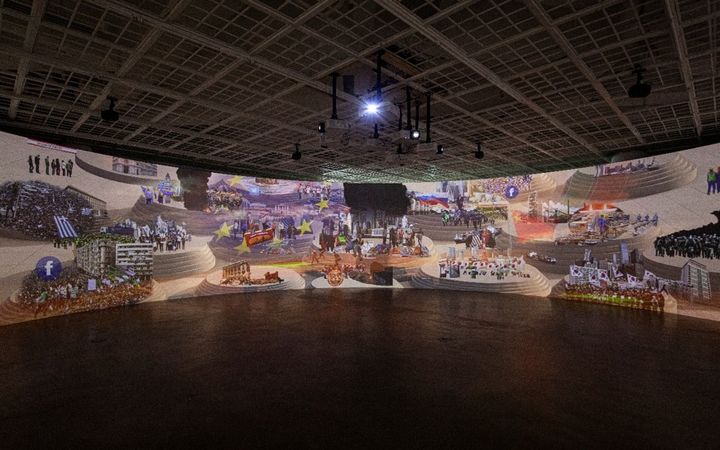
Yang, the planner of Ham’s private exhibition at Alternative Space LOOP, considered
the first category of Ham’s works as a digitally updated, chaotic, and
multi-layered version of the medieval religious paintings of Hieronymus Bosch,
and proposes that the artist “criticizes the current attitude of indifference,
which assumes neoliberalism as the general condition that has existed
throughout history”2). This view is also an effective approach in
defining Ham’s underlying thematic motif. However, the two reviewers merely
discussed thematic motif and did not mention any developments in Ham’s works in
terms of form and technique, as well as the consistency maintained (or
theoretically assumed) in spite of such developments. How do the two modes of
Ham’s work complement or contrast one another? To answer this question, I
consider 〈Nonsense Factory - Coupon Room and Nonsense
Factory - Blue Print Room for a Future Factory〉 as both
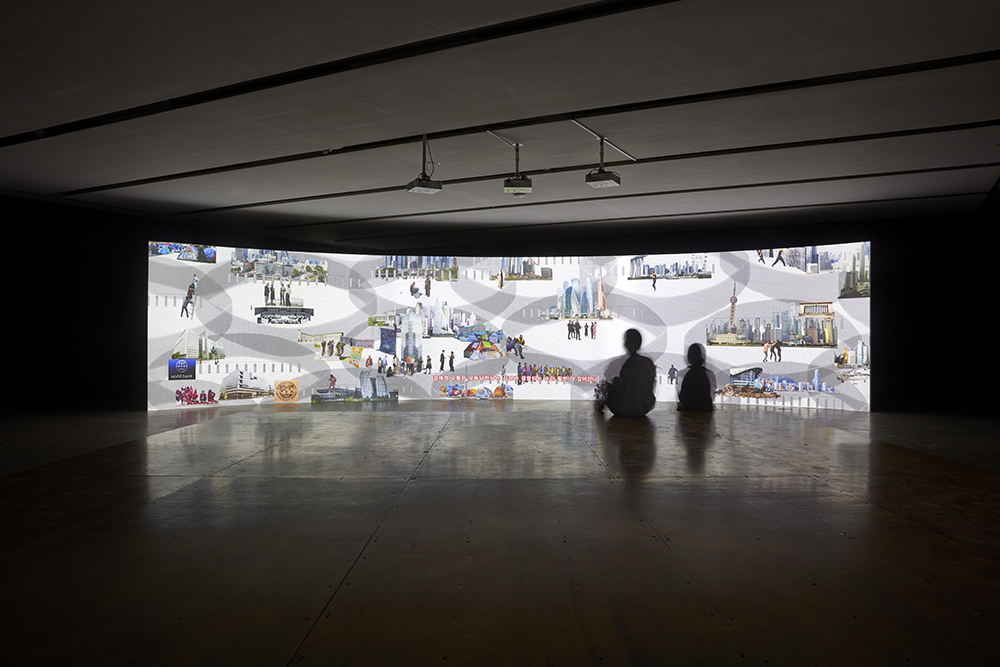
separate art pieces as well as a two-channel video art installation.
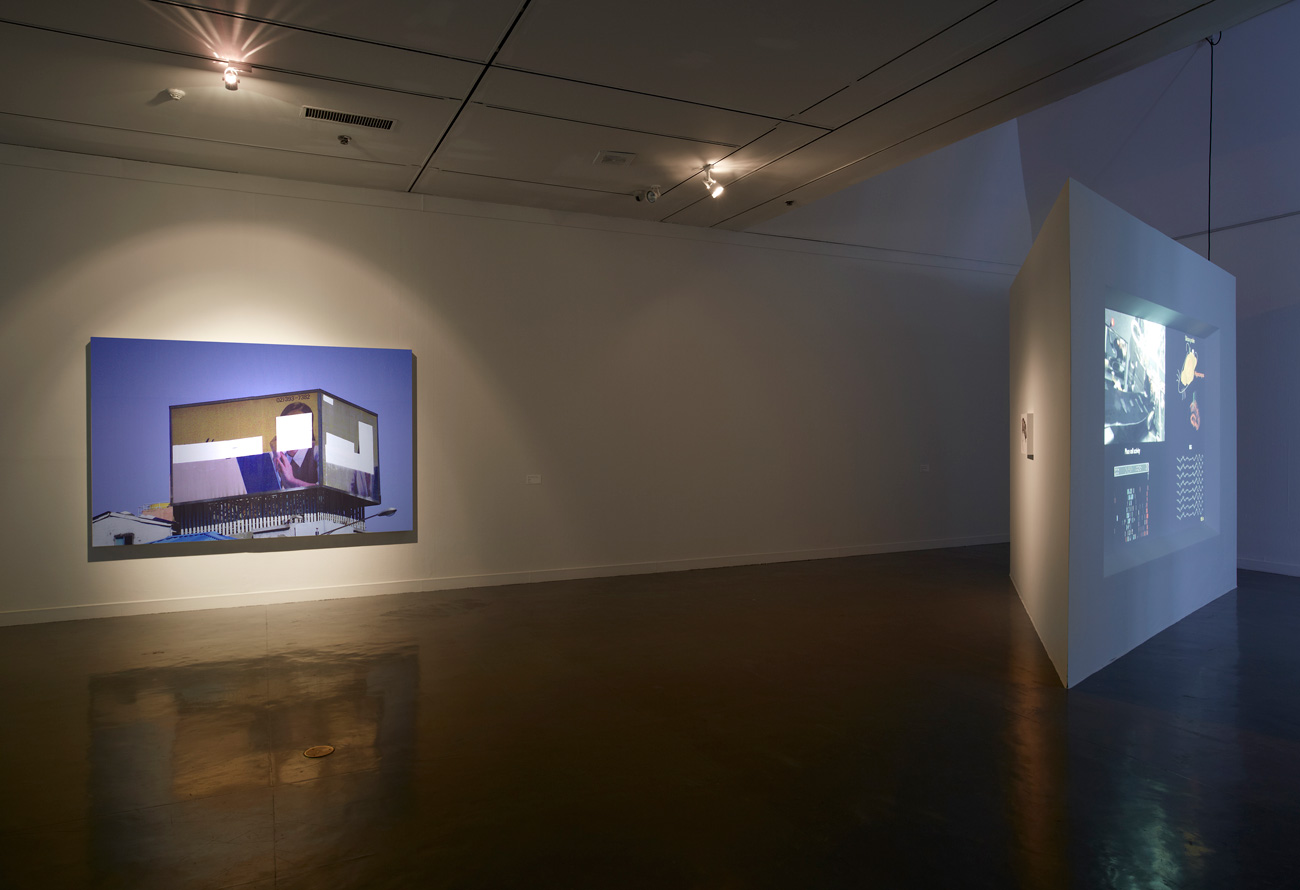
In the
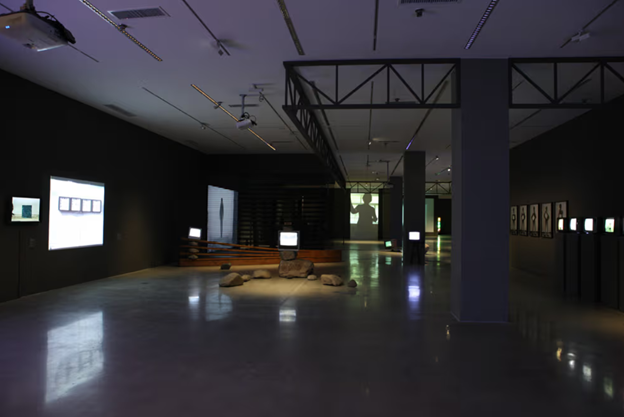
exhibition room, two 30-inch monitors displaying the artwork are placed next to
each other in parallel, and therefore viewers can naturally appreciate and
criticize the two artworks from the same point of view. (And I assume the
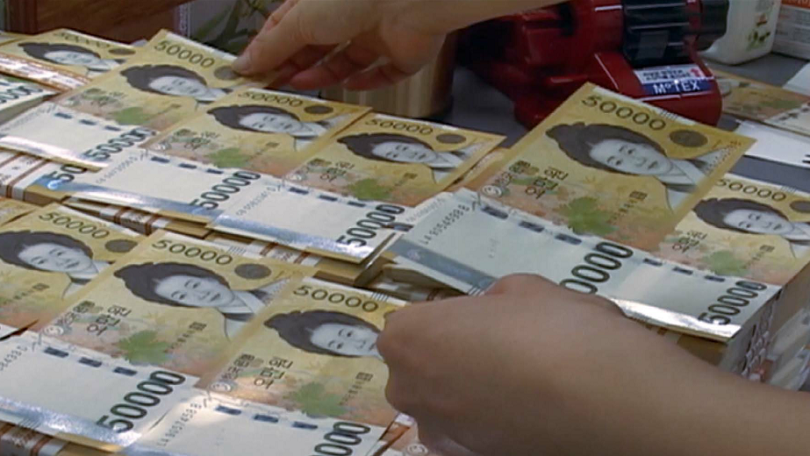
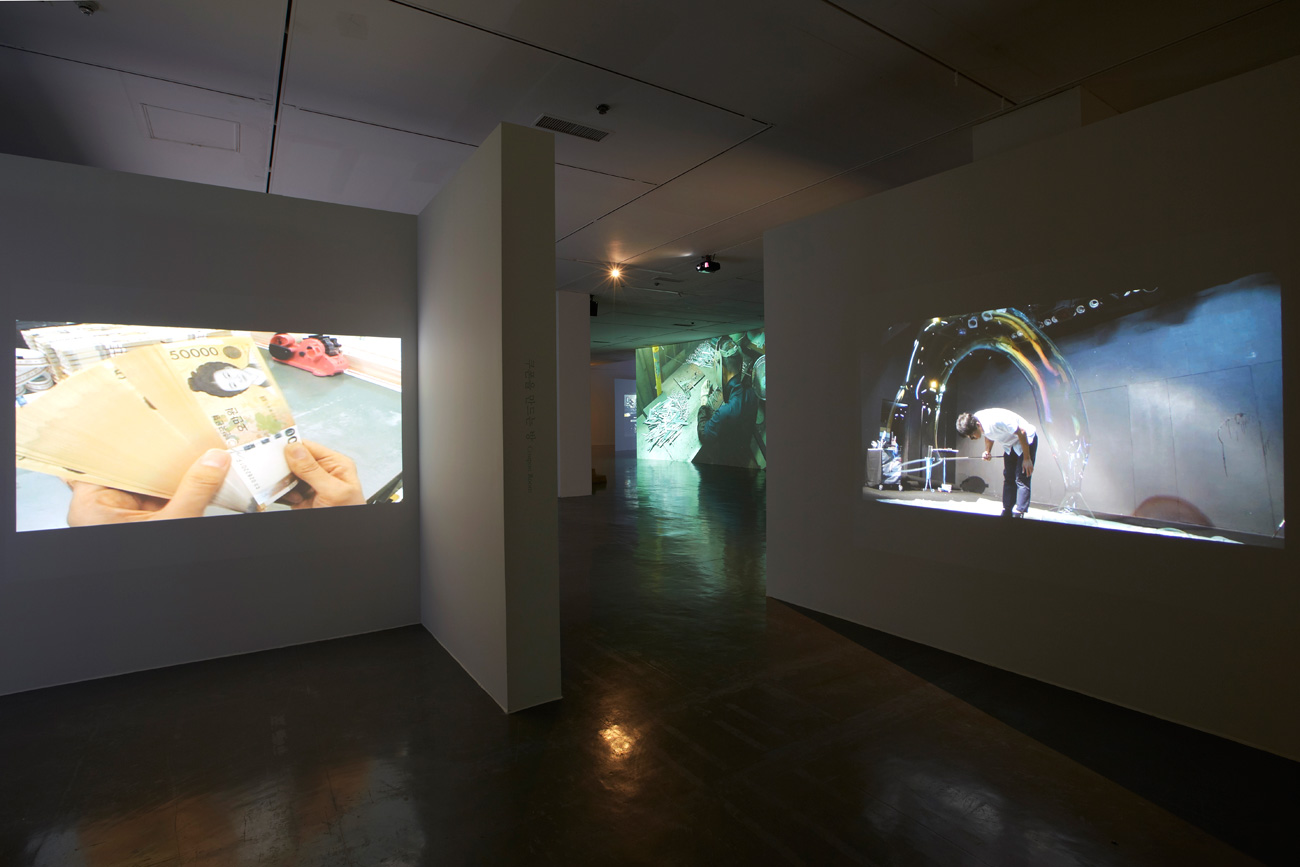
artist intentionally placed them in this way.) In 〈Coupon
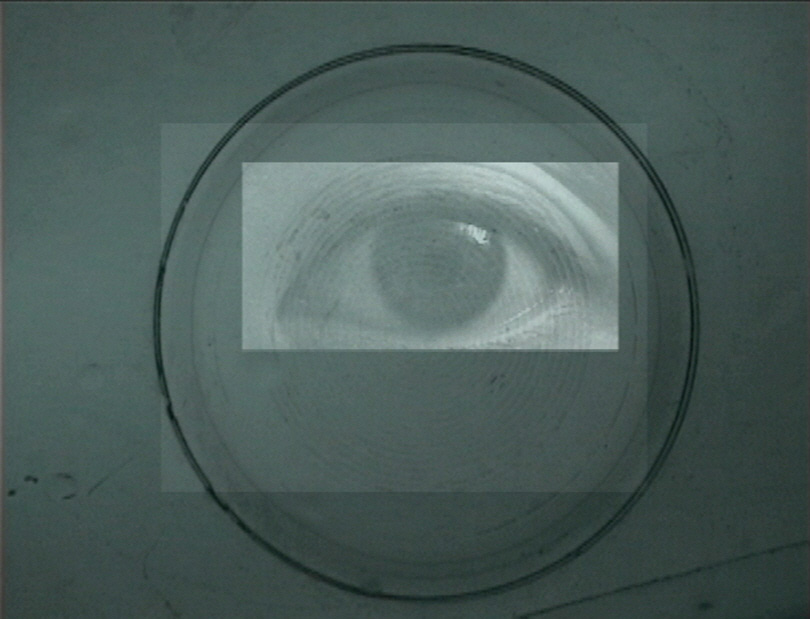
Room〉, Ham uses closeup shots of various entities: a
conveyer belt that facilitates the mass production of paper money, produced
bills, the hands, and eyes of a female worker who swiftly checks the bills, and
the stacks of bills that she processes. The repeated jump cut images of hands,
especially, imply that Ham focuses not only the money itself but also the body
of the worker who processes it. An interview with the worker supports this
approach. The worker considers the process, which takes place ten to twelve
times a day, a “daily routine”, and says the bills are “not money, just
products” in the factory. As such, Ham visualizes the process of conversion
from labor to exchangeable value. However, the overlapping image of the “Blue
Print Room” on the right, which is being simultaneously provided, begs the viewers
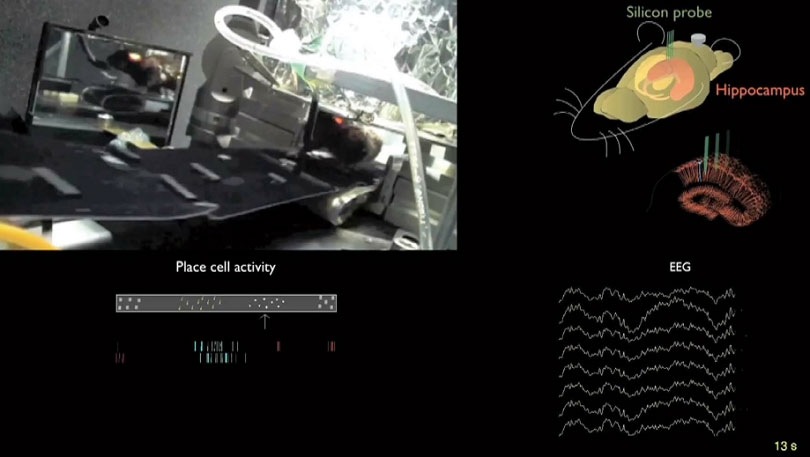
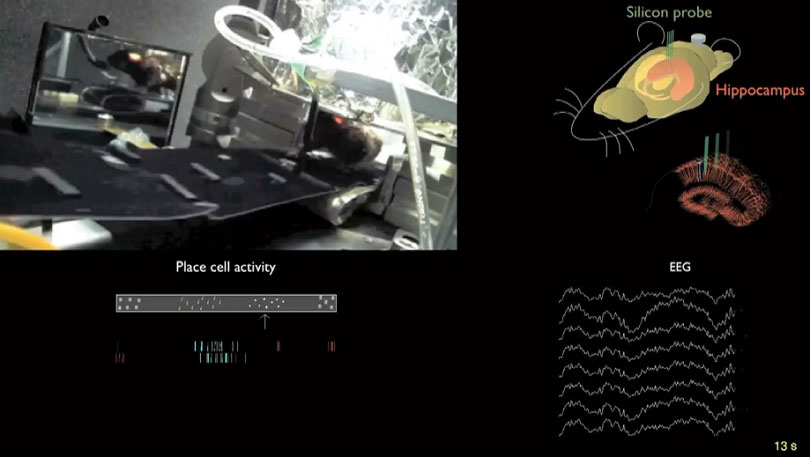
to contemplate the unseen dimension behind the worker’s hands and eyes. As the
images of hands and eyes interleave the graphic recordings of the brain cell
activities and brainwave changes of a rat moving inside a spinning wheel, new
meanings are derived: the unmaterial and non-semantic dimension of the
repetitive tasks of workers juxtapose the neurological dimension of bodies that
sense and act, which is a recent trend in media studies. The technique is based
on traditional cinematic methods to produce and deliver critical knowledge and
higher ideologies, as well as the cerebral effects of the montage, which have
been pursued by many other contemporary multi-channel video art installations
(but not always successfully delivered).