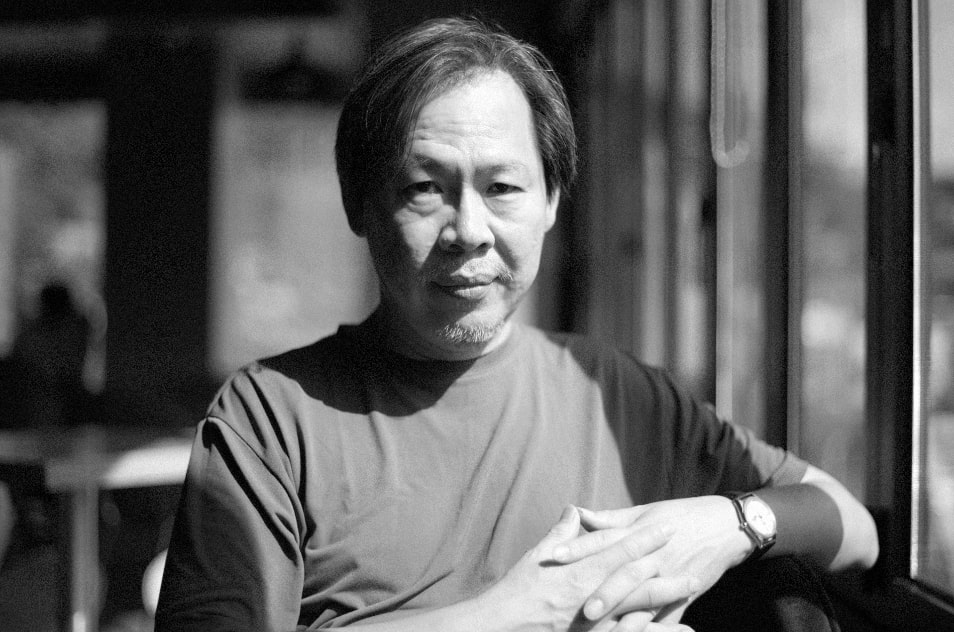
Park
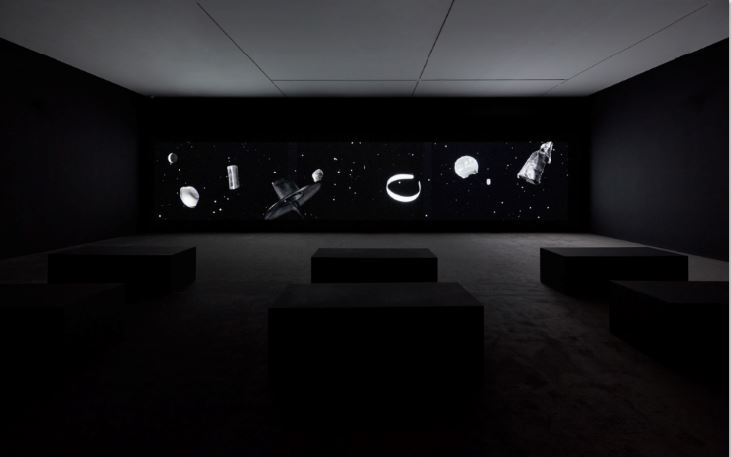
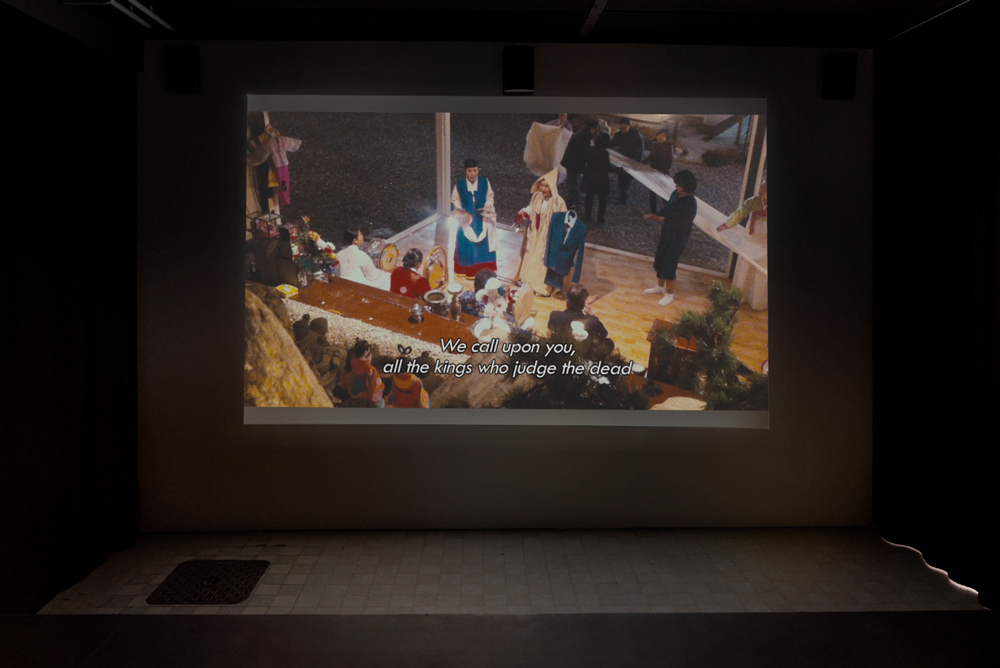
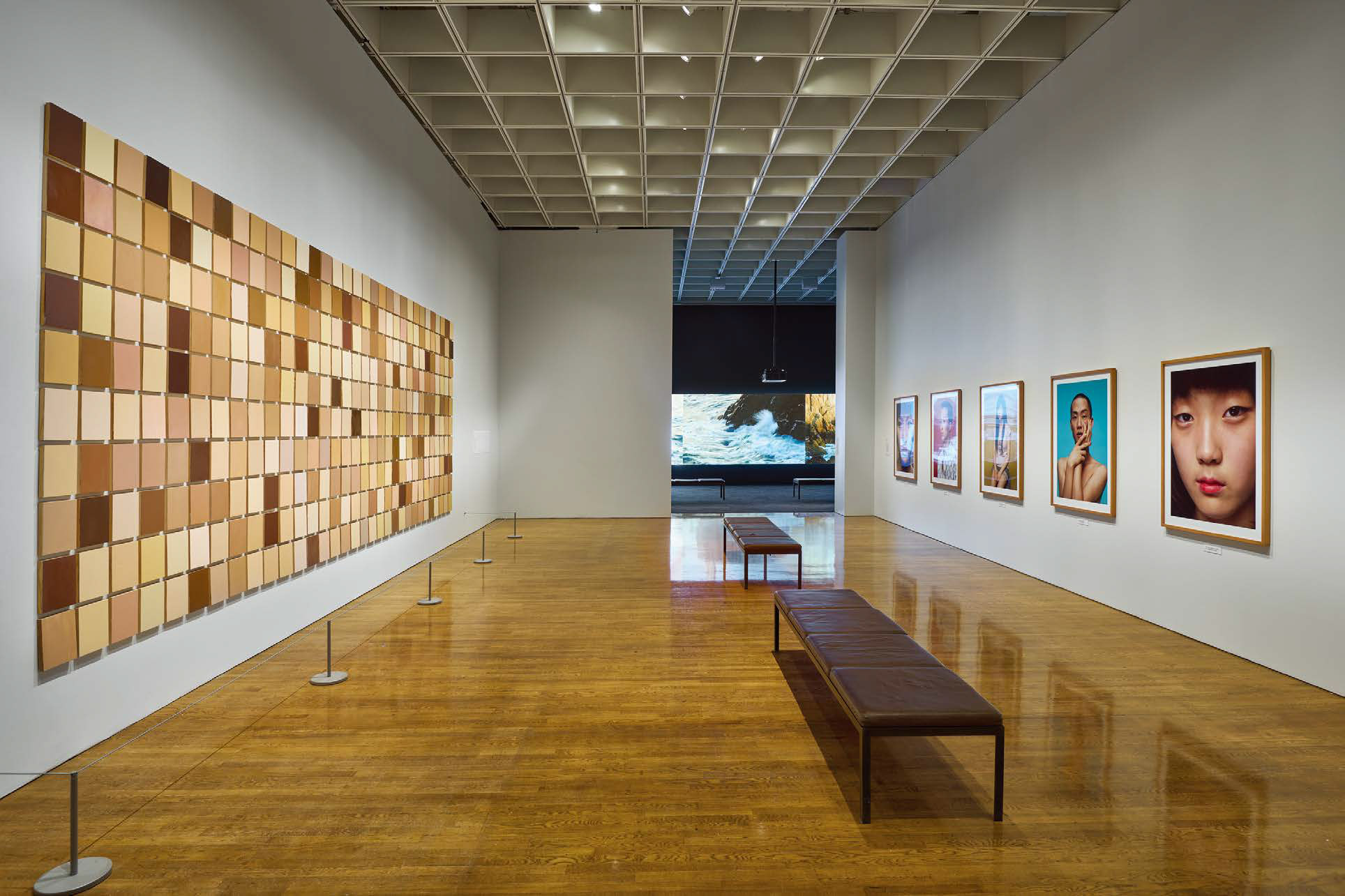
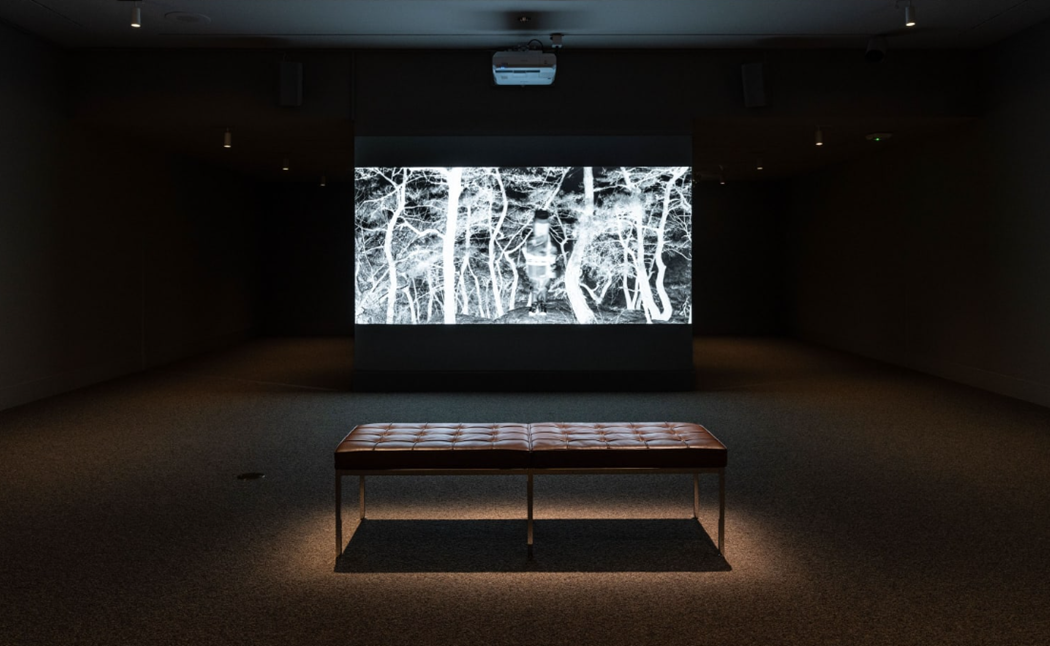
Chan-kyong’s exhibition, composed of a 45-minute video as the centerpiece,
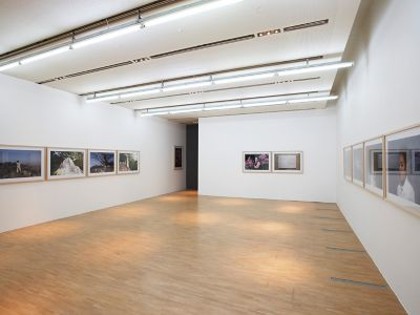
along with still photographs, architectural models, and a reconstruction of
archival materials that serve as explanatory supplements to the figures and
locations appearing in the video, is a genealogical inquiry into Mount Gyeryong
and the region of Sindoan located within it—places that one day delivered a
shock to the artist himself. The reason this work cannot be considered a
strictly empirical or historical documentary is because the tangible cultural
entity it explores, which until recently had survived as a living tradition,
has been largely lost due to neglect and distortion.
The
work analyzes materials related to Sindoan that were collected, classified, and
preserved by various groups holding either affirmative or critical views of the
place. It intertextually edits those sources together with footage and
interviews that Park filmed on-site to reconstruct a lost culture. The newly
woven text of “Sindoan” is thus tightly entangled with both empirical
historical records and mythological and religious imagination, to the point
where the two are inseparable.
Said
to have geomantic significance so powerful that Yi Seong-gye, the founder of
the Joseon Dynasty, once considered it for the new capital, the location is
today part of Gyeryong-si, Chungcheongnam-do. The name “Sindoan” has since
disappeared—its erasure implying the disappearance of the entity itself. The
Sindoan invoked by the artwork oscillates between past and present, imagination
and reality, revealing a hidden dimension of its existence.
Even
today, Mount Gyeryong retains a lingering association with hermits, recluses,
mystics, and eccentrics. According to Park’s research, the region had long been
considered a center for ideal society as imagined by geomantic prophecy
theories, ethnic religions, and new religious movements. Since the Japanese
colonial era, it had become home to hundreds of religious groups. Rather than
focusing on the superstitious irrationality and absurdity often associated with
such folk religions, the work concentrates on exposing the religious
unconscious of the lower classes—those marginalized and repressed throughout
Korea’s tumultuous modern and contemporary history.
The
Sindoan presented in the work is shown to have been persecuted and destroyed by
dominant cultural powers—first during the feudal era, then under Japanese
colonial rule, and later by foreign-backed authoritarian regimes. Yet it was
also a place where those driven out of mainstream society, whether voluntarily
or not, found refuge and renewal. Scenes of forced demolition under the
pretense of “purification” during the military dictatorships of the 1970s and
1980s dramatically illustrate how Sindoan was cast into the role of scapegoat
necessary to uphold the existing order.
The
so-called “purification” forces, appearing as if to drive out a deadly
epidemic, don armbands and Saemaeul Movement hats as they proceed to demolish
homes and religious sites. Compared to the obsessive and meticulous attention
paid by Japanese investigators who had recognized the cultural value of
Sindoan, this violence appears ignorant and barbaric. Nonetheless, even such
negatively biased documentation becomes crucial reference material in
reconstructing the place’s historical reality.
The
video is composed of six independent yet interlinked thematic segments. The
background music, with its repetitive rhythm, exerts a strong immersive effect
and tugs at the viewer’s nerves. The introduction begins with a dense cluster
of signboards for religious facilities situated beneath a large tree in Mount
Gyeryong. Faint black-and-white archival photographs are interspersed with
brief captions and interviews provided by the artist, while the camera’s
zoom-in and zoom-out techniques form a visual narrative. Past and present,
black-and-white and color, still images and video footage are seamlessly
interwoven—allowing the previously silent materials to finally speak. Fragments
of data, created in various times and spaces, are absorbed into the narrative
structure of the video, allowing a topic that is both old and new to be
reimagined for modern audiences familiar with moving images. As Park Chan-kyong
stated in a newspaper interview, his exploration of the religious unconscious
of the lower classes connects with the themes of “mutual life-giving”
(sangsaeng) and “resolution of grudges” (haewon) found in Minjung Art.
The
first work, Three God Shrine (Samshindang),
depicts the story and daily life of a female practitioner who claims to have
received a revelation from a “heavenly maiden.” Her speech may sound erratic
and tangled within the internal logic of the doctrine she believes in, but the voice
with which she describes her bodily experience of spiritual energy entering her
is full of conviction. The religious experience of Kim Jeong-sim, the head of
the Samshindang, is an irruption of the Other that tears apart the boundary of
ego identity. It is at once violent and mystical, terrifying and euphoric, and
carries strong contagion.
The
second work, Ritual Dance for the Departed (Yeonggamudo),
features performers demonstrating ancient chants and movements in a shabby room
with an old mother-of-pearl wardrobe. The camera captures without adornment the
earnest expressions of ritual dance practitioners Song Soon-gi and Na Sang-hyun,
who are entirely immersed in the sound and movement. These figures are not
merely objectified as exotic subjects—they represent the universal condition of
human beings, who are, by virtue of their mortality and limitations, inherently
religious.
The
third work, Commemorative Photograph, uses group
portraits of religious communities in Sindoan taken between 1924 and 1975.
Groups in bizarre uniforms stand out. What is surprising is not only the
diversity of religions represented but also the sheer number of their
followers—this is where the documentary character of the piece is most
powerfully revealed. It informs us that even at the time of demolition by the
military regime in 1983, 5,400 religious followers still remained. The culture
they had built was erased in the name of “environmental cleanup” and replaced
with new military facilities.
In
this segment, the hazy black-and-white archival photos are abruptly replaced
with vivid computer graphics and jarring English narration. This mirrors the
inclusion of Japanese dialogue in archival footage from the colonial era. Over
time, society has become more rationalized and systematized, but also more
destructive and aggressive. Among the works in the exhibition, the
juxtaposition of a traditional folk painting of a tiger and a tiger hunter in a
Western suit powerfully underscores this point.
The
work introduces numerous examples of folk beliefs that suffered under Korean
modernism’s alliance with foreign powers. Yet it paradoxically reveals that the
newly constructed octagonal military facility—built upon the ruins of
indigenous culture—was also not divorced from religious origins. If the
mechanism of creating scapegoats to reinforce the dominant order is itself the
origin of religion and society, then the conflict between religion and science,
or tradition and modernity, is not one of fundamental opposition but rather a
lateral transition from one religion to another.
If
we accept that beliefs which are now held by a few can later be held by the
many—and vice versa—then shedding light on the religious unconscious of the
lower classes, long excluded from modern and dominant cultures, carries
profound significance. Scenes from the old film Mount Gyeryong are
inserted, showing a self-proclaimed messianic leader and a crowd of
torch-bearing worshipers, creating the sensation of watching a film within a
film. There is no clear boundary between reality and imagination here. While
this is an effective method for examining a subject from multiple angles within
limited conditions, more fundamentally, it reveals that reality itself is a
product of human belief and will. This tendency is reflected most clearly in
the lives of the ascetics portrayed in the video—individuals who live entirely
within their own symbolic worlds.
The
fourth piece, Serving the Indwelling Lord (Si-cheon-ju),
features a practitioner of the Donghak-derived Si-cheon-gyo religion, which
existed from 1924 to 1983. The video transitions from black-and-white archival
photos to the present, showing a neatly dressed man in a suit standing alone in
an empty room. Moon Gyeong-jang, the leader of Seongdogyo, explains at length
the meaning of Si-cheon-ju (“the Indwelling Lord of all creation”), saying “All
things in the universe are Si-cheon-ju.” Though his discourse is lengthy, the
speech is delivered to no one, on a formal stage—symbolizing the current state
of his religion.
As
he chants the name of Si-cheon-ju in intonation, sits cross-legged, and writes,
his monologue continues. Most of what he says consists of religious doctrines,
but when scenes from his mundane present-day life appear, a sense of
incongruity emerges.
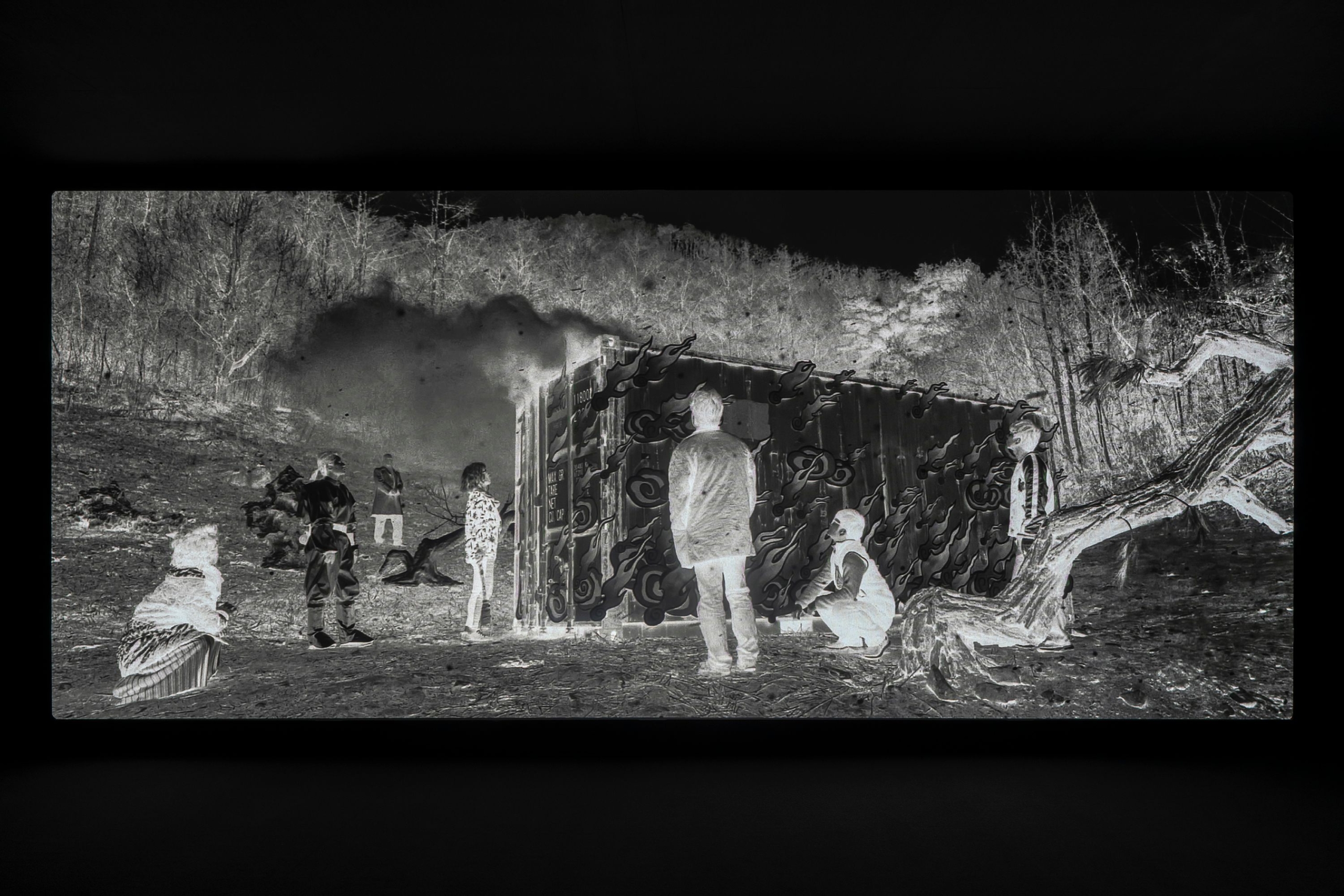
The
fifth piece, Kuvera, is a “believe-it-or-not” tale
linking Kuvera, the Sri Lankan god of wealth, and the claim that Buddha’s true
relics (jinsinsari) were transferred to Mount Gyeryong. An Indian woman,
mysterious and exotic in atmosphere, appears. Scenes follow in which characters
from earlier works gaze up at a celestial energy shooting across the sky like a
comet and landing in Mount Gyeryong.
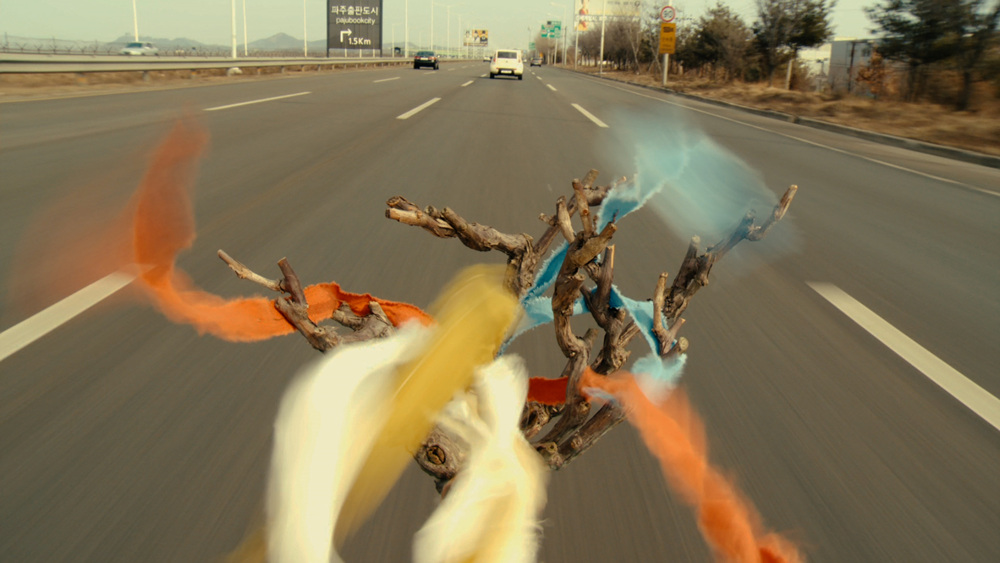
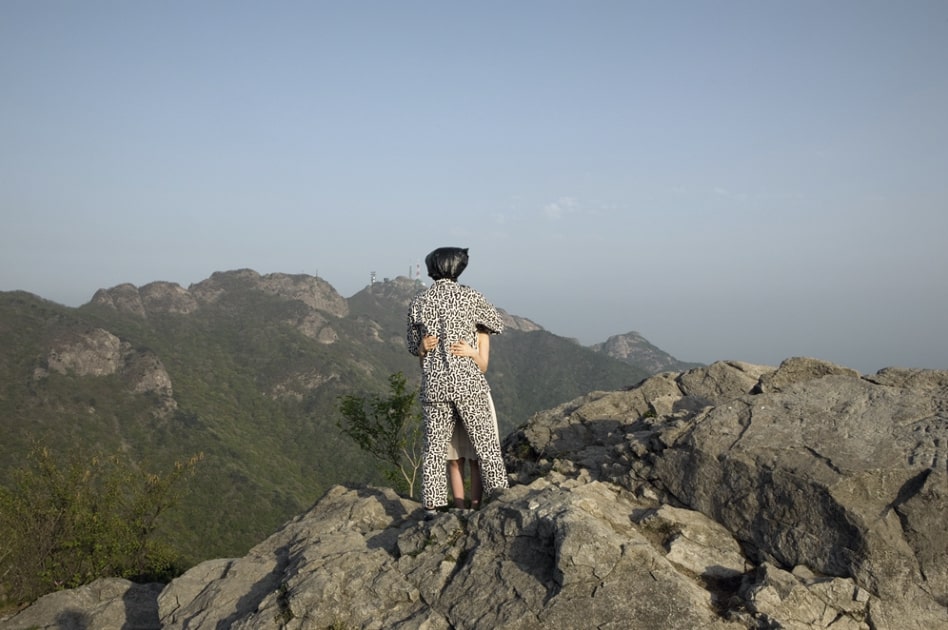
Lastly, Yeoncheon
Peak, Mount Gyeryong tells of a story in which young people who
survive an apocalyptic future gather at Mount Gyeryong. As the six episodes
unfold, fictional elements become increasingly prominent. A young man dressed
in a tiger costume takes the place of a divine tiger guardian; a scuba diver
emerges from a great flood that hastened the end; a girl in a fluttering dress,
oddly out of place on the rugged mountain; a figure in a school military
uniform with a black plastic bag over their head; and surreal, bodiless clothes
that move on their own—all come together on Yeoncheon Peak to perform a strange
ritual while holding hands.
The
work proceeds with solemnity only to end somewhat absurdly. But isn’t this
duality itself a trait of religion? The fundamentalism of religion plays the
role of the Other, reflecting back upon a modern society consumed by hollow
uniformity. The characters portrayed are, on one hand, marginalized figures;
yet on the other, they are transcendent and sacred beings.
Historically,
the diverse folk religions centered around Mount Gyeryong—often scapegoated by
the ruling elite—have functioned both as conservative forces reinforcing the
established order and as mythic centers of resistance seeking to rupture that
order. The artist points out that Sindoan historically gained vitality whenever
Korean society fell into disorder. The folk religions of Mount Gyeryong, long
suppressed as heresies, resemble Western eschatologies that, though
marginalized in ordinary times, sometimes emerge to offer revolutionary
visions.
Throughout
history and across cultures, religion has served as a foundation more
fundamental than society, history, or art. Religiousness exists deep in our
unconscious precisely because we do not fully understand it—yet it exerts
persistent and decisive influence. Concepts such as reason, interest, and
social contract are merely surface phenomena resting lightly upon the vast
ocean of religious unconscious. Thus, the role of art may be to draw out a
moment of liberation—not from blind faith or regression, but from within the
very irrationality of religion itself.