The
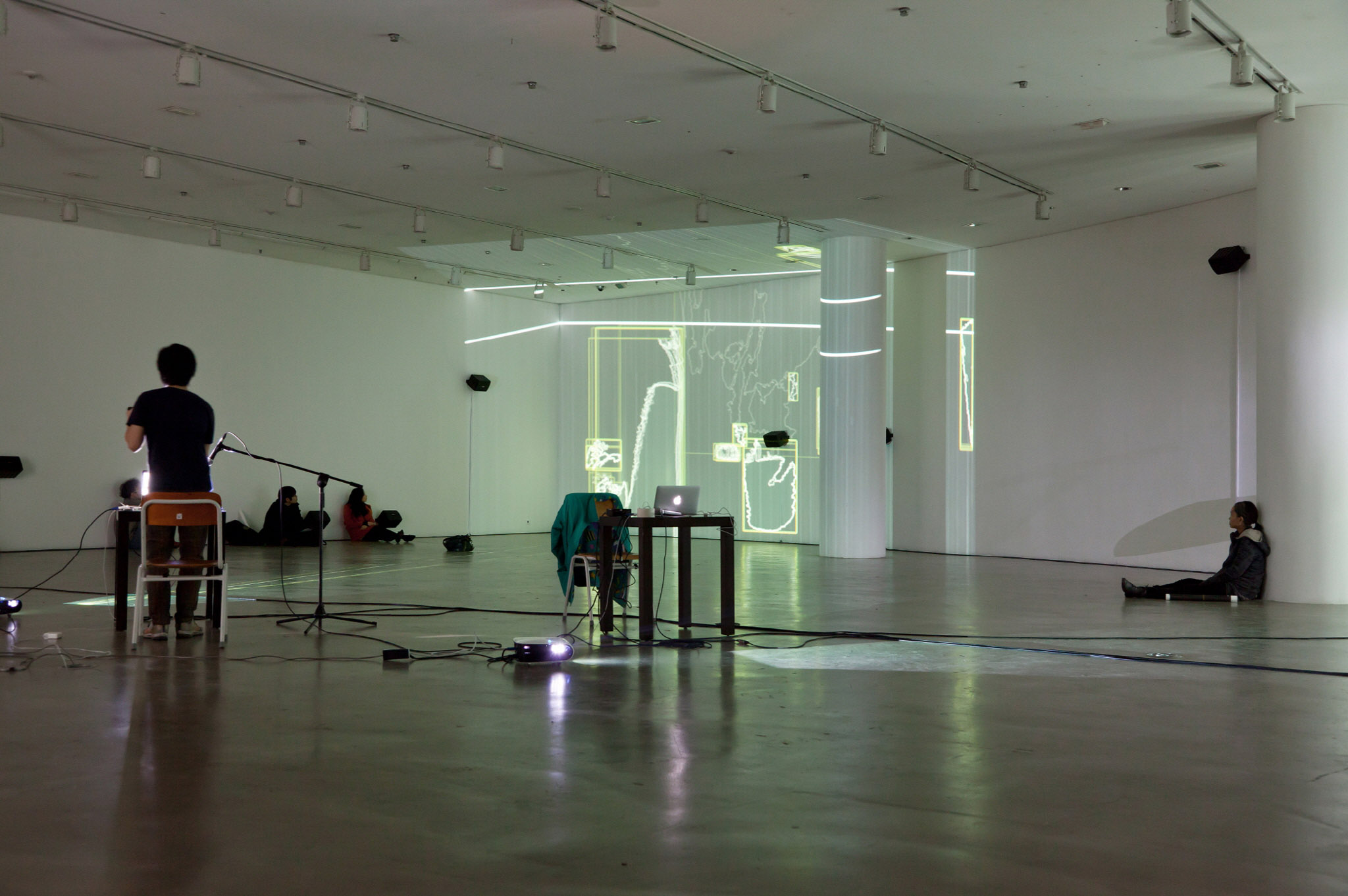
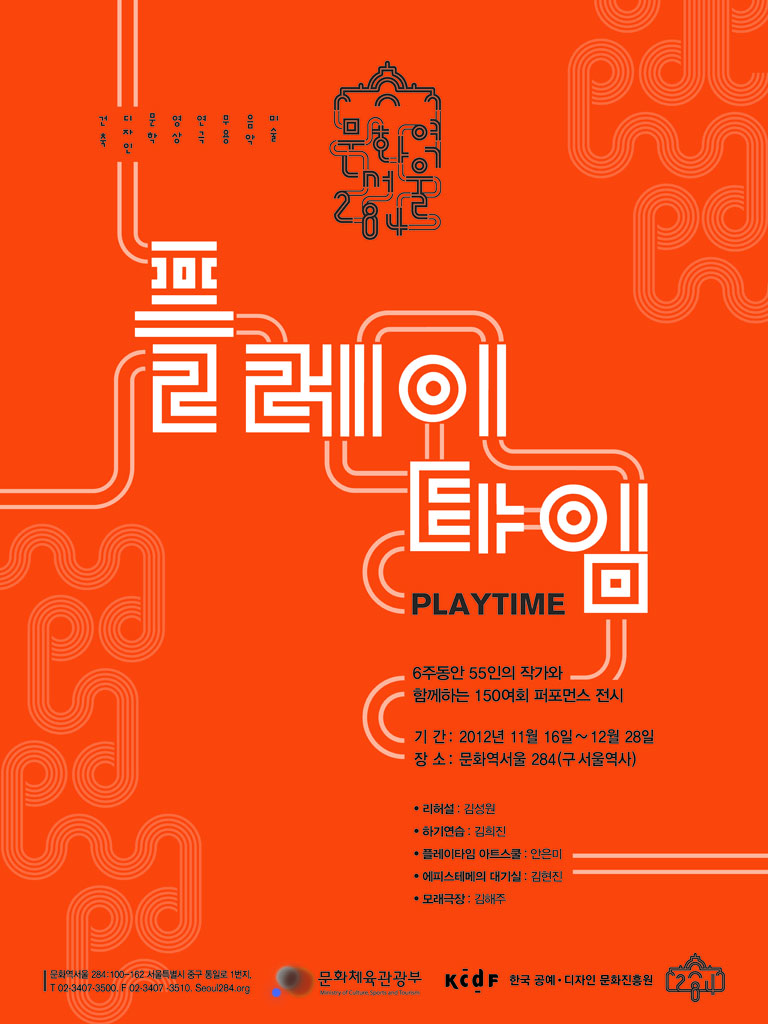
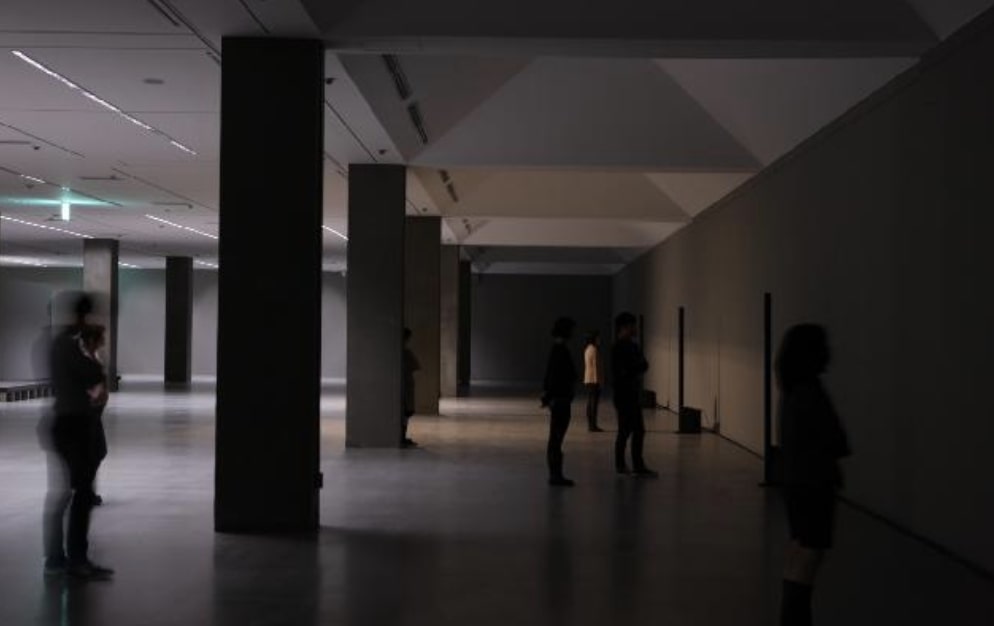
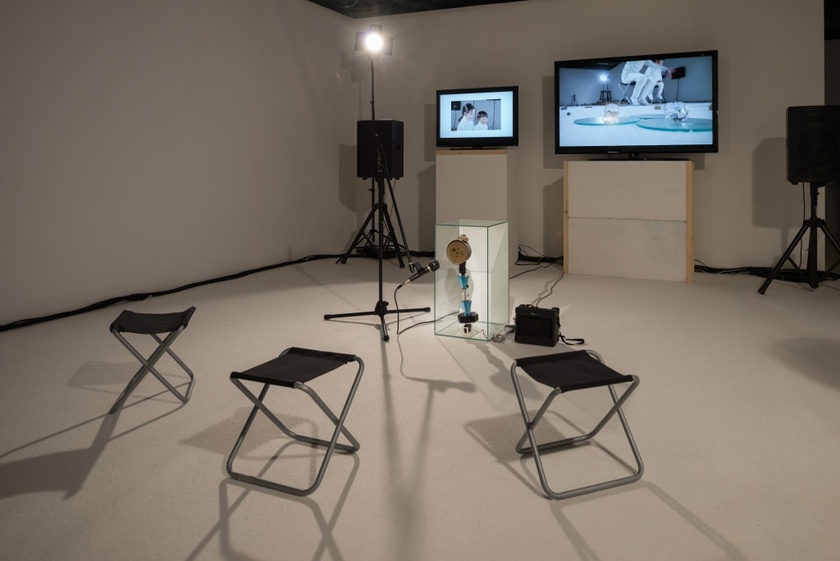
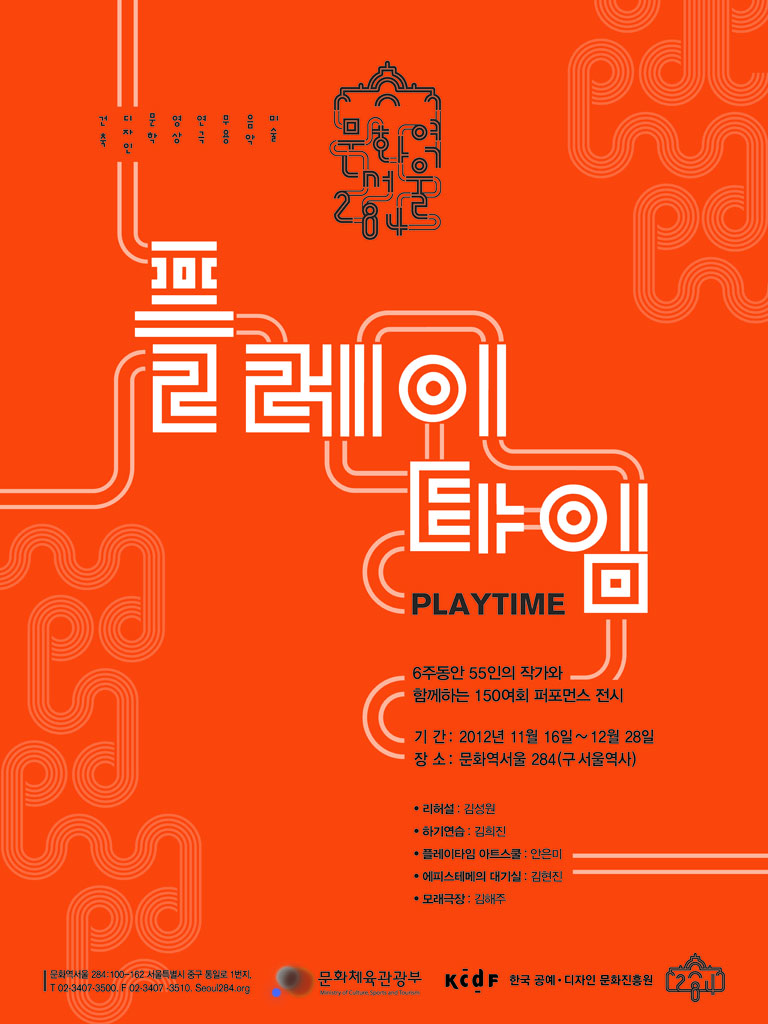
exhibition 《Playtime》 at Culture Station Seoul 284 is a performance-based project that
focuses on the intermingling of genres and the temporality of art, both of
which are key characteristics of contemporary art. For six weeks, from November
17 to December 28, a total of 55 artists (or teams) from various
genres—including visual art, music, dance, theater, film, literature, design,
and architecture—presented unique performances simultaneously across the entire
venue on a daily basis.
One
notable feature of contemporary art since the 1990s is the way it blurs the
boundaries between genres, fusing exhibitions with performances and offering
unique experiences through real-time actions. These qualities have led to
experiments in new forms of contemporary art and expanded the formal boundaries
of what performance can be. The diversification and evolution of
performance-based forms became even more prominent in the 2000s, with growing
interest in their ability to generate meaning.
Consider
the cases of Jérôme Bel and Tino Sehgal—two artists who have become major
figures in today's art scene. Is Bel’s dance a form of performance or
conceptual art? Is Sehgal’s work performance or sculpture? Even with these
extreme examples, it becomes clear that categorizing these practices by genre
is no longer meaningful.
As various social activities are reinterpreted as
artistic forms, sculpture can incite action, performance can evoke narrative,
and the art of today explores questions like: what constitutes the “time of
art”? How do we perform or direct this time? And what forms of art are
generated through this temporal play? In this context, we must closely examine
the essence, transformation, and form of performance.
In
recent years, numerous exhibitions and festivals based on performance have been
introduced in Korea, allowing us to gauge the position of performance within
contemporary art. Following this current, 《Playtime》 aims to showcase the experimental
proposals of artists across all genres in Korea, in a more urgent and radical
manner, through real-time presentations over the course of six weeks.
《Playtime》 does not seek to present a
definitive model of performance, nor does it attempt to articulate a fixed
statement on the medium. Rather, it exists as a space for experimentation
rather than typology, and for posing questions rather than asserting declarations.
《Playtime》 is a time to
experience, in real time, the relationships between action, movement,
narrative, and time—as well as the experimental forms and meanings generated in
the process.
The
exhibition deals with the unrepeatable temporality of artistic actions,
distinct from recorded or representational time, and consists of five sections:
-
Rehearsal, curated by Sungwon Kim
-
Practice Doing, curated by Heejin Kim
-
Playtime Art School, curated by Eun-me Ahn
-
Waiting Room of Episteme, curated by Hyunjin Kim
-
Sand Theater, curated by Haeju Kim
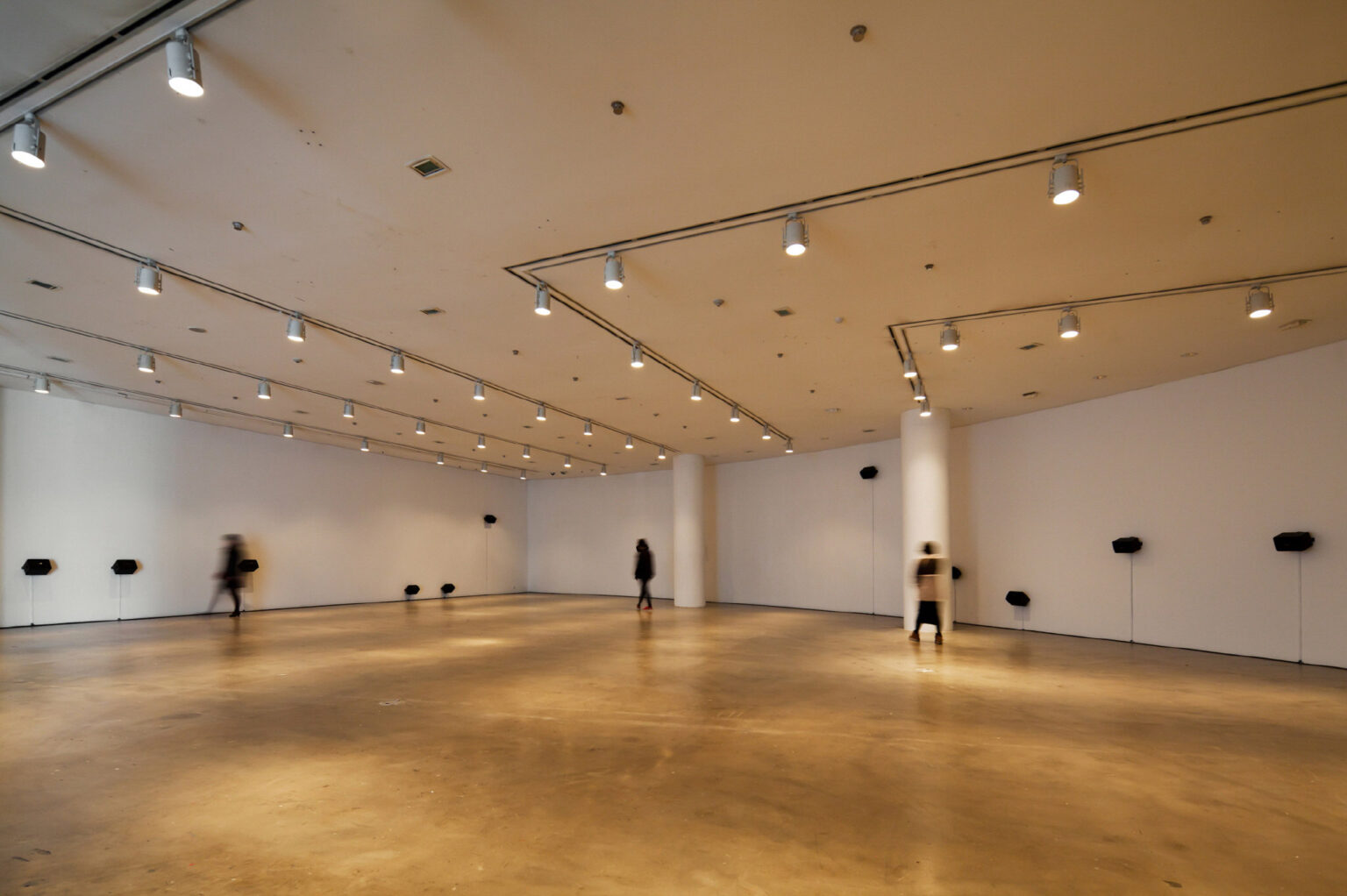
Rehearsal explores
a time without beginning or end—repetitive and real-time. It presents a
multitude of stories and avant-garde actions that unfold in real time, creating
new meanings despite their unrepeatability.
Practice
Doing shows a kind of training process that governs all our
behavioral patterns, from daily routines to social conduct. As it unfolds in
real time, the section crosses the boundaries between discipline and training,
examining the meanings of personal and social behaviors.
Playtime
Art School is a “playtime for art” where young Korean
choreographers and dancers make free use of the exhibition space and works of 《Playtime》 to engage creatively.