1. The Narrative
“My work begins with curiosity—curiosity about things I’m drawn
to. Behind those things lie backstories, clues, and unresolved mysteries.”— From the artist’s notes
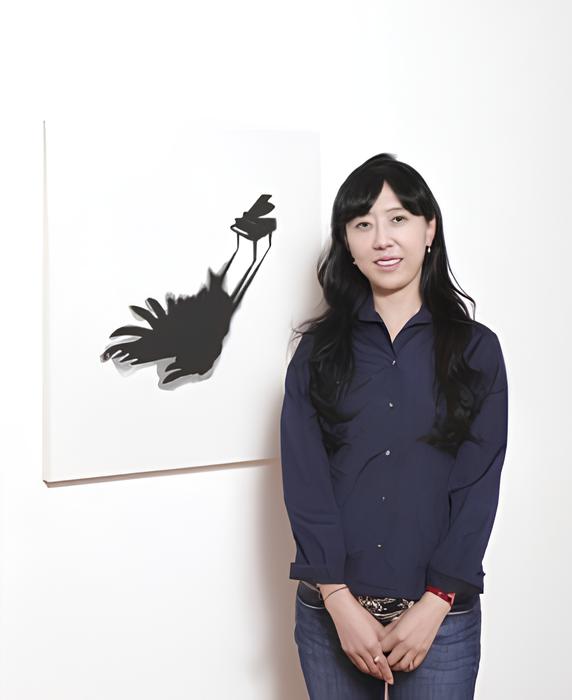
This note encapsulates the core of Park’s practice. Her work often
stems from in-depth investigations of events she’s intrigued by: the Robert
Pickton murders, the Virginia Tech shooting, the Lougheed Highway, Riverview
Psychiatric Hospital, Vancouver’s Downtown Eastside, the assassination of
Martin Luther King Jr., Mount Baker, and the Exxon Valdez oil spill.
Not only does she examine media archives, but she also visits
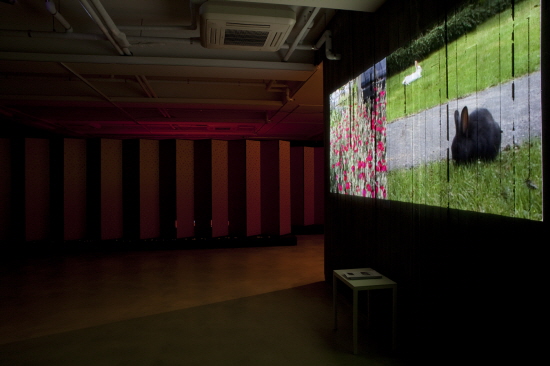
crime scenes firsthand. She filmed the Pickton pig farm, recorded Riverview
Hospital on her camcorder, and interviewed homeless residents in the Downtown
Eastside. These documented landscapes and clues, fused with imagined
narratives, become the foundation of her intricate and mysterious stories—each
culminating in a multimedia artwork.
Three events inspired works featured in this exhibition:
The Pickton Pig Farm Murders (Canada): At a pig farm owned by
William Pickton near Vancouver—often idealized as paradise—69 women disappeared
or were found murdered. Human DNA was later discovered in pig feed, making this
one of the most grotesque real-world crime cases.
The Exxon Valdez Oil Spill (USA): In 1989, the Exxon Valdez
supertanker ran aground, spilling 11 million gallons of crude oil into Alaskan
waters. The environmental disaster remains unrecovered even after 20 years.
The Assassination of Martin Luther King Jr. (USA): On April 4,
1968, King was assassinated on the balcony of the Lorraine Motel in Memphis by
a .30-06 Remington rifle, allegedly fired by James Earl Ray.
Rather than reproducing media narratives, Park reconstructs these
incidents within the fictional realm of Ixtlan, offering alternative
interpretations and confronting the causes of tragedy through her artistic
lens.
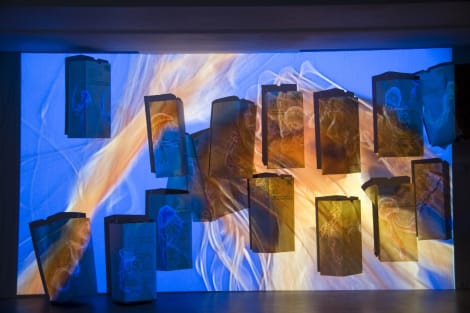
As part of this exhibition, Park wrote two mystery novellas: ‘The
Briefly Appearing Blue Pillars’, related to her project Journey
to Akeldama, and ‘The Pitch-Black Lougheed Highway without
Streetlamps’. Both fuse real-world research, imagined characters, and
fantastical settings, echoing her installations in prose form.
2. The Space
“Ixtlan is not a real place, but a symbolic one—where we must
discard what we desire or love in order to arrive.”— From the artist’s notes
"Ixtlan," as described in Castaneda’s Journey to
Ixtlan, is a fictional location one can reach only after surrendering personal
ambitions and attachments. Castaneda identified three entheogenic plants—Peyote
(a cactus), Jimson weed (a toxic nightshade), and Psilocybe (hallucinogenic
mushrooms)—as tools for entering Ixtlan.
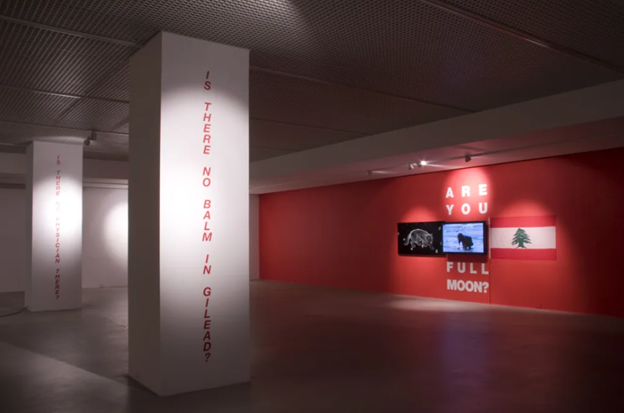
Park transforms Ixtlan into a healing zone, where violence,
murder, and disaster cannot touch. She reconstructs the Pickton murders, the
MLK assassination, and the Virginia Tech shooting into a fictional world free
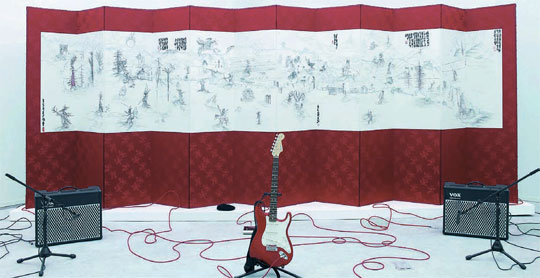
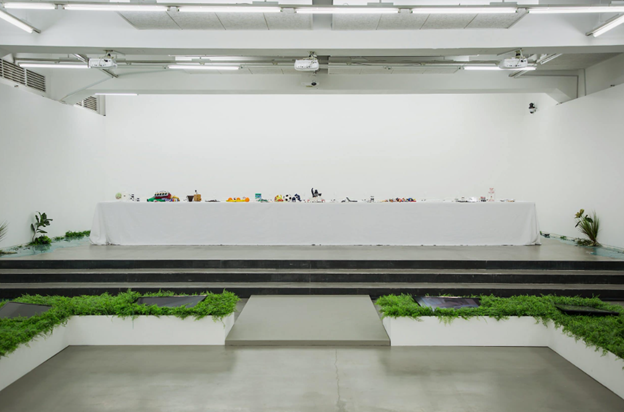
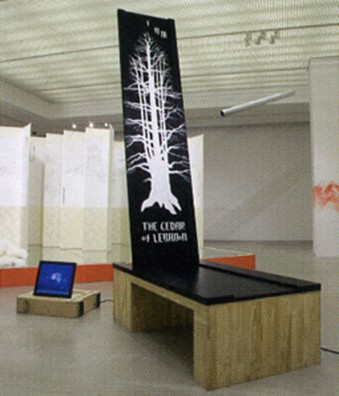
of tragedy. The physical "triggers" from each event—the rifle used to
kill King, the Exxon Valdez tanker, and Cho Seung-hui’s Walther P22—are drawn
as sketches on folding screens. These are then "neutralized" by the
indigenous ceremonial plants, which grow over the triggers, symbolically
cleansing and reclaiming the space.
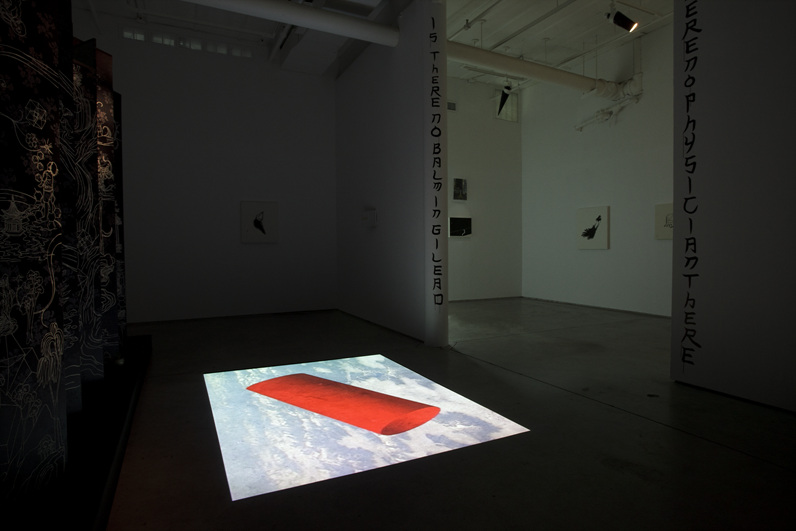
In doing so, 《Ixtlan Stop》
becomes a space of healing—a threshold where natural forces
metaphorically restore balance to a world damaged by human cruelty and desire.
3. Stories Within the Space
Reading the narratives Park constructs while journeying toward
Ixtlan is key to understanding her work. Like detectives, viewers piece
together clues scattered across the exhibition to unravel new narratives based
on real events.
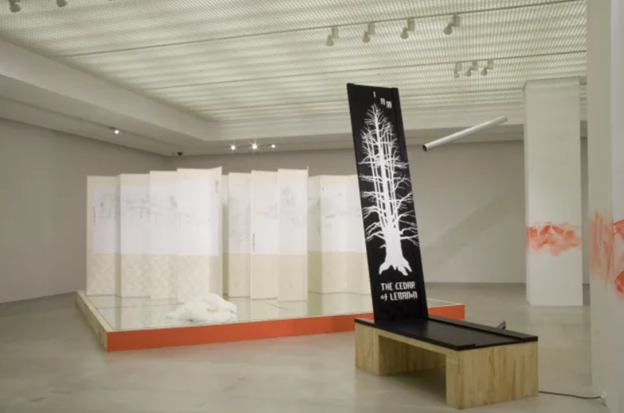
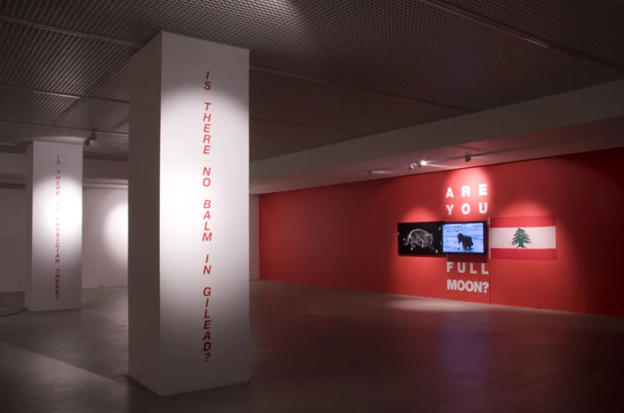
One notable installation is Downtown Eastside, which combines
a white folding screen, a large mirror, and bold vermilion paint to evoke an
atmosphere of mysticism and drug-induced delirium. A pipe symbolizes a cocaine
straw; white wool and silk refer to narcotics; and mirrors, glass, and news
clippings stand in for razor blades and drug paraphernalia. This scene alludes
to the lives of the Pickton victims—many of whom were drug users in the
Downtown Eastside—evoking both their vulnerability and the broader societal
negligence that led to their disappearance.
Park has long focused on themes of death, disappearance, and
vanishing forces—whether natural or violent. But her true interest lies not in
death itself, but in the mysteries surrounding it: the inexplicable, the
irrational, the unresolved. She seeks answers both through imagination and
analytical reasoning.
Her stories are deeply personal and poetic, yet they inevitably
question universal suffering, loss, and our shared human condition.
A “stop” always lies between beginnings and endings—between
arrival and departure, life and death. Park’s work too exists in this liminal
space: between reality and fantasy, fact and fiction. Ixtlan Stop,
like Journey to Akeldama, hovers in that in-between, drawing us into a
world that dreams of healing through nature, justice, and reflection.
This exhibition offered a rare opportunity to encounter Park as an
artist in the midst of an expansive journey—and to pause, even momentarily, in
the fictional yet truthful space of Ixtlan.