A
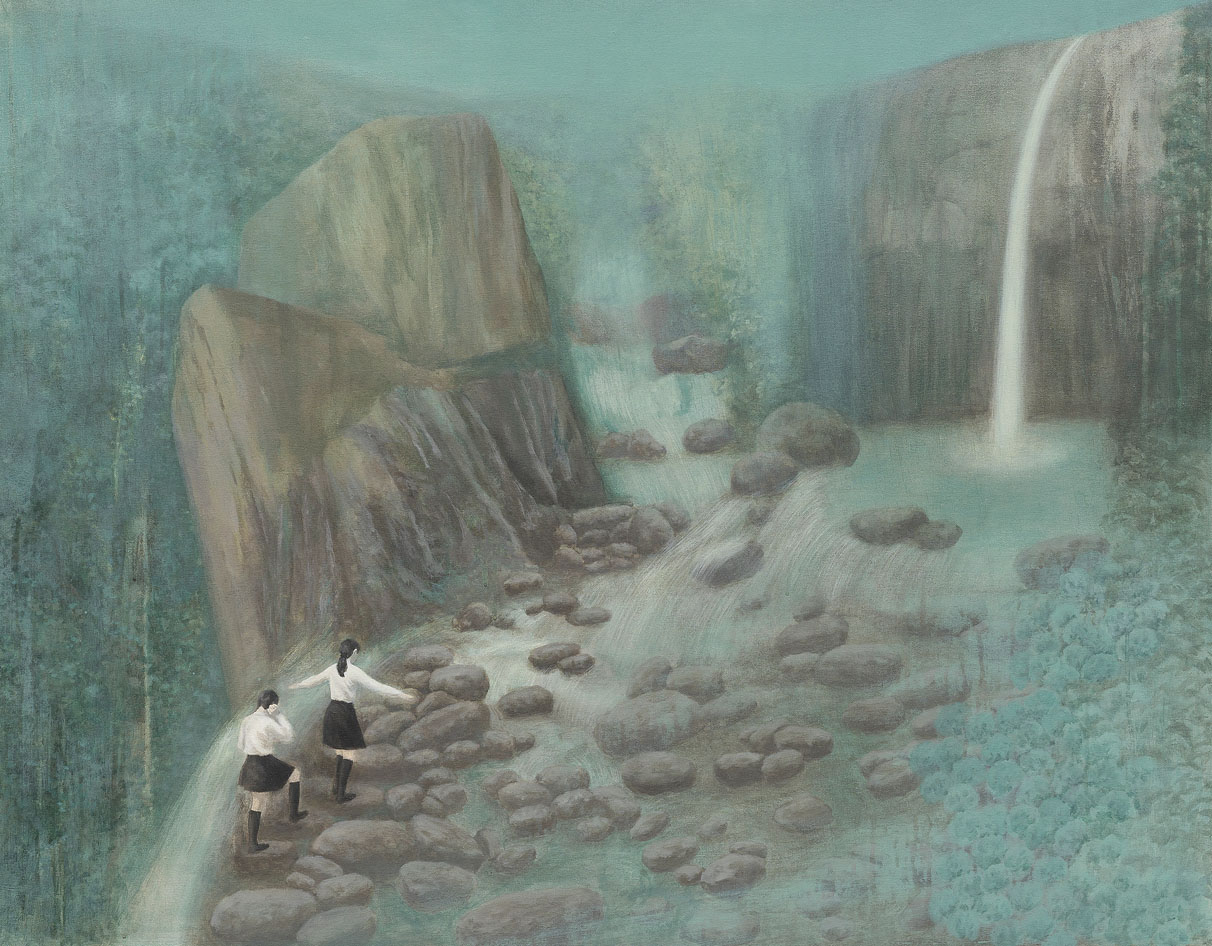
girl stands at a precipice. She stands straight, looking at the landscape
beneath her feet. At the edge of a cliff, the landscape is made impossible to
enter. In Precipice (2021), the girl beckons us to enter the
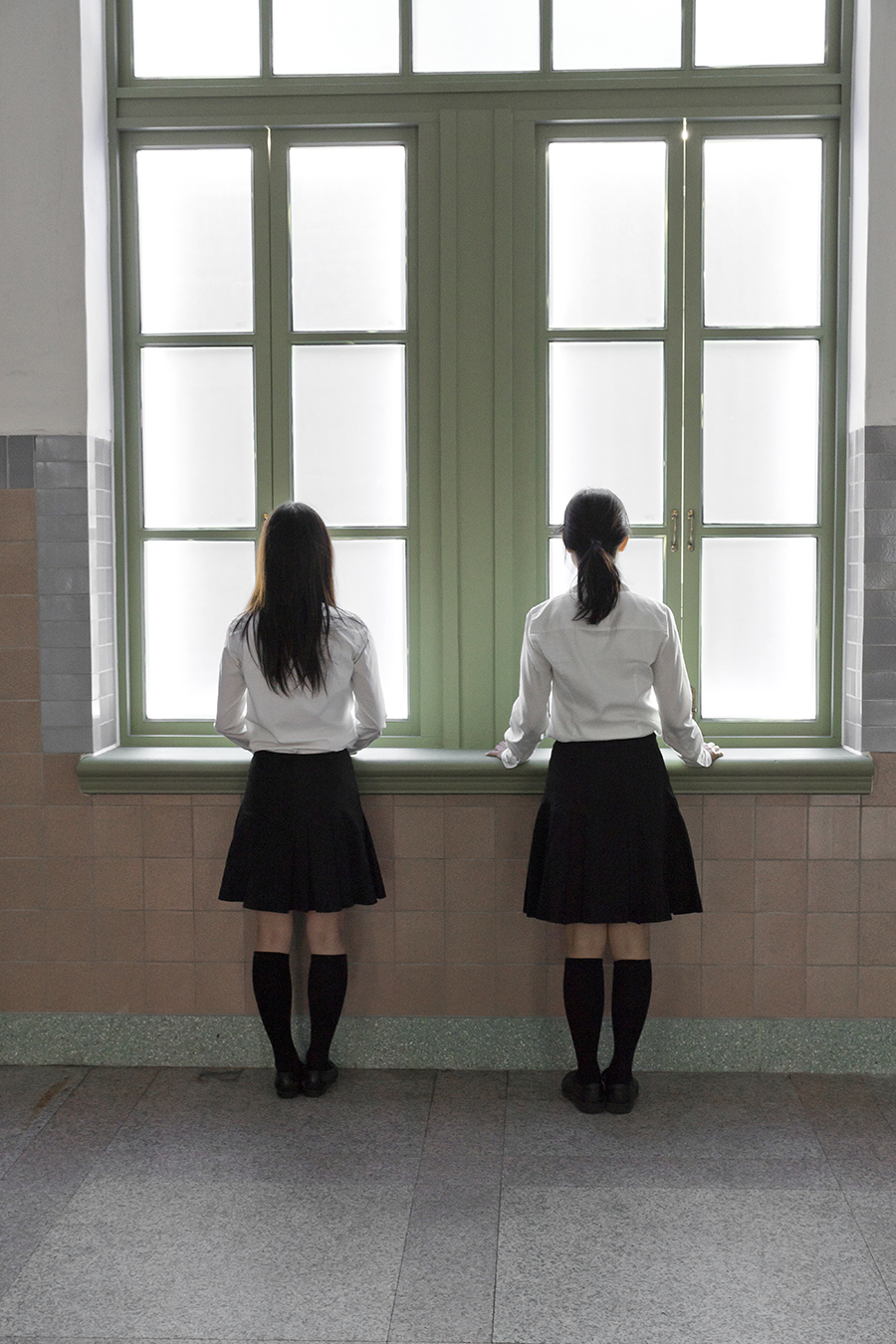
landscape in her place, as if saying it is our turn. Like in much of Sunny
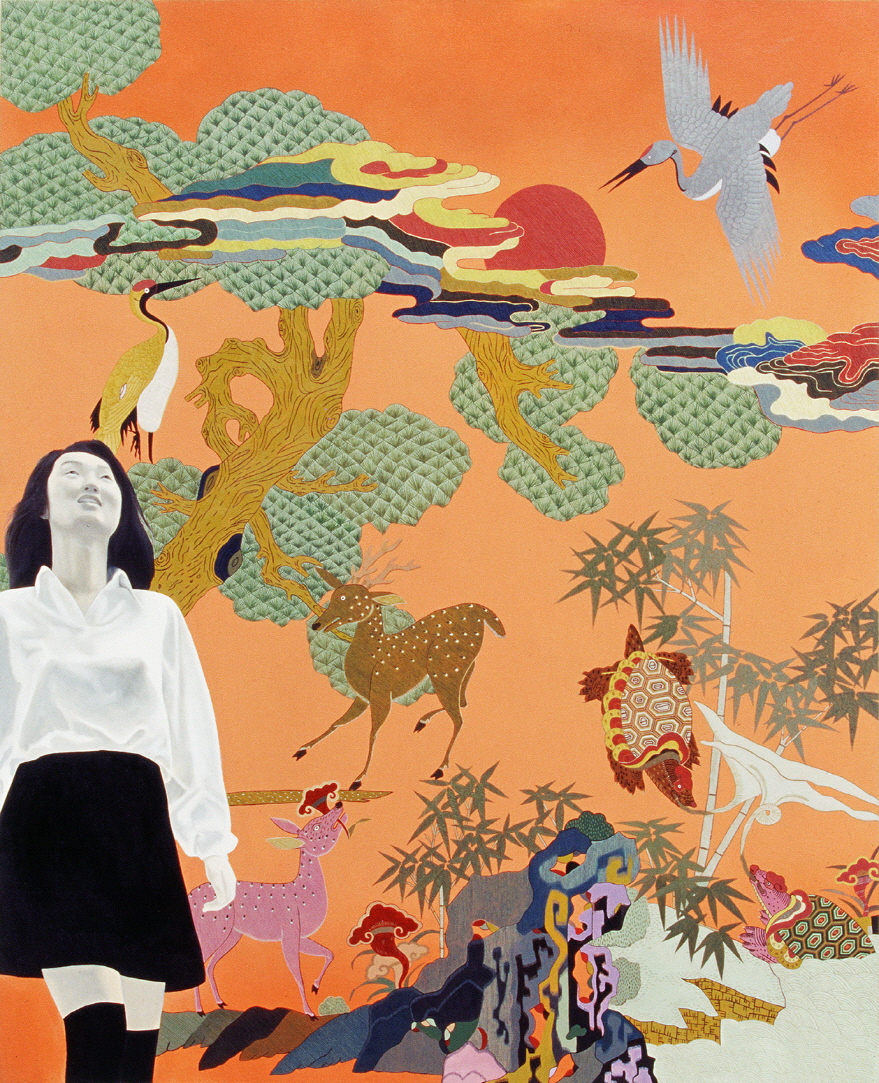
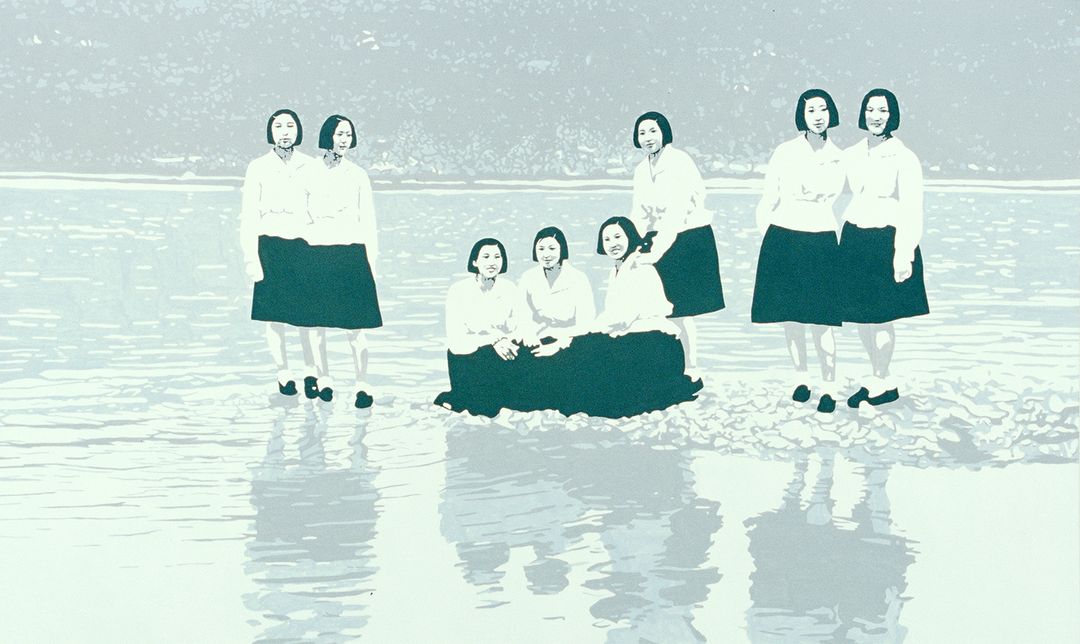
Kim’s work, the girl is wearing a uniform. School uniforms are tied to a
specific, finite time in our lives. The girls, who are tethered to this time,
situate themselves in Kim’s infinite landscapes. Without knowing what is to
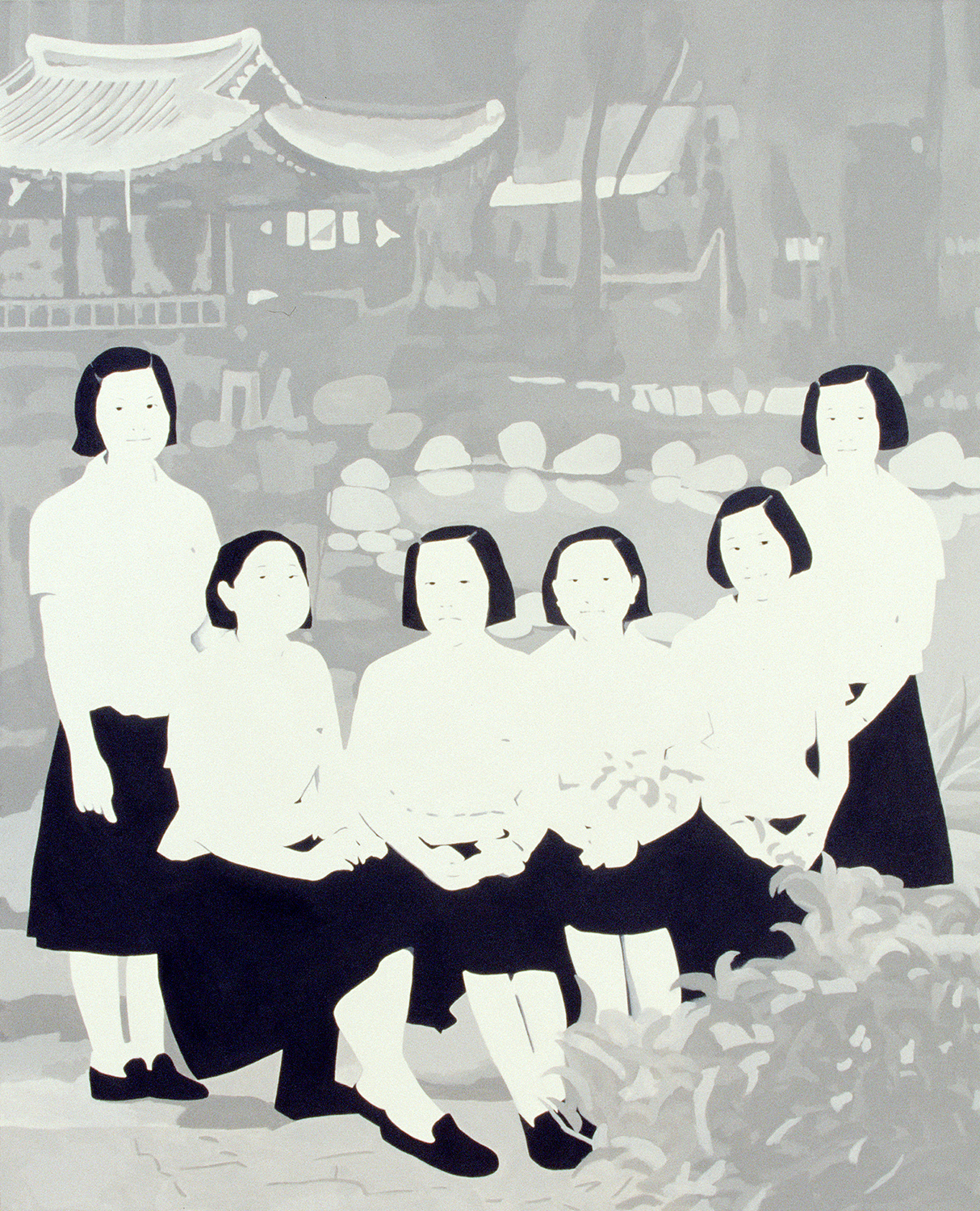
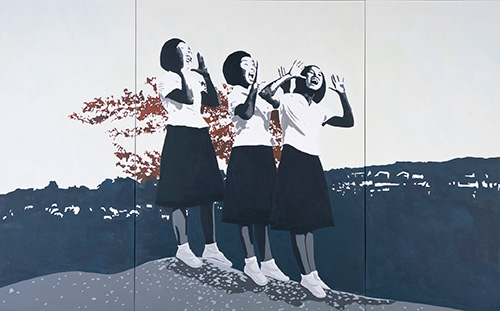
come, they remain in a ‘past’ that was once ‘present’, shouting “Yaho!” into
the distance. In Yaho Girls (2002), a painting Kim made 20
years ago, the girls’ voices echo into the expanse. A girl in uniform looks on,
standing at the edge of an inaccessible time.
Following the girl’s gaze, where their echoes reverberate; we enter the
landscape. The landscape lives in a mystical time resonating with memories that
don’t exist, where one can reminisce about moments not experienced. This is an
‘imagined time’ that lives in the back of one’s mind. The time spent brooding
over a choice in the distant past implicates a path not taken, a time not lived
– this time is made real by the act of revisiting, accompanied by the
continuous sound of a ticking clock. In Sōseki’s Grass on the Wayside (道草, Michikusa), the main character Kenzō is an autobiographical figure tightly entangled with this ‘imagined
time’,
agonizing still into adulthood over paths not taken. Sōseki writes, “He was once more involved in a world which for a while had become
merely a part of the past. He had always known, of course, that someday this
world would force itself on him, that his own present life would become
entangled again with the lives of those who had never left it.”
Sunny Kim constantly moves between the U.S. and Korea, contemplating the choice
and relationship between the two places. In this way, Kenzō’s ‘imagined
time’
becomes an apt metaphor for the ‘girls in uniform’. The
girls Kim paints have no specificity beyond the ‘uniform’ and the
time it implies, remaining in that imagined past. Beckett writes: “The most
successful evocative experiment can only project the echo of a past sensation” - if a
past sensation agitates the present, it can live as a beautiful, infallible
sensation on its own, “annihilating every spatial and temporal restriction”.
Sunny Kim accepts a destabilizing past in the present through
self-actualization, by painting landscapes where the girls’ echoes ring. The
landscape is blurred, as if one is dreaming, and in its endless expanse the
girls and the artist find freedom together. It is a space and a surface, where
the exchange between energy and atmosphere creates a weighted transparency.
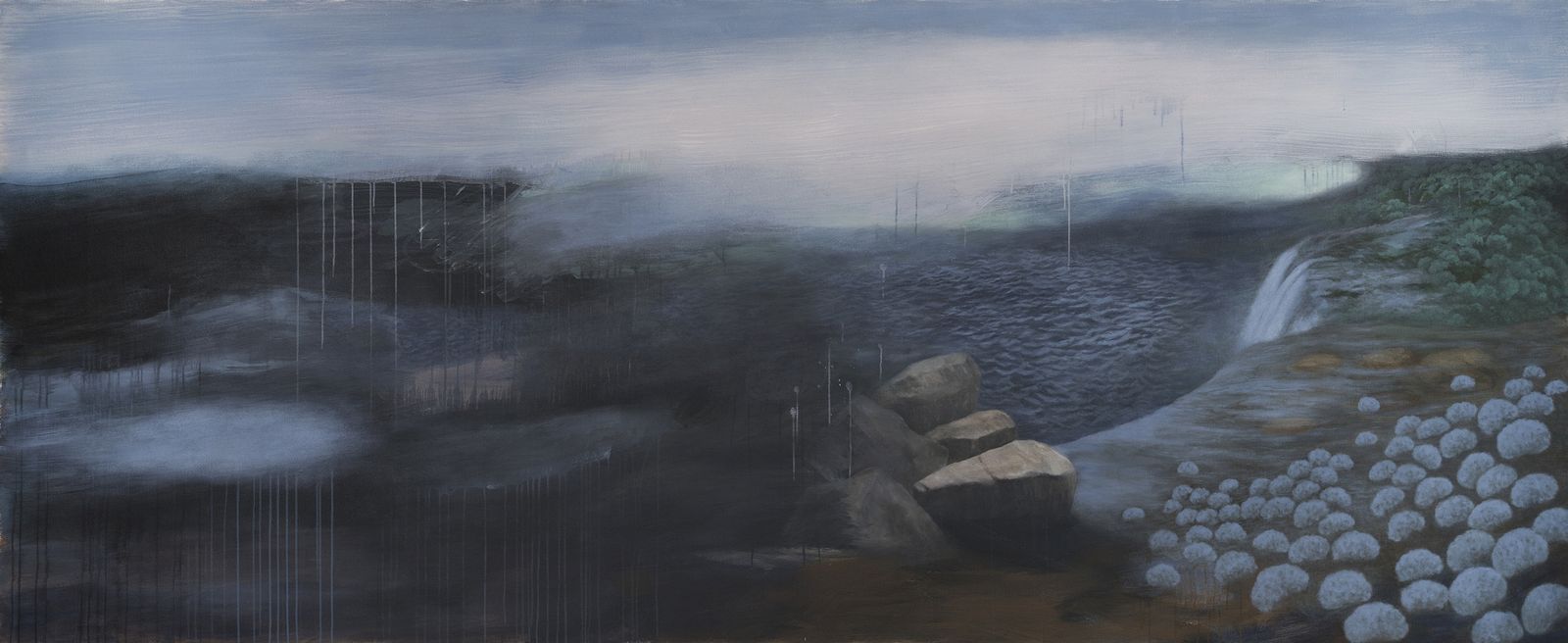
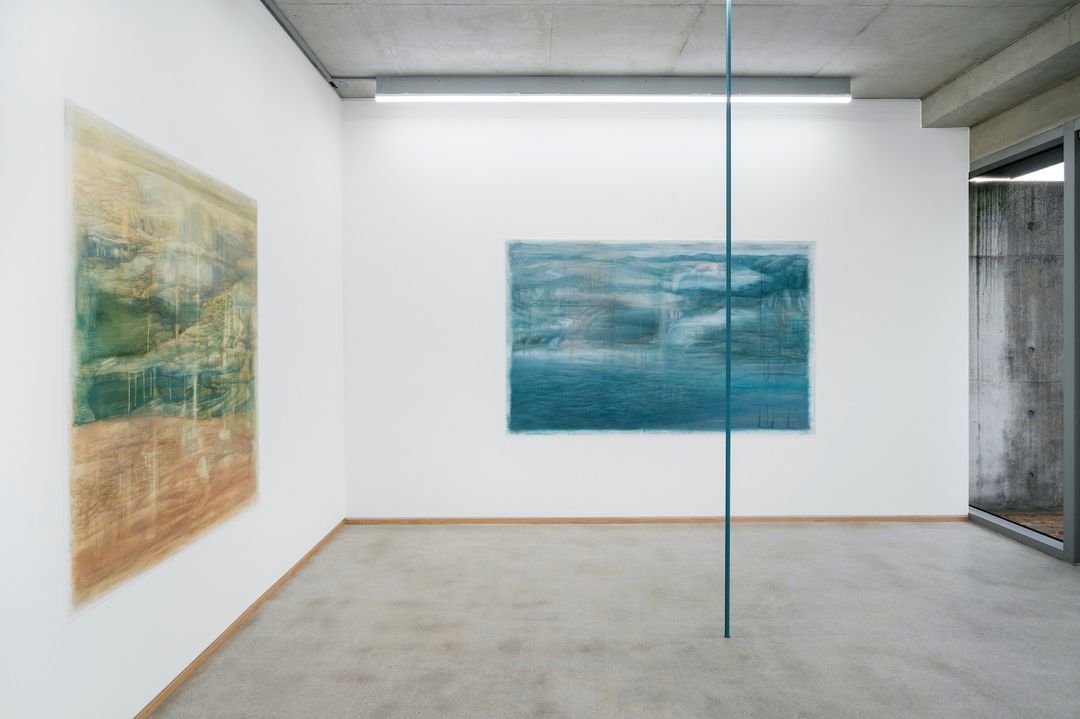
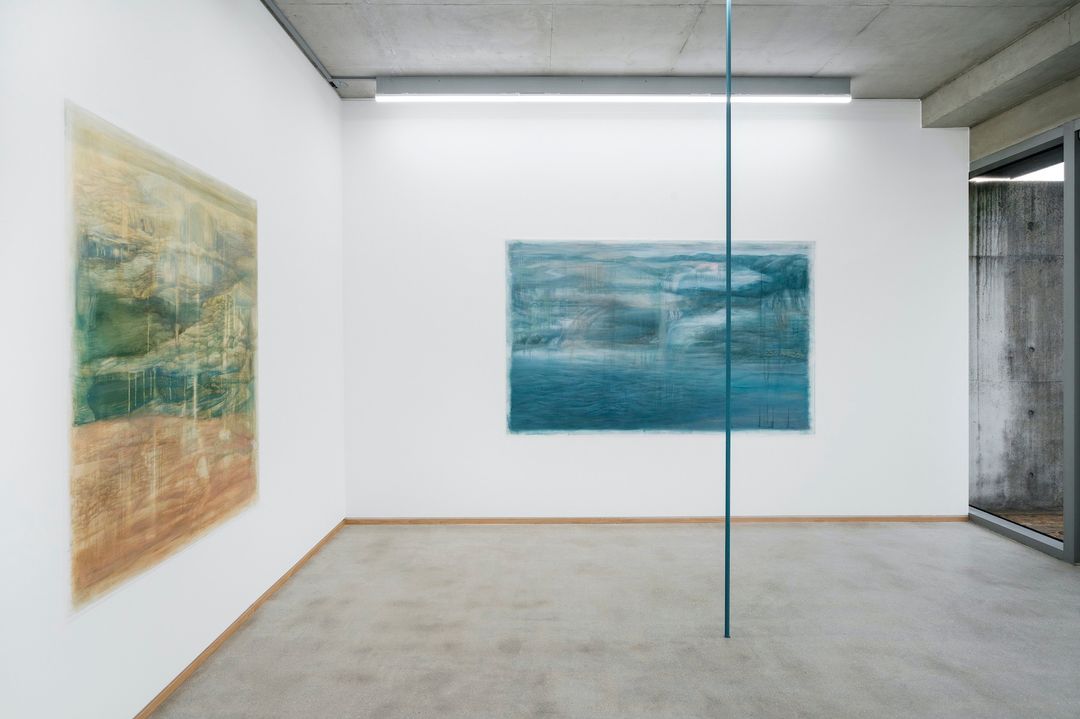
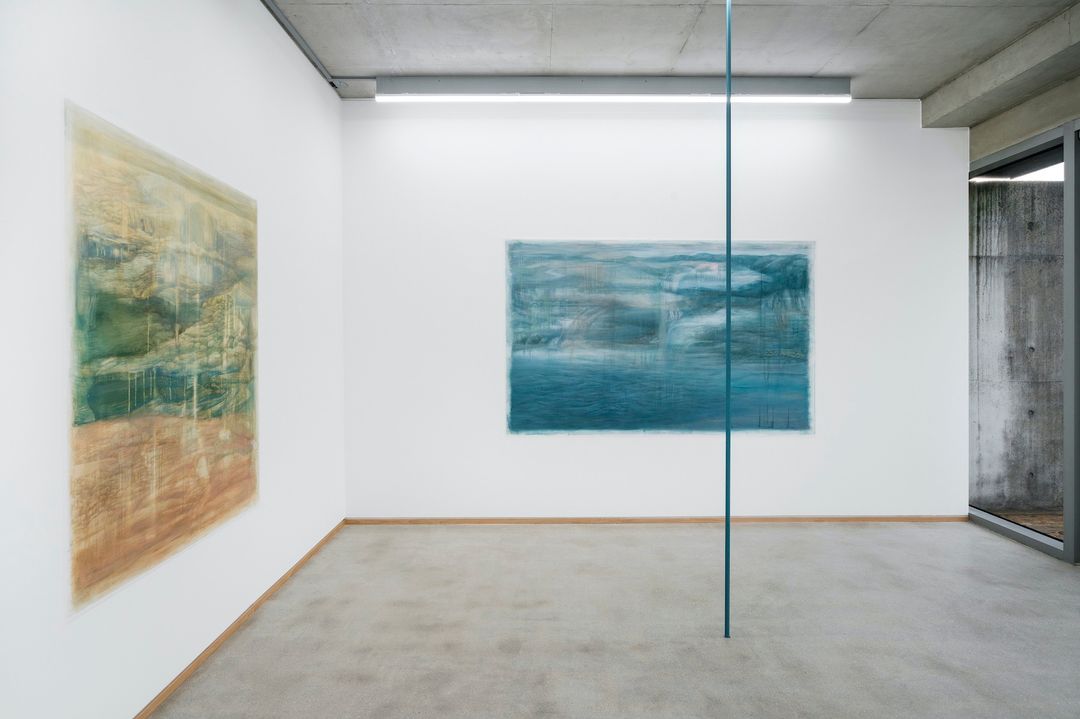
The landscapes Kim depicts in this exhibition look as if painted from a great
distance. It’s not a distant landscape one looks at through close-ups; rather,
objects can be observed up close while maintaining their distance in the larger
painting. Within the distant forest, each rock, tree and stream reveals itself,
and we can observe them in their diminutive, blurred form up close to the
surface. Around the landscape’s horizon, painted strokes integrate and
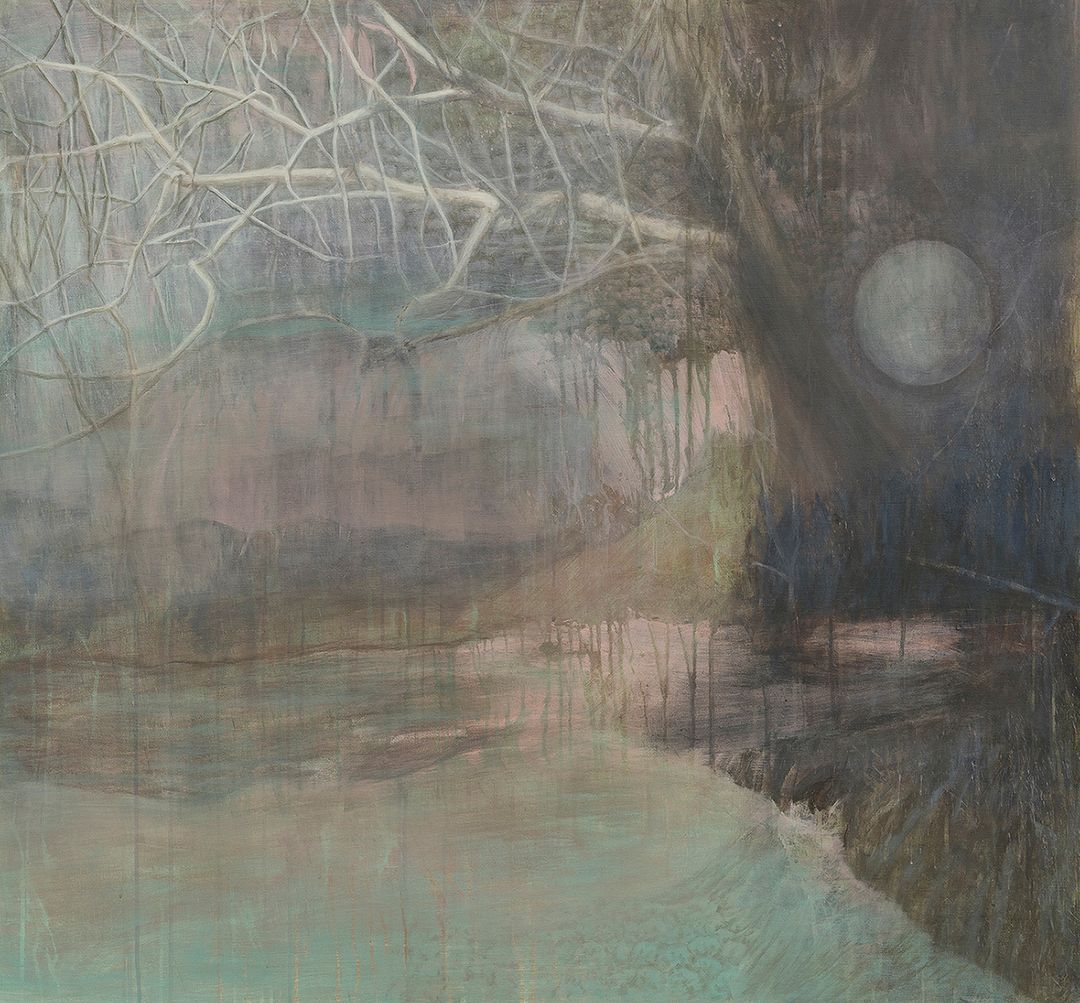
intersect, continuously layered to create a mysterious structure. Dust
has a faded facade akin to a fresco - the light washes of a brush accumulates
to create countless layers in the image. When the paint suddenly drips, leaving
a streak over the landscape, a new phenomenon manifests on the layers. In this
manner the landscape’s depth and layers become a record of the artist’s
physicality and mental state; the painting’s strata.
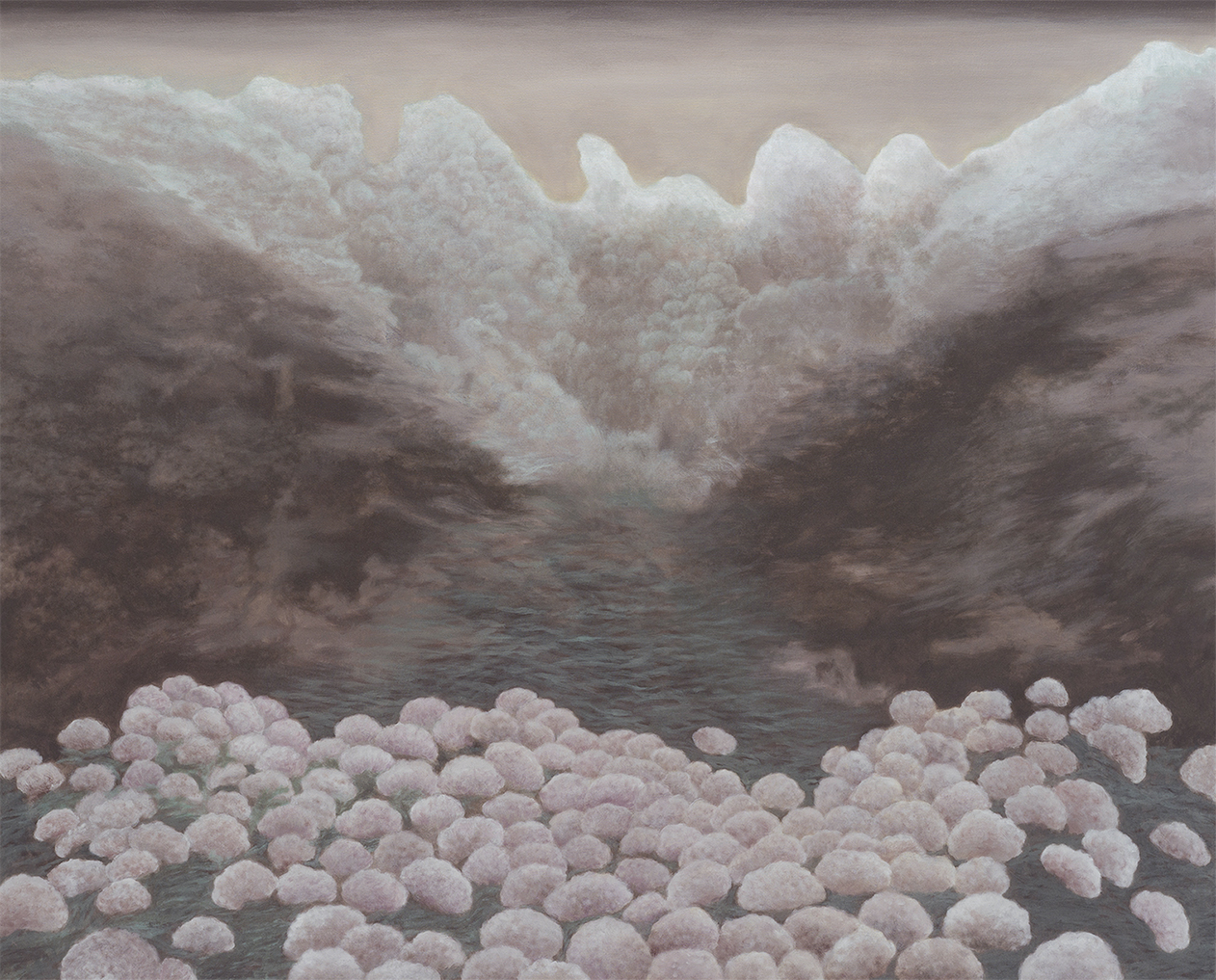
In this exhibition Kim’s landscapes are not a reproduction of previously
existing pasts - they are rather a result of a painter’s actions; the result of
a variety of colors and light. A relationship is formed between the artist and
their landscape, and in that process specific narratives or temporal
constraints become meaningless. In front of the artist’s landscapes, we
encounter a humid forest that feels both “far and near” on countless levels.
This is a poetic space where immeasurable depth and breadth merge with an inner
state of being - what the French philosopher Bachelard calls “the experience of
the forest.” It is a space that holds the time of a girl’s existence, a
paradoxical territory where the boundaries between front and back, side and top
dissolve, and one forest and multiple forests fluidly intertwine. Stirred by
the energy of multiple time periods, this space remains in constant motion,
dispersing with a tactile sensation that cannot be grasped, like fog.
To Sunny Kim, land is a means to showcase the paint’s materiality and the
reality it conveys. A painting is the result of an occurrence: it is the artist
who controls this occurrence in its cause and shape. It is a site that is
solely the artist’s, where they continuously reinforce their self-identity. It
is here where an artist can make sense of the space between ‘imagined time’ and
‘the present’. Sunny Kim enjoys working with the canvas when it is flat on the
wall, rather than stretched on a frame. This is in part due to the
technicalities of moving between South Korea and the U.S, but it is also an
effort to make the painting into an extension of the room.
This duality points to the painter’s gesture, which can be seen through
contrasting trajectories of motion breaking the horizon line. The landscape’s
narrative, created by the interplay between the layers of terrain and its
vertical interventions, may be a grasp at an internal reverberation in the
expanse of time and space. The ‘pole’, which has begun to make an appearance in
Kim’s work, may be a cartographic marker for where those echoes lie. It acts as
a makeshift bridge between the space of existence and a landscape beyond. In
Kim’s landscapes - the world of the other side - the girls in uniform walk by,
their voices burying themselves into the terrain, seeding a forest. Now, as a
complete present and distant terrain, the landscapes echo before us.