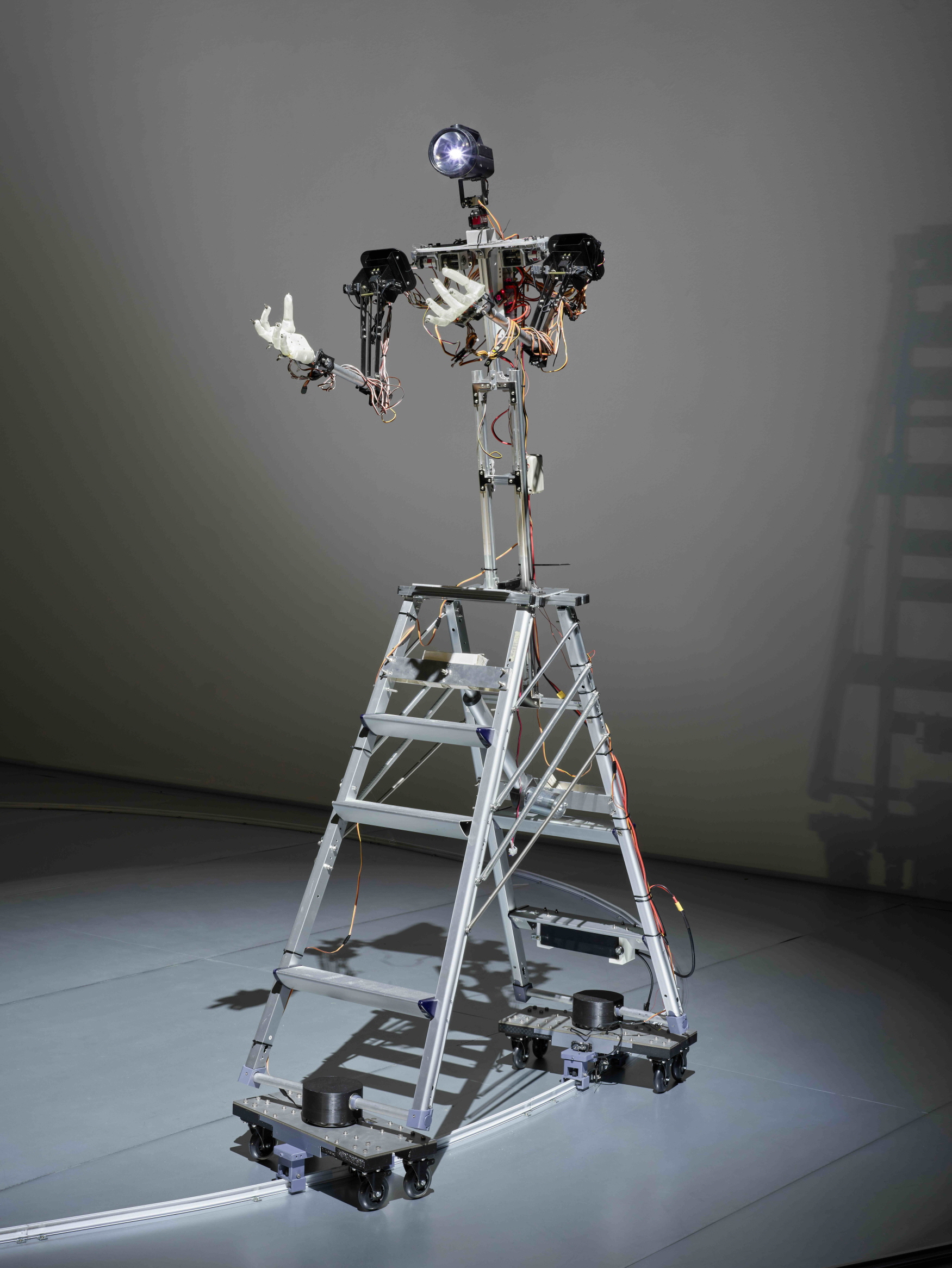
Lyrics of Cheap Android is
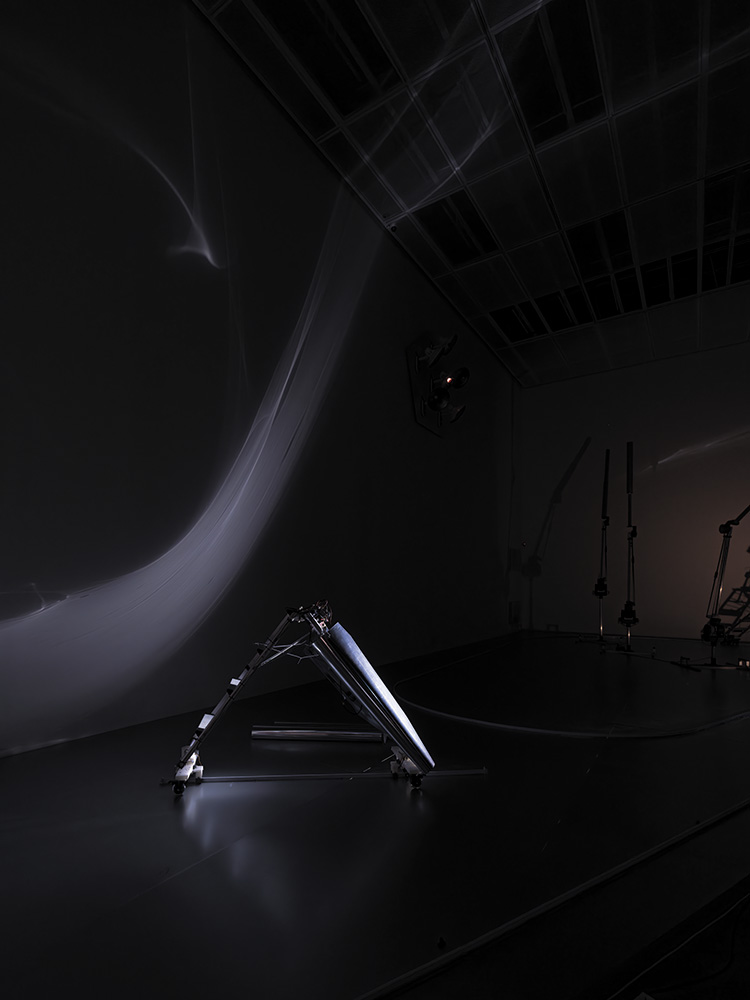
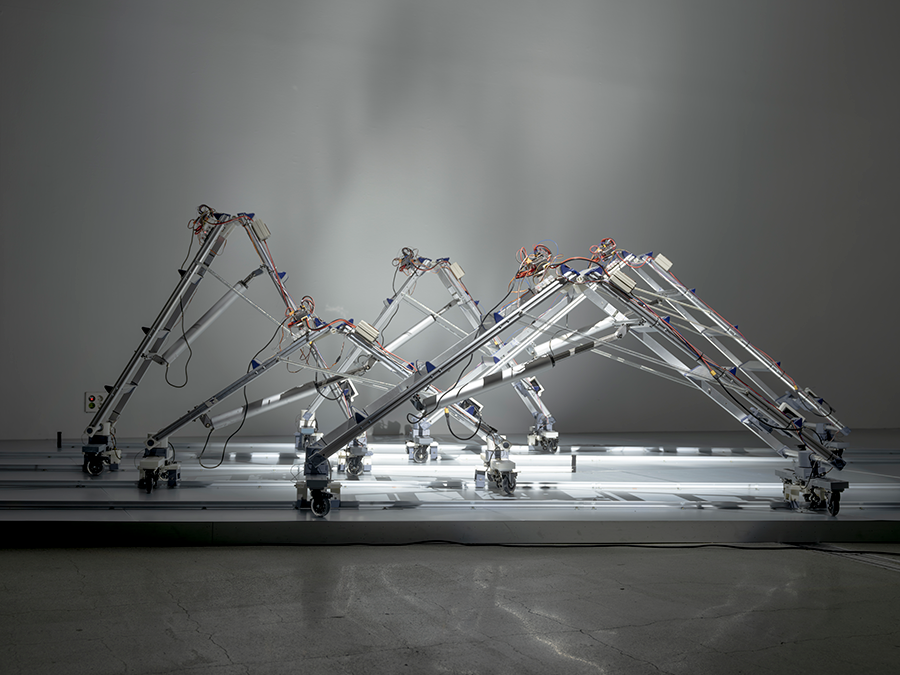
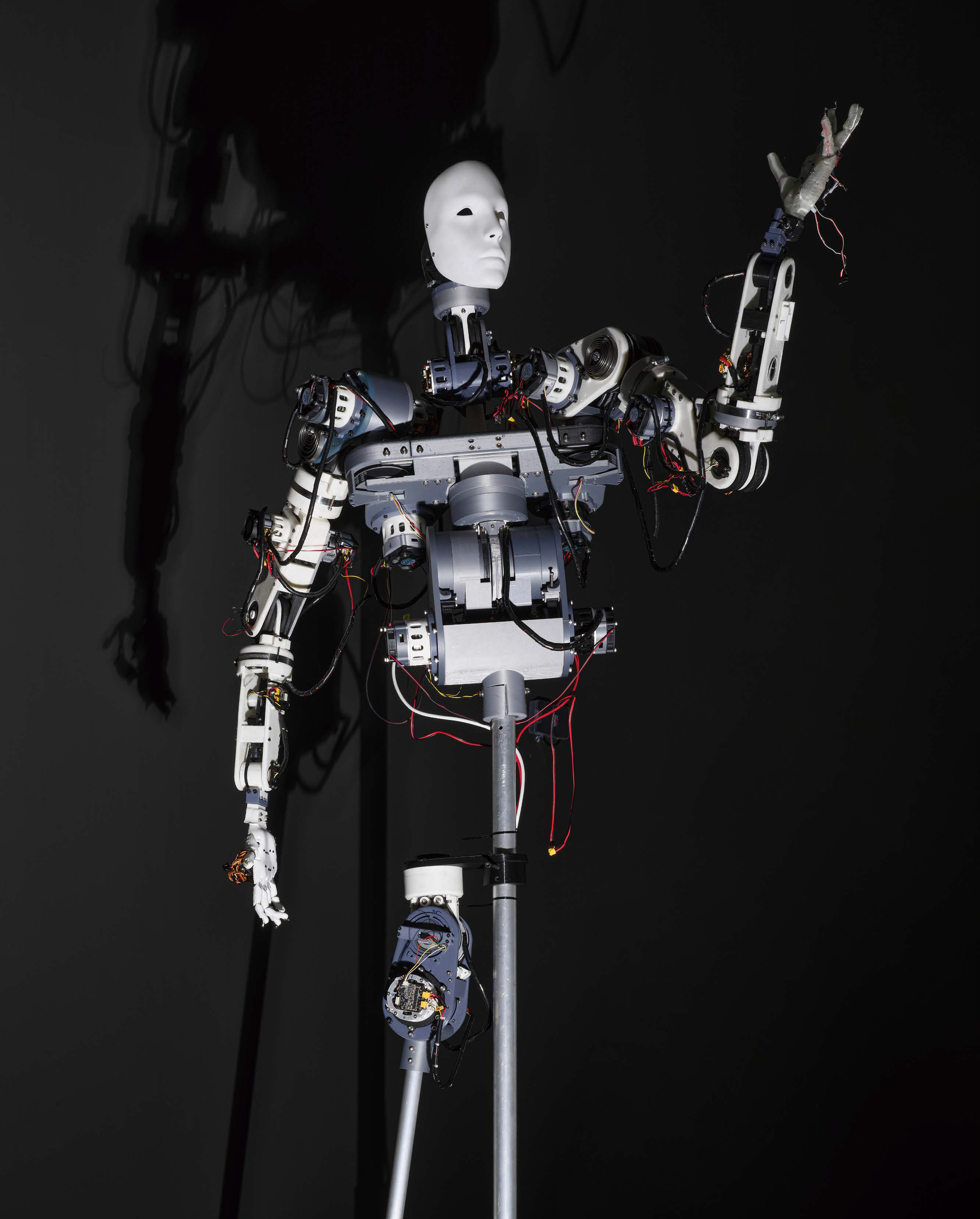
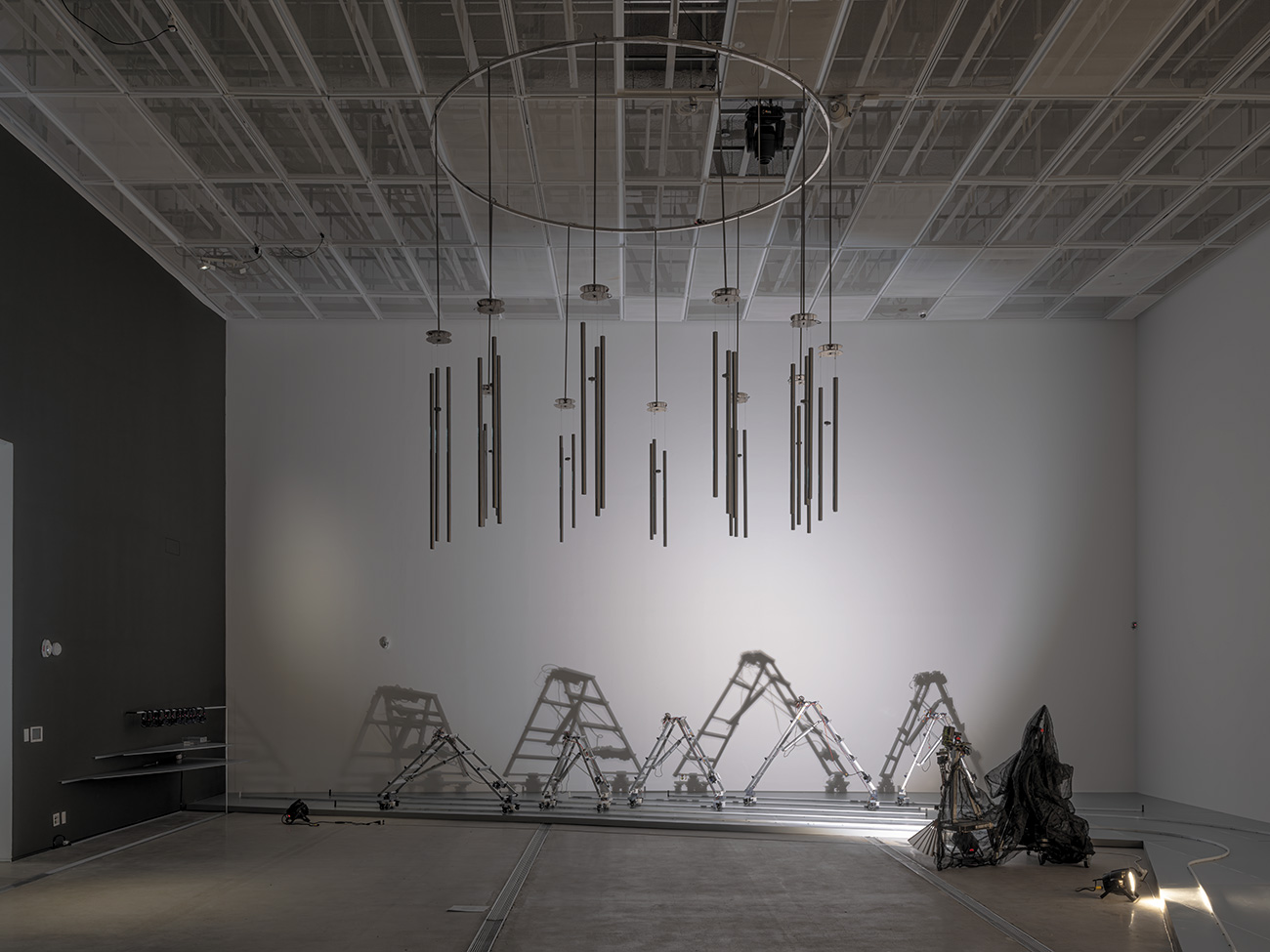
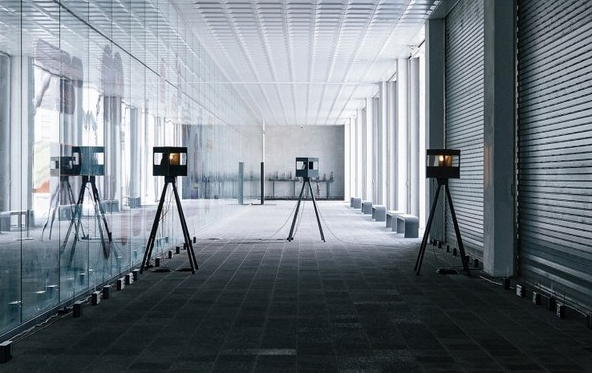
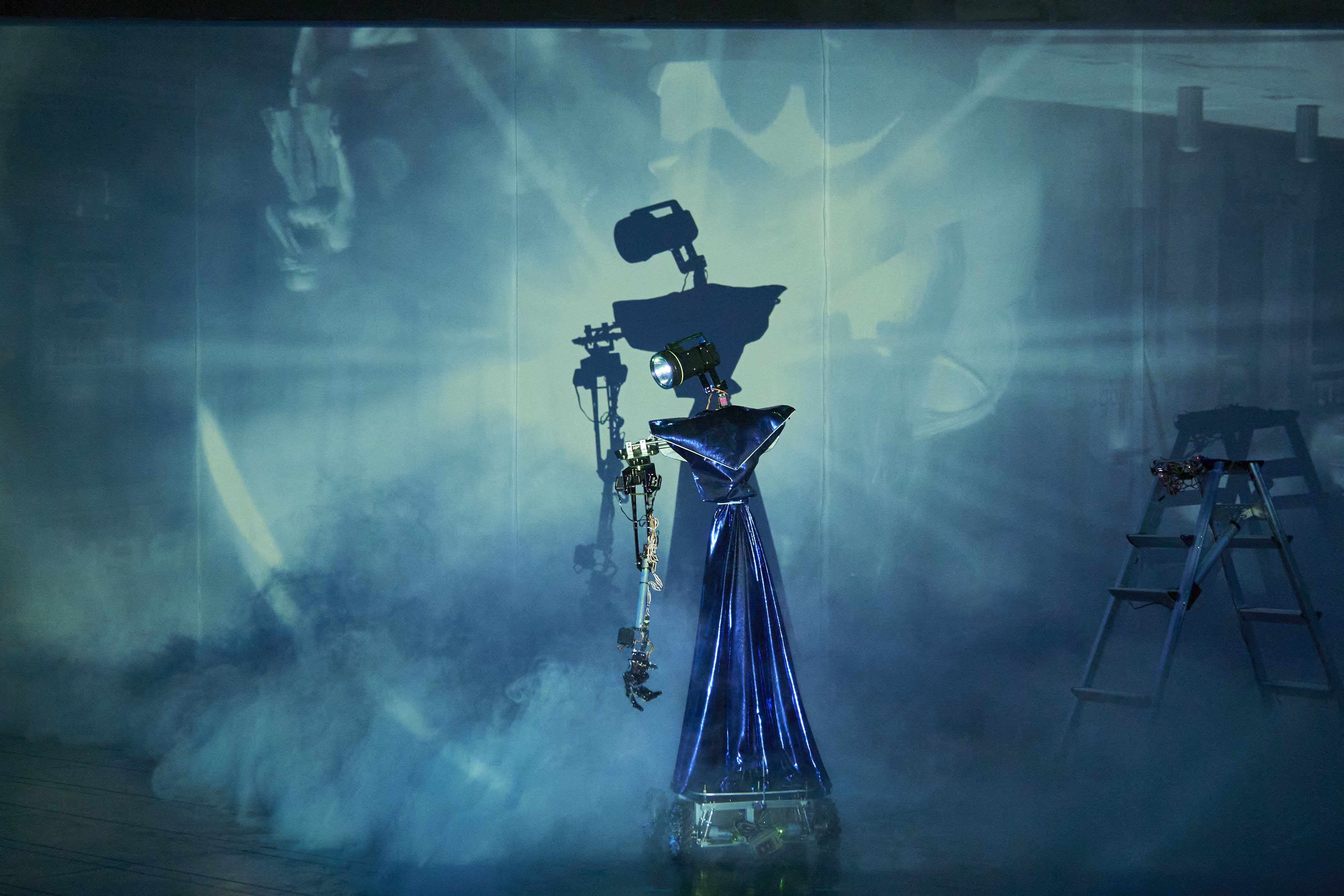
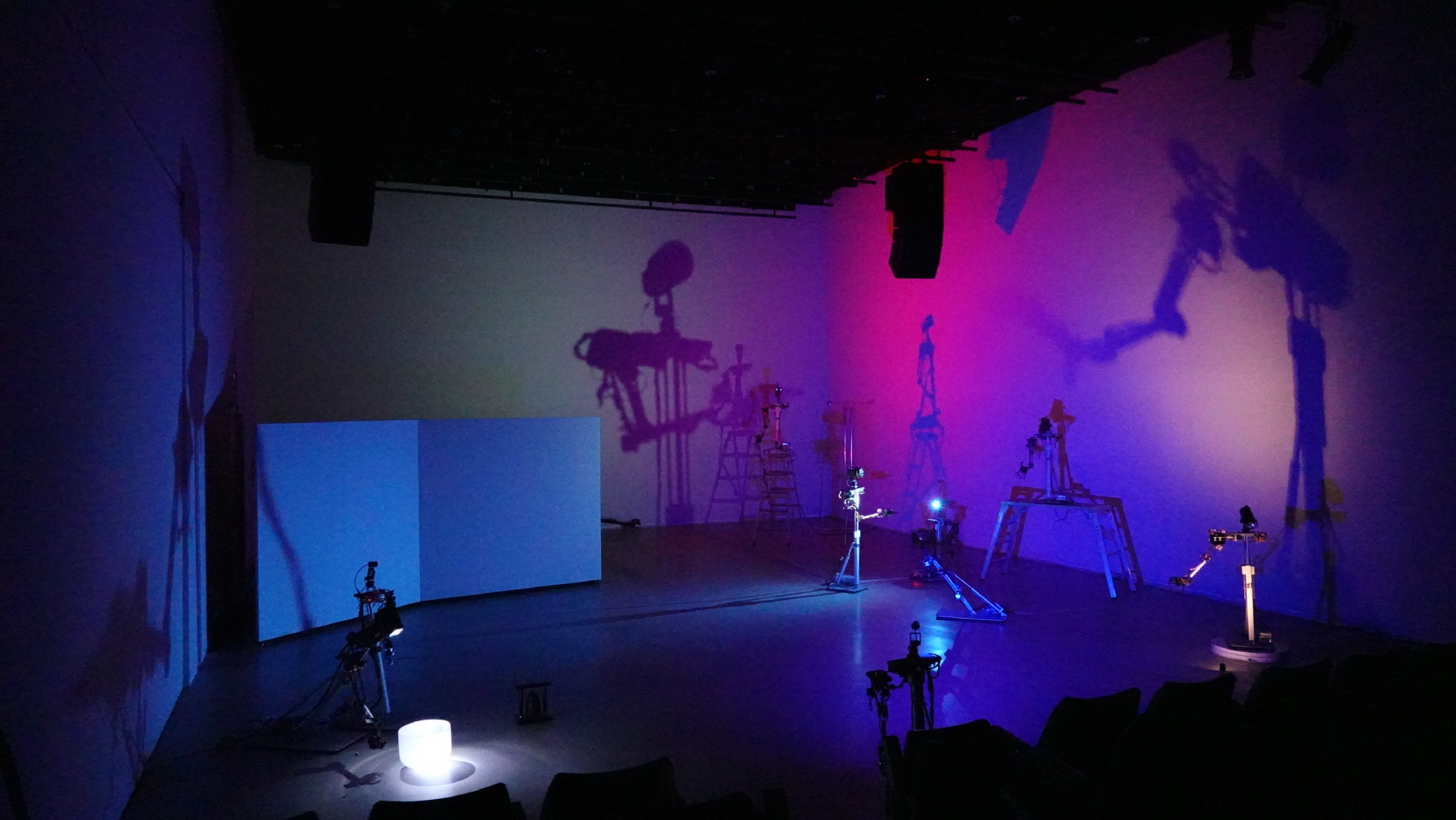
a shadow play performed by twelve humanoid robots, a number evoking the figure
“12” that symbolizes a complete cycle. Byungjun Kwon gives each robot a name
and assigns roles such as a vagrant, a street musician, and a spirit of the
night. When the play begins, Dro (the vagrant), who has been standing with his
head bowed on a turntable, awakens and looks around at the audience. Oat and
Philip (street musicians) trade rumors and begin to keep time together. Soon
Dro turns the turntable to 3D-scan himself and projects the image. Gazing at
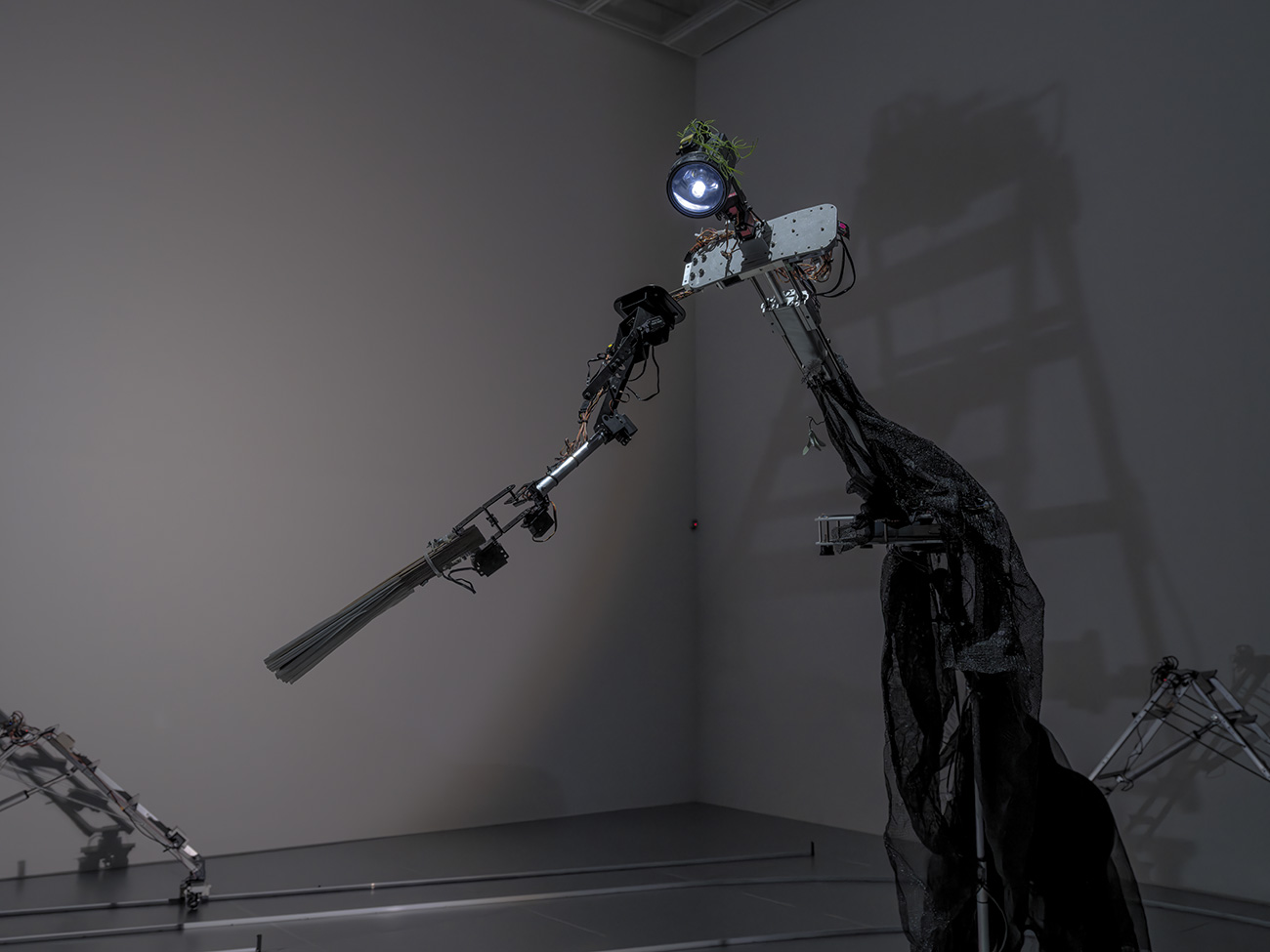
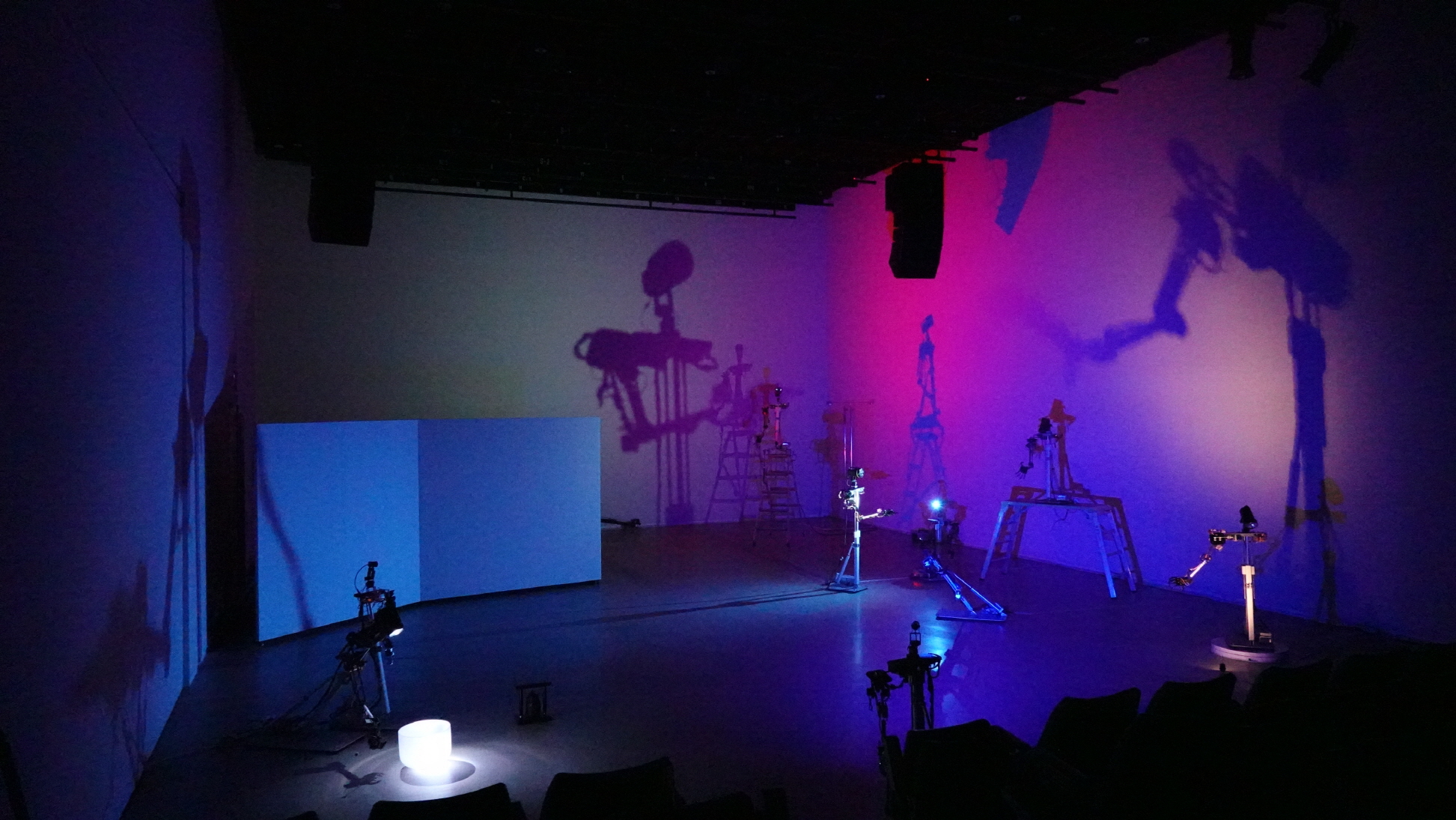
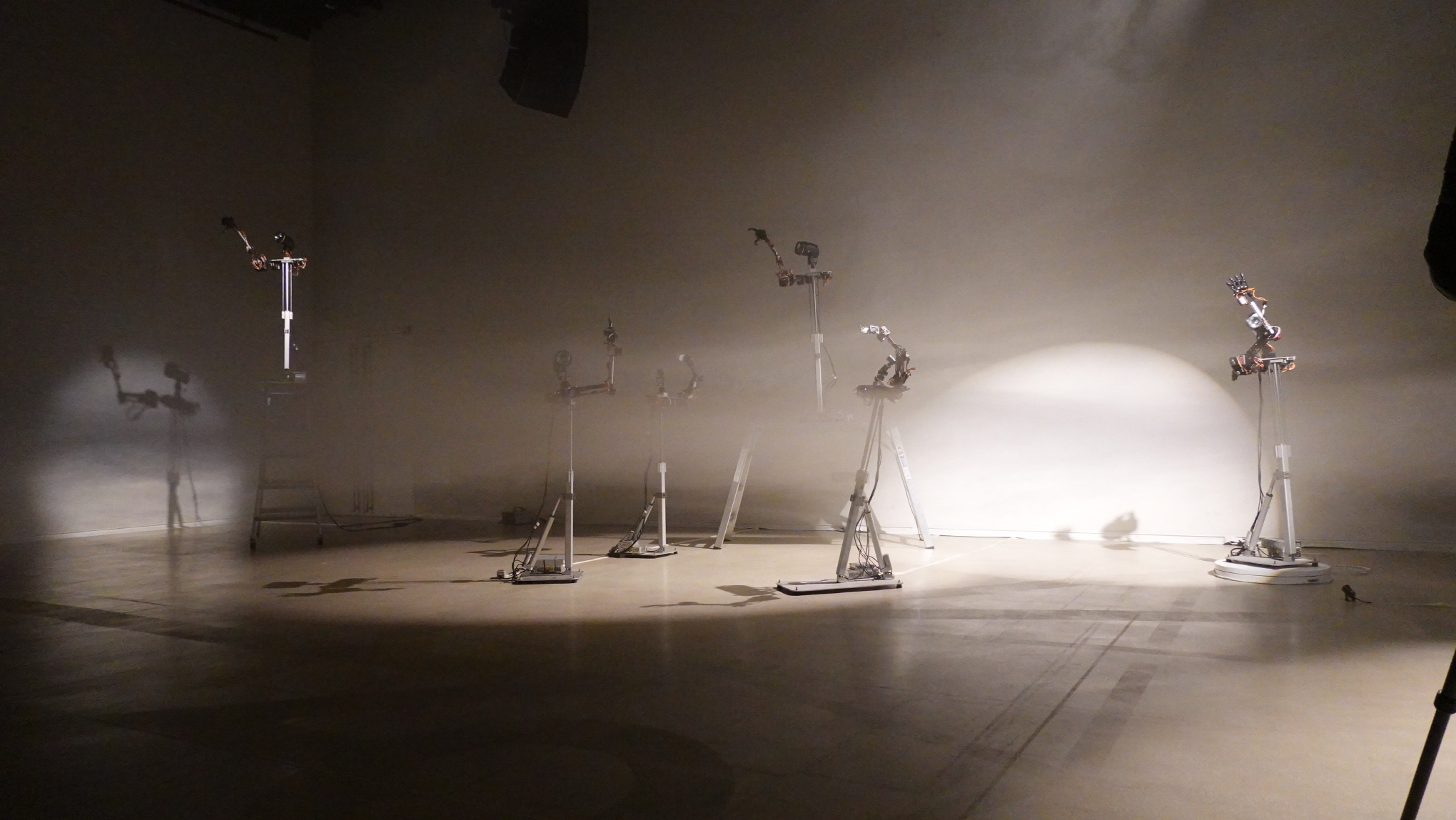
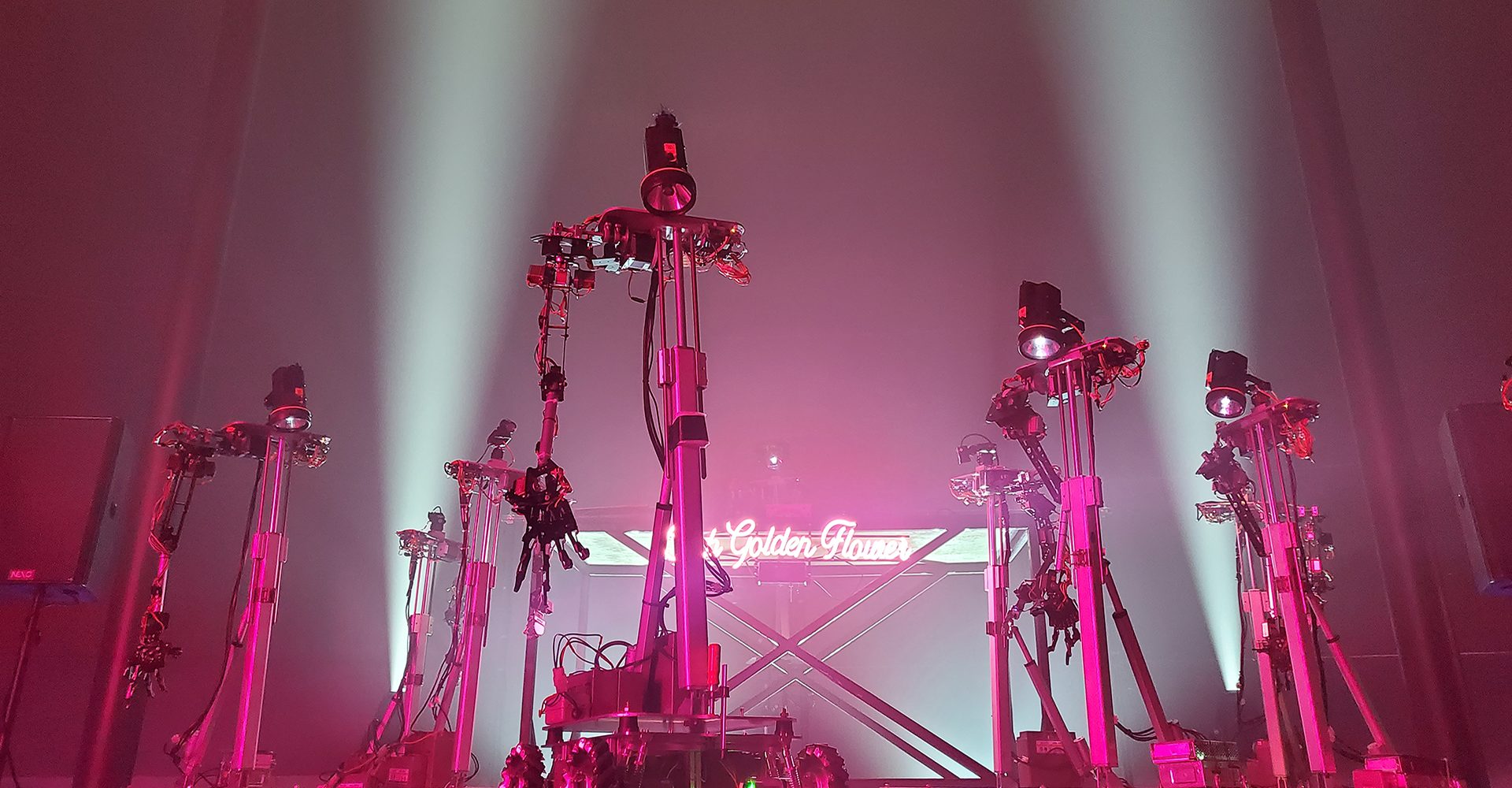
his projected self, Dro starts to sing. The twelve one-armed robots shine light
on themselves and one another, dancing and singing together.
At a time when science and technology have
become a new source of power, Kwon poses a paradoxical, satirical critique
through the figure of the “dancing robot.” His robots seem uninterested in
realizing the robot’s native “high productivity.” Following the gaze of light
that collapses into shadow, human-like robots twitch into motion. The rough,
ungainly movements of asymmetrical, one-armed robots, through superimposition,
distortion, and compositing of shadows, induce in us an illusory “human
familiarity.” His robots devote themselves to “useless” motions—merely
reflecting and looking at themselves, over and over.
The propaganda line that “science and
technology enrich human life, and art contributes to that innovation” is
accepted as if it were a “universal civilizational change” not only by
politicians and entrepreneurs but even by artists. Declarations proclaim that
the “Fourth Industrial Revolution,” led by creative innovators, has arrived.
Yet the reality behind this is ignored or concealed. The monopolies of
multinational IT corporations strengthen surveillance and control over
citizens, and reinforce imperial and late-capitalist power in the form of
divisions between the information-rich and the information-poor.
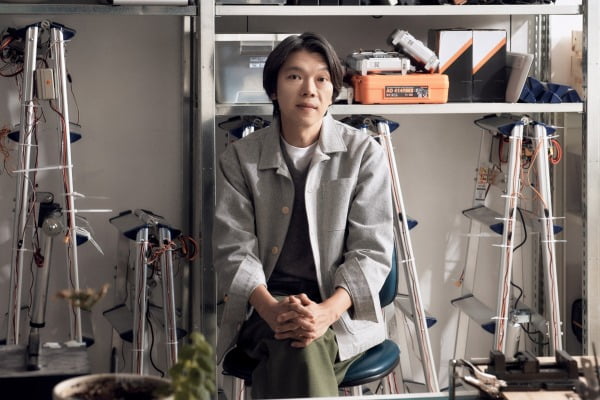
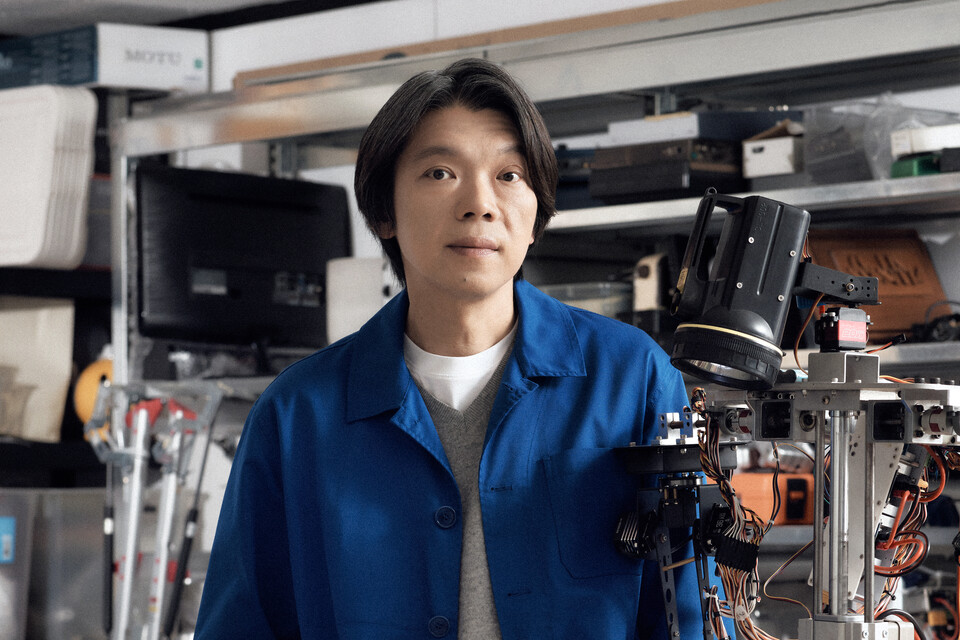
Kwon explains that the twelve robots were
modeled on the colleagues who shared the Hongdae club scene in the 1990s and on
the people drifting around Seoul Station Plaza. In this work the robots are not
lower, slave-like beings compared to humans; rather, they become “the
marginalized” themselves. Watching robots shine light on each other and dance
and sing within limited gestures, the artist invites us to face our own
marginalized selves.
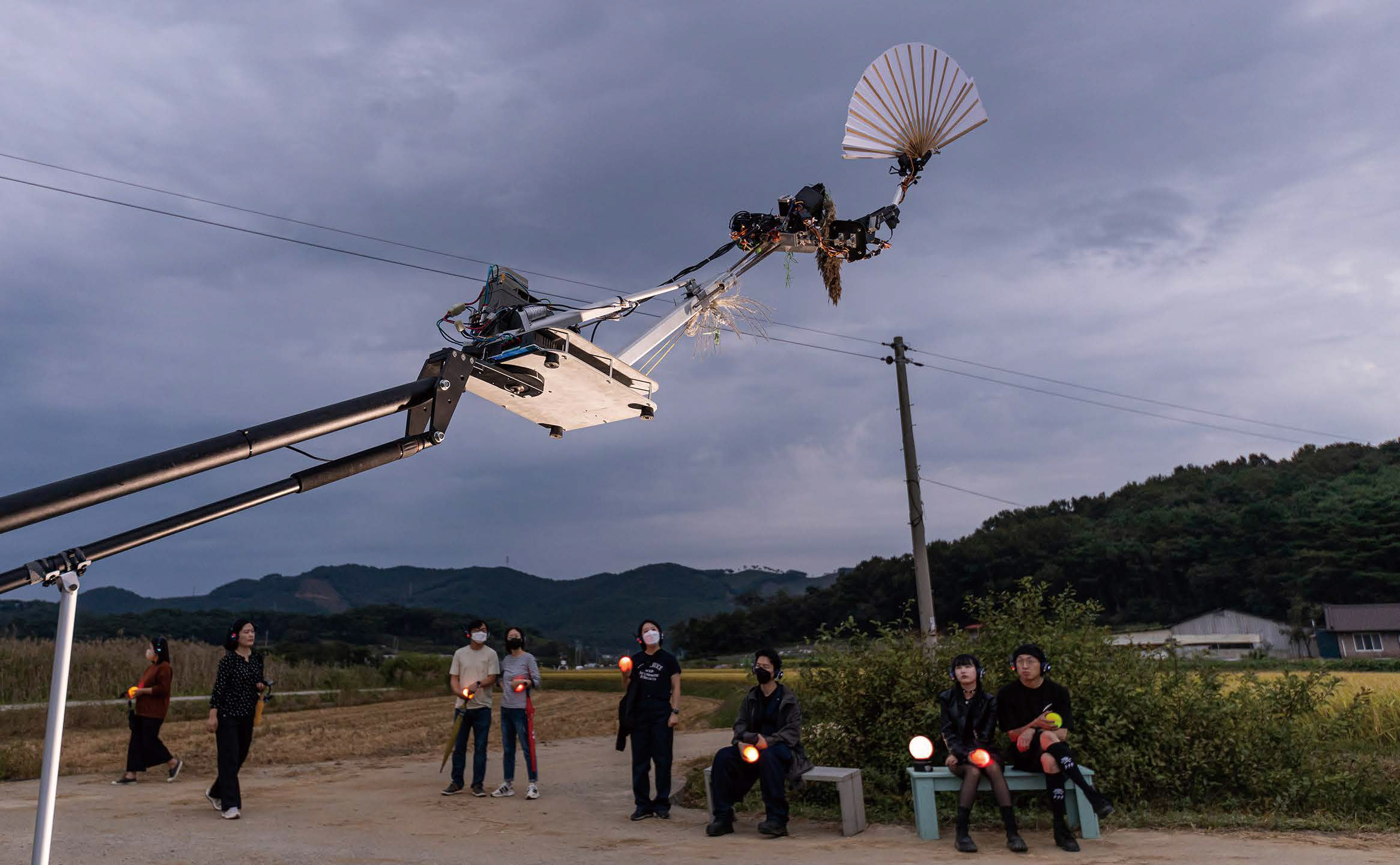
At a time when “the Fourth Industrial Revolution” is being
advertised in terms such as artificial intelligence, machine learning, and
automation, this also becomes the artist’s own response: an art practice based
on handcraft and traditional low-tech. First introduced at LOOP in 2017, Kwon’s
robot performance now, in this play, attempts formal experiments and narrative
expansion together with a five-member creative team. This method of
production—collaboration and solidarity—is likewise a survival strategy for
independent entities that refuse subordination to profit-seeking capital,
rather than the corporate, tech-industrial mode supported by big capital.