My
grandmother taught piano. As a child I’d go to her house after school with
neighborhood friends and take turns at the piano for thirty minutes each. I was
eager to play difficult, impressive pieces, but I couldn’t bear repeating the
same études over and over. I’d play three times instead of five, twice instead
of three, and spend the remaining practice time squirming. I often ran away
from practice, so my grandmother would send my older brother to fetch me. I
grew increasingly afraid of playing the piano and lost interest in handling
instruments.
In high school, I thought playing guitar was cool. But I lacked
the resolve or passion to develop technique and was more drawn to writing than
musical expression—the endless choices and arrangements, especially of style,
seduced me. Had I known then that music was not so different, I might have had
more fun with it. As it stands, I can’t really read music beyond a basic level,
let alone play an instrument. Music became one of the things I know least and
do worst—in other words, it was long, for me, an overly professionalized
domain.
Studying
art in college and following friends to improvised-music gigs in Seoul, I felt
a kind of liberation. More precisely, it excised my inferiority complex about
music. Having experienced new criteria by which sound becomes music; music as a
method of assembling alternative systems; an aesthetic stance oriented toward
phenomenological experience—music turned from something to avoid into a matter
of choice following subjective reconceptualization, a matter of enjoyment, a
question of how far to push. Contemporary art, across domains, constantly
reconceptualizes and redefines itself in motion; one role of criticism is to
track how an artist, a work, or the systems they inhabit conceptualize and
enact art itself.
Recently,
with colleagues in band music and noise improvisation, I began a project called
“sonic fiction.” We adopted the concept of music to point toward a ghostly,
invisible world and to think through how to arrange musical elements so that
pointing succeeds. Put another way, we aim—via re-arranging elements and
reinventing the concept of music—to point to that ghostly, invisible world. At
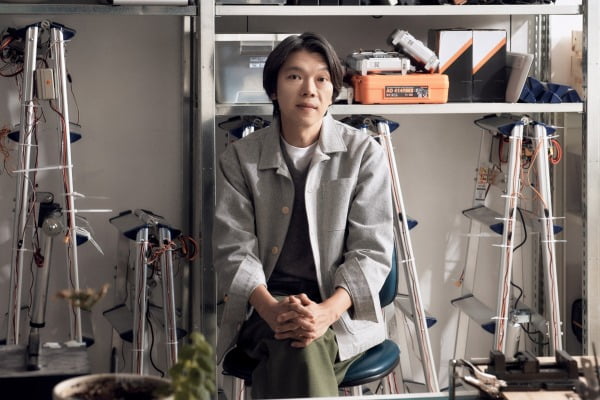
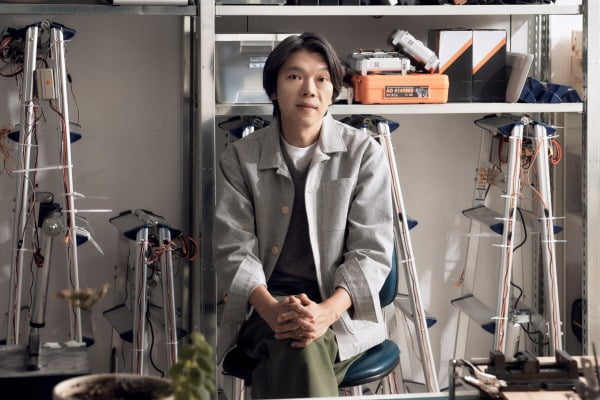
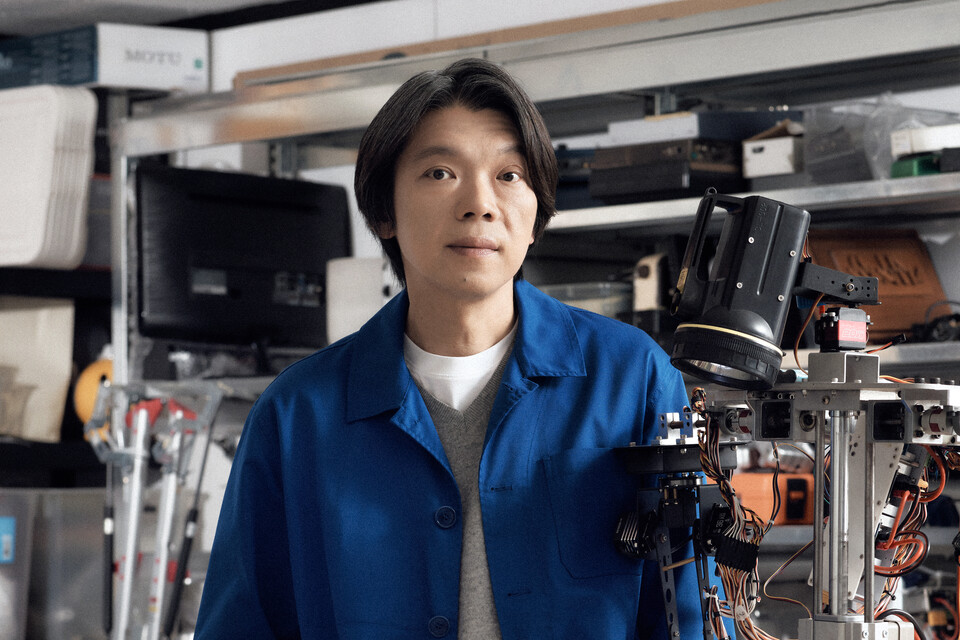
the project’s outset we invited artist Byungjun Kwon to speak about his musical
practice over the years. We wanted to know concretely what filled his artistic
practice—ever searching for new sounds, expanding the concept of music from a
starting point in band work—and what its meaning might be. Of particular
interest was his ongoing invention of new instruments.
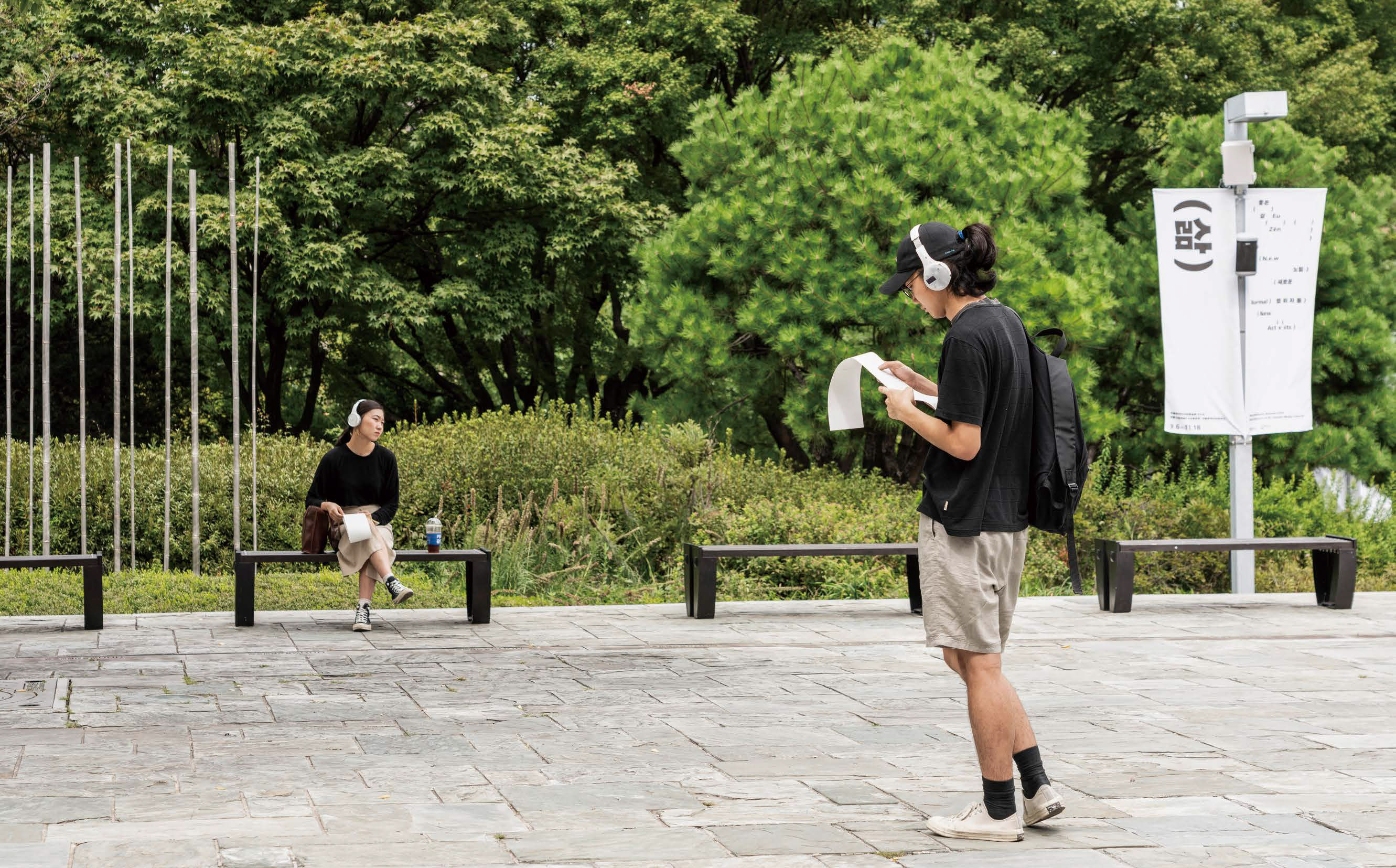
When
we visited Kwon’s studio for a preliminary meeting, he was struggling with a
run-of-the-mill pair of consumer headphones. Those headphones were one of his
instruments-in-progress: a kind of interactive instrument that responded to
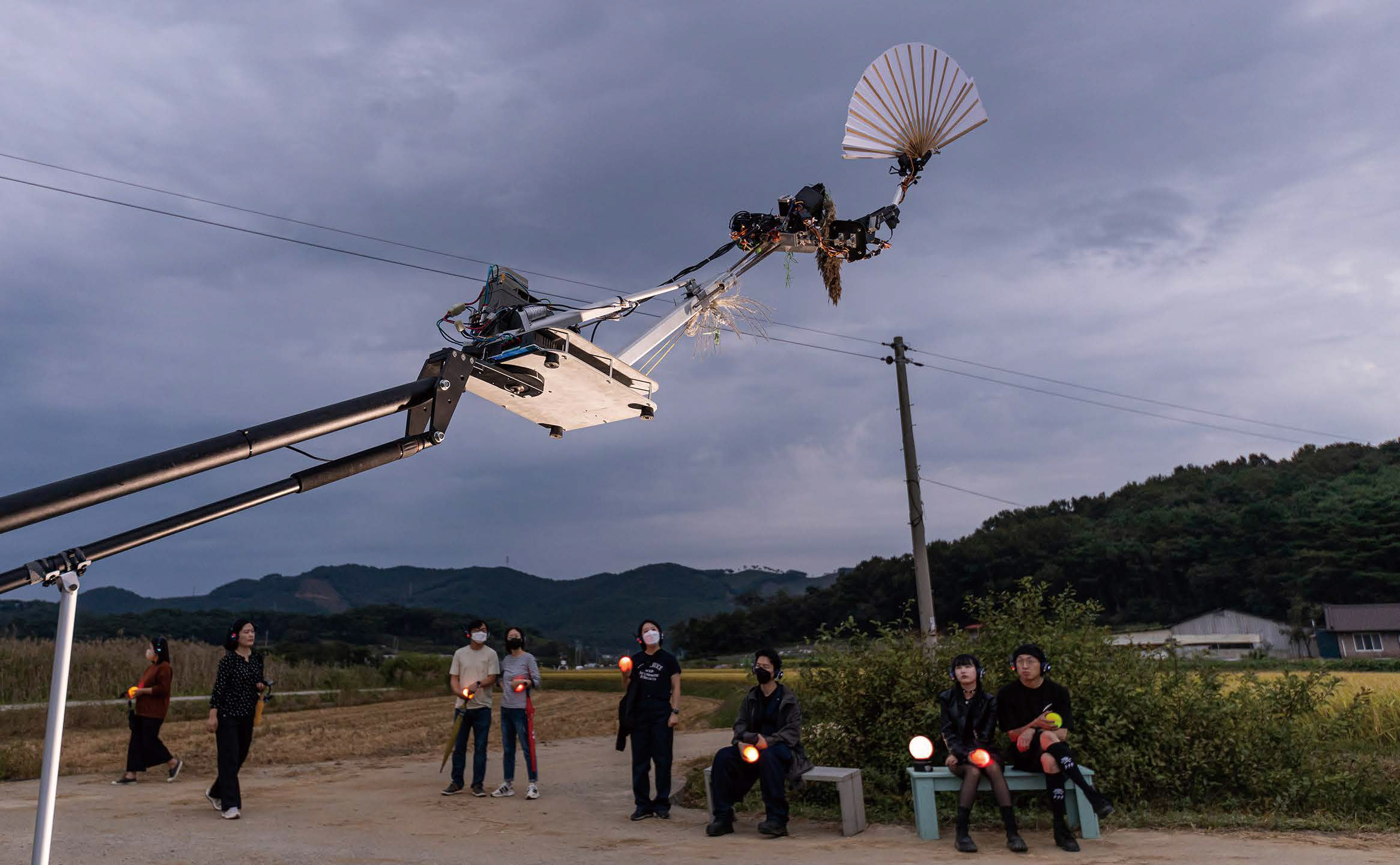
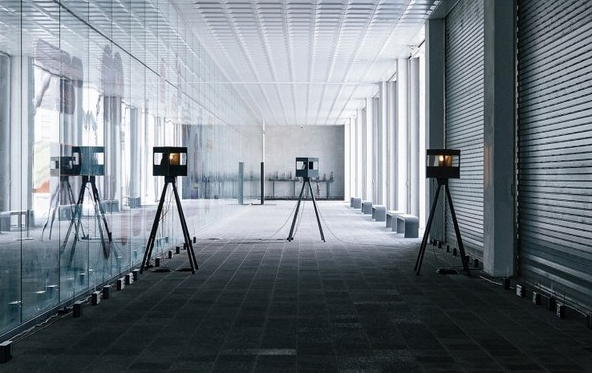
other headphones. In a large space, multiple participants wear the headphones
and move around; when they encounter others, the sounds from their respective
devices mix to create a new sound—up to three people can be mixed, he said, and
he spoke of the technical difficulties in making the instrument function
properly.
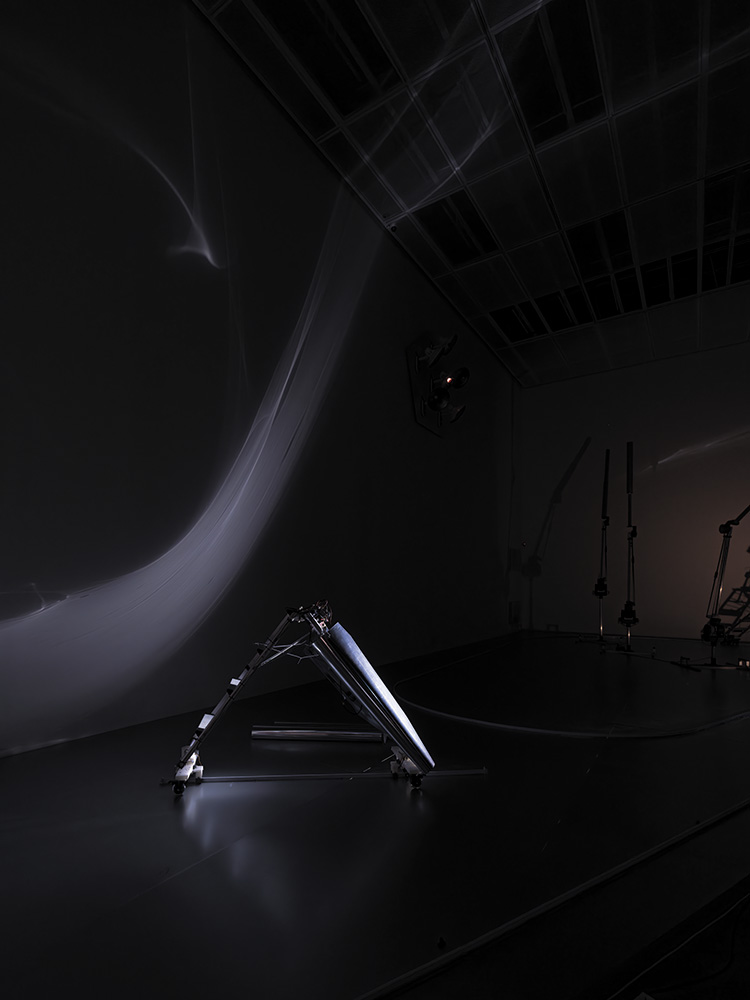
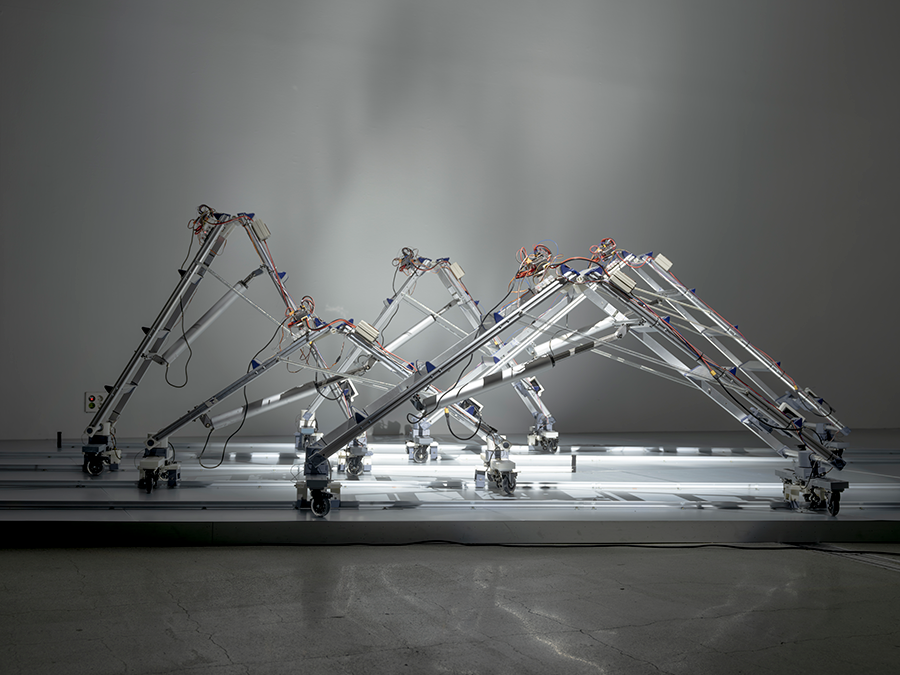
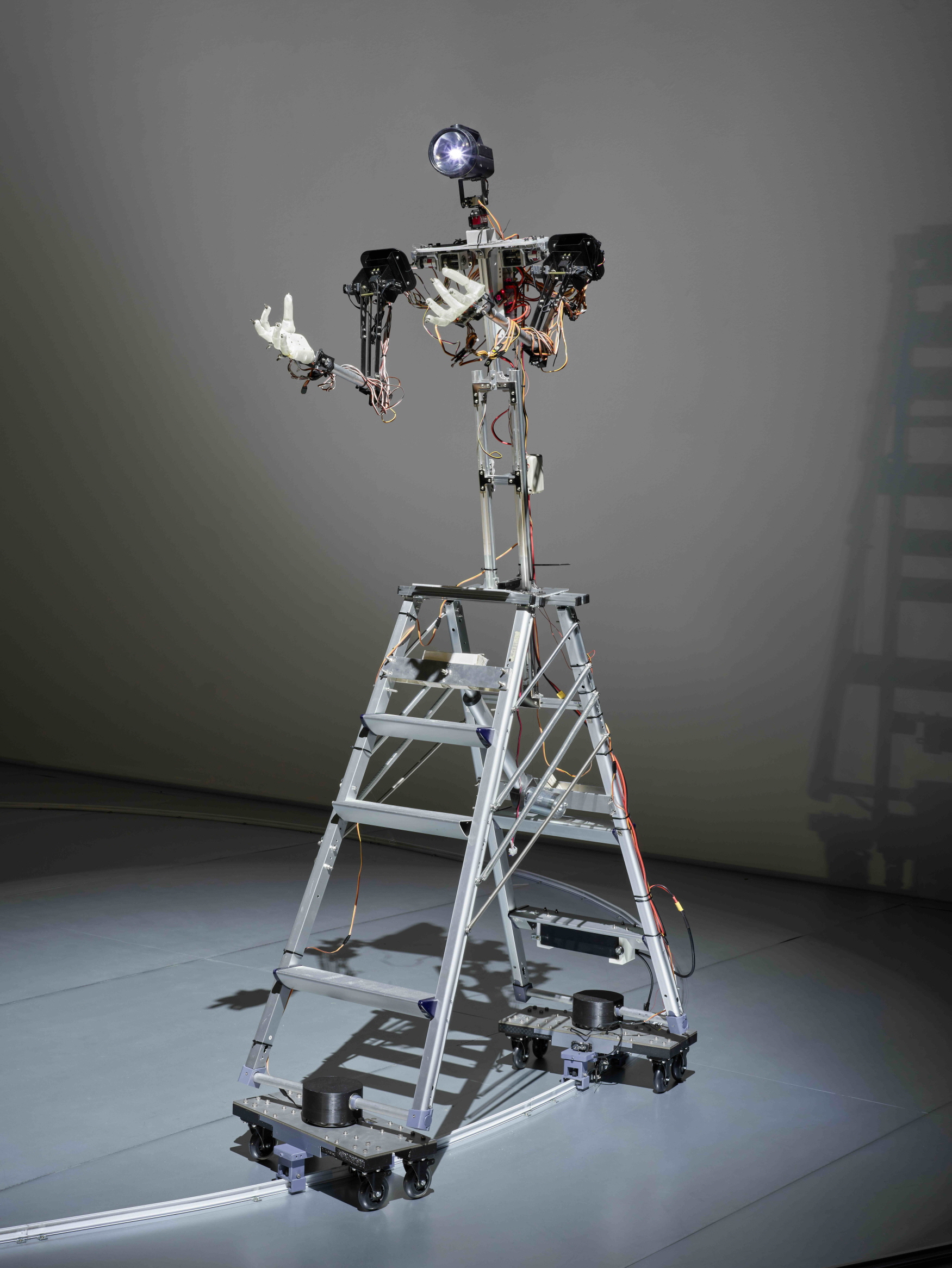
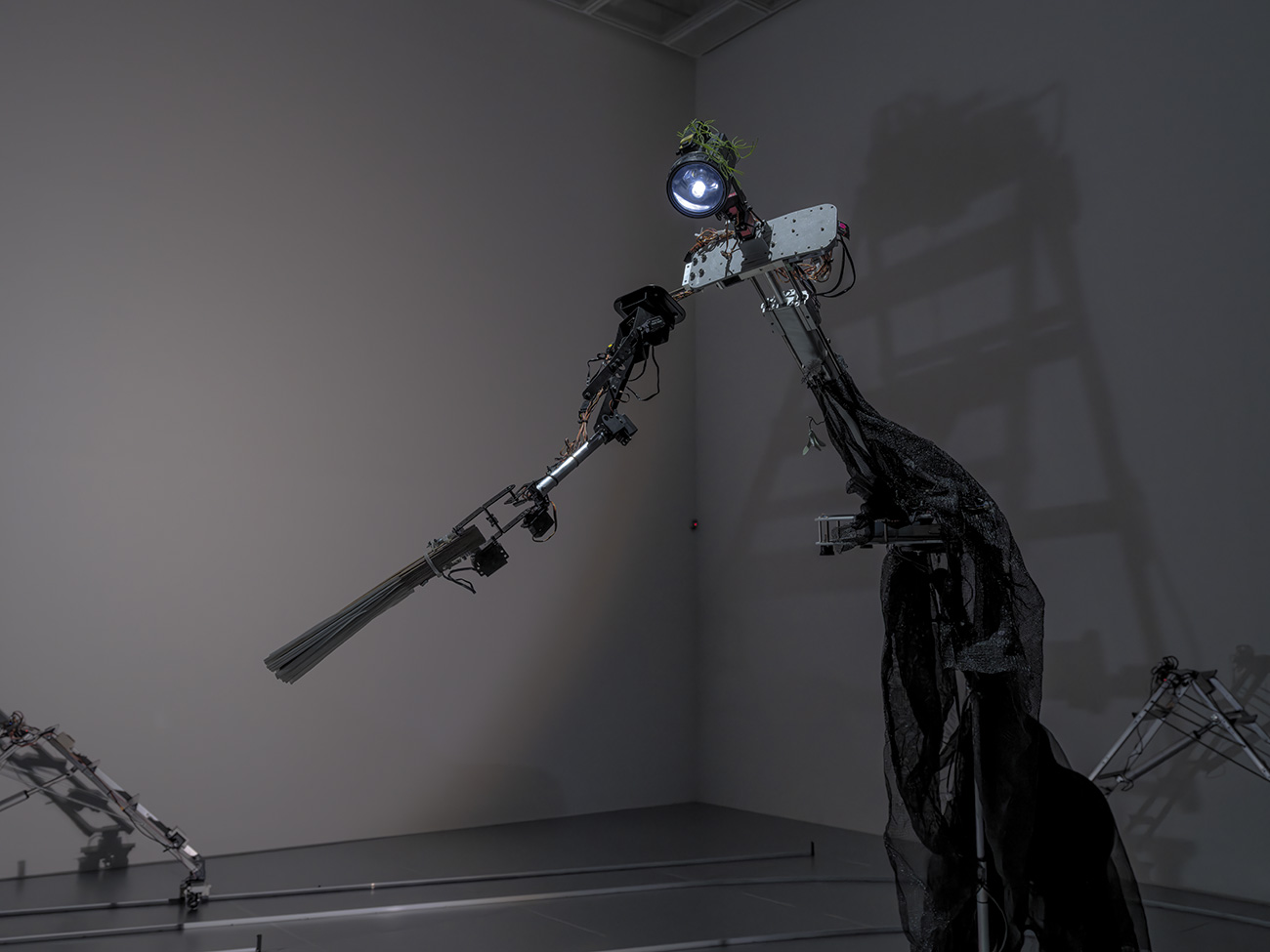
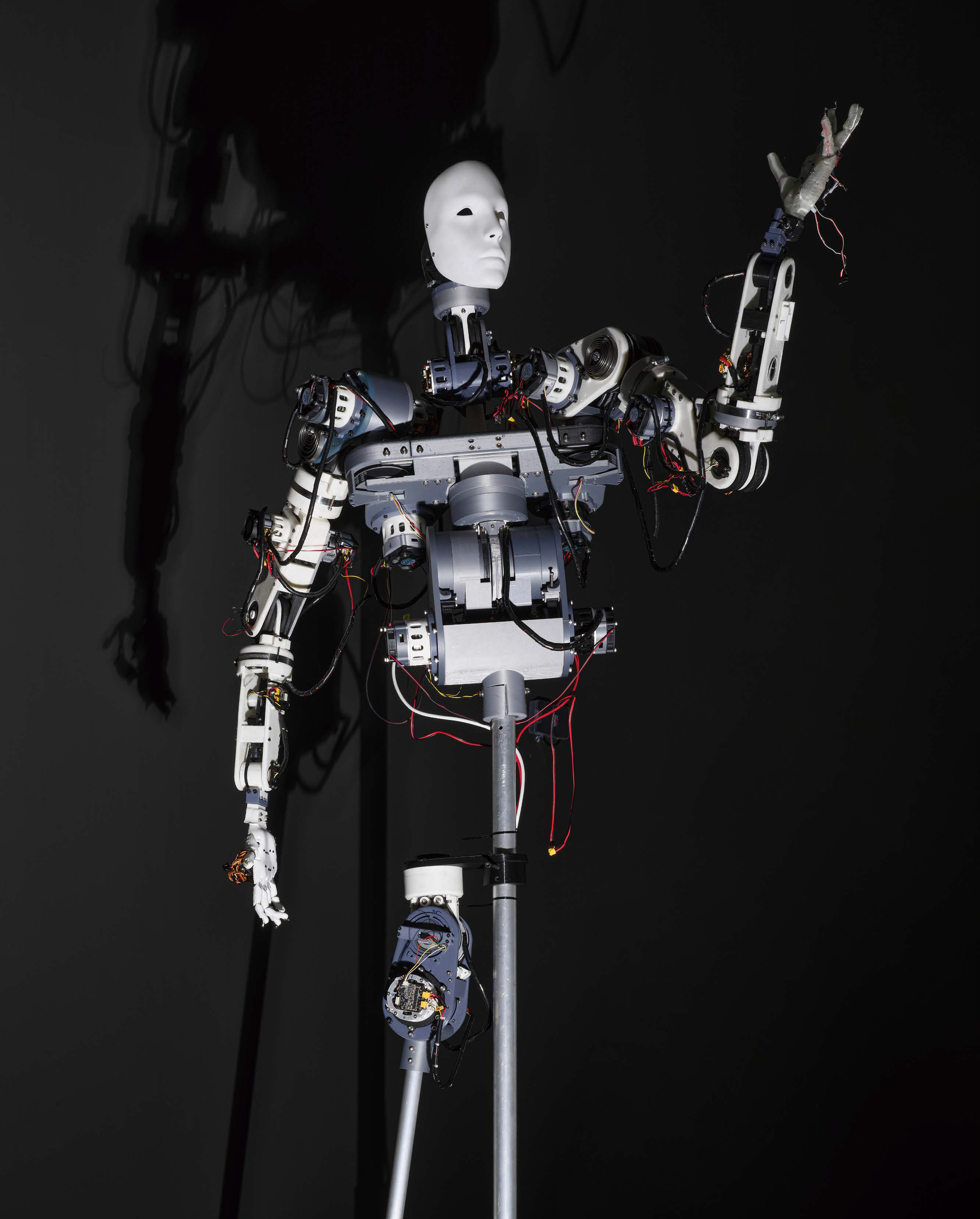
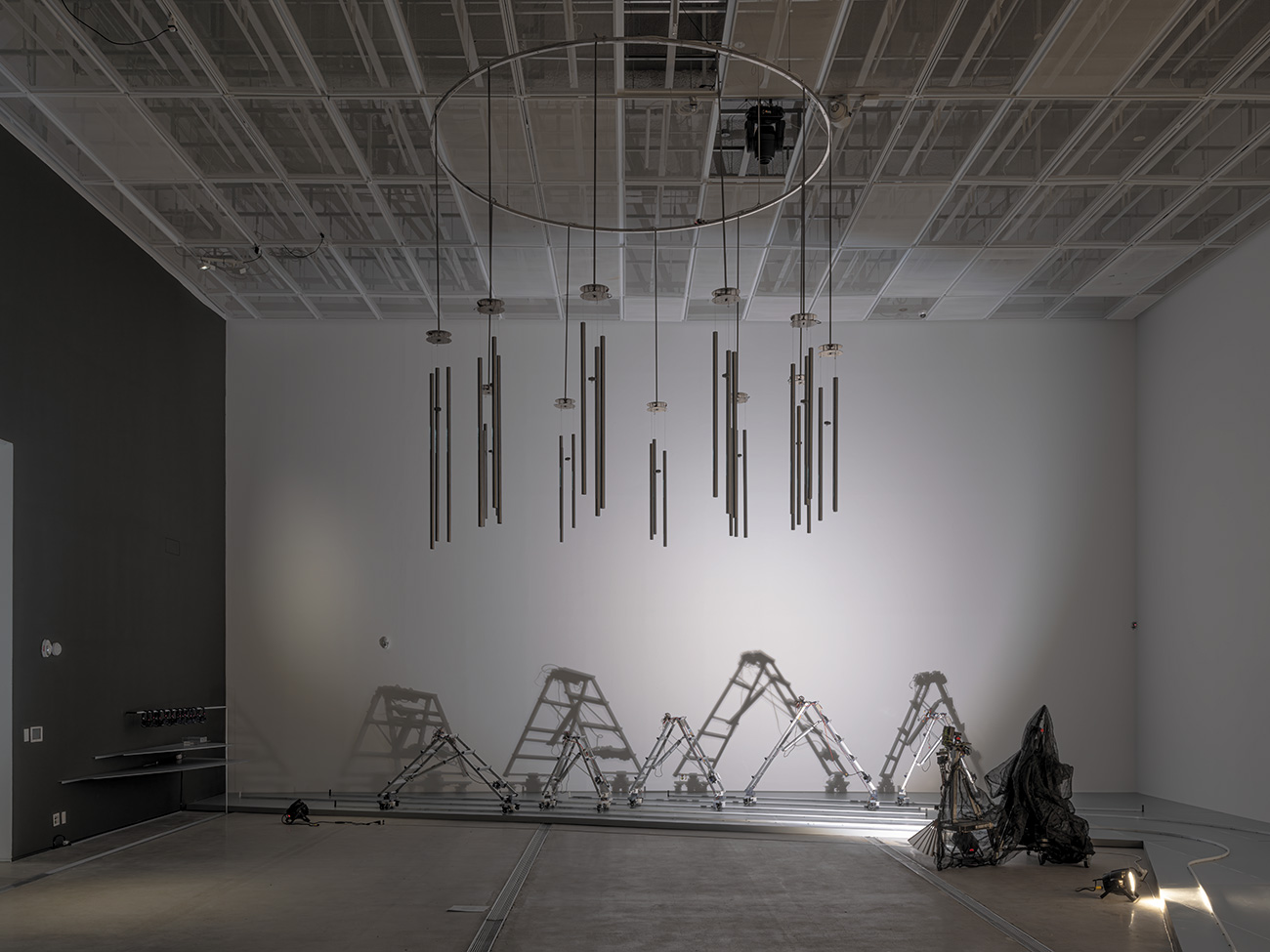
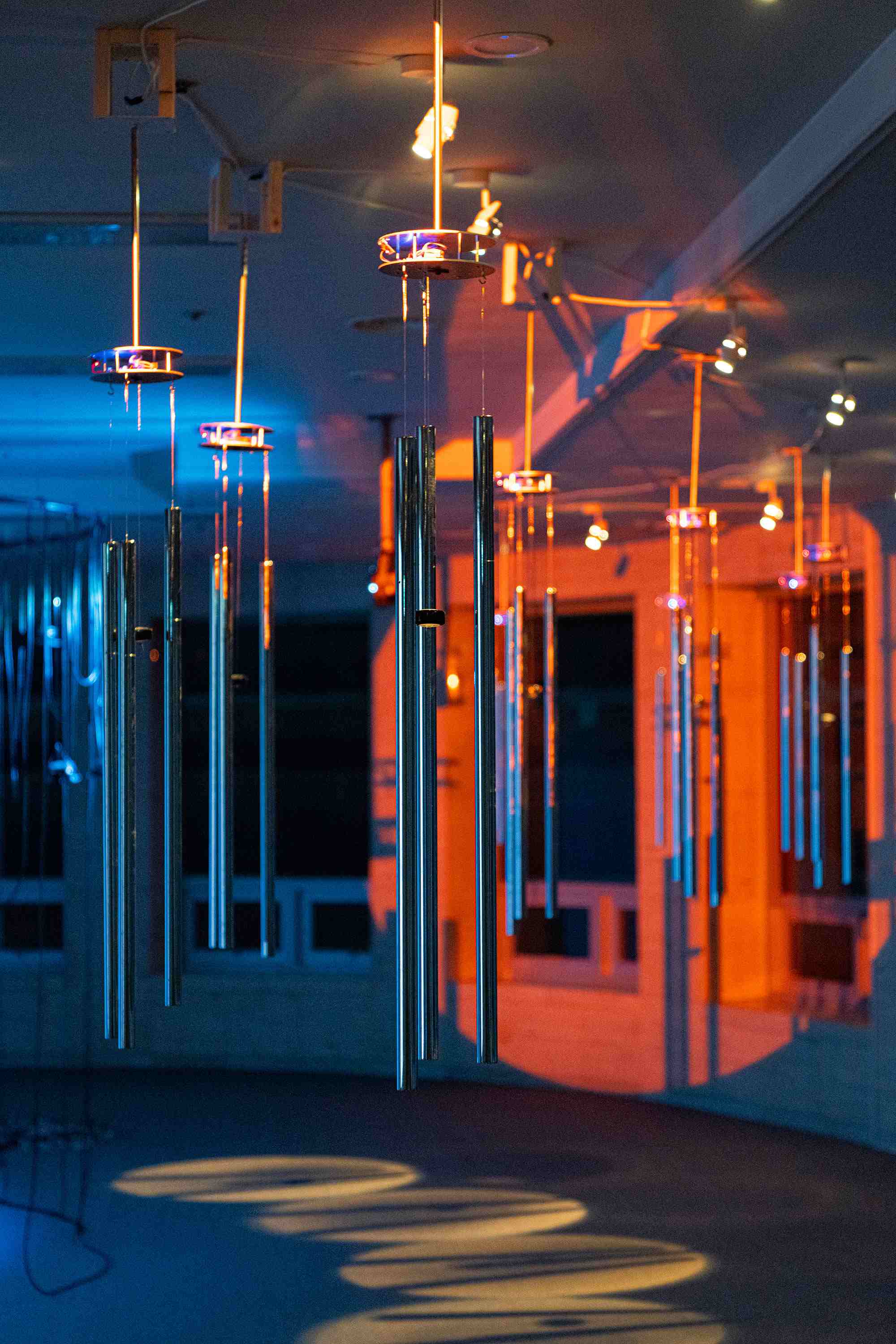
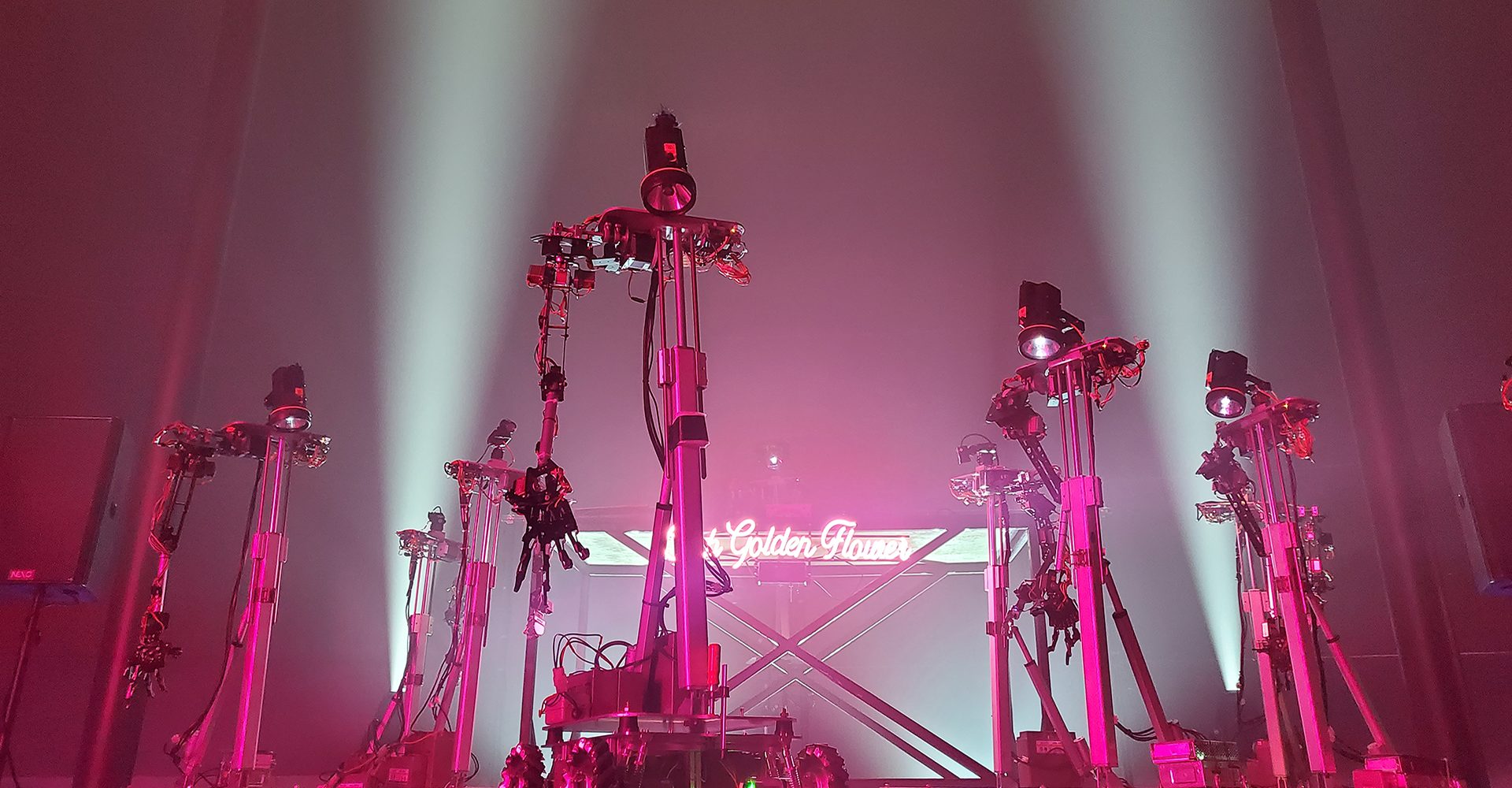
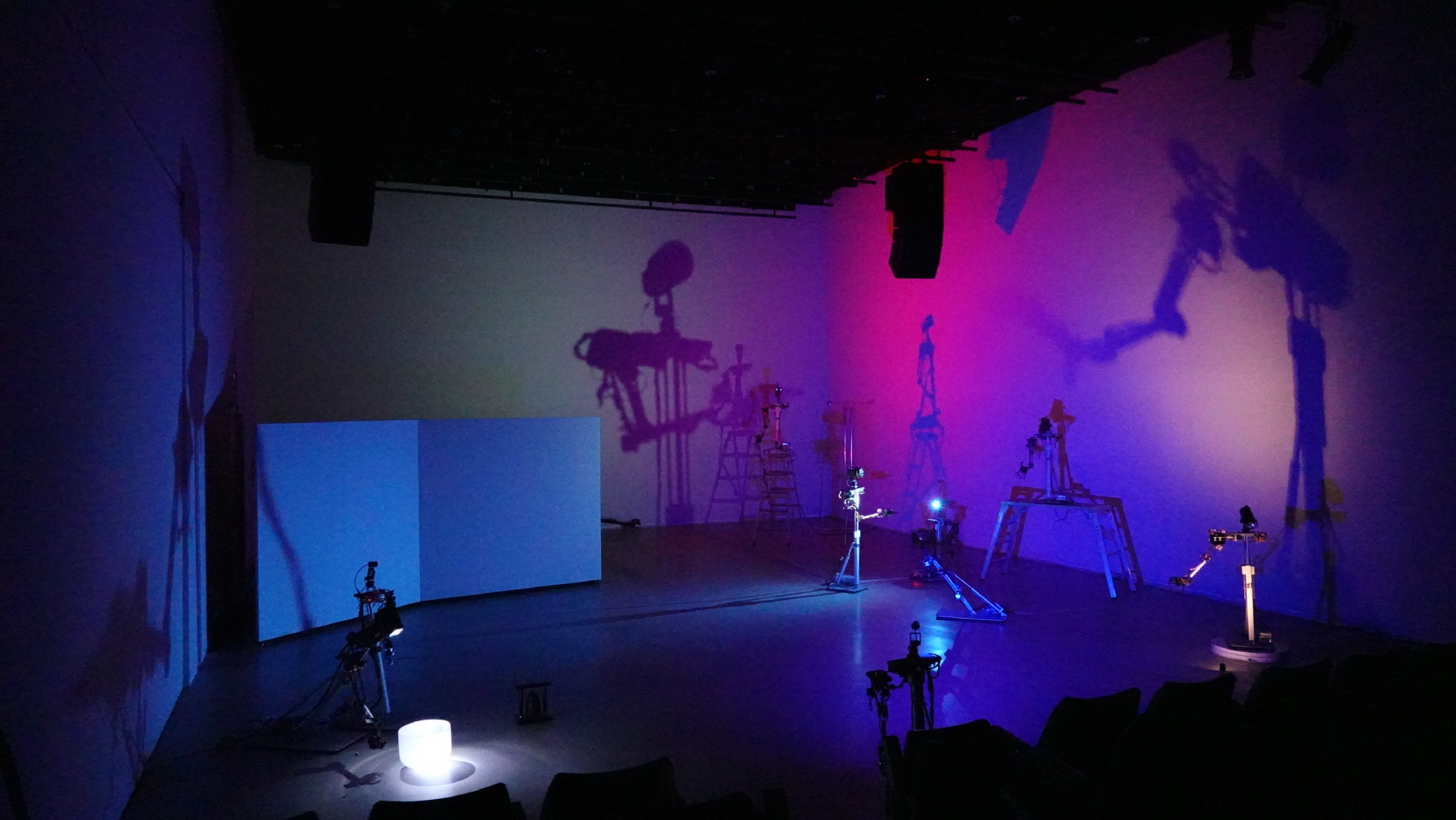
These headphones speak volumes about the nature of his instruments
and the grain of his musical practice. If you look closely at the instruments
he makes, an interesting fact emerges: he uses objects we all know and can
handle easily—like headphones. His instruments do not assume wholly new forms
or use entirely novel materials. He leverages the conventional interface
inherent to a given object (everyone knows headphones go on the head) and,
through electronic components he adds, grants that object a new interface. Thus
the listener/experiencer encounters new sonorities and a new process of
listening through a familiar object, guided by that interface.
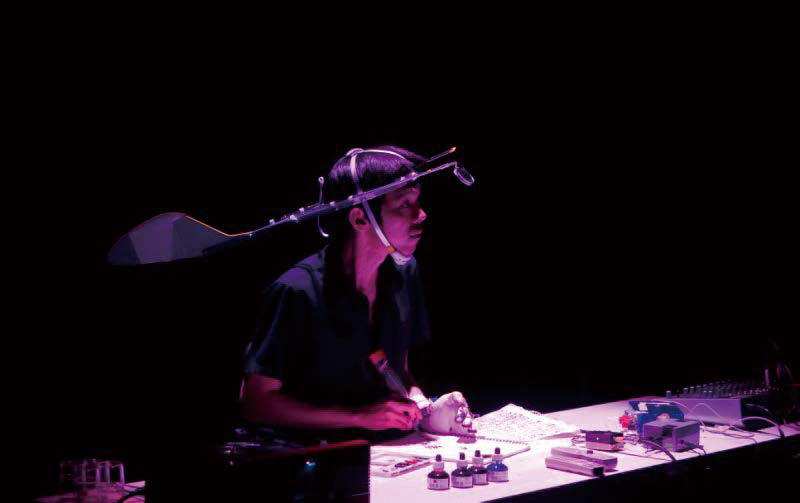
The
“hybrid piano” he recently invented and presented in several performances looks
like a piano but sounds like a string instrument. This hybrid piano retraces
the gaps in the instrument’s historical legacy—from classical performance
through Nam June Paik’s famed
smashing of pianos—revealing how the instrument has been handled in diverse
ways. In this sense, his new instruments enter a dialectical relation with
existing objects and systems.
They do not dream of a completely new,
emancipated state; rather, they take the given senses as a base and
progressively expand the concept of music—steps taken slowly. In that regard,
his music is not a materialist improvisation that, while grounded in a device’s
or object’s basic hardware, leaves all possibilities open; nor is it an
anarchic music that seeks the same hierarchy for performer and listener.
Instead, it offers performers a new interface for music—proposes, in a sense, a
program. If materialist improvisation tends toward de-ideologization, Kwon’s
instruments constitute an alternative ideology. The former tries to endlessly
reduce aesthetic experience itself; the latter mediates aesthetic experience.
A
new interface creates sounds that did not exist and reconfigures the concept of
music, while simultaneously imagining new gestures for that interface. New
gestures given to objects and machines inversely reveal the conventions long
embedded in them, emancipating performers from those conventions. Crucially,
Kwon’s instruments demand only the lightest of gestures—actions anyone can
perform, easily. This is, to some extent, his path toward a utopian
universalism of music. Thus in his work the performer’s present, embodied
gesture carries more weight than the listener’s. This is not to say he neglects
the listener. For Kwon, the listener is an element that constitutes the music
itself. His music both emancipates the performer and lays out, for the
listener, a new field: the world of sound. If image is today’s most powerful
language of meaning and the dominant sense, Kwon’s long engagement with music
is likely because, through the alternative language and sense of sound and
listening, he wishes to re-perceive and recompose the world.
Kwon
once wrote a brief essay titled “Weapons and Instruments.” It recounts his time
at STEIM, the Dutch research center for electronic instrument development,
interweaving reflections on how technologies developed for military killing
become entertainment and art with memories of large and small violences he has
seen and experienced. Weapons and instruments. Whether one is making an
instrument or a weapon; whether one should make an instrument or a weapon;
whether what he makes is an instrument or a weapon. After reading it, you
realize that making instruments is not a romantic matter for him. Rather,
instruments are an urgent, pressing demand—a way to respond to fundamentally
absurd force. The essay ends thus: “If I had the capacity, I would want to make
the most powerful thing that could erase all of this.”