To Kim, matter is something
unseparated from the world. It’s not something permanently fixed in one state,
and neither is it the opposite of ritual or concept. To establish this theory,
he introduces the concepts of “mattereality” and “mattering,” translatable to
“the reality of matter’s existence” and “the becoming of matter” respectively.
These concepts assume matter to be imperfect and under perpetual change and see
reality and phenomenon as inseparable. Mattereality, by Kim’s definition, is a
phenomenon in which matter “is not a partial constituent of the world
surrounding it,” but one in which it “endlessly fluctuates, intertwines,
implicates itself, and ‘becomes’ all the while unseparated from reality.”
In
fact, mattereality is not a hypothesis but a physical truth that we all
experience: chemical reactions that seem complete are actually in a metastable
state of dynamic equilibrium and may resume with a change in conditions; all
objects including our bodies are also in perpetual interaction with their environments,
constantly affected by the entropic force. Matter is not something
distinguishable from the world or its beholder; it’s a system of cosmic
continuity that continuously interacts with and interpenetrates the world and
its beholder.
This perspective shares many commonalities with various Western
philosophies that reject human-centered and dichotomous metaphysics epitomized
by Bruno Latour’s actor-network theory, Quentin Meillassoux’s
speculative realism, and Gilbert Simondon’s concept of active matter. What
Kim emphasizes above all is the concept of “process” and “non-human agency,”
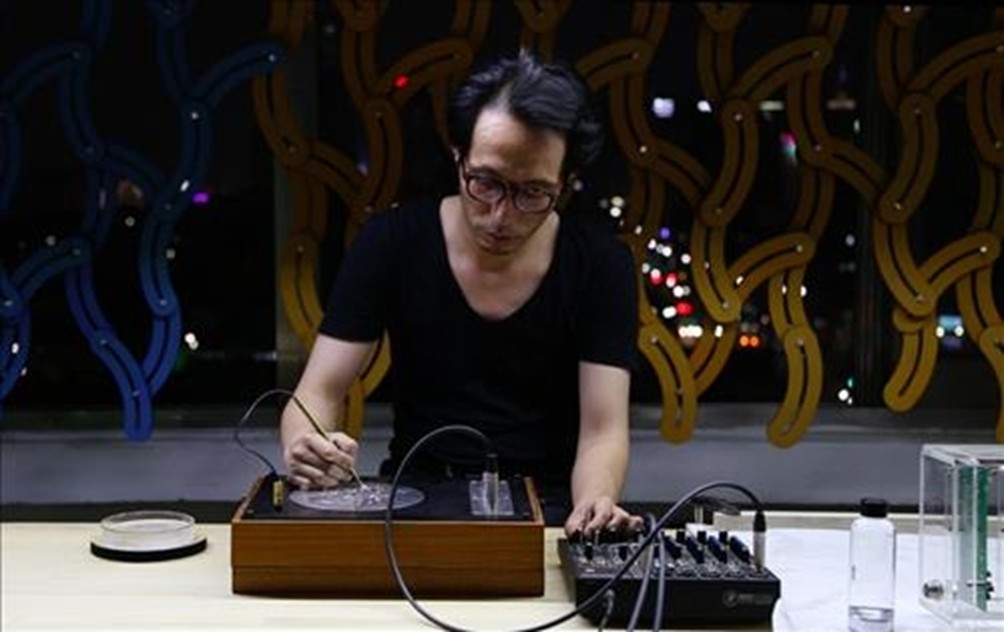
which directly links to his work process during which countless experiments are
administered in his studio to materialize the properties in his imagination.
Kim agrees with Alfred North Whitehead’s idea that reality consists of
processes and not material objects, and that processes are best defined by
their relations with other processes and therefore reality cannot be
constructed by independent bits of matter. He also identifies with Karen
Barad’s philosophy that not only the subjects for measurement but also the
measuring devices and the observing behavior are active agents.
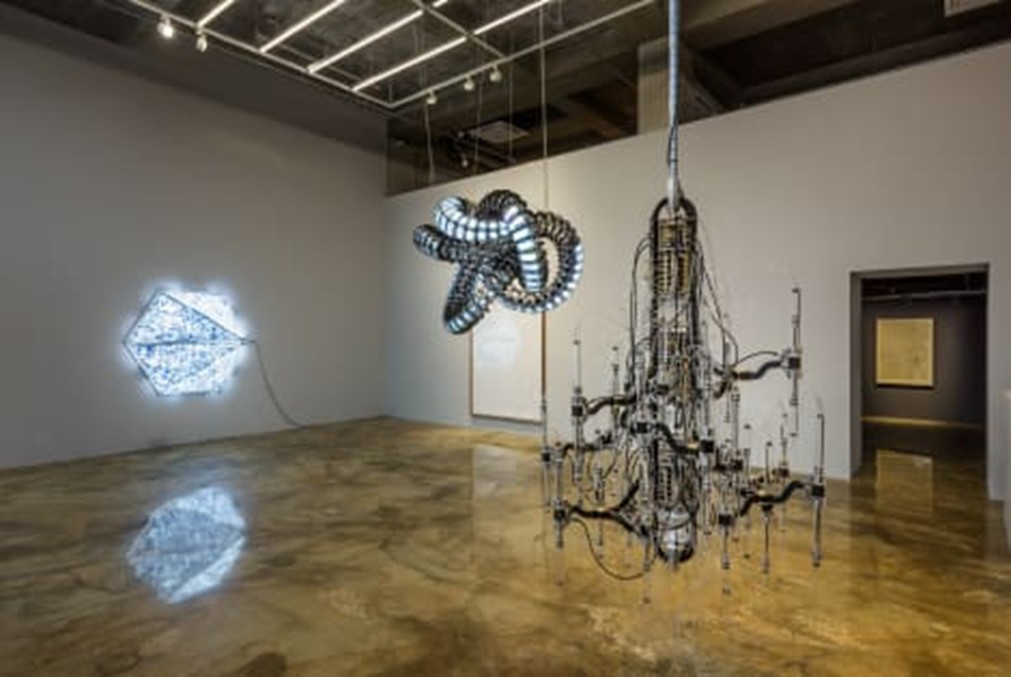
This is why all
of Kim’s works are in perpetual motion, reacting to their environments and
nearby subjects, and often organic in physical form. Not only the final
artworks themselves but also the experimental process of finding the right
material, the mechanics of the detection devices, the space in which the work
is placed, and the audience’s reaction to the work all become a part of the
work as participating agents. The most effective way to turn the conceptually
and linguistically represented world into a perpetually fluctuating world of
matter is to come face to face with the literal materiality that has yet to be
defined by language.
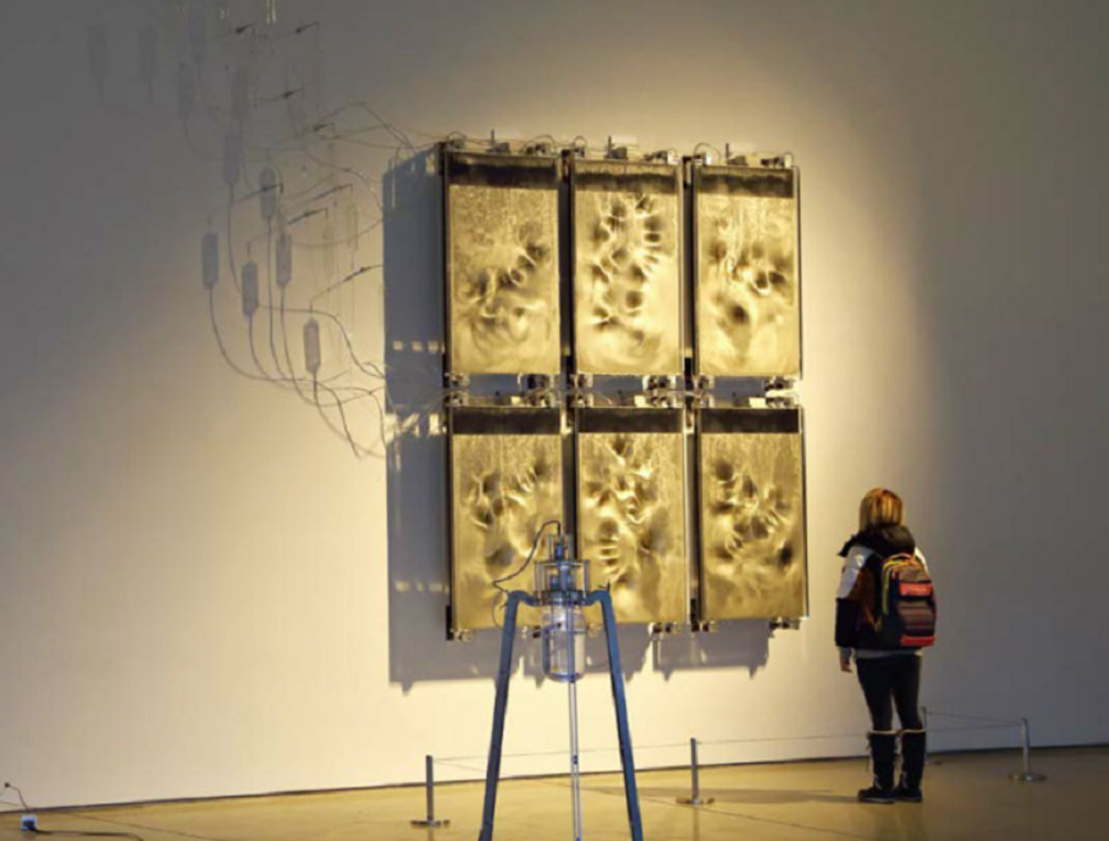
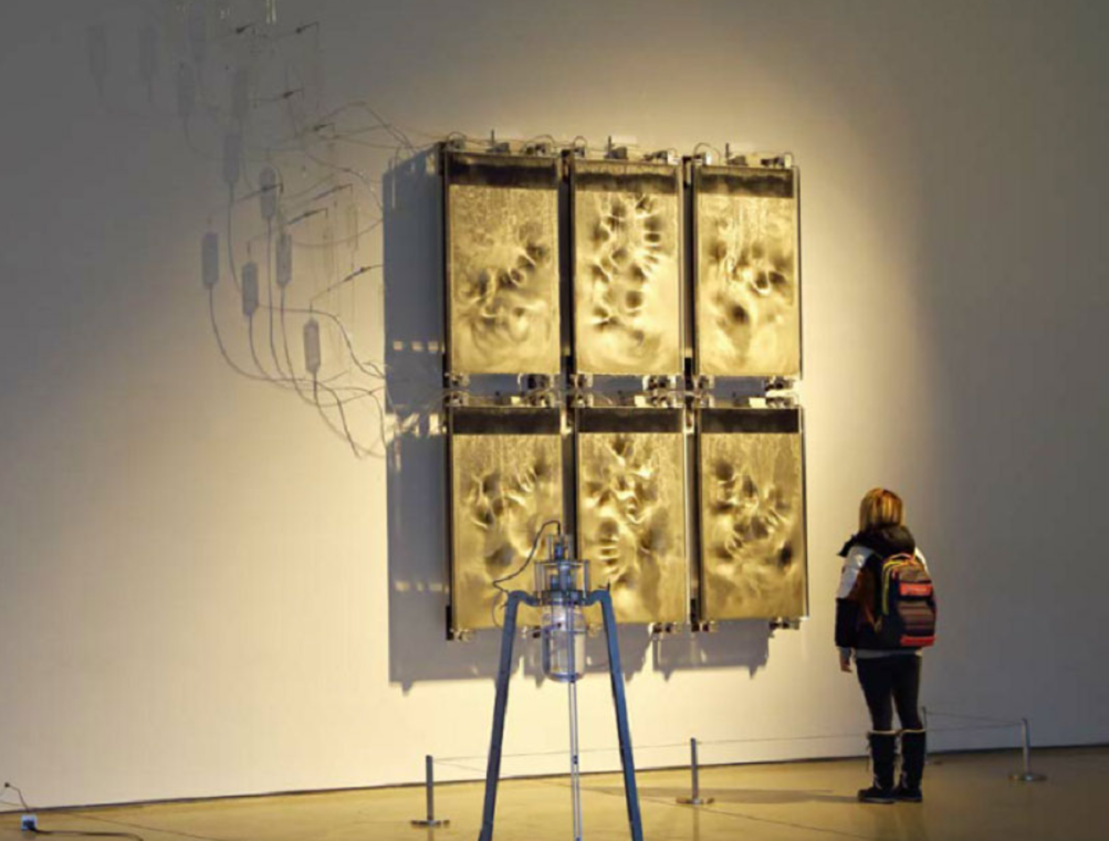
〈Effulge〉 (2014),
one of Kim’s well-known works first shown at the National Museum of Modern
and Contemporary Art, Korea, explores the material properties of a metallic
liquid by creating a fluidic flow reminiscent of the convection of plasma
around the primitive universe or the sun. The flow of the unidentifiable
particles doesn’t represent reality but presents matterreality, which is to say
that it offers a physical and phenomenological encounter before any semantic
process kicks in.
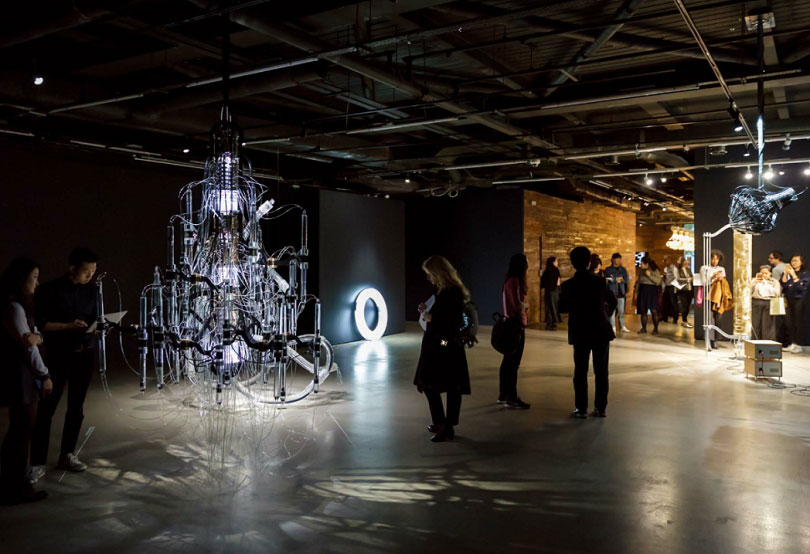
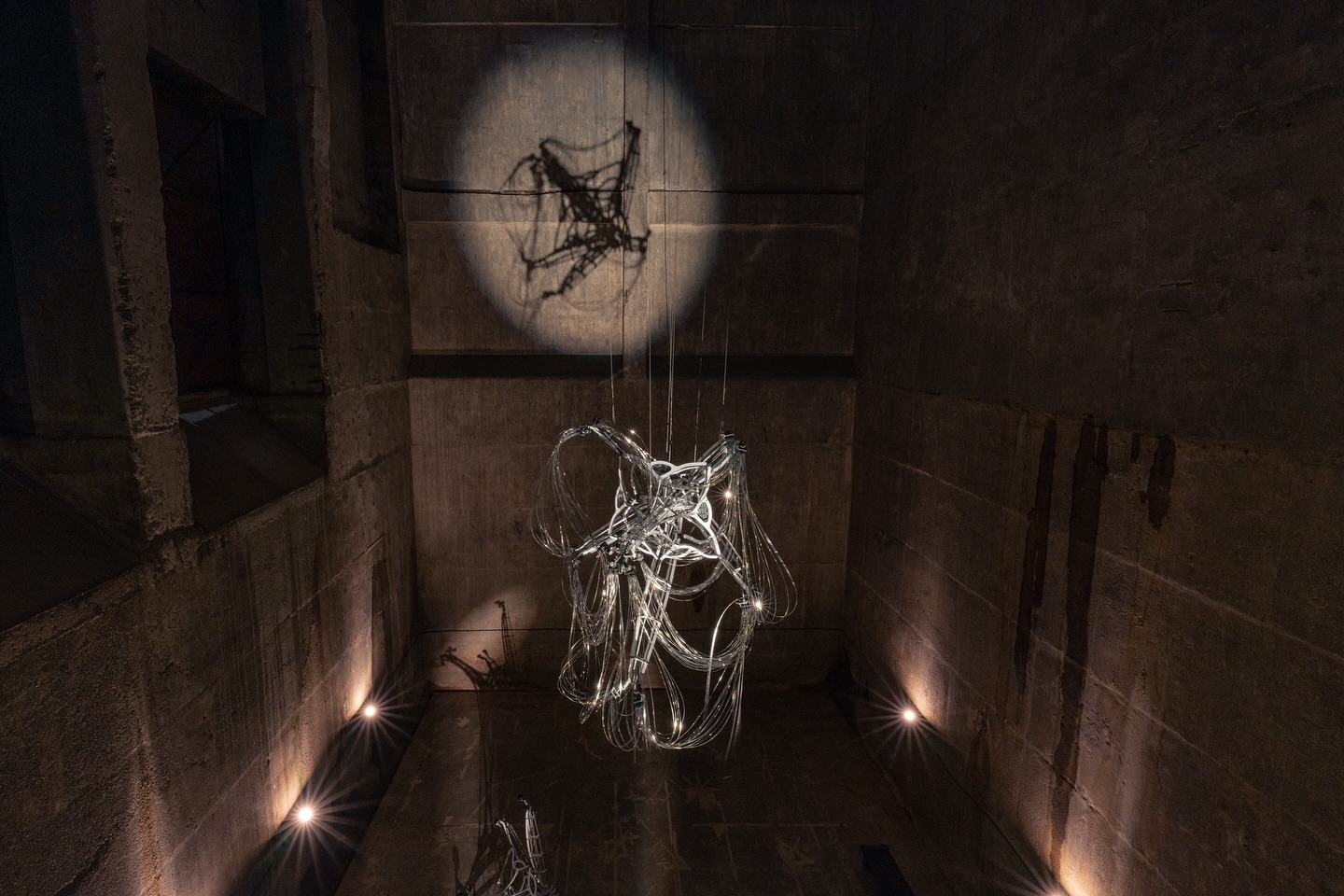
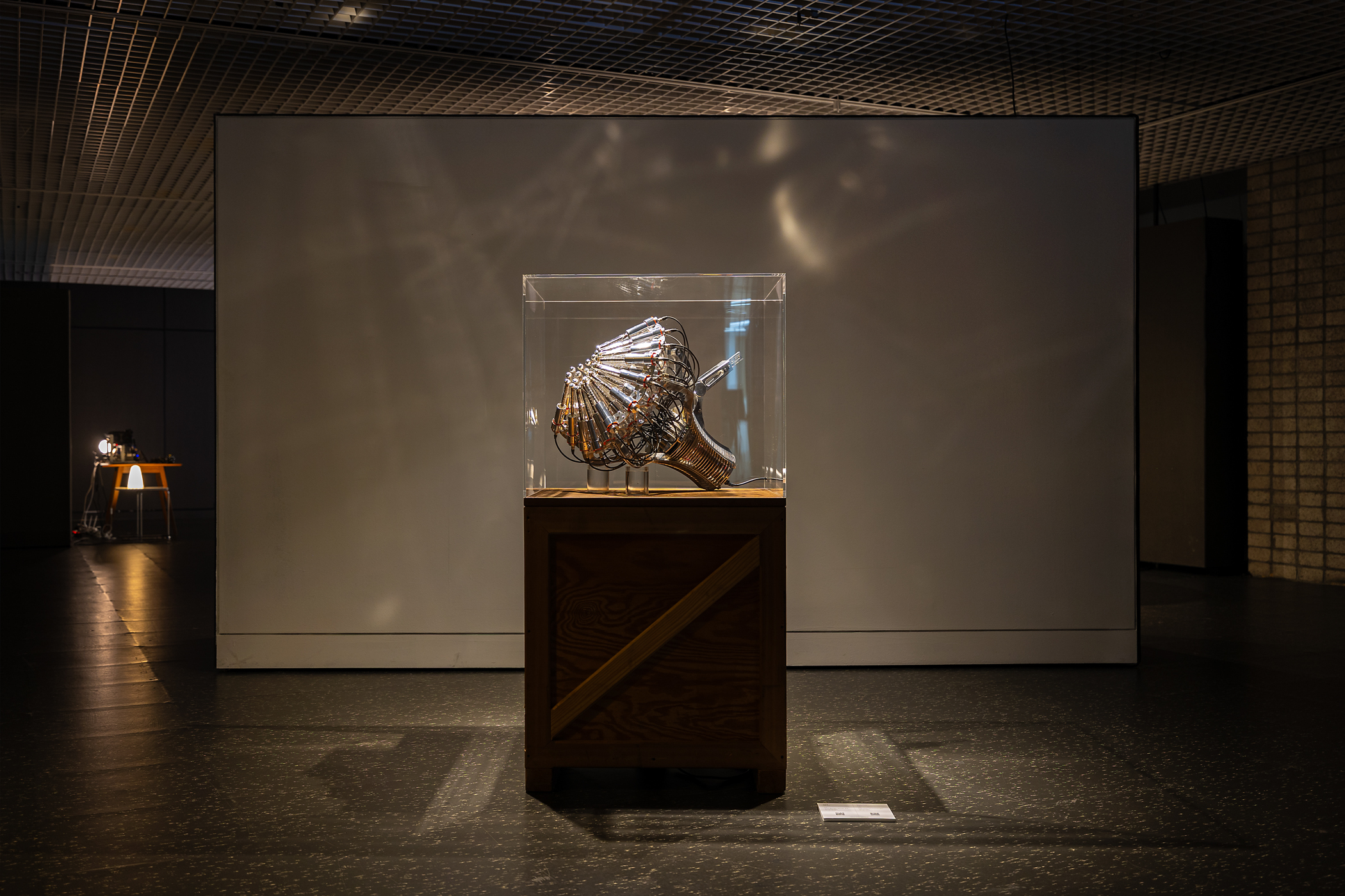
In his microtube installation Cascade
(2016–2017), the tubes are bent at an equal refraction index as the microfluid
so that the tubes are invisible when the fluid runs through them but becomes
visible either when the fluid is absent or when the hydrogel is formed,
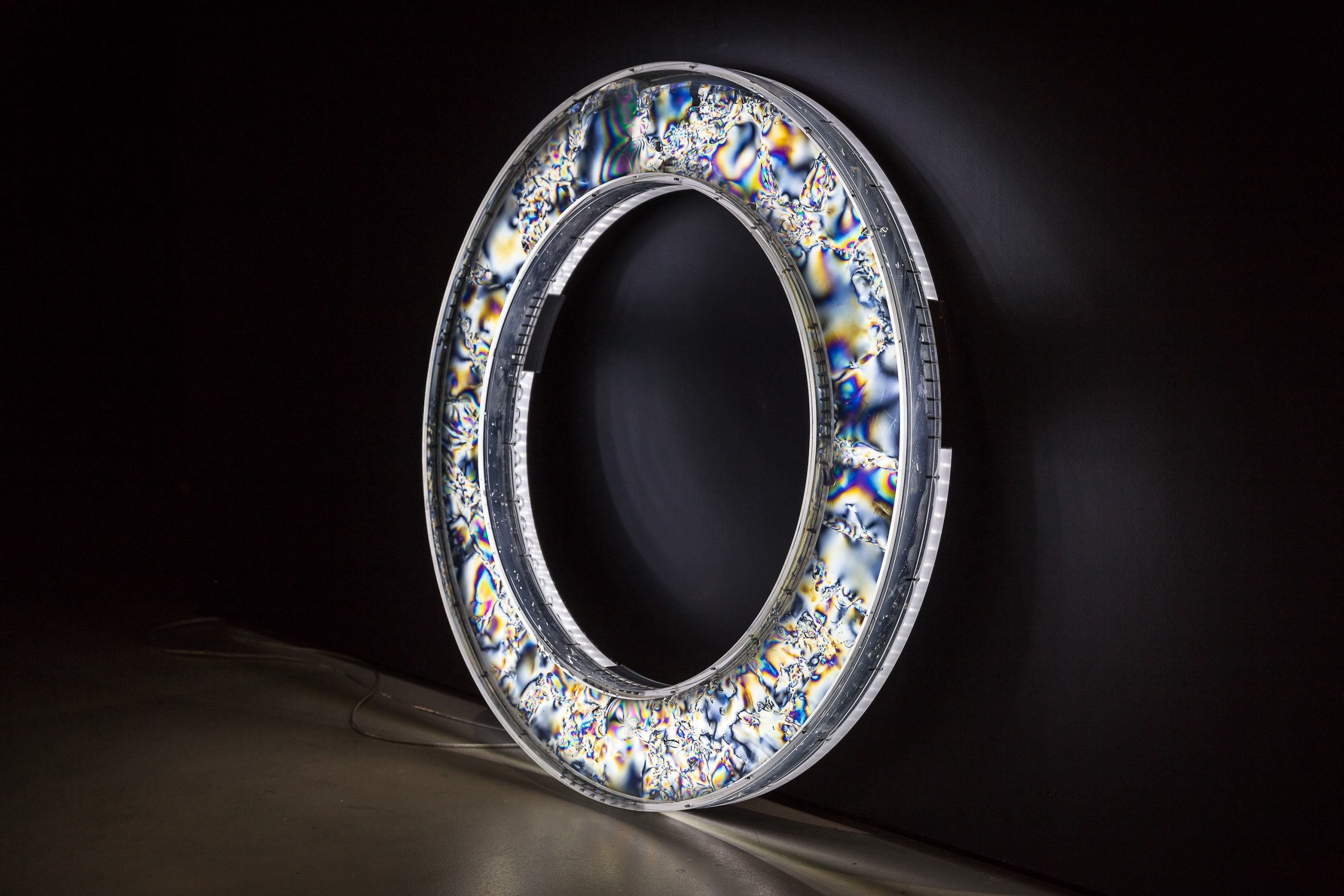
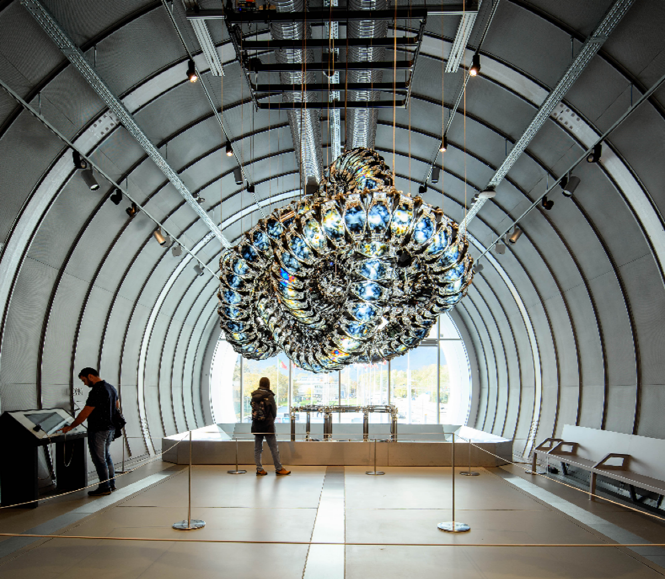
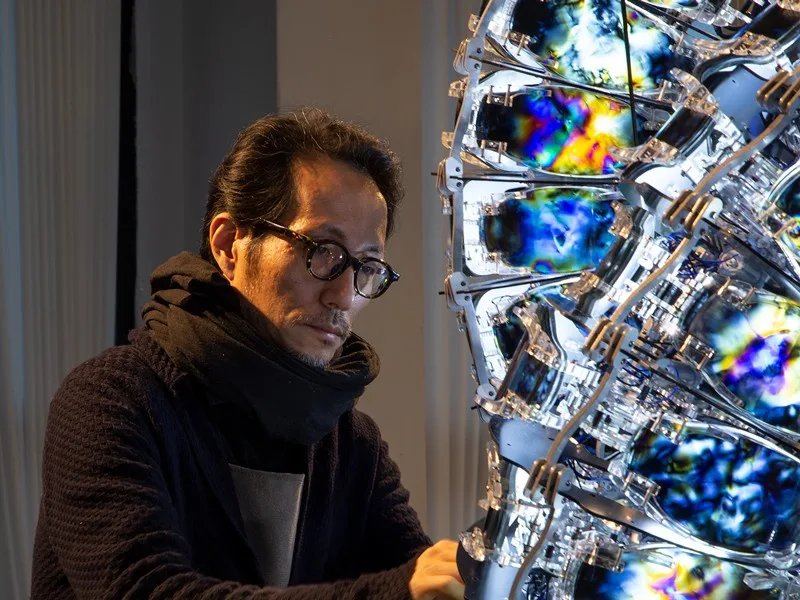
literally visualizing fluid motion. In his recent work Amorph
(2018), a hydrogel is applied with force to generate internal stress, which
changes the form, hence the refraction index, of the material, creating ornate
and colorful light deflections. In this case as well, what we come to see is
neither the phenomenon nor the concept, but the pure (free of artificial dye),
the inherent color of the gelatinous material.