Articles
[Review] Lee Eunsil Solo Exhibition 《Press the Button!》, 2019
2019
Lee Sunyoung | Art Critic
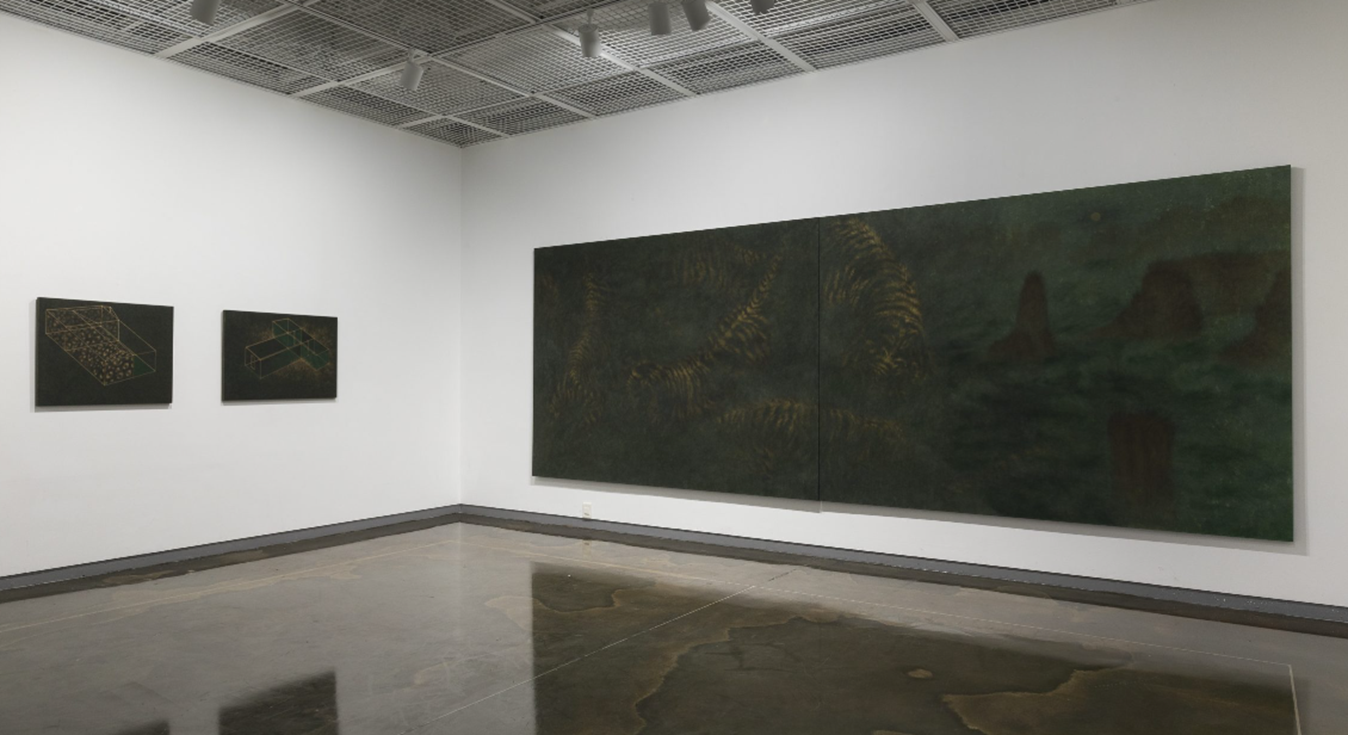
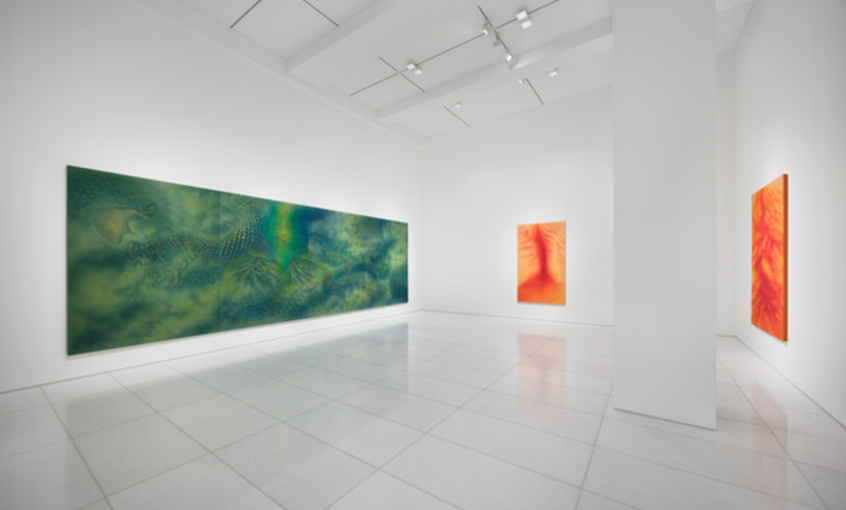
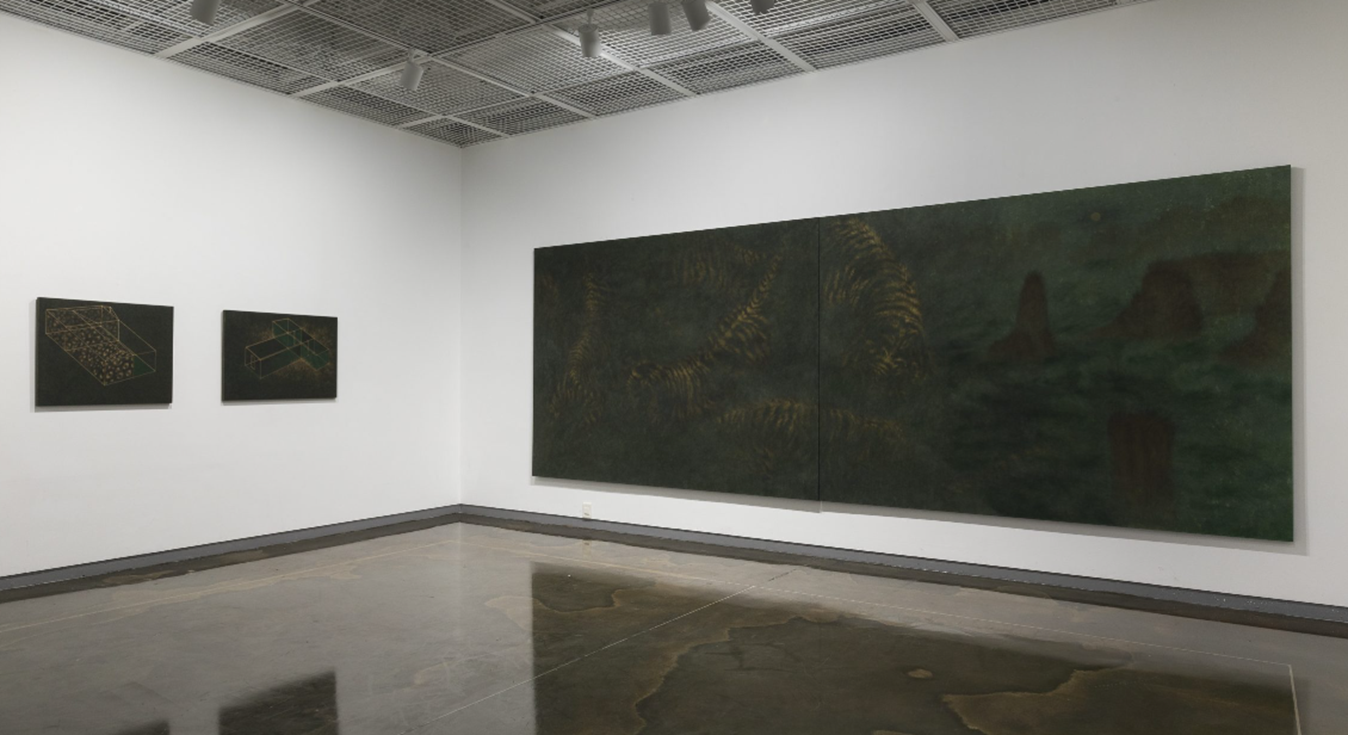
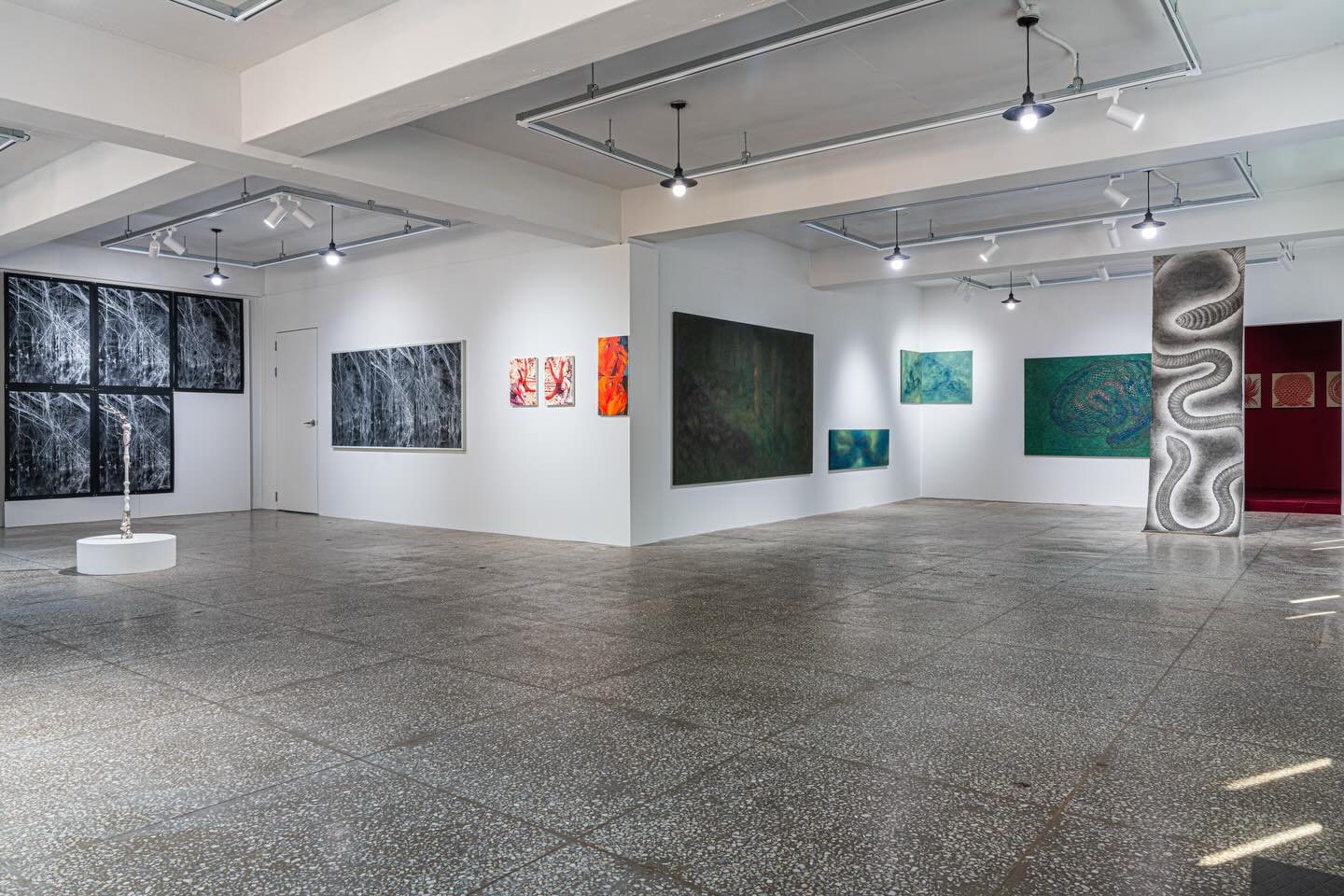
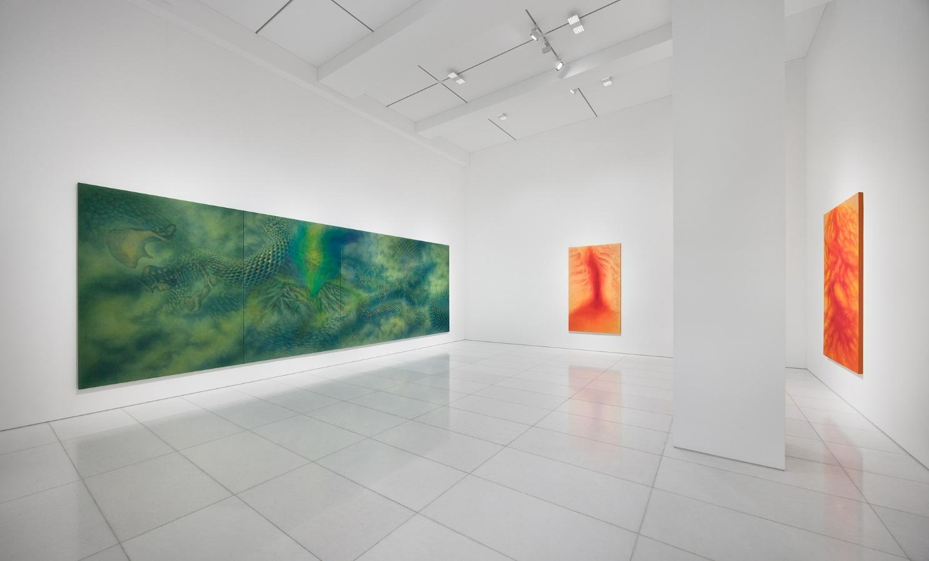
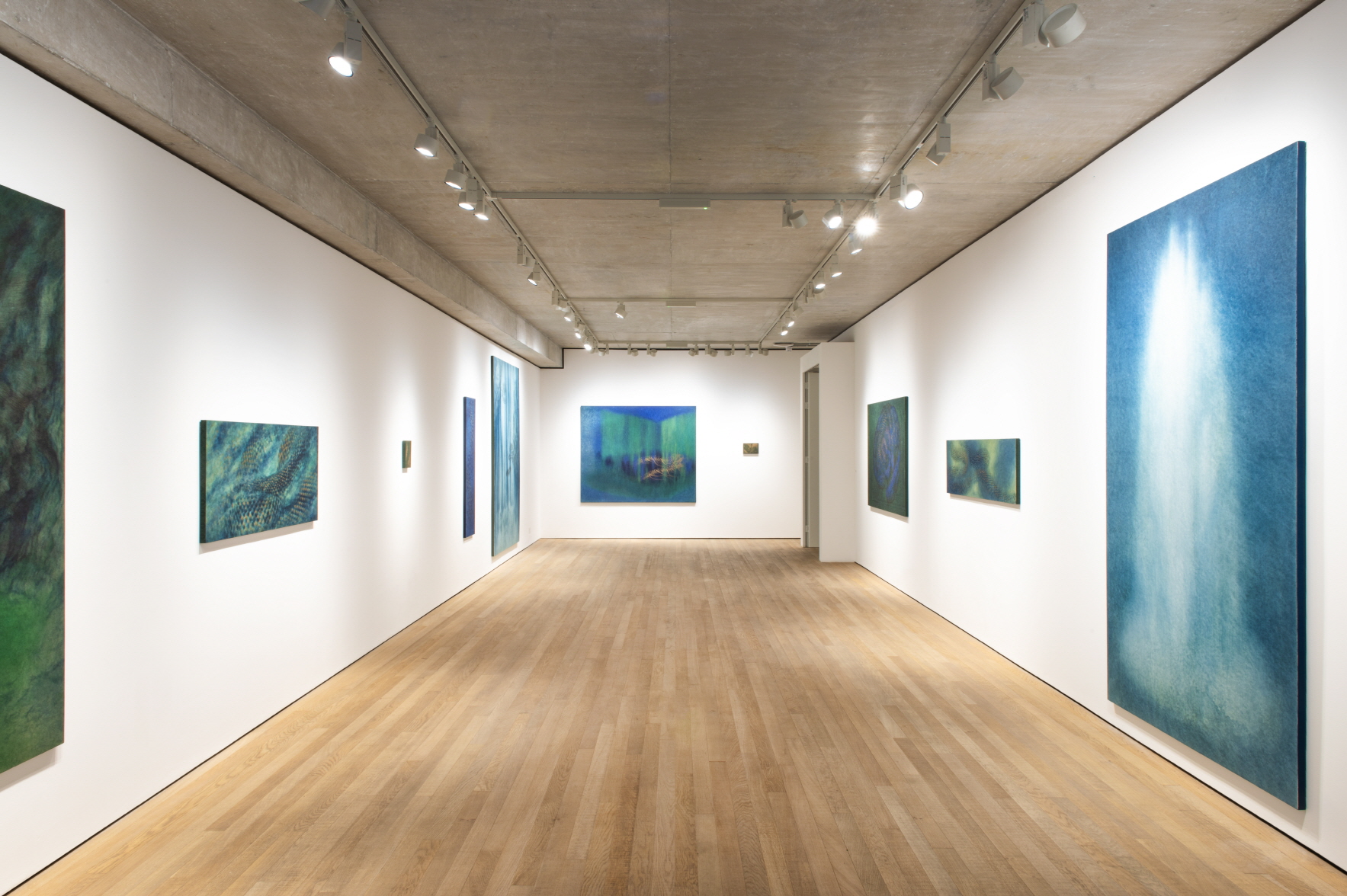
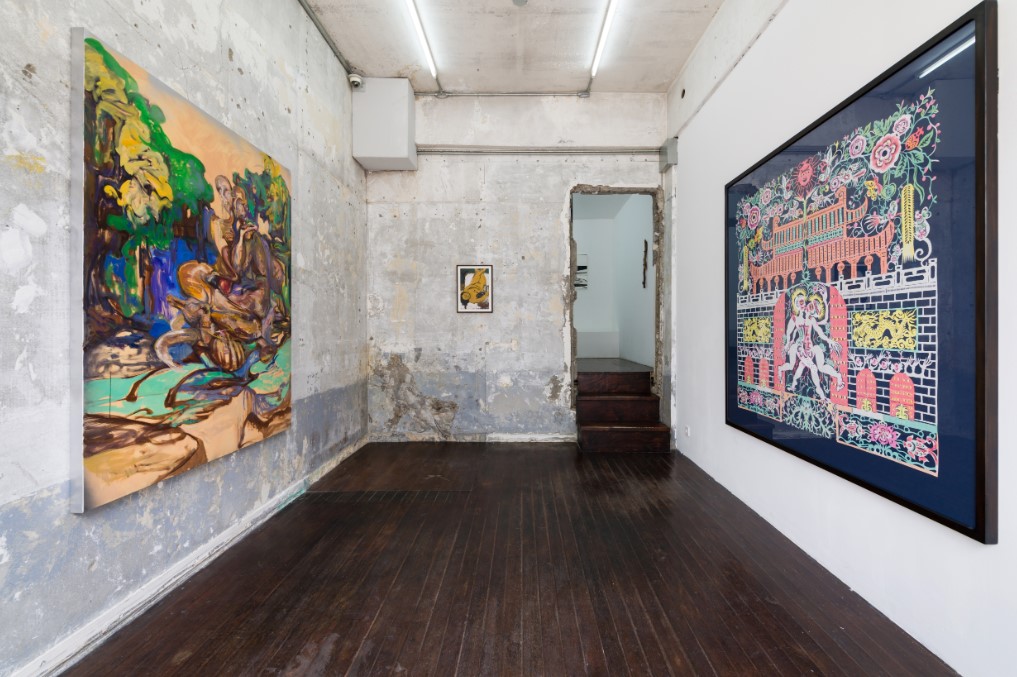
Installation view of 《Press the Button!》 © UARTSPACE
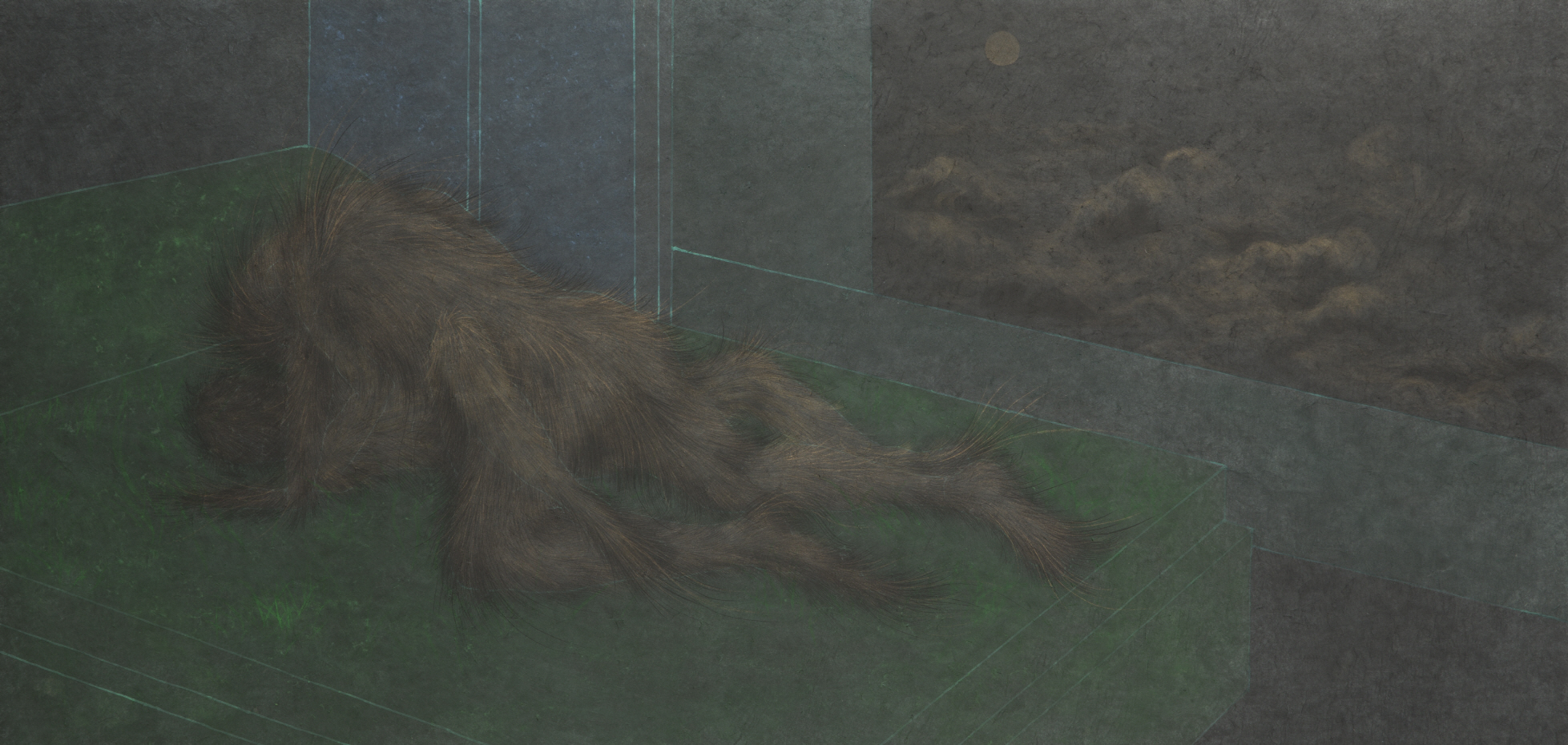
Lee Eunsil expresses a dense world of sexual desire through traditional Korean painting techniques. As seen in a work such as Scene of Desire in this exhibition, the keyword of desire is embedded throughout. Even in old Eastern painting albums, there are explicit images comparable to contemporary pornography. However, in Lee Eunsil’s works, where metaphorical iconographies faintly emerge from scenes dampened by sticky desire, the atmosphere is more subtle and thus even more erotic.
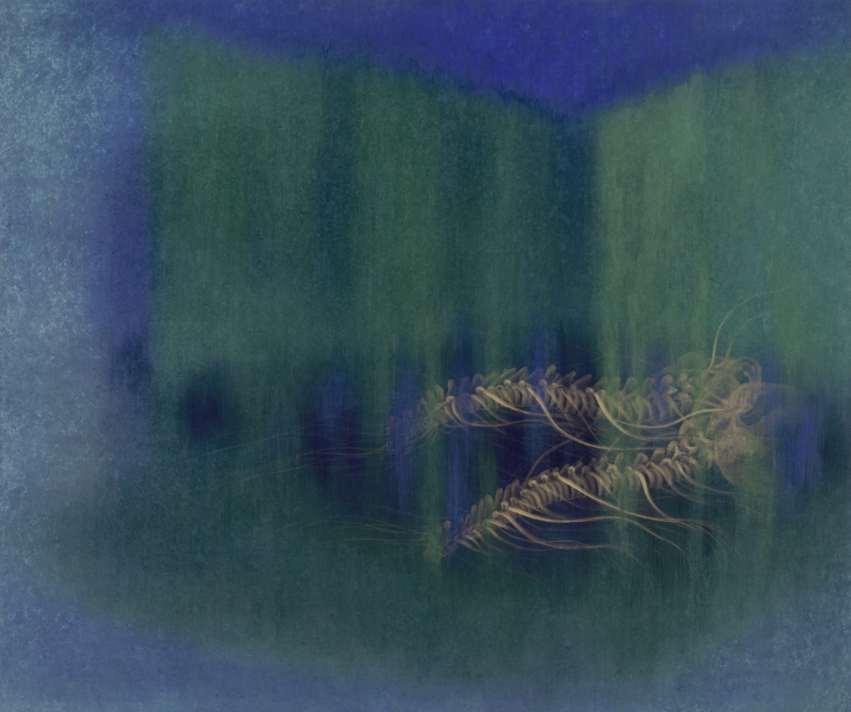
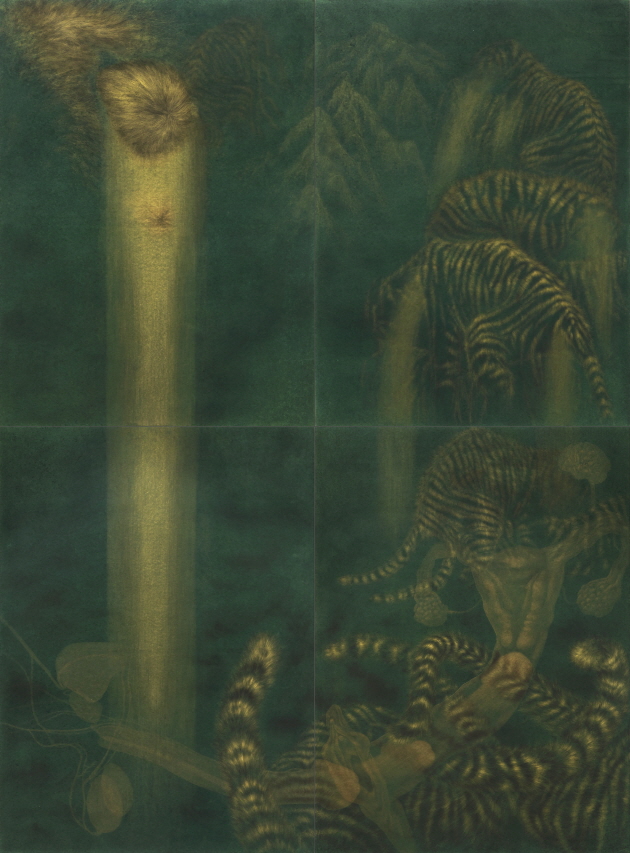
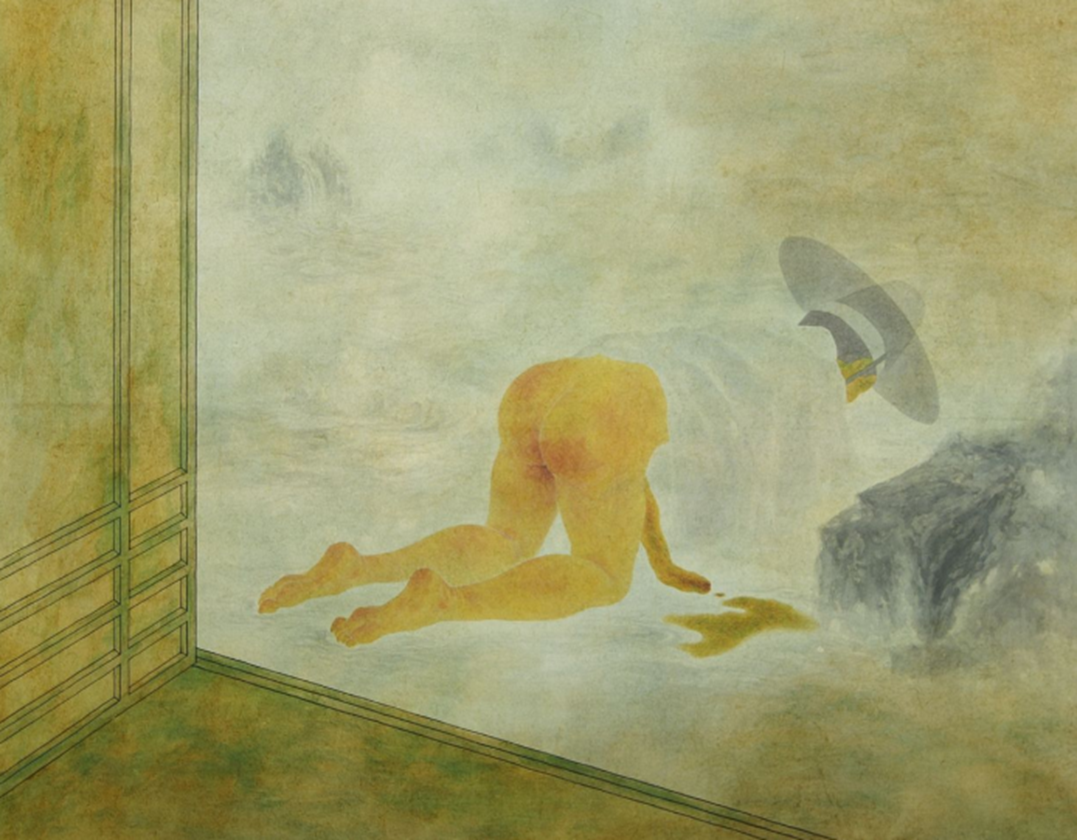
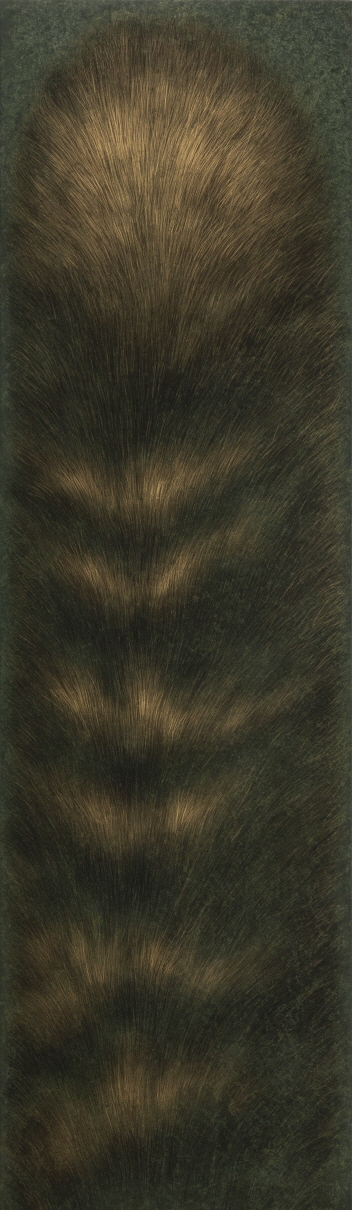
The strange landscapes of moonlit nights painted in ink and color on Korean paper evoke a dark and humid mood. At the center of these scenes stands out a mythical being with golden fur. The exhibited works encompass desires ranging from primal instincts considered part of nature to the structural desires of civilized society. Works featuring animals and humans, or animal-like humans, speak to both the connection and disjunction between biological needs and symbolic desires.
First, the affectionate acts of tigers evoke thoughts of wild love. Julia Kristeva, who philosophically explored love, cited in ‘The History of Lov’e the lines from Romeo and Juliet that confess a “violent, rough, and intense love”—“the time of my heart is wild and cruel”… “more savage and more merciless than a starving tiger or a roaring sea.” However, the tragic ending of the classical love story Romeo and Juliet also invites reflection on the relationship between love and death.
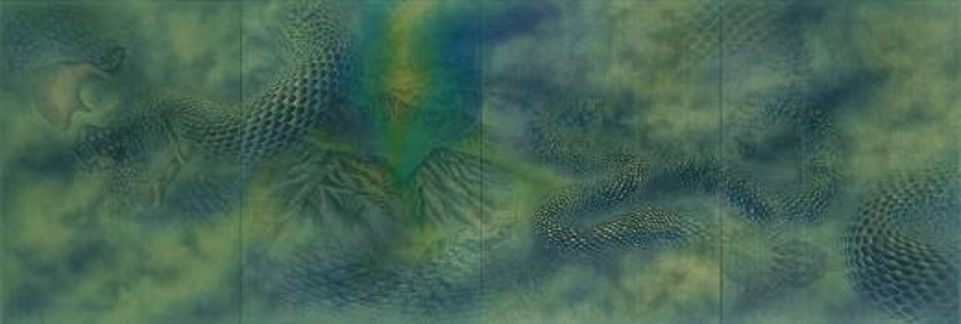
Human sexuality, having departed from the destiny of reproduction, has already moved beyond the realm of biology. Natural forces, including sexuality, come under the regulation of civilization. Whether biological need or social desire, the formative element that connects the two opposing poles desired by an individual coexisting with others is a luminous line that cuts through a dark background. These shining straight lines, slicing through a dense, opaque background resembling algae-filled water, are thin yet possess a strong presence like neon lights glowing at night.
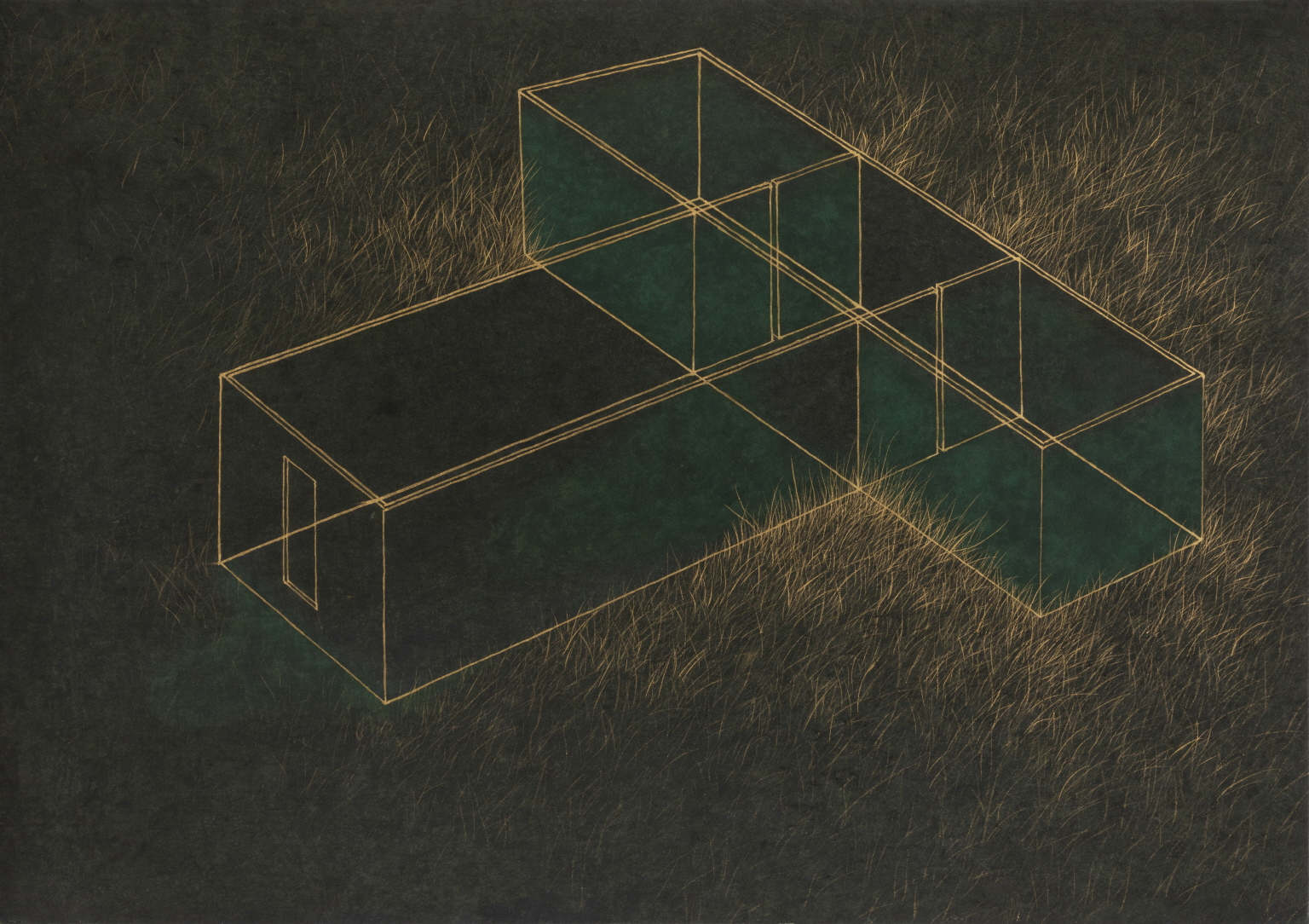
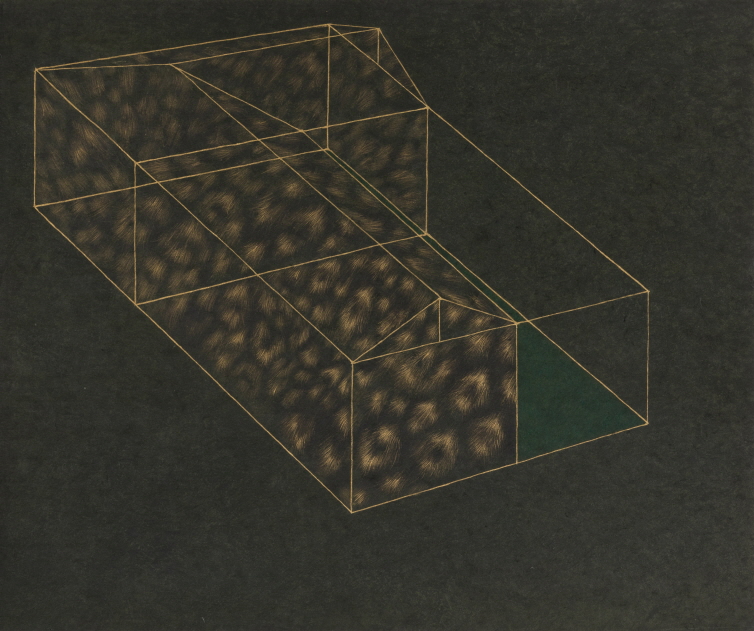
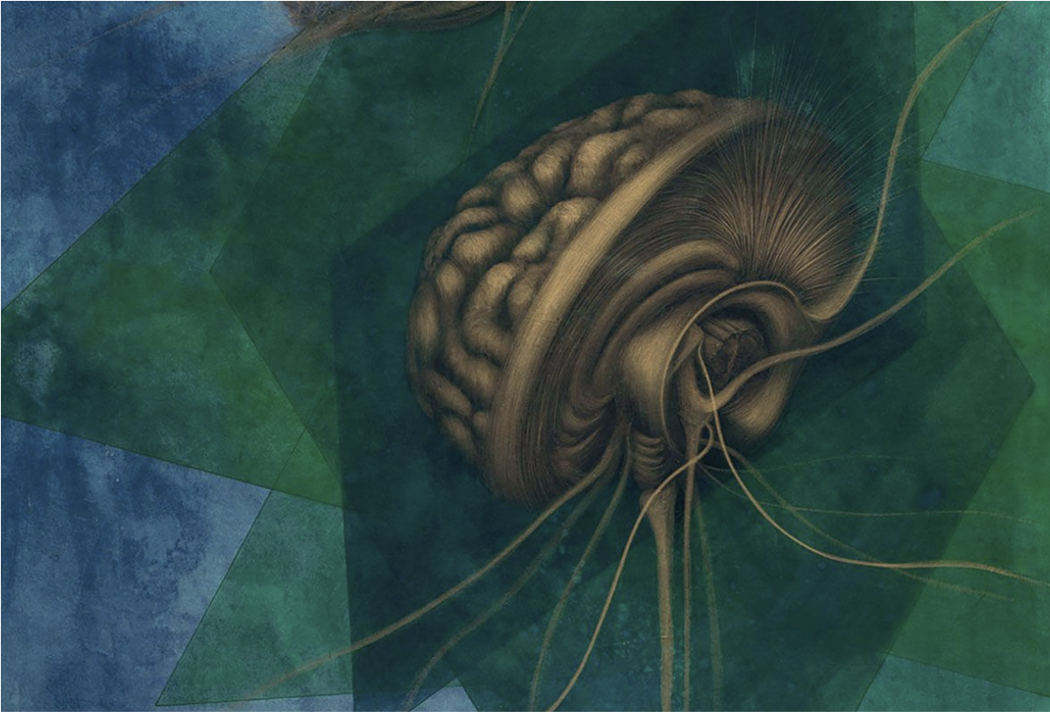
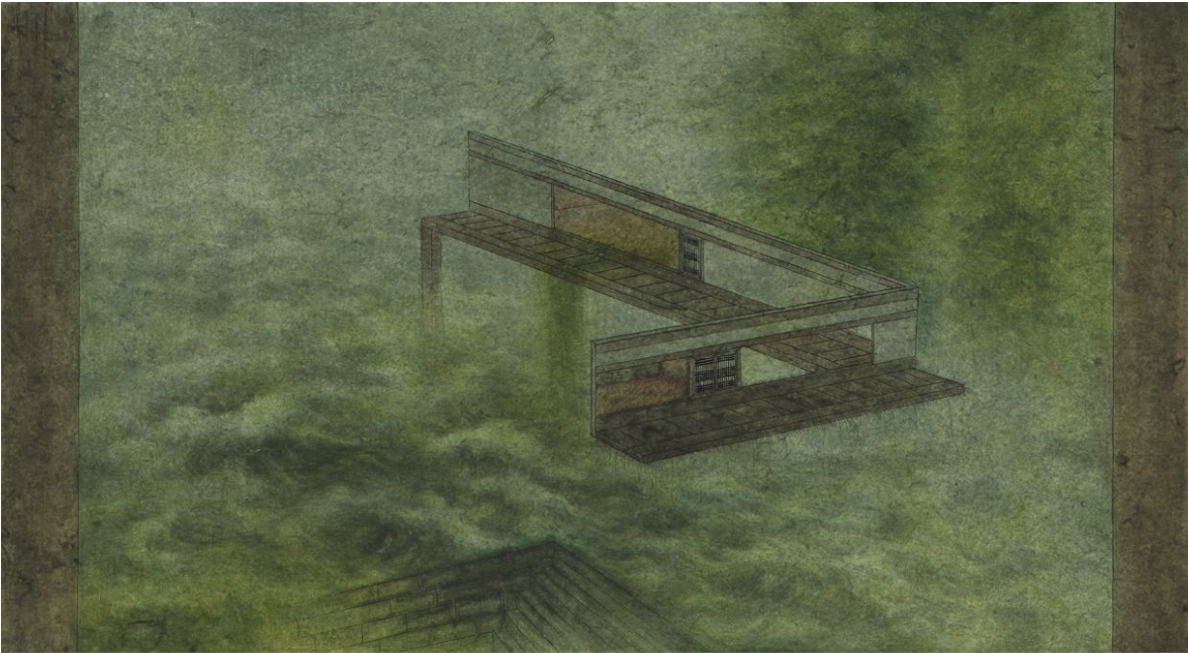
The line becomes a transparent plane that frames primal reality in various ways, leading the narrative. Lines that depict the golden fur of beasts take on clearer directionality and form parts of architecture or machinery. The primal desires of nature interact with the structured forces of civilization. The desires of civilization take natural impulses as energy, giving them direction and amplifying their force. Works such as Old House and the ‘Deep Night→Room’ series present architectural structures filled with animal patterns and layered coordinates.
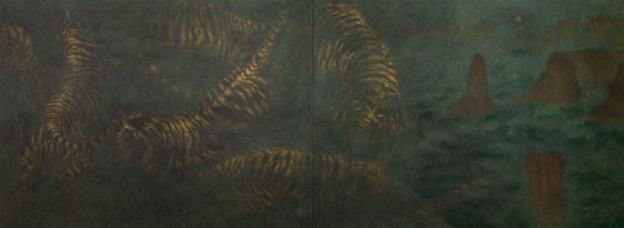
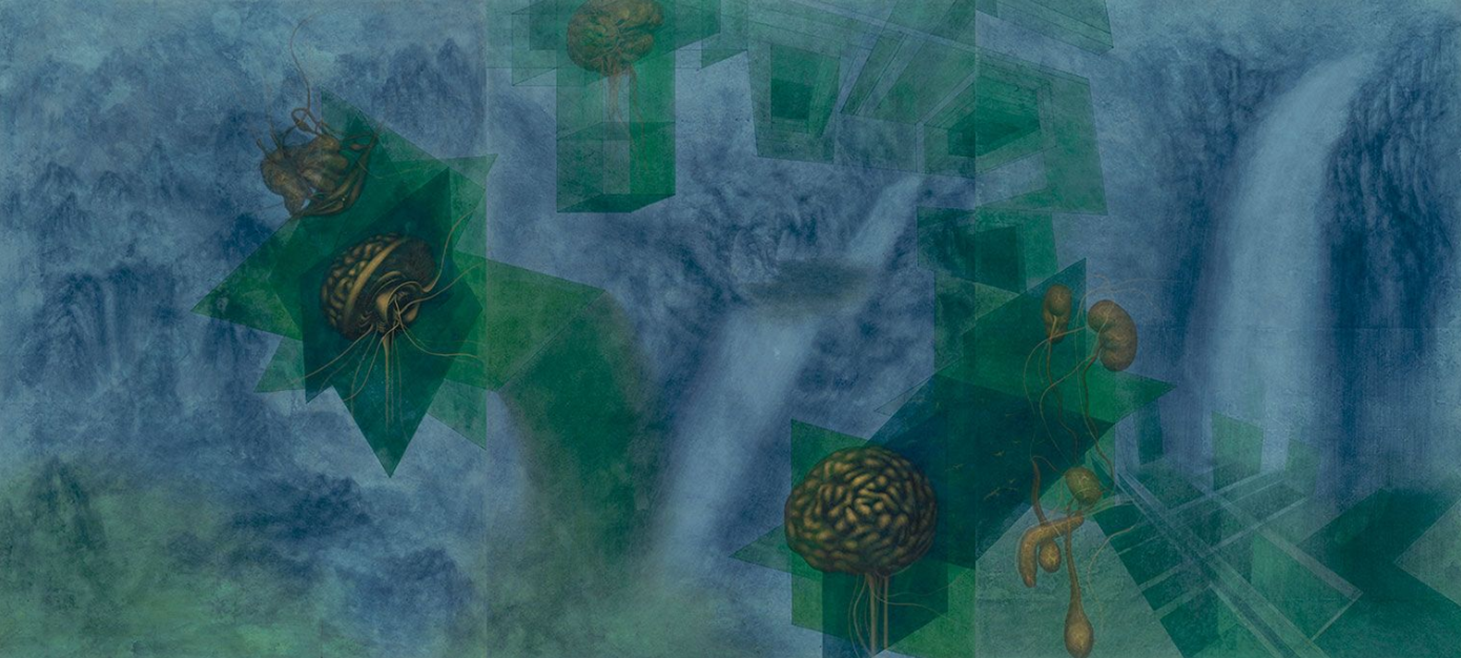
Lee Eunsil, Scene of Desire, 2018, Colors and ink on Korean paper, 180×488cm © Lee Eunsil
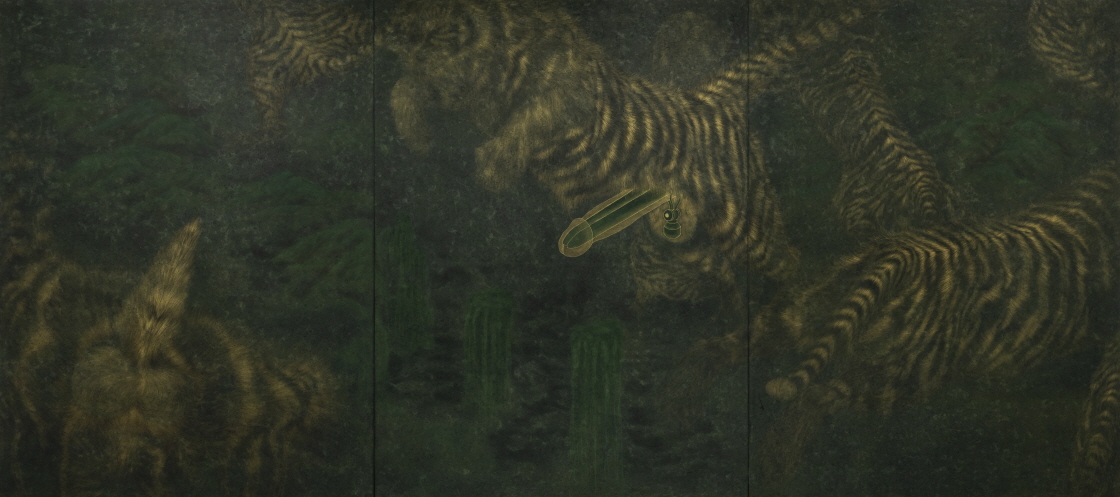
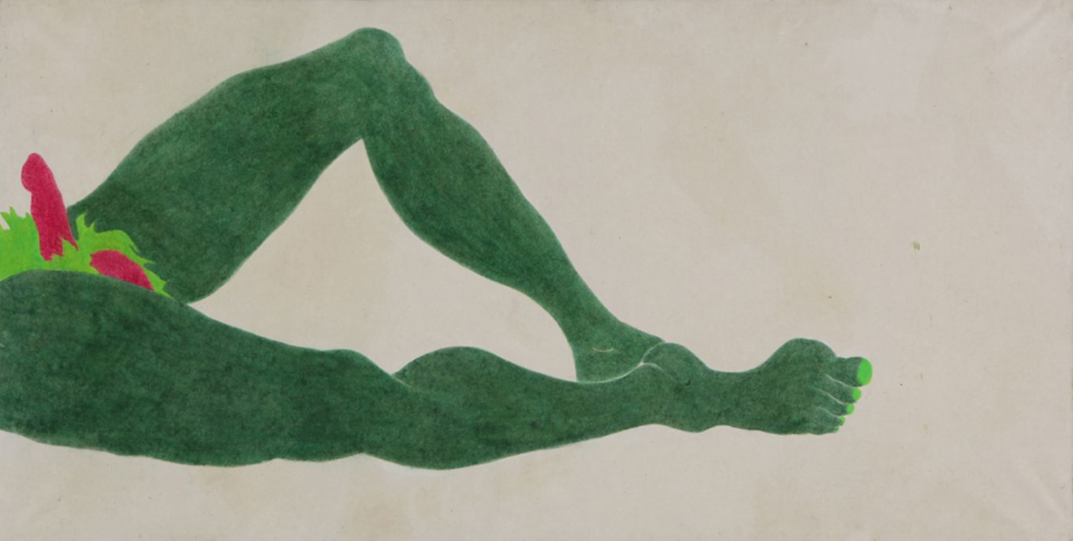
The desiring eye that seeks something—including the viewer’s gaze—follows a subtle coordinate axis. However, it is impossible to know where this trajectory leads. Only the process of approaching or retreating toward an unknown point remains clear. In the work BIONIC PENIS, PRESS THE BUTTON!, the artist attaches a button to a penis, transforming a biological organ into a symbolic entity. From Lévi-Strauss to Lacan, it has been argued that the symbolic belongs to the domain of social institutions.
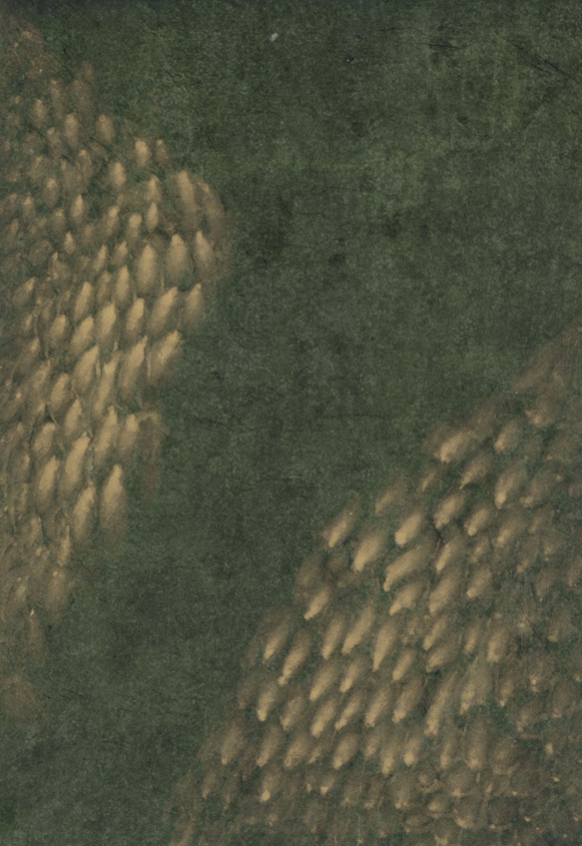
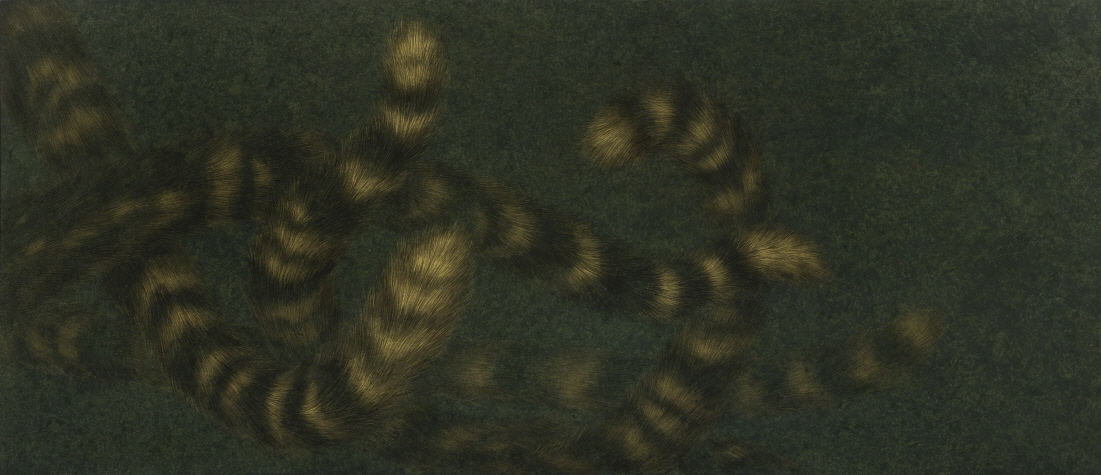
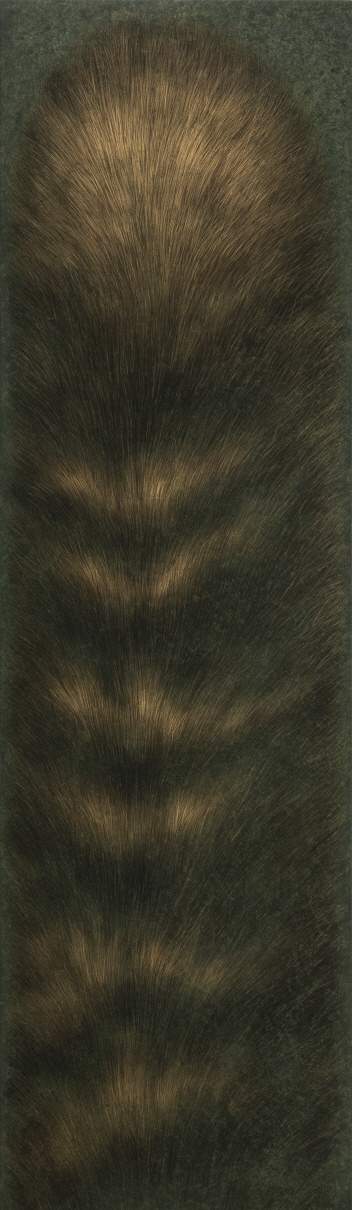
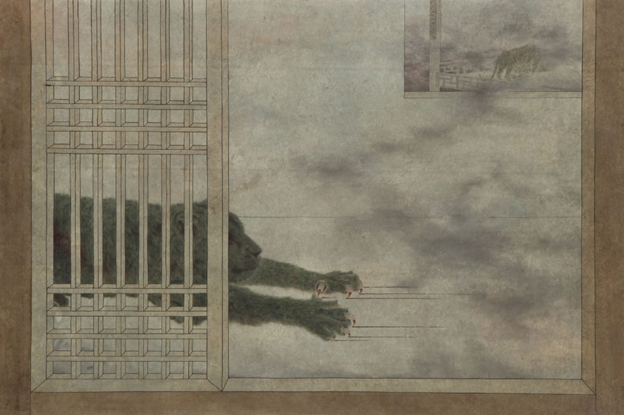
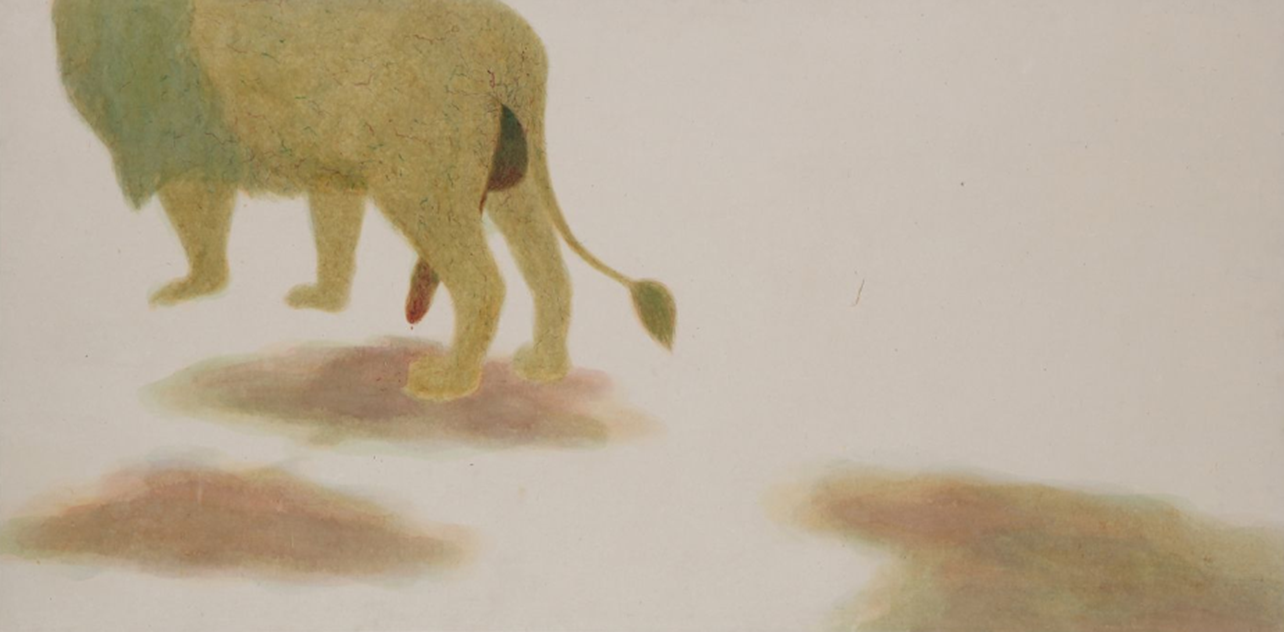
However, primal reality cannot be fully captured by the symbolic order. Although the canvas is quite large, the artist presents the scene as if it were a cropped frame. This implies that there are more beasts outside the frame. Meanwhile, natural force or reproductive power cannot be unrelated to art. It is, however, a primal energy that must be regulated. The tail, another animalistic feature like fur, resembles both a brush and a phallus in Lee Eunsil’s works.
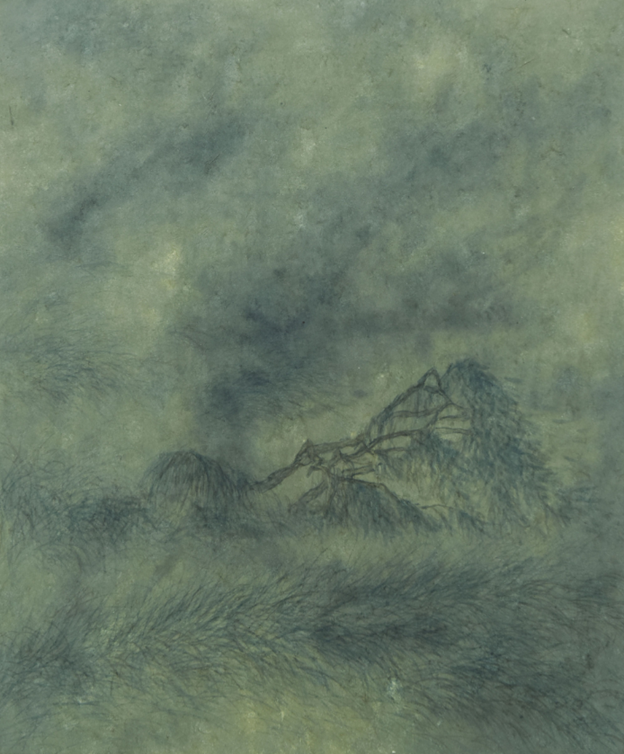
In the work ‘Barely,’ where a tail appears to grasp the edge of the canvas, the relationship between energy and form in the work is revealed. Strange rocks, grasses, and clouds arranged inside and outside architectural structures emerge as symbols of the generation and dissipation of sexual energy.
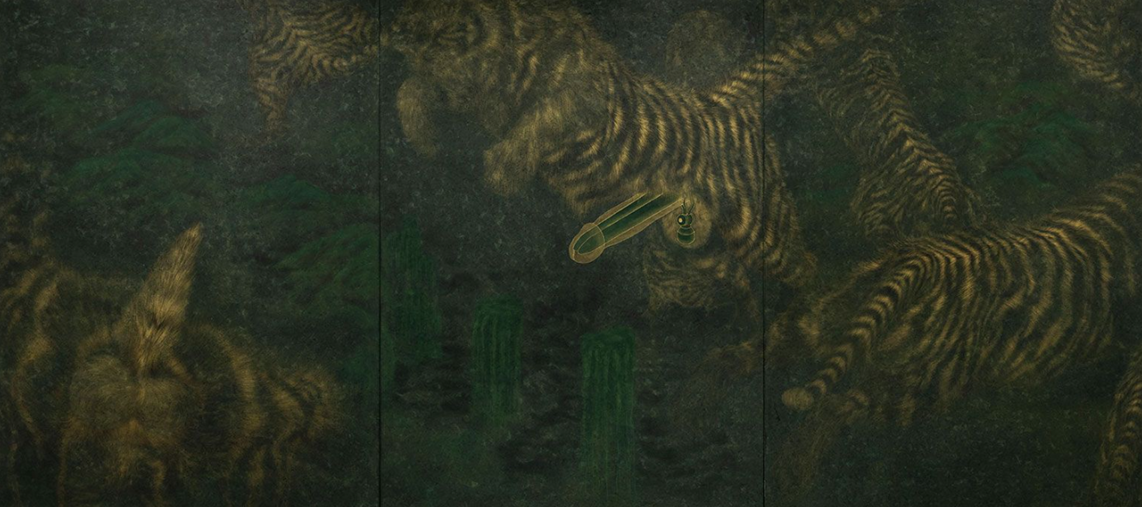
Lee Eunsil, BIONIC PENIS, PRESS THE BUTTON!, 2019, Colors and ink on Korean paper, 245×540cm © Lee Eunsil
The exhibition subtitle 《Press the Button!》 expresses a mechanism that regulates natural energy. Energy that arises futilely and disperses flows into circuits of concentration and accumulation, which will expand and reproduce power. However, as seen in works such as ‘Failed Vasectomy,’ the symbolic system is not perfect.
Within structures that resemble precise mechanical blueprints, there are openings that allow passage through forbidden lines. Between animals and humans lies a boundary defined by the presence or absence of taboo. Hair, as an animalistic inheritance of humans, remains an element of strength and sexual attraction within the human imaginary. Thus, acts such as cutting or concealing hair—including body hair—symbolize disempowerment.
At the same time, the temptation associated with these animalistic elements is underlaid with the conclusion of death. The structural forces that constitute human society have attempted to sever the network connecting desire and death through taboos, yet these taboos are often violated. Lee Eunsil’s works appear unsettling because the primal energy that human society believed it had already overcome surges in an attempt to break through the boundaries of taboo.