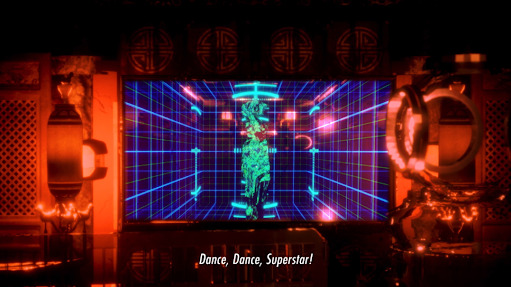
At 5 PM, through the open
doorway, hazy overlapping shapes and directionless blinking electronic sounds
began to intensify in output. As the spectators lingering outside all entered
through the dim, slanted passageway, the obscure forms already occupying the
space collided with them and, after a brief sputtering adjustment, exploded and
scattered in all directions. The paths created by the movement of disparate
sounds and forms suggested unpredictable scenes and motions beyond
comprehension, ushering the audience into a new space. The opening performance
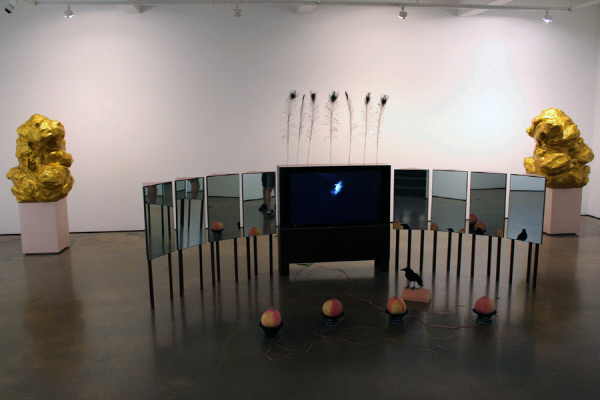
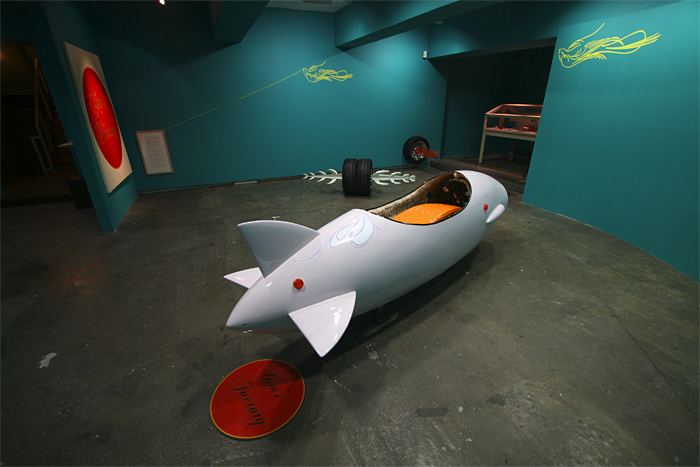
of Yangachi’s solo exhibition 《When Two
Galaxies Merge,》 became a kind of theater where
accidental encounters and uneasy signals emerged.
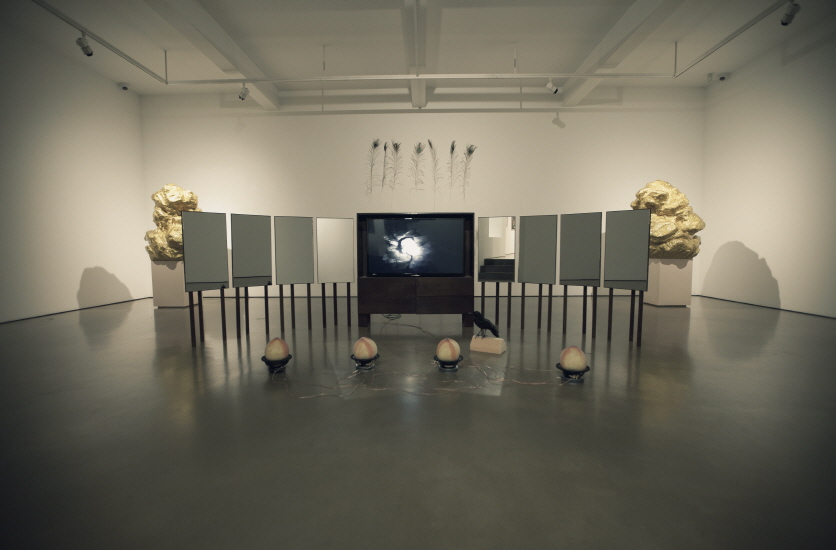
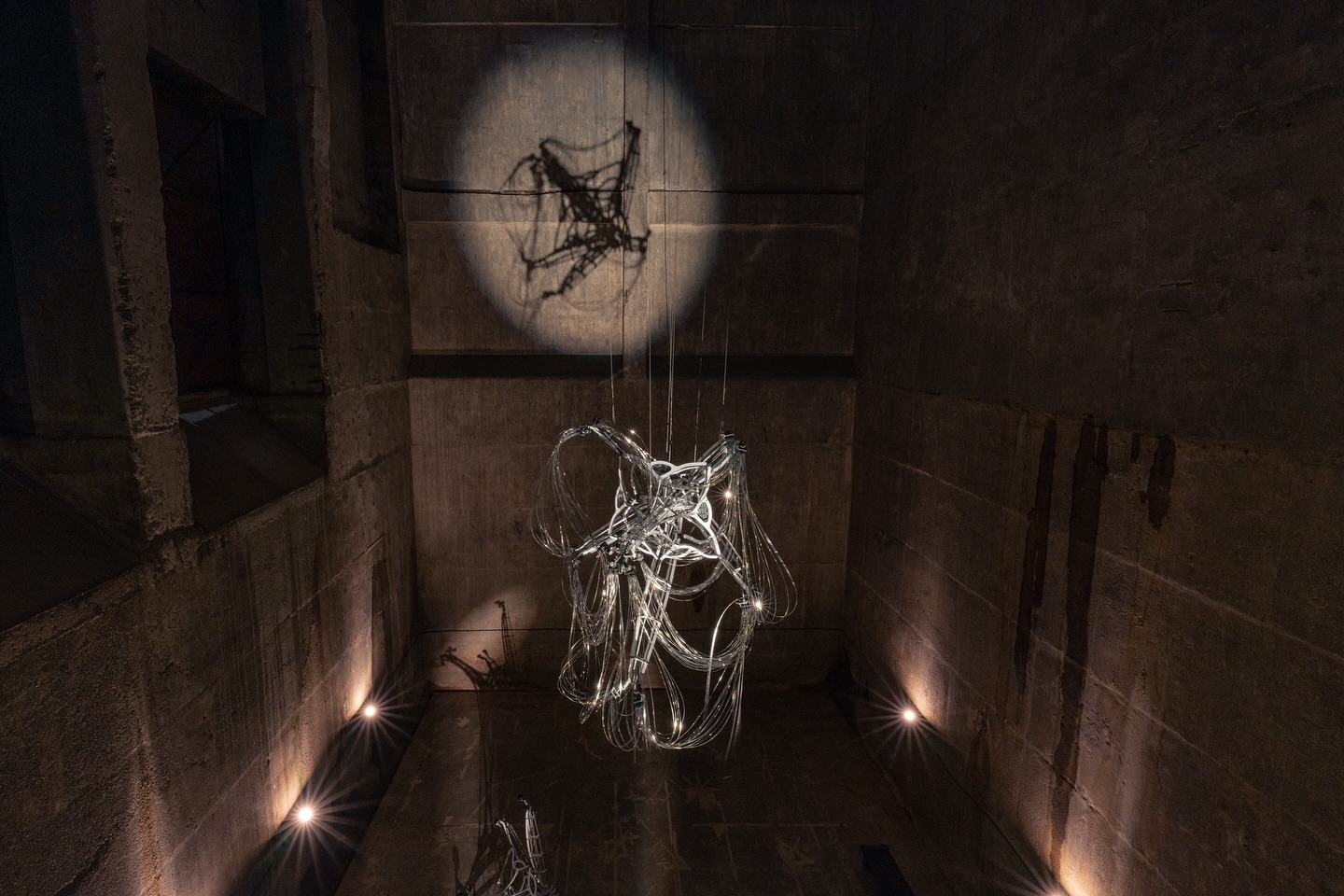
This temporary space, constructed
like a theater or stage, possessed a latent force that nullified eternal
presentness. For Yangachi, the theater refers to a virtual space of
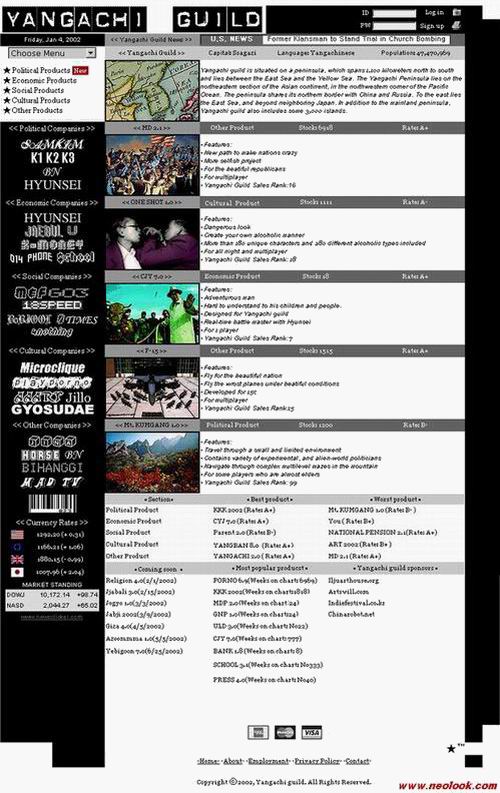
communicative situations and latent potential. The concept he has put forth to encompass
his practice—“virtual–latent force”—has been explored through various forms,
ranging from his past immersion in the internet to his recent focus on theater
and stage. These transitions reflect the artist’s strong longing for the
uncertain virtual world. For instance, the exhibition title merely suggests a
sequence of uncertain conditions: “When two worlds meet.” According to the
artist, this colossal merging of two different worlds breaks away from existing
gravitational stability, disperses and volatilizes, and then reorganizes into a
new sensory experience. This disturbance in communication and reconfiguration
into a nonlinear structure is like the unfinished sentence in the exhibition’s
title; Yangachi is particularly focused on such unpredictable situations
unfolding on stage. Perhaps it is this very stage he proposes that becomes a
virtual time-space where scattered and distinct sensations intersect and
momentarily exert their latent forces—love, insomnia, hypnosis, movement,
birds, Seoul, scores, 5G.
Sound, in this context, acts as a
signal of diverse beings, restoring dulled senses on the theater’s stage where
two worlds collide. Yangachi revisits the sense of sight, which has been
heavily relied upon, questioning whether it truly holds power or if it still
has the strength to sustain this world. Like Henri Lefebvre’s notion of the
“rhythmanalyst,” Yangachi attempts to discern the individual existences of
different sounds within the murmurs resembling noise, mobilizing all senses.
Also, as described by Brian Massumi, he listens to sound as a “manner in which
the virtual becomes actual,” experiencing the unpredictable situations brought
about by this latent force—in other words, the virtual.
In fact, Yangachi, who has long
experimented with media art based on the web, began to re-conceive media itself
as a form of communication quite some time ago. Consequently, the sensory
stimulations provoked by media often generate unfamiliar communications. At
least for Yangachi, sound functions as a tactile language that mediates
unknown, unrecognized experiences.
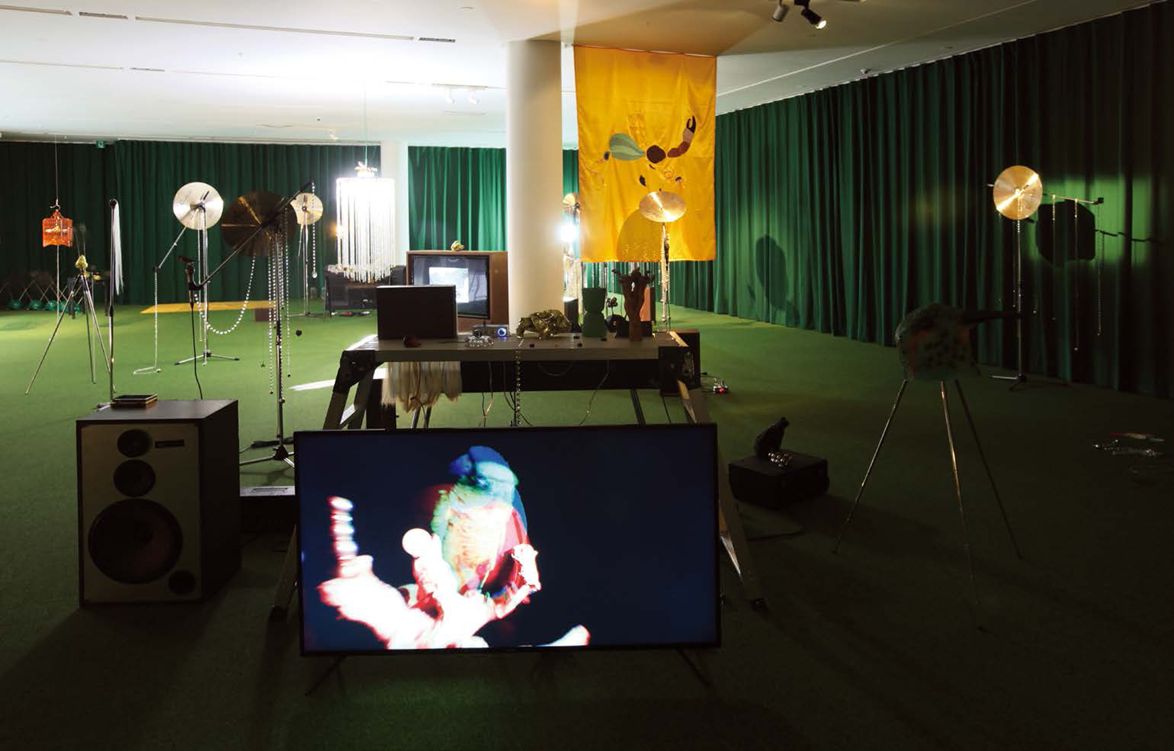
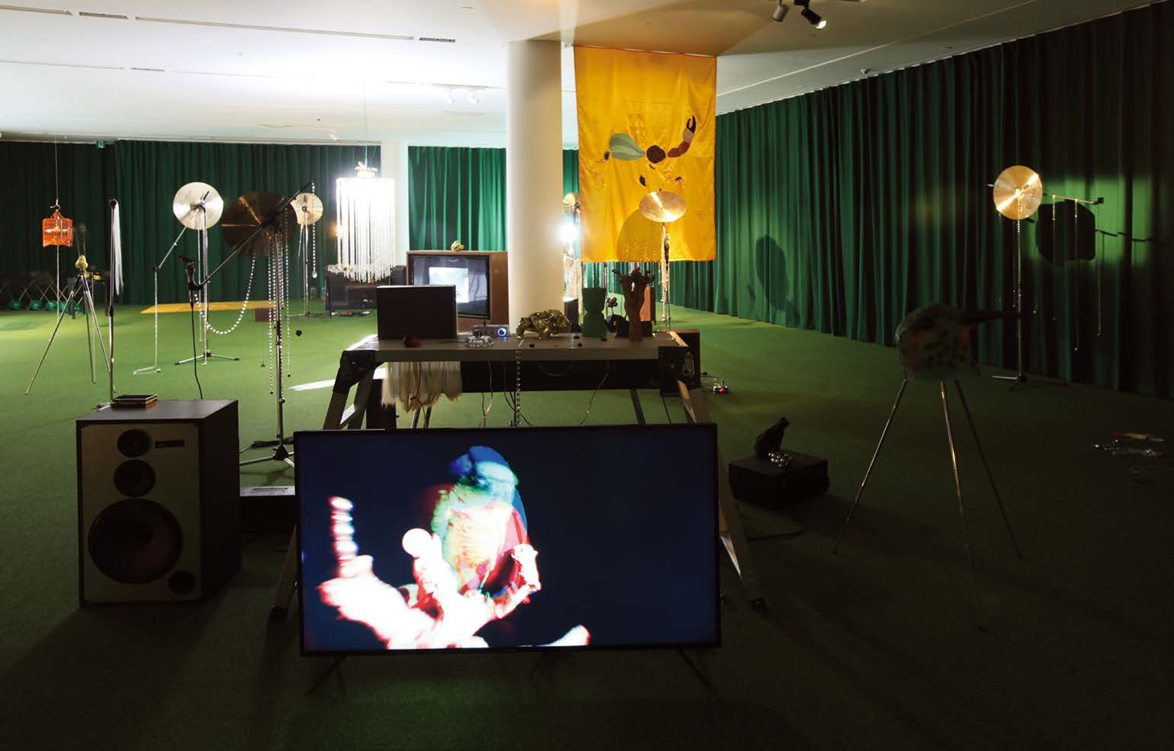
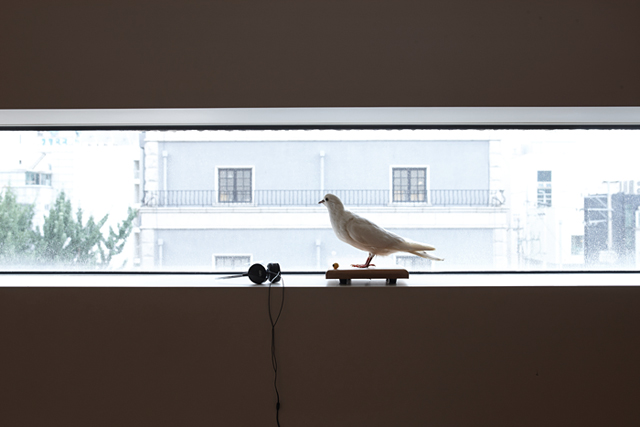
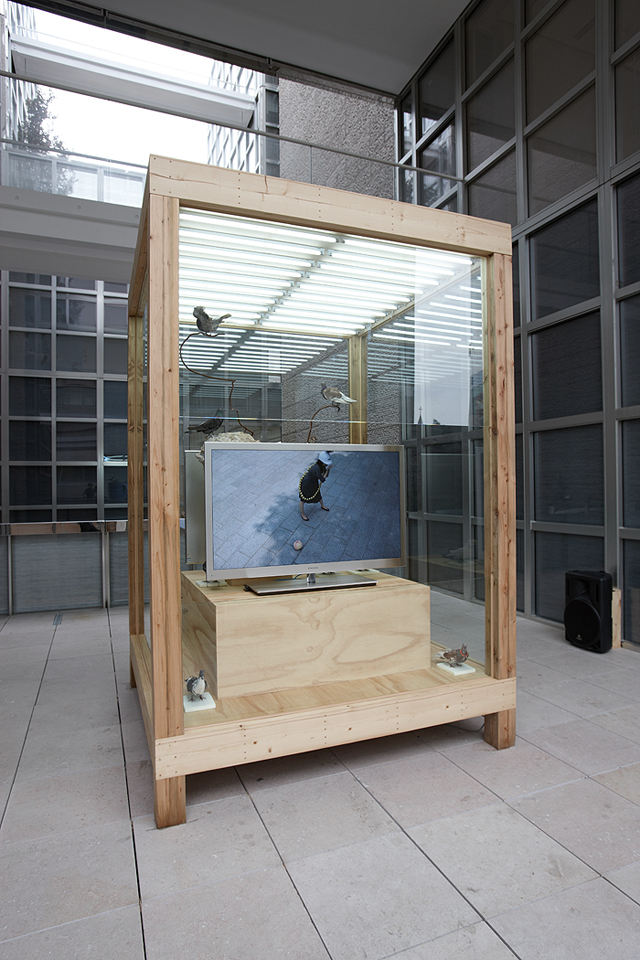
For example, birds appear on
stage as auditory communicators. The birds, isolated in hanging cages,
occasionally interrupt the space’s faint murmurs with piercing cries. At such
unexpected moments, the fragmented puzzle of communication is serendipitously
assembled as the two worlds merge. The birds on stage occasionally react
intensely to sounds leaking from TVs and speakers, marking the very moment when
an uncertain merging of different worlds occurs. Observing the swinging cages
in response to the birds’ sudden movements, one senses that the intense
auditory reactions cast a kind of hypnotic spell on the otherwise still space.
The glimmering electronic sounds—detected first by the birds—pierce through the
murmurs, sending new waves to the ear.
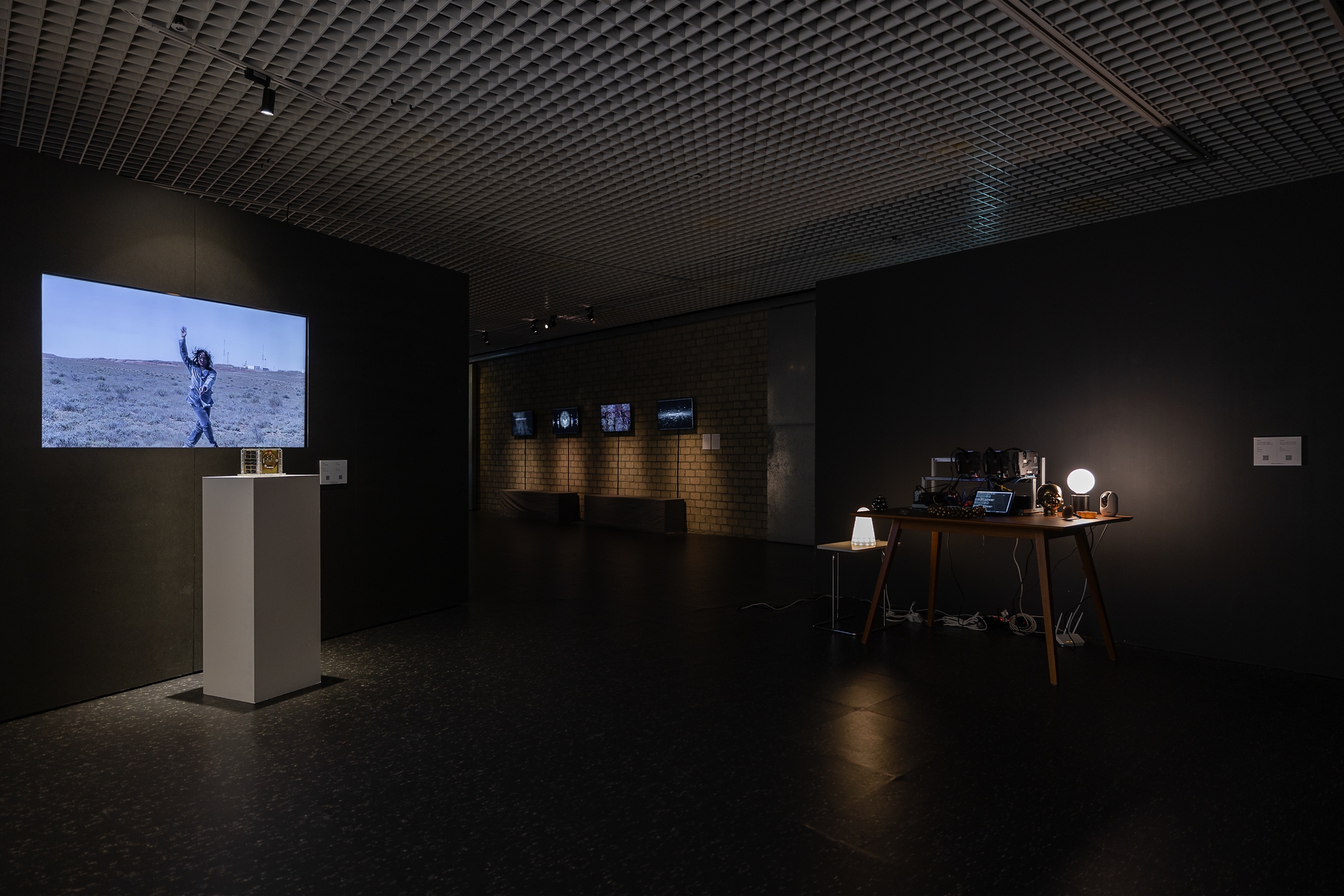
This virtual stage space, where
diverse sounds flicker and collide in midair, resembles a half-open revolving
door. Two worlds interlock, and through their merging, push and pull each
other, sharing the bodily experience of an uncertain and remote world.