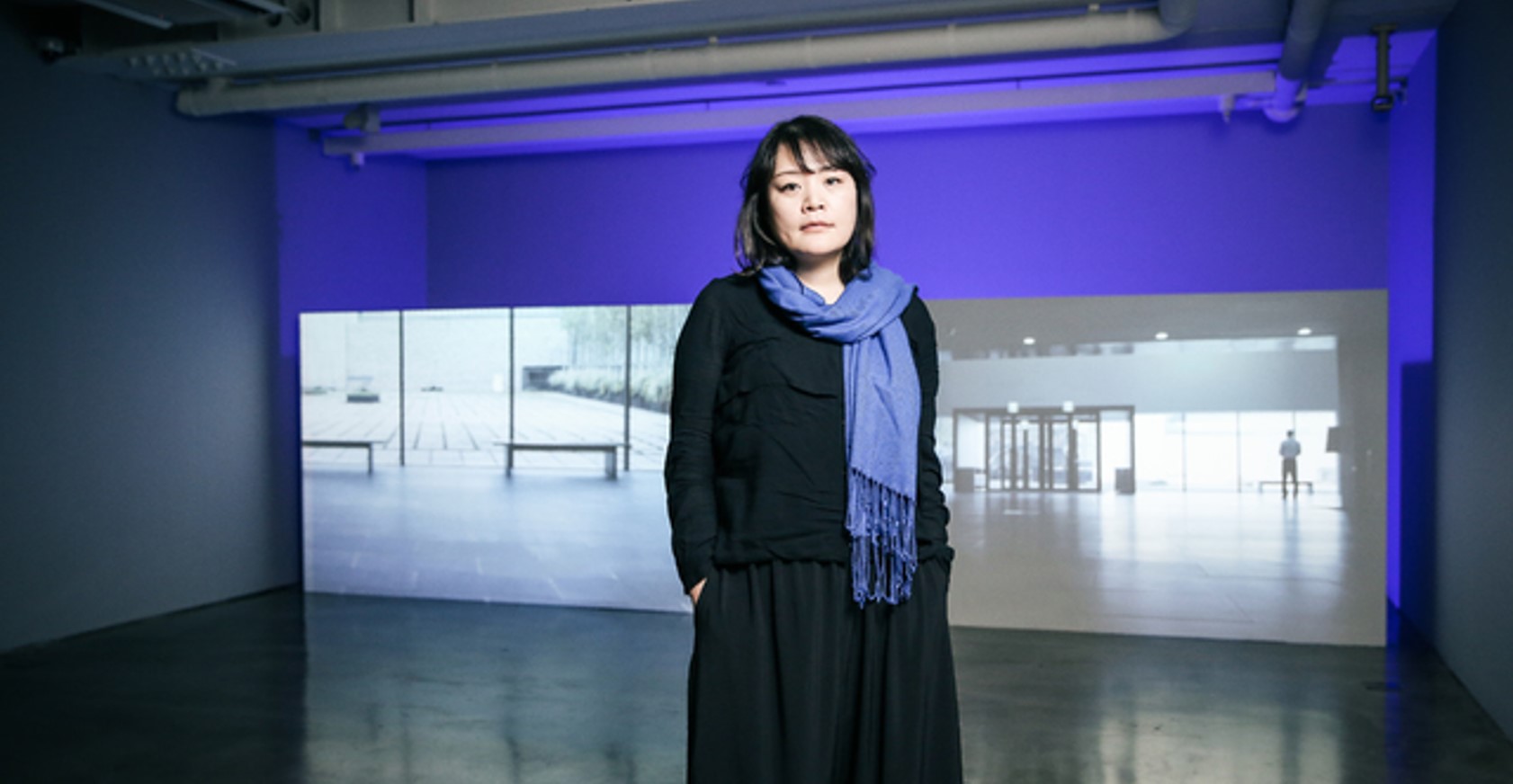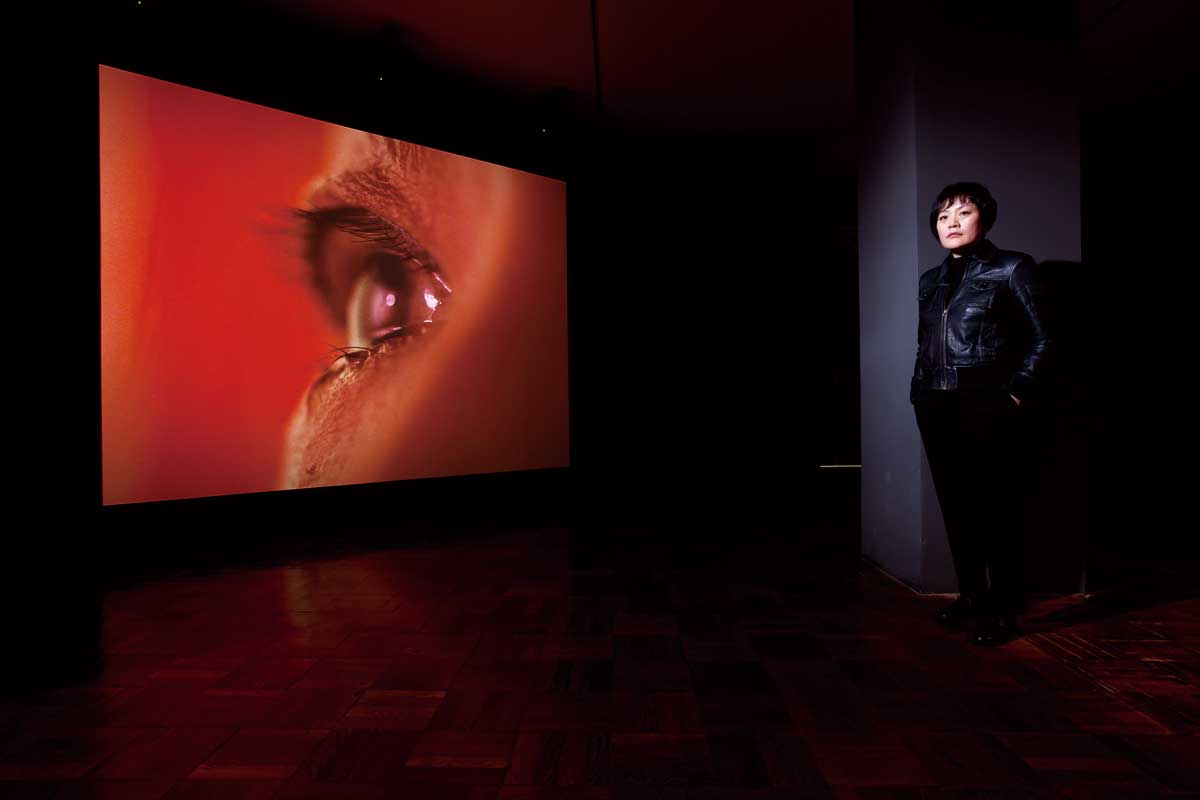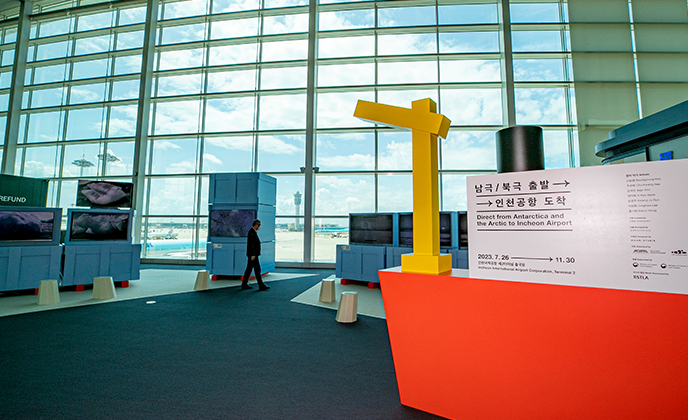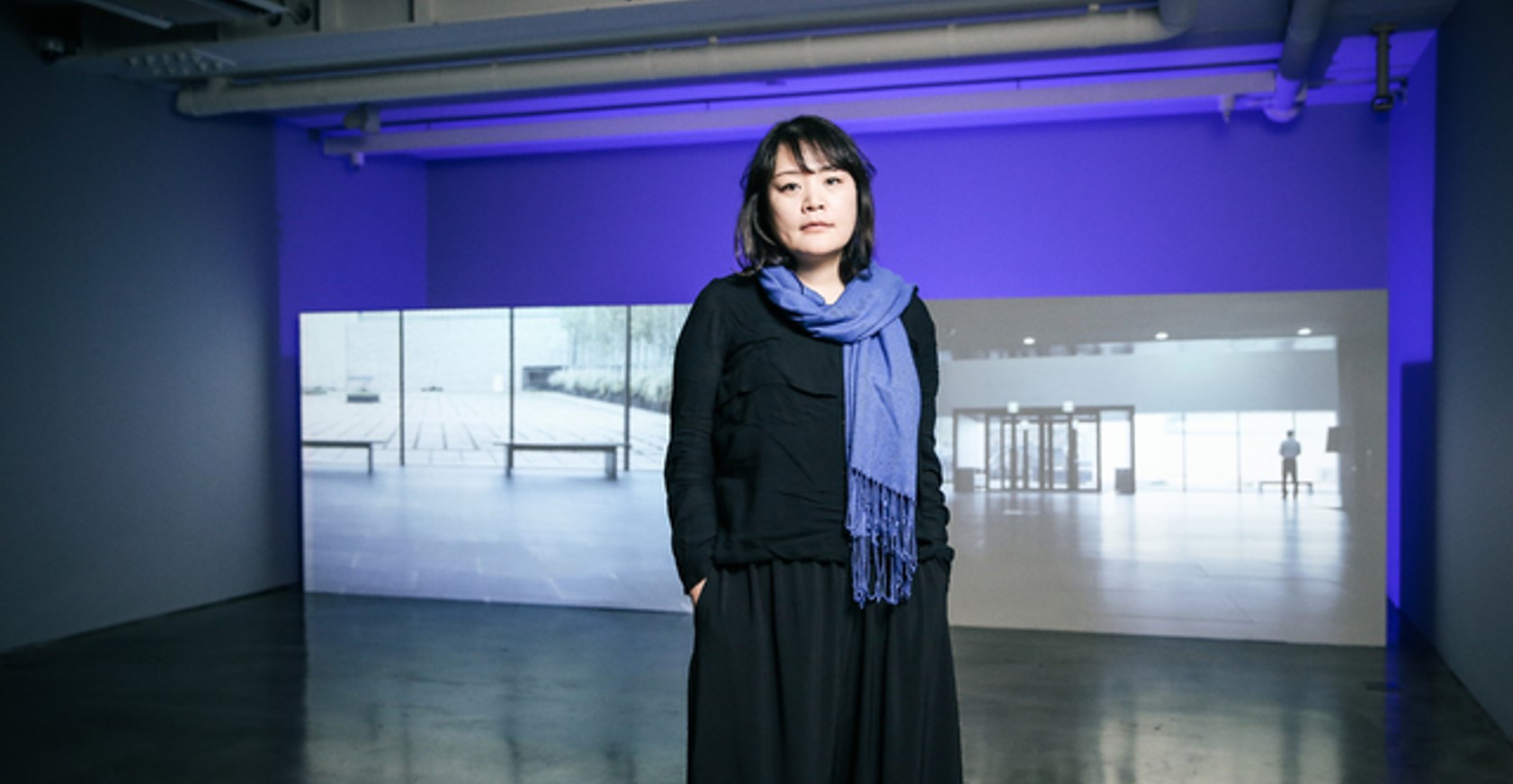
Media artist Sejin Kim moves between grand narratives and microscopic worlds. She captures the intimate and vulnerable moments of individuals living passively within the deepening conditions of contemporary neoliberal society. Her work reflects a consciousness of the individual’s daily life, concealed beneath the grave historical realities of the public sphere. The images Kim captures in video intertwine cinematic expression with the objective gaze of documentary. Through her distinctive video language and screening methods, she delivers her message with striking clarity. This essay examines the artistic world of Sejin Kim.

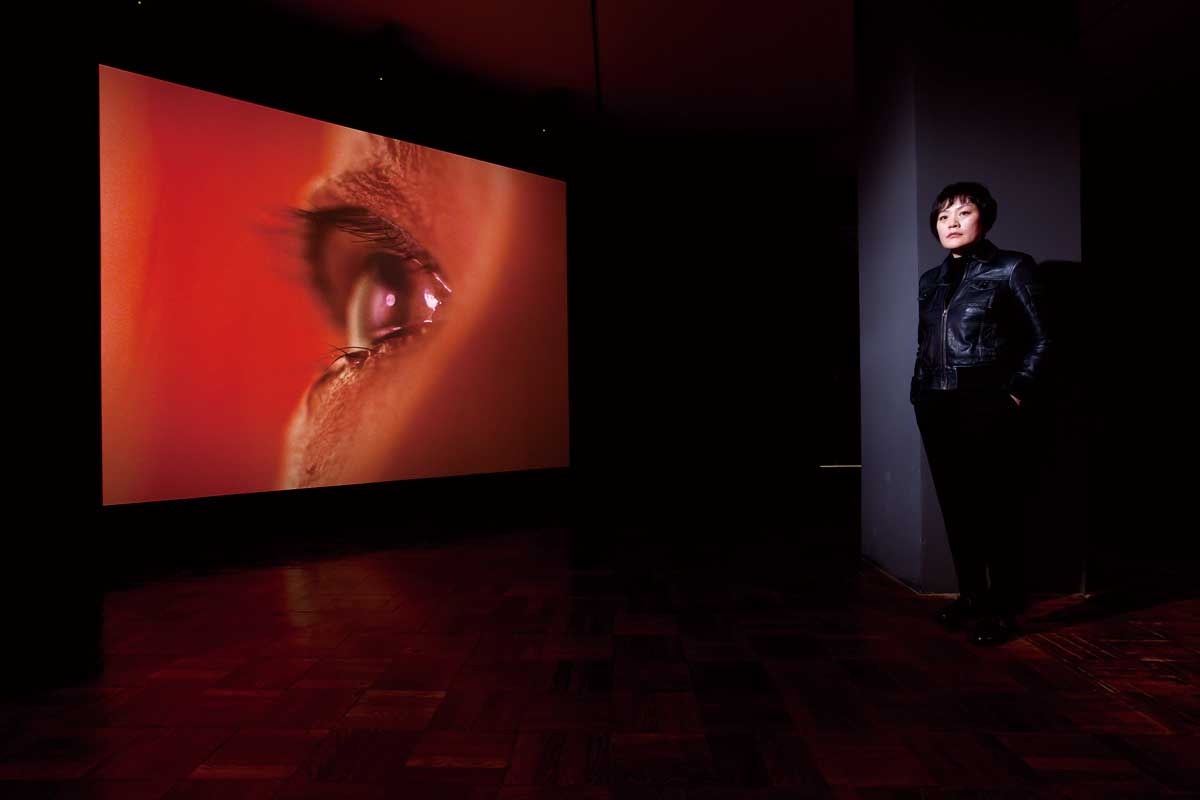
Sejin Kim, Chronology about the Bad Blood, 2017, Single-channel HD video, 5.1-channel surround sound, 12min 50sec, exhibited in Arrival of the New Woman at MMCA Deoksugung © Sejin Kim

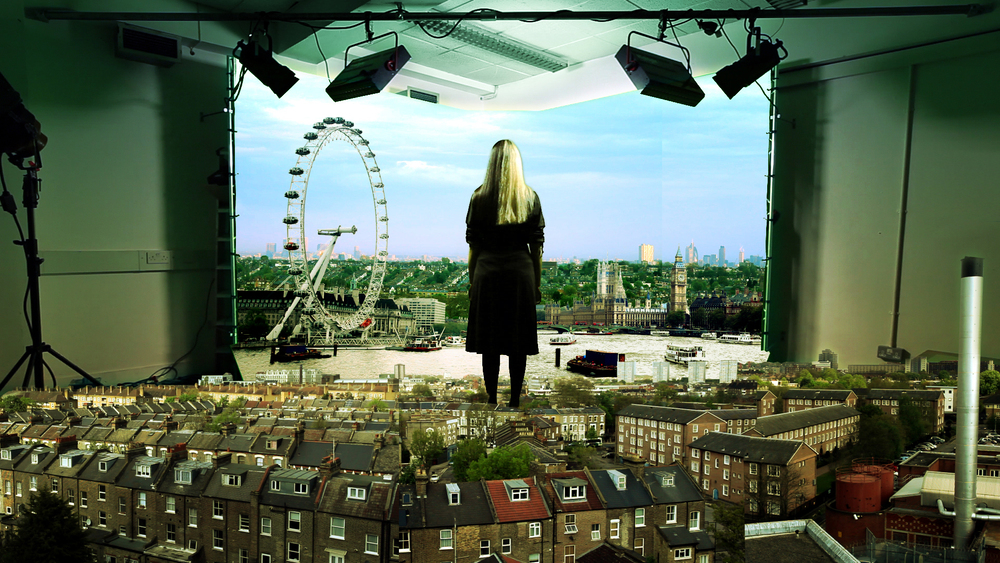
Let us begin with the final scene of Chronology about the Bad Blood. A woman carrying a bag walks away. In the distance, cheerful moonlight reflects off the calm waves of the sea. The camera slowly pulls back. Beyond the actress, a red sea drawn on the backdrop screen appears, along with a microphone, a filming monitor, and a camera dolly track. That the real protagonist of this work—presented in the exhibition Arrival of the New Woman at MMCA Deoksugung—is Korea’s first female novelist, Kim Myung-soon (presumed to have died in 1951), makes this one of the most “cinematic” works among Kim’s oeuvre.

(Born in 1896 in Pyongyang, Kim Myung-soon dropped out of Jinmyeong Girls’ School and studied in Japan. She attended Kokuritsu Joshi Gakkō in Tokyo for a year before returning to Korea and graduating from Sookmyung Girls’ School in 1917. Some sources say she enrolled in Tokyo Music School, but this remains uncertain. She is presumed to have died in April 1951 at the Aoyama Psychiatric Hospital in Japan. Her literary works include 15 stories such as At Grandmother’s Grave, The Maiden’s Path, The Night When Dreams Are Asked, and When Looking Back. In 1925, she published a collection titled Fruit of Life through Hanseong Publishing House.)

All films ask us what is representable. Regardless of the era or character, they raise questions about the boundaries of representation: what is representable, what lies at the threshold, what emerges when we reach that limit, and what disappears through it. Or, what can occur only at that limit. Moreover, what does it mean for film to pose questions about subjects that have not yet arrived to us? The “not-yet-arrived” encompasses not only imaginings of the future or past but also expectations of an unknown present. For me, ‘moving images’—or rather, most contemporary art experiences—are always like this: a continuum of gazes anticipating an unpredictable next scene from the moment of playback, and simultaneously, a present that strives to re-verify unresolved moments from the past.

This essay explores the materiality of film as it relates to representation (or non-representation) in Sejin Kim’s cinematic practice, focusing on Chronology about the Bad Blood.


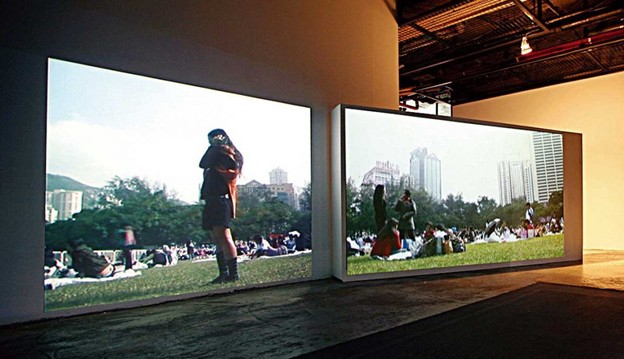
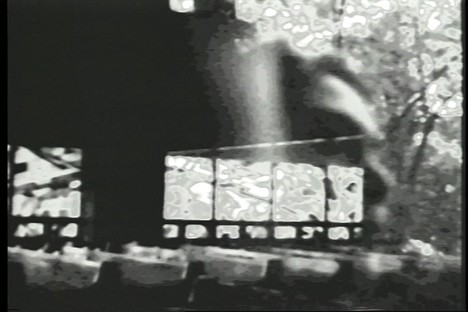
Sejin Kim, Victoria Park, 2008, 2-channel video, 3min 53sec © Sejin Kim

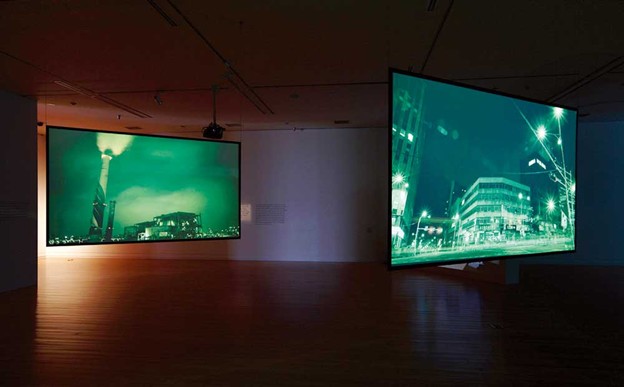
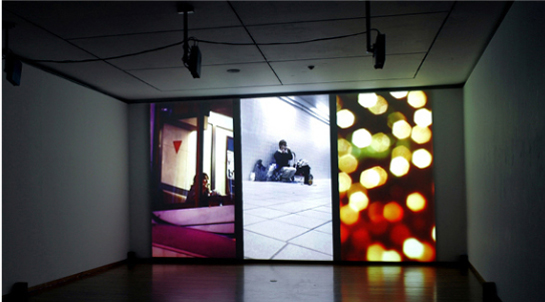
From the young domestic helper in Hong Kong spending her weekend days at the park due to high rents (Victoria Park, 2006), to a highway toll booth operator and a security guard waiting for dawn on narrow chairs (Night Worker, 2009), and a gallery guard quietly standing and gazing into the space from the corner of a tidy museum (Urban Hermit, 2016)—Sejin Kim captures specific durations through her subjects. Ghosts who exist, but do not exist. As John Berger describes in A Seventh Man, they are those who are never born, never raised, never aged, never exhausted, and never die.

Kim’s documentaries on existence draw attention to those drifting between systemic selection and forgotten anonymity, revealing how the concept of the “individual” in modernity transforms into a momentary and microscopic “state.” Recalling the fleeting objects in Urban Hermit filmed in a museum—things like detergent containers and mops tucked away in storage—they are dry, desolate objects that must be hidden.

How can we meet a novelist who has now vanished—an individual who is presumed to have died in 1951, some 67 years ago? When recalling films that summon the dead, we often fall into the illusion that an actor’s appearance or voice can augment the realism of a character. But in reality, such methods only reinforce the fiction. Film, even as we watch it, is being erased and disappearing. Chronology about the Bad Blood is a good example of this, precisely because it situates itself within the conditions of representation of a person who once existed.

What appears (paradoxically) reveals absence; film does not merely depict what is represented, but addresses the very possibility of representation itself.

Kim Myung-soon, the protagonist of this video, was the daughter of a courtesan during the modern era. As a young schoolgirl, she was raped by a Japanese officer; as a female writer and a woman who openly expressed her beliefs in free love, she was repeatedly expelled from her place in society—from birth to death.

For this novelist, who lives only through the writings she left behind, Sejin Kim constructs an image using deeply cinematic grammar—an actor’s performance, framed shots, original soundtrack implying a narrative, and narration. Film here does not reinforce reality but rather cinematizes the fictionality of reality itself.

The artist’s camera stands on the paradox that the act of filming necessarily violates the subject’s right to be forgotten, destroying the secrecy of their existence.


Sejin Kim, Night Worker, 2009, 2-channel HD video, 6min 58sec © Sejin Kim


Backs and Voices

I watched Chronology about the Bad Blood twice—once at the MMCA Deoksugung exhibition, and once via a video link sent by the artist, which I viewed on a monitor with headphones. In those two experiences, the film revealed a clear duality: the image/video track and the sound/audio track diverged into two distinct axes.

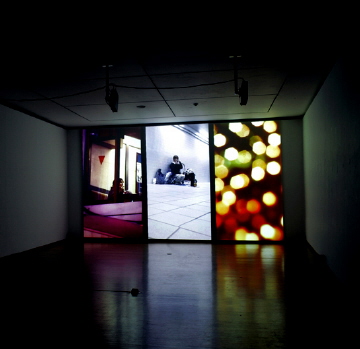
In works like Day for Night and Urban Hermit, Sejin Kim has typically constructed her narratives without dialogue or narration, using silence and emptiness to shape the flow. Her screens are divided planes that reflect a single image, fragmented syncs scattered across space, guiding the viewer’s movement. Compared to the “visual narratives” conveyed through moving images, editing, frames, on-site sync playback, and spatial lighting installations, this work is markedly auditory—to the extent that it may be called a “read-aloud film.”

What caused this shift from visual to auditory narrative? Chronology about the Bad Blood begins with the premise that novelist Kim Myung-soon did not die in 1951, but instead survived somewhere in secret to complete the final sentence of her novel. The work is composed of excerpts and words from her poems, novels, plays, and essays—fragments of confession about deeply personal inner desires, ideals, frustrations, loneliness, hope, and isolation.

With original sound reminiscent of a radio drama, voices reading Kim’s poetry, an actress’s voice, accusatory male voices, field recordings from the forest, found footage, and a layered chorus of dissonant voices invading one another, the work becomes a kind of abstract drawing made of sound. The trembling in the voices seems to imply the formation of an unseen character.

In Jonathan Sterne’s The Audible Past: Cultural Origins of Sound Reproduction, he writes that one purpose of the invention of the modern phonograph was to record the voices of family members—conversations, recollections, and wills in their own voices. This was a form of necromancy: the ability to summon the voices of the dead into the present at any time.

The recorded voice, then, becomes both a real and a magical state of being.


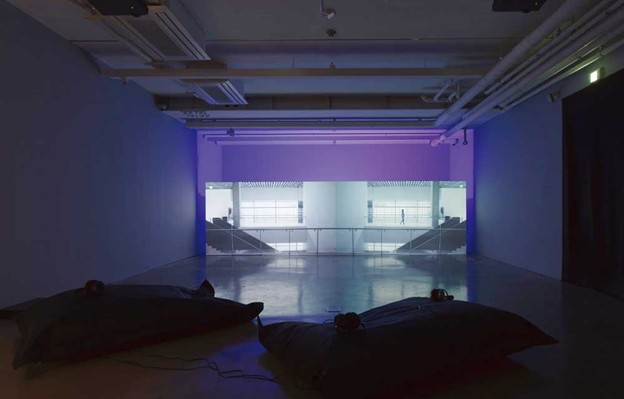
Sejin Kim, Urban Hermit, 2016, 2-channel HD video, 6min 25sec © Sejin Kim

The opening scene of Chronology about the Bad Blood features a farewell between two young girls, Beomnae and Teuksil. They cup their hands to their mouths and call each other’s names as they part ways, one going this way, the other that.

The time of the film is not the time it takes to comprehend a story, but rather the time it takes to approach (or leave) the Other—a time of moving toward existence itself.

It is a time situated on the threshold of what can be experienced, on the surface of what we can call the present; a time that speaks to what cannot be fixed or commonly grasped within experience. A form of being called—or of vanishing. Perhaps this movement between naming and farewell defines what cinema is.

Let us recall a scene from Urban Hermit. The glass windows and hallway are spotless. The janitor, silently walking around the museum with a cloth in hand, is filmed from behind. Kim Sejin leaves this footage played in reverse for a moment, letting time briefly rewind.

The image that snatches the viewer’s attention is always a figure’s back.

The girl standing in the field with her phone flashlight in Day for Night, the characters seen from behind in Sleeping Sun and Temporary Visitor—these are all silent moments. Kim describes the image of a person’s back as “an image imbued with anonymity.”

When we cannot know what someone is looking at, when we see only a solitary figure’s back in a crowd, seemingly staring into something—it demands our concentrated attention toward existence itself.

The woman walking away with a bag in Chronology about the Bad Blood—her back now turns to us and asks: What did we really see?

References