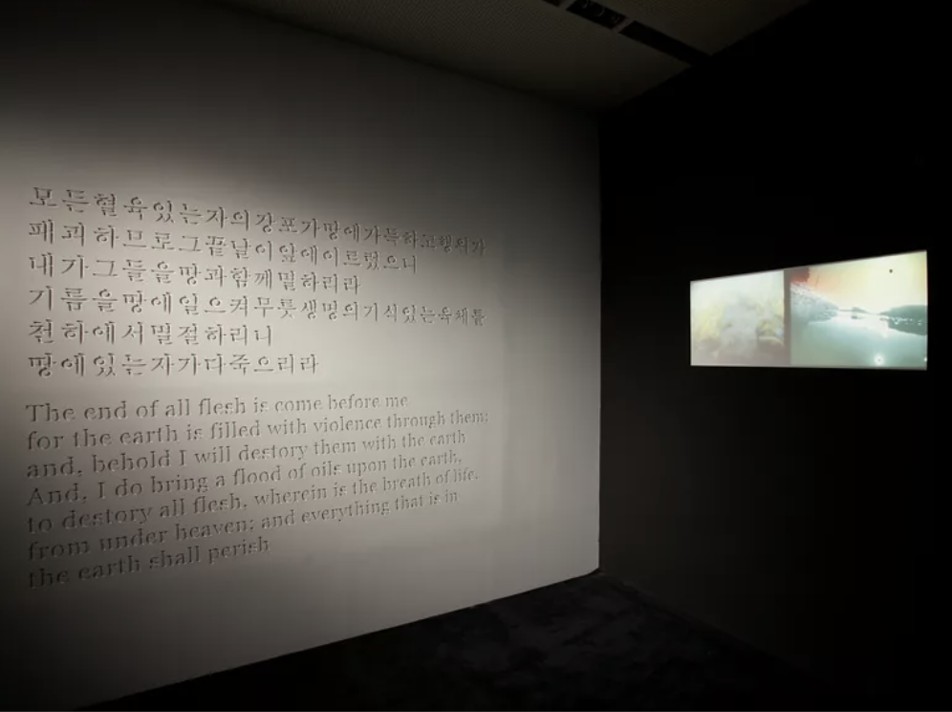
Such attempt of Sanghee Song commences from her private
experiences. These works were created from the visit she had in the
northernmost Soya of Japan encroaching the Sakhalin Seas while she was doing
her Japanese residency 7 years ago. She was faced with a small stone tablet in
Soya written “Peace to all people in the world” and these memories became
foundations of her works in this exhibition. The works of artist Sanghee Song
based on historical events such as assassination of first lady Yook Yeoung-soo,
or Stone memorial of King Gwanggaeto of Goguryo Kingdom, actually originates
from the questions about the circumstance that she finds herself in, about the
time period, about society as a woman in a certain age-group. This is the
artist’s search for a path to seeking her own identity questioning
herself/woman as an entity of cognition where she is placed among the
homogeneity between members of the society that claims we are one. And this is
a means of resolving the confusion between the processes.
This concern about the self, in the end, connects to the question
about the society and the system. This is because she can certainly understand
society only through observing the society on women’s view/observation, and
eventually Sanghee Song is able to realize the point where she exist in the
world. Soya, the background of the stone tablet titled Peace to all people in
the world, is the place where Korean Airline carrier 007 was shoot down by the
ex-Soviet Union fighter plane and exploded to pieces in September 1983. Due to
this event, 269 passengers including a US senator died, 53 people including
family of the deceased visited the accident site, but could not recover the
dead bodies.
Even now after 28 years, accurate information about the victims
has not been delivered and many conspiracy theories are abounded. Speculation
that it was intentional attack by the ex-Soviet Union at the height of the Cold
War, and that those passengers had survived the attack has not been confirmed.
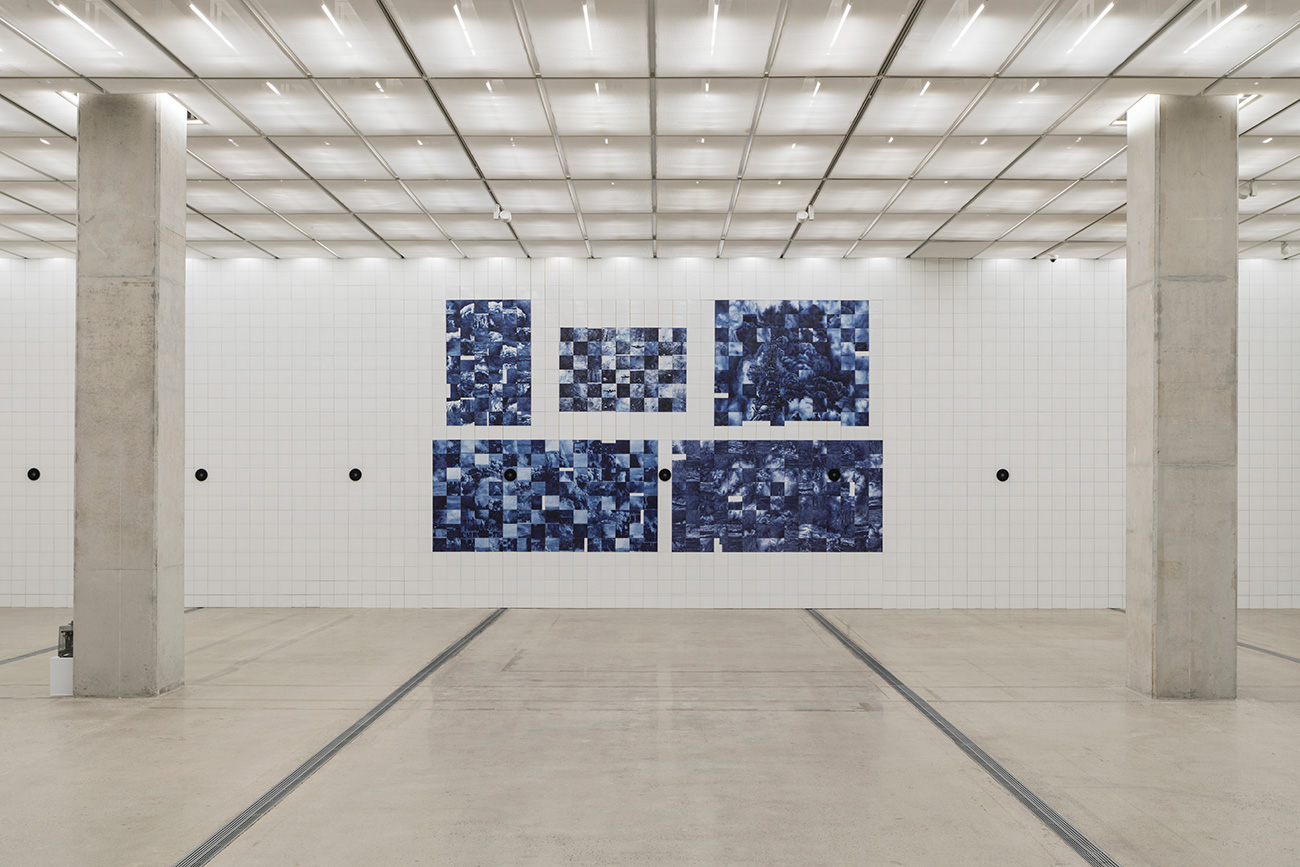
Drawing work 1983 (2010) has been constructed by comments
made by ex-Soviet Union and U. S. presidents that described the circumstances
of the Cold War at the time.
Whatever the truth is, only the fact that many
innocent people unrelated to such issues died and disappeared without any
remains is crystal clear. Such attempts of the artist to deal with social
events is her effort to look properly into the system she is put in, in the
process of seeking her own identity. Only through such works, she will be able
to understand the society clearly and simultaneously she will comprehend and
assess the critical points on women’s views/perspectives.
However, why has she decided to relieve a story now that is over
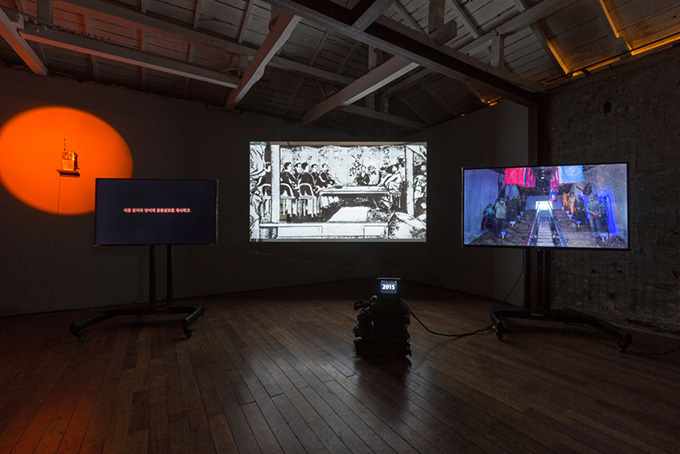
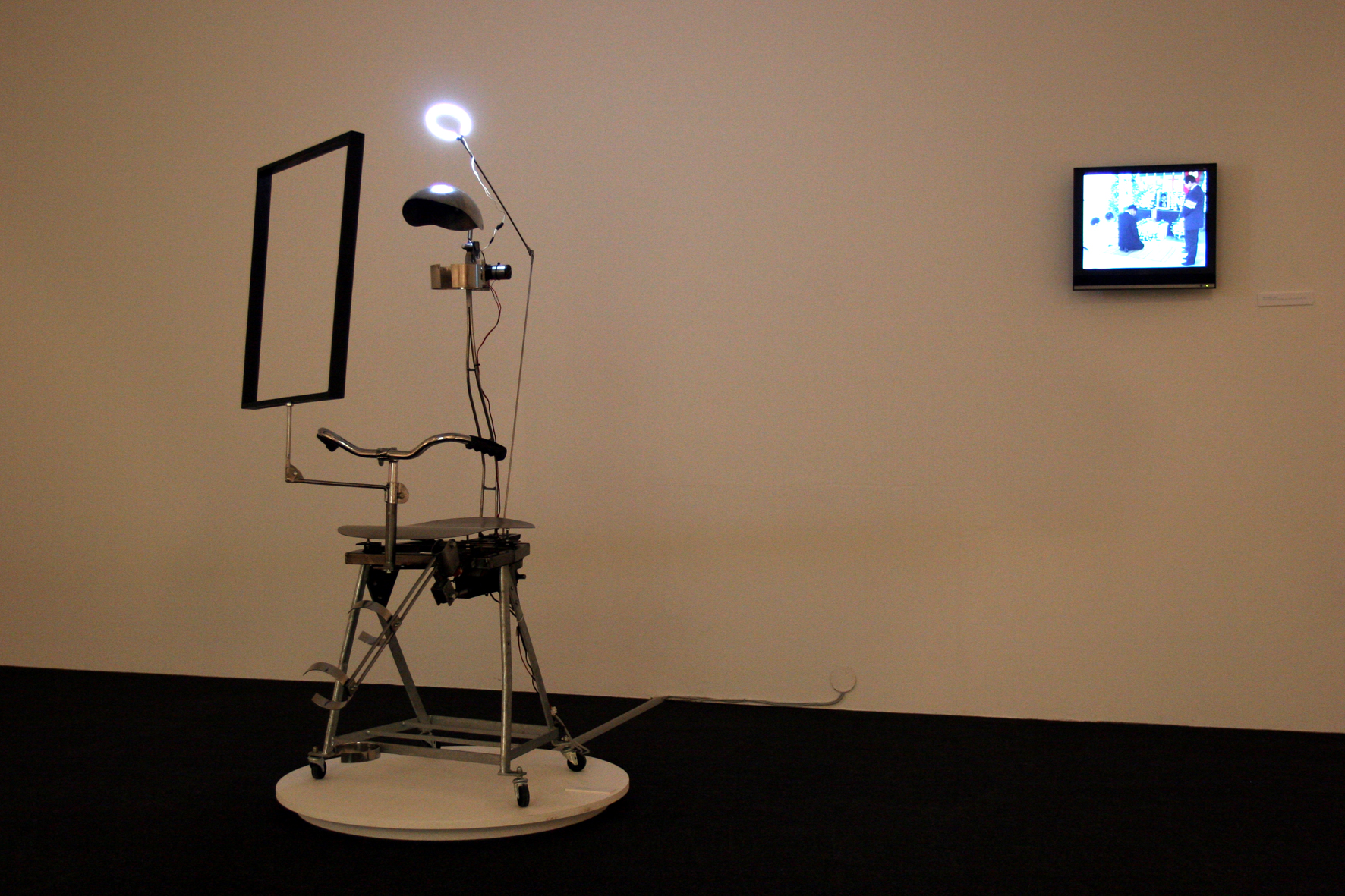
20 years old? 243.0 MHz (2011) deals with and centers on the
radio communication between then ex-Soviet Union fighter plane pilot Gennady
Osipovich and Commander of Soviet Union’s Air Force Kournokov at the time of
the 1983 KAL 007 attack. The contents of the radio, the main event comes out
after popular songs are heard, as if one is tuning into the radio, places the
circumstances of then dialogue into the present times. Sanghee songhas already
proceeded to combine myths or stories of the past into the present times into
her works such as Abandoned Egg (2003). Such reallocation of
historical events and past stories represent the artist’s belief that such
events repeat itself and exist now in different forms. As Freud has said,
forgotten history repeats itself, and present is again another type of past’s
repetition.
As it has happened over half a century ago, or even 20 years ago, because of
aggression, war and religion, many souls are disappearing mutely somewhere even
now in present times. In 1983, the only remains that then Soviet Russia has
returned to Korea (Japan and American Coalition of the family of the deceased)
were frozen shoes of those passengers. Sanghee songthought that maybe those
passengers were floating around the Pacific Ocean somewhere even then. Those
shoes that make an appearance floating amidst the black sea in Sanghee Song’s
work Shoes (2010) almost appear to be calm and beautiful
regardless of its origins or forms. As Gayatri Spivak has questioned, “Can the
subaltern speak?” those shoes are mute in sight. However, like those shoes that
may be floating around somewhere, artist Sanghee Song grants silent voices to
those mute, floating subalterns.