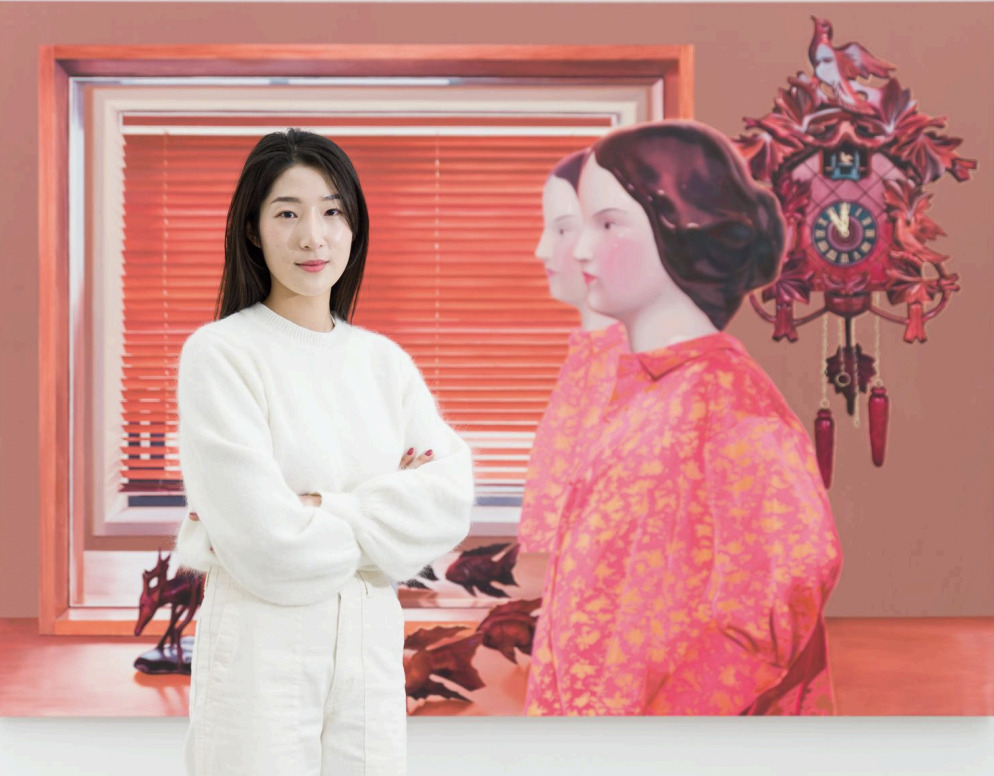
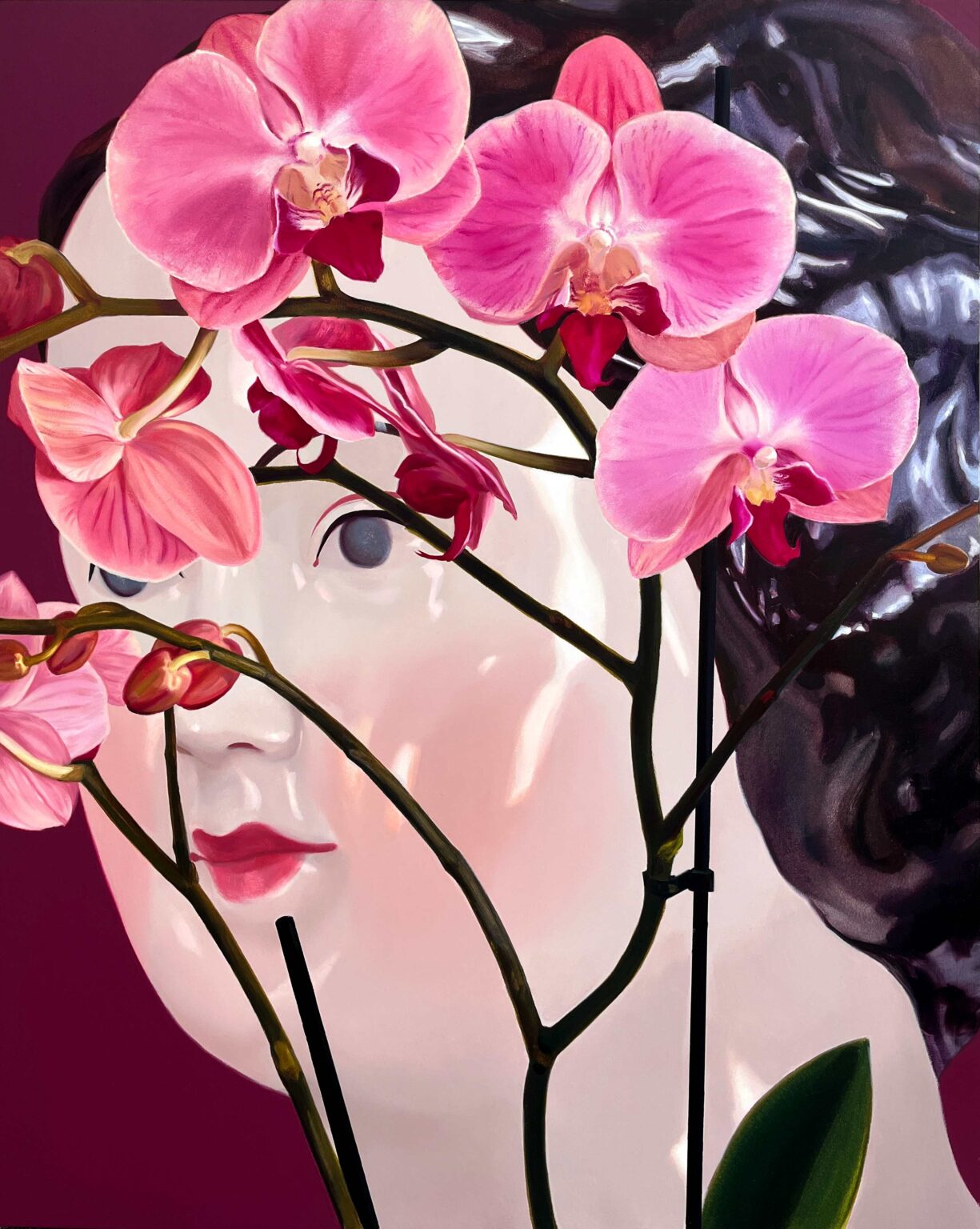
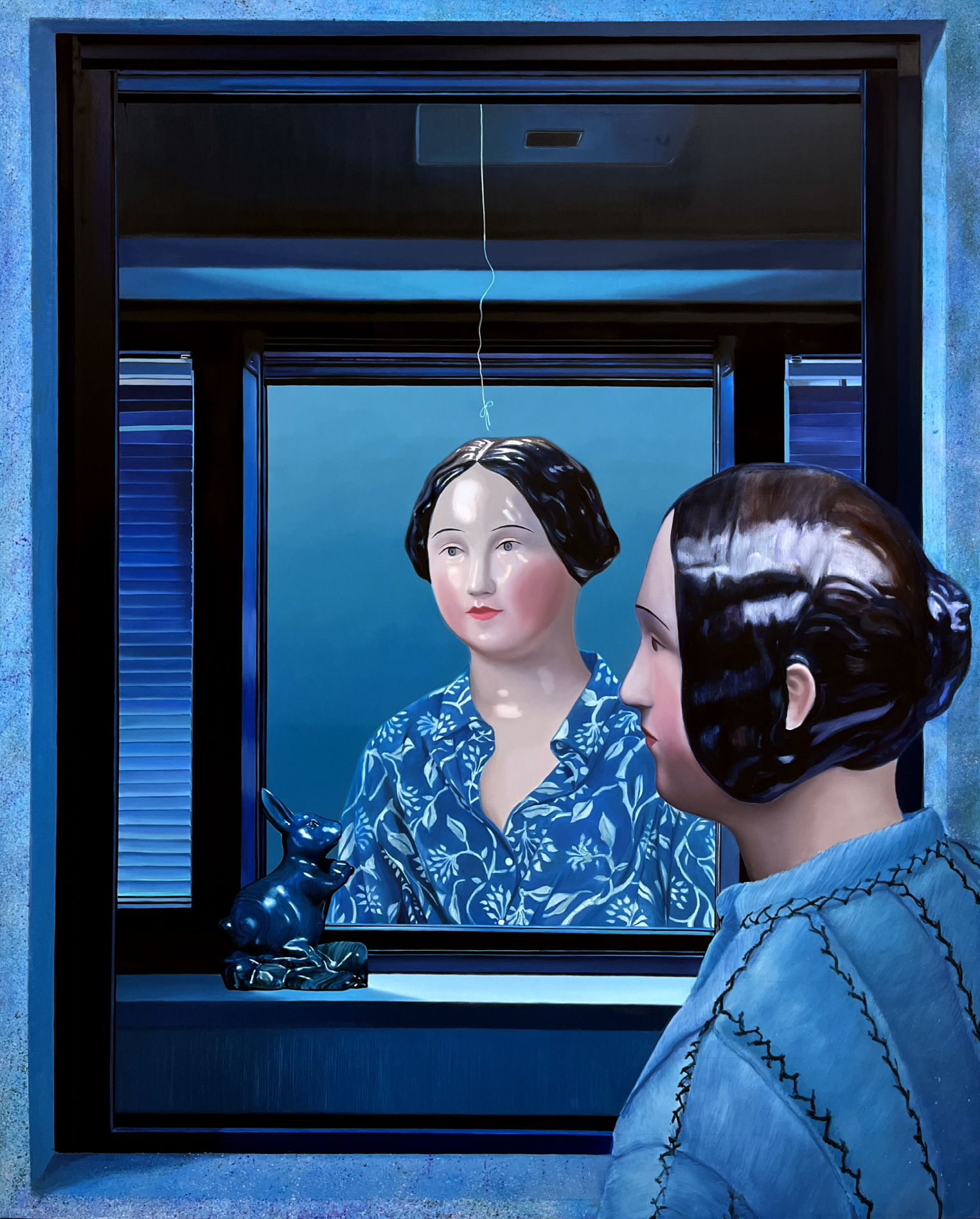
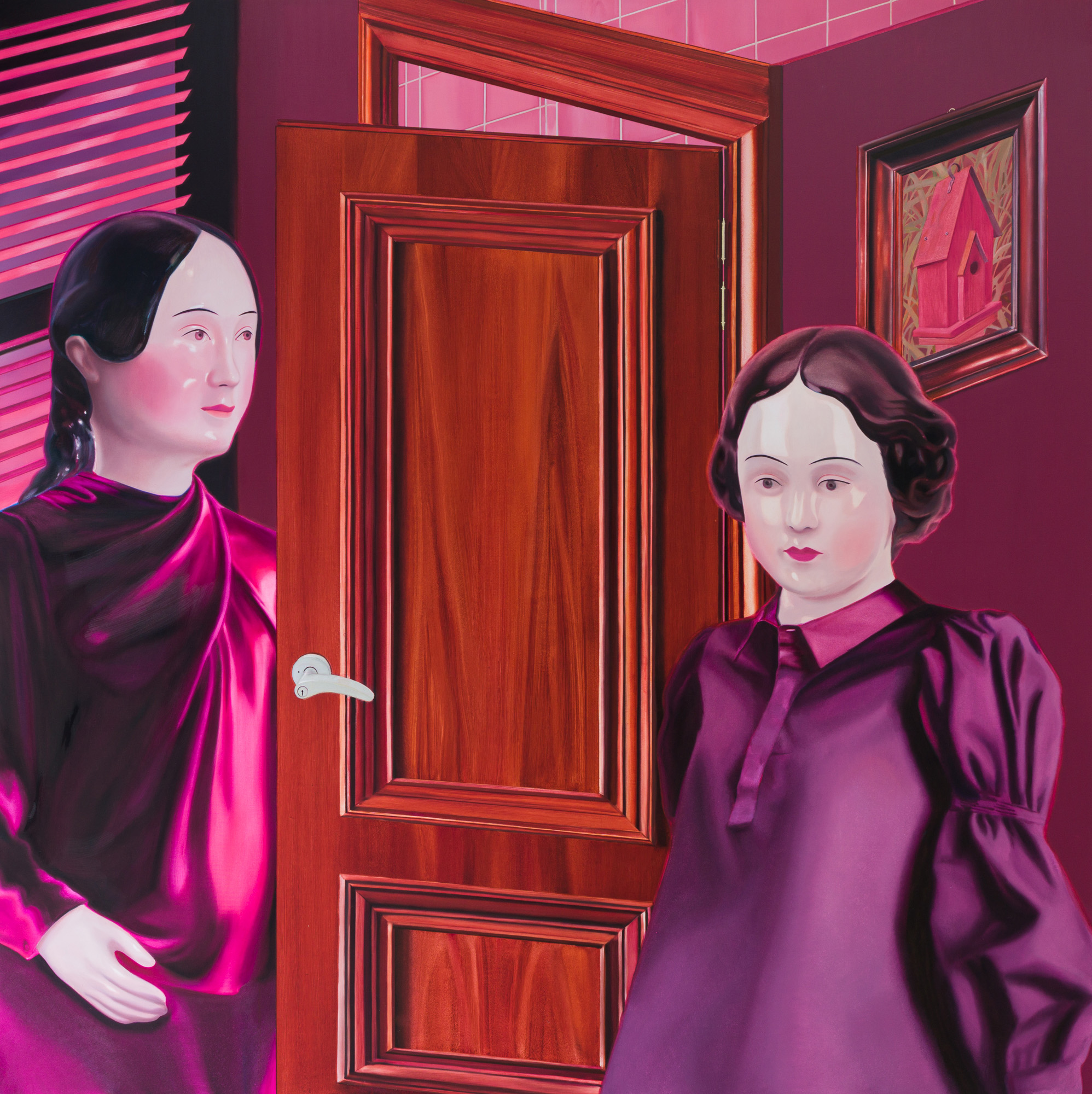
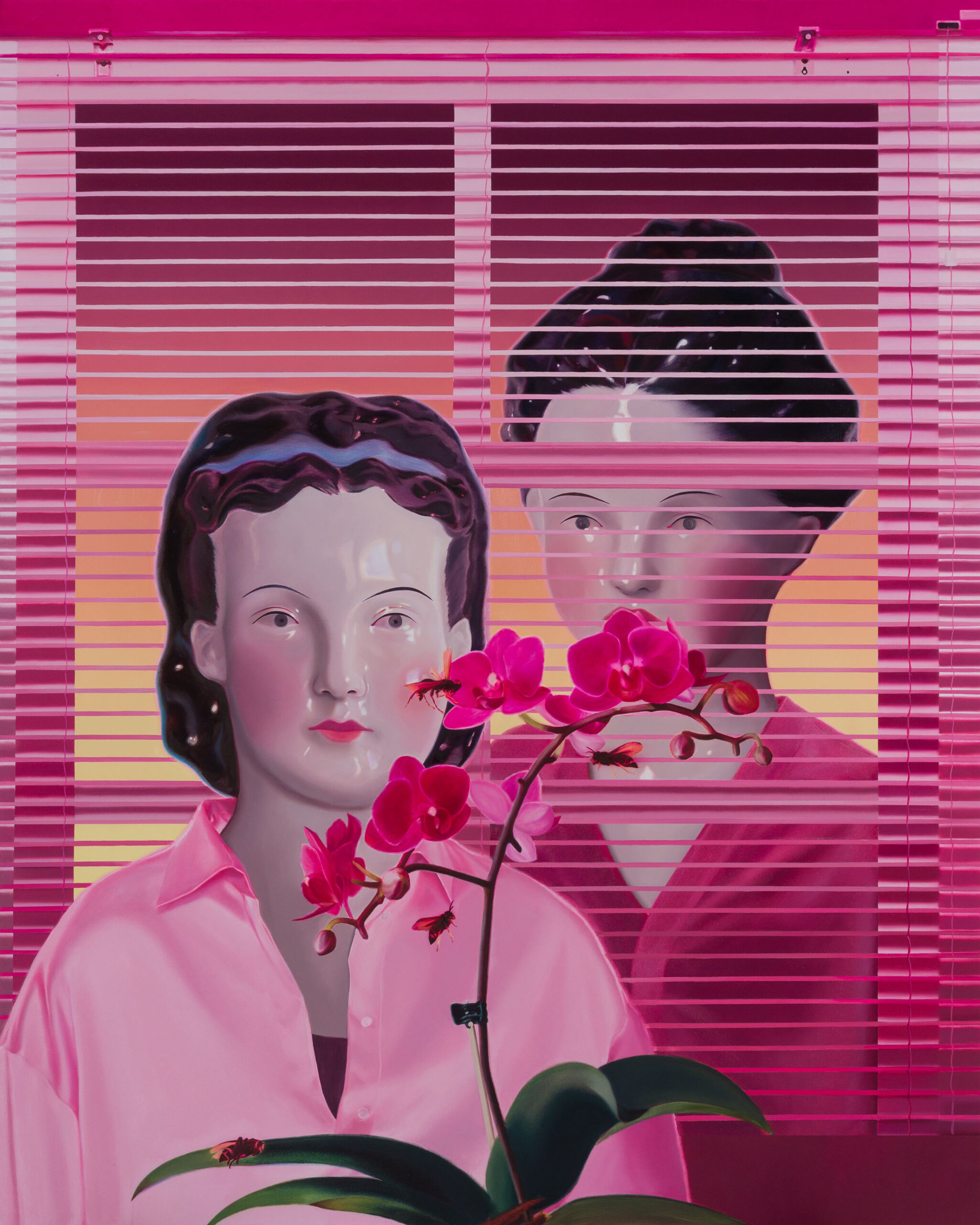
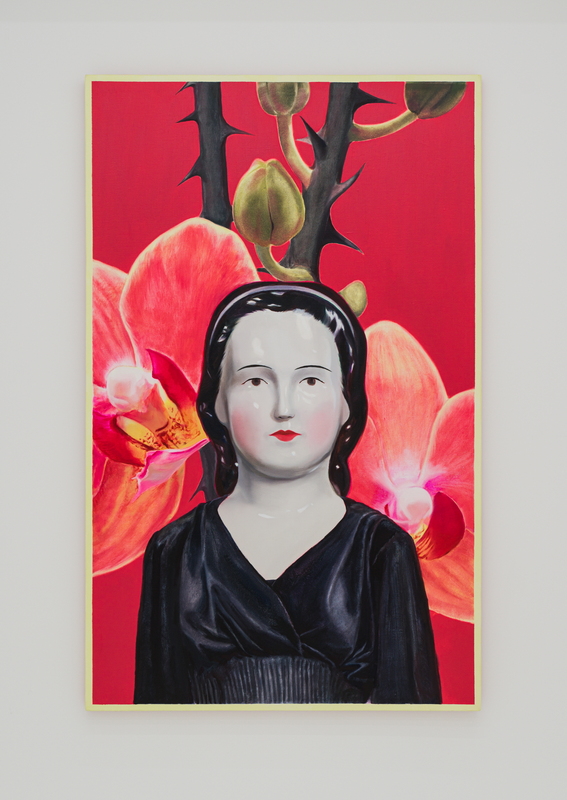
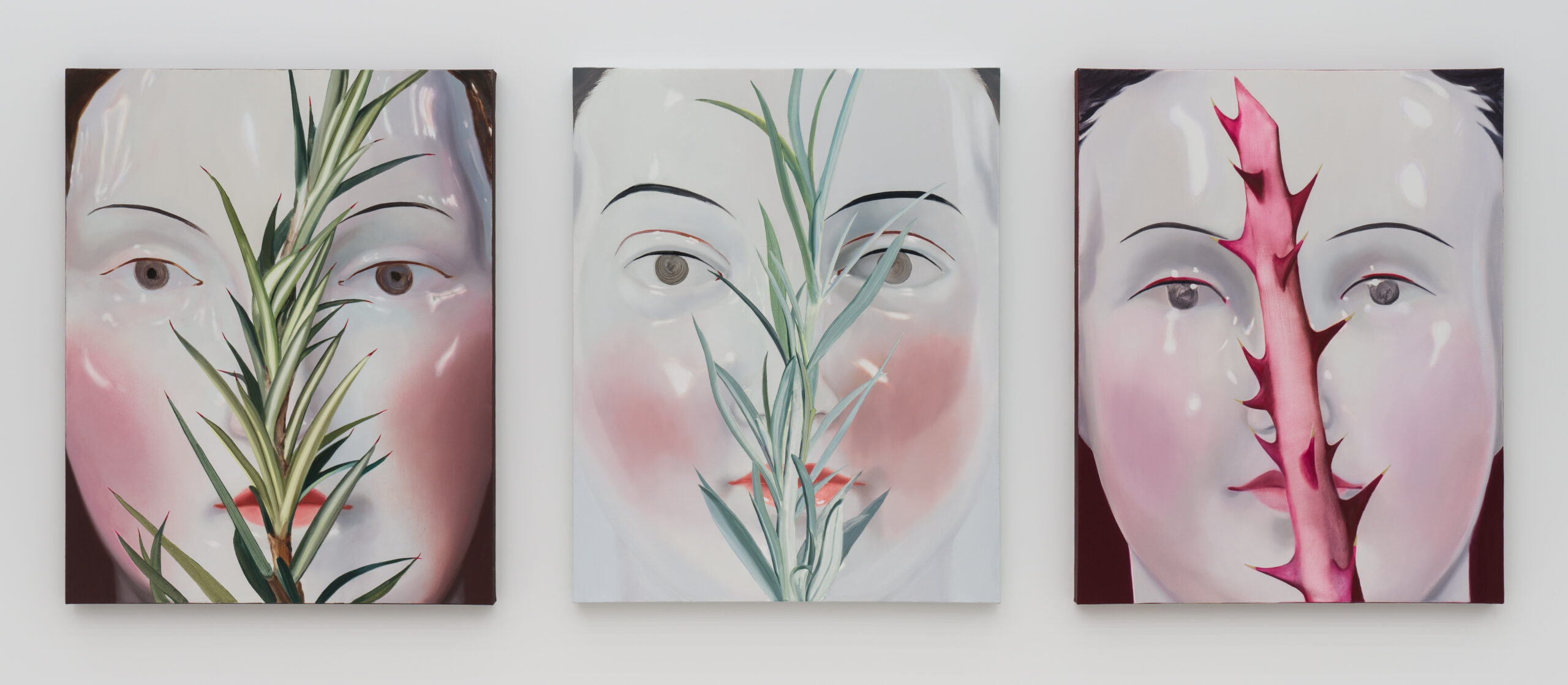
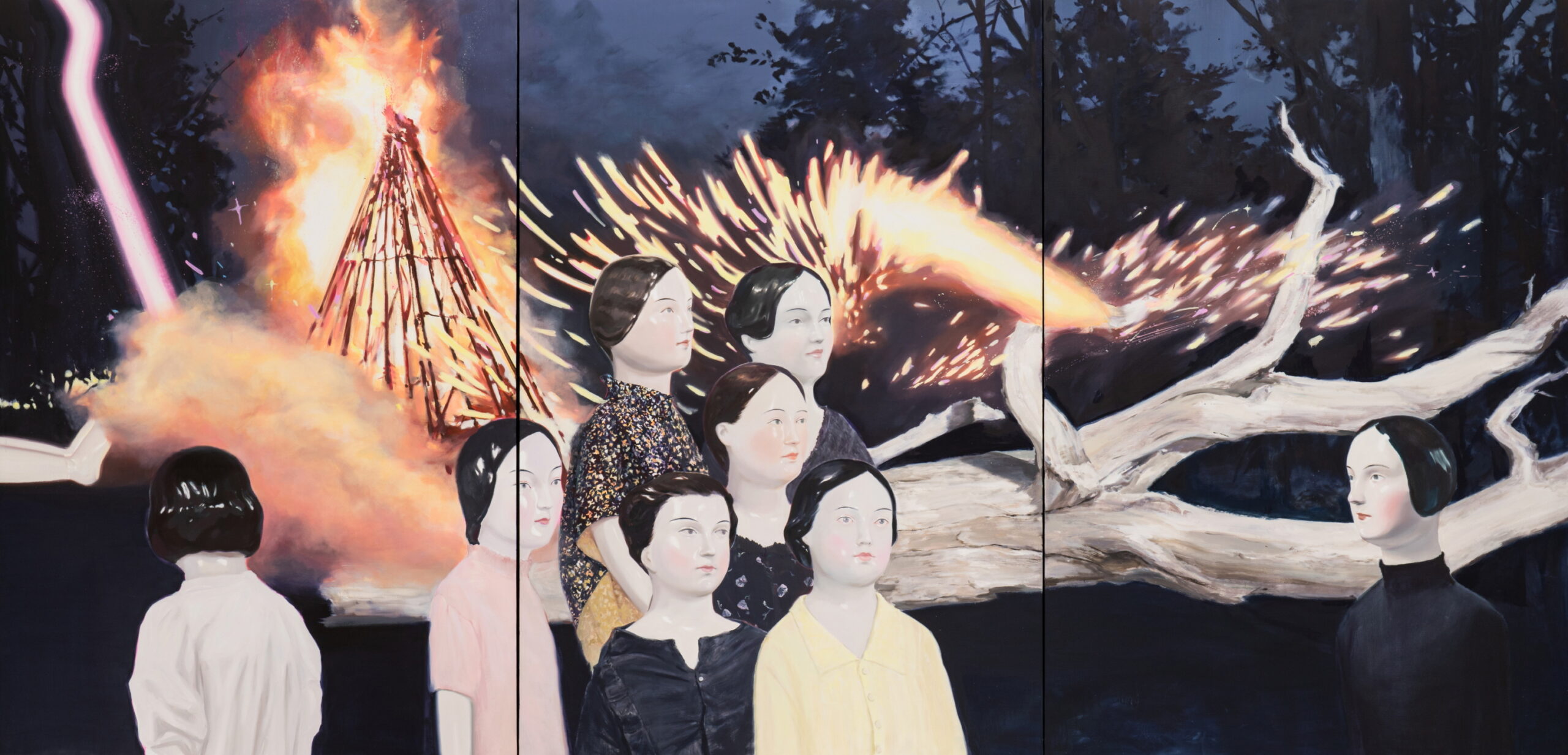
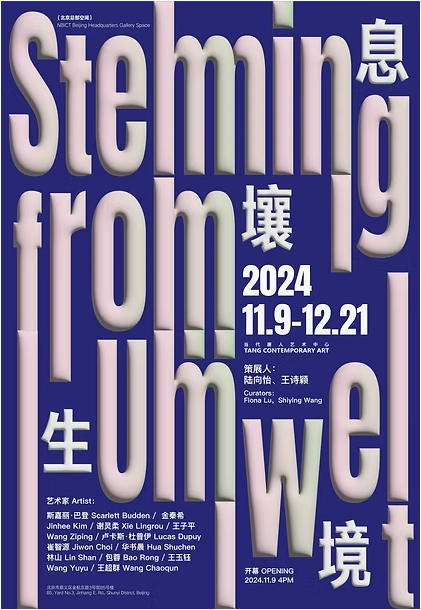
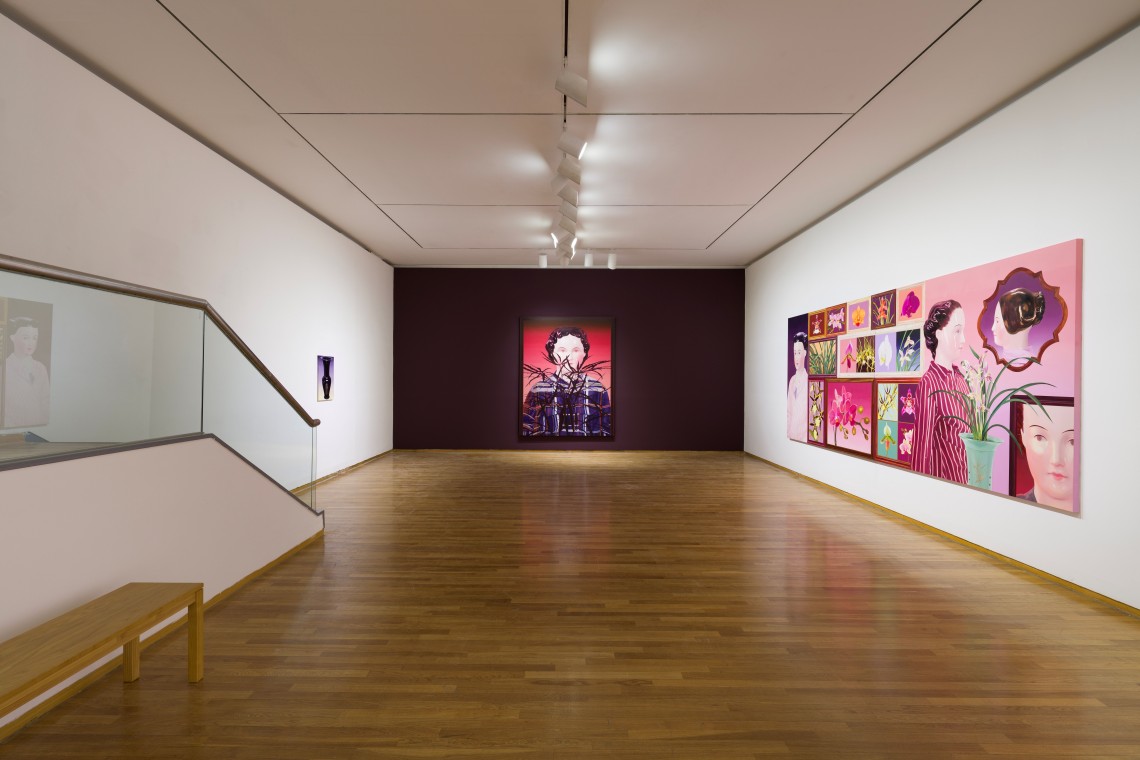
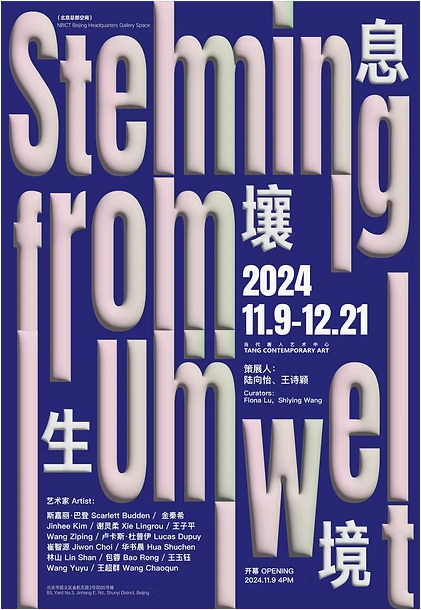
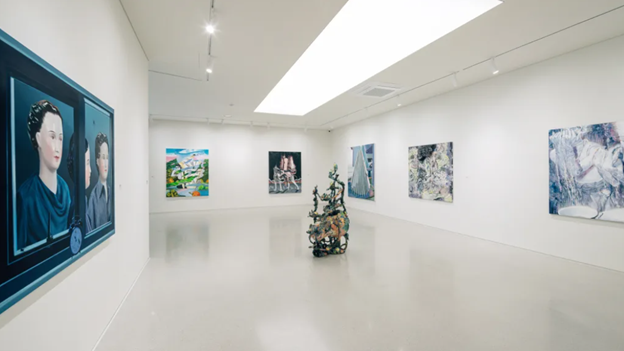
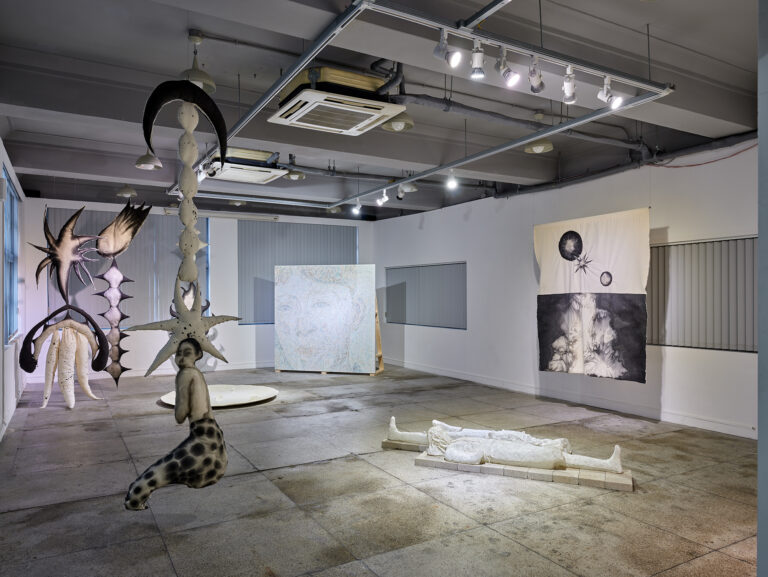
Tang Contemporary Art is pleased to announce the launch of 《Stemming from Umwelt》, a group
exhibition of young artists, on November 9, 2024 at its Headquarters Gallery
Space. Curated by Fiona Lu and Shiying Wang, the exhibition will present the
latest works of these artists in their upward mobility.
"The flood is overwhelming;" Gen (The tribal chiefs of
the legendary primitive era.) stole the "vigorous soil" to
"block the flood" which initiates flood control. In the "Shan
Hai Jing" (Classic of Mountains and Seas), the "vigorous soil"
is described as having a special ability to grow and expand continuously,
symbolizing growth, nurturing, and cyclical beginnings. As digital
technologies, like artificial intelligence, evolve in a torrent, the timeline of
technology disrupts the original natural time, breaking down the windows that
separate us from the external infinite natural.
When Paul J. Crutzen first used
the term "Anthropocene," it seemed to herald the end of the
separation between nature and historical subjects. The Anthropocene signifies
the systemic and material continuity between human posture and living
environment. In this context, the image of "Umwelt," becomes
inseparable from human, akin to the regenerative "vigorous soil"
returning to its origin——the cycle began 8,000 years ago with the agricultural
era, where deforestation initiated the process.
Aristotle's Metaphysics asserts that "The whole is greater
than the sum of its parts." The whole transcends its individual
components, and at the scale of humanity, the interactions between individuals
and their environment lead to "emergence." When emergence occurs, an
entity exhibits new characteristics that are not present in any individual
component. Emergence symbolizes the complexity and variability of systems.
"Umwelt" encompasses an environment of systemic consensus and
symbiosis, where individuals respond to their surroundings in their unique
ways, creating feedback. The interactions among individuals within the system
form life experiences and worldviews that are both intimate and shared. In this
ecological network, artists act as small nodes, sensitive to the subtle ripples
around them.
The works of Wang Yuyu and Bao Rong weave a landscape of desire
characterized by "stickiness and permeation" based on bodily
experiences. They adeptly use various materials, such as inflatable plastics,
silicone, and metal, marking traces of symbiotic emergence within the
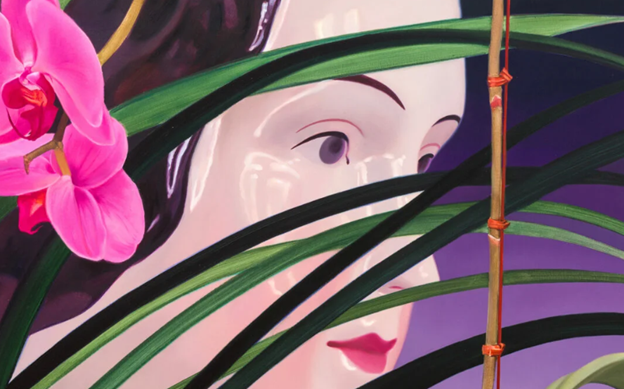
"Umwelt". Lin Shan describes ecological narratives through human
perception of plants; the repetitive and swaying growth of plants symbolizes a
continuously changing state of integration. The artists express their ecological
experiences through the perceptions of shapes, depths, shadows, and textures
perceived via new technologies, developing, cultivating, and articulating
perceptions based on bodily environments, overcoming and bridging perceptual
differences through visual media.
New technologies have created a new cycle of "vigorous
soil" where technology ceaselessly learns and records nature, achieving
not only imitation but even transcendence of nature. Analysis, documentation
and appropriation not only help to the visual analysis of nature, but also to
the inclusive generation of images. In this regard, artists blend their
experiences with images and data to create new forms of experience, merging
visuals and discourse into a visually tautological form.
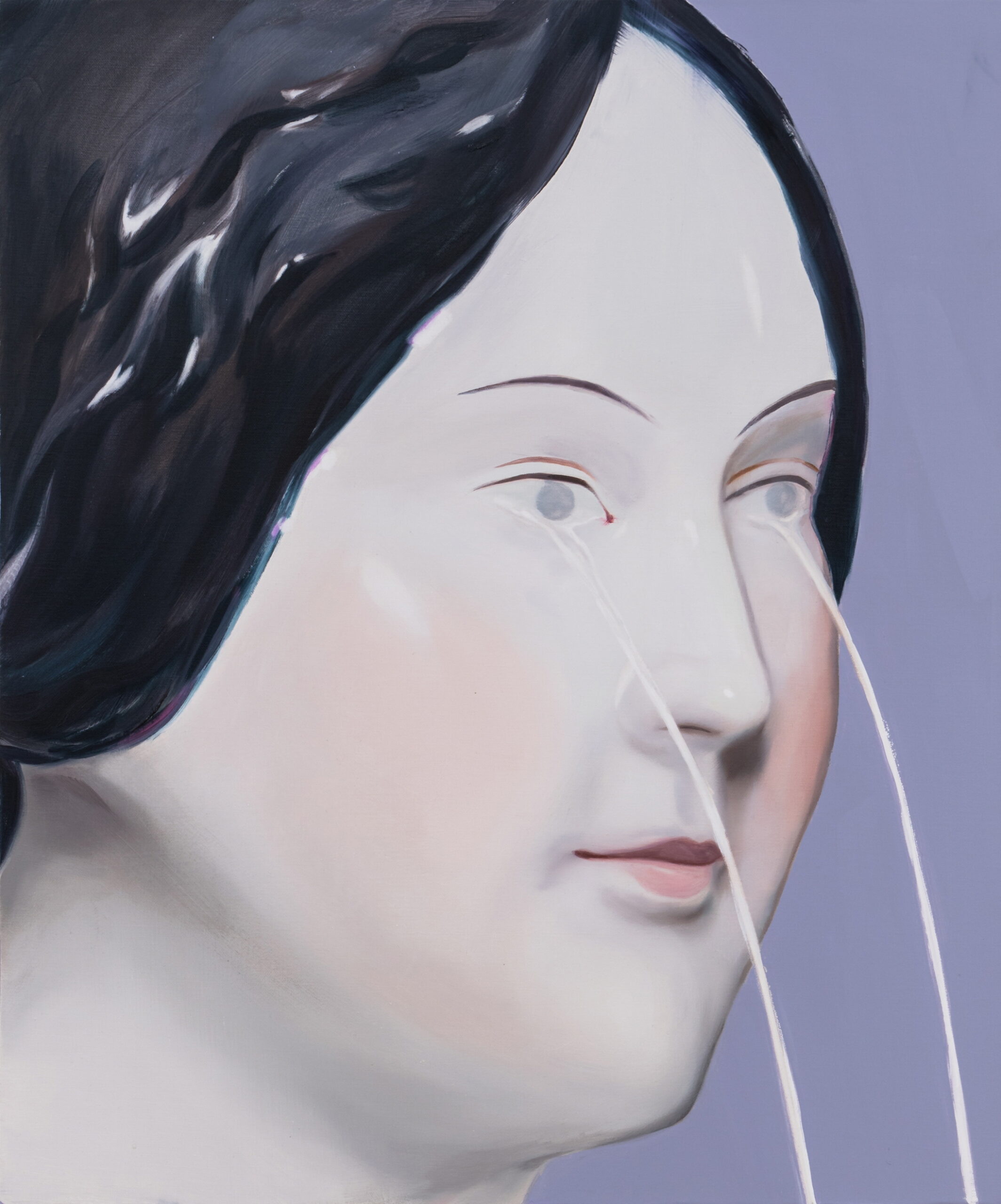
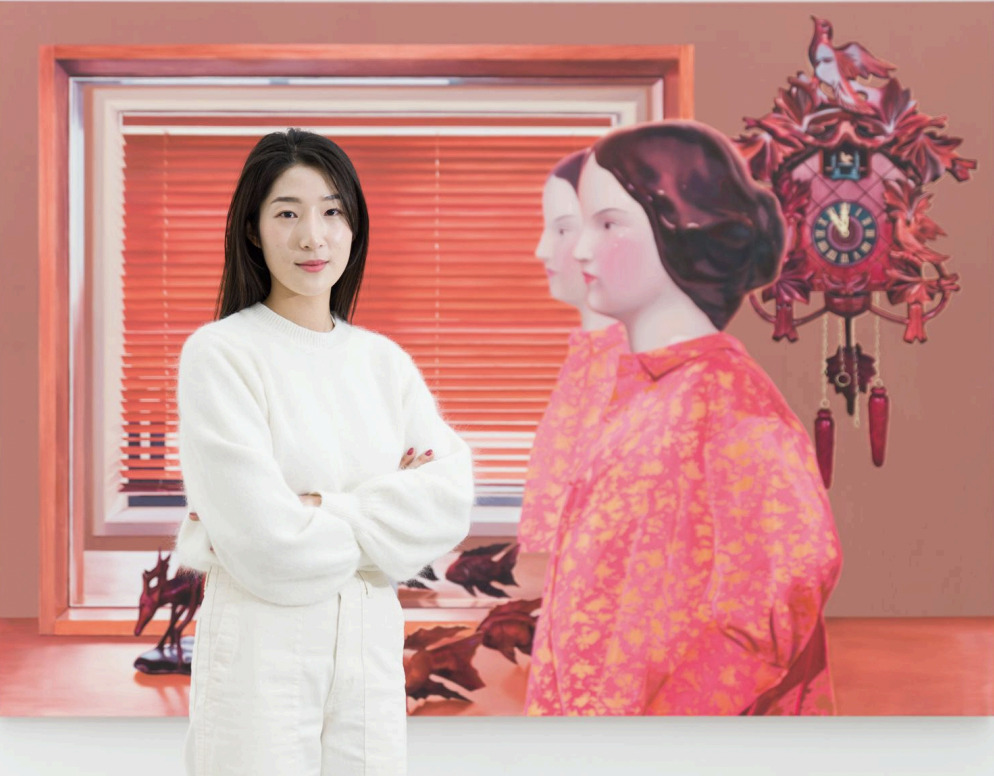
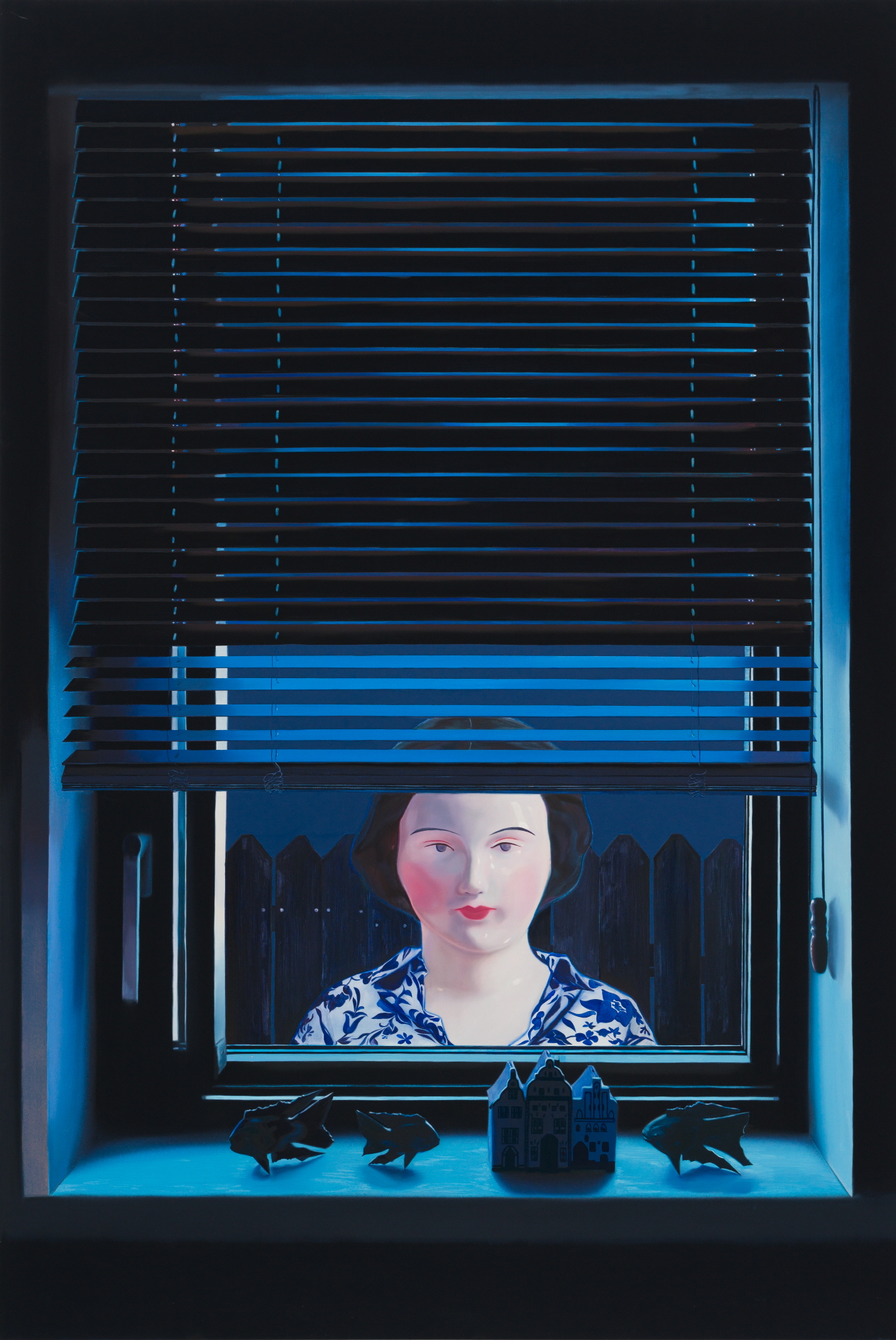
Artists like Jinhee Kim and Lucas Dupuy excel at capturing unreal
moments of everyday life, skillfully employing the textures of screen images to
poetically present light and minimalist spatial compositions, thus subverting
traditional representations. Wang Ziping and Wang Chaoqun focus on the direct
impact of digital information technology on their visual perception. The
combination of different types of symbols and external organs extends the
understanding of painting's spatiality into conceptual forms, reflecting the
contemporary process of digital integration with the body. As digital systems
become embedded, they not only record and archive information but begin to
exhibit perceptual functions, amplifying the emotional quality of images
through feedback in communication, thereby enhancing the sensations and
intensity of information.
"Vigorous soil" carries the vicissitude of the old and
new, with the information landscape merging new forms of interaction between
technology and nature. Within the 'visual array' effect described by Gibson,
this integrated approach to modulating visual perception is increasingly
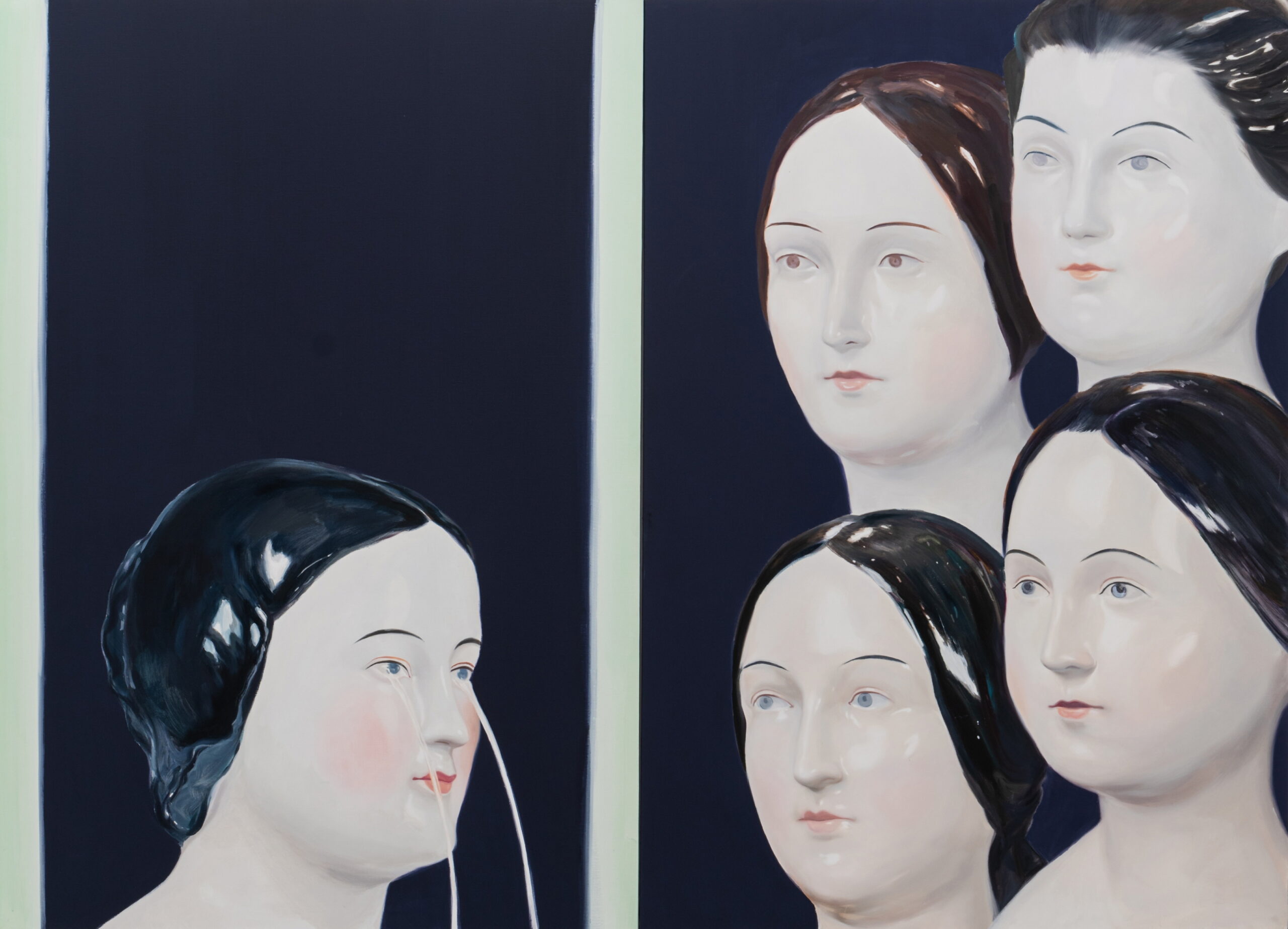
embedded in the form and content of art. The works of Xie Lingrou and Jiwon
Choi are imbued with themes of nostalgia and texture. The former focuses on the
sensatory relationship between image and painting, while the latter
incorporates the processed emotions of consumption to the textured quality of
her ceramic paintings.
Scarlett Budden and Hua Shuchen depict concrete
landscapes or bodies, with bodily perception materializing within the realm of
technology; the magnified landscapes become expressions of self. The ecological
nature of art serves as a call to "read" the environment from the
perspective of information acquisition, as well as a call to adapt to this
information. Artists contemplate how to express their connection to the world
using their own bodies and as organisms, revealing the interrelations between
themselves and their surroundings.
In the "torrent" of technology, perhaps art could serve
as a form of "vigorous soil," a means of expression to "seal
off" the contradictions and imbalances that arise from rigid definitions.
In specific contemporary contexts, artistic expression provides an approach to
bridge the vast chasms in modern ontology. It encourages us to step outside
established linguistic frameworks, using body as a medium and intuition as a
guide to experience deeper, more essential forms of communication that
transcend words.
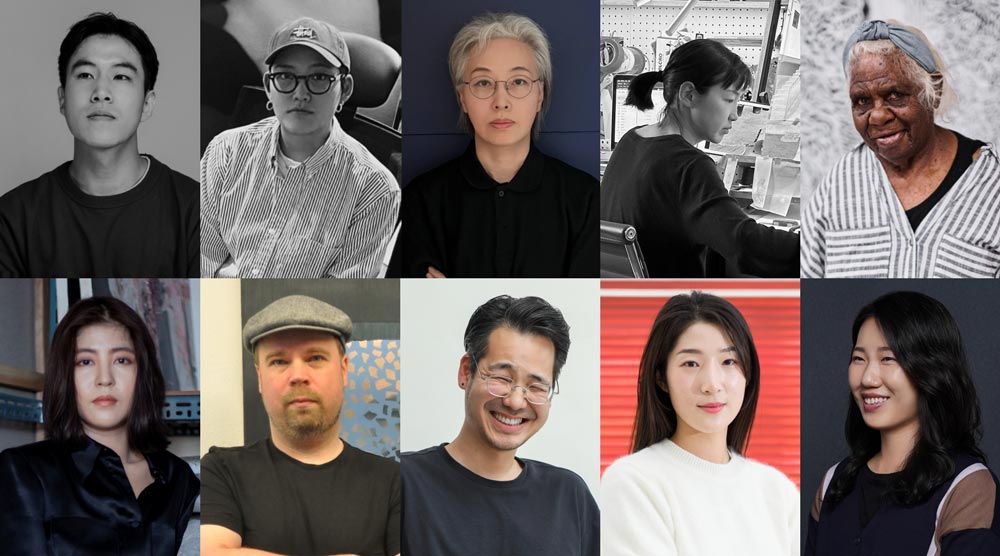
Artists:
Scarlett Budden, Jinhee Kim, Xie Lingrou, Wang Ziping, Lucas Dupuy, Jiwon
Choi, Hua Shuchen, Lin Shan, Bao Rong, Wang Yuyu, Wang Chaoqun