Exhibitions
《The Paused Moment》, 2024.03.01 – 2024.04.28, PARKSEOBO FOUNDATION (PSBF)
February 27, 2024
PARKSEOBO FOUNDATION (PSBF)
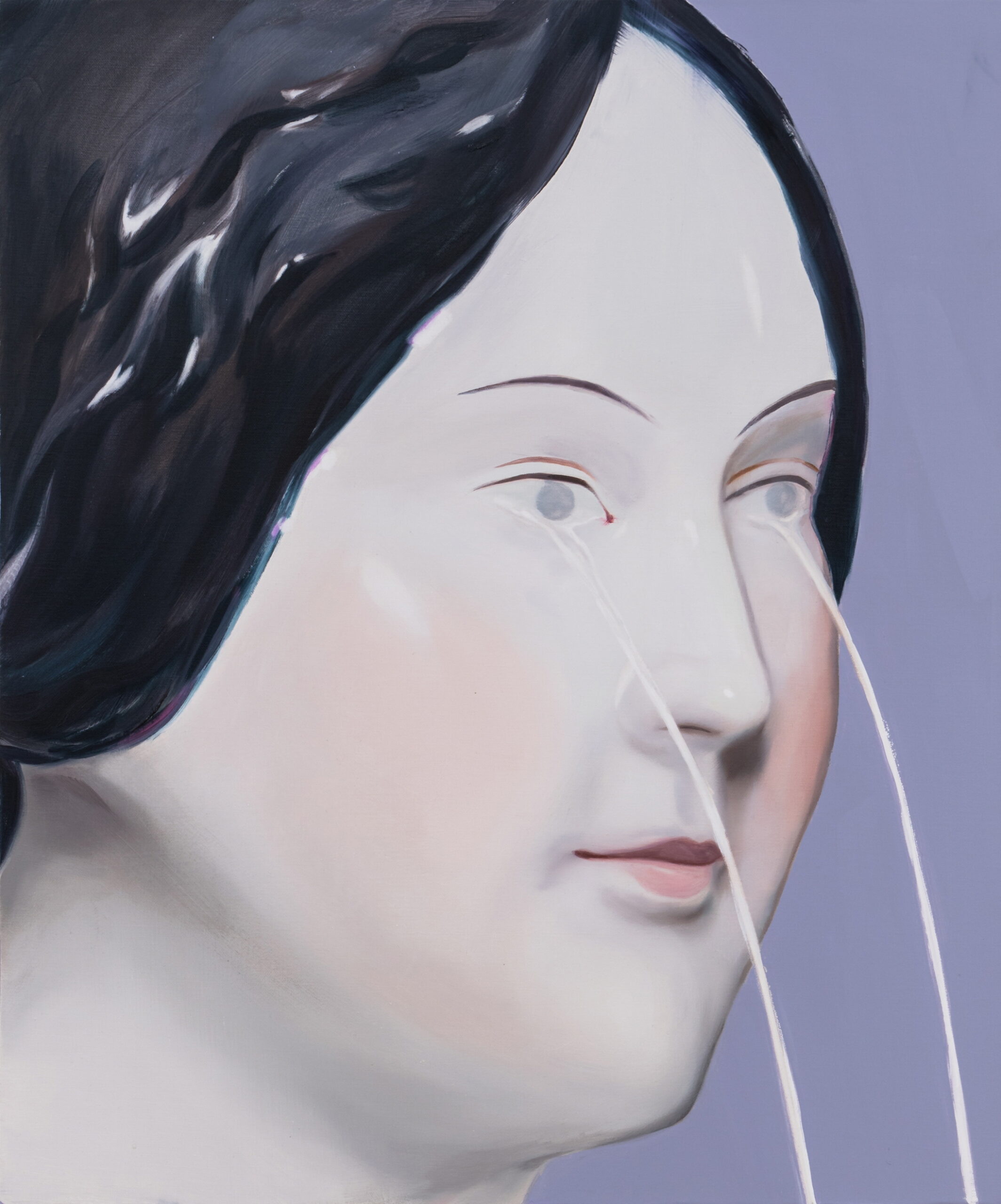
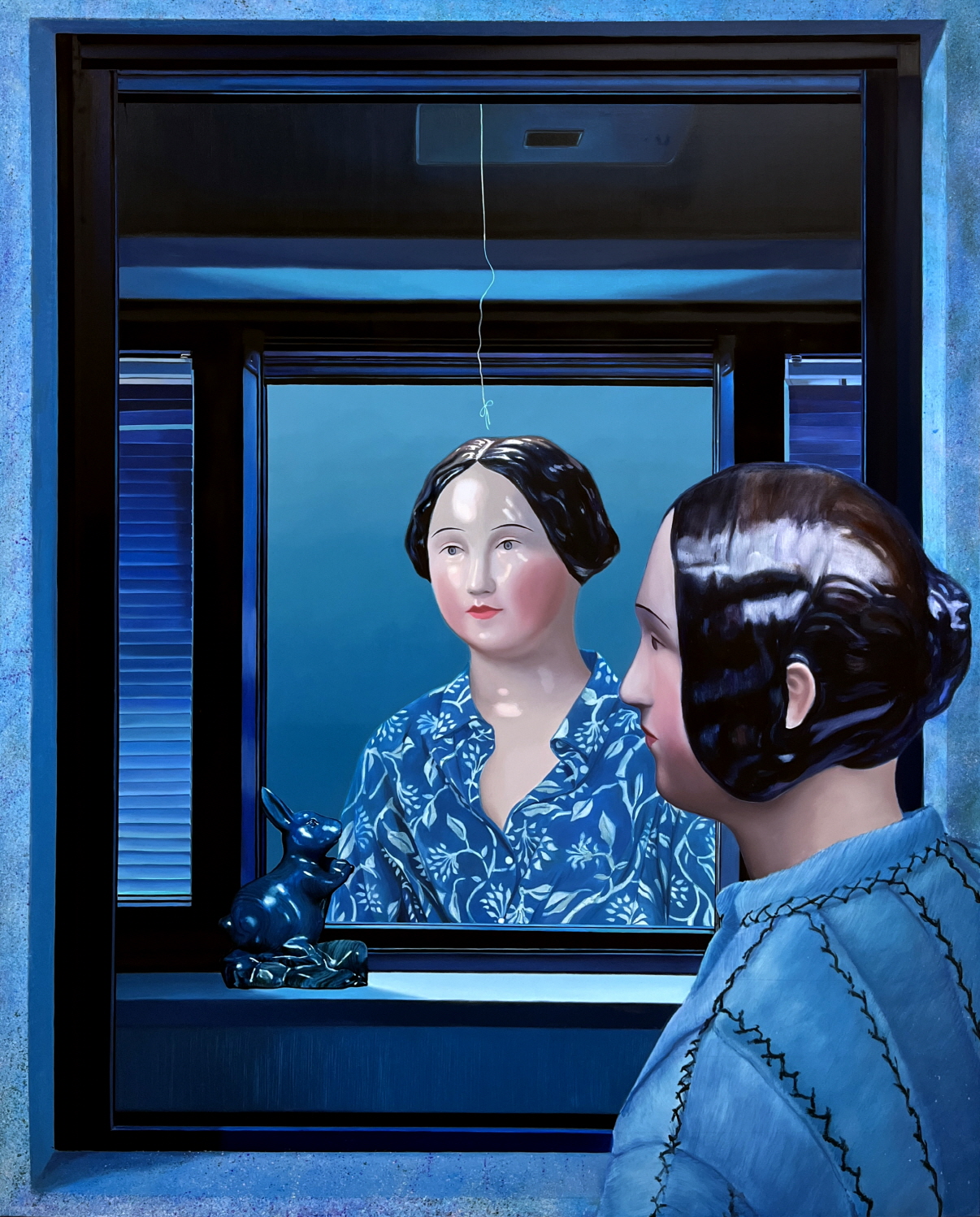 Jiwon Choi, The year of
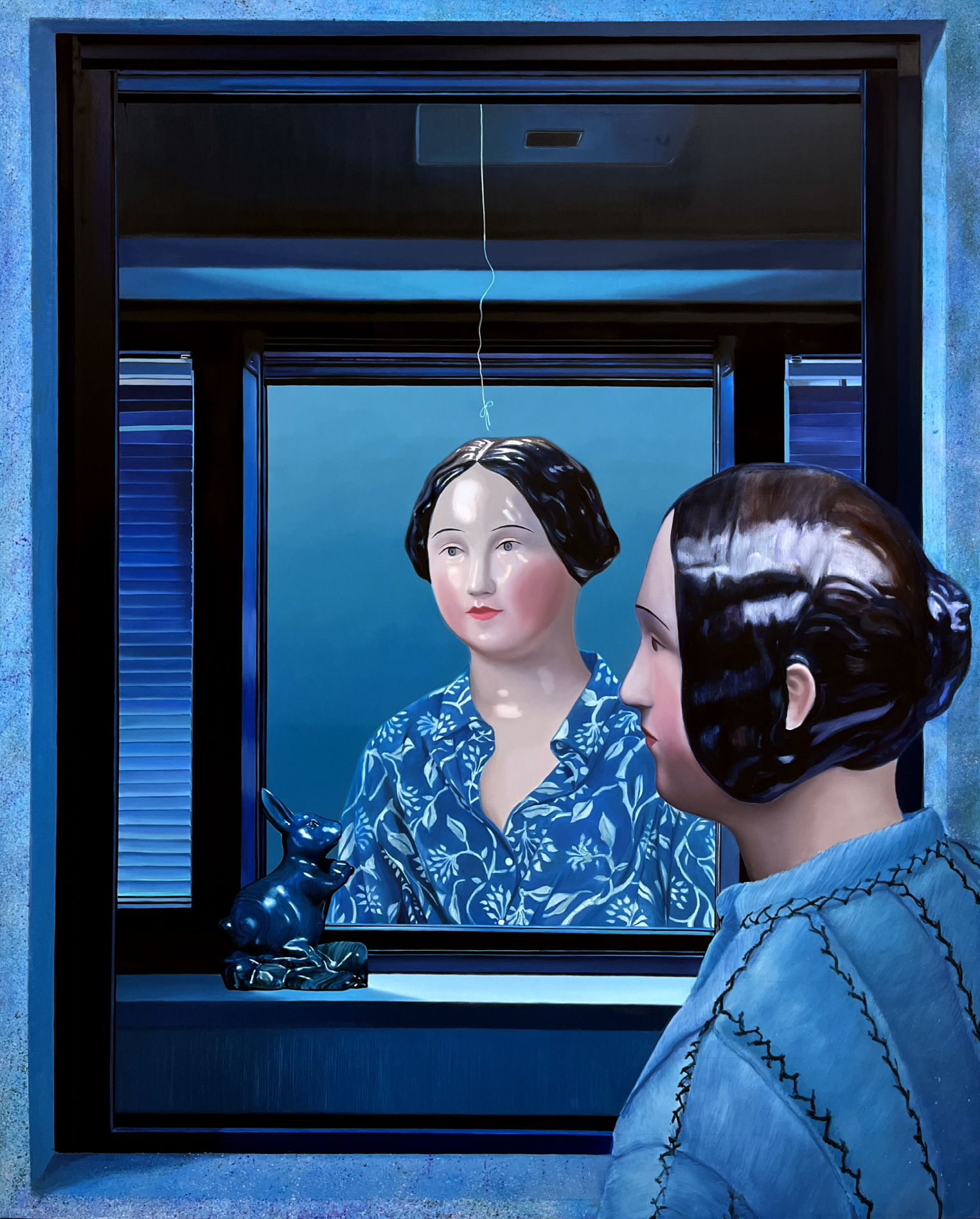
the Rabbit's Room, 2023, Oil on canvas, 162.2x130.3cm © Jiwon Choi
Jiwon Choi, The year of
the Rabbit's Room, 2023, Oil on canvas, 162.2x130.3cm © Jiwon Choi
The
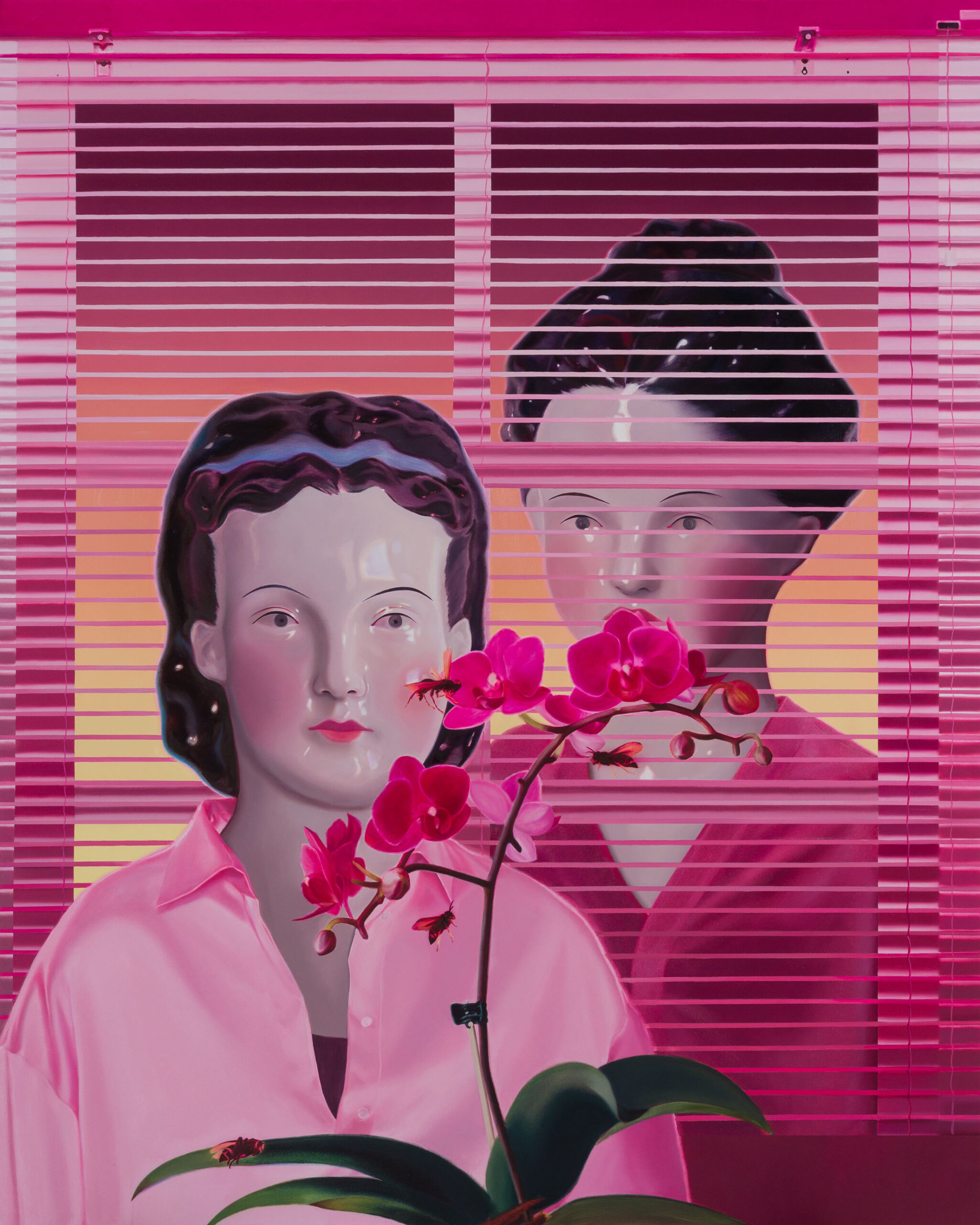
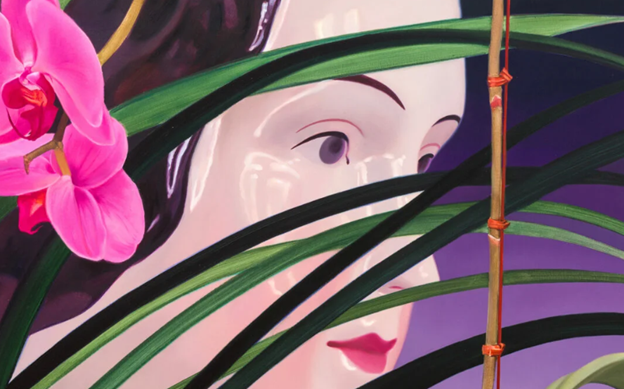
porcelain doll’s skin, polished to the point of reflecting light, stands beside
a glossy blue rabbit-shaped craft object. Together, they evoke not only a sense
of visual smoothness but also the tactile sensation of hardness and coolness.
Their dazzling, solid exterior belies an interior that is hollow and fragile.
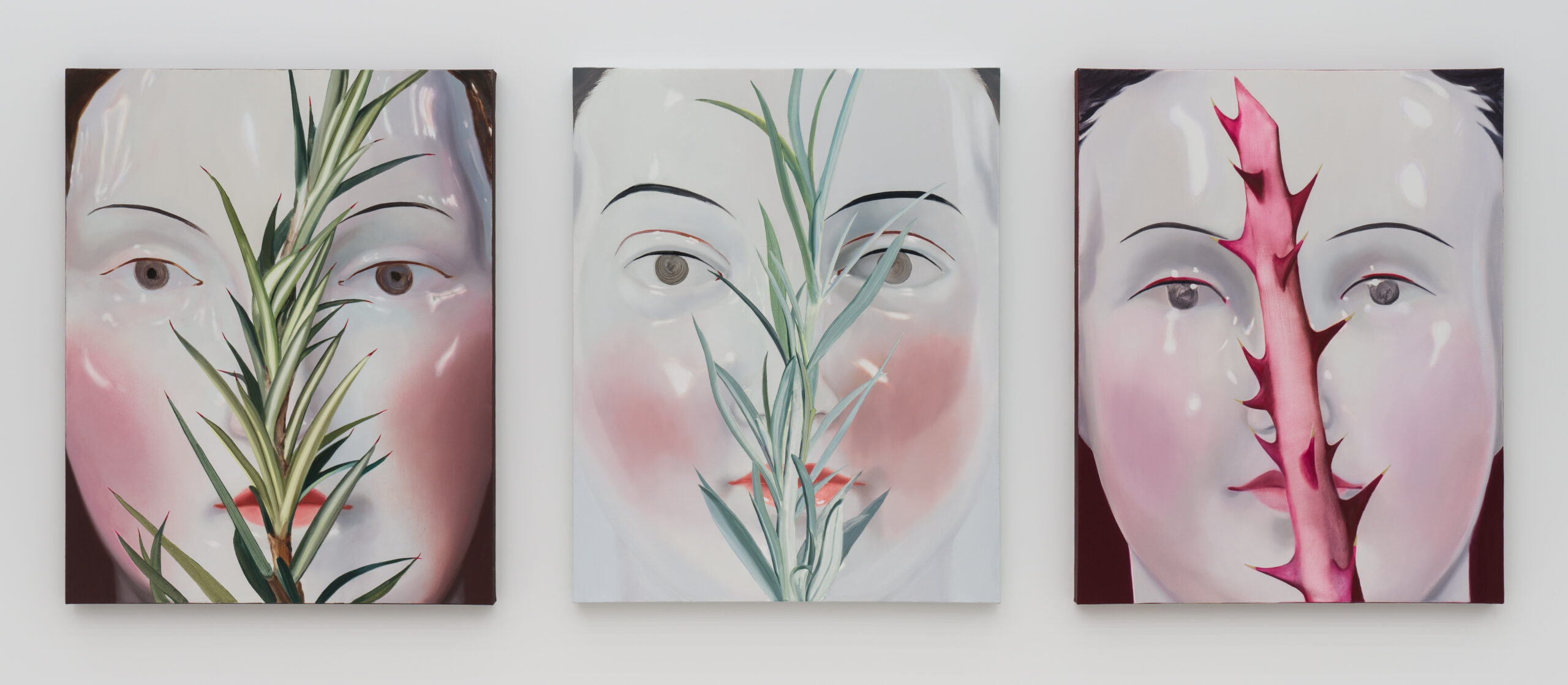
For Jiwon Choi, porcelain dolls embody the contemporary sensibility of living
with an undercurrent of anxiety beneath a beautiful surface. This interplay of
opposing qualities—external brilliance and inner fragility—forms a key to
understanding Choi's artistic world. If porcelain dolls symbolize the sleek
desires and uneasy emotions of modern life, what might reside within their
rooms?
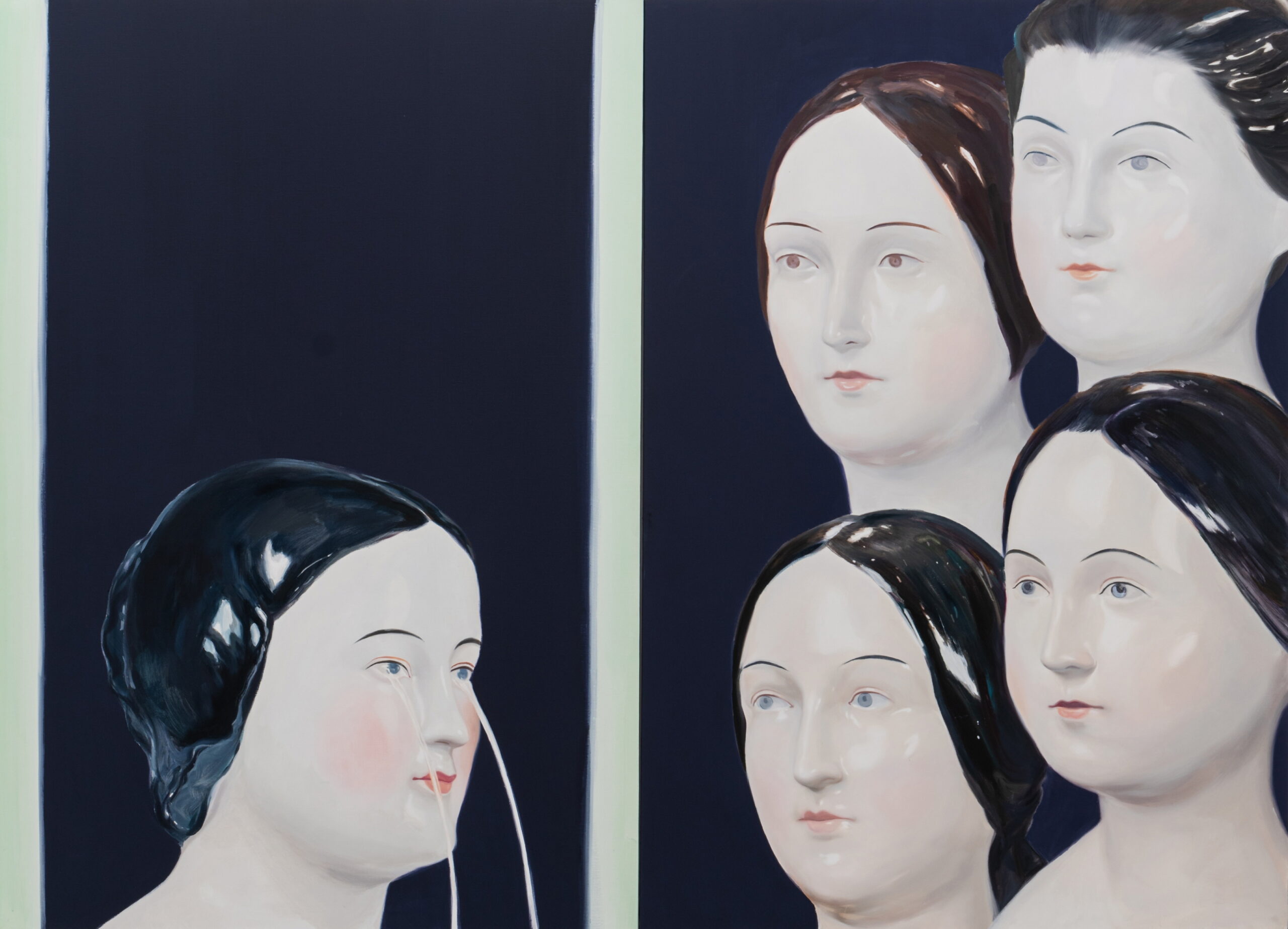
 Jiwon
Choi, The Paused Moment, 2023, Oil on canvas,
162.1x227.3cm © Jiwon Choi
Jiwon
Choi, The Paused Moment, 2023, Oil on canvas,
162.1x227.3cm © Jiwon Choi
One
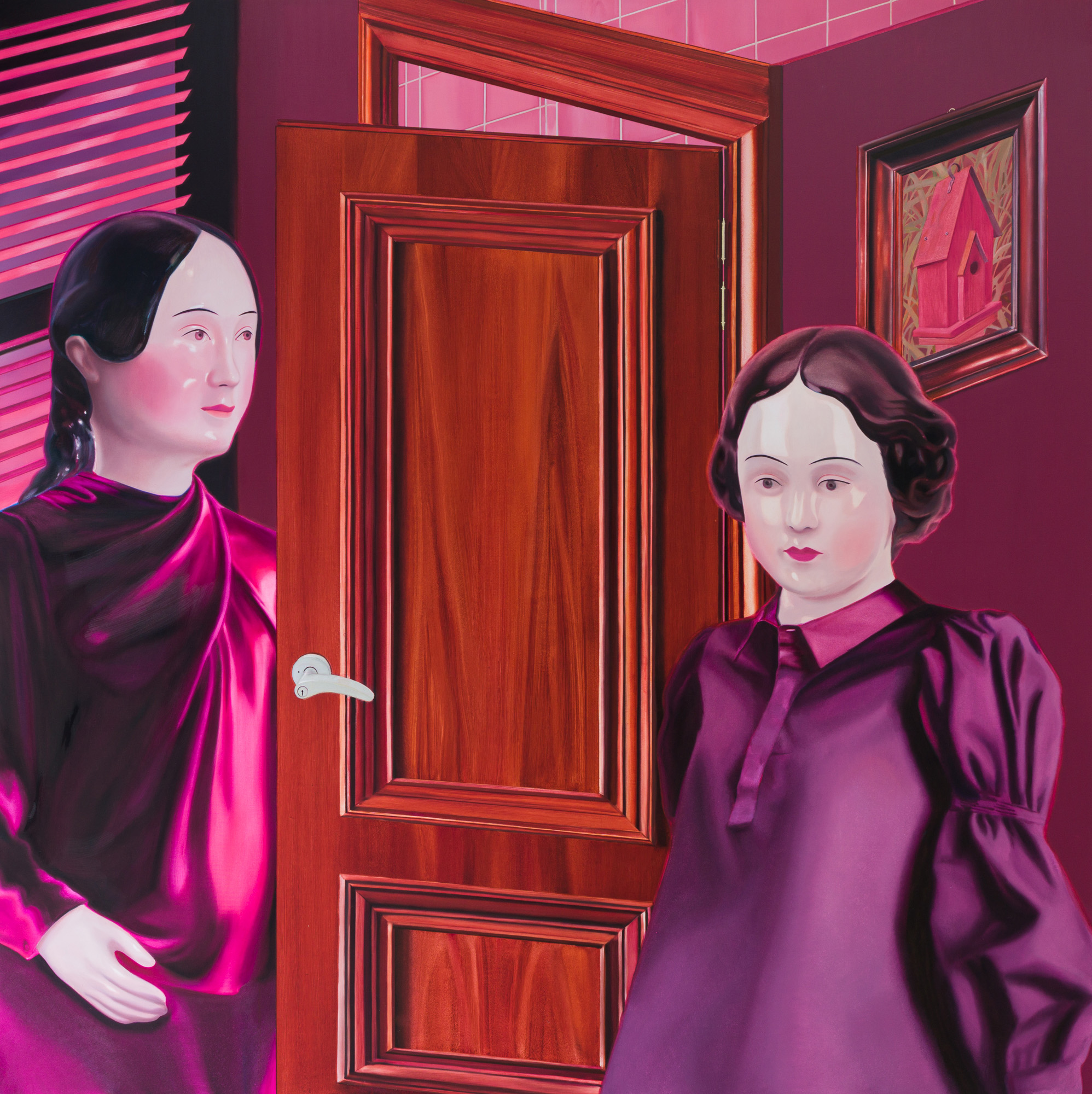
can glimpse the answer in The Paused Moment(2023). In a
dimly lit room with blinds drawn to block out light, a red deer, a fish, and an
old cuckoo clock quietly occupy the space. A modern clock, depicted entirely in
white, shows a time that does not correspond with the cuckoo clock. Between the
frozen moments of these two clocks, dolls and craft objects find themselves
trapped.
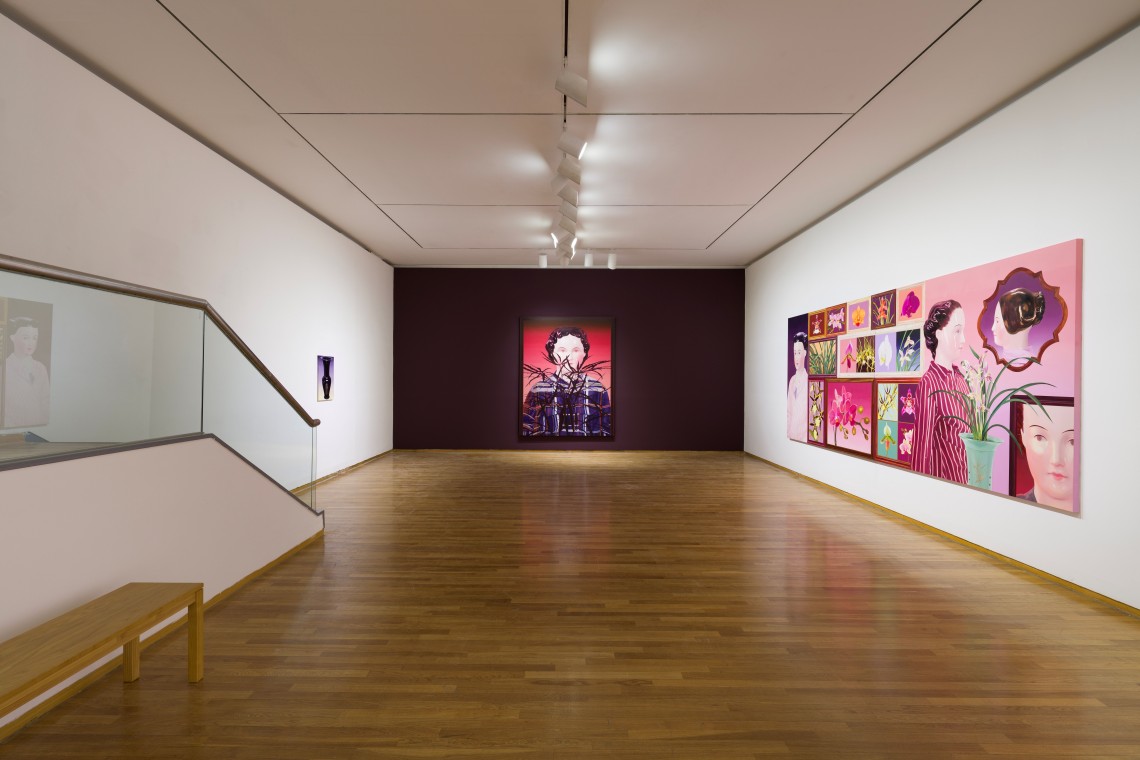
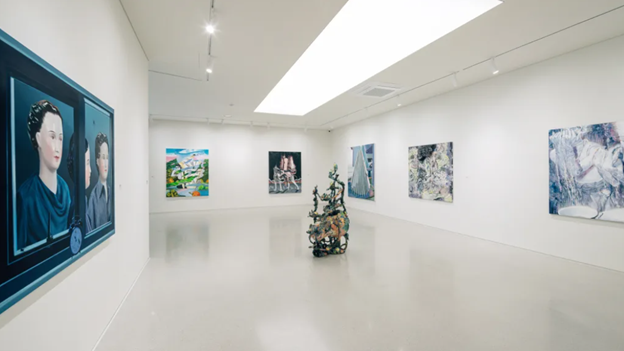
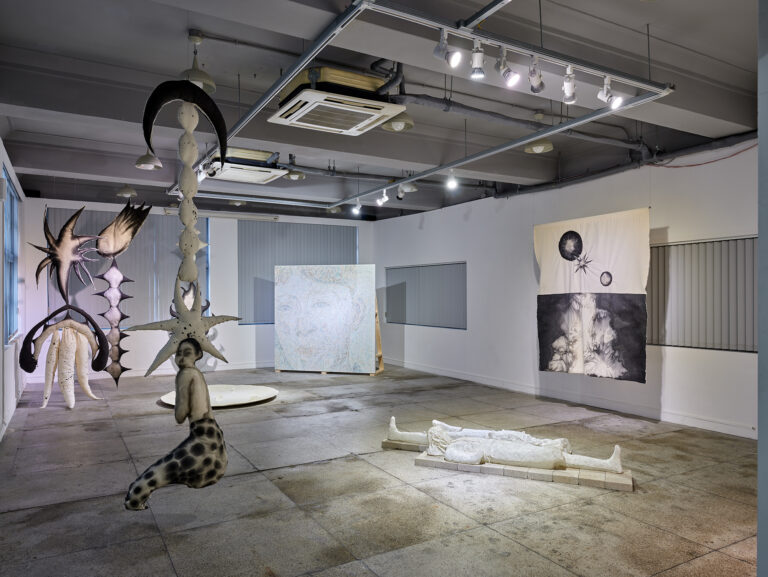
 Installation
view ©PSBF
Installation
view ©PSBF
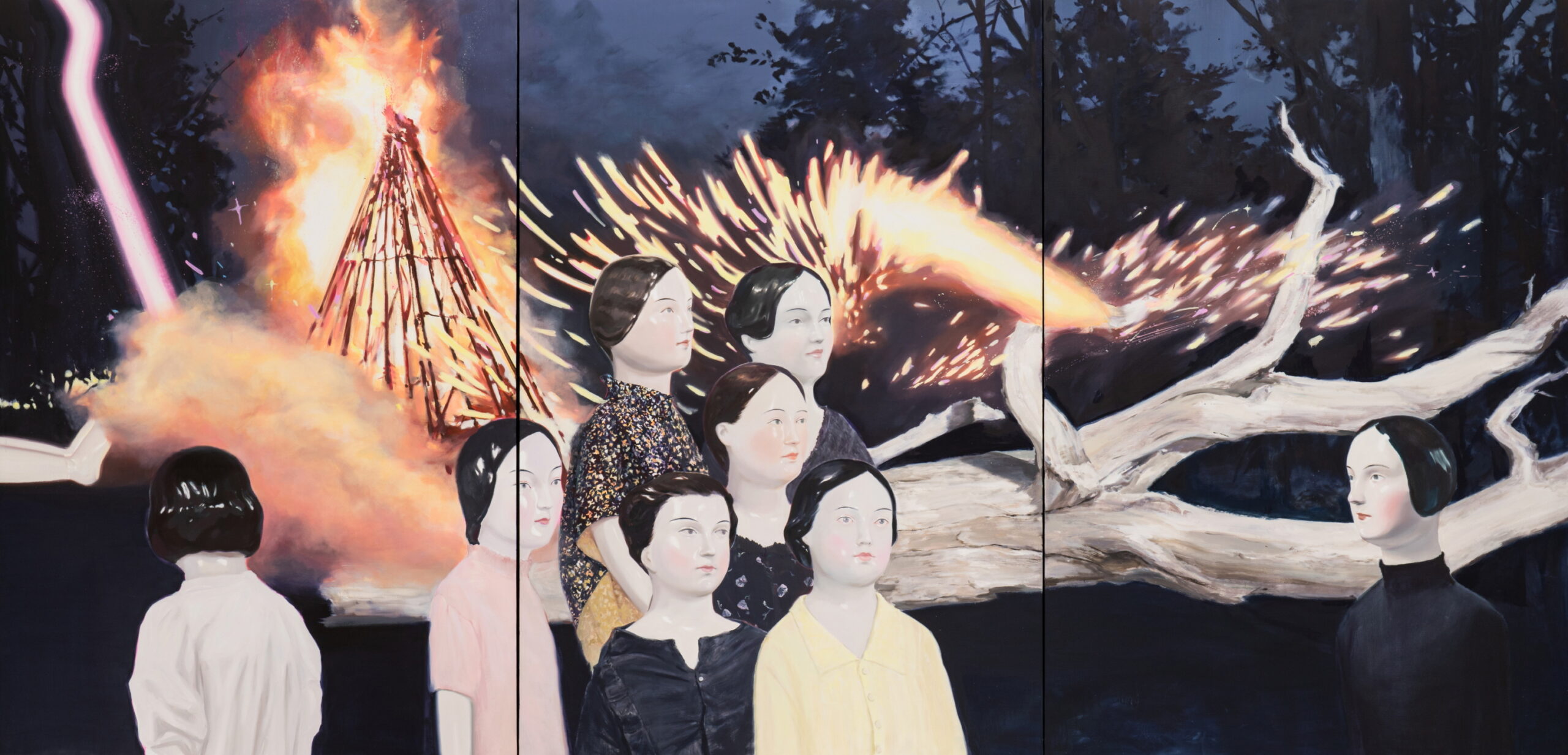
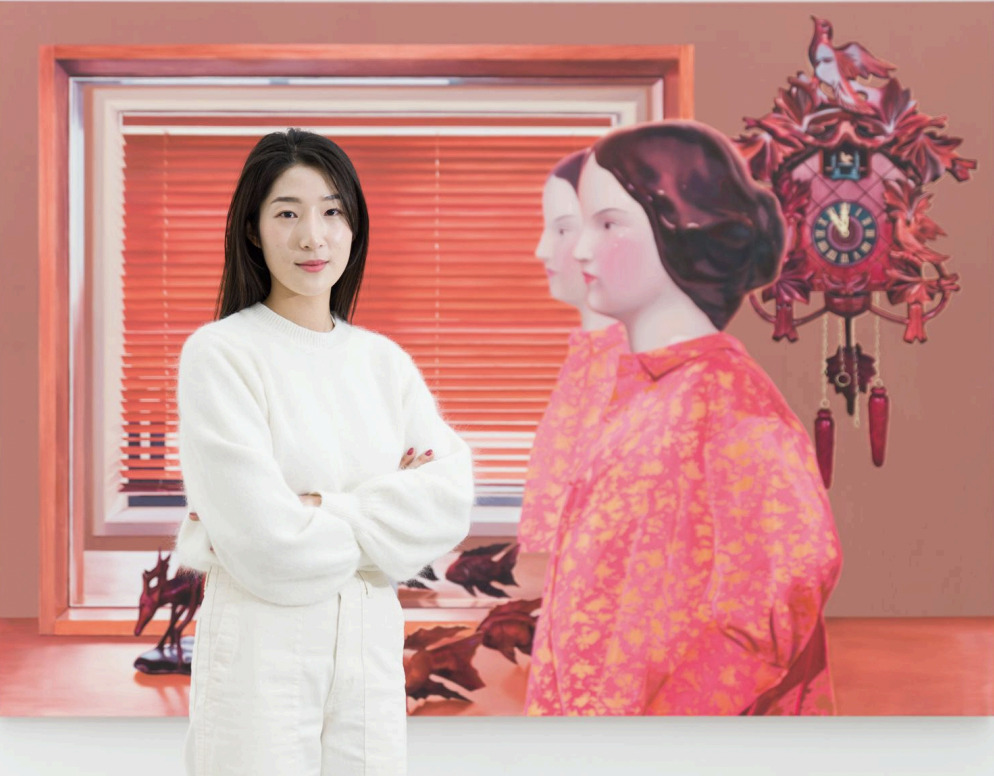
This
exhibition also presents Choi's new work, Ready, Set,
Go!(2024), where the small objects placed beside the dolls take
center stage. True to its dynamic title, the painting captures vigorous
movements—fluttering wings poised for flight, swaying fins, and windswept horse
manes. Yet, these motions remain confined within crafted forms, and the fallen
old trees and rooted buildings that appear between these movements seem to
remind us of perpetual stillness.
The
expression of vitality within the temporal boundary of the present moment
becomes fixed and taxidermized through painting. At the same time, the artist
moves her brush as if breathing life into these still objects. For Choi,
still-life painting is, in her words, “a practice situated between life and
death.”
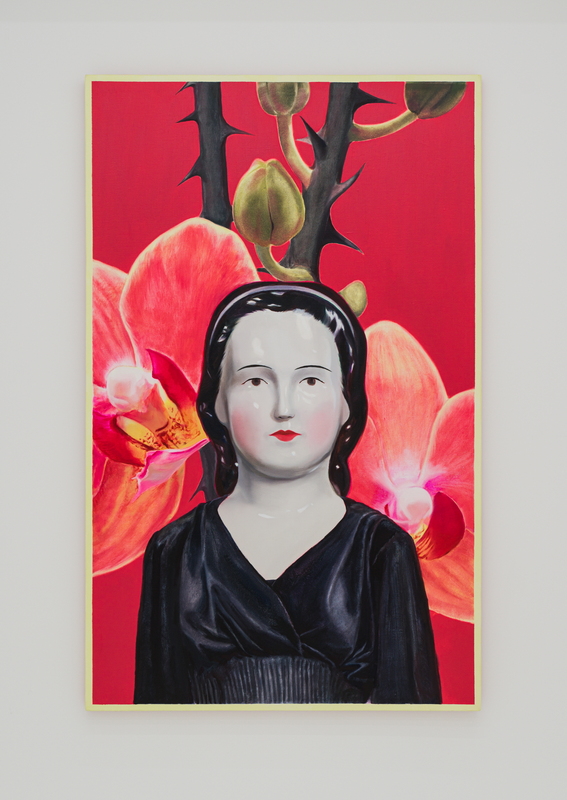
This
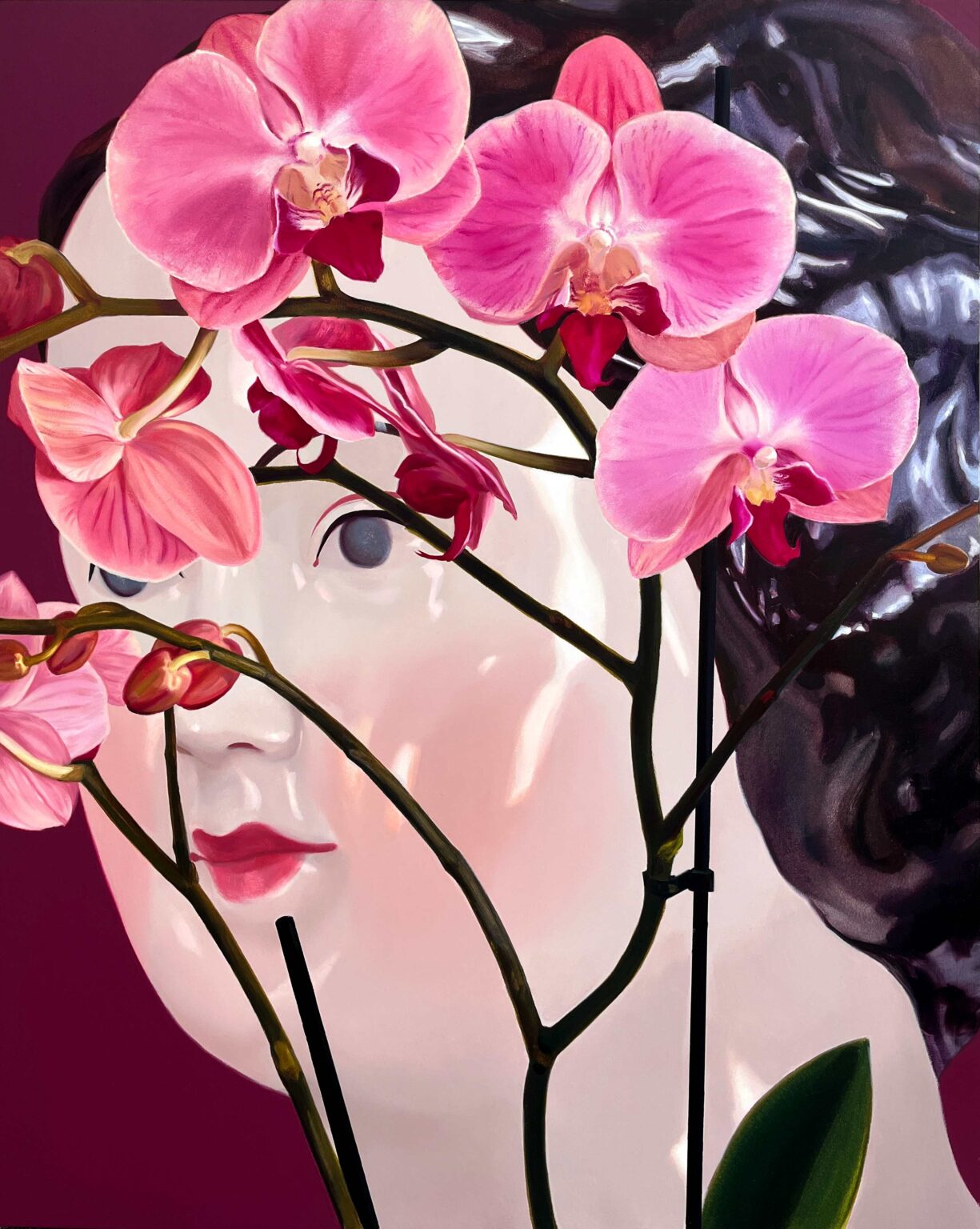
exploration of the threshold between life and death extends to her ‘in the
Frame’ series, which features butterflies and orchids enclosed in finely
polished wooden frames or taxidermized butterflies within old, paint-stripped
wooden frames. The variability of life is captured in these paused moments of
painting, becoming fixed and immutable. Jiwon Choi translates this paradoxical
boundary into her own sculptural language.