1. Between Documentation and Performance
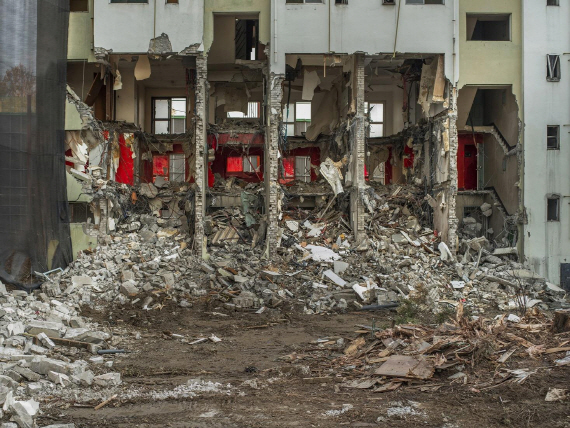
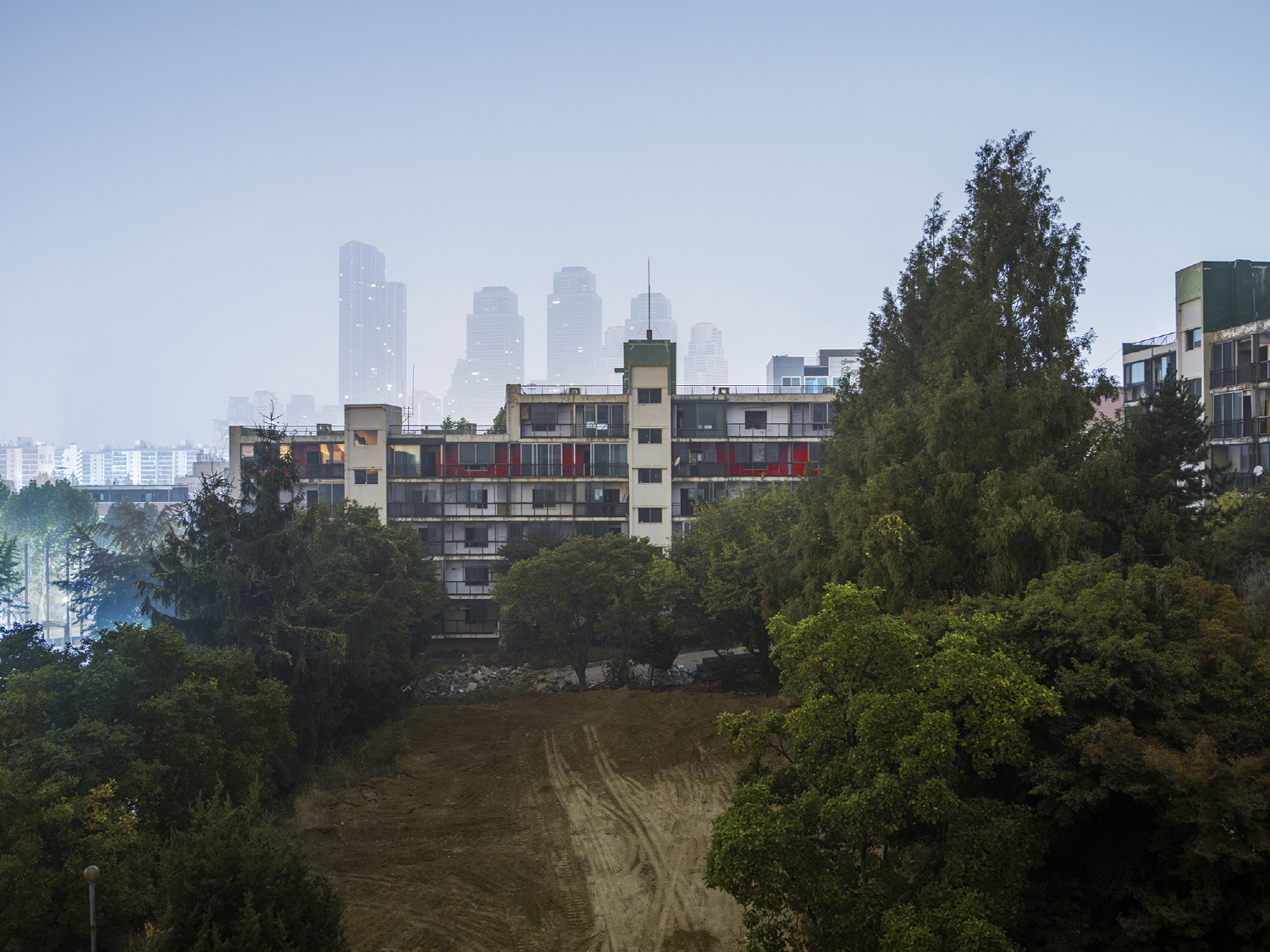
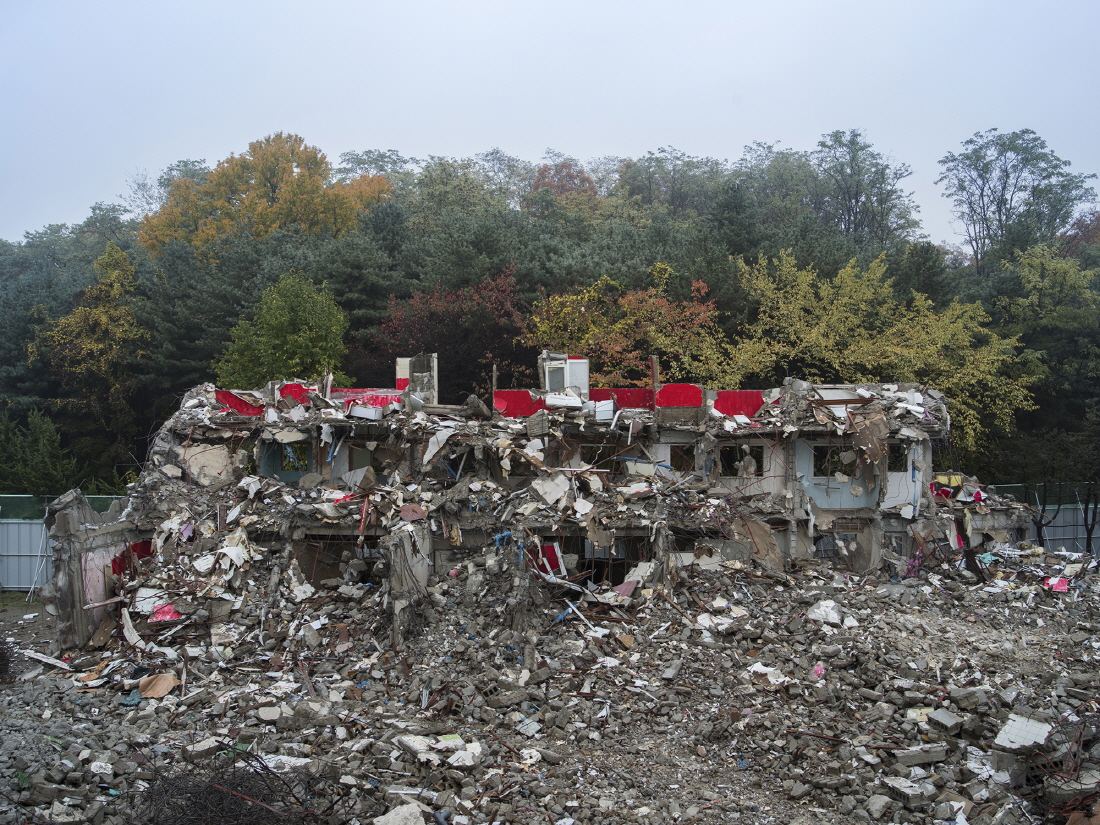
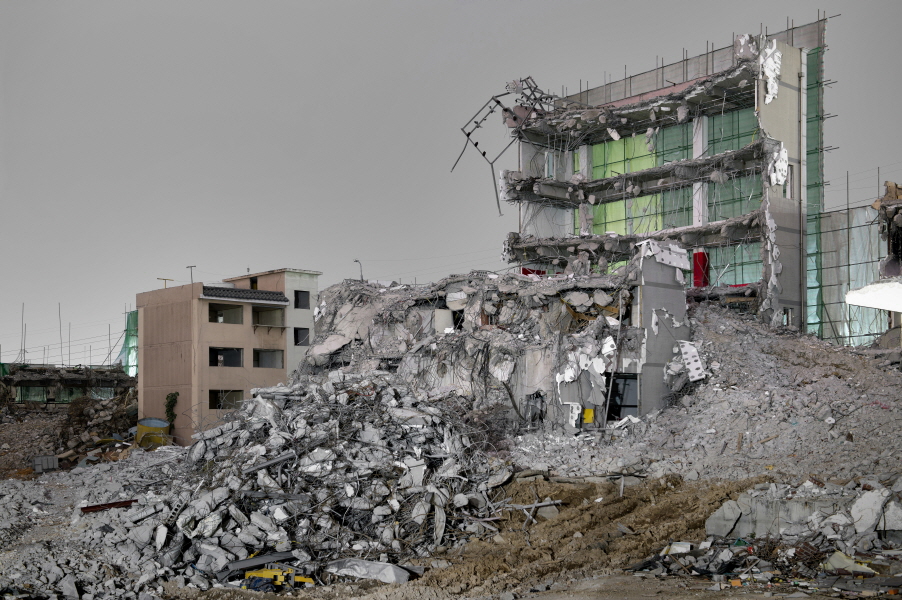
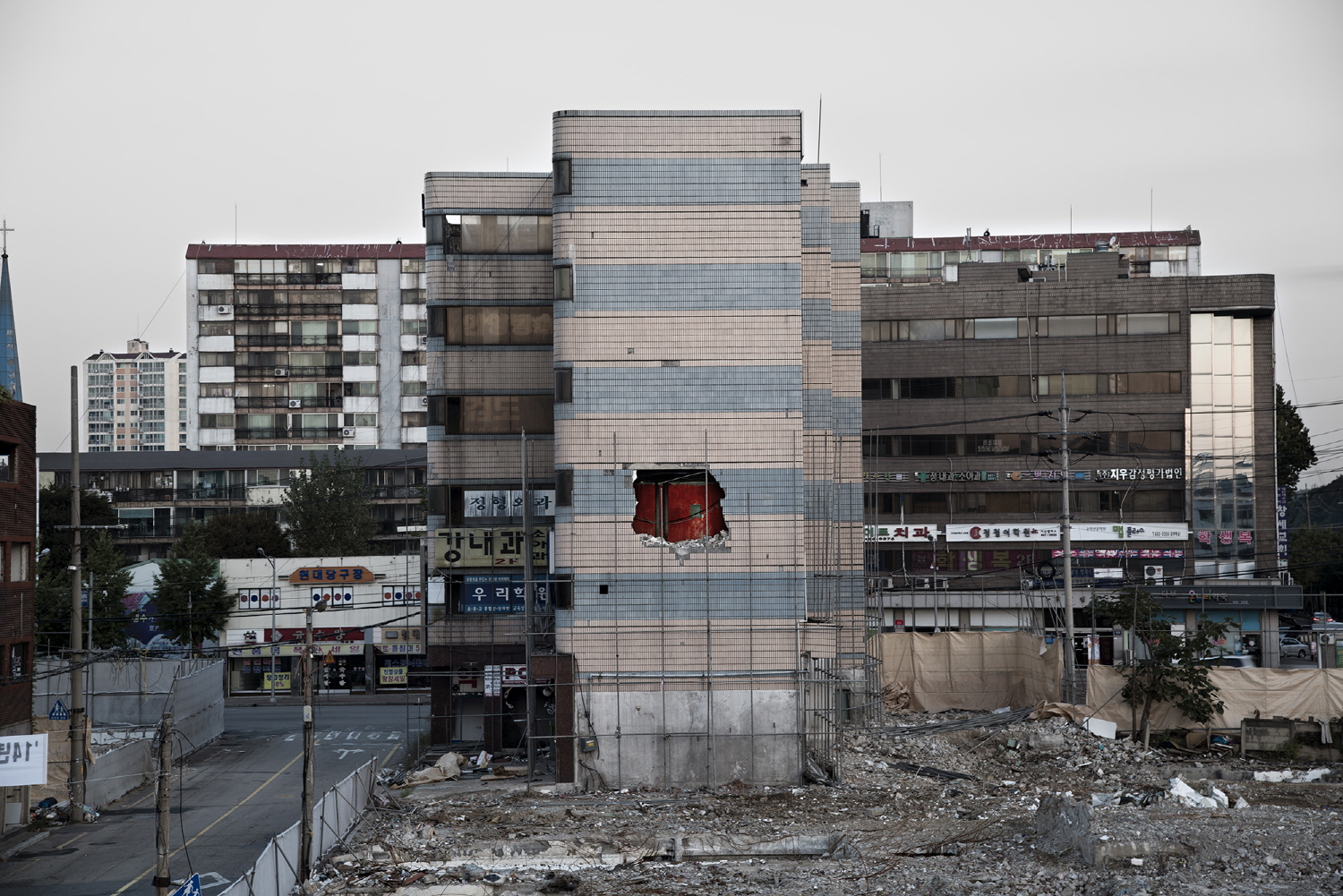
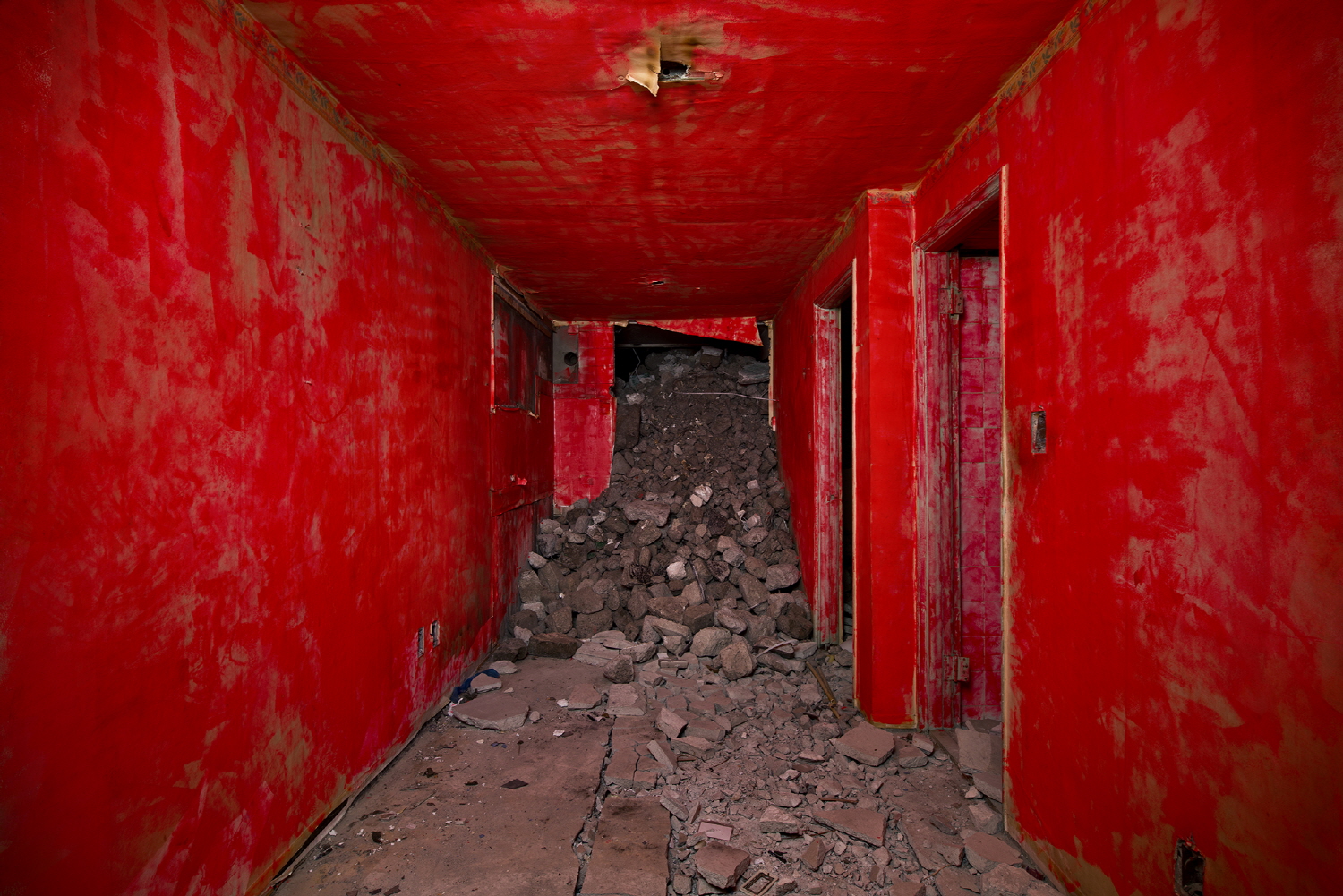
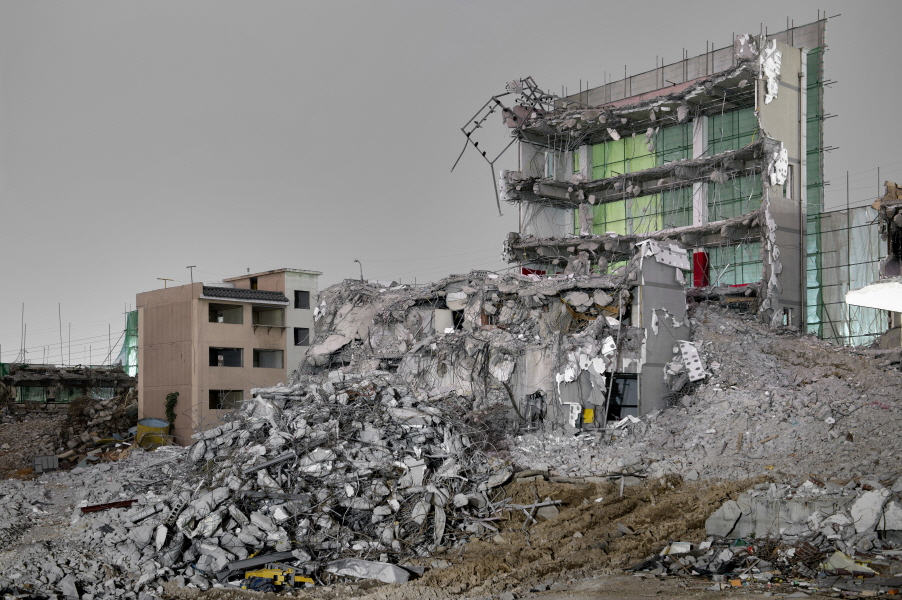
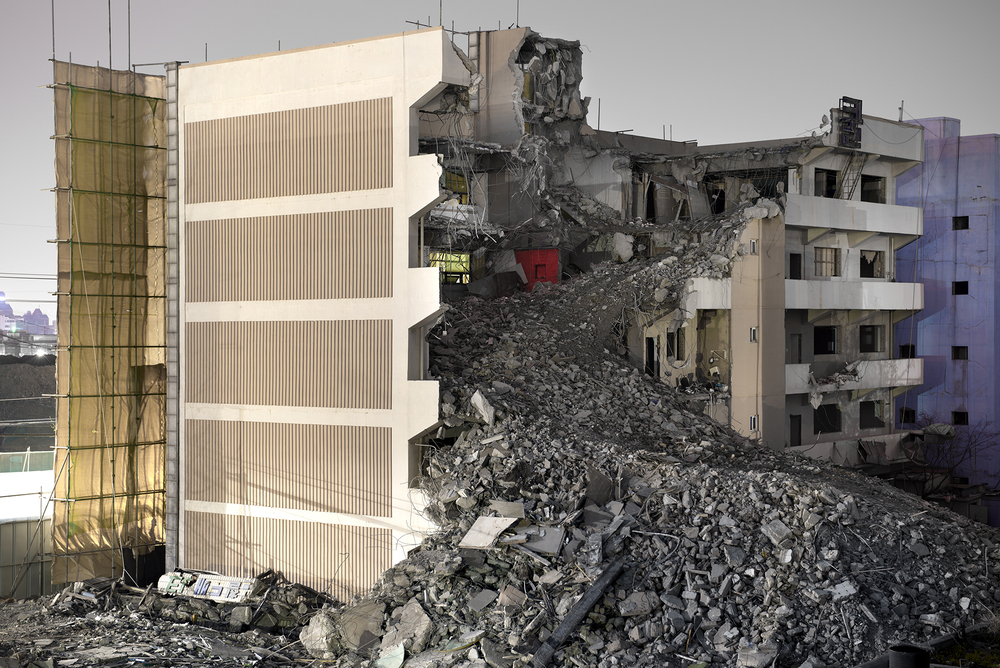
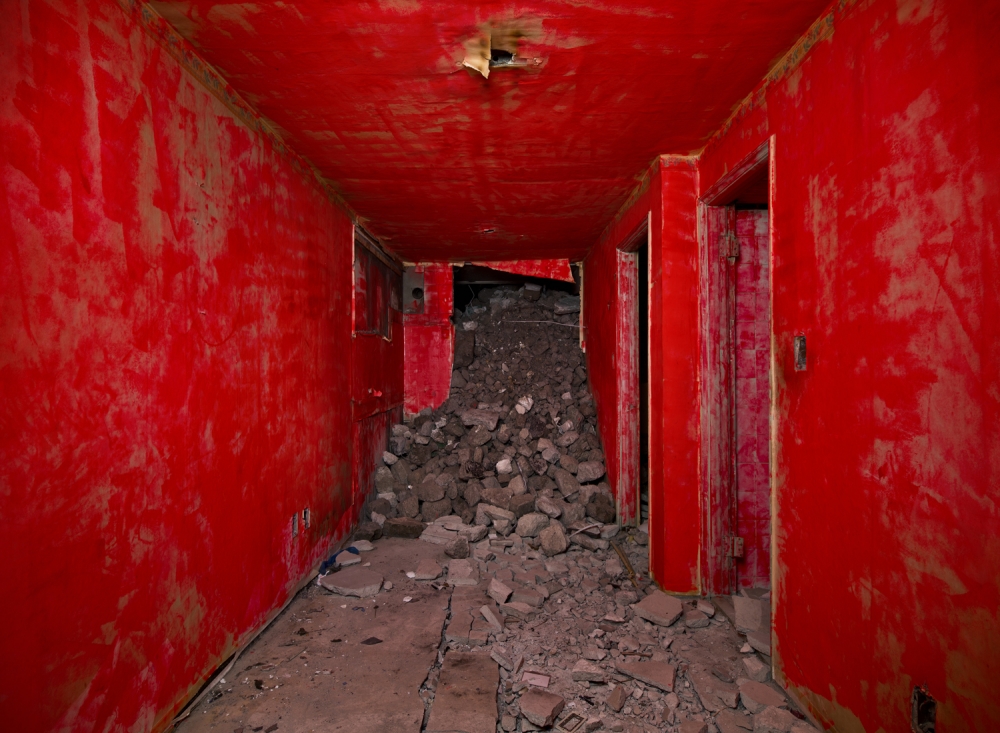
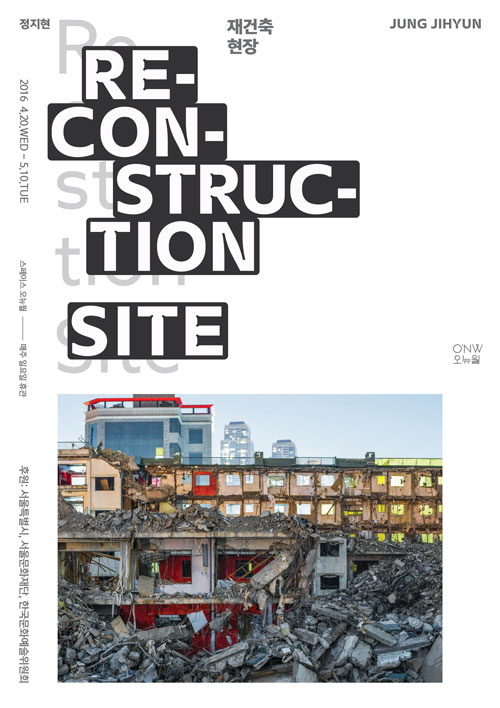
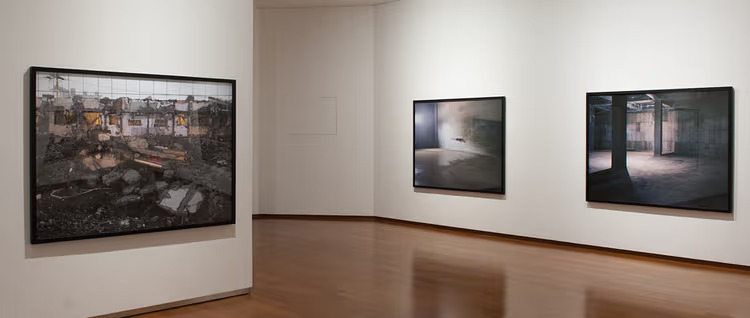
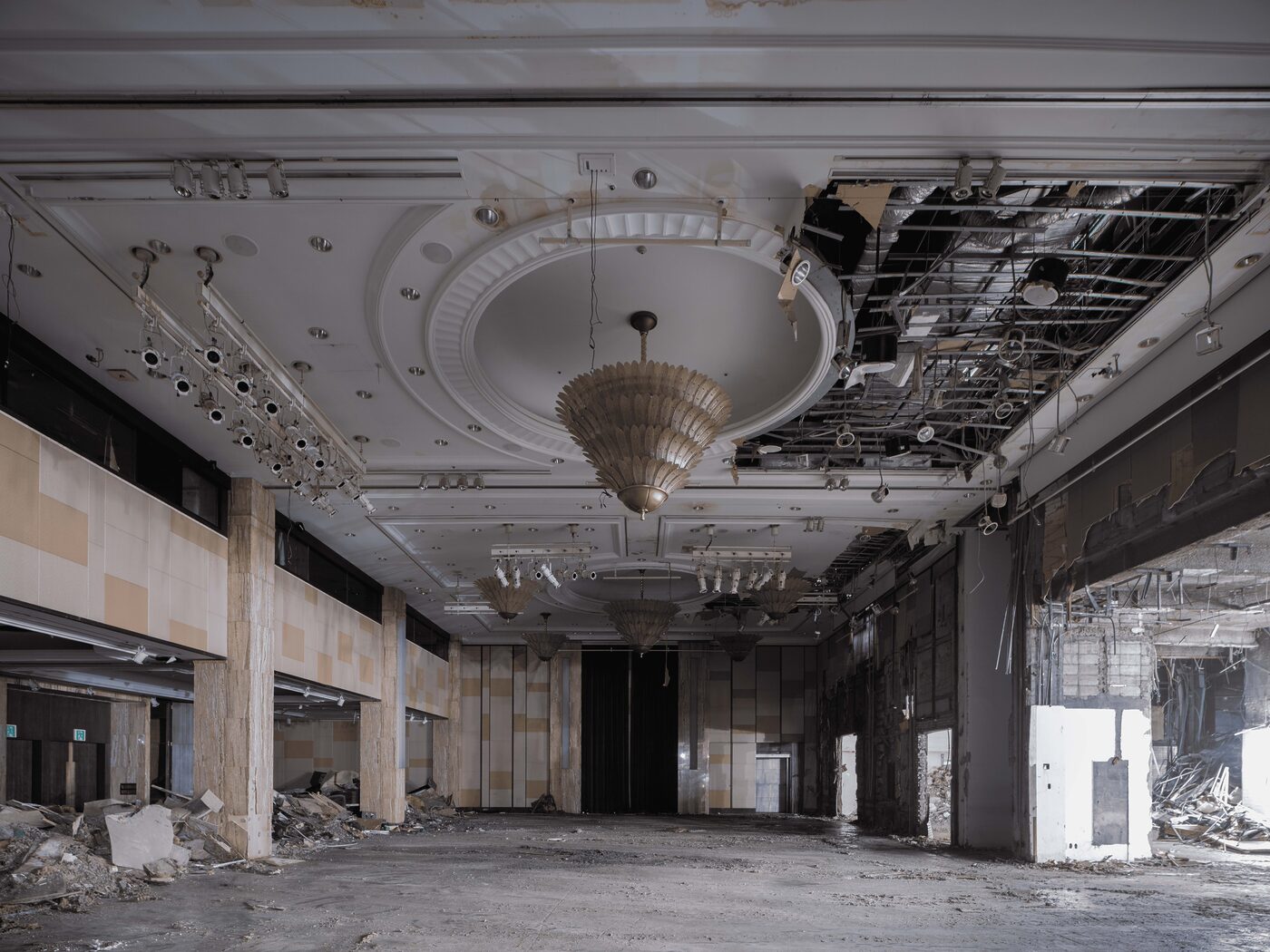
Jung Jihyun has developed a photographic practice that deconstructs and reconfigures the conventional narratives embedded in Korean urban architecture. Through the series ‘Construction Site’ (2008–2012), which captures the uncanny aesthetic permeating unfinished spaces at new town and redevelopment construction sites; ‘Demolition Site’ (2013–), in which he enters aging apartment buildings undergoing demolition and paints each room in vivid red; and ‘Reconstruction Site’ (2015–), which records the process through which “red rooms” gradually become exposed as the outer walls of buildings are dismantled, he has presented sharp urban landscapes shaped by the transformation of city spaces through both distant and close-up photographic views.
These bodies of work possess a documentary quality in that they realistically capture scenes in which the ideals embedded in architecture are gradually dismantled and erased through demolition and reconstruction. At the same time, they also contain a performative dimension, as the artist’s physical presence intervenes in restricted construction and demolition sites, bringing about tangible changes within the space.
2. The Perception of “Surface” and the Reality of Space
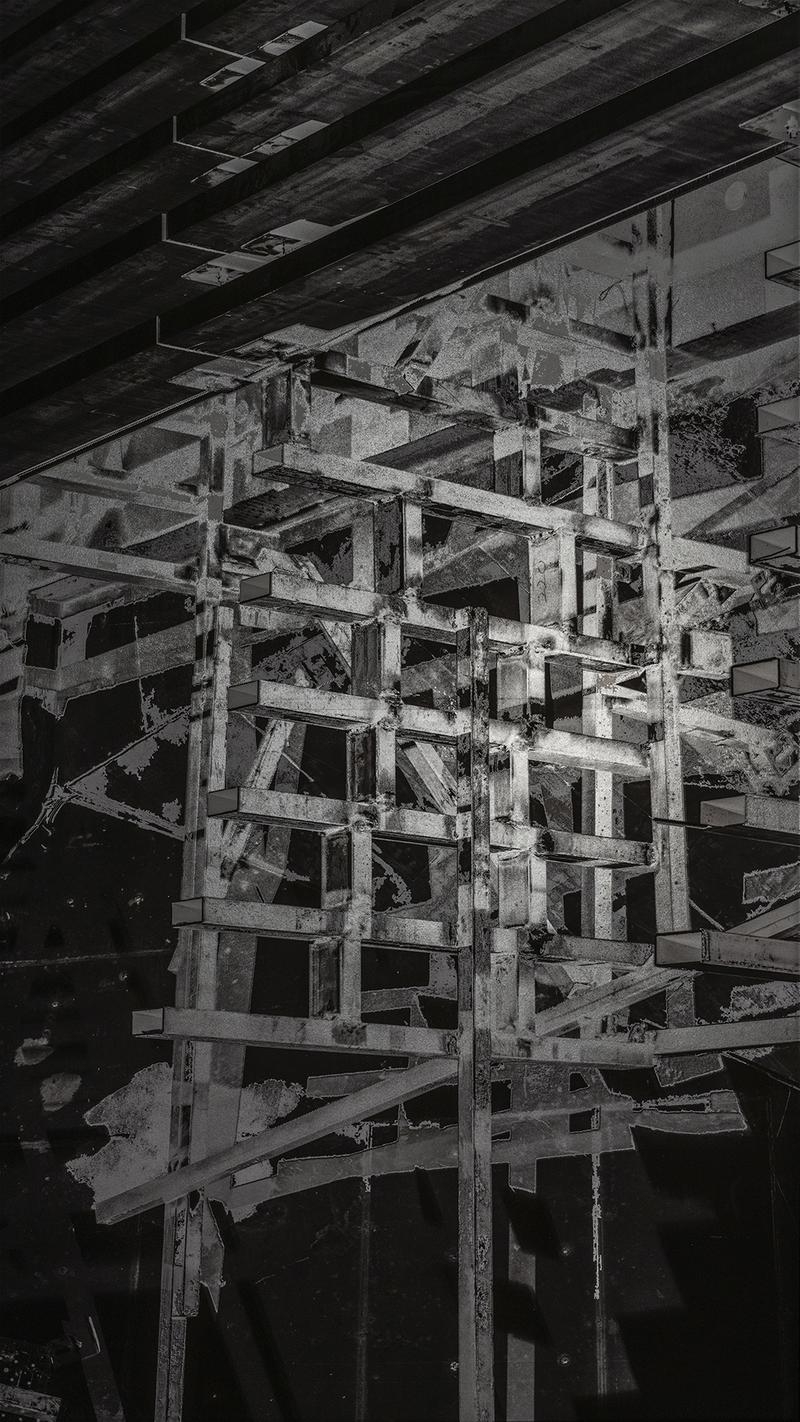
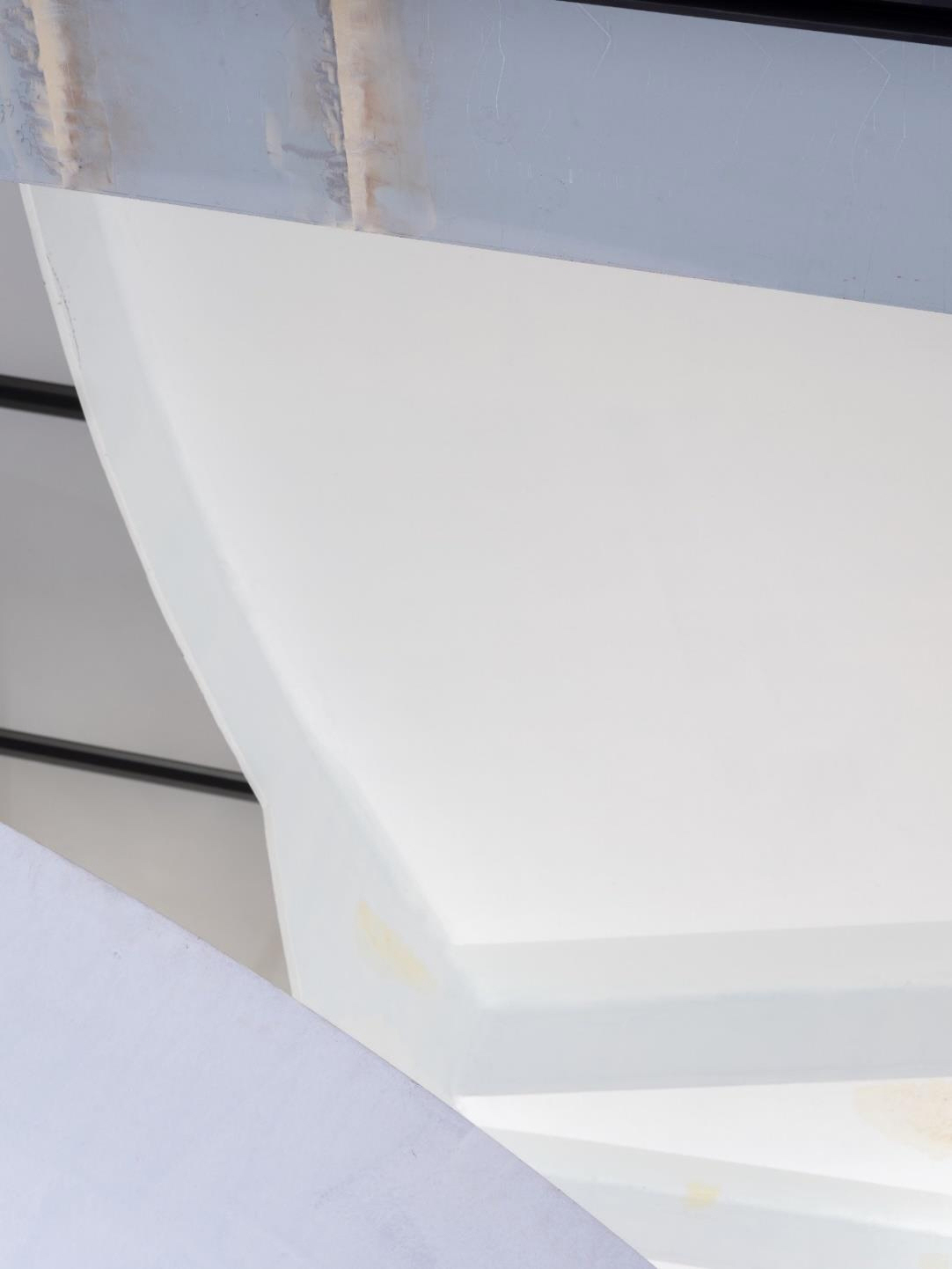
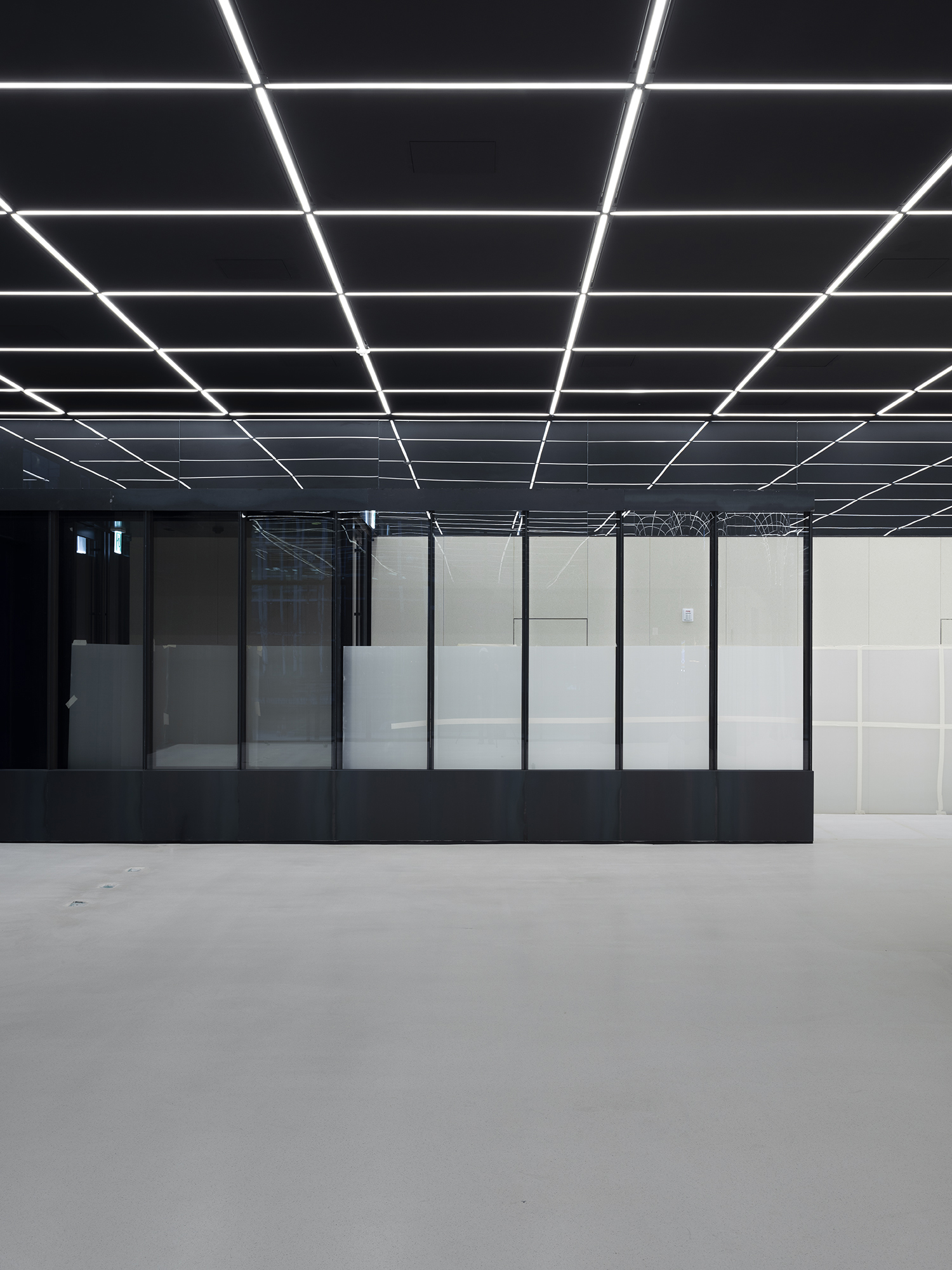
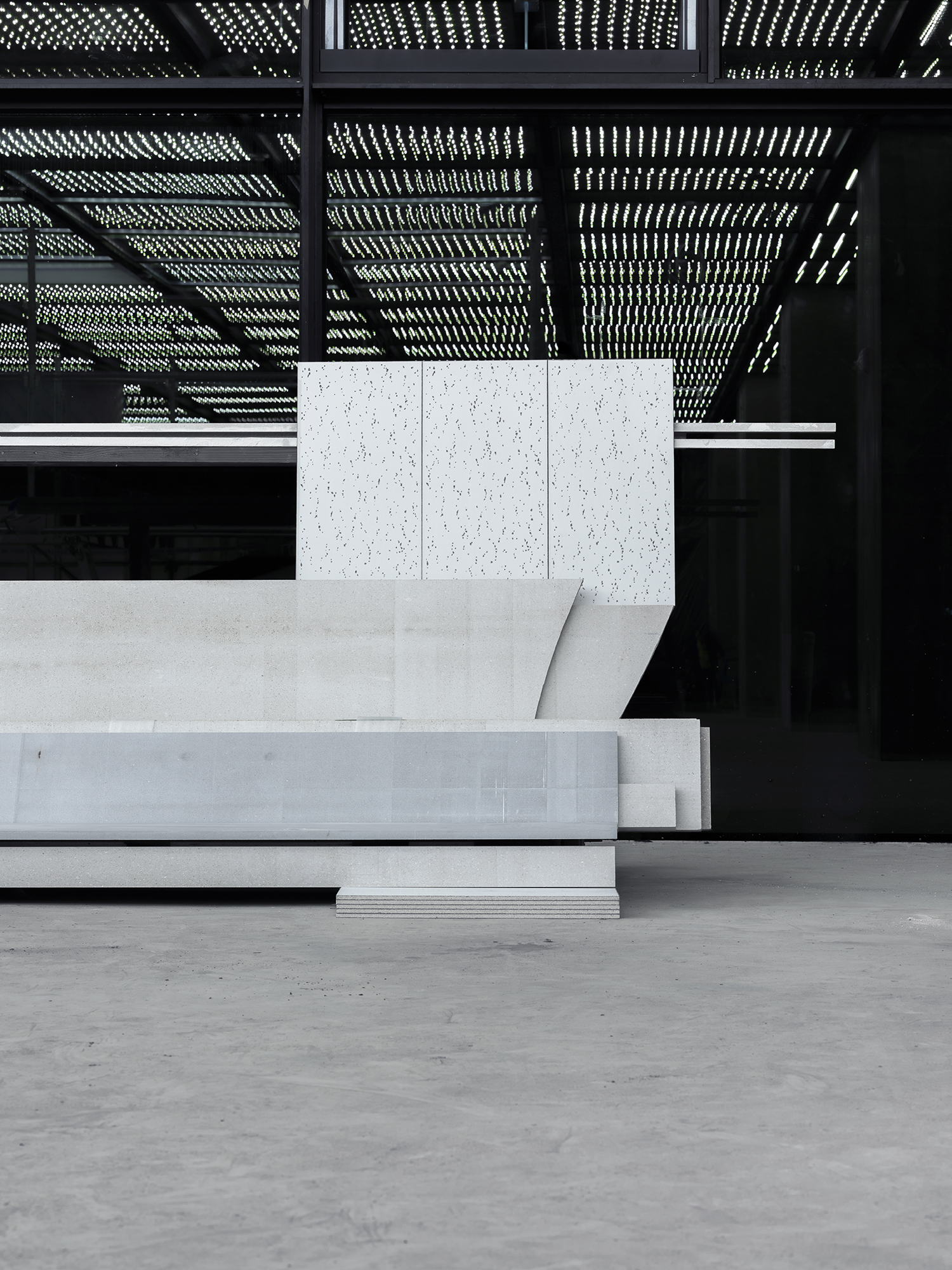
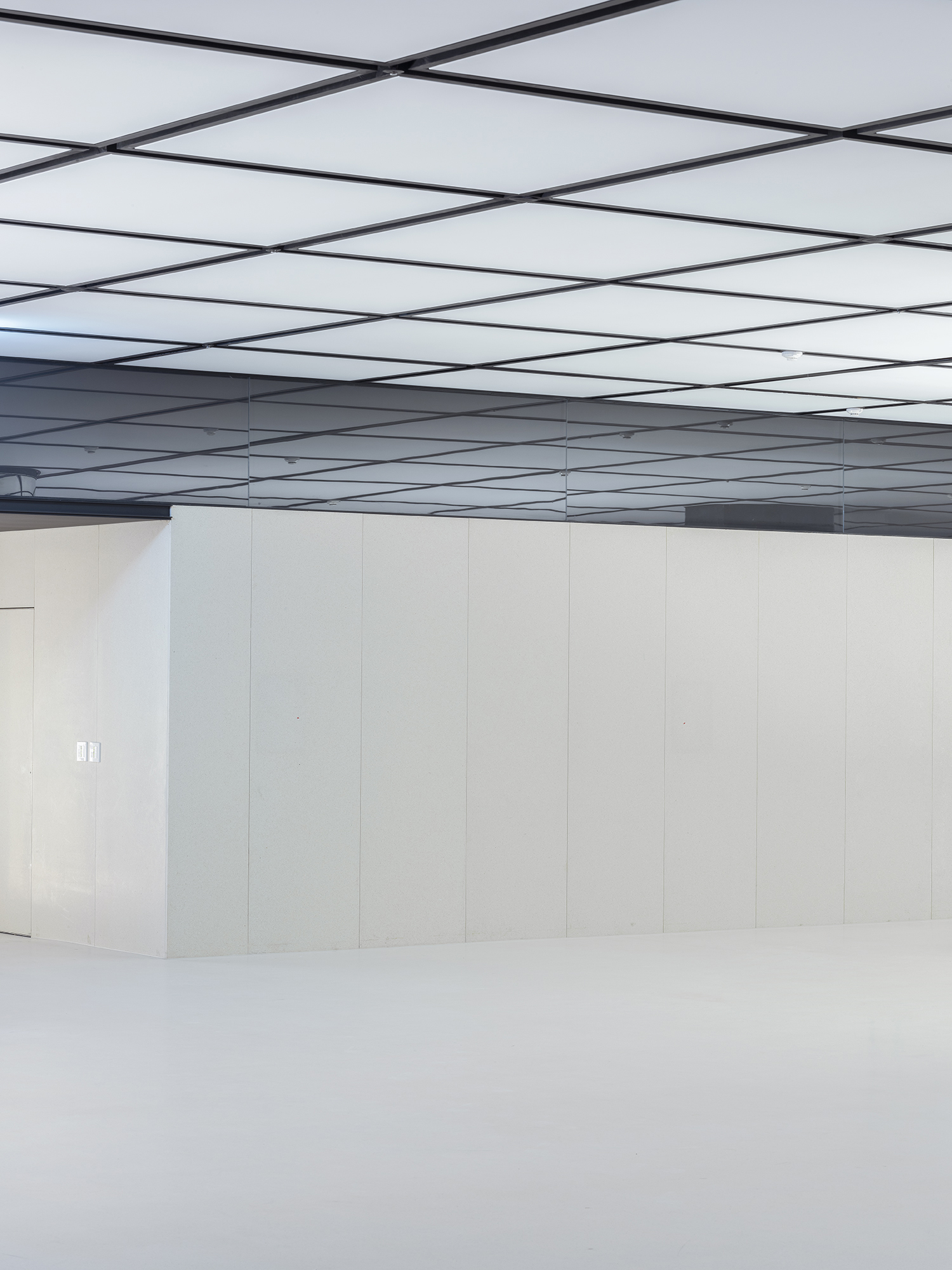
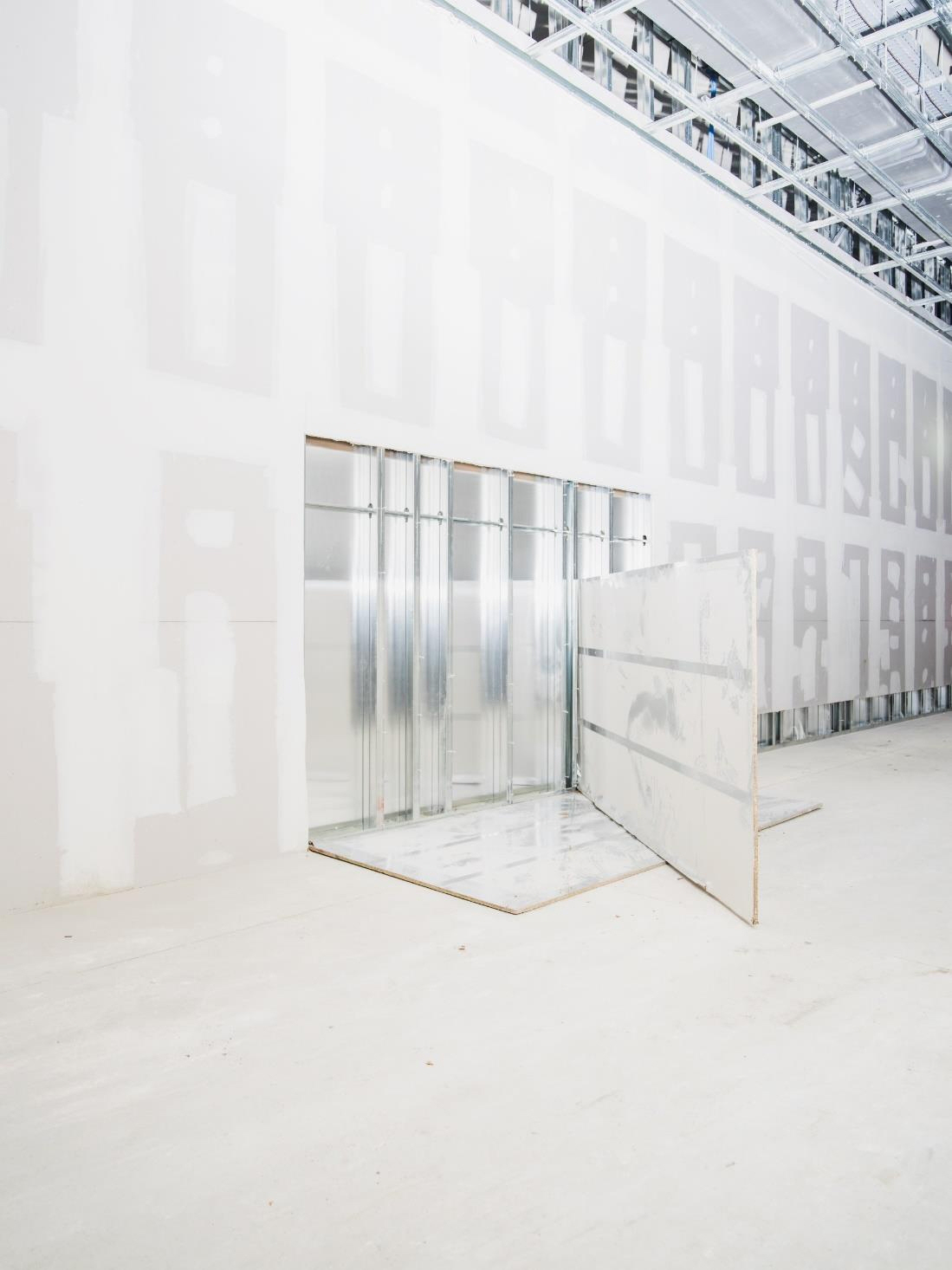
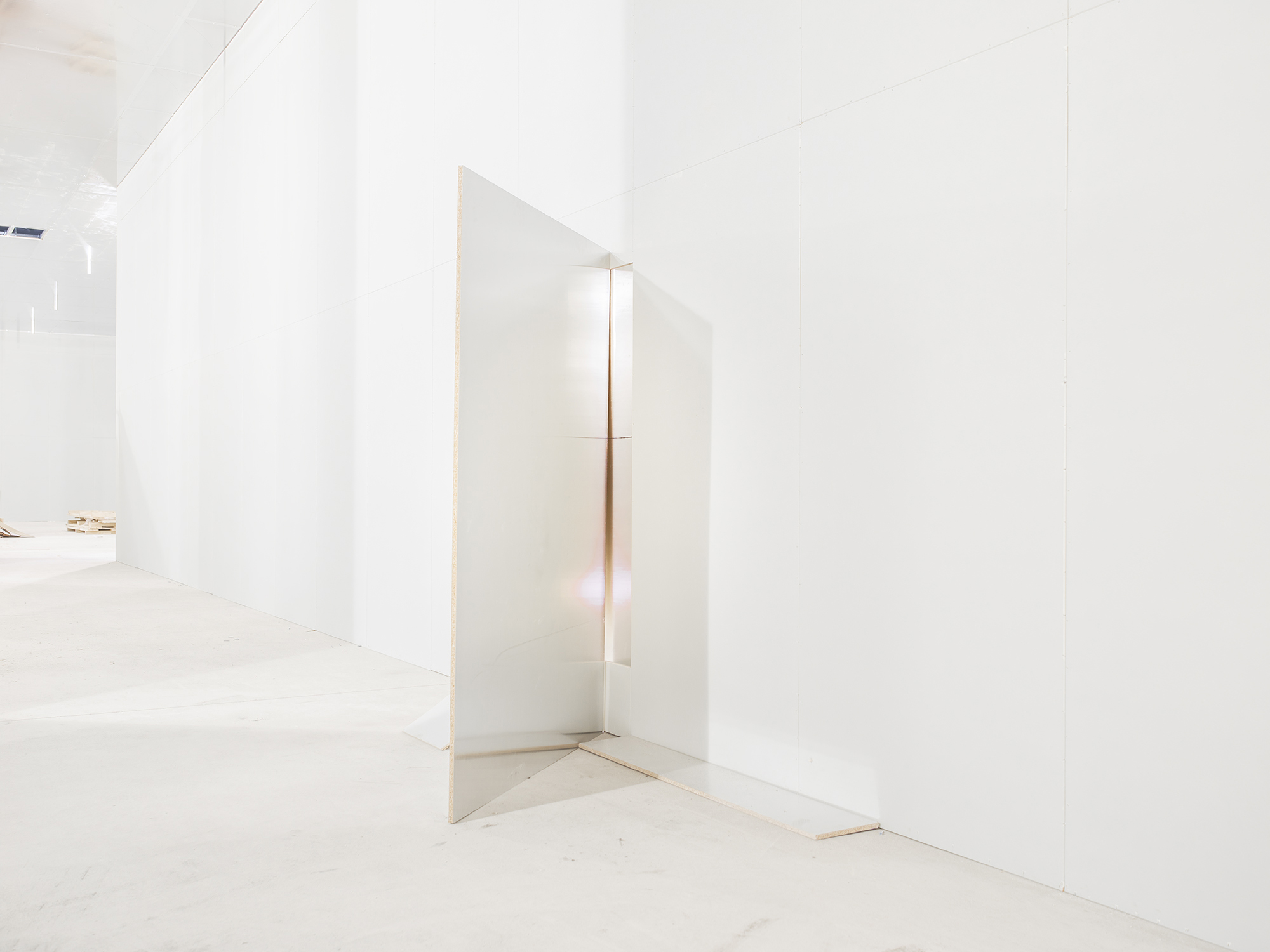
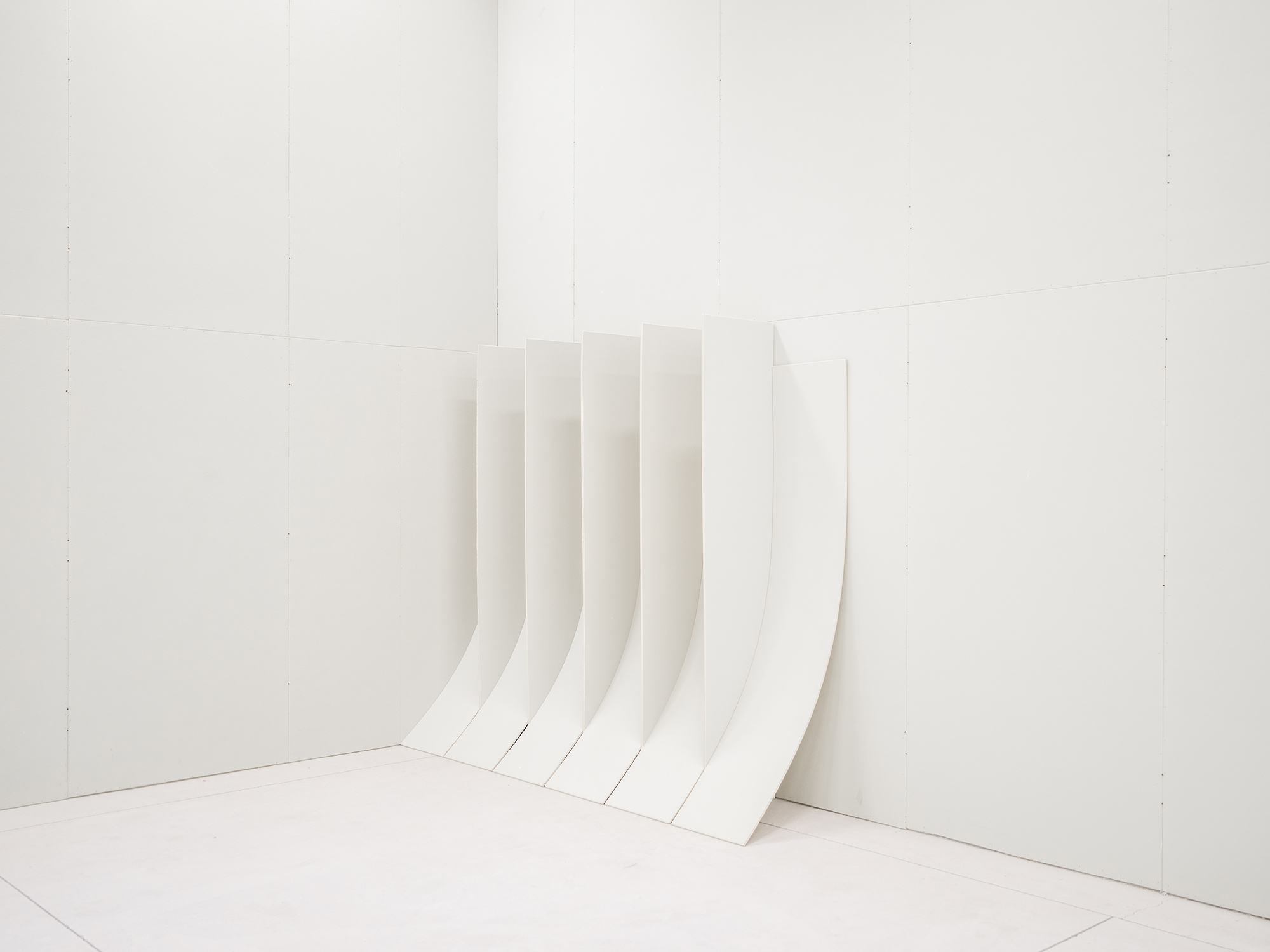
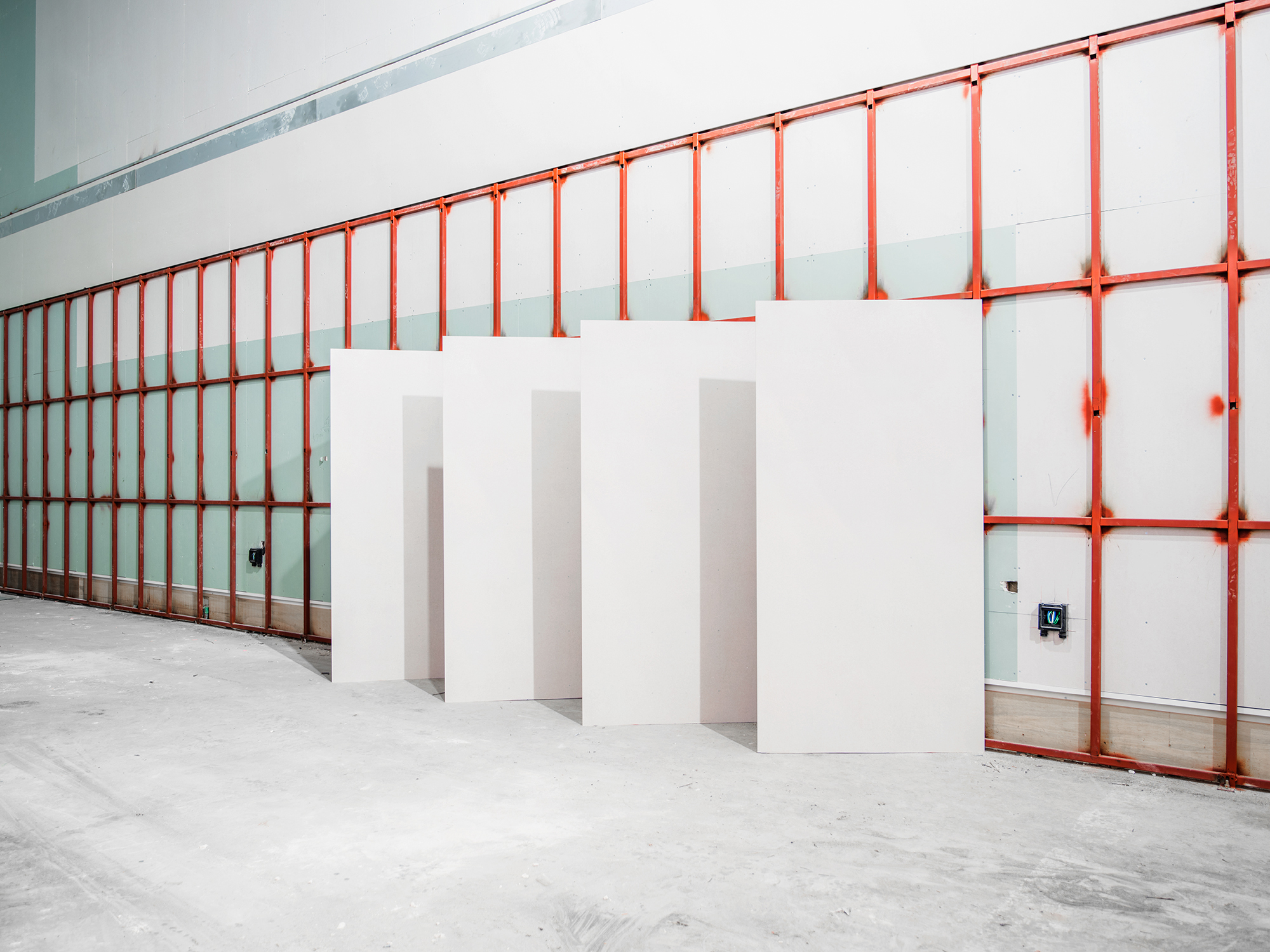
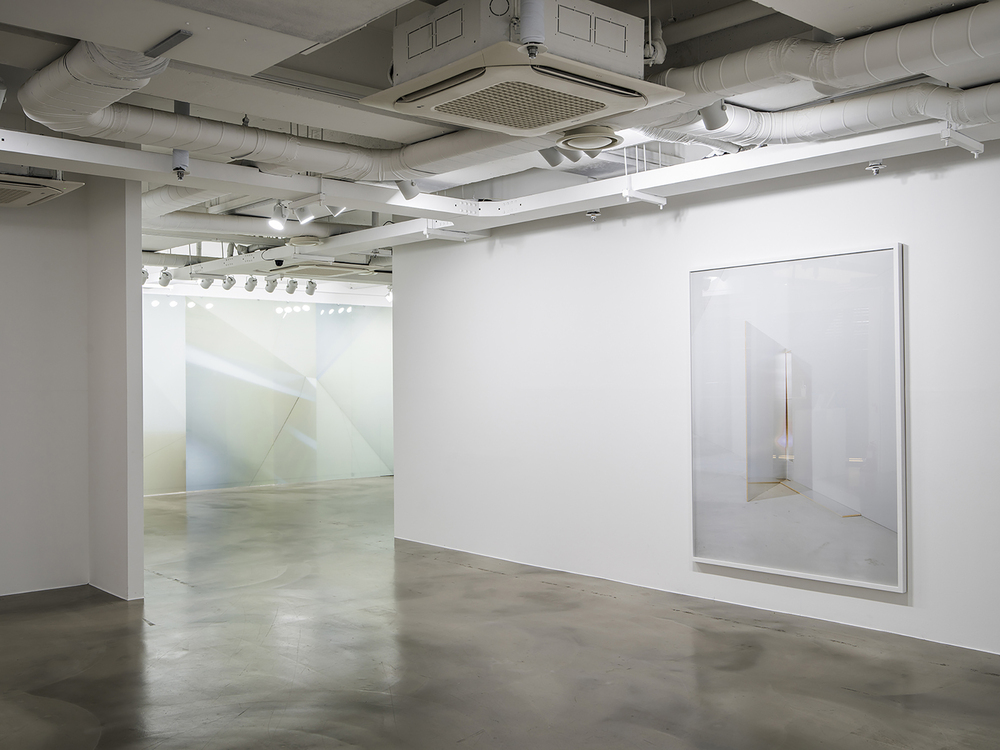
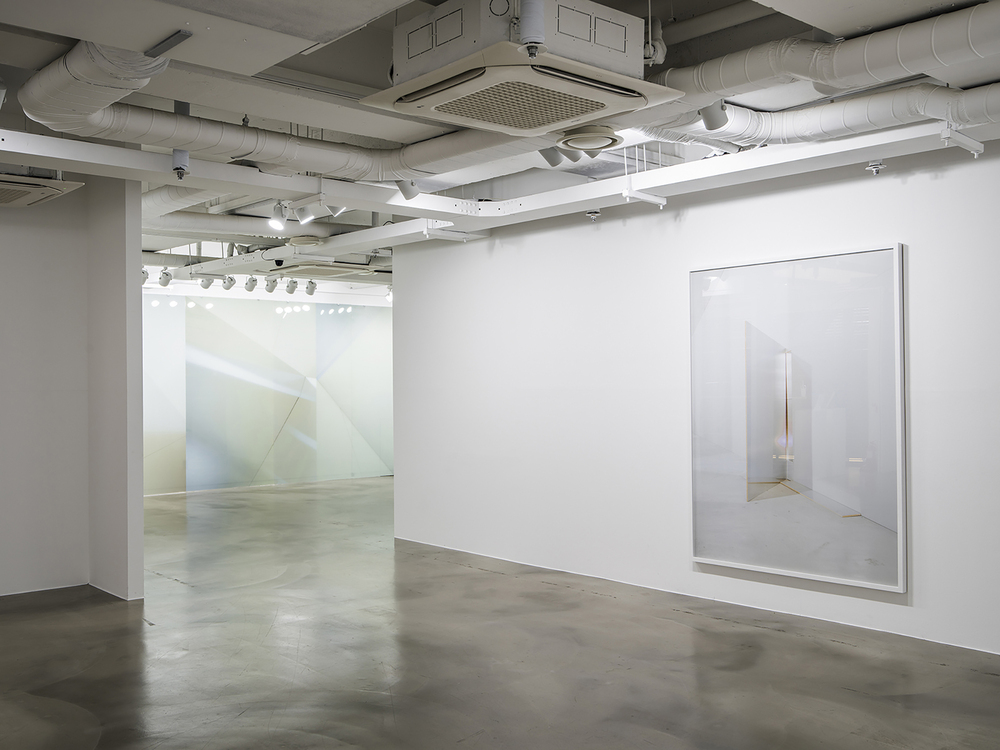
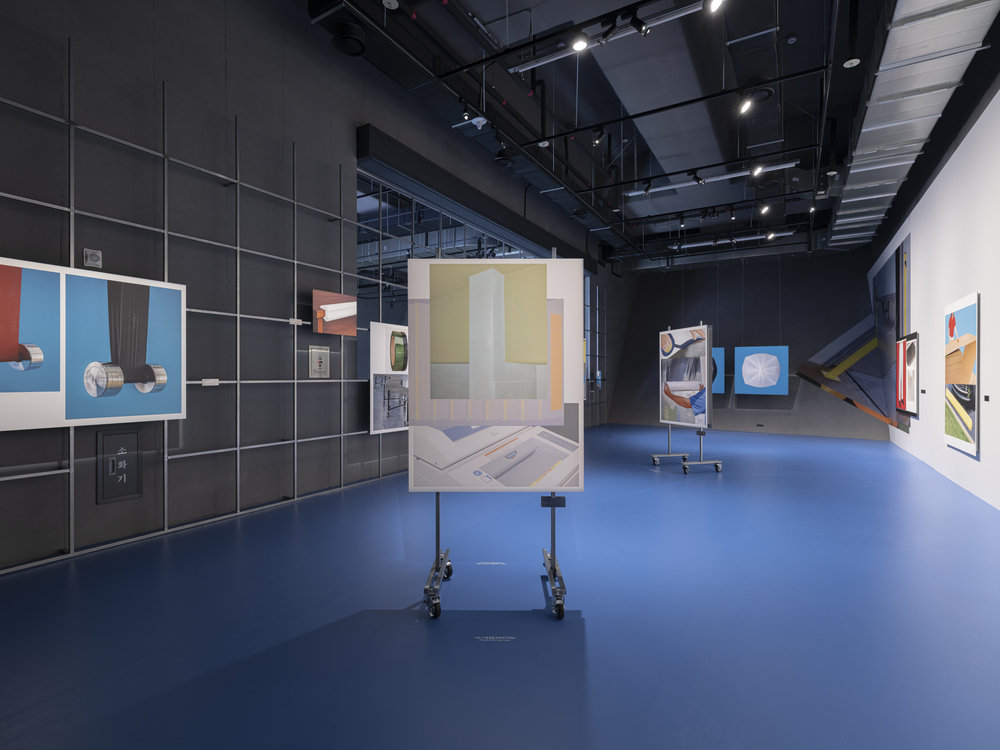
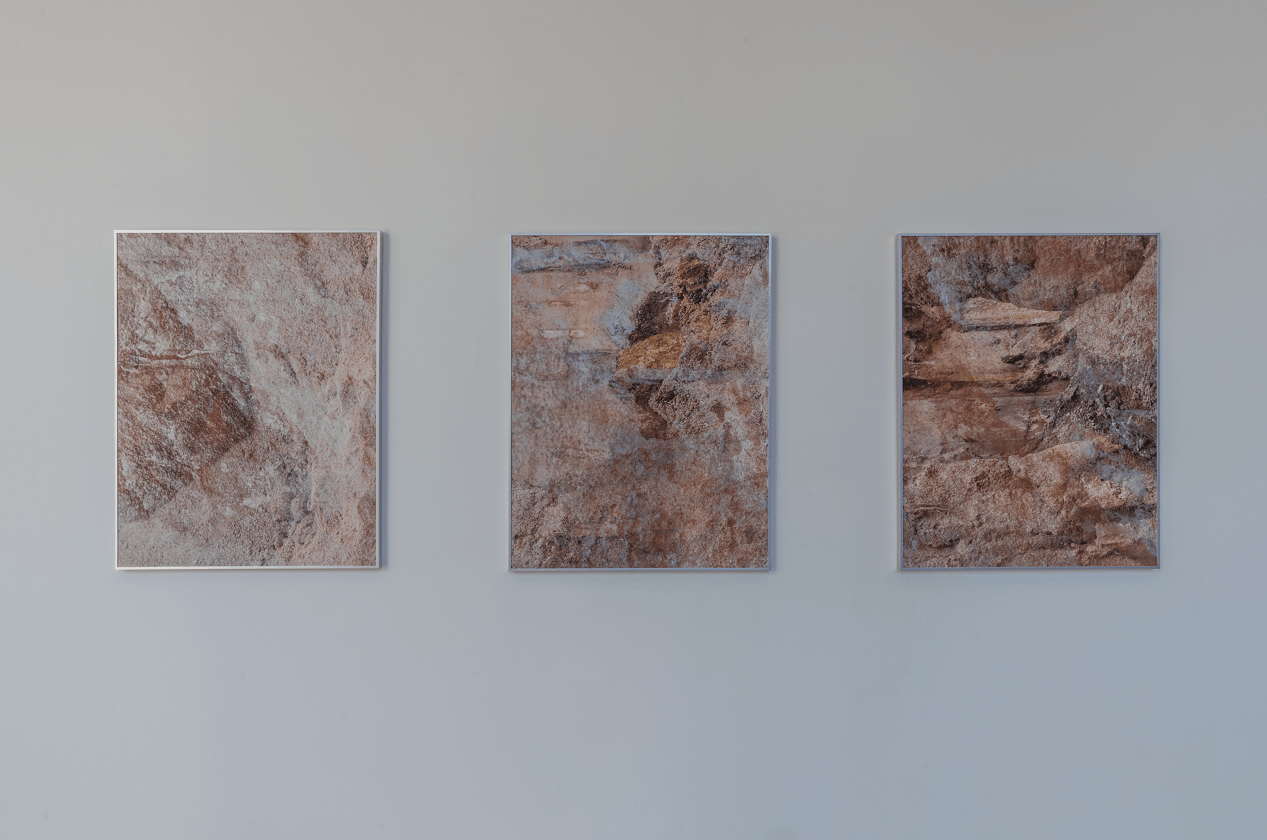
In a recent solo exhibition at KT&G Sangsangmadang, the artist presented a large body of works from the series ‘CONSTRUCT’. While residing at the construction site of the Amorepacific headquarters in Yongsan, Seoul—completed in June 2018—he directed his lens toward various sections of walls just before the exterior finishing was completed. Focusing on the surface of wall structures composed of multiple layers of interior materials—specifically the gaps subtly revealed between exterior panels—he inserted curved fragments of materials contrasting with the outer wall, or flipped leftover construction pieces to reveal both front and back surfaces simultaneously, thereby visualizing the cross-sections of the layered wall structure.
In revealing the unseen “inner skin” of architectural space, the ‘CONSTRUCT’ series appears to extend from earlier works such as ‘Reconstruction Site’, as well as ‘Construction Site Dreg’ (2012), which presented close-up views of discarded materials left at redevelopment sites. However, whereas ‘Reconstruction Site’ engages the macro context of urban landscapes through the inversion of interior and exterior spaces during demolition, ‘CONSTRUCT’ focuses on close-up cross-sections revealed just before the completion of new spaces, prompting a reconsideration of the sensory perception of “surface.” The artist describes this as an attempt to “restore our perceptual capacity for recognizing the reality of space, which we often fail to notice.”
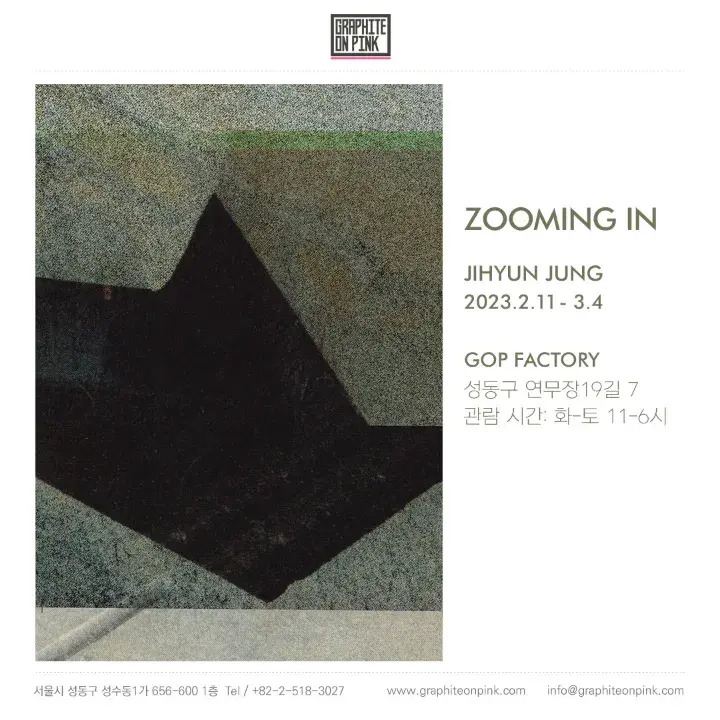
In some works, he pushes this approach further by extremely close-up views of the junctions between different materials, illuminating them with multiple white lights at close range to generate shadows between surfaces, thereby flattening spatial depth and making the image appear almost as a single plane.
The artist also appears to have given careful thought to the medium of output. While most works in ‘CONSTRUCT’ are printed as pigment prints, two works in which the flattened effect is particularly pronounced are presented as UV prints on glass. The images, visible beneath the smooth surface of glass, create the impression of graphic images, even though they originate from photographs of three-dimensional space.
3. Recomposition of Digital Images and Experimentation with Output Materials
Although the series ‘Construction Site’, ‘Reconstruction Site’, and ‘CONSTRUCT’ develop along slightly different trajectories, one of the defining characteristics that connects Jung Jihyun’s photographic practice is its performative nature grounded in meticulous pre-planning—namely, the artist’s physical intervention. Recently, however, he has also pursued a contrasting body of work, a kind of “spin-off.” One example is the series ‘TRANSIT’ (2015–), a photo archive composed of randomly “collected” urban landscapes in Japan.
During his three-month residency at Tokyo Wonder Site in 2015, he rode the automated Yurikamome train almost daily, capturing countless images of the passing urban scenery through the train window using the automatic shooting function of a medium-format digital camera. The resulting archive amounts to approximately 50,000 images.
Since the photographs were taken from a moving train, most of them are blurred, capturing fleeting glimpses of pedestrians’ profiles, nearby buildings, and natural elements. From this archive, the artist selected and edited images, projecting them onto two walls to generate new composite images, which were then re-photographed and printed. This represents an experimental approach driven by curiosity about whether meaningful outcomes can emerge from the random accumulation of images, emphasizing post-production processes such as image composition.
Building on this experiment, the artist carried out a similar project focusing on Korean urban landscapes in 2018. The result was Ui–Sinseol Cultural Arts Railway (2018), a commission by the Seoul Metropolitan Government. The “random photographs” taken around Ui Station most frequently feature hikers preparing to ascend Bukhansan Mountain. From these images, the artist extracted the themes of “mountain” and “hiker,” creating two separate image layers.
First, he produced an abstract layer composed of fragmented surfaces derived from close-up images of the colorful hiking outfits worn by the subjects. Second, he created another abstract layer by pixelating enlarged images of Bukhansan as seen from the direction of Ui Station. To intersect these two image layers within a three-dimensional space, he employed mirror film printing. The two layers, printed on transparent film, are installed facing each other on the glass walls of the station entrance, allowing the overlapping images to shift depending on the viewer’s angle.
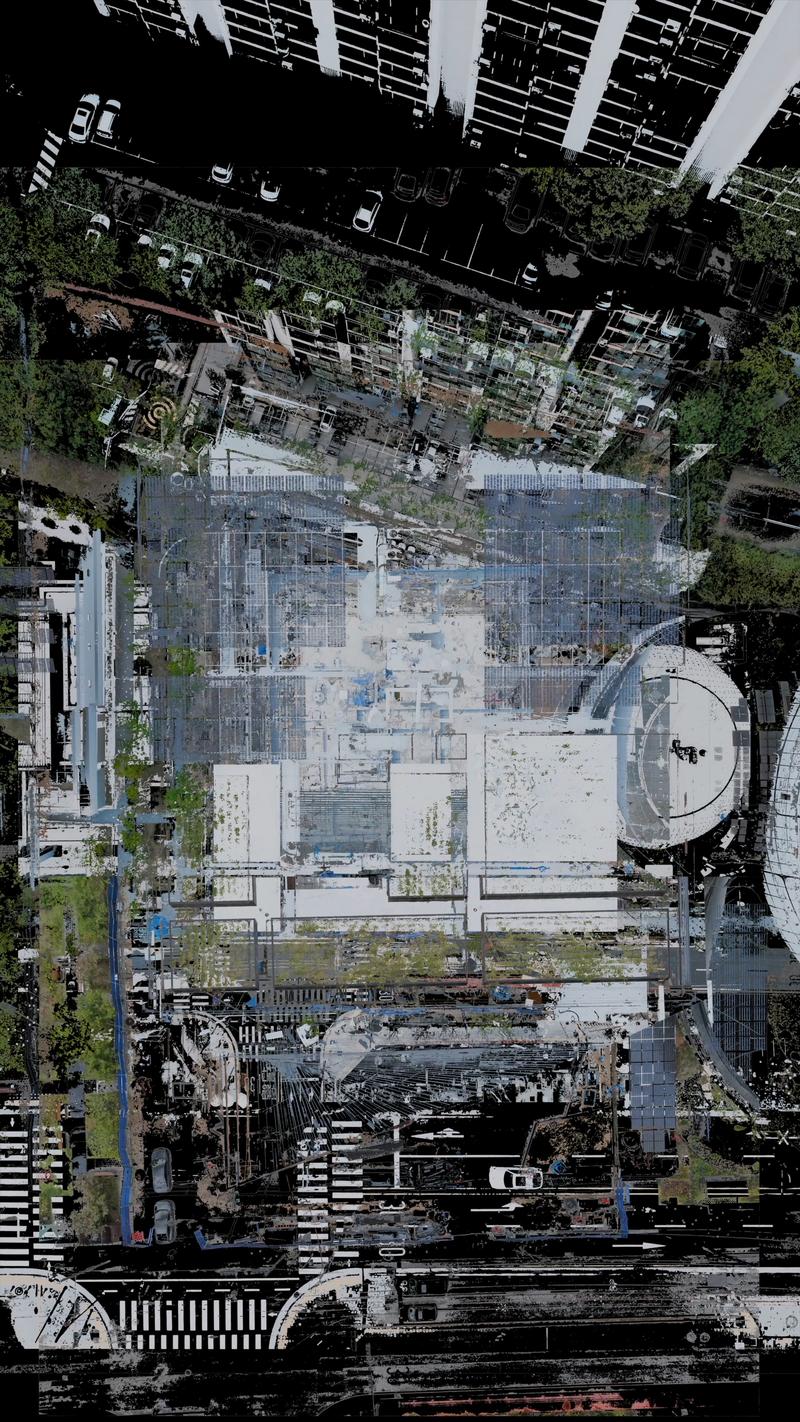
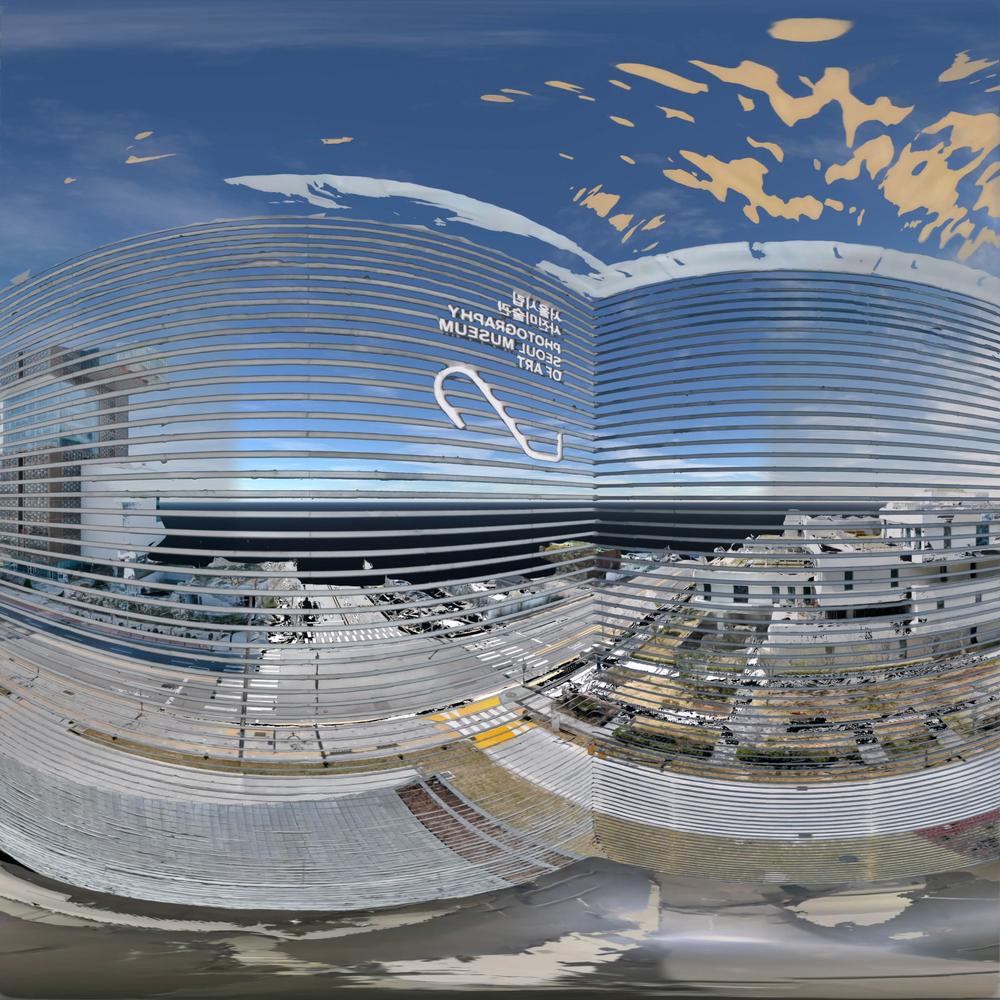
Through the recomposition of digital images and experimentation with output materials, Jung Jihyun continues to explore photographic methods that most contemporarily represent the evolving architectural spaces of the city. In particular, his recent focus lies in developing new ways of re-materializing digital images—captured from real-world subjects—back into physical reality.
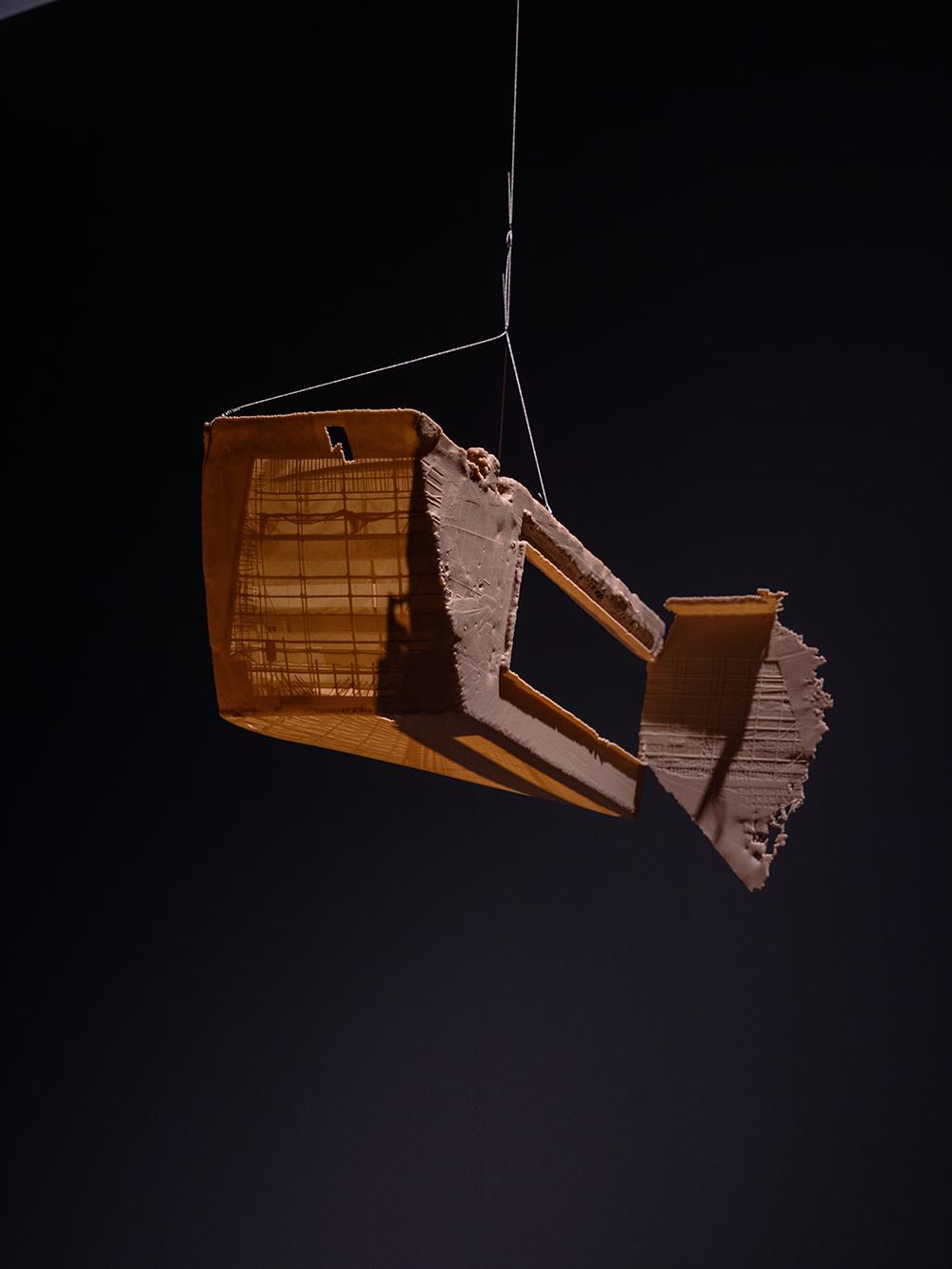
The artist is currently planning an experiment to convert objects of discarded materials photographed at reconstruction sites into data and reproduce them through 3D printing. It remains to be seen how Jung Jihyun’s exploration of reconstructing architectural landscapes—beyond the flat image and into installation—will continue to unfold.