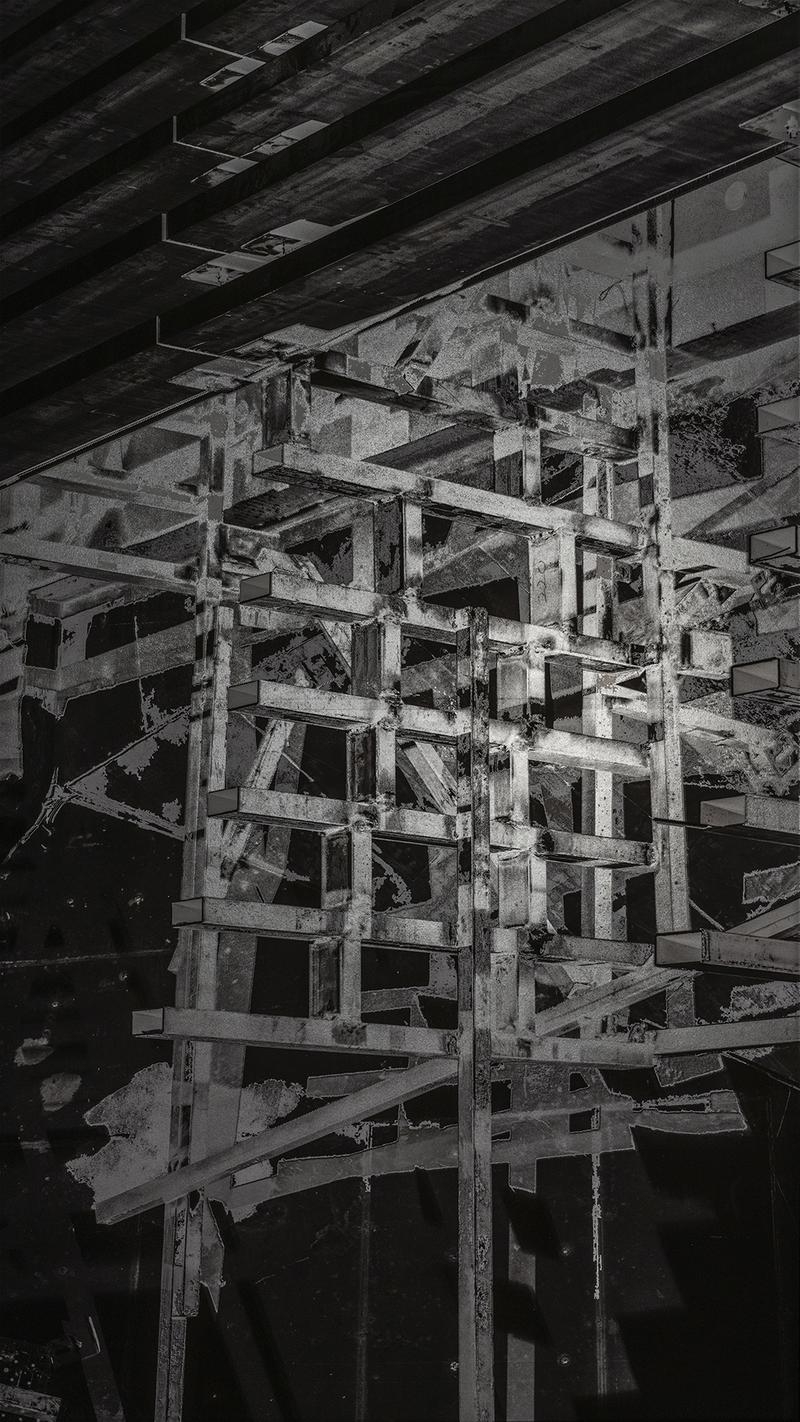
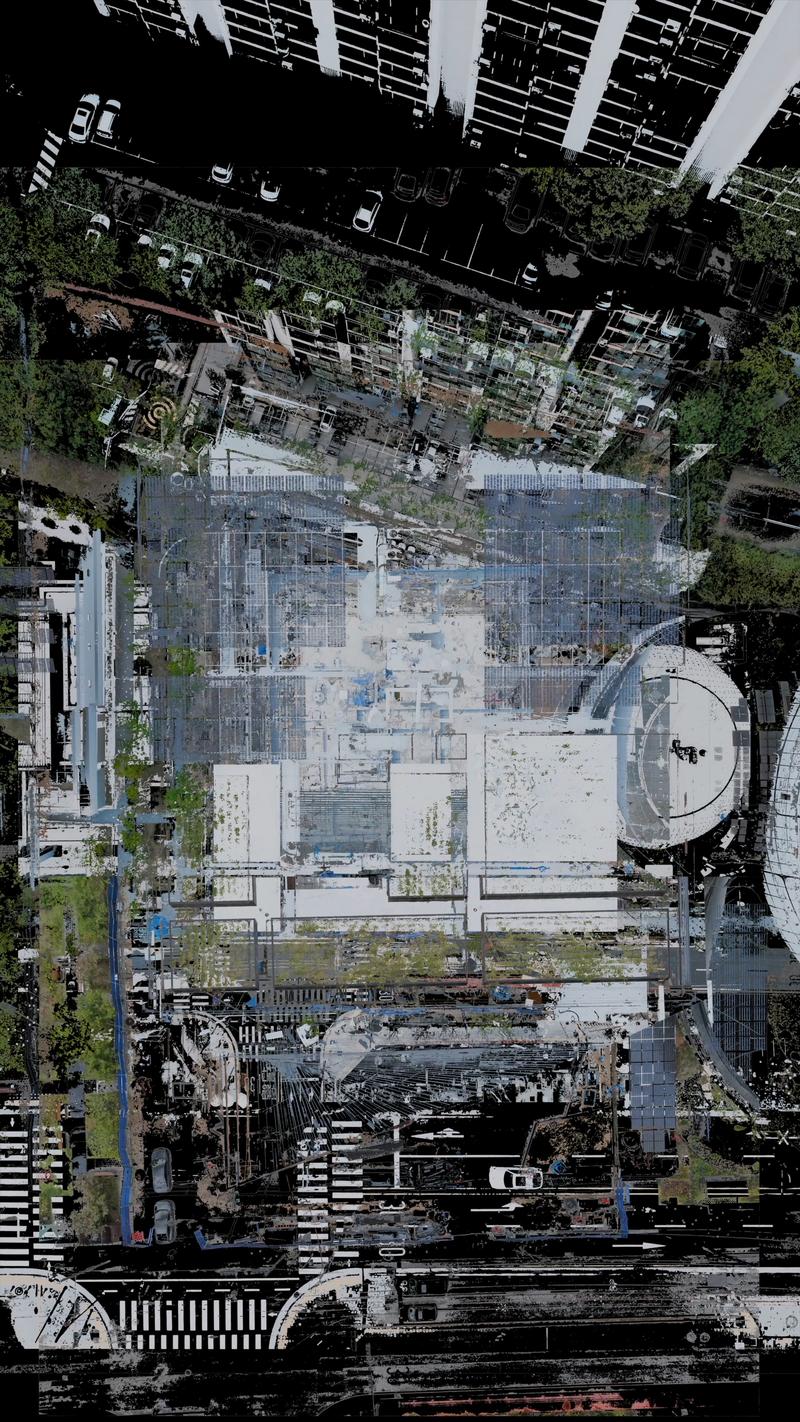
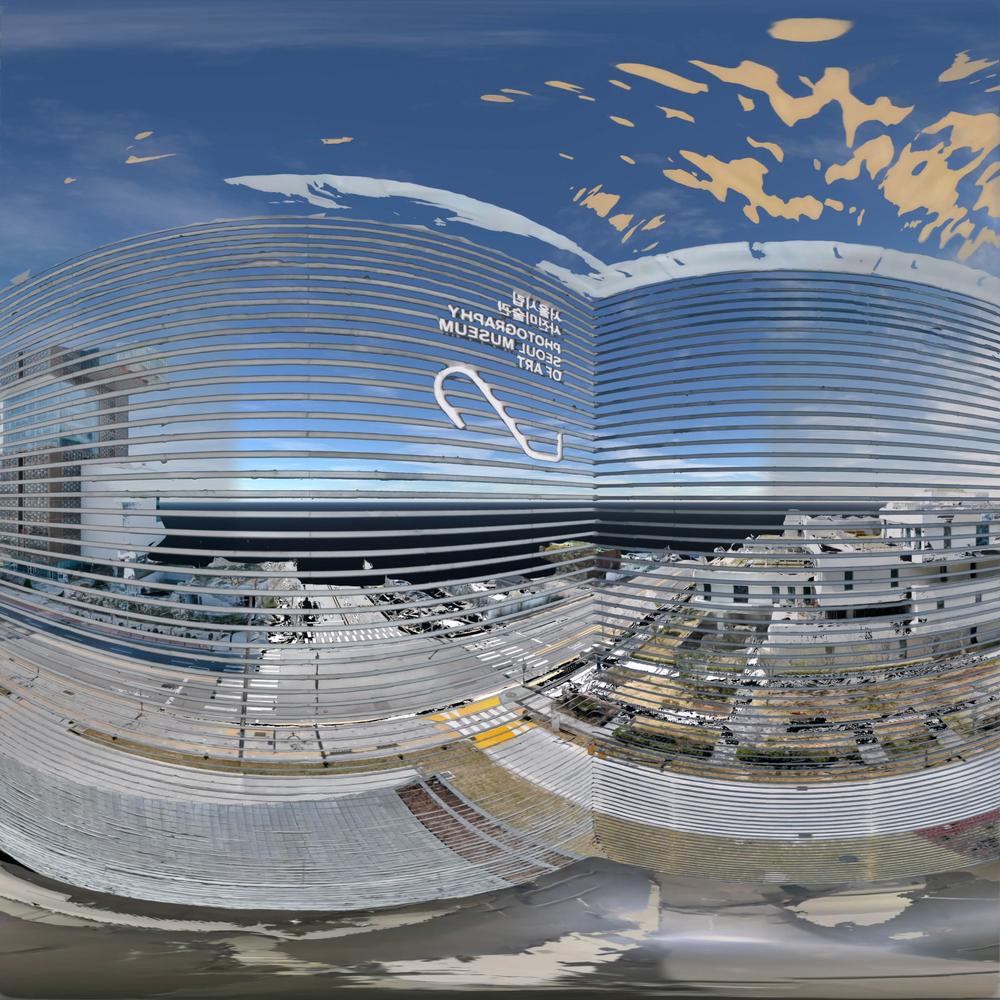
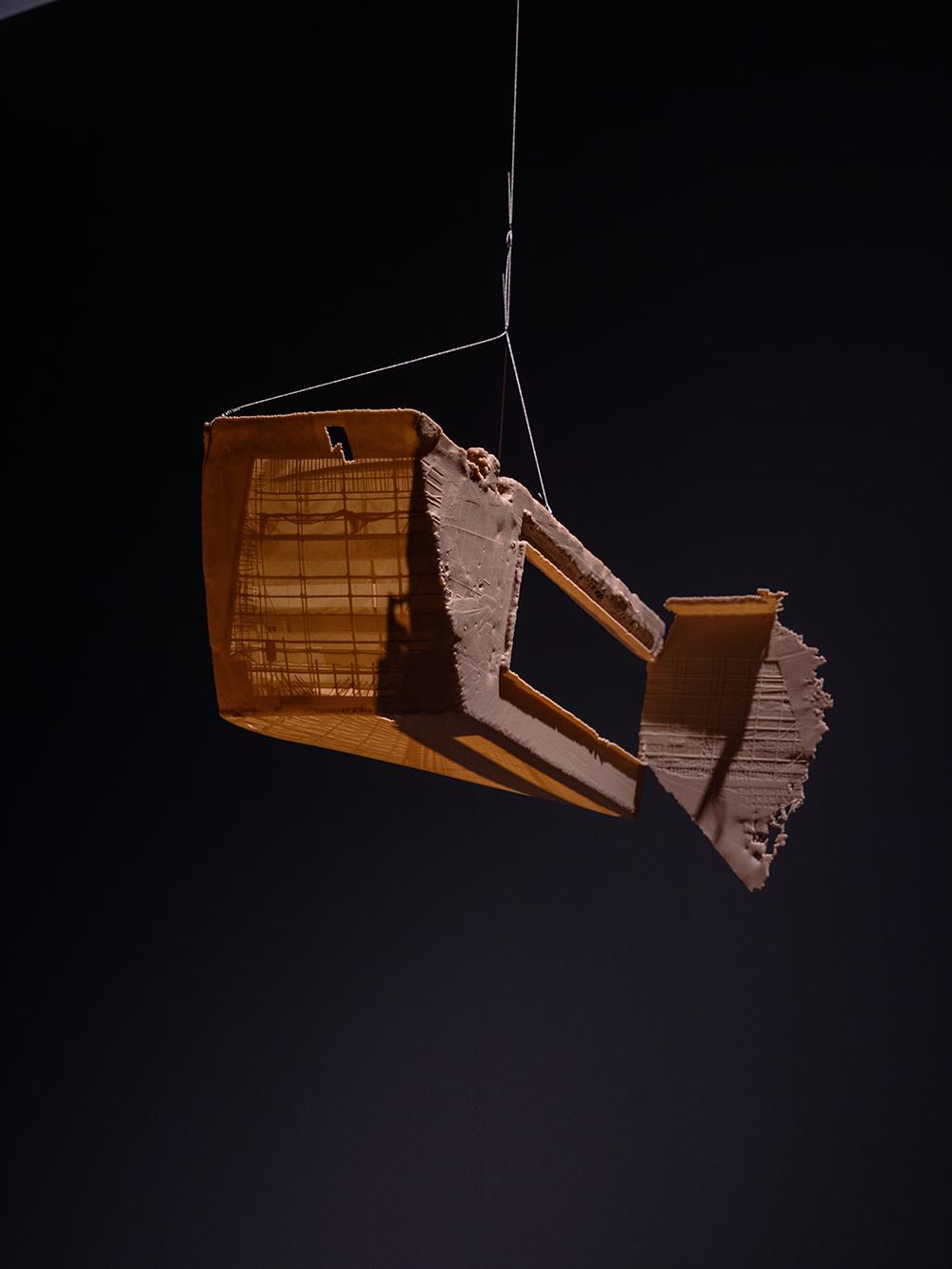
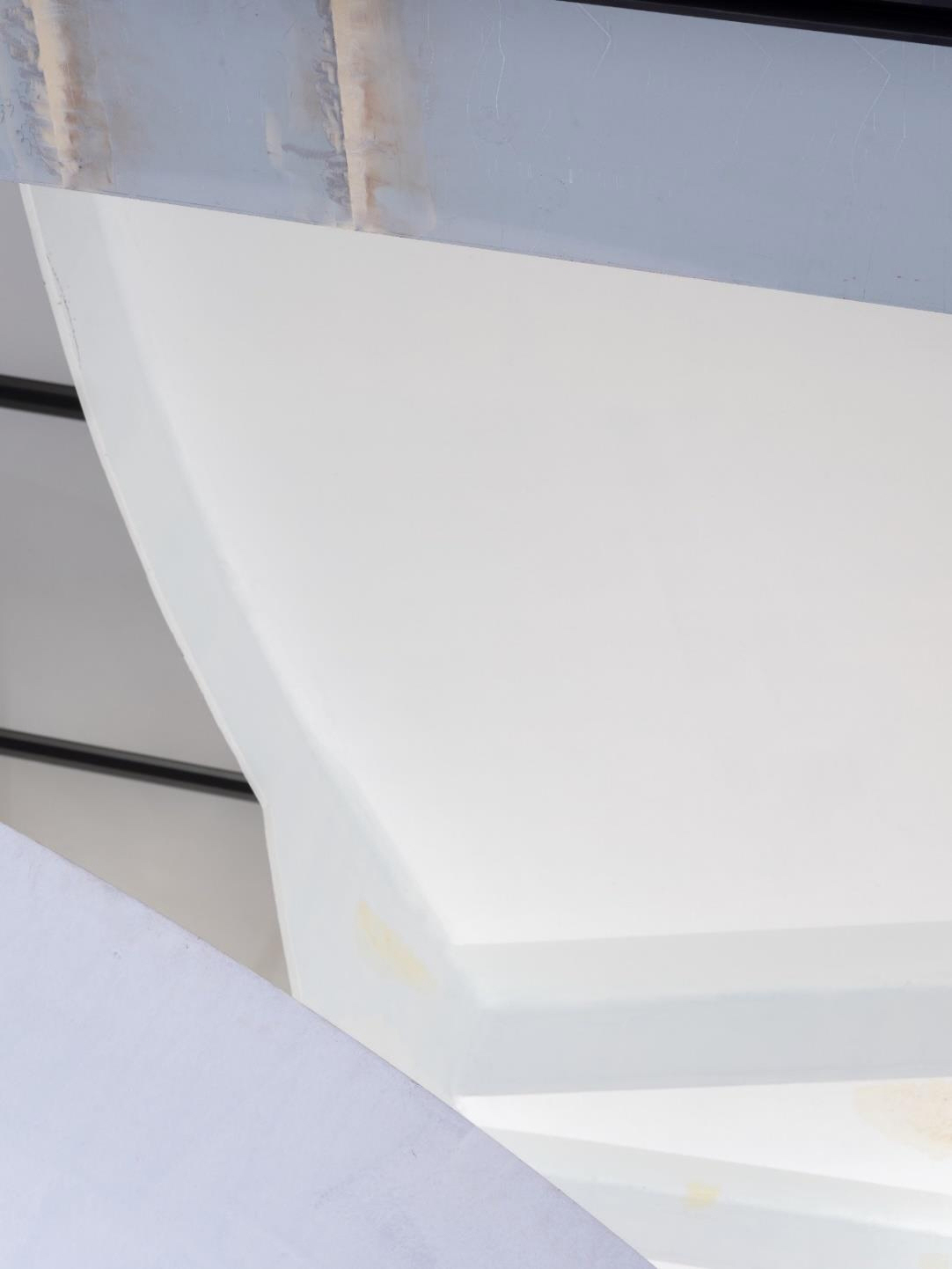
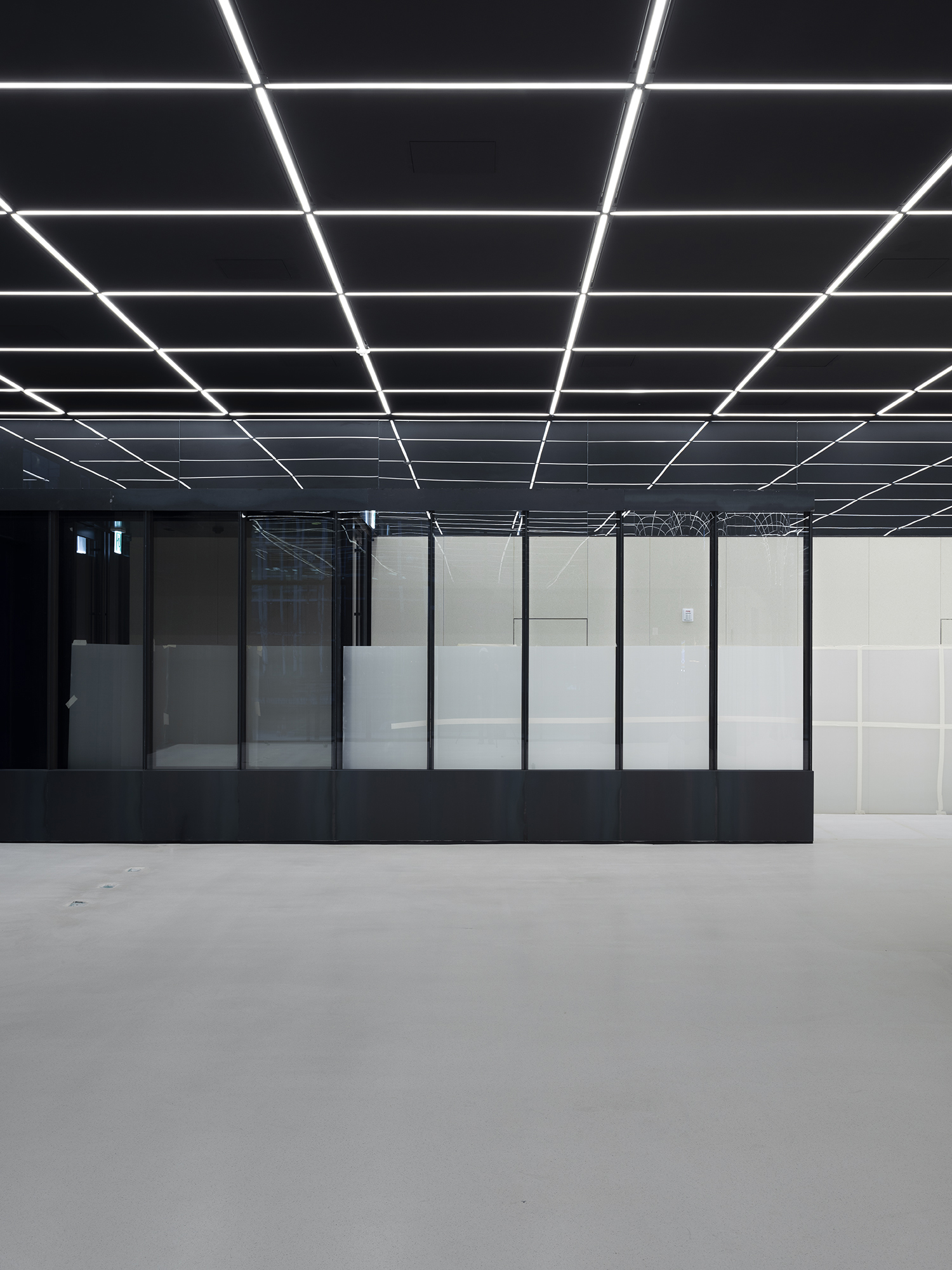
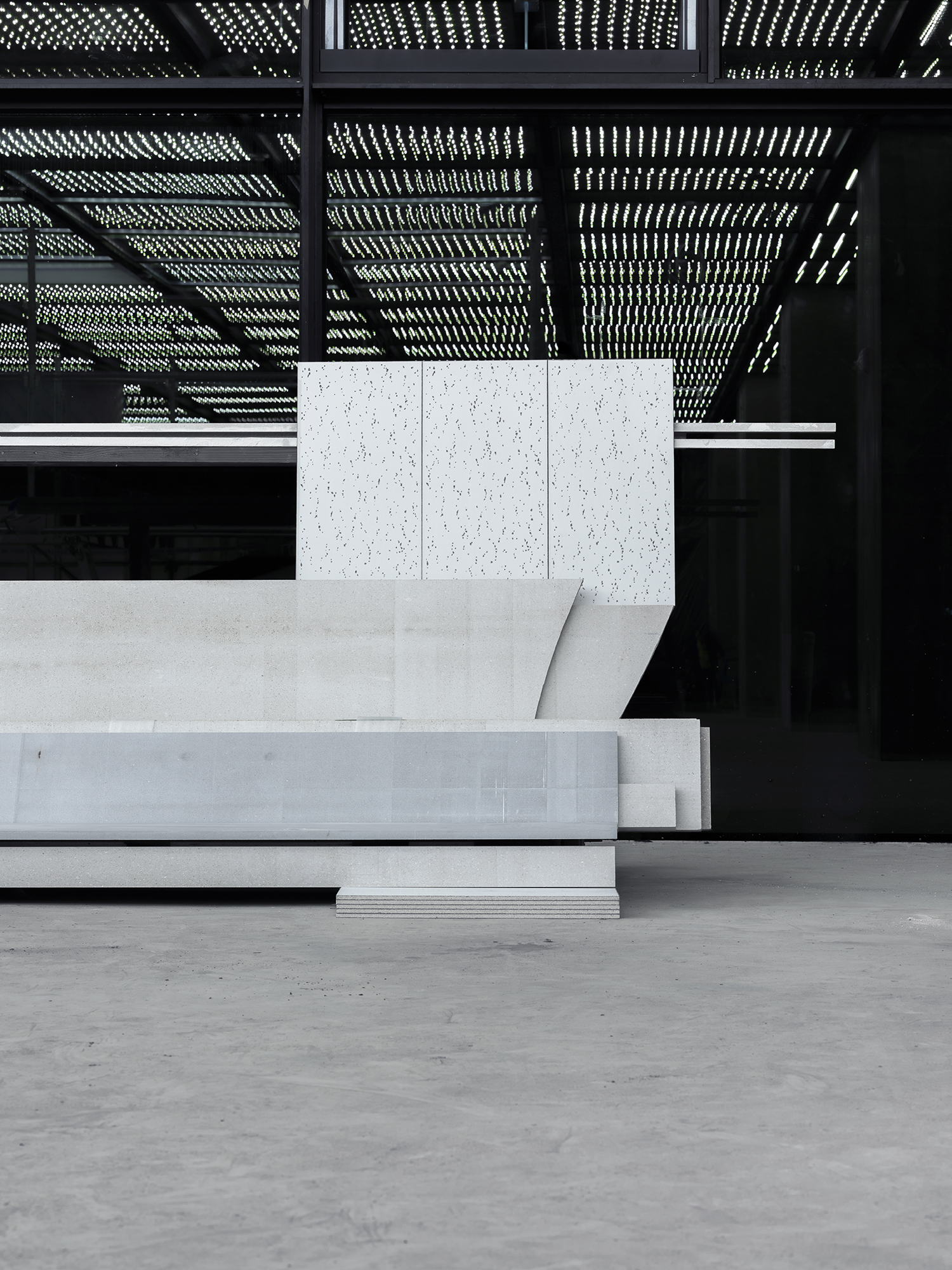
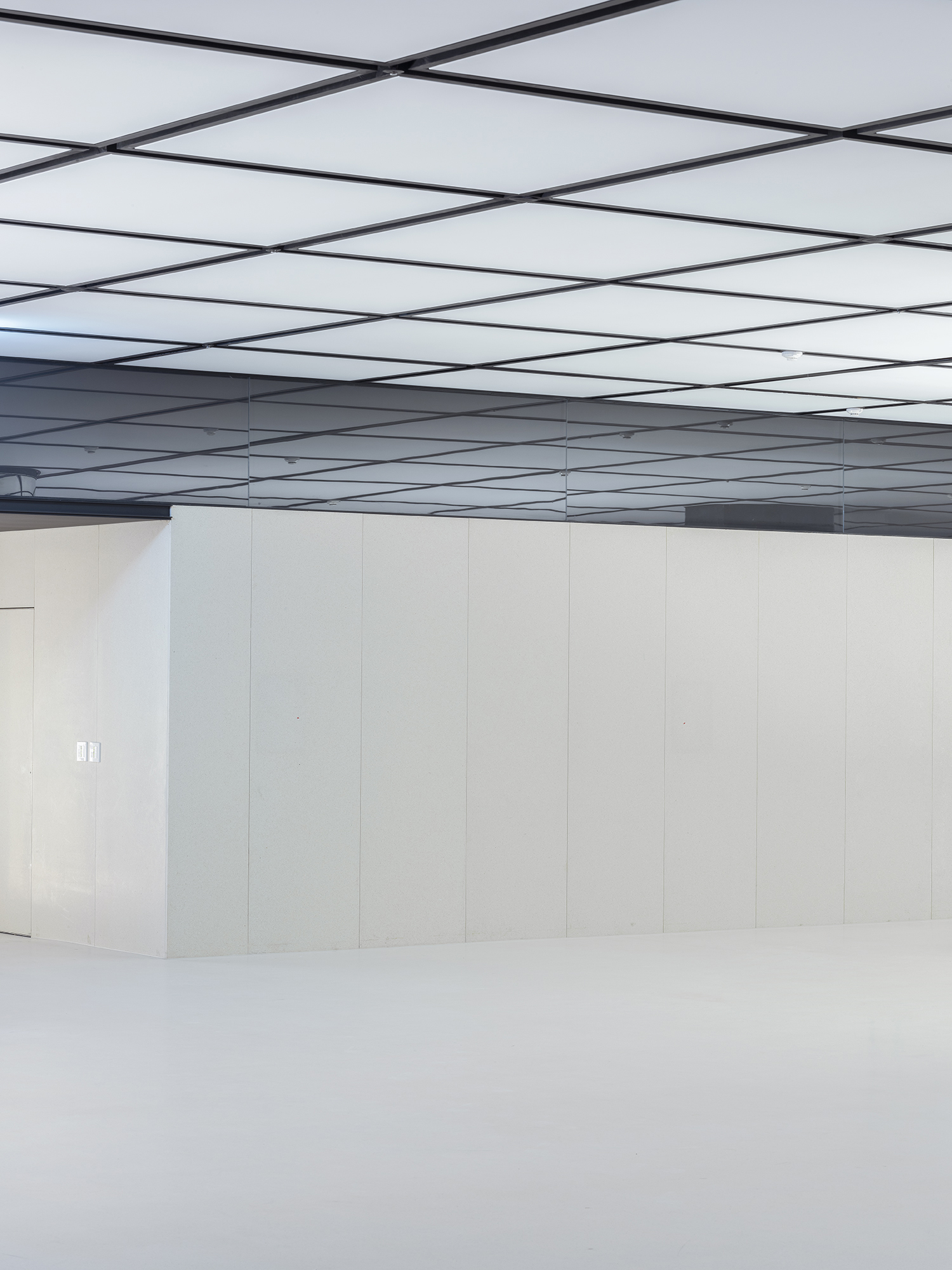
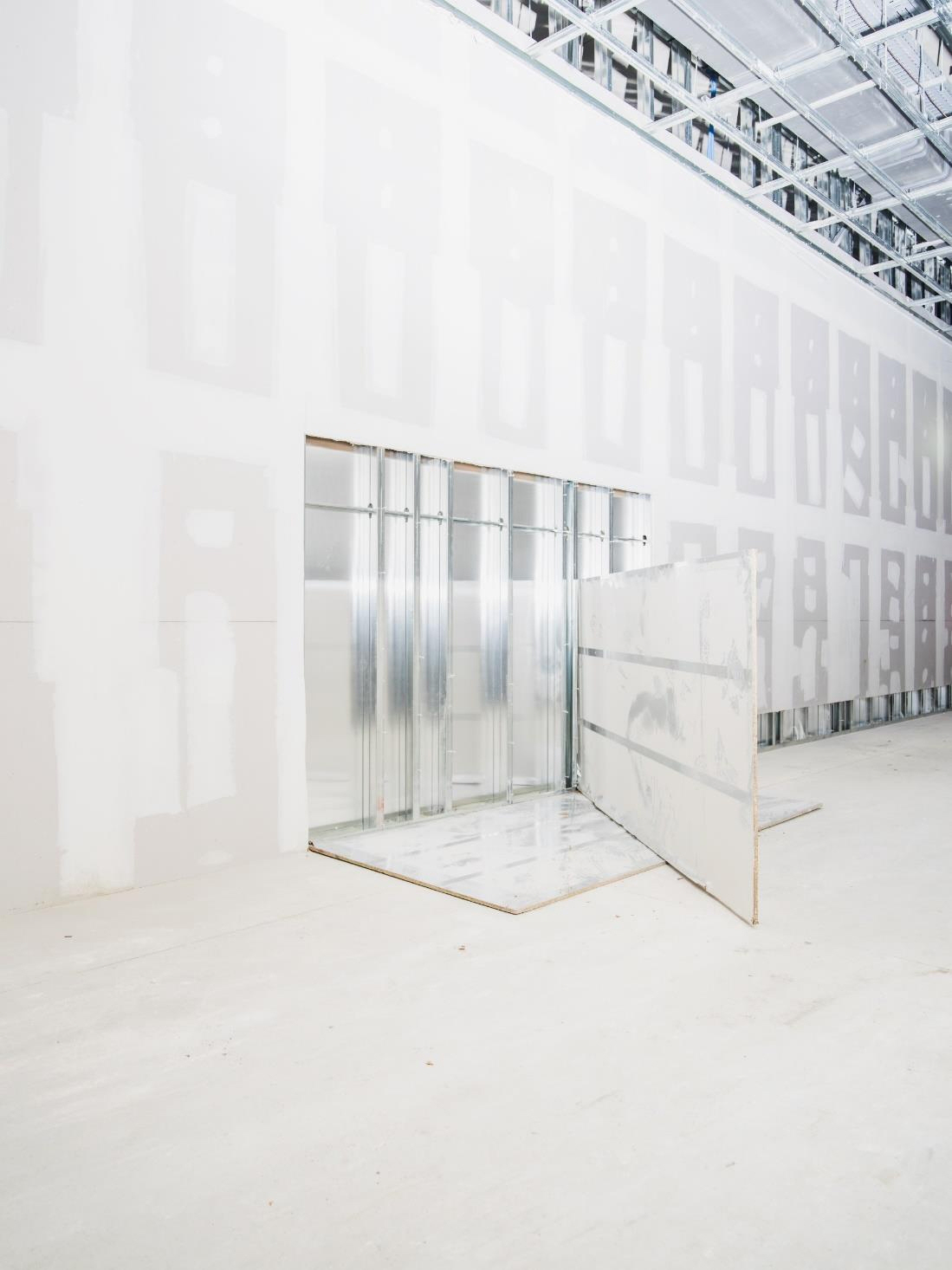
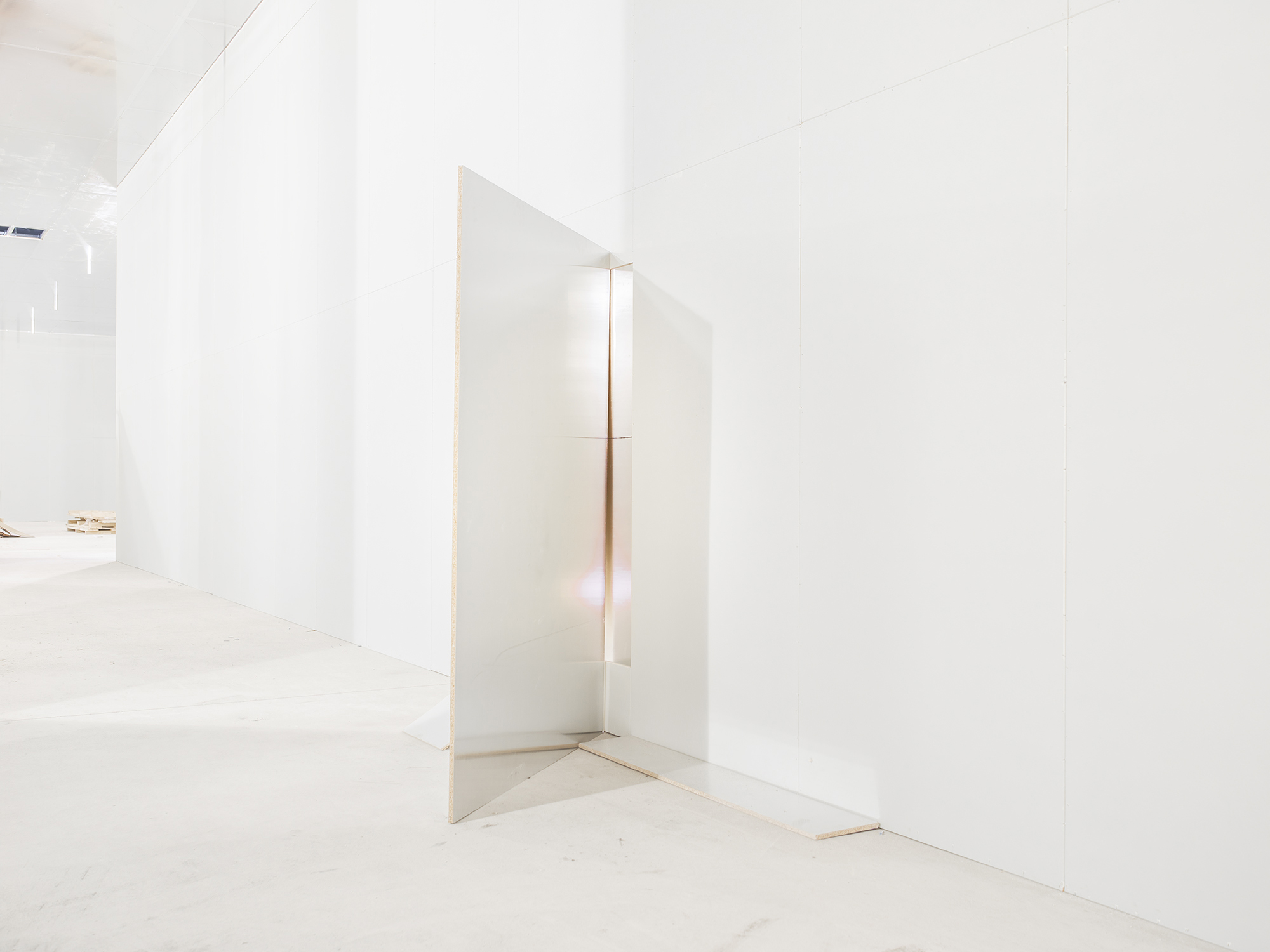
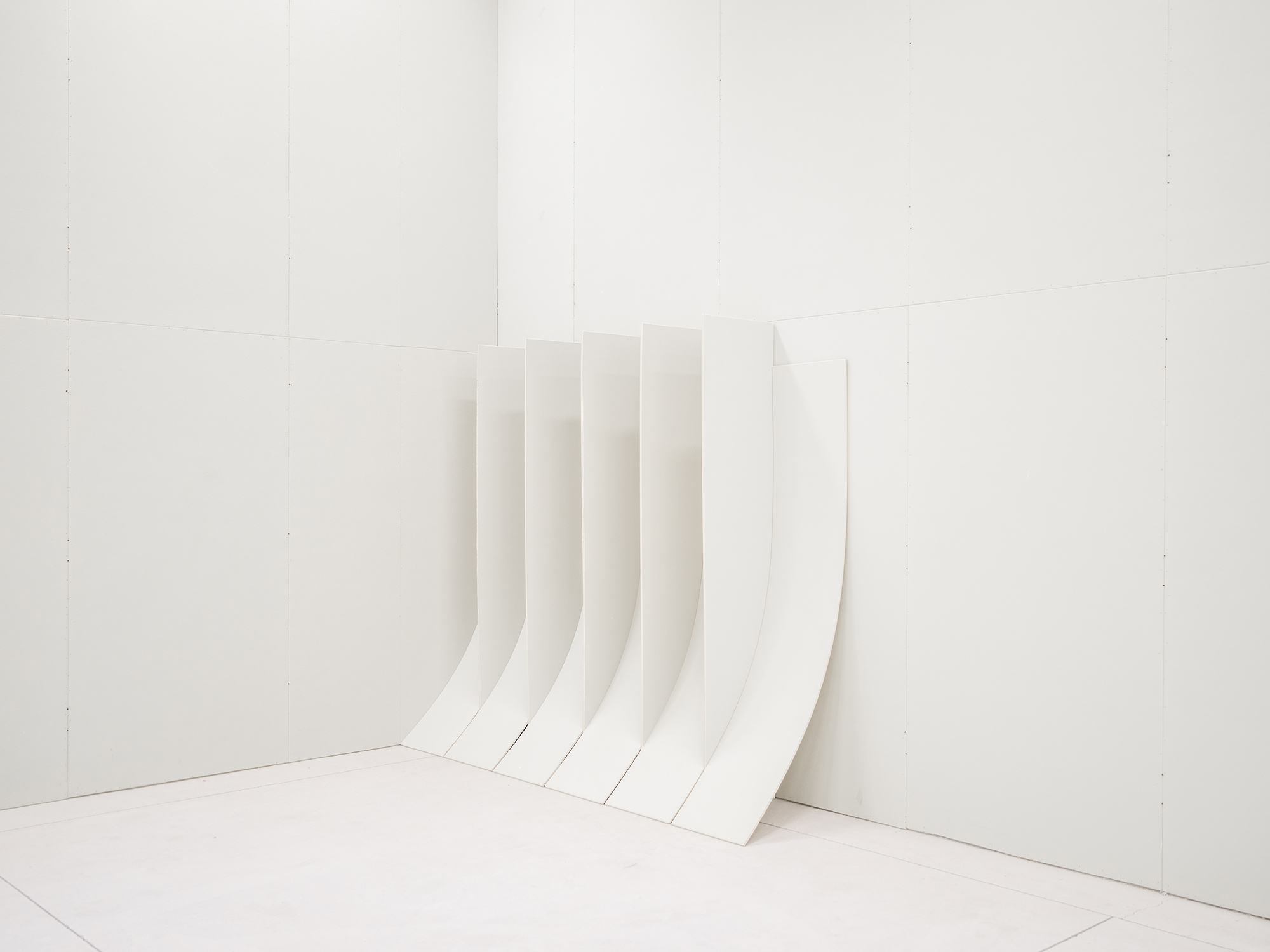
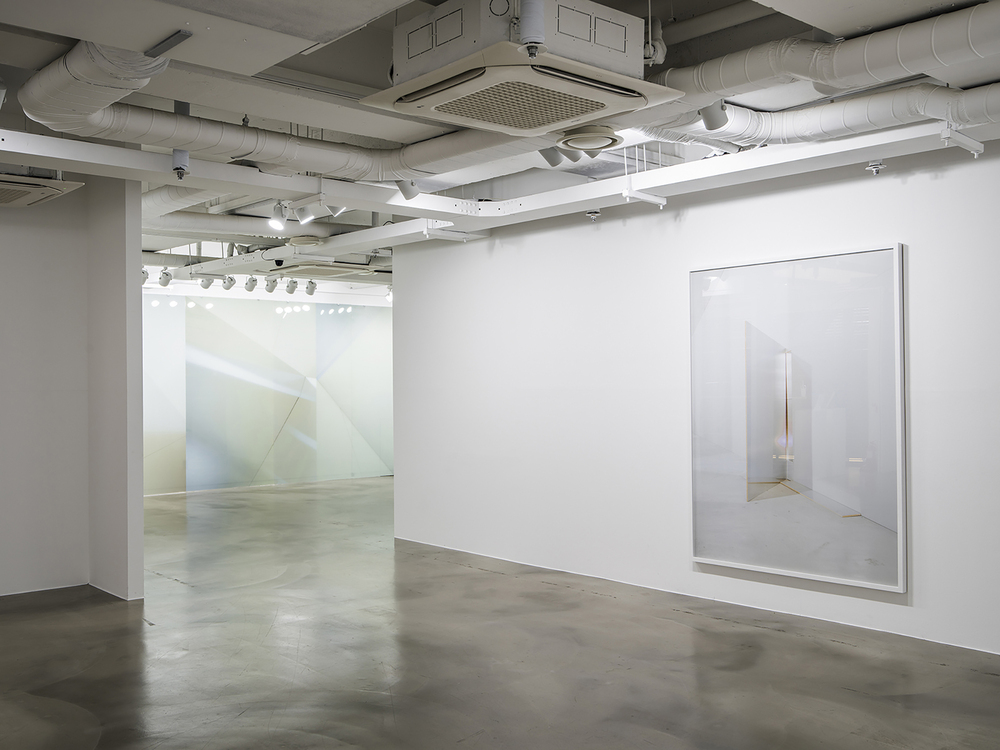
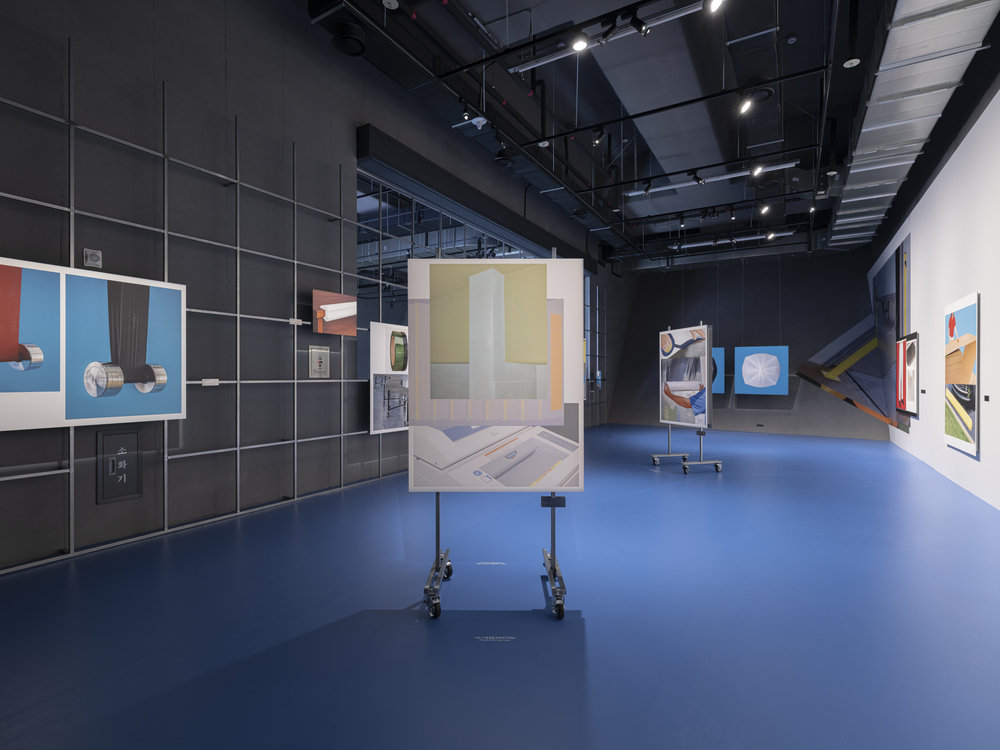
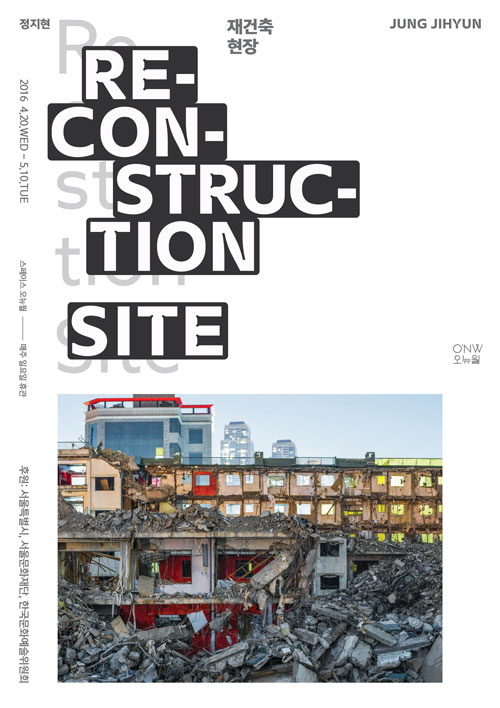
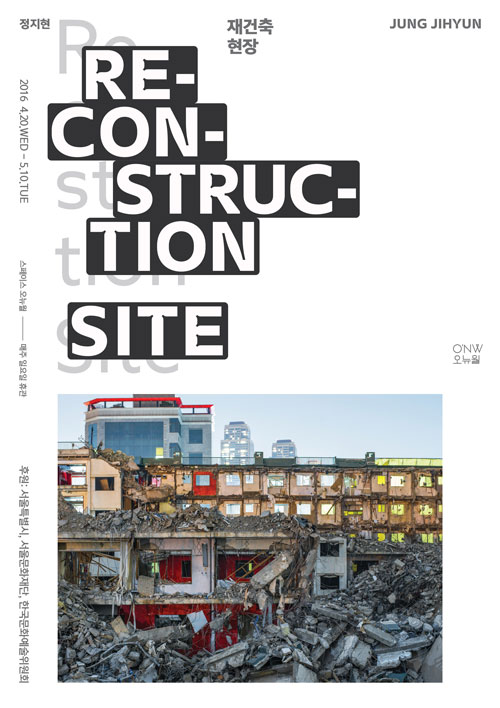
Poster image of 《RECONSTRUCTION SITE》 © Space O'NewWall

Jung Jihyun’s Photography_On Nonexistent Communities

An attachment to vanishing entities is an instinctive sensibility of the photographer. When what is disappearing reflects significant transformations in society, this attachment is further imbued with a historical imperative. Scenes of ruins are, in themselves, compelling subjects that encapsulate the aesthetics of spectacle, the narratives of destruction and loss, and the emotions of death and emptiness. For this reason, sites of redevelopment and reconstruction inevitably become a compelling subject that photographers living in contemporary Korea cannot help but engage with at least once.


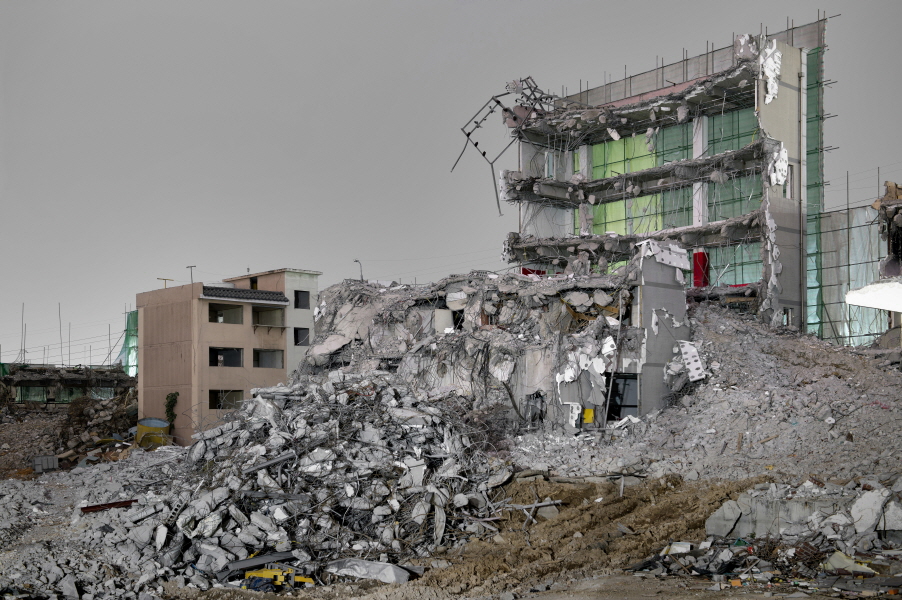
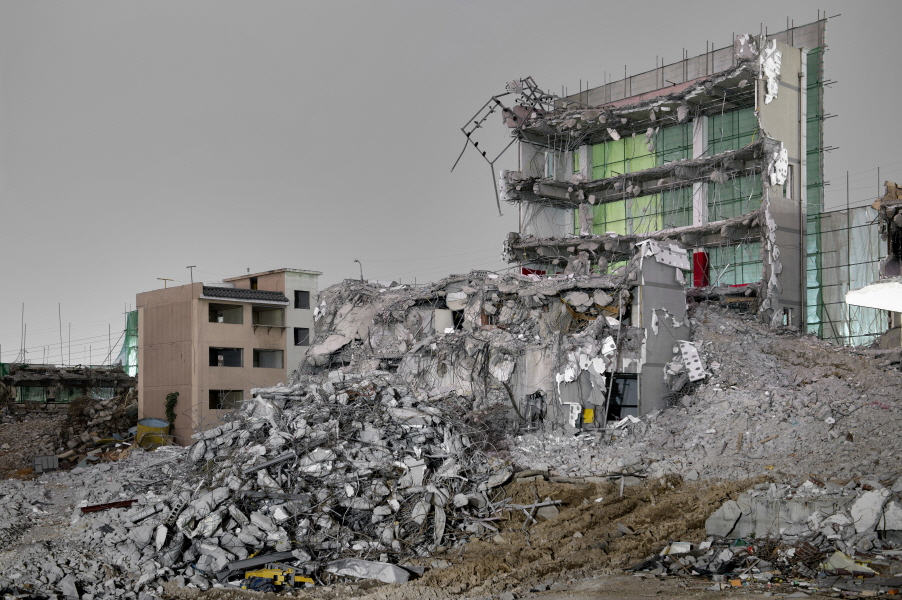
Jung Jihyun, Reconstruction Site 1, 2015 © Jung Jihyun

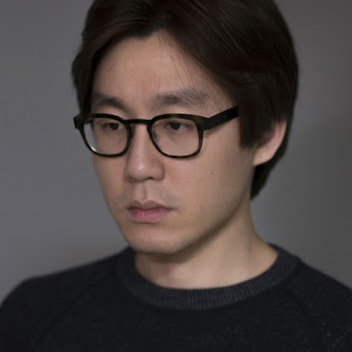
Jung Jihyun, born in 1983, is one of the artists who demonstrate the emergence of a new generation in art dealing with the theme of reconstruction. Often categorized as “apartment kids,” this generation shares the experience of having grown up perceiving the collective housing form of the apartment, and the system of the city itself, as a natural and self-evident environment. This marks a fundamental difference from those born in the 1960s and 70s, who experienced an era of alleyways where people of diverse economic conditions coexisted with distinct ways of life.

As a result, their work diverges notably from earlier practices that were grounded in a critical perspective on the processes of modernization and urbanization, often accompanied by denunciations of class issues or a nostalgic sentiment toward individuality and uniqueness. For this new generation, the stage of childhood was not the alley but the apartment complex, whose defining characteristic is safety. This sense of safety is guaranteed by the clustering of residents belonging to similar economic strata.

Therefore, when that stability is threatened or dismantled, they experience a shock akin to the ground beneath their feet—once taken for granted—beginning to tremble, and from this experience, they form a particular artistic worldview.

With this in mind, it is compelling to trace the development of Jung Jihyun’s work. Having spent his childhood in the Jamsil Jugong Apartments, he began to step beyond the safe zone of the complex when he started taking the subway alone in middle school. A study he produced during his high school years is a series created through double exposure, layering traditional and modern architecture in Seoul within a single frame. The artist explains that this series was based on his experience of feeling as though multiple temporalities coexisted within the city while riding the subway.

Though expressed through the abstract notion of “time,” if one considers the route map of Seoul Subway Line 2—which he likely frequented—and lists stations such as Gangnam, Jamsil, Seongsu, and Gangbyeon, it becomes evident that this “time” refers to the sequence in which capital is invested. Even within the same city, present time flows where capital is concentrated, while past time persists where it is not. It is always deemed right to have capital rather than not, and to live in the present rather than the past. Questioning this belief, or extending it into a reflection on class issues, is not his primary concern.

This naturally leads to the following question: in art that takes reconstruction as its subject, is it possible—or even necessary—to seek meaningful messages in the absence of critique toward social structures, or homage to individuality, uniqueness, and personal memory?


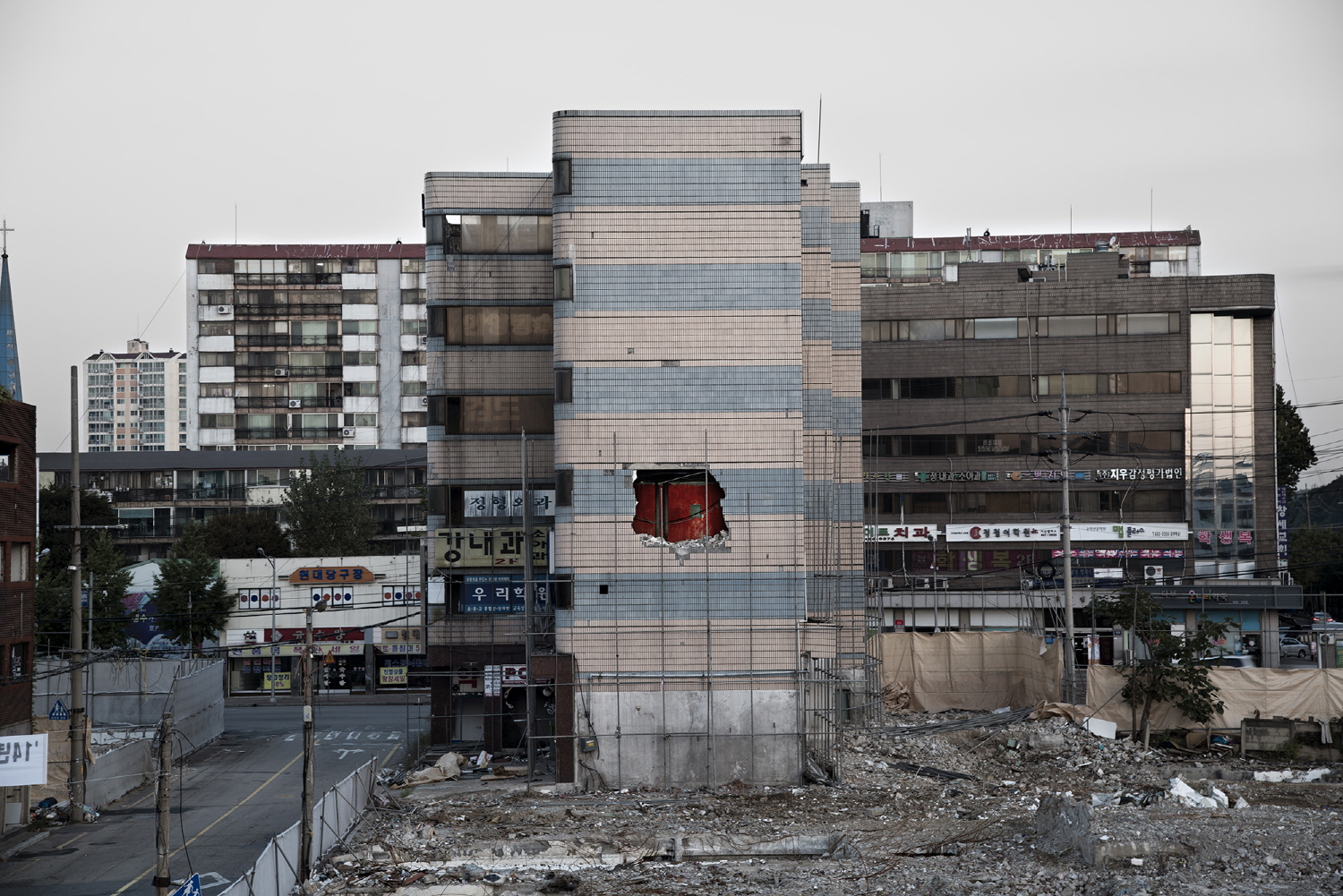
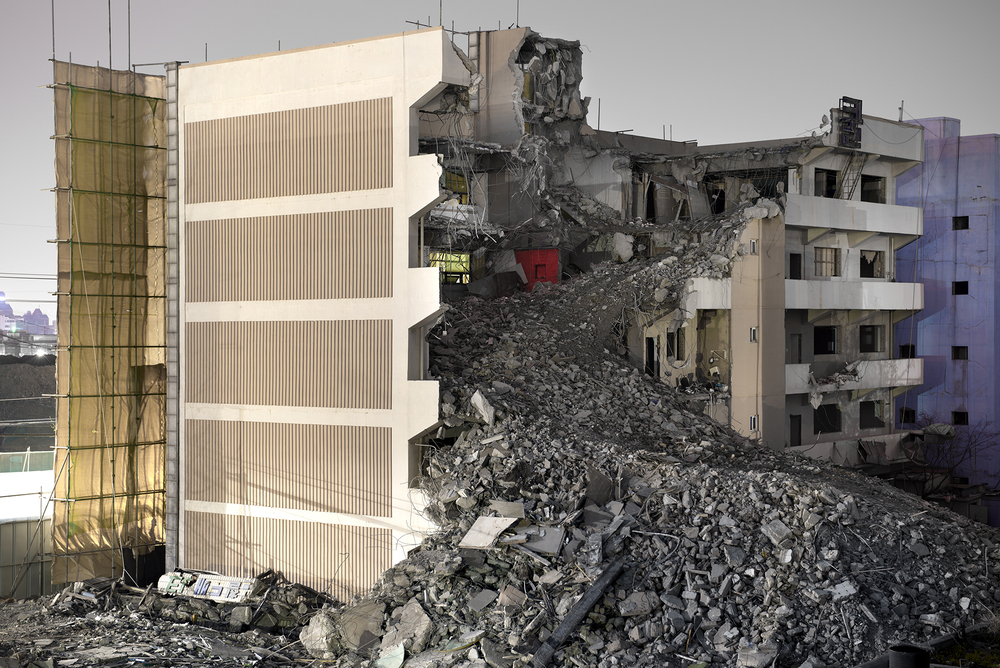
Jung Jihyun, Reconstruction Site 2, 2015 © Jung Jihyun

Jung Jihyun began working in earnest on apartment-related themes in the mid-2000s. The shock of witnessing the seemingly solid world of Jamsil disappear almost instantaneously through redevelopment naturally led to an interest in the apartment as an architectural structure itself. The series ‘Apartment’ (2005–2006), photographed across various areas of Seoul such as Hoehyeon-dong and Ahyeon-dong, records buildings that no longer exist today—old apartment complexes that were already on the verge of demolition at the time—in monumental frontal views, resembling memorial portraits taken before death.

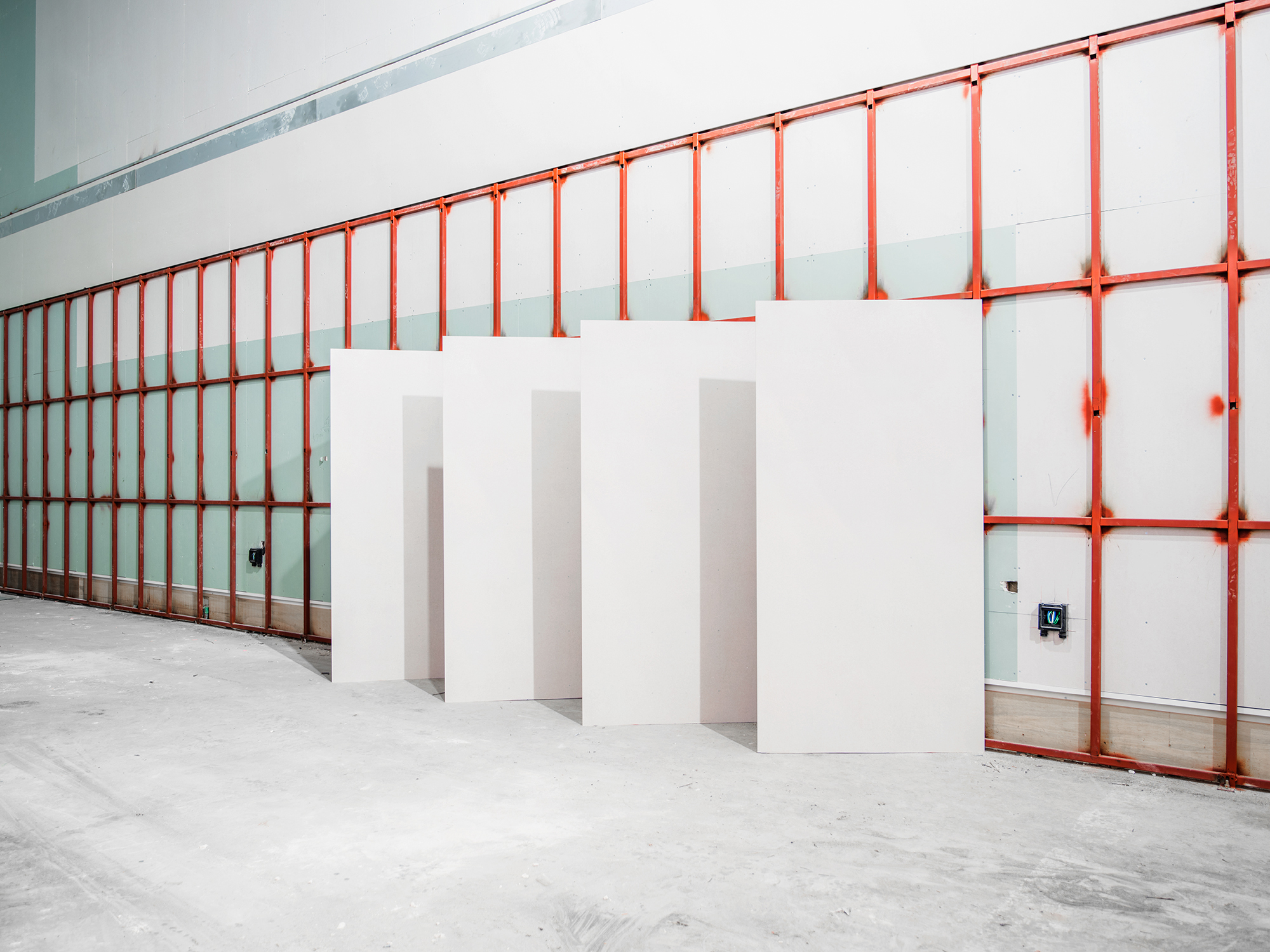
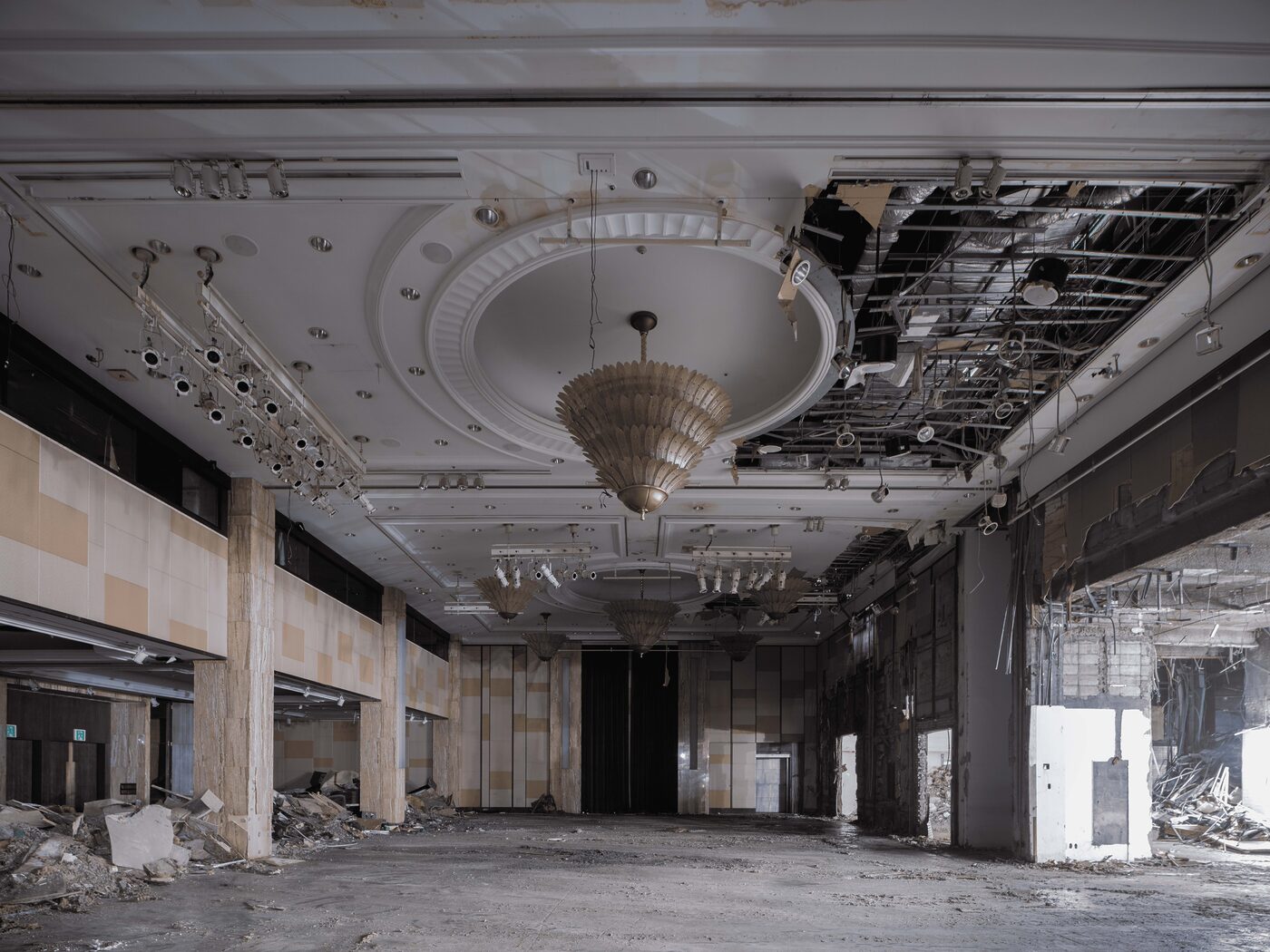
From the late 2000s, when second-generation new towns such as Pangyo and Gimpo were being constructed, Jung Jihyun began to photograph construction sites of new apartment complexes in earnest. In the series ‘Construction Site’ (2008–2012), the artist’s approach to the theme of the city becomes more concrete. The artist explains that he wanted to capture the moment when a city is born in the wild; however, rather than focusing on the exterior of construction sites, the photographs concentrate on the interior spaces of apartments just before they are transformed into living environments.

These ambiguous spaces—filled with concrete walls and abstract architectural structures, yet not fully identifiable in terms of function—are enveloped in warm, soft natural light. The quiet stillness of the time the artist spent alone exploring the interiors of these buildings during inactive weekend afternoons is clearly conveyed in the images. Construction materials of indeterminate purpose are placed in somewhat unnatural positions, suggesting the artist’s subtle intervention in the order of the space. The awareness of instability, gained through witnessing the collapse of a world, advances into a process of exploration and understanding of the structures that form its foundation.

In this way, the artist’s process of closely examining and grasping the physical reality of the space called home recalls the experience of first looking inside one’s own body through an endoscope—something one had never been conscious of before falling ill. It is like the realization, upon observing the position and function of internal organs, that one had lived all along without ever truly being aware of their form or structure.

In this work, the artist deliberately targeted a brief period when no external materials had yet been applied—when everything remained in its raw concrete state—which relates to his intention to understand the structure of this world solely through its skeletal framework, excluding all supplementary elements. By placing construction materials found on site in ways that slightly deviate from their original context and function, he commemorates and records this new discovery.

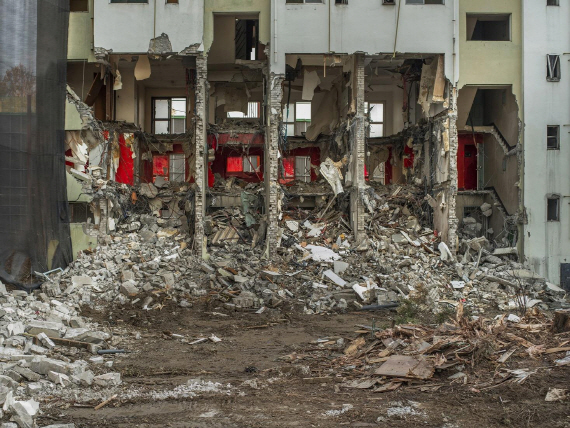
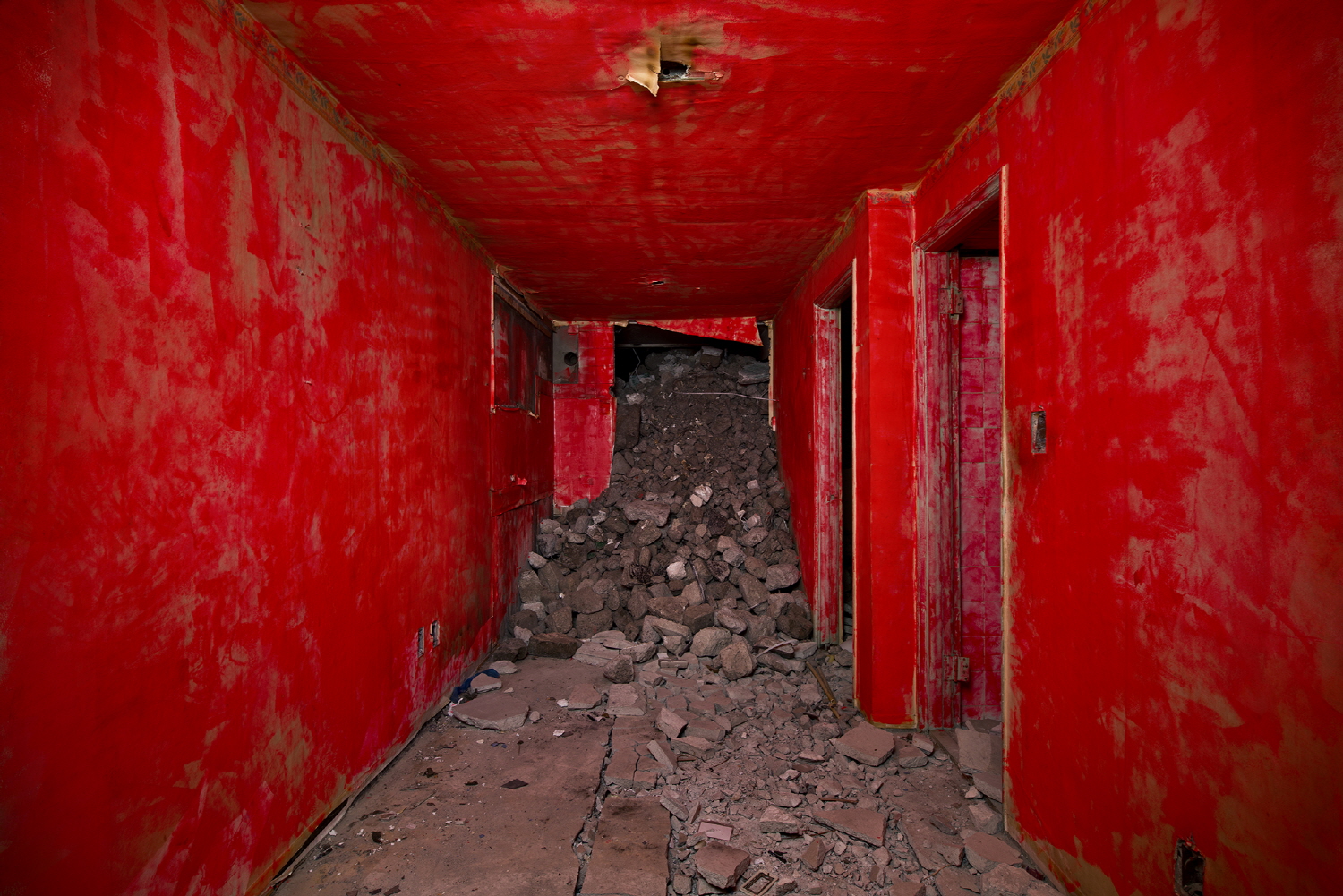
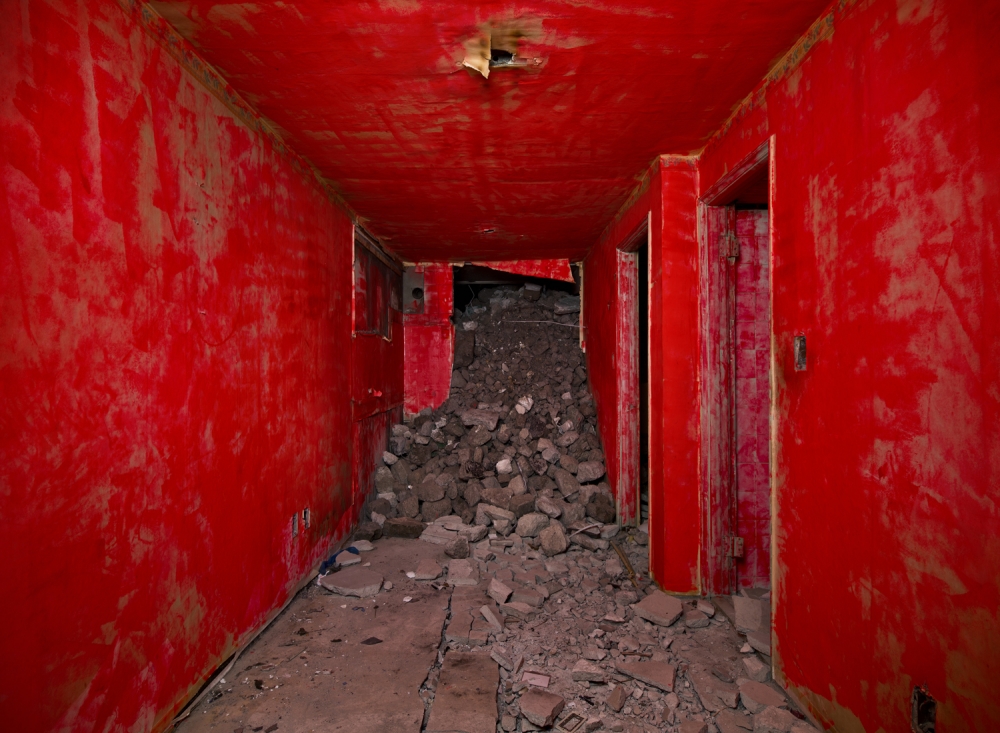
In contrast, the series ‘Demolition Site’ (2013), which began immediately after this body of work but corresponds to an earlier stage within the overall process of redevelopment, is dominated by an entirely different sensibility. This work involves the artist entering a building undergoing demolition, painting a randomly selected interior space in red, then stepping outside to observe the demolition process and photographing the fleeting moments when the red-painted interior is temporarily revealed.

Although conceptually it shares much with ‘Construction Site’—in terms of the theme of redevelopment, an interest in the building’s internal structure, and the artist’s intervention to reveal that structure—this series evokes a far more dramatic and intense emotional response. Of course, narratives of destruction are always more stimulating than those of creation, and the symbolic associations of the color red with flesh and blood further intensify this effect. At the same time, it is also significant that the artist’s intervention here is carried out with much greater assertiveness.

According to the artist, he sought to express that the ruins presented in a single photograph are not unreal landscapes one might encounter in a disaster film, but concrete spaces in which we lived until quite recently. In this series, one can sense his intention to convey this realization not conceptually but sensorially—to move beyond understanding toward empathy. The “intervention,” which remained relatively passive in ‘Construction Site,’ here begins to take on the character of a “statement.”



Jung Jihyun, Reconstruction Site 5, 2015 © Jung Jihyun

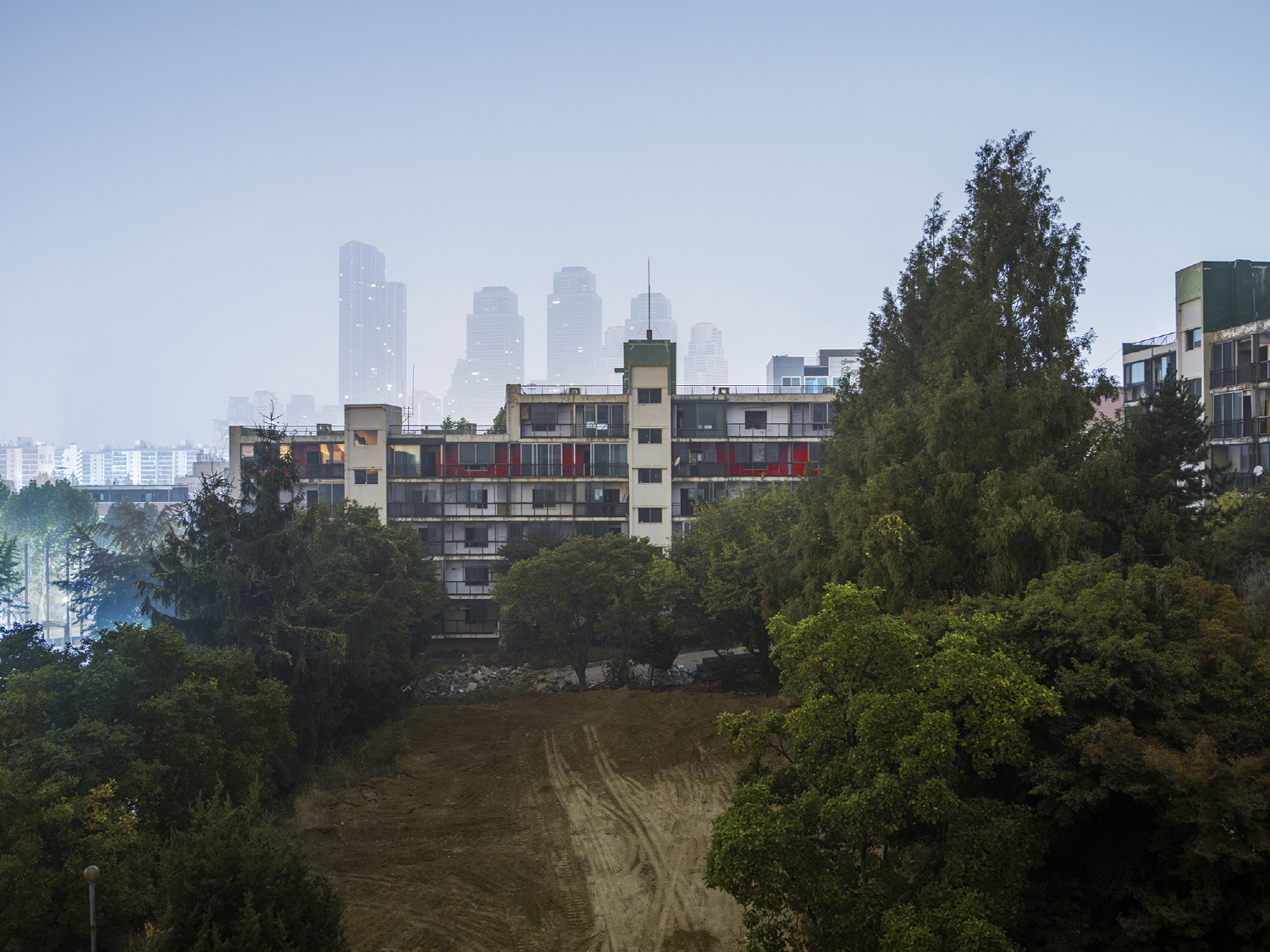
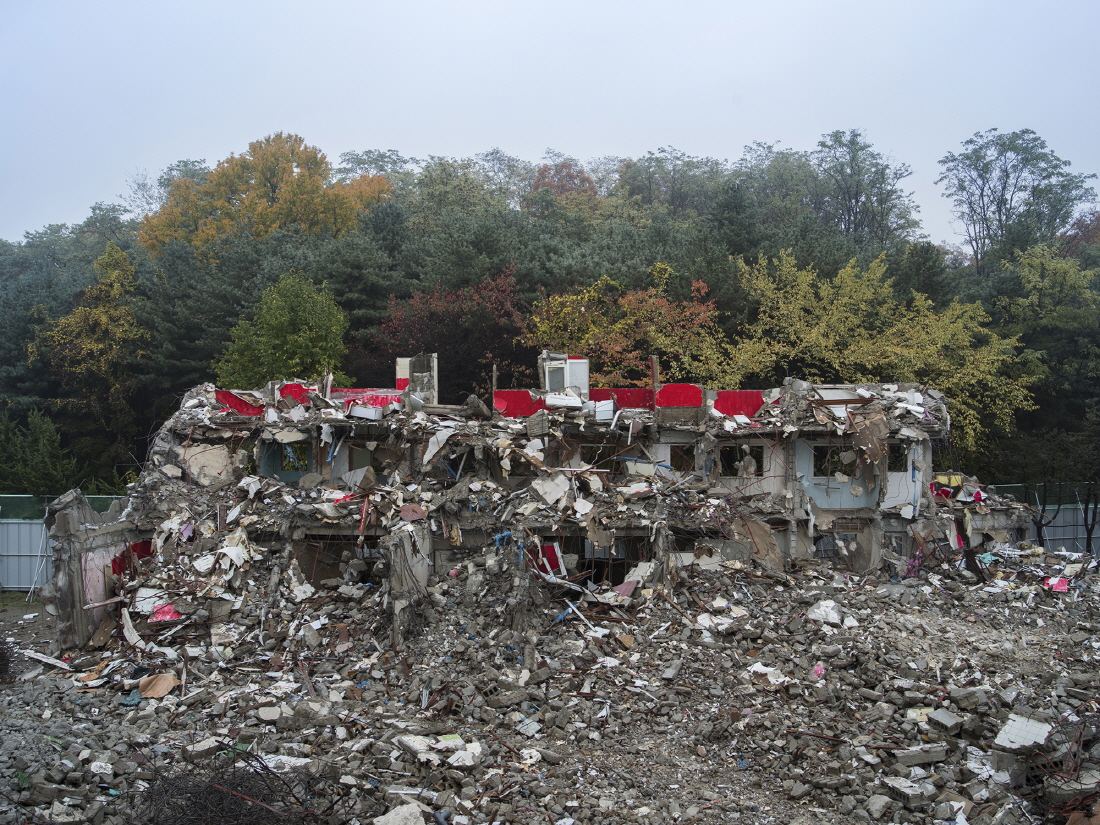
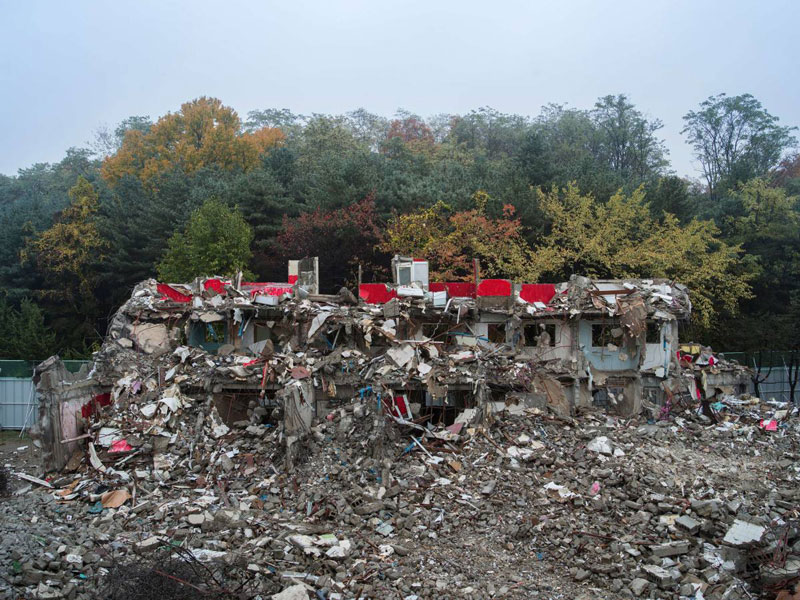
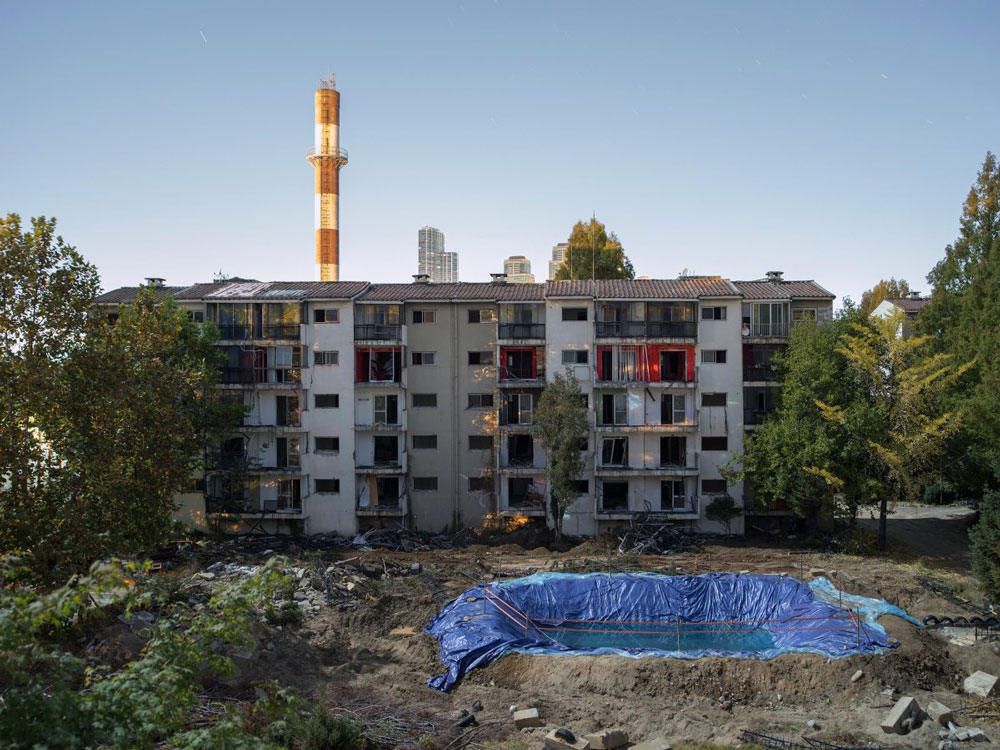
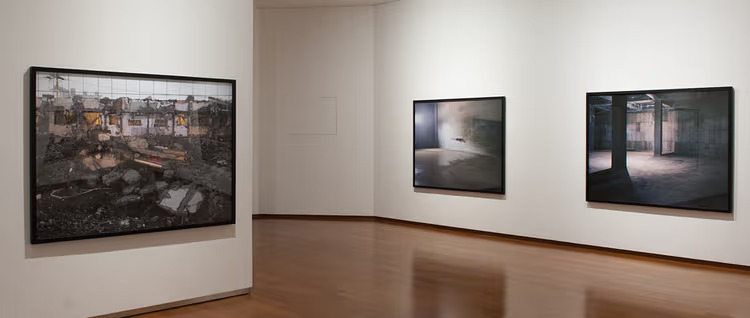
Meanwhile, the series ‘Reconstruction Site,’ which began in 2015, more concretely demonstrates the direction in which the artist’s interests are expanding. This series deals with the reconstruction site of the Gaepo Jugong Apartments. Here as well, the intervention of painting surfaces red is employed, but this time the basic unit is not an individual living space but an entire apartment building, referred to as a “block.”
For example, in a photograph featuring a five-story apartment building with the clearly visible number “208” on its side façade, it becomes evident that the artist has painted the interior spaces of all units on the second floor in red. As the walls that once separated each household are demolished, the previously isolated red surfaces become connected into a long band; as the building gradually collapses from one side, the band shortens and eventually disappears.
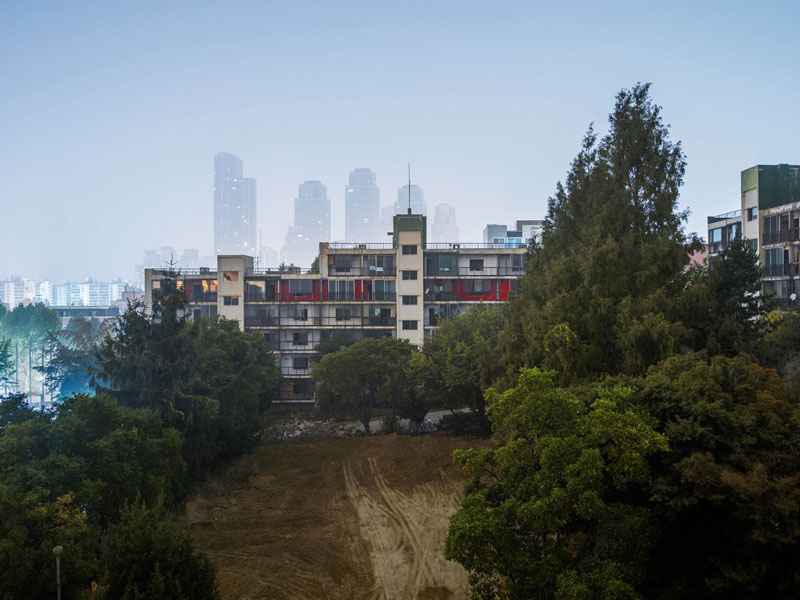
The process of expansion, connection, and disappearance of these red surfaces is compelling because it appears to indicate a fleeting moment in which a fragment of truth about our lives is revealed within the complex social phenomenon of reconstruction. The apartment is a peculiar space. It is born as a single building with identical size and structure, yet the moment people move in, the individuality of each unit is maximized and emphasized. (It is, in some sense, a curious fact that in the era of alleyways—when completely different types of houses coexisted—neighbors often maintained closer relationships.)

An apartment, initially conceived as a single building, exists for decades as dozens of divided individual homes, only to return to being one building again when it reaches the end of its lifespan and enters the stage of reconstruction. The moment when the red surfaces connect into a continuous band serves as the artist’s metaphor for the moment when residents—each living their own separate lives—become unified as a community under the name of a reconstruction association, driven by the shared goal of economic gain.

In art that takes reconstruction as its subject, is it possible—or necessary—to seek a meaningful message beyond the mere representation of phenomena, in the absence of critique of social structures or homage to individuality, uniqueness, and personal memory? I still do not know the answer to this question.

However, it suddenly occurs to me that perhaps Jung Jihyun, beneath an apparently indifferent surface, may in fact be making a rather cynical statement in his own way. That the true community we seek exists not in the moment when life is actually being lived, but only just before and just after it. In other words, it exists only within nostalgia for the past and dreams of the future, and therefore the present—the reality that might be subject to critique and reflection—may have never existed in the first place.

References