Articles
[Critique] Writing Leaning on Painting, Painting Leaning on Writing (Monthly Art)
April 2020
Ji Young Maeng | Curator of Doosan Gallery
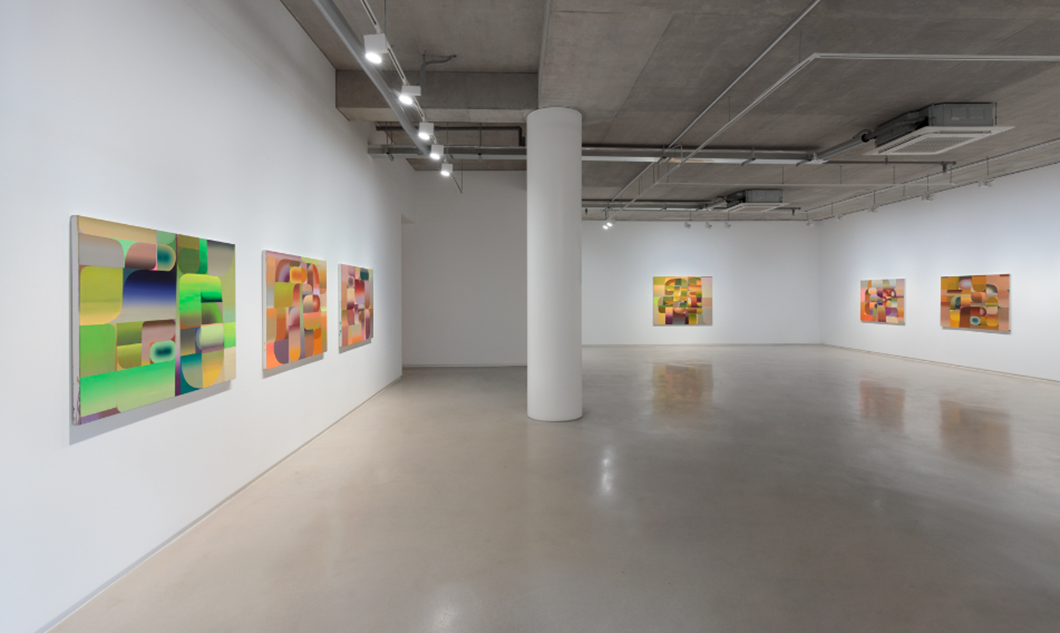
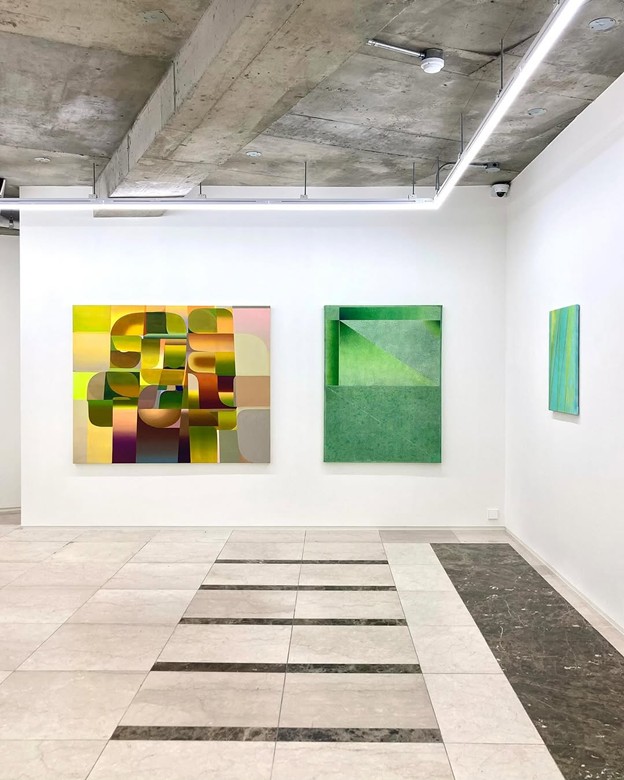
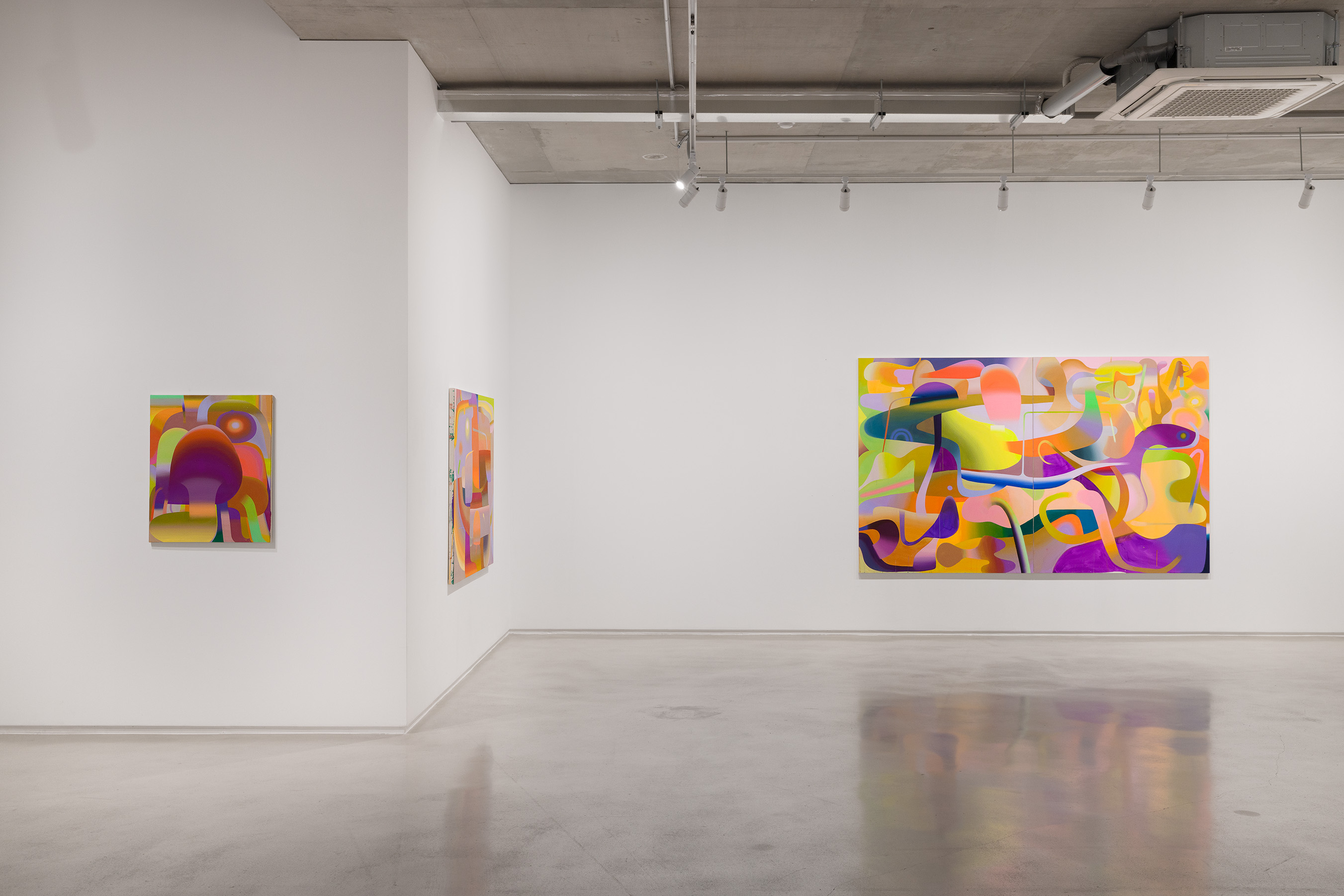
 Installation
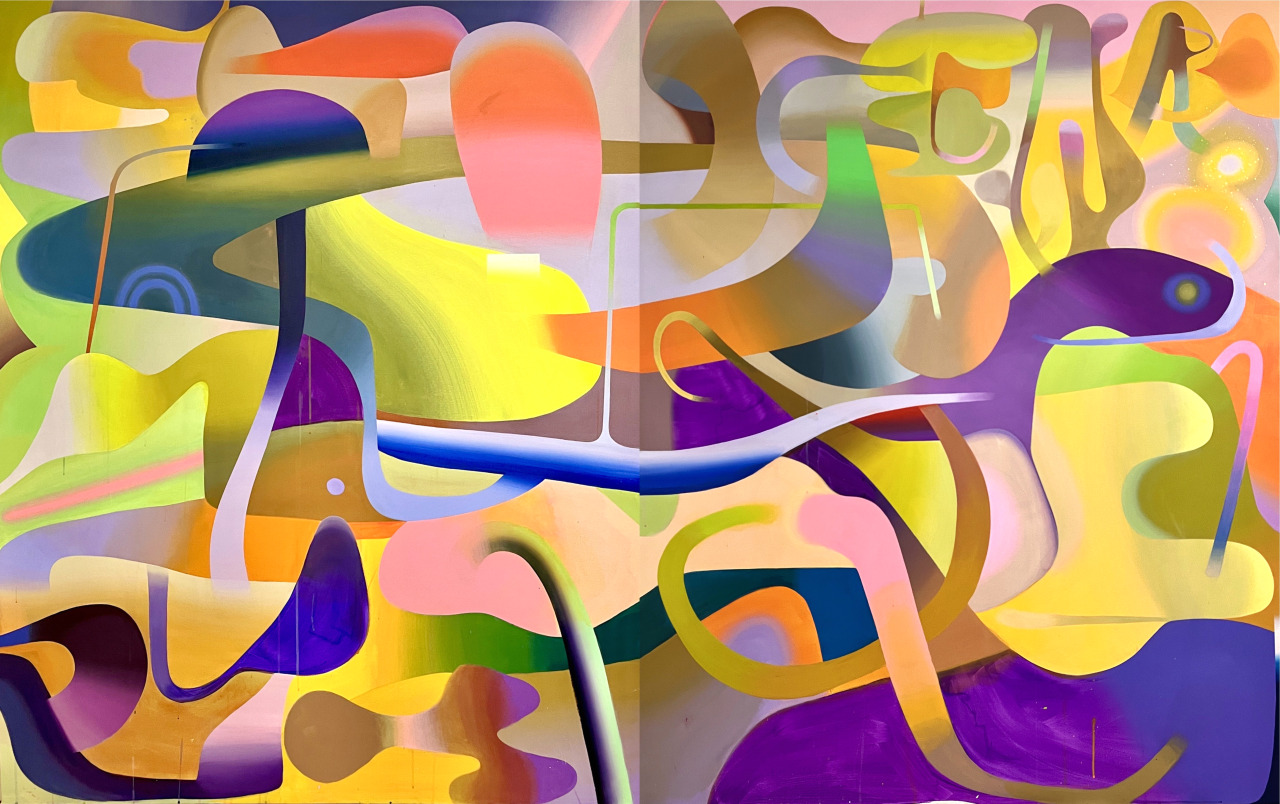
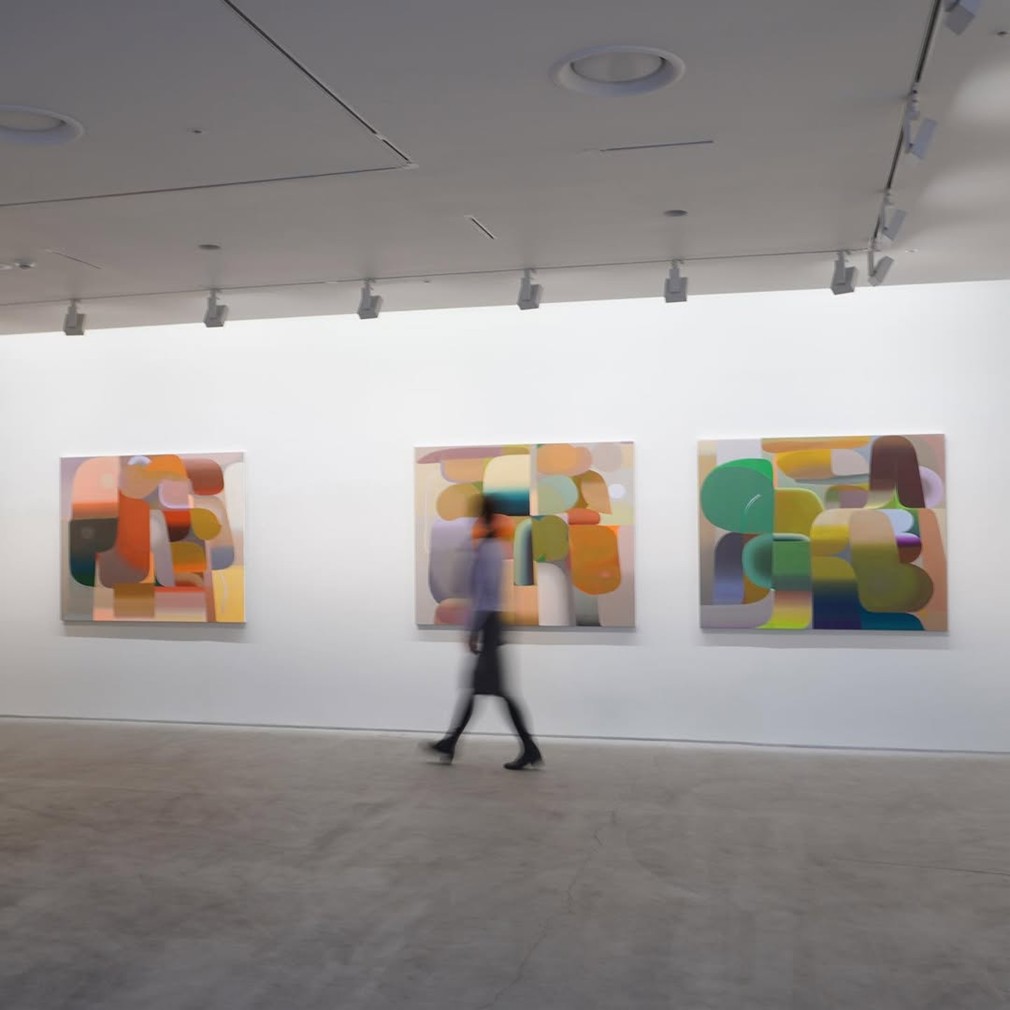
view of 《Modulate》 (Perigee
Gallery, 2020) ©Perigee Gallery
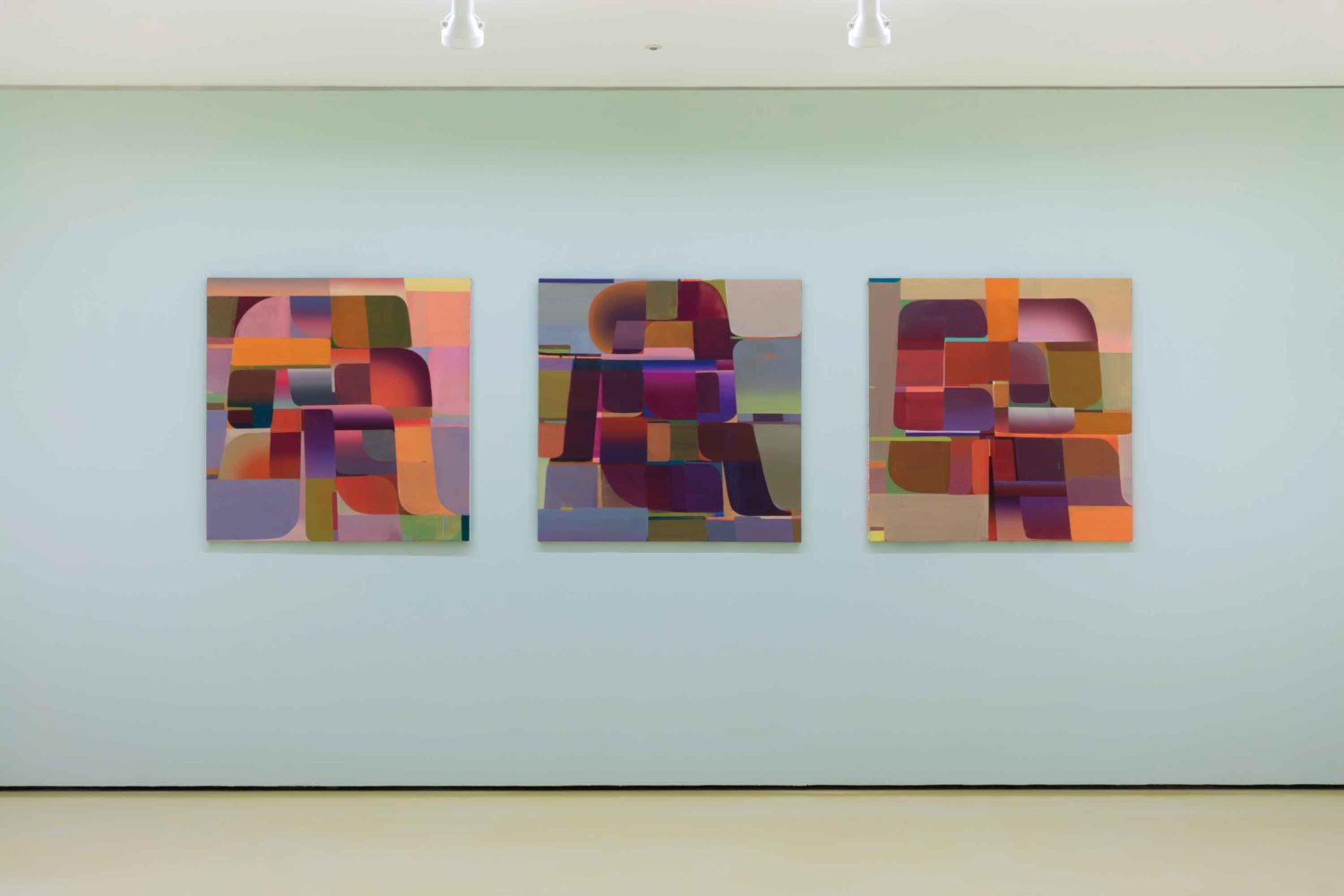
Installation
view of 《Modulate》 (Perigee
Gallery, 2020) ©Perigee Gallery
Whenever
I write about painting, I find myself thinking that it is an attempt doomed to
fail—and yet, inevitably, I catch myself attaching words to images once again.
Writing about painting, to me, is not about confining the artwork within the
boundaries of language but rather one of the ways I approach it, a part of the
process of understanding. Thus, depending on who writes it, a text about
painting inevitably yields diverse interpretations; sometimes, the writer’s own
subjectivity becomes embedded within the words, revealing another world beyond
the image itself.
Painting,
by nature, is a visual manifestation of sensations and flows of consciousness
that cannot be fully expressed in language—it is perhaps the most primal form
of nonverbal language. For this reason, writing about painting occupies a
paradoxical space: it can never stand entirely on its own, yet it often
establishes a position that is most independent and self-sufficient.
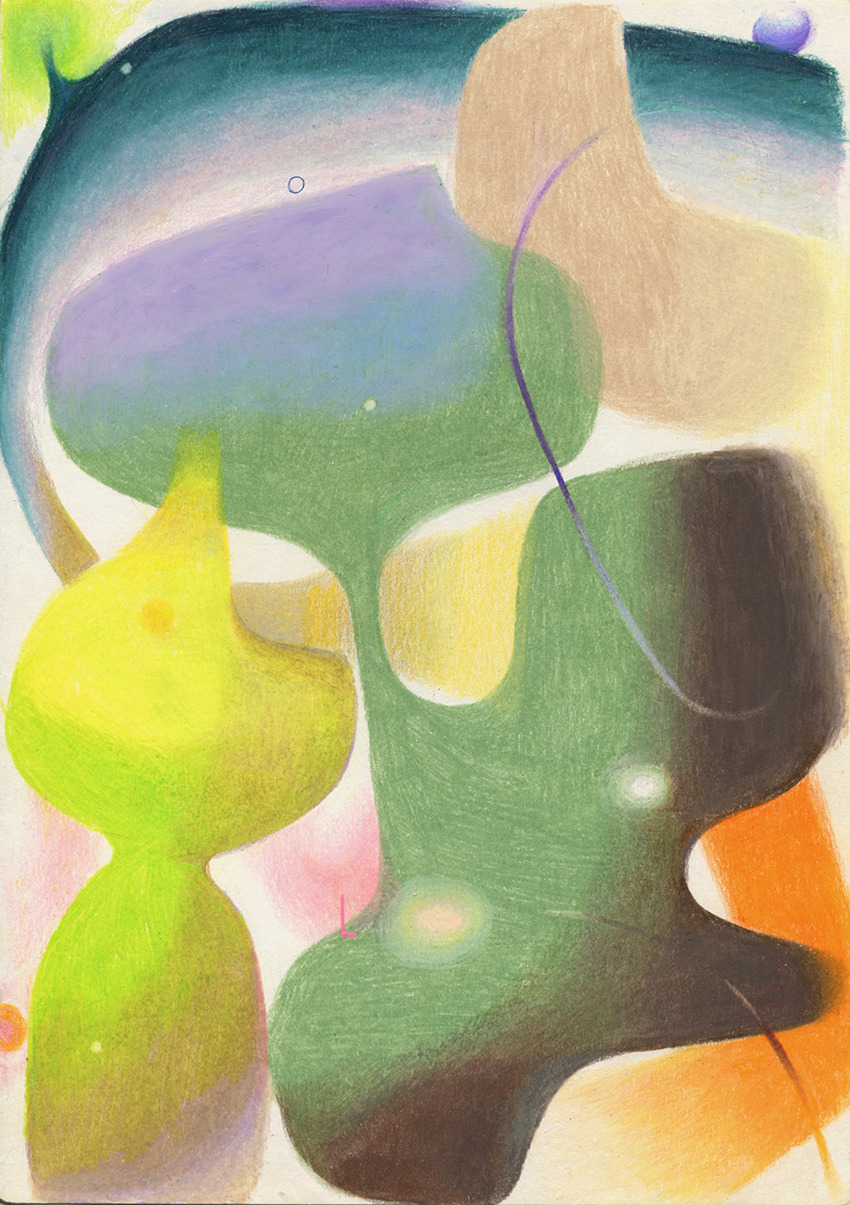
Personally, I find that the more abstract an image becomes, the greater the
possibility that writing can stand on its own. This comes from my belief that,
in the case of abstract imagery, interpretive authority rests with the viewer,
allowing for a freer dialogue with the work.

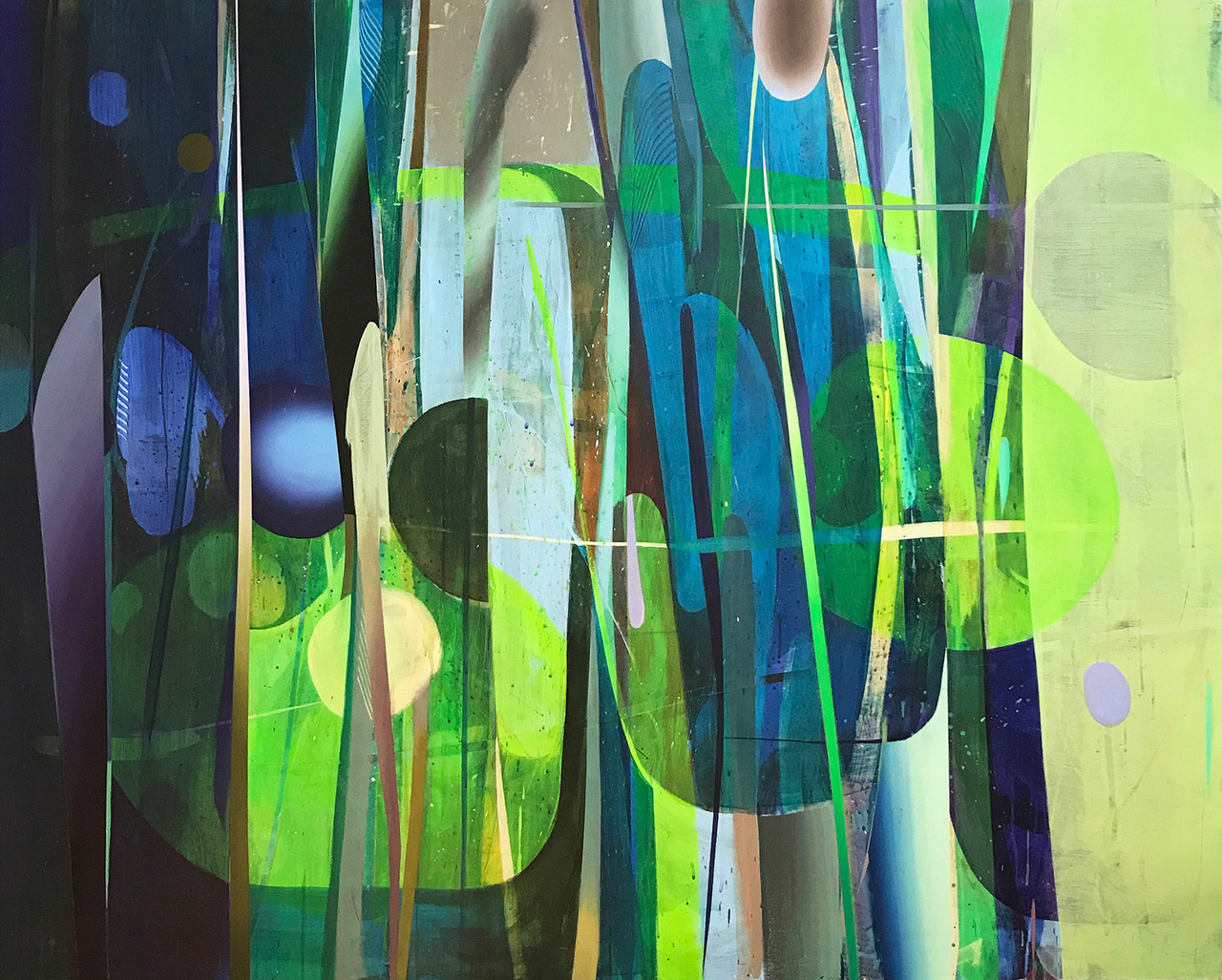
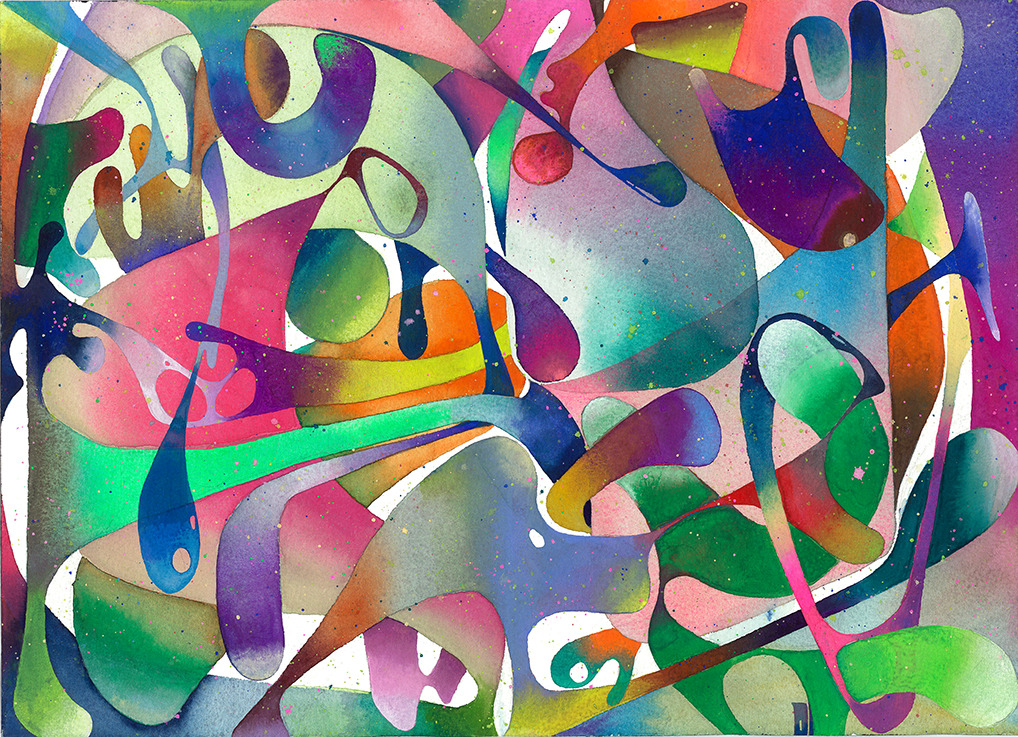
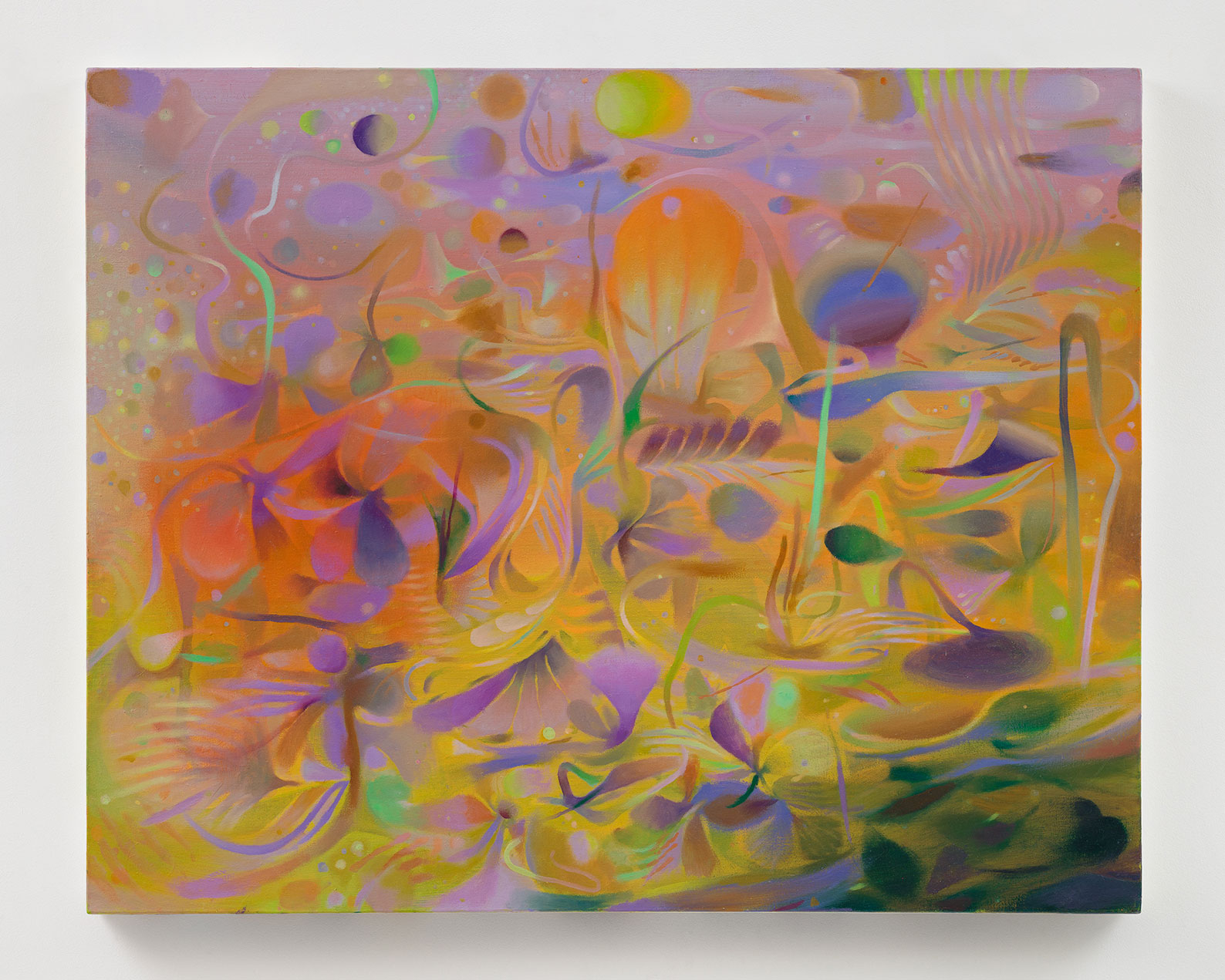
Nakhee
Sung, Polyphonic 5, 2016 ©Nakhee Sung
I
have been in continuous conversation with the paintings of Nakhee Sung, who has
persistently worked with abstract imagery. As I have followed the evolution of
her practice over time, my perspective and interpretation have shifted as well.
Much like getting to know a person, the more I became familiar with her work,
the more multidimensional my understanding became—sometimes my preconceptions
dissolved, while at other times, I found firmer grounds to solidify my
interpretations.
In
her works from the mid-2000s to around 2010, I found myself closely following
the geometric forms that dominated her canvases, drawn by their rhythm and
sense of movement, which evoked a musical sensibility. For this reason, I once
referred to her works as “image music” when writing about the two-person
exhibition 《Stuffs!》 (2012), which she held with her brother, artist Nakion (Sung
Nakyoung).
Since the early 2000s, Sung had not only painted but also produced
wall drawings, allowing her images to break free from the confines of the
canvas and extend dynamically across the exhibition space’s walls and floors.
Looking back, I wonder if the artist, in fear that the images she felt and
wanted to express might fade, “performed” them as if playing music in a
spontaneous surge of expression. Perhaps I, unable to keep pace with that rapid
tempo, was preoccupied merely with reading the surface.
However,
upon encountering her later series—‘Transpose’ (2018) and ‘Sequence’ (2019)—I
began to think that her earlier works might have been preludes or guides
leading toward these later developments.

Nakhee
Sung, Frequency, 2006 ©Nakhee Sung
Overlapping Pasts
The
‘Transpose’ series represented a zoomed-in version of the spaces found in her
earlier paintings. Revisiting her past works, Sung developed the ‘Transpose’
series in 2018, followed by the ‘Sequence’ series, which was presented in the
2020 exhibition 《Modulate》 at Perigee Gallery. The images on her canvases still carried a
rhythmic sensibility, yet unlike before, that musical quality no longer skimmed
swiftly across the surface. Instead, it lingered between the spaces within the
composition, encouraging the viewer to pause or move in rhythm with the
painter’s gestures and brushstrokes.
In
the early ‘Transpose’ works, one could sense that certain shapes from her 2000s
paintings had been enlarged, but the use of straight and curved lines appeared
somewhat rigid. As the series progressed, however, her division and arrangement
of space became bolder and freer, revealing her distinctive wit, unexpected
color combinations, and the traces of her brushwork. Of course, there are
exceptions—works such as Transpose 2, for instance, appear
to compress spatial depth to an extreme (perhaps evolving from Amplitude
2, 2017). Yet unlike her earlier paintings that demanded the viewer’s
eyes dart busily across the surface, these works allowed a slower engagement,
revealing how delicately she calibrated every area of the canvas.