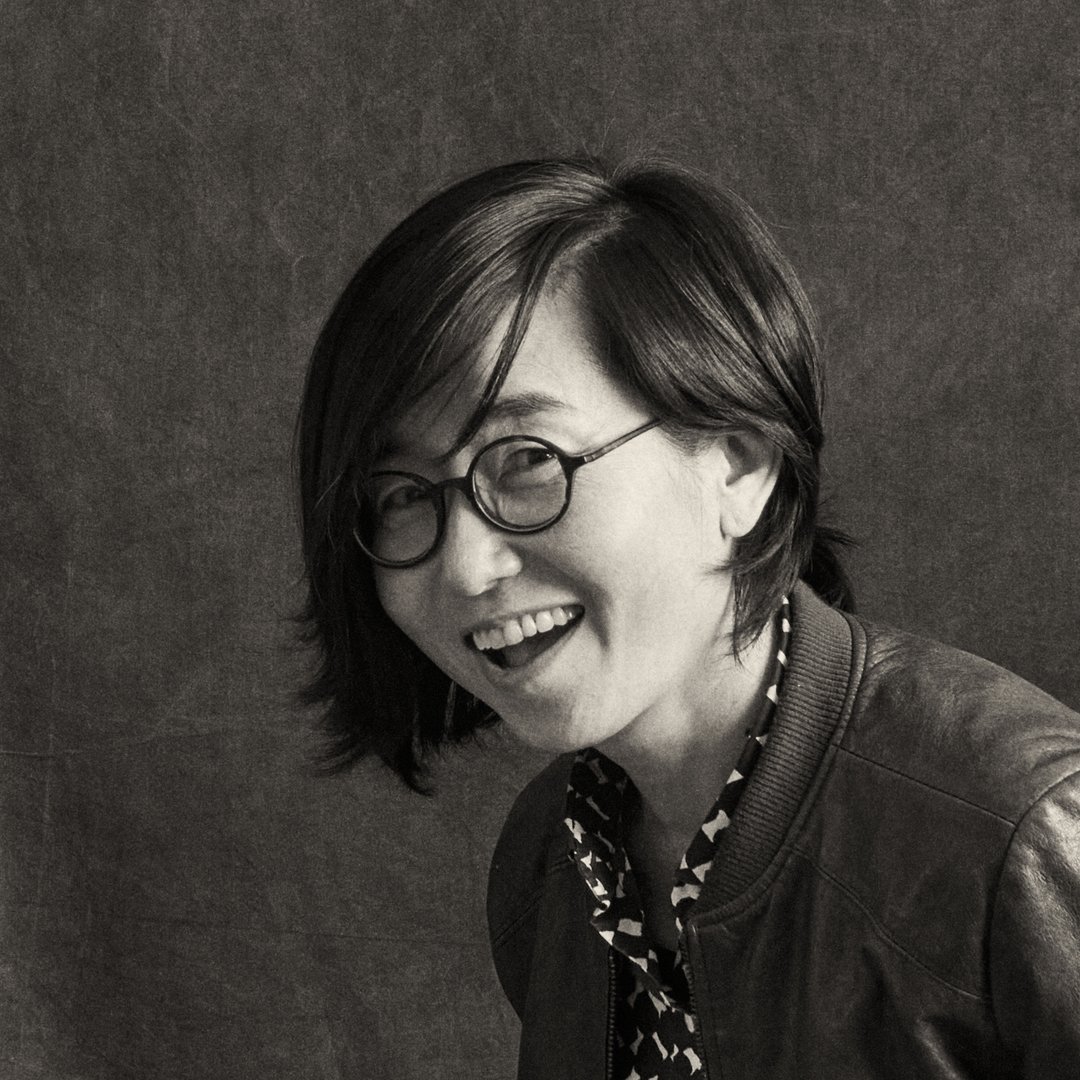
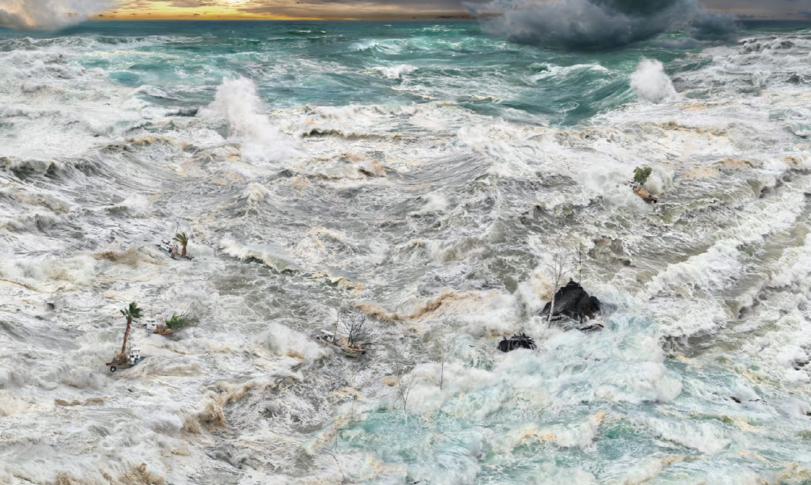
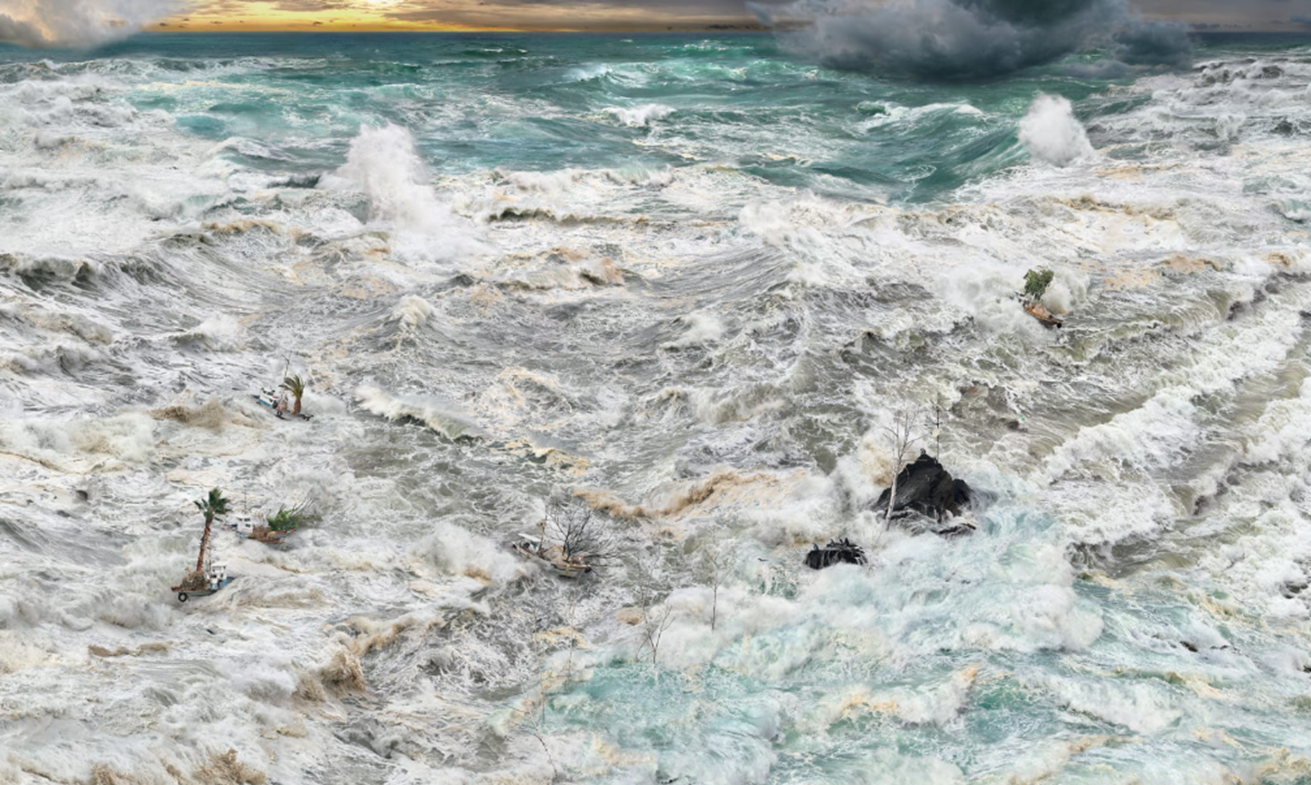
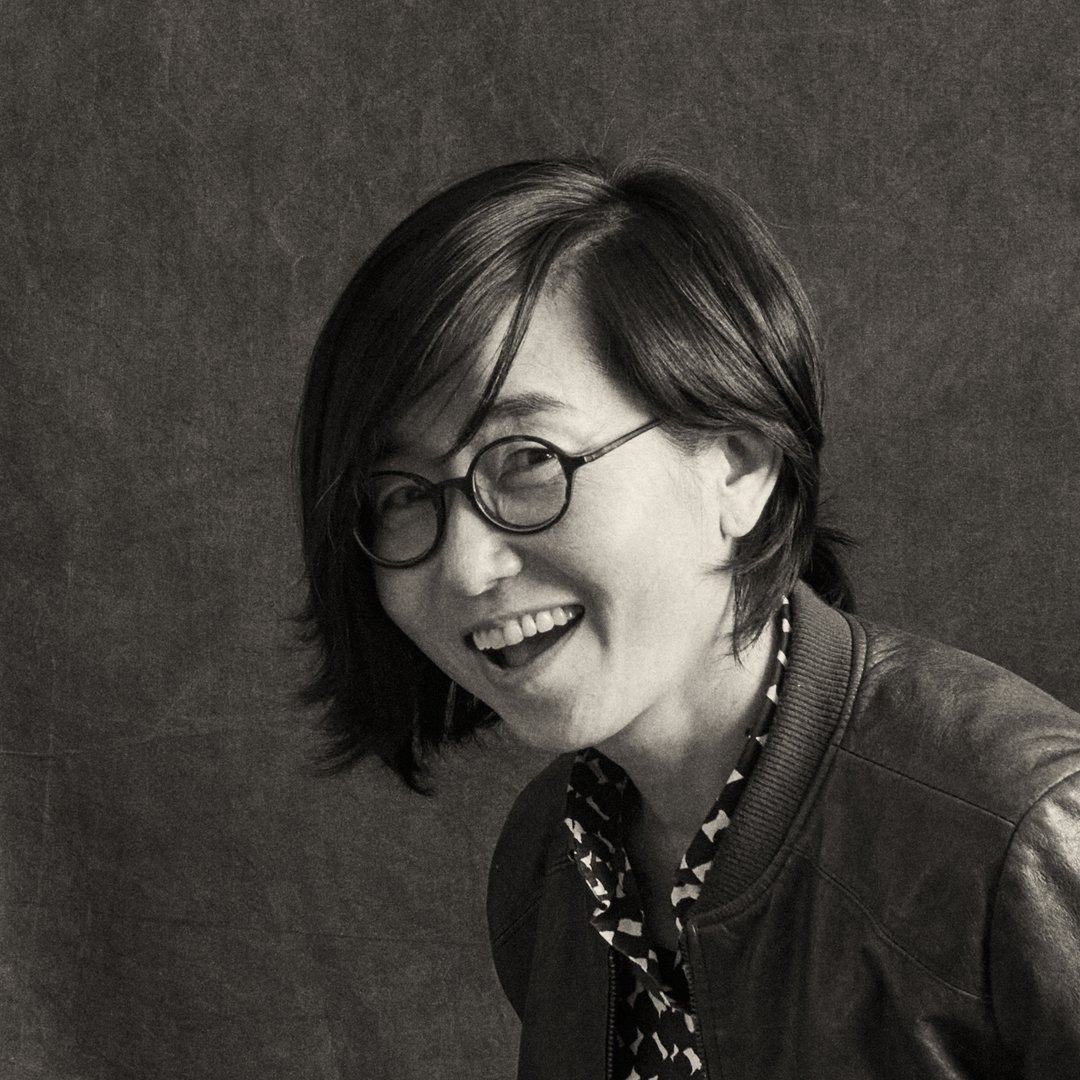
Won Seoungwon received M.F.A. from Kunstakademie Dusseldorf in 2002 and Kunsthochschule für Medien Köln in 2005. She is represented by Arario Gallery and currently lives and works in Seoul.

Won
Seoungwon’s artistic practice begins with the question, “Where do stories come
from?” Her early work My Life(1999) documented the small
objects inside a 2×4m room—pill packets, letters from her mother, socks, and
pieces of bread—through 628 photographs that were then compiled as a single
work, marking the starting point of transforming the most ordinary traces of
her life into a visual narrative. From this work onward, her interest shifted
toward “the life she can actually hold onto,” leading to a belief that a small
room, its objects, and individual memories can form an entire ‘world.’
Thereafter,
‘space and desire’ became the core axis of her practice. In the
‘Dreamroom’(2000–2004) series, she traveled around the world to collect images
that construct the ideal rooms desired by herself and her friends. On top of
real one-room apartment photographs, she overlays landscapes such as swamps,
rocks, and primeval forests to construct surreal environments. Works such as Dreamroom-Seoungwon
(2003) and Dreamroom-Tina(2000) place the narrow,
suffocating spaces of reality against “the landscapes of desire lying beneath,”
foreshadowing the consistent attitude across her practice—seeing reality and
imagination simultaneously.
From the
late 2000s, her subject matter expanded outward—from herself, to those around
her, and then to broader members of society.
The Tomorrow(2008) series and the exhibition 《Tomorrow》(Alternative Space LOOP, 2008)
begin from daily episodes of family, friends, and colleagues, forming fictional
village scenes where past, present, and imagined future intertwine. The ‘Seven
Years Old’(2010) series presented in the solo exhibition 《1978, Seven Years Old》 reconstructs the
artist’s first experience of separation from her mother through her niece and a
symbolic tree, turning a personal trauma into a narrative of healing. Here, the
young niece stands in for the artist at age seven, and the tree symbolizes the
absent mother, demonstrating how rewriting one’s own life can open up a path
toward empathy.
Since the
2010s, she has expanded from personal narratives to the identities and
emotional structures of ‘social subjects.’ In her solo exhibition 《The Sight of the Others》(Arario Gallery,
2017), works such as The Quarries of Financiers(2017) and The
Sea of Journalists(2017) metaphorically transform specific
professional groups—public officials, journalists, financiers—into rocky
mountains, seas, or clusters of animals, questioning how occupations define
lives and identities. In her recent solo exhibitions 《Freezing
Point of All》(Museum Hanmi, 2022–2023) and 《The Inaudible Audible》(Arario Gallery,
2021), she visualizes superiority and inferiority coexisting within “successful
people,” as well as loose networks and anxious mental states, through motifs
such as icy mountains, trees, droplets of water, and ‘Ordinary Loose Network,’
thus addressing the psychological landscapes of contemporary individuals on a
more universal level.
Formally,
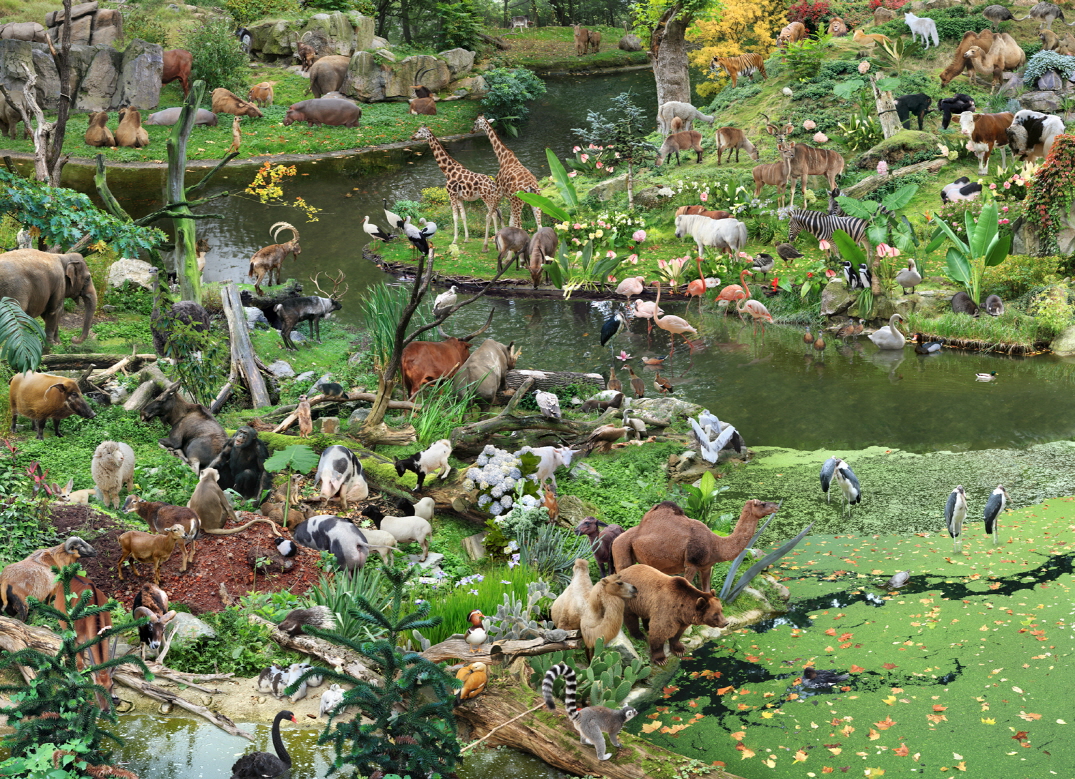
Won Seoungwon’s work is based on digital photo-collage, while in content it
encompasses a hybrid of painting, installation, and literary narratives. She
records subjects with meticulous precision—photographing a single tree in as
many as 60 segments—and assembles hundreds to thousands of images into a single
scene as if composing an “image novel.” While My Life
constructed an installation-like arrangement of objects inside a room, this
spatial sensibility later becomes absorbed into fictional landscapes, making
the picture plane itself a stage and a world.
In series
such as ‘Dreamroom,’ ‘Tomorrow’, and ‘Seven Years Old’(2012), the imagery
always contains “fragments of reality we have seen somewhere,” yet through
their unconventional combinations they form worlds of entirely different
layers. Works such as Seven Years Old–The Chaos Kitchen(2010),
Seven Years Old–Azalea Boiled Rice and Chrysanthemum(2010),
and Seven Years Old–Bed-Wetter’s Laundering(2010) transform
familiar domestic spaces into psychological environments that simultaneously
hold anxiety and comfort, through excessive objects, flora and fauna, and
strangely scaled elements. The narrative is conveyed without text, with each
scene composed like a children’s story—carrying emotional rise and resolution.
Over time,
her collage approach has evolved into more complex and increasingly abstract
forms. In 《The Sight of the Others》, the barren rocky terrain, naked trees, sagging electric wires, and
lightbulbs in The Quarries of Financiers symbolize
professional desires and insecurities, and the circulation of capital.
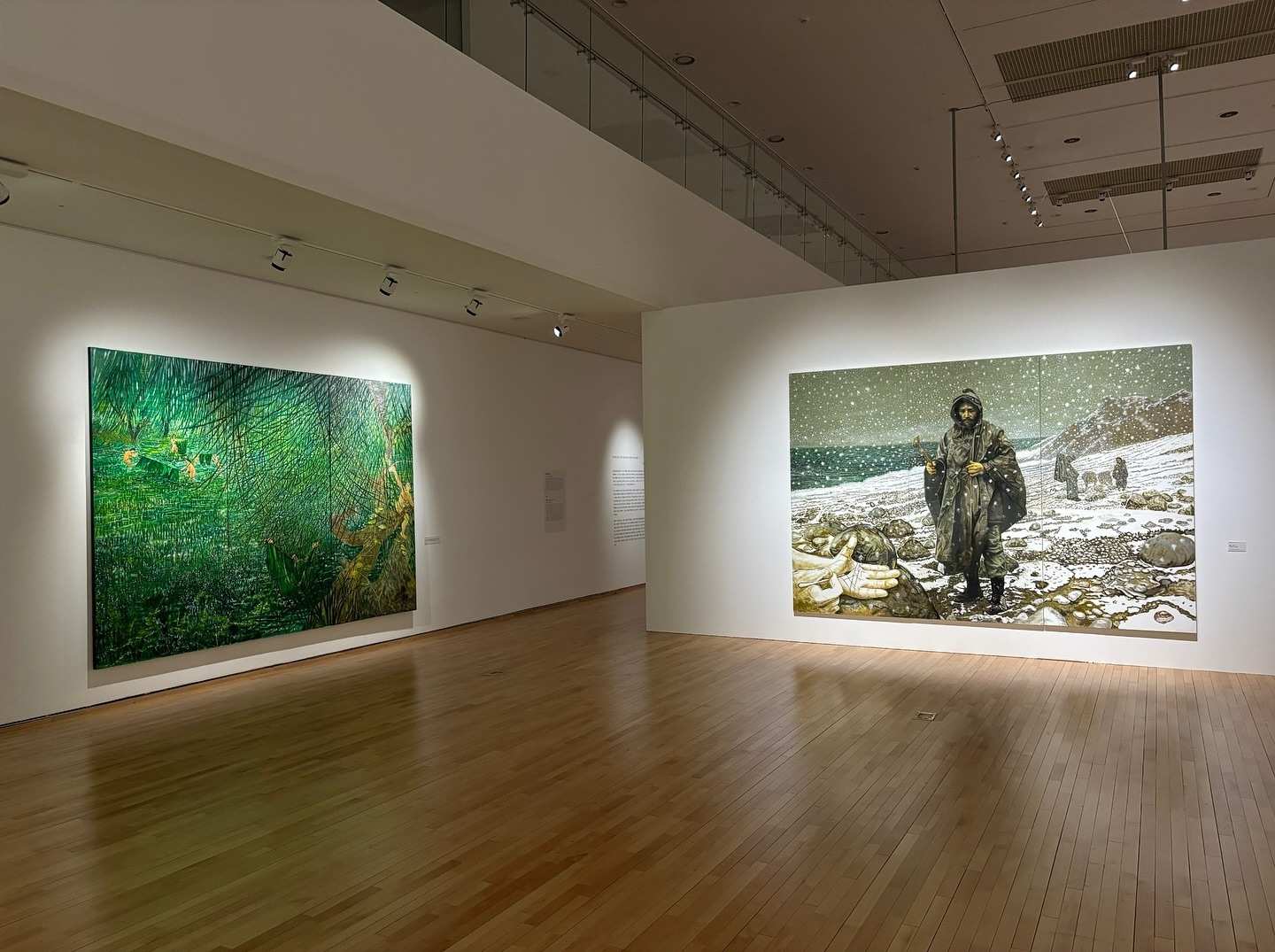
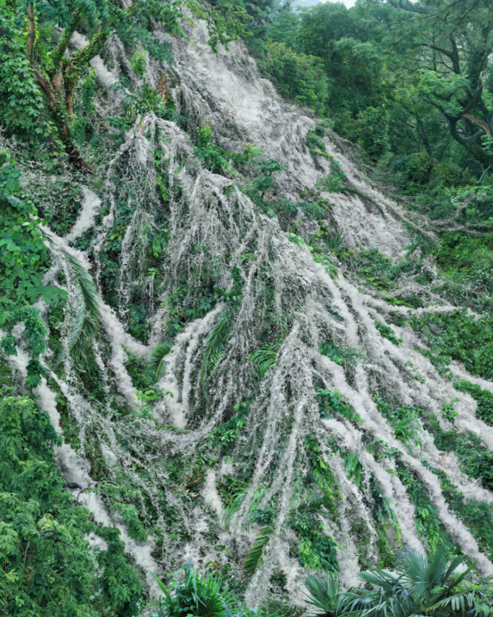
Meanwhile, works such as The Grass That Used to Be There(2022)
from 《Freezing Point of All》
and Grand Waterfall(2021) and Ordinary Network(2021)
from 《The Inaudible Audible》no
longer reveal specific figures or occupations directly. Instead, motifs such as
ice, droplets, branches, grass, and loose networks metaphorize “poorly handled
inferiority,” “fragile bonds,” and “willpower that grows even in frozen conditions,”
shifting the content toward psychological and emotional planes.
The
distinct sense of estrangement in her compositions stems from technical
decisions. Although based on real landscapes, the scenes are never taken in a
single shot but stitched from many segments with slightly mismatched
perspectives and vanishing points, producing “impossible landscapes.” The near
absence of shadows flattens the image, yet within it coexist multiple times,
seasons, elevations, and distances simultaneously. Tens of thousands of shots,
thousands of selected elements, and thousands of hand-crafted layers—along with
up to ten hours of daily labor—reinsert analog temporality and physicality into
a digitally constructed medium. In this way, form and content are inseparable:
as she describes, “it’s not the forest, but the story of each tree”—the forest
in her work is not a natural sum, but a fabricated relationship formed by
thousands of edited fragments.
Won Seoungwon has established a distinct position in contemporary
Korean photography and image-making by merging staged photography with
narrative-based imagery. Within the strong documentary tradition of Korean
photography, she has built a unique middle ground of “fiction grounded in
reality” by capturing real objects and landscapes and reconstructing them into
newly imagined worlds. Over the past 20 years since My Life,
her work has demonstrated that photography can exceed documentation and become
a psychological and narrative space.
This approach is reflected in her recognition and institutional
presence. Through solo exhibitions such as 《The Sight of the Others》, 《Freezing Point of All》, and 《The Inaudible Audible》, she has examined the
lives of social others, her own childhood anxieties, and the inner structures
of the successful. She has been selected as the recipient of the 23rd DongGang
Photography Award in 2025, establishing her as a key figure in contemporary
Korean photography. Her works are housed in major Korean museums—including the
National Museum of Modern and Contemporary Art, Seoul Museum of Art, Gyeonggi
Museum of Modern Art, Museum Hanmi, and GoEun Museum of Photography—as well as
international institutions such as the Osthaus Museum (Germany), Santa Barbara
Museum of Art (USA), and Mori Art Museum (Japan), enabling diverse
interpretations of her work across cultural contexts.
Her practice holds strong potential for broader international
reception, thanks to the universal resonance of her themes—superiority and
inferiority, anxiety and relationships, profession and identity, childhood
wounds and adult self-understanding. At the same time, the dense symbolic codes
drawn from Korean professional structures, social systems, and familial
dynamics maintain a grounded locality. It is anticipated that she will continue
to develop “expanded narratives dealing with social subjects, collectives, and
psychological structures,” persistently generating new scenes at the boundary
between reality and imagination.
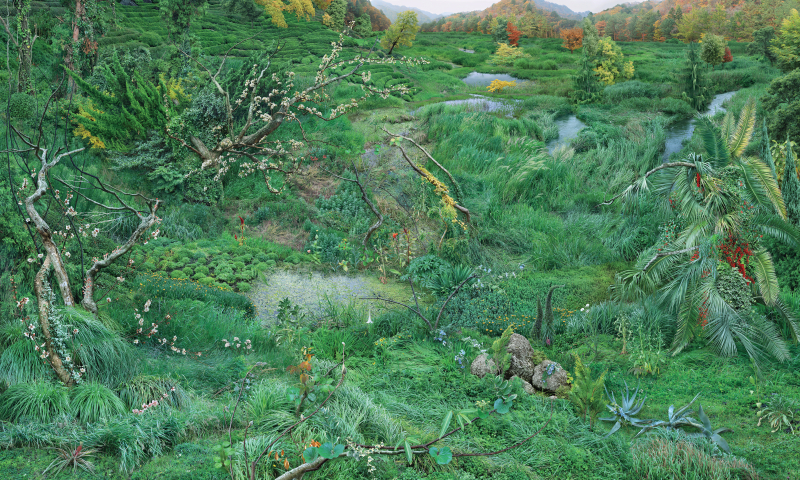


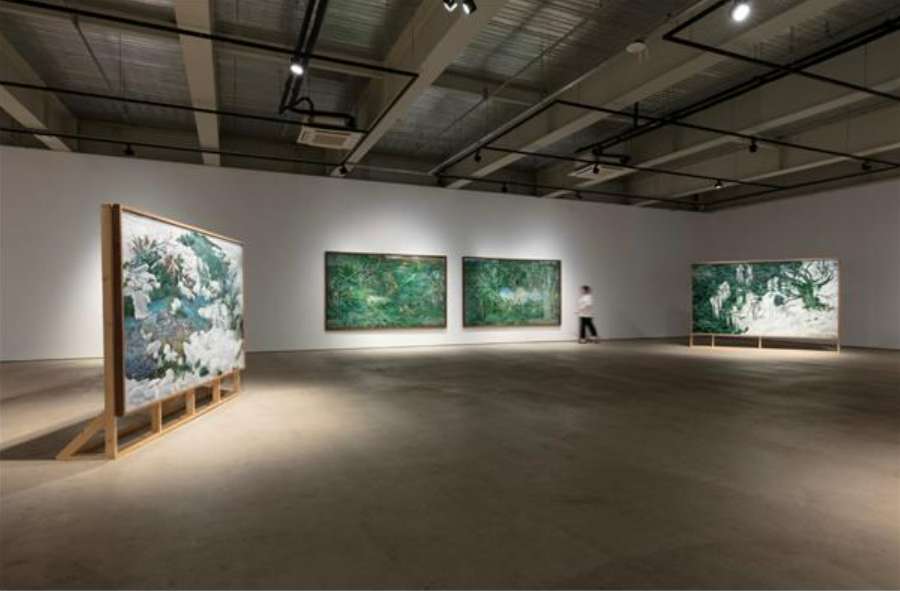
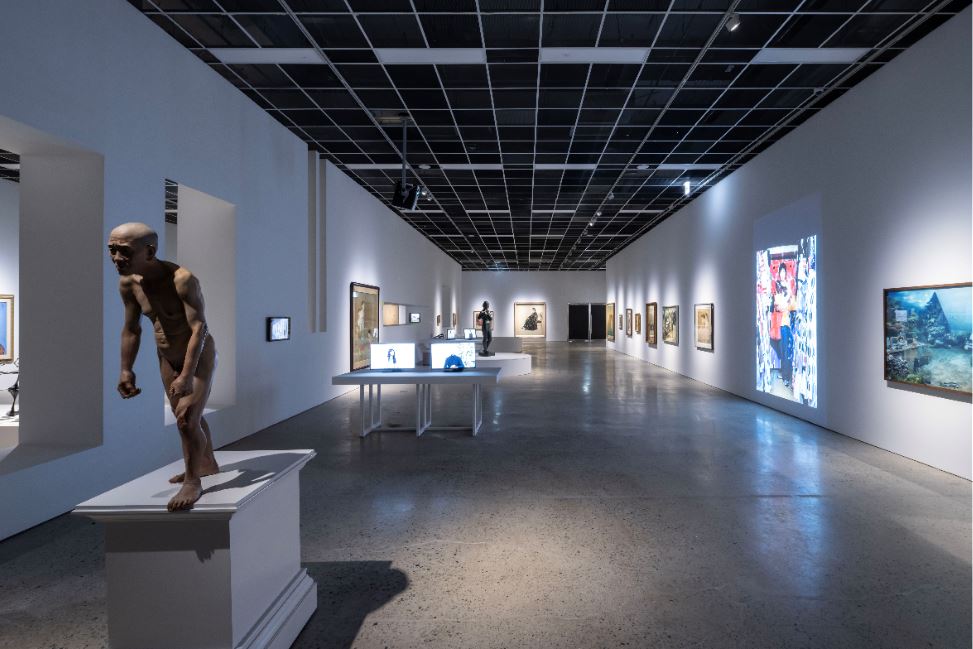
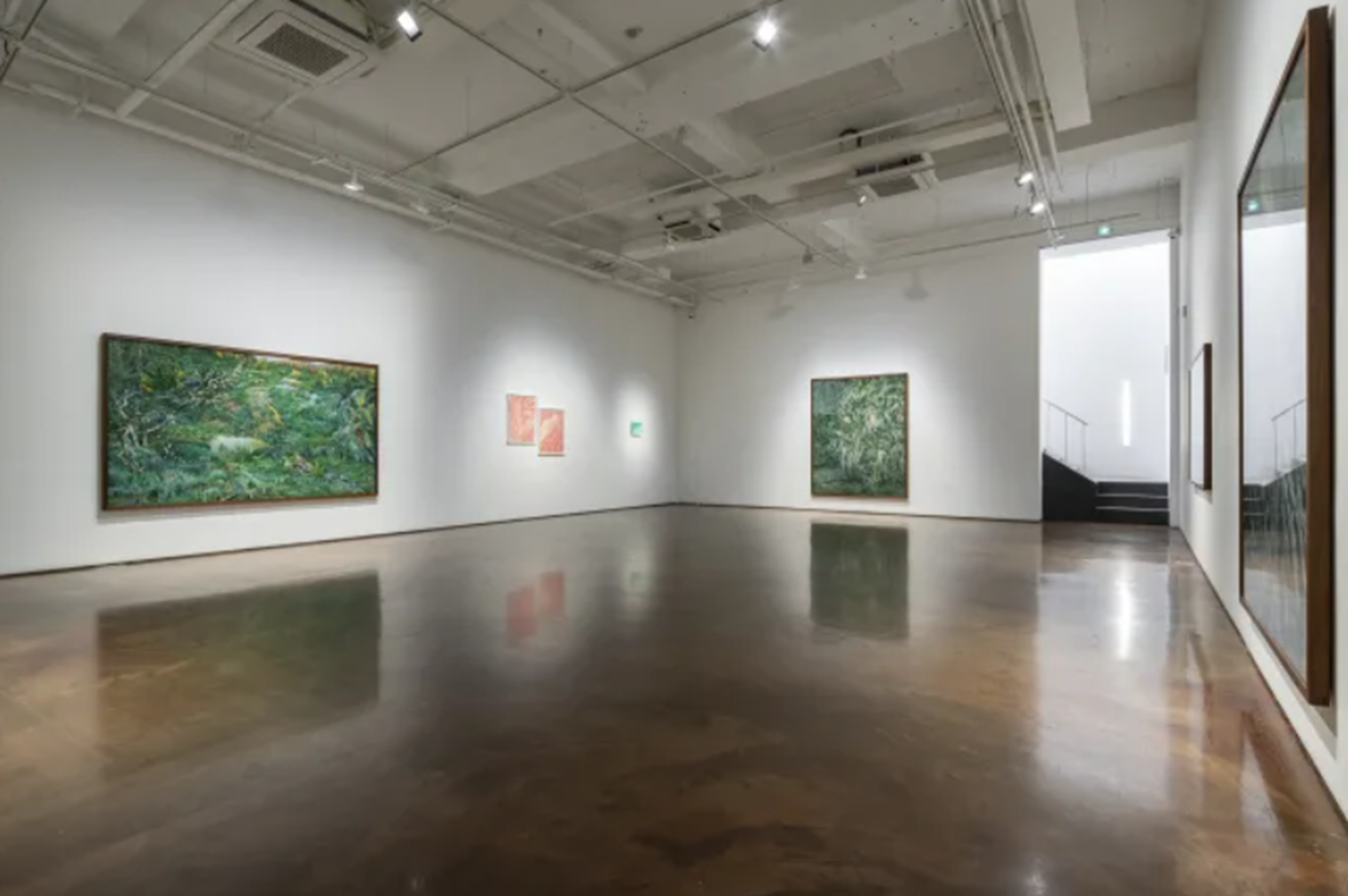
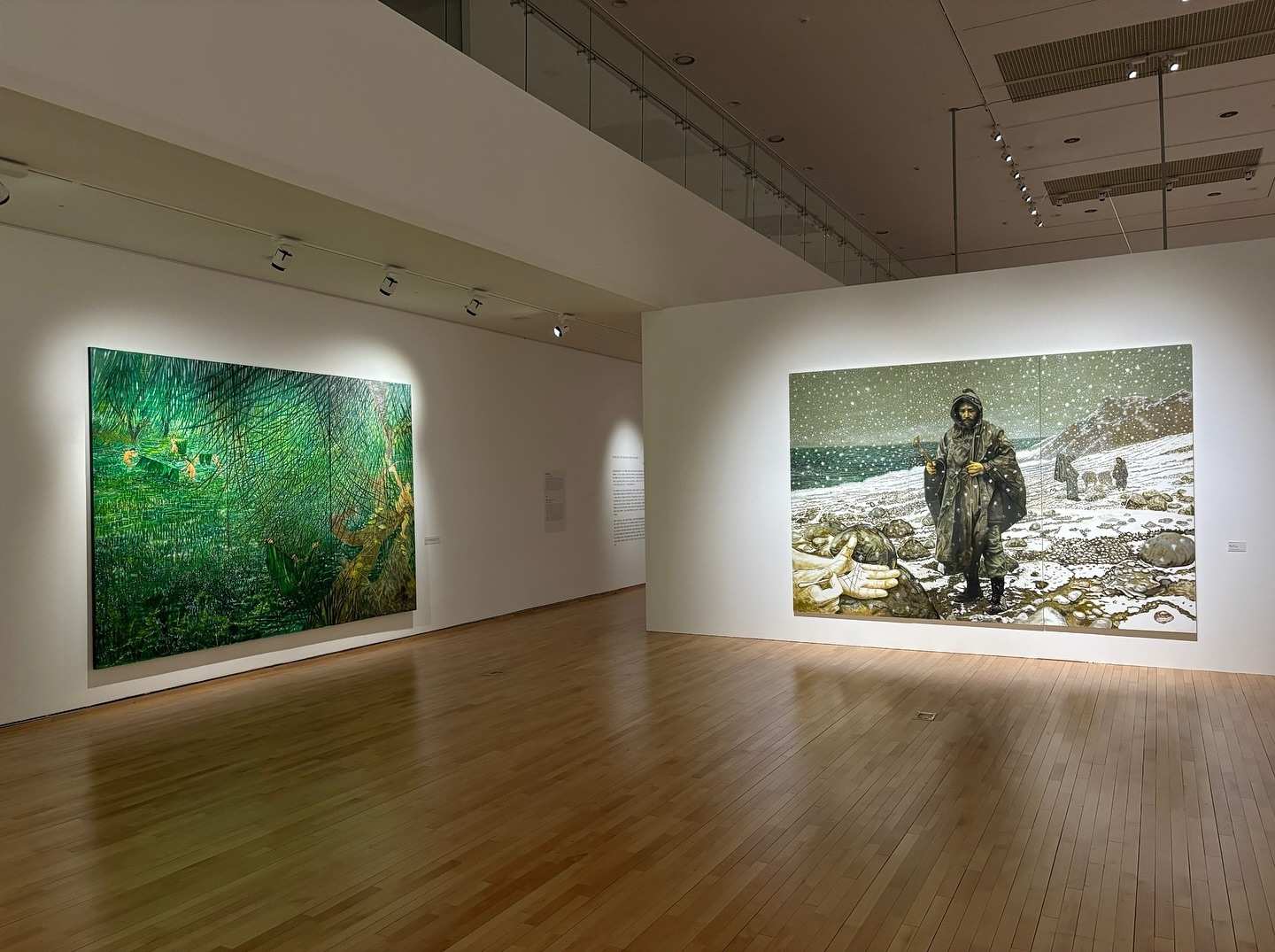 Installation view of 《Here's Tomorrow's Weather Forecast》 © Pohang
Museum of Art
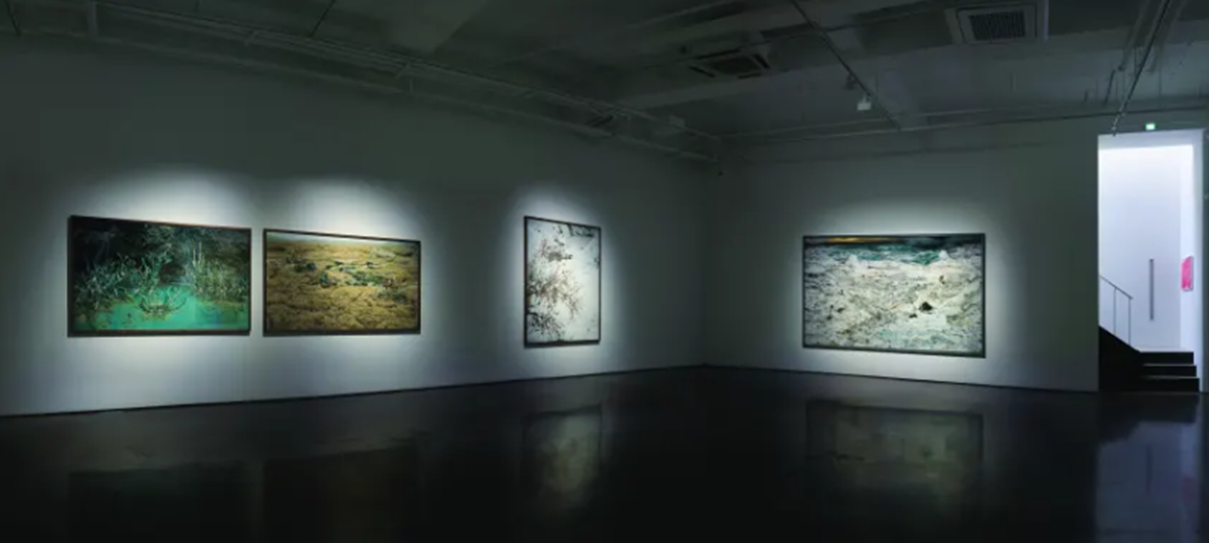
Installation view of 《Here's Tomorrow's Weather Forecast》 © Pohang
Museum of Art
“Living
on Earth has come to embody a meaning different from before.”— Nicolas Bourriaud
Pohang
Museum of Art presents the exhibition 《Here’s Tomorrow’s Weather Forecast》 as
an invitation to look back at the world we currently face. Inspired by weather
observation and forecasting, the exhibition reflects on the meaning contained
in this ordinary phrase—“Here’s tomorrow’s weather forecast”—and examines the
artistic perceptions of a present world defined by heightened prediction
technologies and overwhelming variables. At the same time, the exhibition
explores the thoughts and anxieties humans develop as they sense the shifts
brought on by global climate change.
Can
we truly predict life? Life is filled with countless uncertainties and
variables. We know well that it is practically impossible to predict every
situation with accuracy. Yet we continue forecasting—with scientific methods,
statistical models, and other tools—specific events, conditions, and
tendencies. Even so, uncertainty still persists, born of probabilistic
fluctuations. Continued international collaboration and advanced technological
systems have improved forecasting accuracy, and meteorology augmented by
artificial intelligence is no exception. Despite claims that weather prediction
represents one of humanity’s most extraordinary adaptive achievements,
unpredictability remains.
Within
the sphere of mundane daily forecasting, weather reports provide information
that helps us make efficient decisions and intuitively understand the
complexity of the world. Whether it’s grabbing an umbrella on the way to work
or school, choosing the right clothes, anticipating traffic, or dreading midday
heat in advance—our everyday actions and expectations rely heavily on
prediction. And yet, we frequently encounter deviations: no need for the
umbrella we carried around, or clothes chosen too warmly or too lightly.
But
unprecedented phenomena—record-breaking heatwaves and tropical nights, snowfall
in Africa, massive blackouts in distant cities due to extreme snowstorms and
cold waves—fall completely outside expected bounds. Such anomalies have already
surpassed the margin of forecasting errors. Here, our collective anxiety
ignites.

We tend to understand the world
through the information we gather from experience. Few things are as deeply
connected to our daily lives—or as clearly indicative of reality—as climate
change. Weather is no longer about rain, snow, or wind alone. As we covered
nature with civilization, we believed it would lead toward utopia. That belief
now presents itself as a precarious reality.
This exhibition unfolds within
the anxious anticipation formed by human-made variables and the interactions
between them—variables that saturate our lives. Through the temporal realms
created by nine participating artists, we are awakened to familiar sensations
of nature while simultaneously sensing the wrinkled, entangled complexity of
the world. Instead of merely representing or symbolizing reality, they evoke
and capture it.
The sun still rises without fail,
and the moon continues to wax. Yet the common phrase “Here’s tomorrow’s weather
forecast,” and the assumption that tomorrow will exist, no longer guarantees a
peaceful tomorrow like yesterday’s. Rather, it reminds us of a reality filled
with fear and anxiety—a crisis that compels us to live tomorrow already today.
Our limitations in predicting
life, the tension between today and tomorrow, the anxiety and hope that exist
between the present and the future—these concerns have become shared human
issues. Rejecting the resigned notion that reality is already fixed, we
continue to anticipate and forecast the future. Perhaps we have always known: today
is human, but tomorrow may belong to nature.

#1. The Familiar (Landscape)
These familiar yet unsettling
landscapes ultimately turn toward “us.” The density of nature, the seductive
pleasure of civilization, and the uneasiness that seeps between them lead us to
contemplate human life and existence. What kind of tomorrow are we imagining
today? Whose dream sustains the assumption of tomorrow?
#2. The Uneasy (Situation)
The brilliance of life and the
grandeur of nature coexist on a groaning Earth. Here unfolds a situation that
makes us directly sense fear and anxiety. The dread of watching our own actions
destroy our lives is soon engulfed by anger. In spaces where today erases
tomorrow, we detect precariousness. We are bound together as a community of
fate.
#3. The Resembling (Nature)
Nature and civilization are not
completely severed. Standing in the present while living toward the future, our
predictions offer a glimpse of what lies ahead—yet the world remains
unfinished. The tension hovering between present and future, between what we
can and cannot know—within that vague and hazy gap, there exists a nature that
resembles what we once knew.