Recent
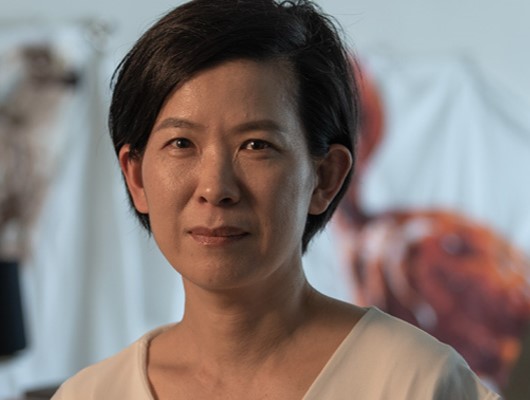
works by Young In Hong, a Korean-born artist currently based in the United
Kingdom, adopt anthropological themes and pluralistic genre formats. In
particular, around the time she was selected as one of the four finalists for
the Korea Artist Prize, jointly organized by the National Museum of Modern
and Contemporary Art, Korea and the SBS Foundation in 2019, she began working
with the history of human labor and animal ecology as central themes.
Given the
nature of these subjects, such works can secure their distinctive artistic
quality only through a process that begins with objective facts, proceeds
through humanities-based judgment, and culminates in the artist’s subjective
interpretation and aesthetic realization grounded in research.
Young
In Hong adheres to this creative process. Above all, she pursues completed
works that not only contain rich layers of meaning but also reveal formal
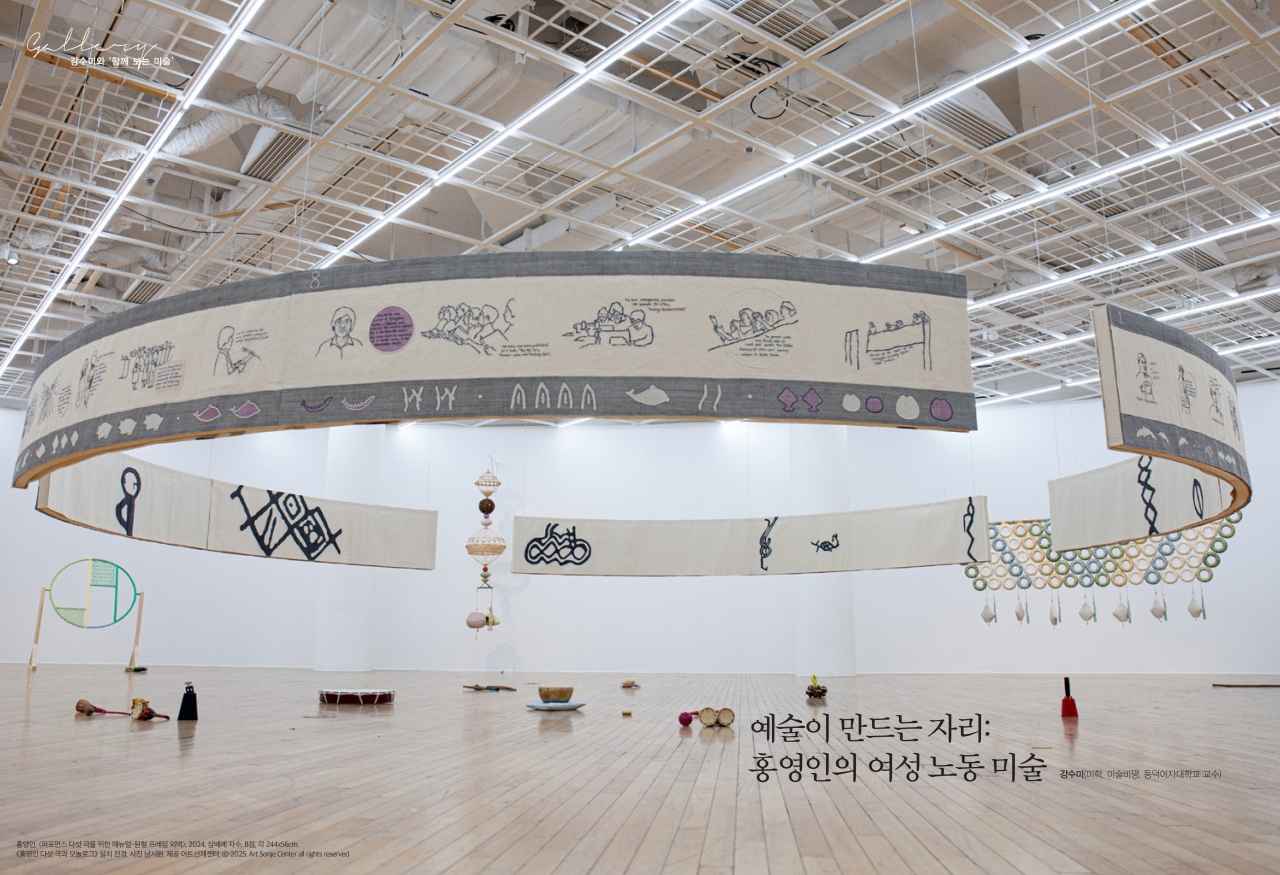
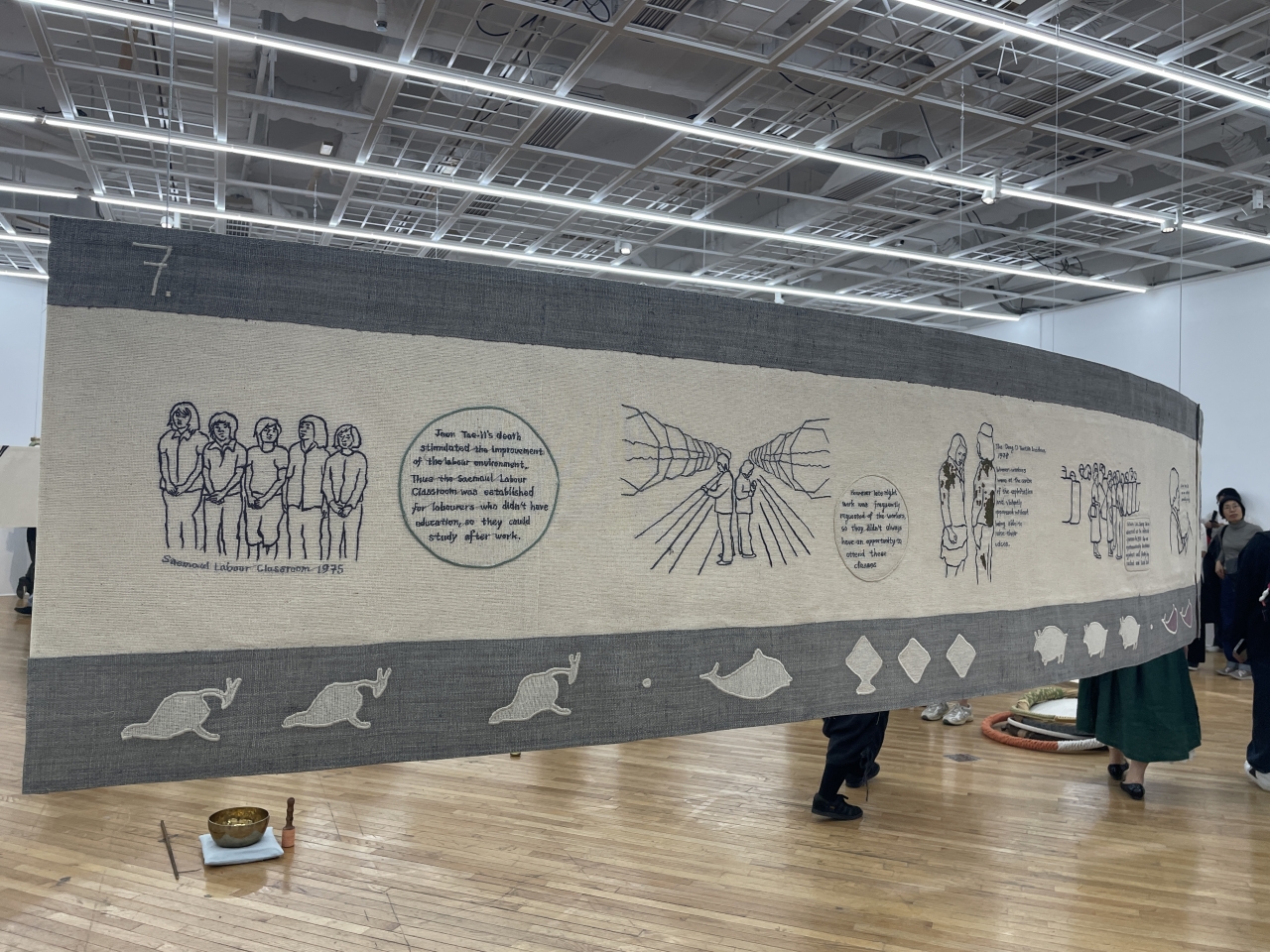
diversity and a synthesis of expressive modes. As a result, her art traverses
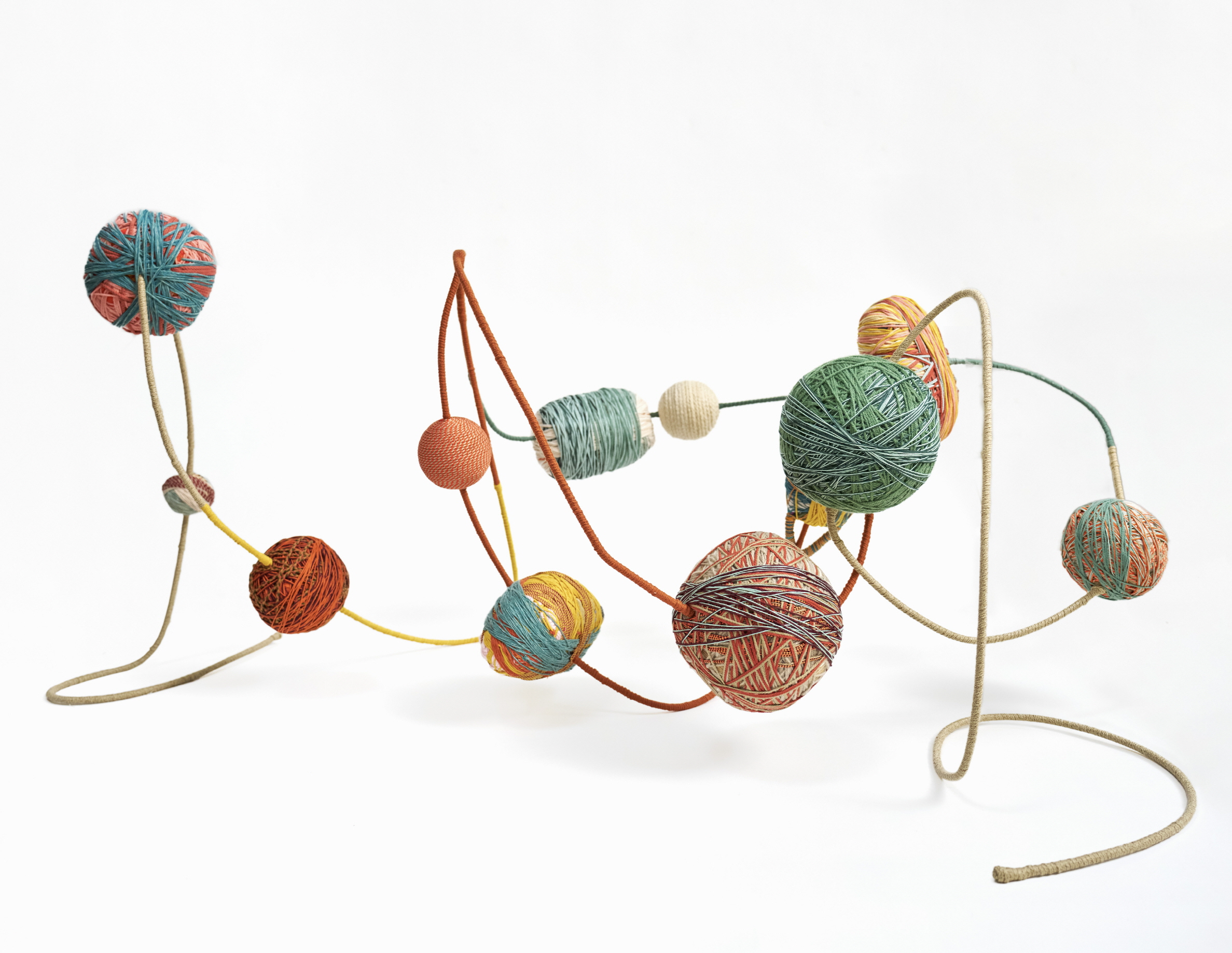
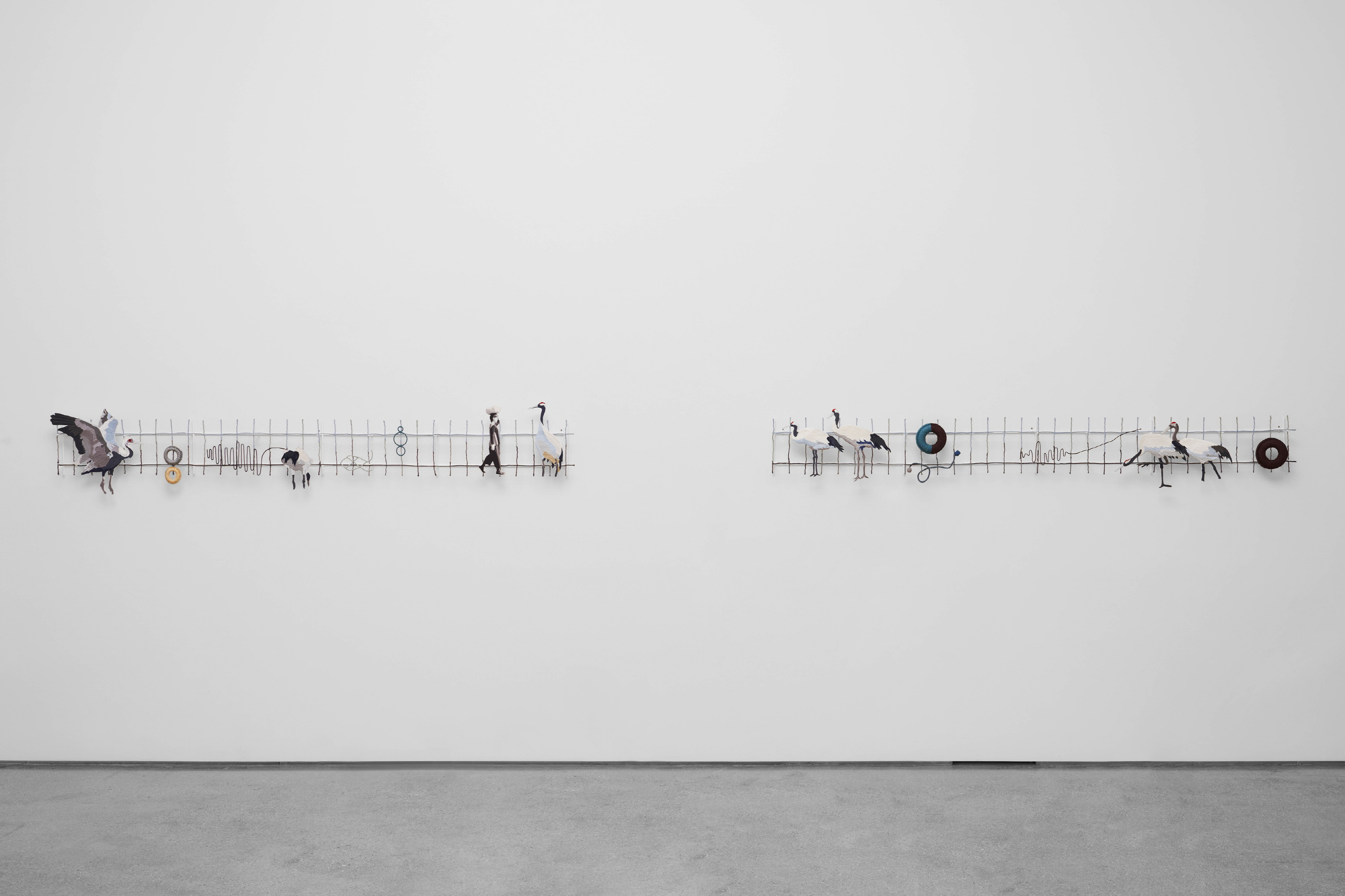
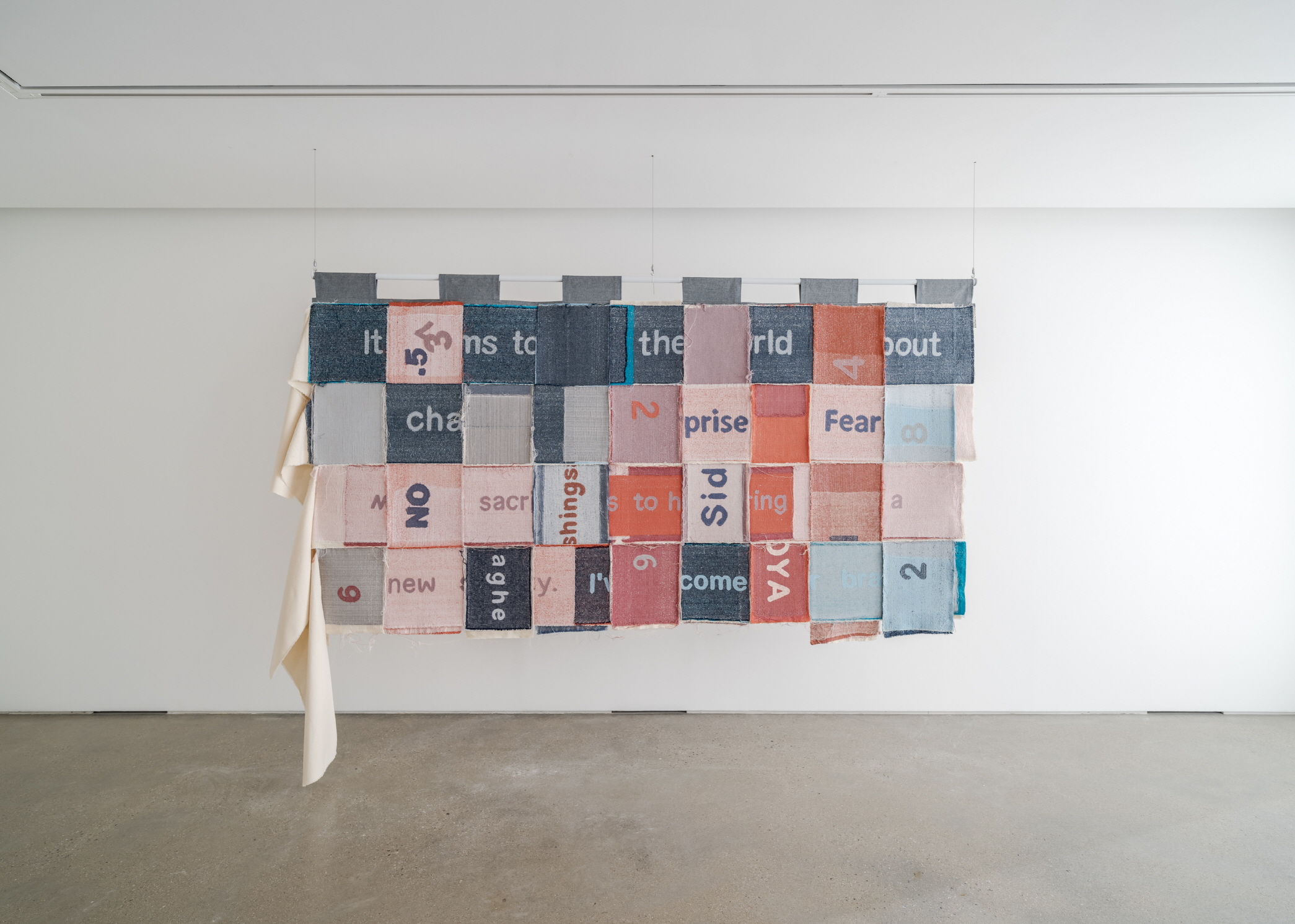
genres—embroidered textiles, craft-based sculptural objects, performance, and
sound art—layering media into a condensed field of meaning.
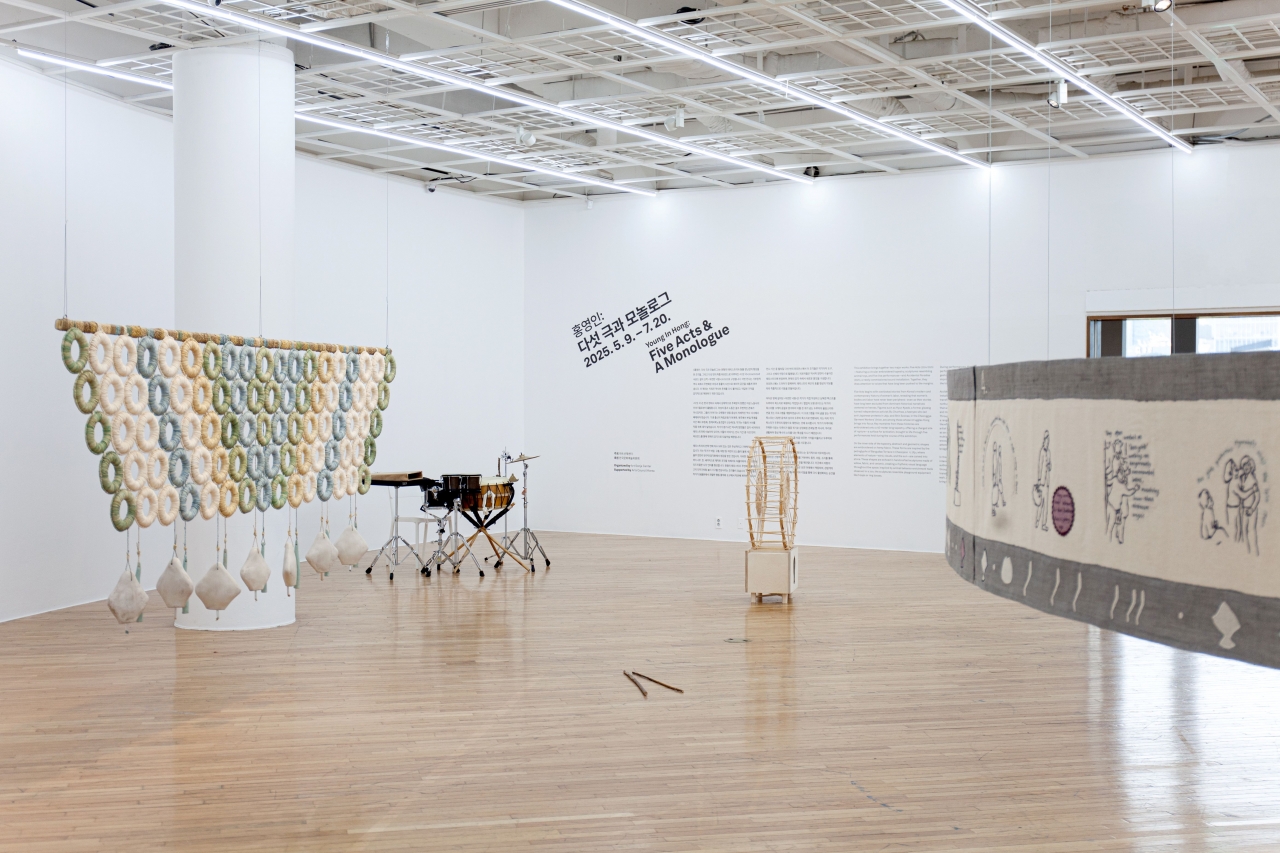
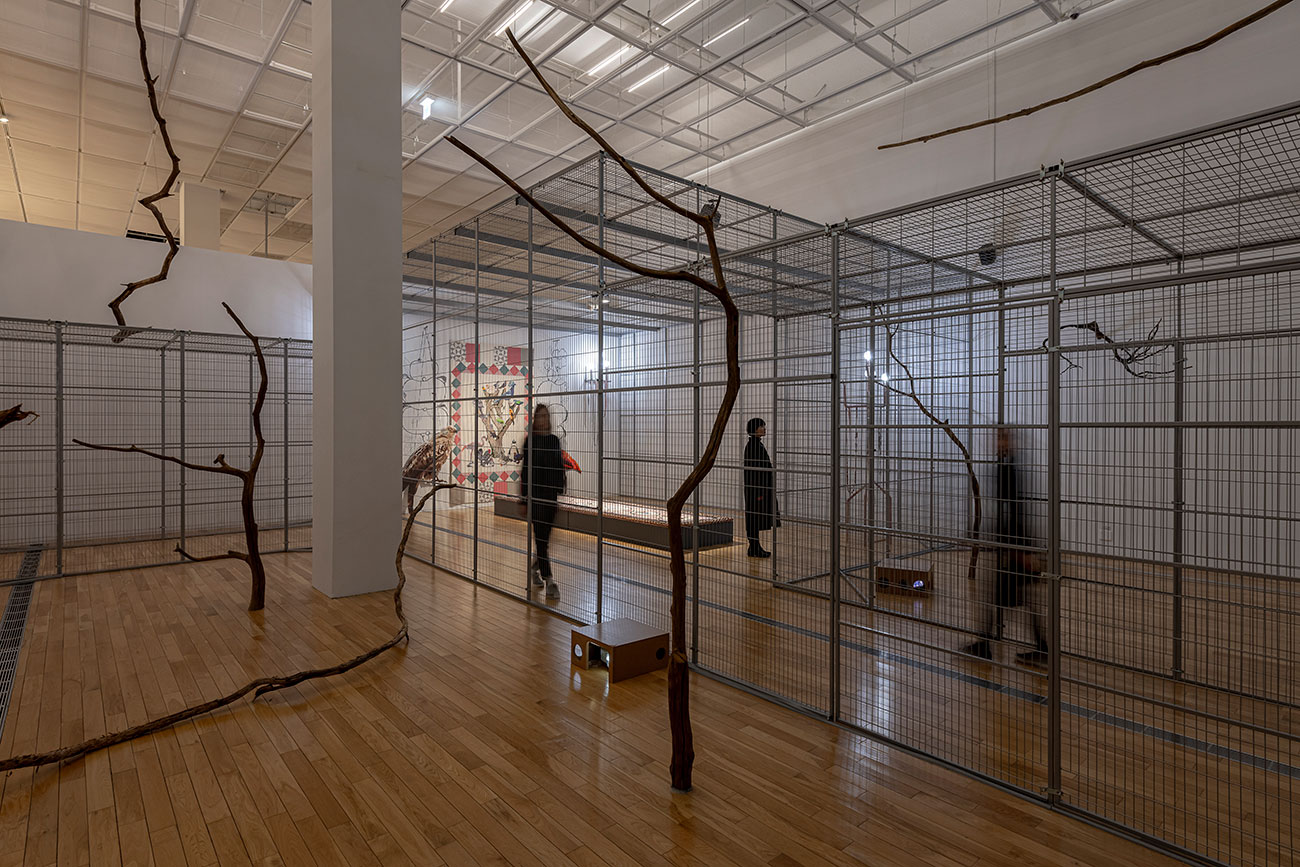
In
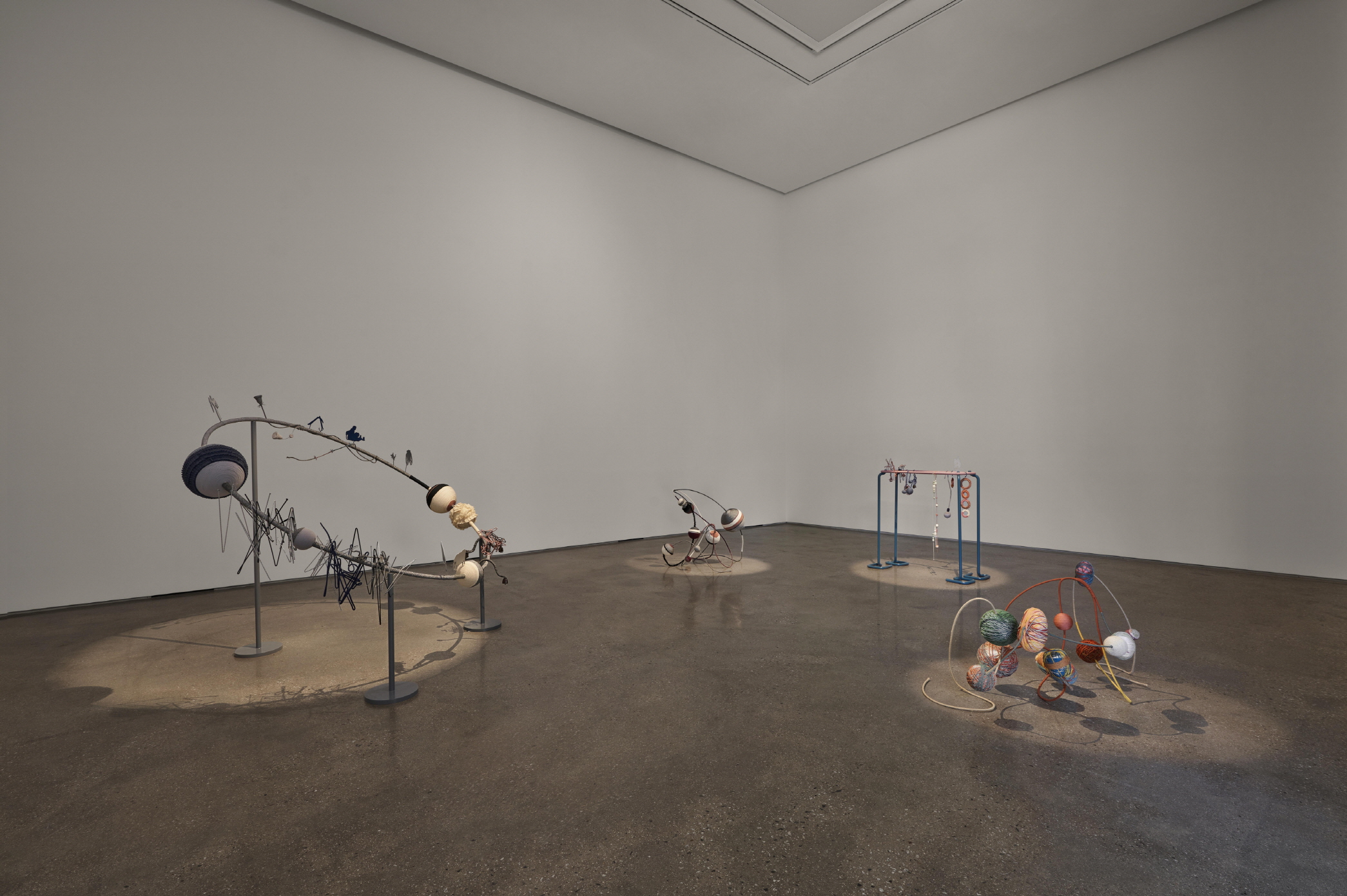
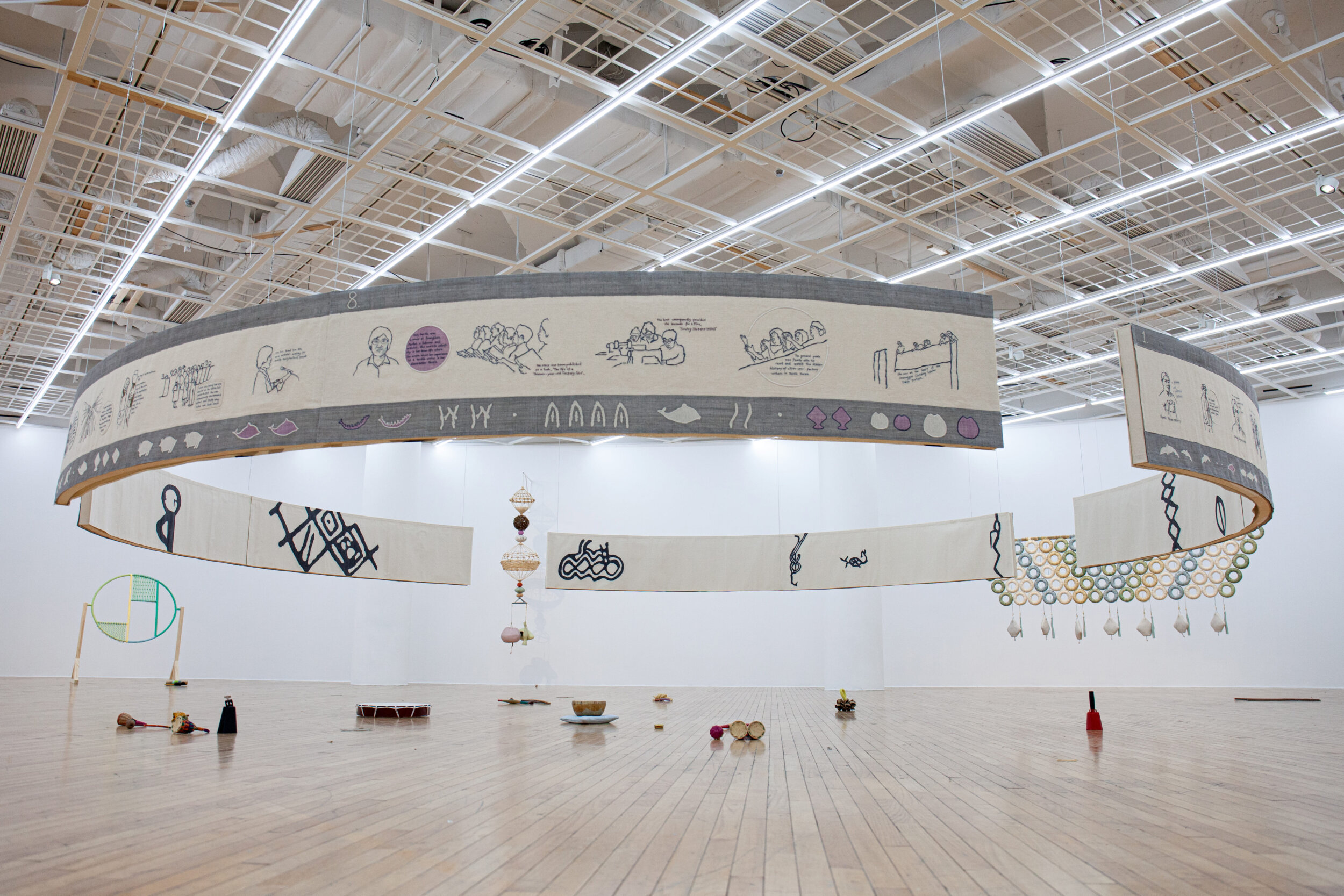
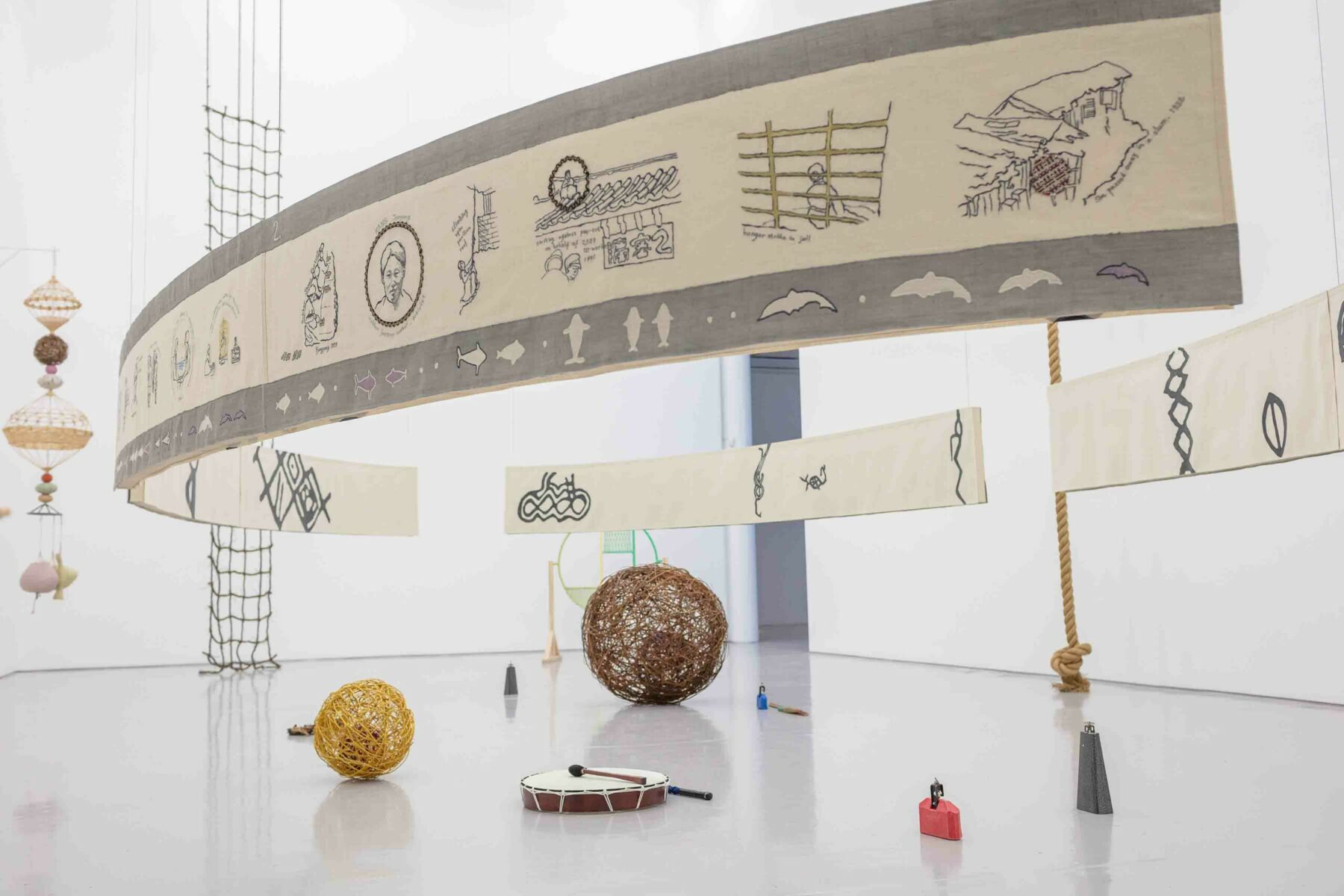
particular, 《Five Acts &
A Monologue》 (Art Sonje Center Space 2, May 9–July
20, 2025), her first solo museum exhibition in Korea, presented this
constellation of elements within a single opportunity for engagement—an
exhibition that also functioned as a performance. In short, it provided a site
that moved beyond the static contemplation typical of exhibition spaces,
inducing a complex sensory experience.
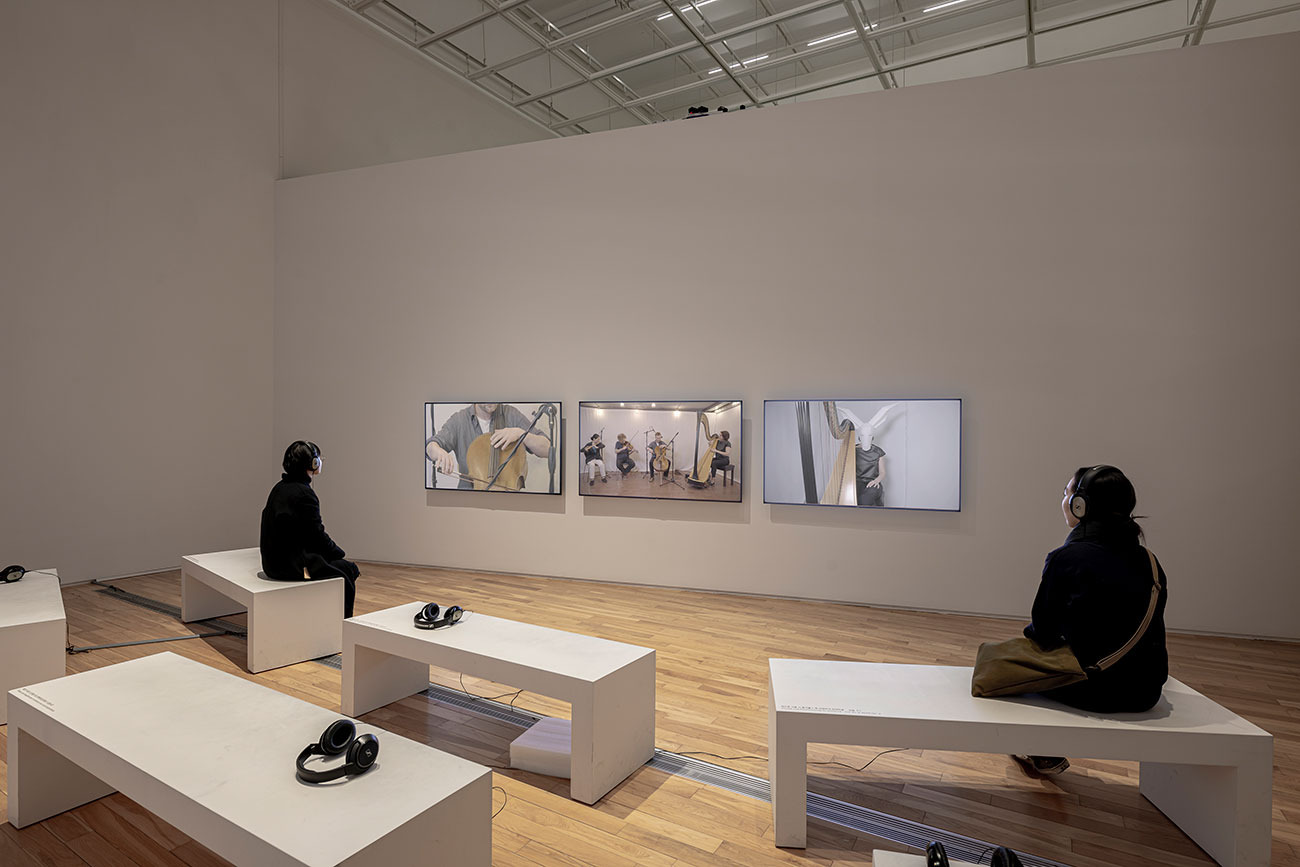
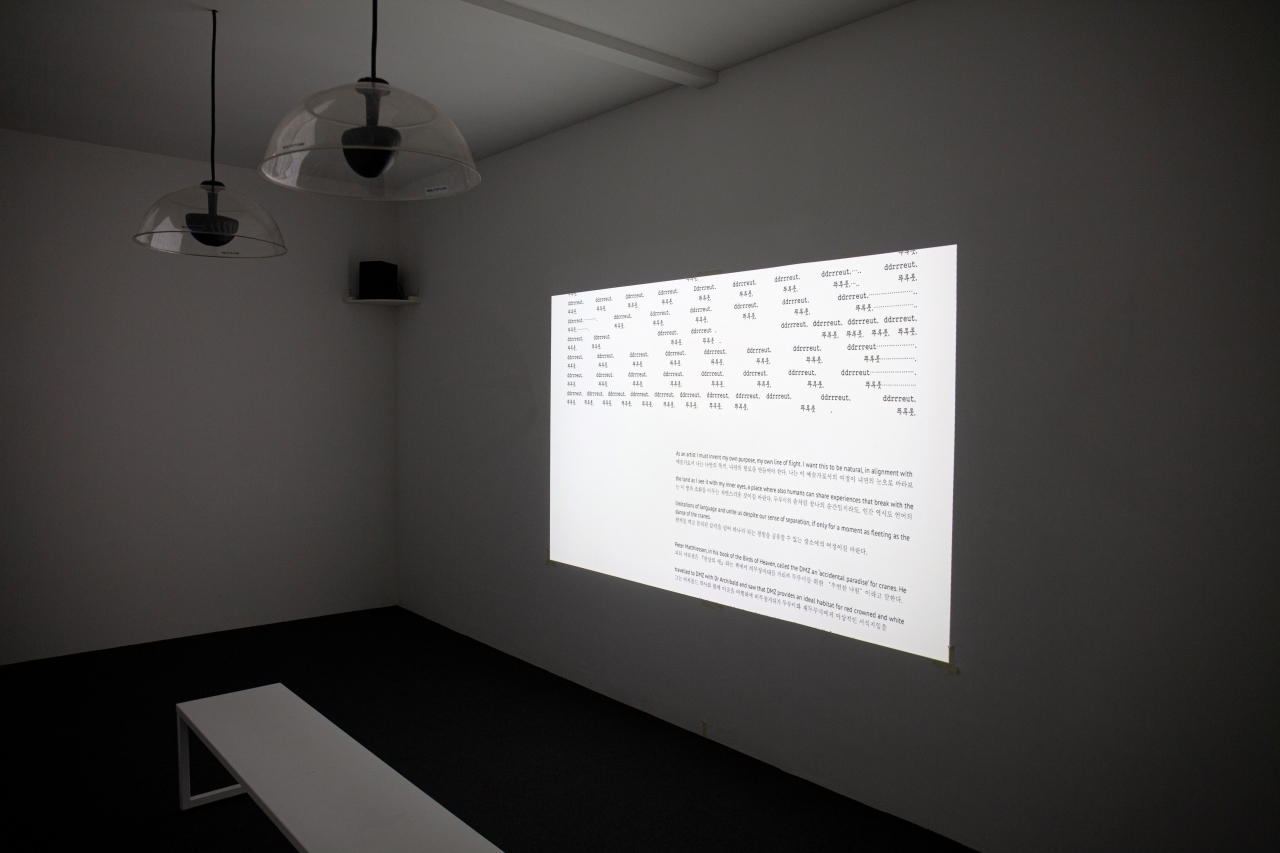
As
the exhibition title suggests, the artist constructed a structure in which
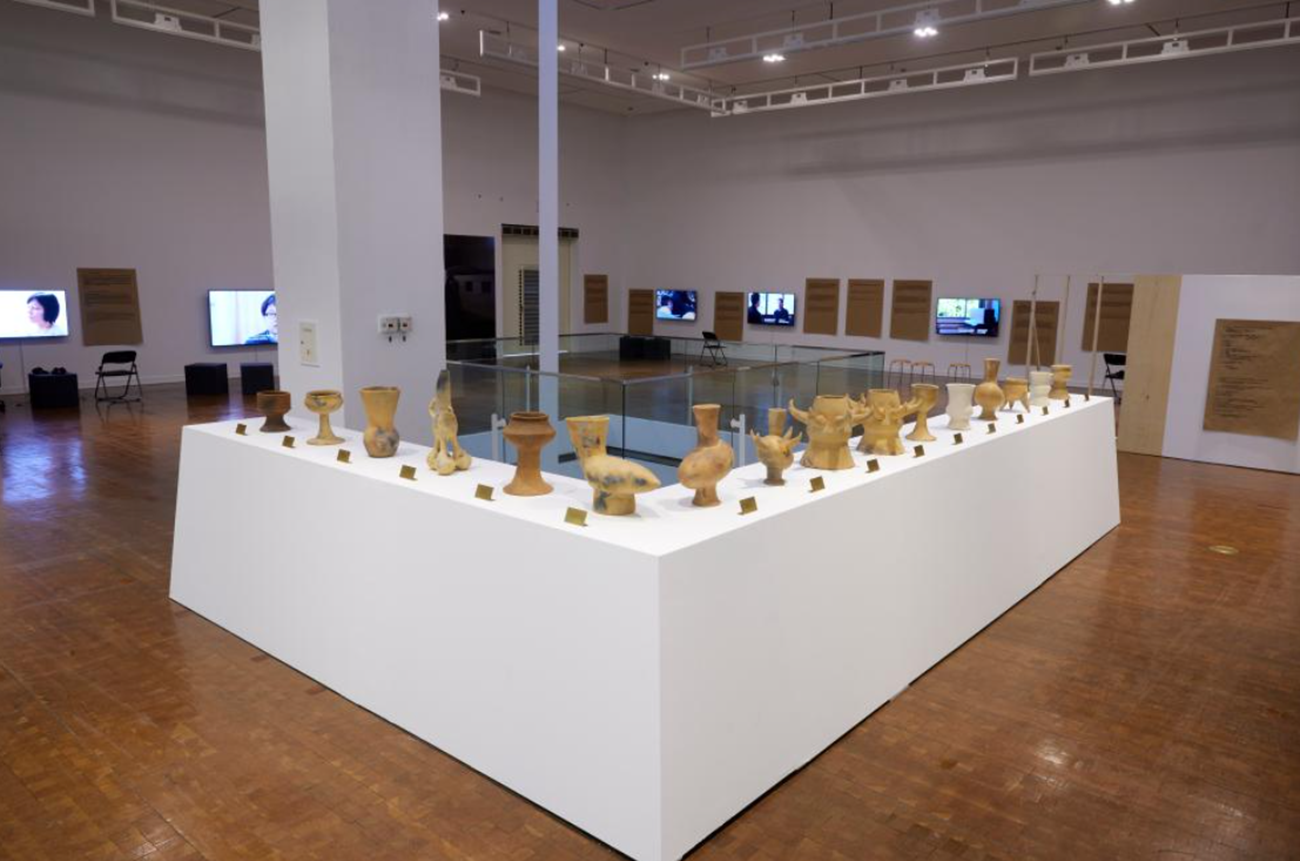
monumental tapestry installations, handcrafted sculptural objects, five
performances staged over the course of the exhibition, and a five-channel sound
and video installation interlock like pieces of a puzzle within the symbolic
condition of “acts.”
What,
then, does this physical exhibition structure contain? Embedded like bones
within this sensory field is a theme that viewers may not immediately
recognize—one shaped decisively by the artist’s intent. Across eras, there have
been those whose very existence was ignored within Korea’s power structures,
those who lived as the weak; those who were never considered in the narration
of modern and contemporary Korean history and have reached the present without
leaving behind even the smallest trace of record.
Among them, the historical
contributions and labor of women are of critical importance. Even if not
encompassing the entirety of what these individuals accomplished in their
lives, Young In Hong seeks to place what she has researched and reinterpreted
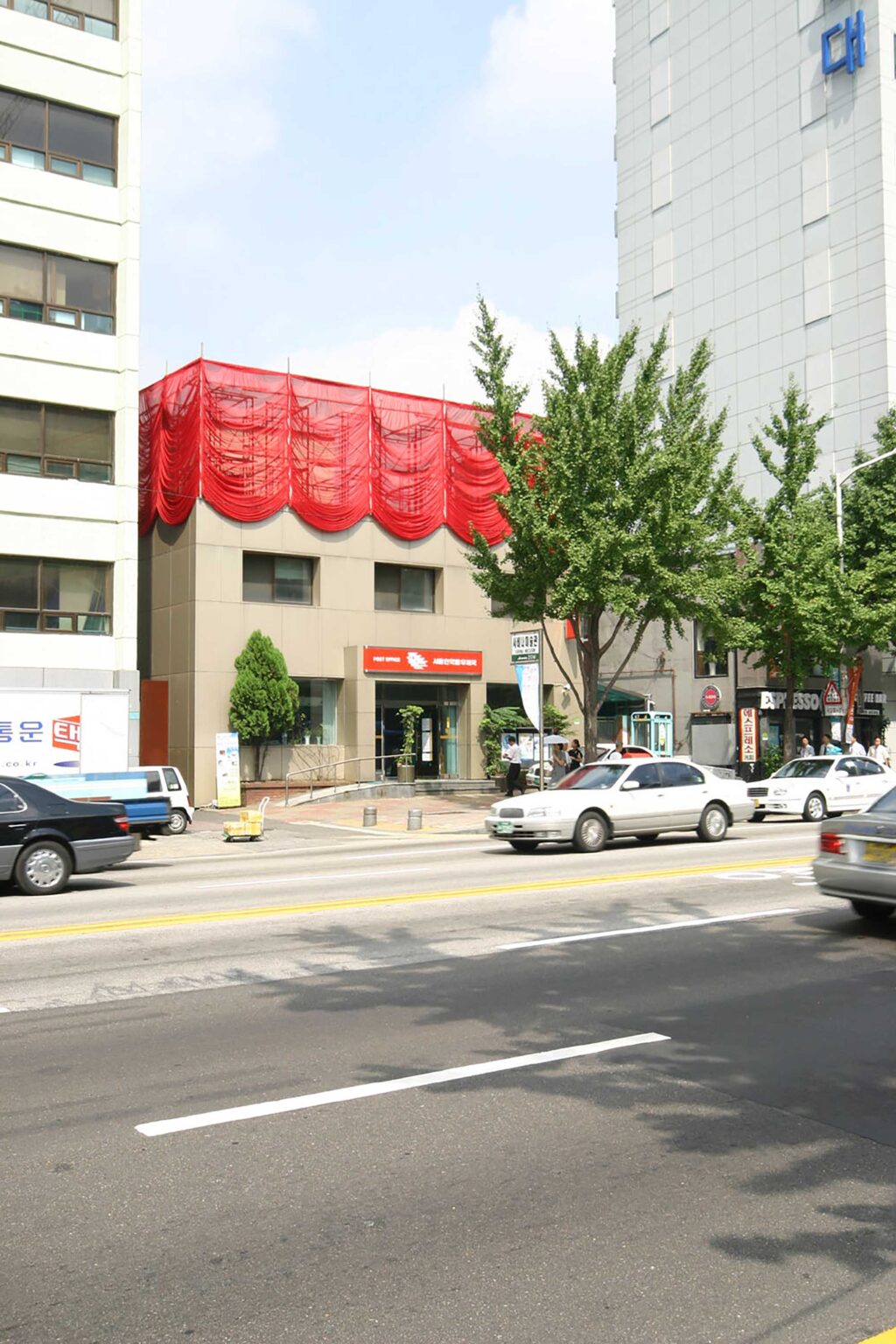
into the realm of art as marginalized realities of Korean modern history. At
this point, let us briefly detour to another artistic example that offers food
for thought.