A few years ago, I happened to walk along the Hongjecheon (one of
the down streams of the Han river) since I had settled in a new studio in the
Seongsan-dong area. Hongjecheon is often called Moraenae. I find the name more
intimate and visually apparent. Obviously, it takes time to get used to a new
scenery whether it is the Han river or a zoo. I have captured figurative
moments in the surrounding environment; painting Moraenae has also followed
such a process. At the end of the Moraenae pathway, you can arrive at the
Mangwon Hangang park. The landscape of Moraenae is not special. There is a long
trail along both sides of the stream with trees and bushes and you can easily
encounter small bridges, fishes, mallards, herons and street cats as sceneries
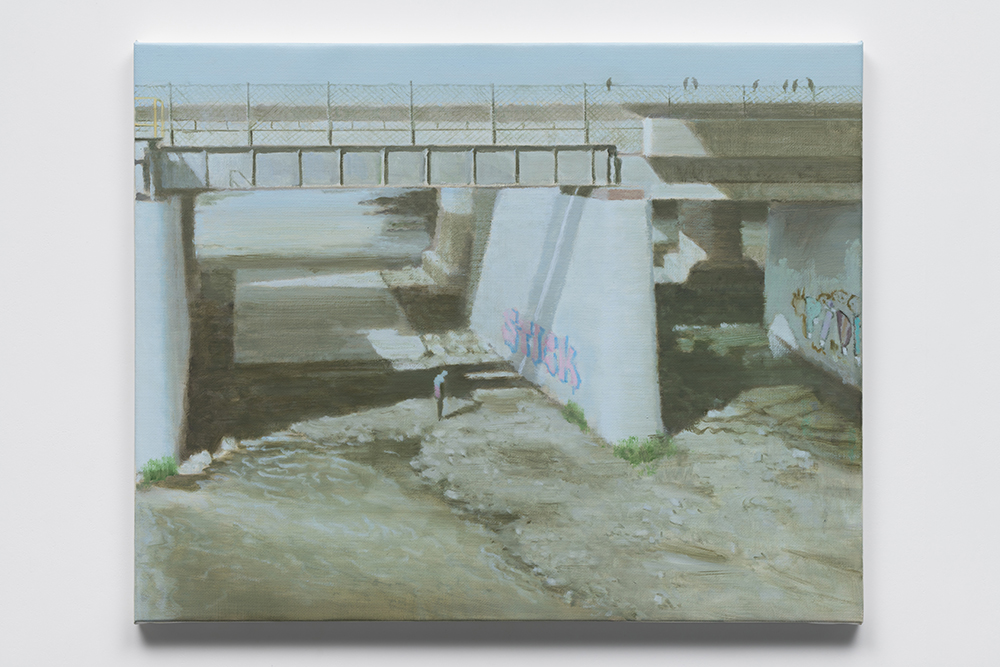
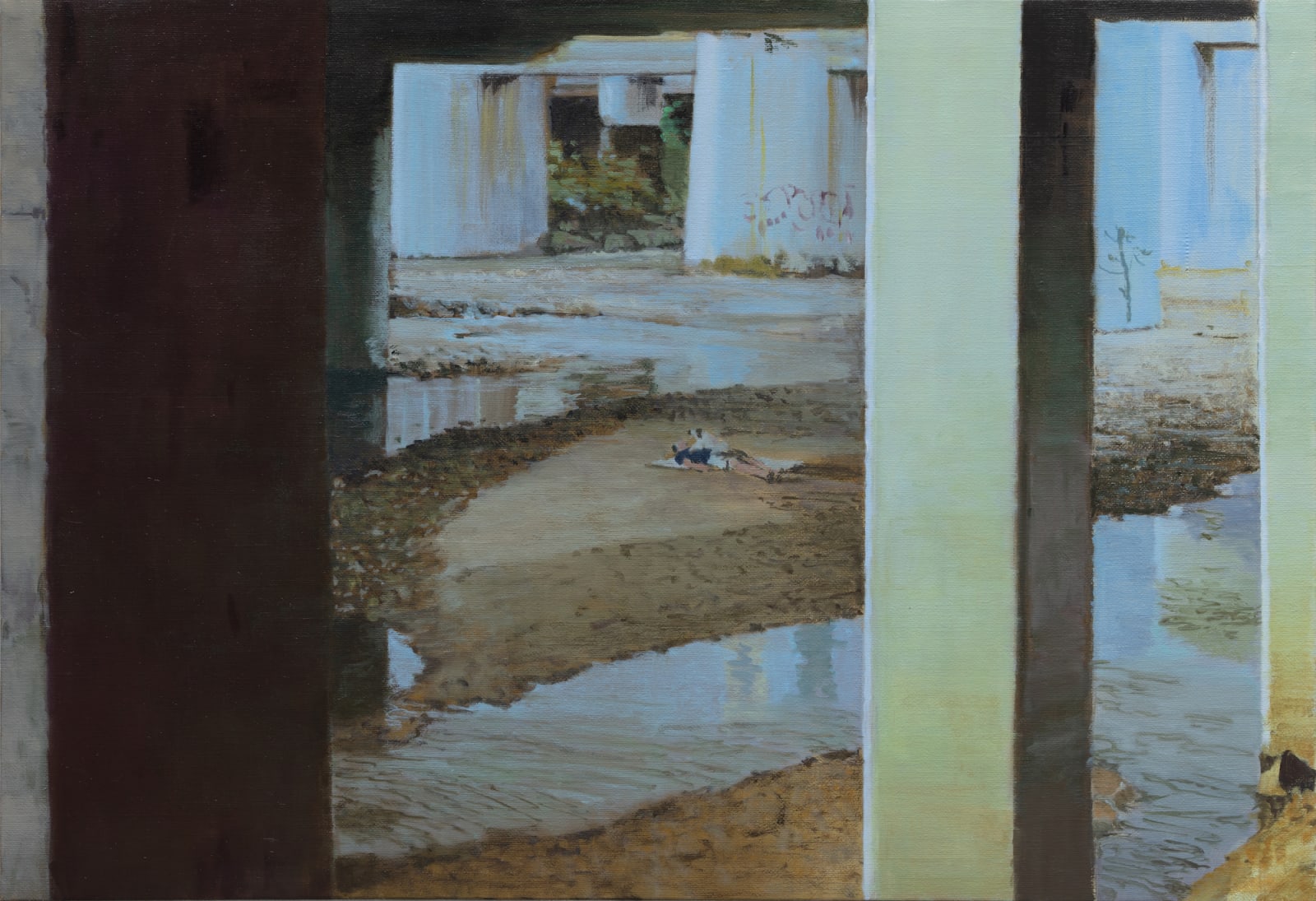
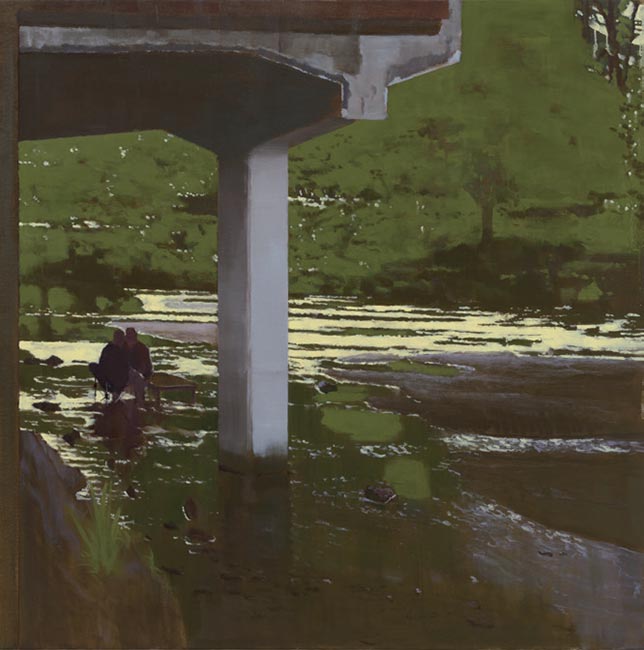
of the other general river streams are. What makes Moraenae different is the
massive Naebu Expressway crossing over the stream which casts a wide
shade.
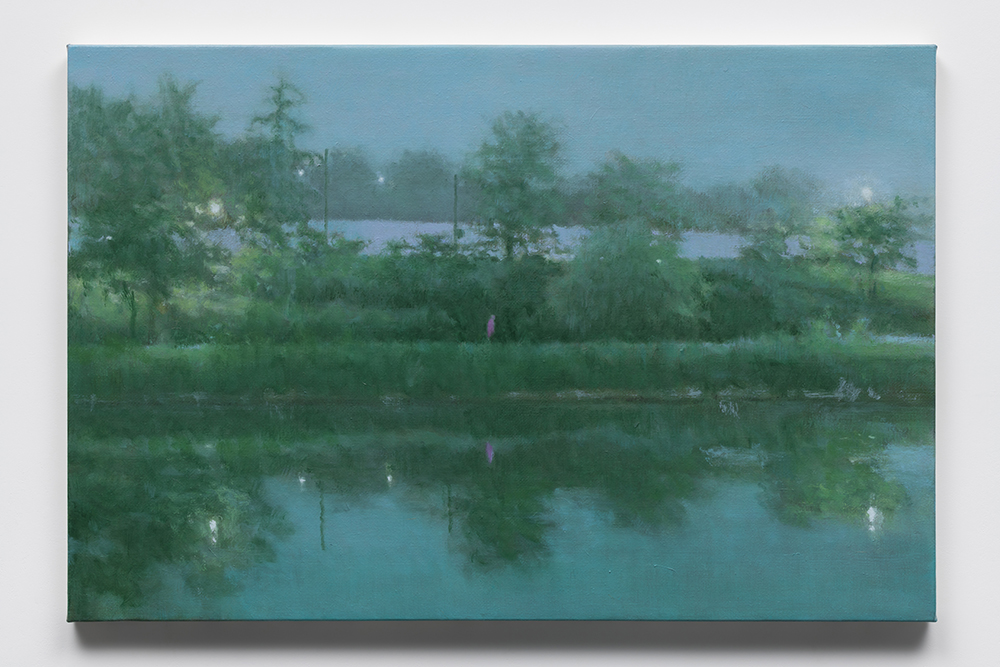
In the summer, Moraenae unfolds the innermost and serene
atmosphere as its narrow breadth is surrounded by trees and bushes, contrary to
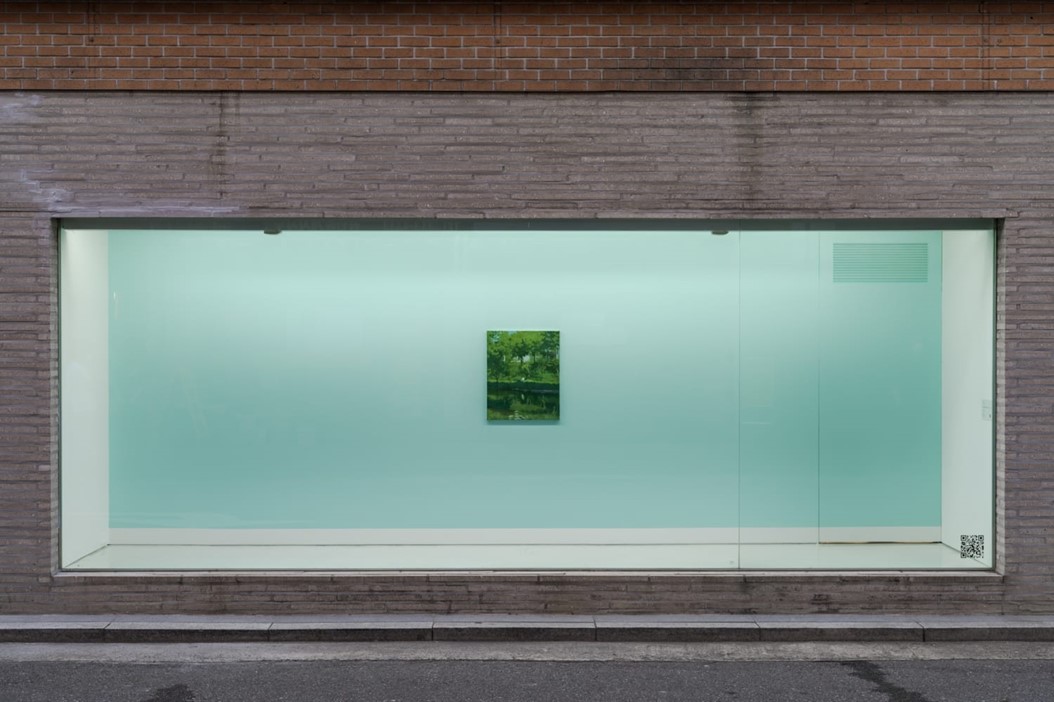
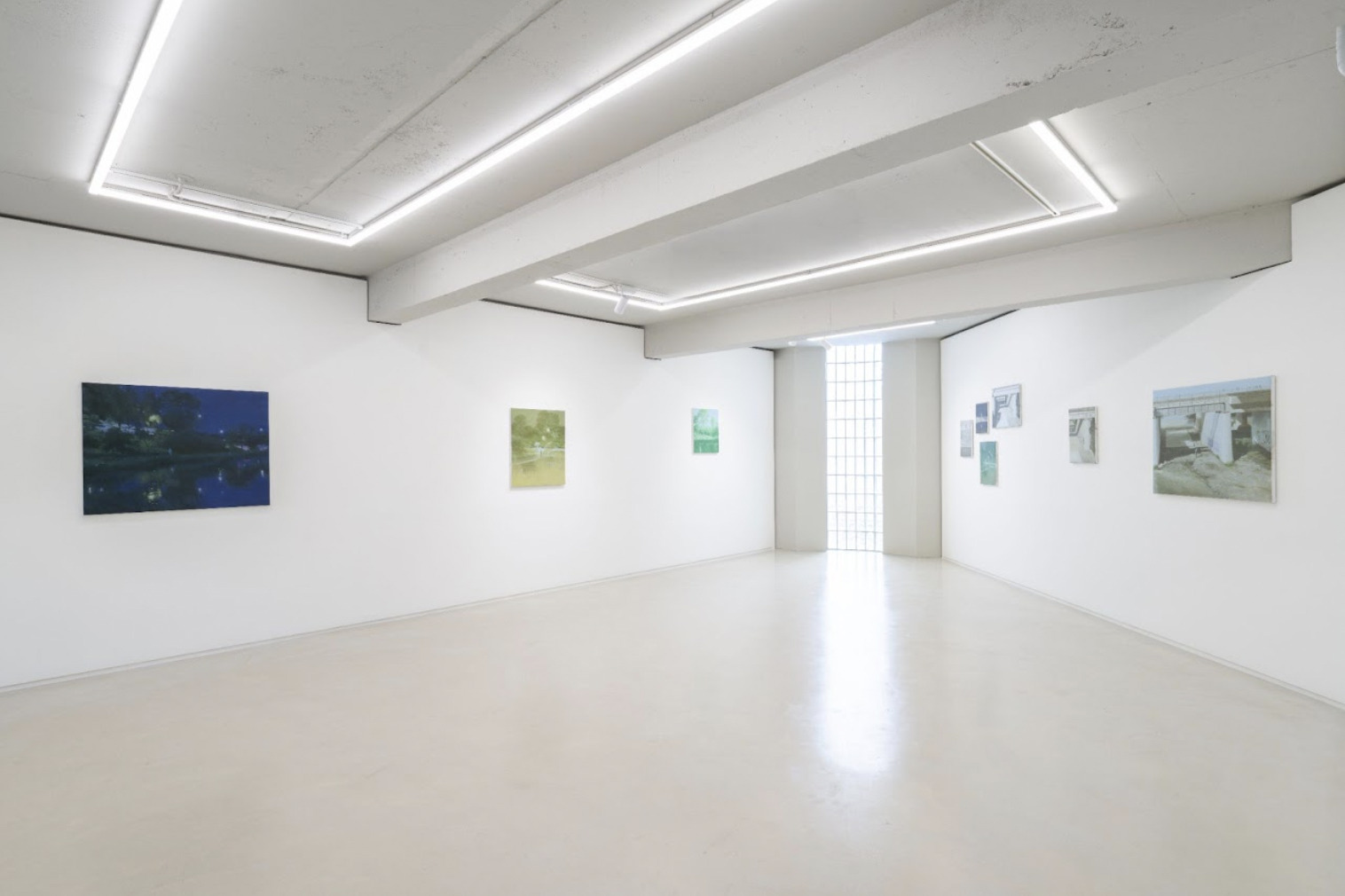
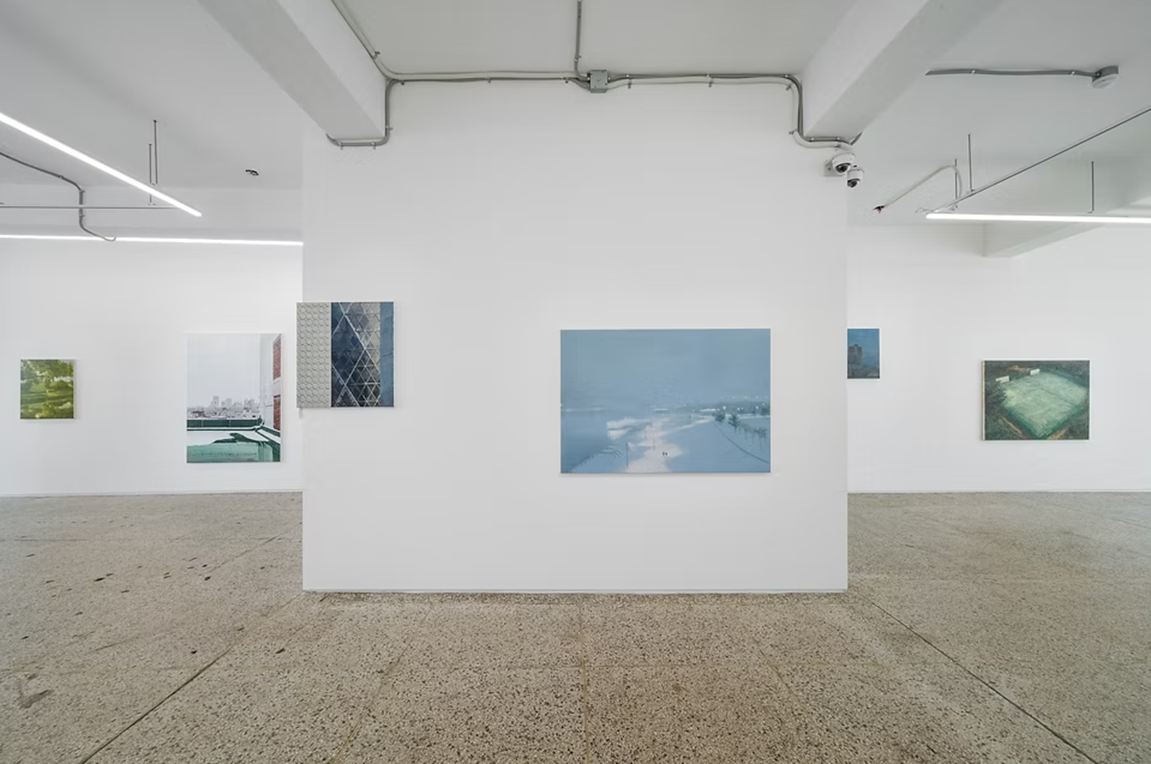
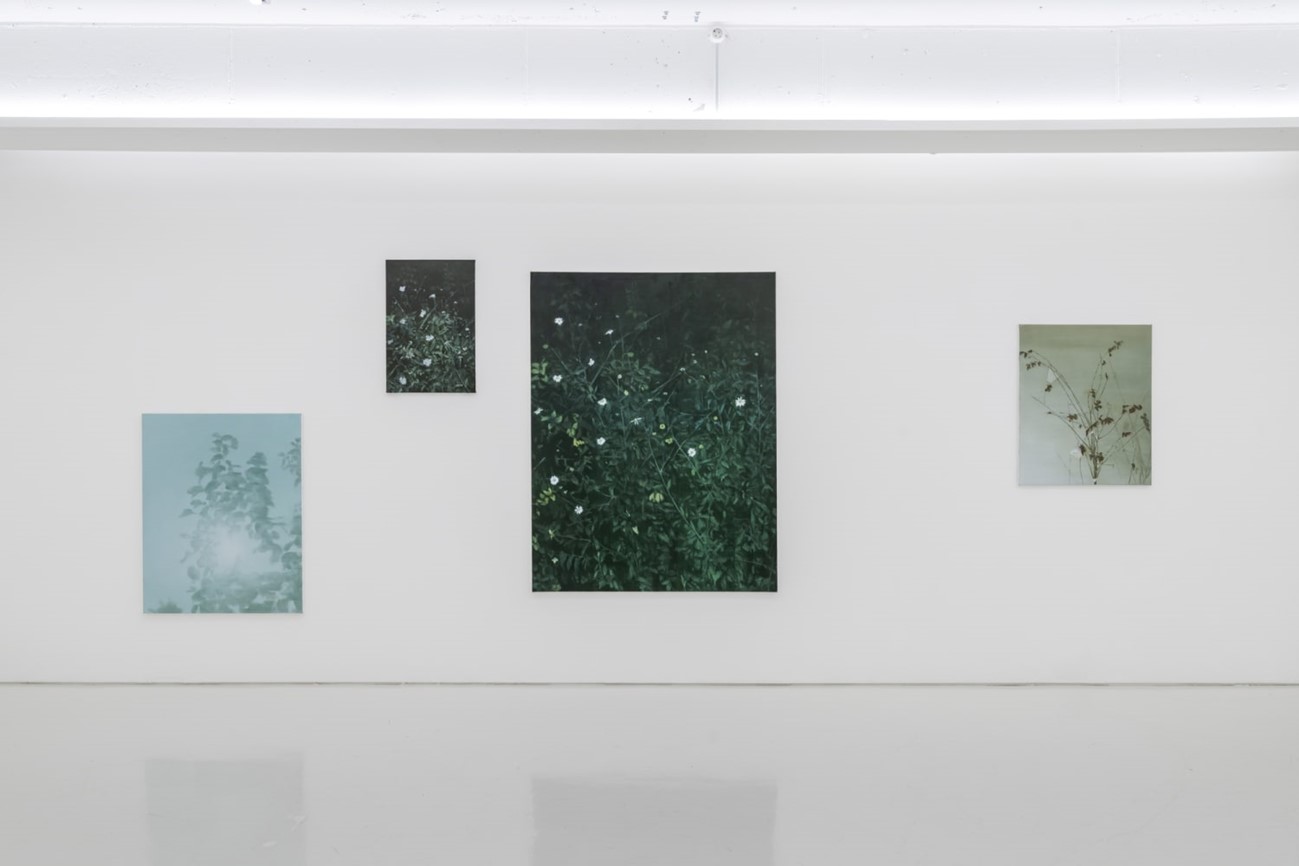
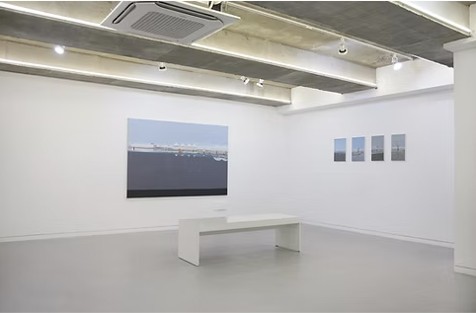
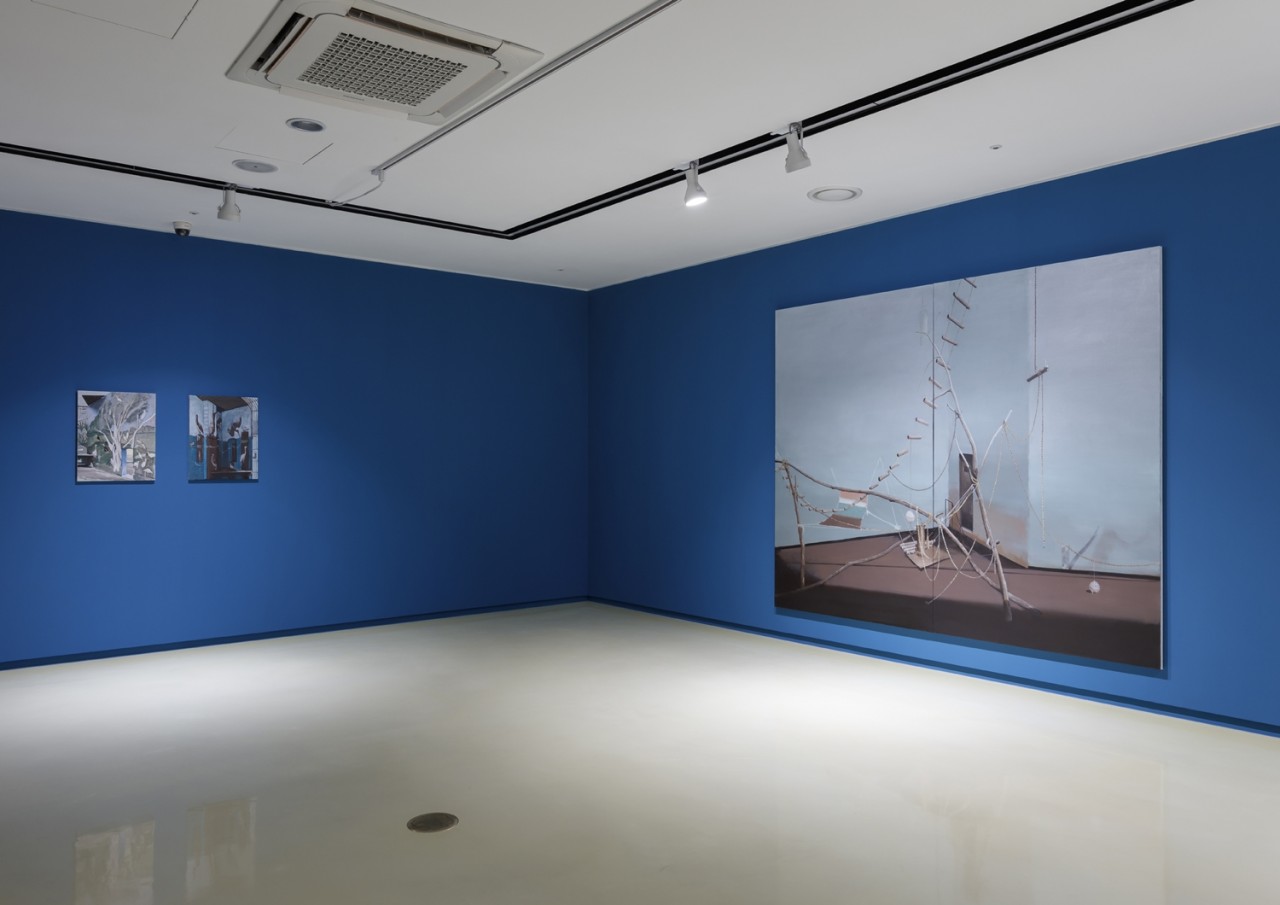
the Hangang riverside park. Although the paintings displayed in the 《Shade》 exhibition have an initial motif from
Moraenae, they are not necessarily connected to the place. At the same time, it
is hardly unrelated to it either. What I attempt to express in my paintings is
not the place per se, but it is approaching the emotions I have had while
staying there. The emotions contain a certain warmth.
As frames of photographs are one of the major resources I use to
create a particular impression of the selected landscapes, the process of
extracting parts from the given scenes’ entire context is crucial. While I was
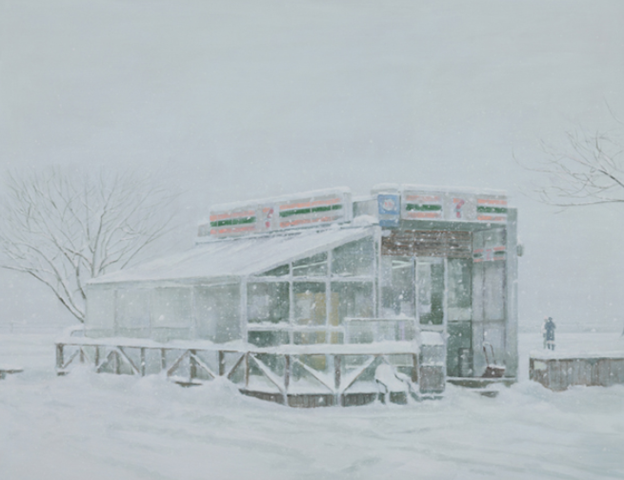
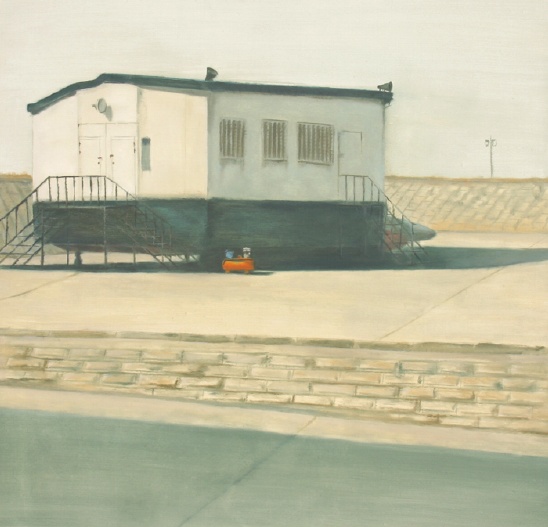
producing the ‘Prosaic Landscape’ series, the main figurative
elements such as a swimming pool, a car park, containers were easy to be
separated from their original backgrounds; however, in the Moraenae case, it
was difficult to detach specific sceneries as they share similar sequences
rather than standing out. Thus, I have tended to carefully catch subtle
instants by paying close attention to existing figures including trees,
bridges, piers or people whose shadows have a broad spectrum. Accordingly, it
turns out that paintings in this exhibition rather repeatedly deliver a certain
sentiment which can be defined as either melancholia or grief, instead of
presenting diverse sights of Moraenae. In terms of depicting the targets, I let
them remain in the state of arousing emotional responses rather than being
interested or indulging in their sensuous and aesthetic qualities.
I believe that there are delicate subjects for each painter. In my
case, the reasons I have these tricky things are both a matter of painting
techniques and my emotional attitude towards them. Nights and nature are my
things. I have always been hesitant about abundant and profound nature. I have
felt inadequate for communicating with nature to describe it; in other words, I
was too emotionally desolate to paint the invigorating spring or the fertile
summer. My mind was not simply enough to embrace four seasons. In addition, I
have naturally selected limited options since I was concentrating on conveying
social and psychological phenomena in my paintings more than adopting a
sense-centric approach towards the landscapes. Styles of representation are
still significant for me with regard to putting emphasis on the reality of the
depicted objects, whereas it was technically challenging to efficiently
demonstrate the complexity of nature with the same strategy.
I rarely painted nights in the past. It was demanding to figure
out what to show through nightscapes for me who did not want to mechanically
paint nights. When I was painting the nightscape of Moraenae, I found a clue
which helped me to have a deeper understanding about nights and darkness
in a phrase by a painter, Yong-Jun Kim(1904-1967)—‘the night is not
becoming dark yet it is letting you feel the dark’. In his era, lighting
was extremely rare so the night meant a pitch black. Kim believed that painting
layers of dark colors to demonstrate the night was a simple-minded
perspective. By insisting that the night could be visually achieved either in
the dark colors or the light colors, he stressed that the most important
purpose of the artistic production depended on what it ultimately implied
through its visuals. In order to support this belief—what it implied
consequently stemmed from its rationale, Kim cited an appropriate
example, Songhabowoldo, a painting by Sangjwa
Lee.
As I was preparing the paintings, I was naturally spending time
coming up with the title of the exhibition. One day, I was resting under the
hot sun rays after reaching the Mangwon-dong dock through the Moraenae trail.
Suddenly, I missed the wide shade under the pier of the Naebu Expressway. At
that moment, I realized that the place, Moraenae, played a comforting role as a
shade for the people passing there. Where you can come to after work,
where you can enjoy shades under the bridges, where you can work out for your
better shape or where you can peacefully watch fishes drifting under the water.
The moments of life holding plain but affectionate humane aspects are what I
discovered there.
- Artist’s Note