Olfactory Art?
Norwegian
artist Sissel Tolaas has long pursued work that extracts and exhibits the
scents of more than thirty-five cities around the world. Premised on the
inseparability of modern cities and their distinctive smells, her work became
widely known through Smell Berlin (2004),
presented at the Berlin Biennale, where she synthesized scents from four
different zones of Berlin. By granting all smells equal symbolic status—counter
to an aroma-capitalist world that favors only pleasant fragrances—she has been
dubbed the John Cage of olfaction. The comparison recalls Cage’s insistence
that no sound is inherently superior to another, that even silence deserves
equal regard.
American
artist Lisa Kirk, in her project Revolution Pipe Dream (2008),
produced a perfume called “Revolution” and presented containers of it as an
installation at a branch of the Museum of Modern Art in New York. She gathered
responses to a question posed to prominent leftist activists and journalists:
what scent comes to mind when you think of revolution? The resulting perfume
evoked tear gas, burning rubber, gasoline—odors far removed from the sweet
fragrances of the aroma industry, yet laden with social meaning.
There
is also Peter De Cupere, a self-proclaimed and widely recognized pioneer of
olfactory art, who authored an “Olfactory Art Manifesto” and positioned scent
itself as an exhibition medium. As an artist, curator, and critic, he has been
instrumental in shaping discourse around olfactory art. In his exhibition 《Smell of War》 (2015), he presented a work of
the same title, installing a synthesized scent of gunpowder and burnt wood to
evoke the smell of gas attacks—one of the first mass-killing weapons deployed
during World War I. He claimed that by installing the smell of lethal gas, he
summoned memories of the war that engulfed Europe. Such approaches are nearly
ubiquitous among leading practitioners of olfactory art.
In
Japan, the renowned olfactory artist Maki Ueda’s representative work Kōdō(2005) references the
traditional Japanese art of incense appreciation, alongside practices such as
ikebana or the tea ceremony. The work takes the form of a game in which people
from different villages smell each other’s local scents and share memories associated with place through
dialogue.
American
artist Brian Goeltzenleuchter likewise undertook Sillage(2007),
a project set in his hometown of San Diego, aiming to evoke nostalgia and
memory through the scents of various neighborhoods. Nigerian-born artist
Otobong Nkanga, based in Europe and a recipient of Korea’s Yanghyun Art Prize,
presented Anamnesis(2018), installing scents such as
coffee beans, crushed tobacco leaves, cloves, and spices at nose height in a
white cube, evoking memories of colonial trade in Africa.
Sensory Immediacy as a Critique of Representation?
And
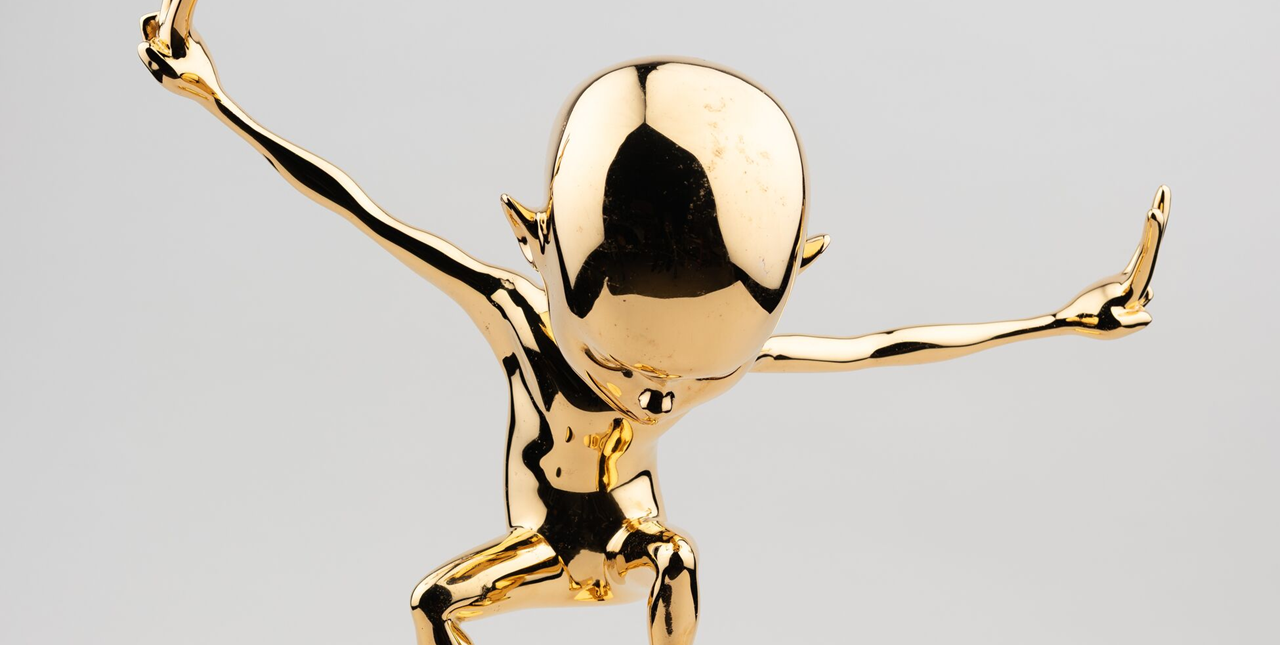
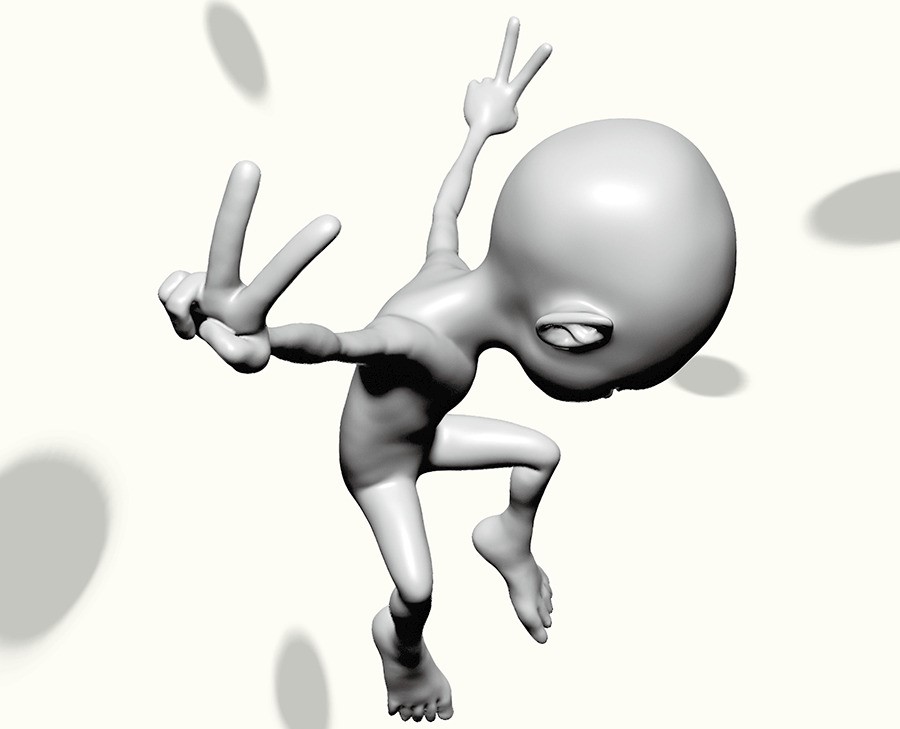
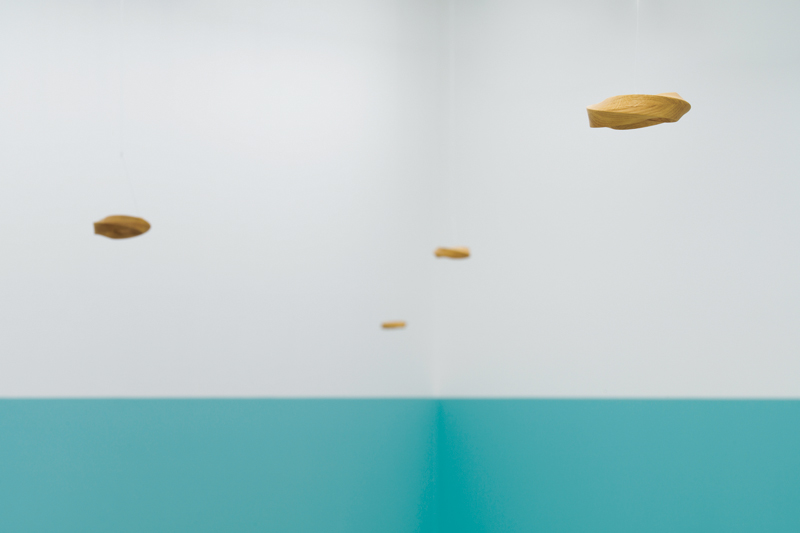
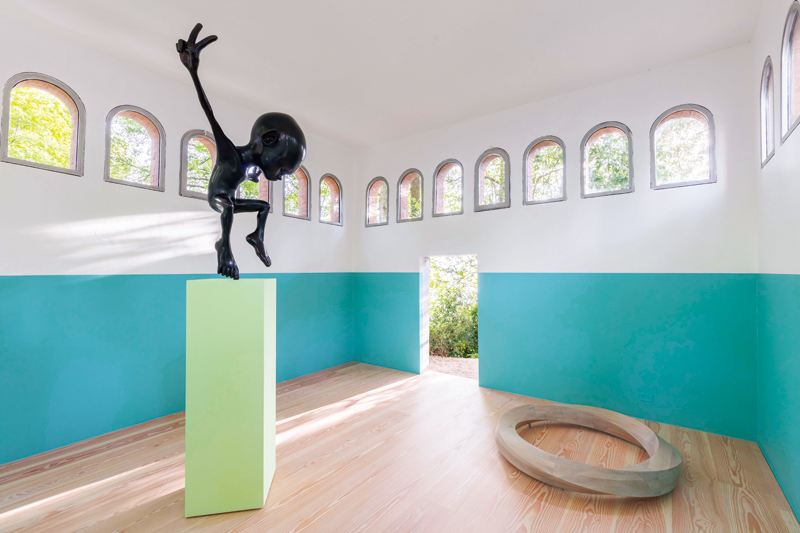
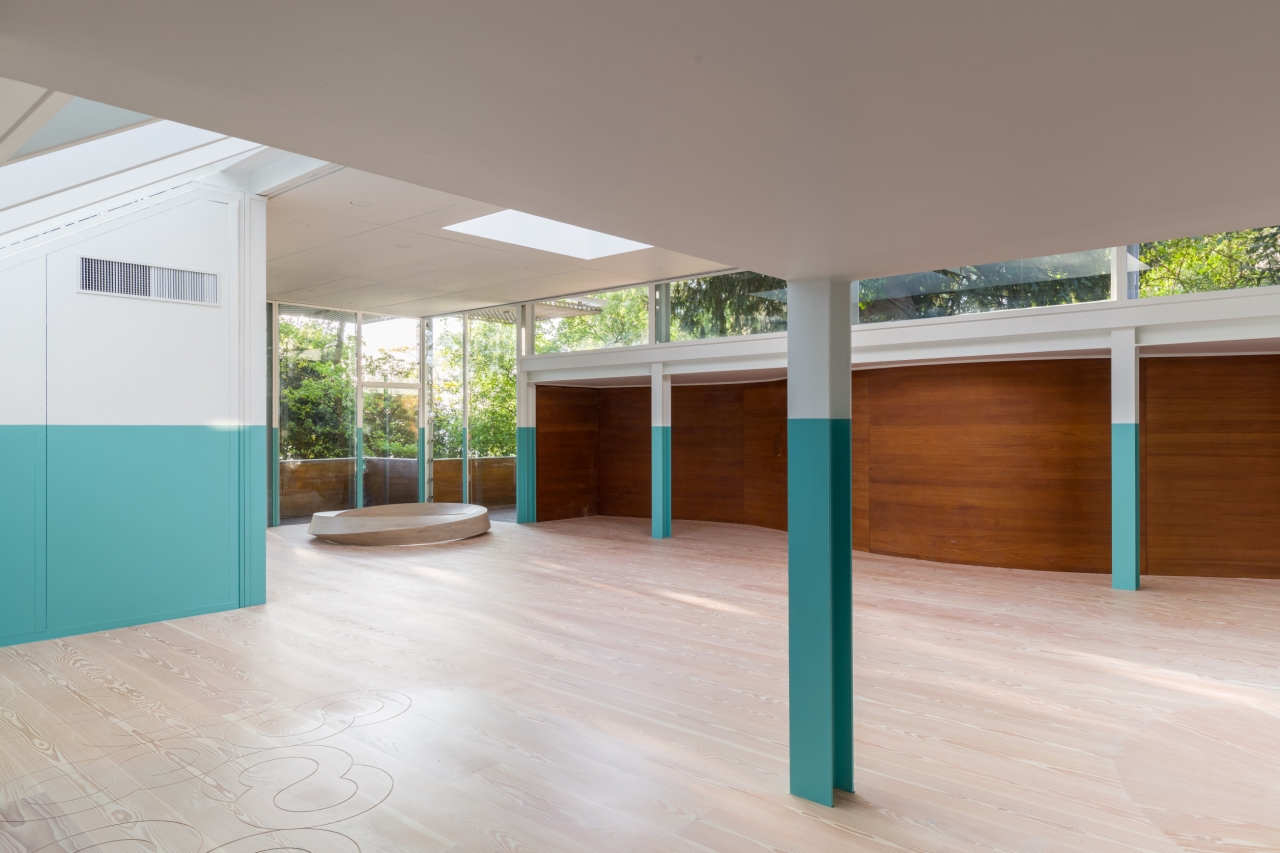
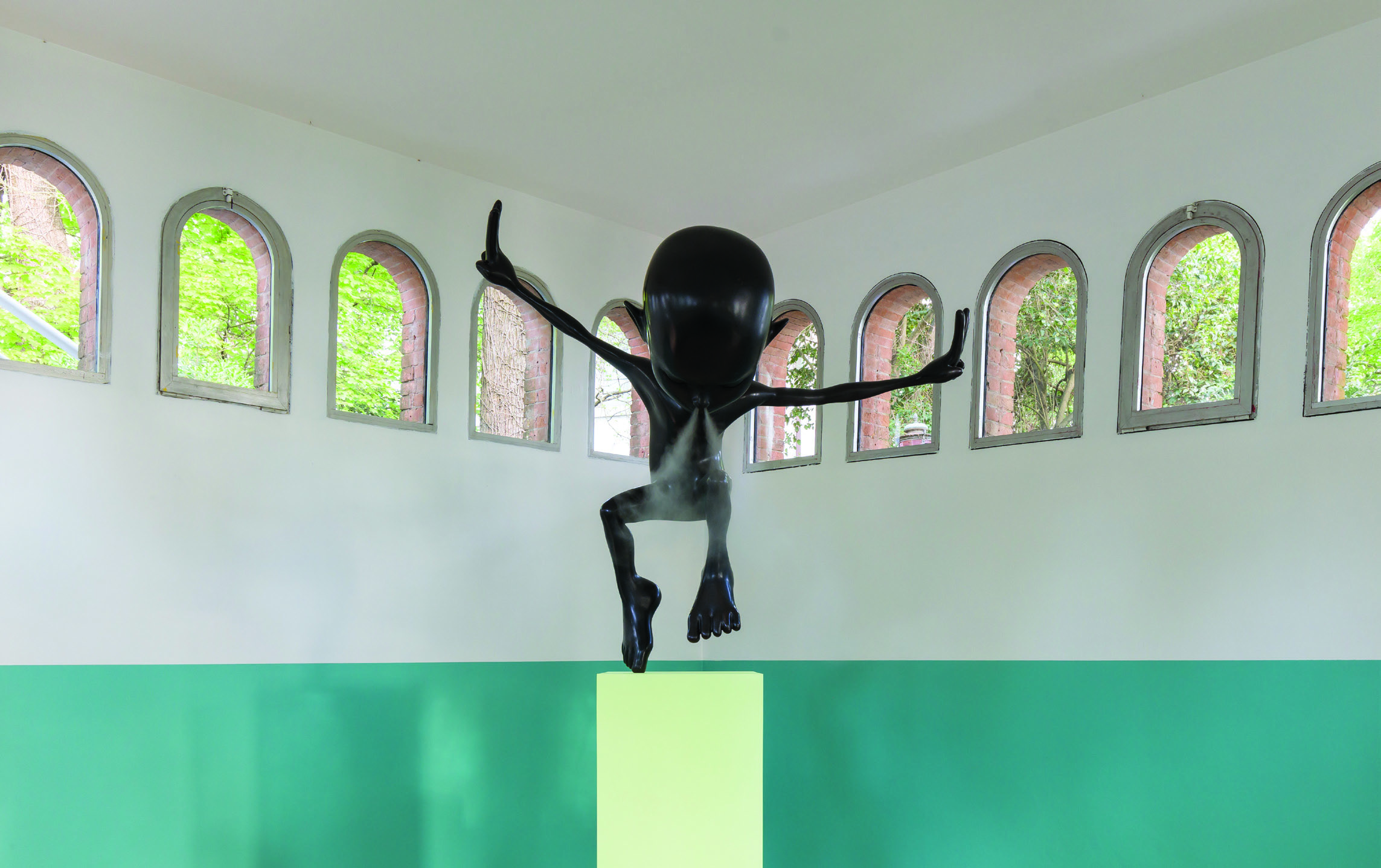
then there is Koo Jeong A’s Odorama Cities(2024),
presented at the Korean Pavilion of the Venice Biennale. Long working with
scent as a primary medium, her project is regarded as an extension of her
longstanding “scent project,” focusing on “how smell and fragrance act upon
memory and how we perceive and recall space.” Yet what dominates this project
is memory itself. By collecting over 600 individual “scent memories” through an
open call, Koo Jeong A appeals to the power of scent as a trigger of memory.
From
here, we may need to reconsider the characteristics of art that relies on
scent, rather than simply embracing the name “olfactory art” as a rejection of
visual media. Rather than grouping all scent-based works under that label, we
should examine the conditions that make olfactory sensation the primary
aesthetic experience. As already seen, memory is the central concern running
through such works.
Proponents
of olfactory art often mount a unified critique against visual centrism in art,
attacking ocularcentrism as a fatal flaw of modernity. References to Marcel
Duchamp—who condemned “retinal art” and exhibited scent—have become a cliché in
this discourse. Yet in the hands of olfactory art, ocularcentrism is oddly
diminished, reduced to a simplistic privileging of sight as a perceptual
medium. This is a superficial understanding. Critiques of the society of
spectacle, the image-saturated world, or the age of simulacra do not accuse
vision itself, but the reduction of the world to images.
What
is troubling in claims made in the name of olfactory art is not the elevation
of smell as the primary aesthetic sense, but the implicit premise that sensory
experience can be separated from cognition. Olfactory perception, too, passes
through layers of intellectual abstraction. As evident in all olfactory art
practices, scents are scientifically and artificially composed. Thus, olfactory
art is not purely sensory but closely entangled with social abstraction.
Any
sensory experience that is remembered, communicated, or shared must undergo
linguistic mediation, extraction, and abstraction. Even if olfactory art dreams
of becoming an art of pure presence opposed to representation, this is little
more than wishful thinking. A lilac-scented fabric softener is already an
abstracted smell, and the social and historical worlds from which such scents
originate are likewise abstracted. Olfactory perception, defended as pure
presence, is itself a highly concentrated form of representation.
This
condition is inseparable from recent trends in contemporary art often described
as an “aesthetic turn.” From the sublime, through the uncanny, to affect, these
concepts have successively foregrounded aesthetic experience as something
irreducible to language or cognition. While there is much to question in the
idea that ineffable sensory shock constitutes the essence of aesthetic
experience, it is worth noting the deep anxiety and skepticism about the
world’s knowability embedded in such claims.
The Smell of History
A
stubborn posture filled with mockery toward totality and disillusionment with
structures of historical intelligibility has often derided art as critique.
Anti-aesthetic practices rejected aesthetic autonomy and resisted confining art
within sensory experience. Yet anti-aesthetic does not mean anti-sensory.
Rather, it sought to reveal that no sensory experience is innocent, unmediated
by structures of domination. This could be called a “sensory hermeneutics of
suspicion,” or, borrowing Fredric Jameson’s term, a “poetics of social forms.”
Aesthetics
can be defined as knowledge that presupposes art’s autonomy and examines the
specific experiences embedded in aesthetic encounters. Yet the longstanding
debate over whether aesthetic experience can produce knowledge has perpetually
unsettled modern aesthetics. The recent hegemony of sensation—rejecting
cognition in art—has produced what might be called aestheticism. Think, for
example, of Jacques Rancière, who dismantles the bridge between experience and
knowledge, replacing critique with the distribution of the sensible. While
intriguing, such positions substitute sensory production for critique, despite
the fact that all sensory experience is socially mediated.
Olfactory
art, though seemingly about smell, thus appears as a provisional aesthetic
remedy for the invisibility of the historical and social world mediated through
our senses. Its appeal to memory reflects the rise of memory studies as a
substitute for historiography. Memory replaces history as a discourse,
privileging subjective individuals over collective historical subjects. In
post-historical thought, time dissolves into subjective sensation, and smell
becomes a sense suited to this condition—transforming time into space,
reconstructing unreachable pasts as spatialized worlds.
In
this sense, olfactory art aligns closely with presentism in contemporary art. A
sudden scent that irresistibly recalls the past signals a recoil from narrative
time. When continuity with the past becomes inaccessible, sensory shock becomes
a fragile bridge. Thus, olfactory art’s reliance on memory exposes a paradox of
time. Scent replaces history, freeing experience from totality, yet remains
deeply entangled with commodity logic and aroma capitalism, which neutralizes
unpleasant odors and sells pleasant presence. This illusion is more
powerful—and more reactionary—than visual illusion. No matter how one defends
olfactory art, it signals our failure of historical imagination.