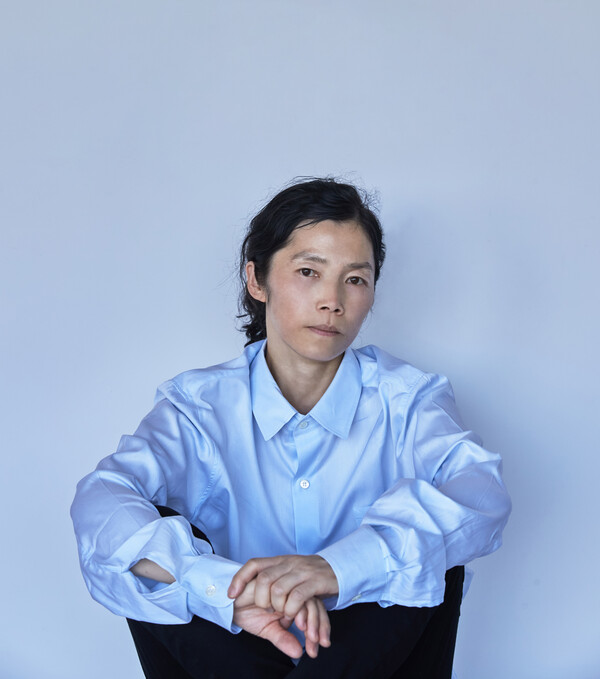
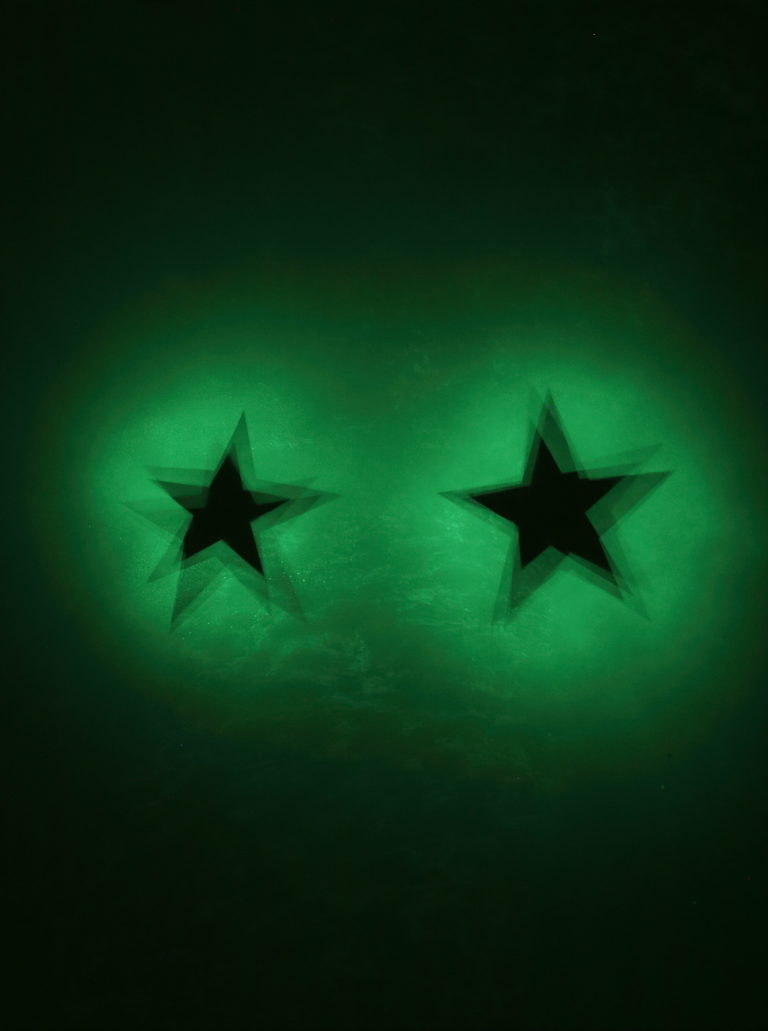
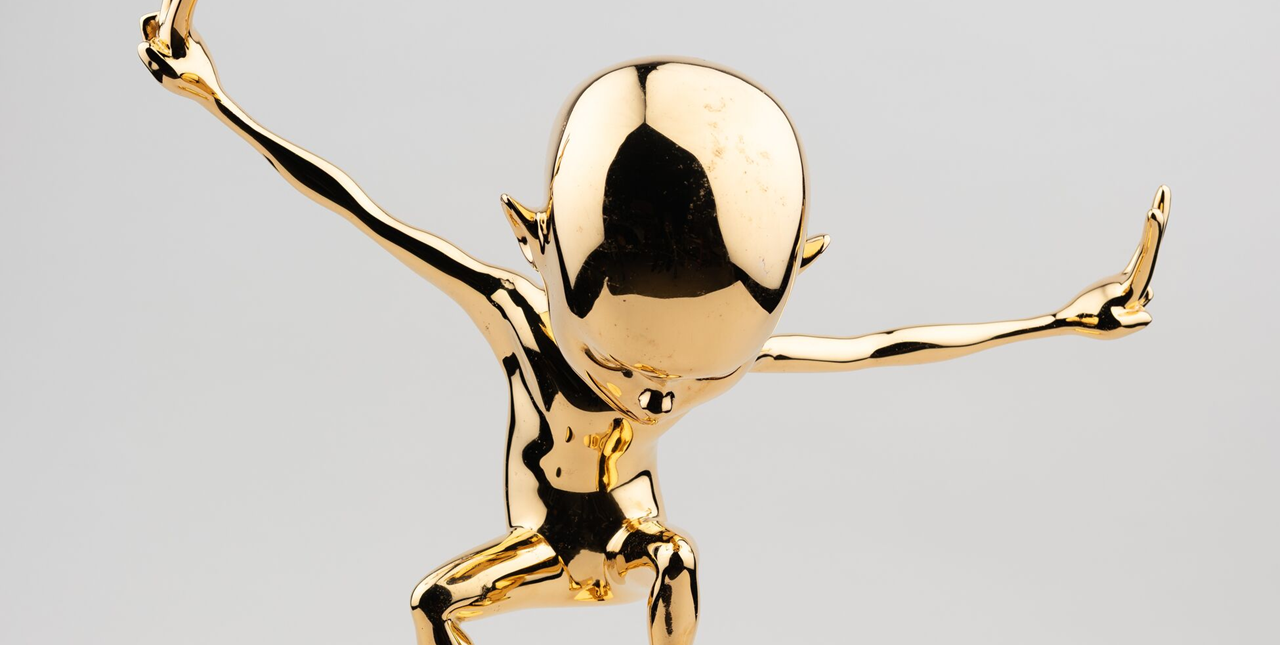
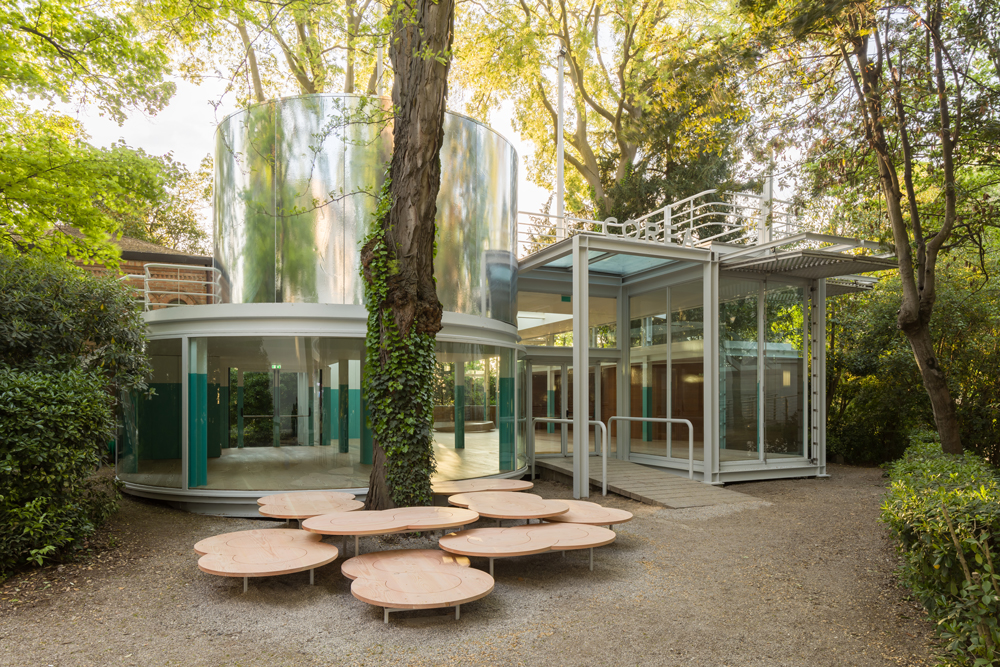
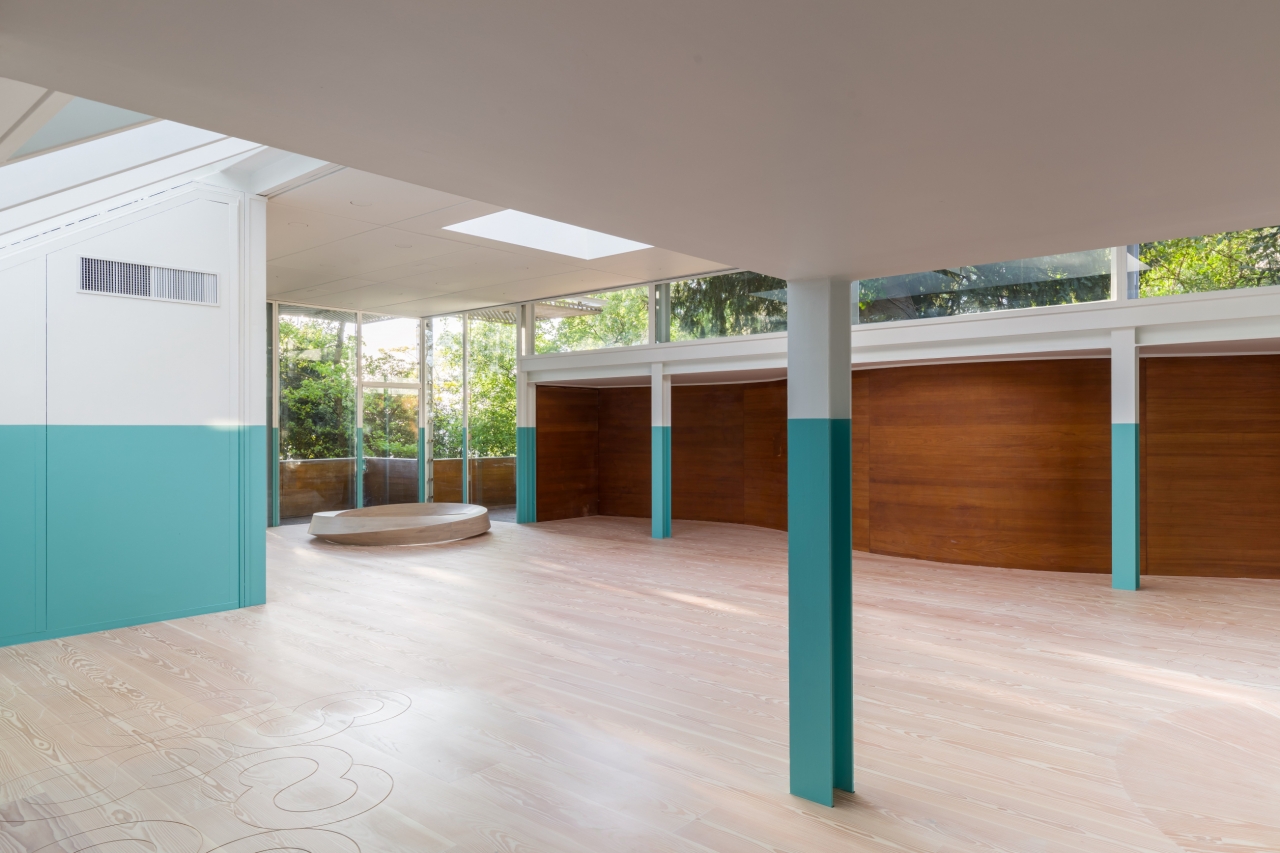
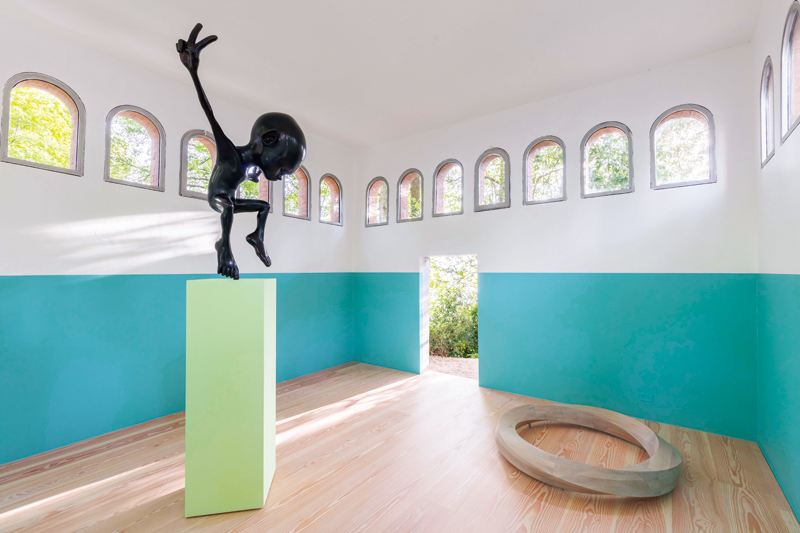
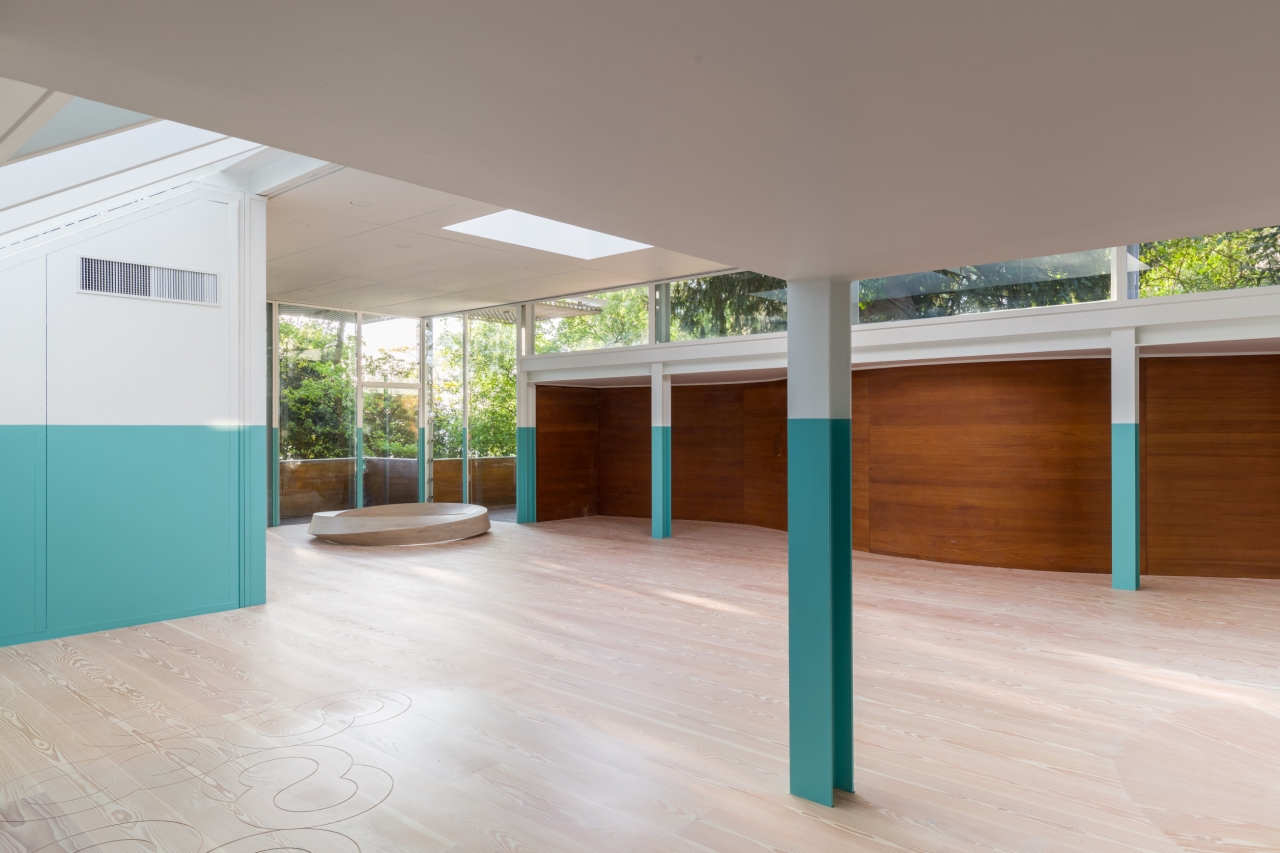
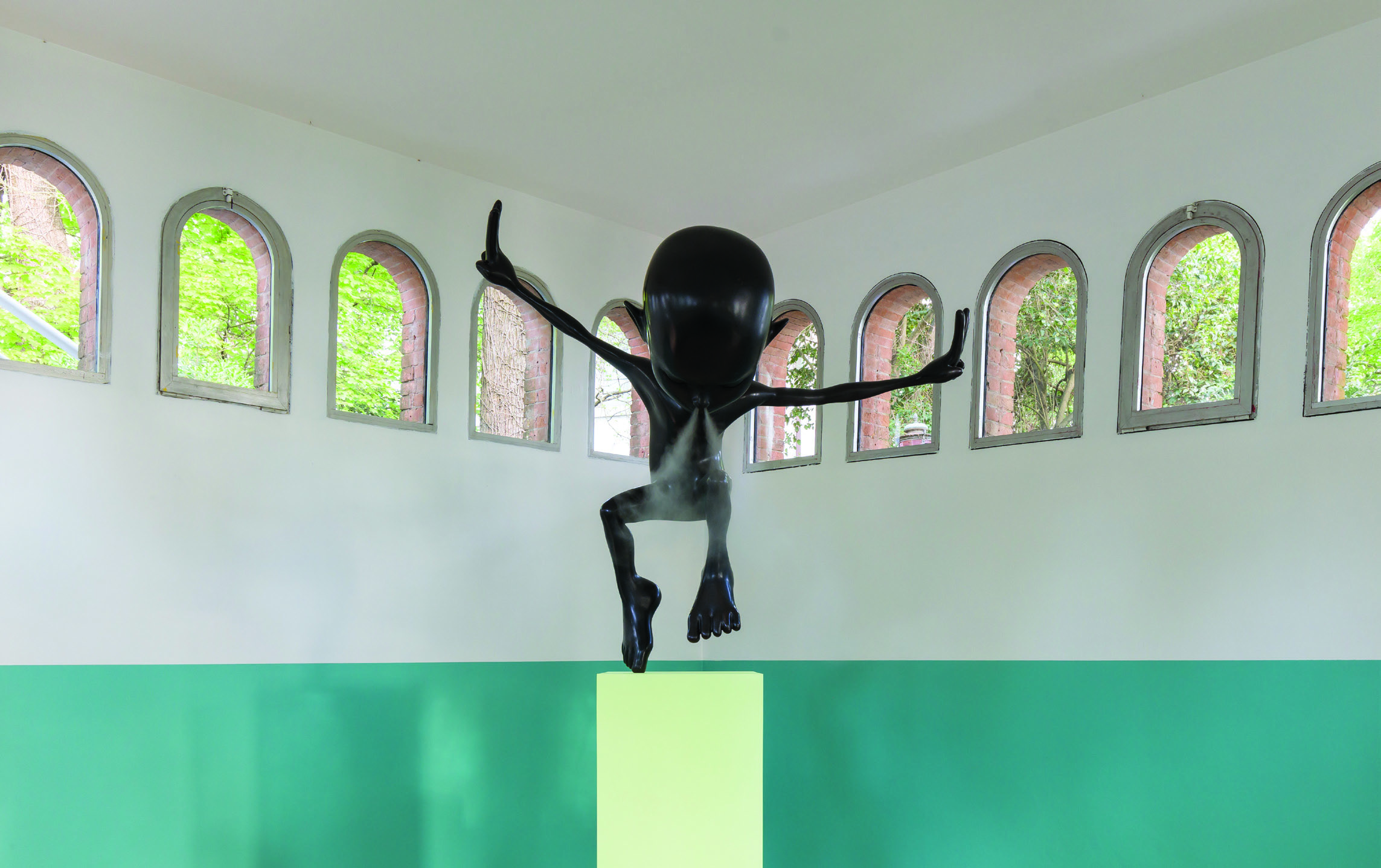
Installation view of 《Koo Jeong A – Odorama City》, Korean Pavilion, the 60th International Art Exhibition – La Biennale di Venezia, 2024 © Arts Council Korea

The Influence of a Conception of Time

In manuals that guide monks toward attaining a state of “absolute freedom,” Tibetan Buddhism defines the past, future, and present in ways fundamentally different from the conventional notion of time as we understand it. According to these teachings, “the past is empty and leaves no trace; the future has not yet appeared and is something entirely new; and the present is not something made, but simply exists as it is.”¹

This is neither a mechanical, linear conception of time measured by physical motion and quantity, nor a Kairotic, nonlinear conception grounded in subjective and qualitative temporal experience. Crucially, these manuals do not define the past as something accumulated. As a result, the past, present, and future are not bound together by relations of causality, and the logic that the present “simply exists as it is” becomes possible.

I believe that this Tibetan Buddhist conception of time has the potential to unsettle the themes of memory, archive, and subjectivity that contemporary aesthetics and art discourse have foregrounded since the late twentieth century as a counterforce to Western modernism. Furthermore, I see in it a clue for seeking a new paradigm shift—one that takes distance from postmodern understandings of humanity and history, as well as from anti-aesthetic artistic forms and attitudes. This is said with the culturalization of experiential memory solidified by academic jargon, the standardized visual formats of archive art, and the mass-produced, cookie-cutter images of individuality in mind.

Writer Han Kang once said in her Nobel Prize lecture that she had written the question “Can the present help the past?” at the top of her diary since her mid-twenties. However, as she began to come to terms with May 1980 in Gwangju in the early 2010s, she reversed the question to ask, “Can the past help the present?” and wrote Human Acts in response.² Many were moved by this.

Understanding Han Kang’s answer to that question as “yes,” people place hope in the benevolent influence of the past upon the present. But what if, like Tibetan Buddhism, we were to regard the past as an emptiness devoid even of traces? I do not interpret such a view as a negation of the past as nothingness or void. Rather, I wish to argue that it affirms the past by encompassing the absolute existence of a unique kind of being—nature (physis) itself, extending not only to the immaterial dimension but also to the physical order that governs generation and extinction.

It is the work of the artist Koo Jeong A, whom I will now discuss, that led me to understand the Tibetan Buddhist worldview in this way. The relationship between past and present that emerges as she absorbs people’s private experiences and memories and casts them into art, as well as the spatiotemporal properties of the here-and-now manifested in her installations, are highly unusual. As I reflected aesthetically on what constitutes this peculiarity, I found myself suddenly accepting that conception of time. In short, Koo Jeong A’s art seems to view the past, present, and future as autonomous singularities. And rather than deducing the substance of the present from the continuity of causal time or the accumulation of experiential facts, it appears to accept the present as existence itself—as phenomenon and being.

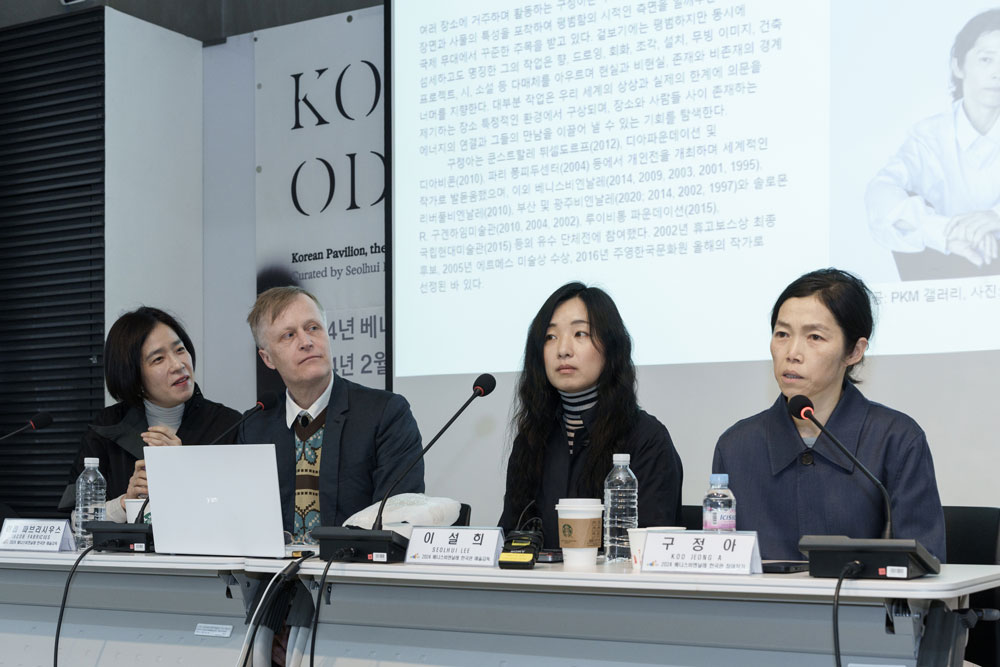
《Koo Jeong A – Odorama City》 (December 20, 2024–March 23, 2025), held throughout the entire Arko Art Center, is a “homecoming report exhibition” newly reconfigured for domestic audiences, based on the exhibition of the same title presented at the Korean Pavilion of the 60th International Art Exhibition – La Biennale di Venezia (April 20–November 24, 2024). Koo Jeong A created the work as the representative artist of the Korean Pavilion, and the exhibition was realized under the joint artistic direction of Korean curator Seolhee Lee and Danish curator Jacob Fabricius.

Founded in 1895, the Venice Biennale is not only the longest-running exhibition in history but also the most prestigious among the more than 290 biennials worldwide.³ It takes place every two years across the city of Venice. The main exhibition is held at the Arsenale and Giardini, while the national pavilions are located in the Giardini. The Korean Pavilion, established in 1995 as the 26th national pavilion, has presented a total of fifteen exhibitions up to this year, marking its 30th anniversary.

The Korean Pavilion exhibition—organized around a structure of an artistic director (formerly commissioner until 2015) and participating artist(s)—carries the weight of representing and driving the discourse and aesthetic forms of contemporary art, both domestically and internationally.⁴ In this context, Koo Jeong A’s 《Odorama City》 is exceptional, as it addresses contemporary spatiotemporal qualities, the relationship between past and present, and individual mind and perception through the extremely present and ephemeral phenomenon of “scent or smell.”

The unfamiliar term “odorama” is a neologism coined by Koo Jeong A, combining “odor,” meaning scent, and “-rama,” from drama. Literally translated as “a drama of scent,” and considering the etymology of both words as well as the exhibition title, it may be interpreted as something like “a performative narrative of cities entangled through scent/smell.”⁵ In the Korean Pavilion exhibition, those cities were limited to the Korean Peninsula. In the summer of 2023, the artist and the exhibition preparation team issued an open call to people living in Korea, or at least those with ties to Korea, asking about “memories of scent associated with Korean cities or one’s hometown,” or “scent memory.”⁶

Approximately 600 intimate scent/smell memories were collected. The artist categorized them into several thematic keywords, and perfumers from Korea and abroad collaborated with her to create scents and commercial perfumes based on the participants’ stories and keywords—sixteen in total. These included phrases such as “alcohol floating in the air mixed with acrid cigarette smoke,” “the scent of mud blended with fermented kimchi,” “the lyrical smell of grandparents’ homes,” “public bathhouses,” and “old electronic devices.”⁷ At the Korean Pavilion, these scents were presented as immersive installations, while the participants’ stories were shared through the pavilion’s website.

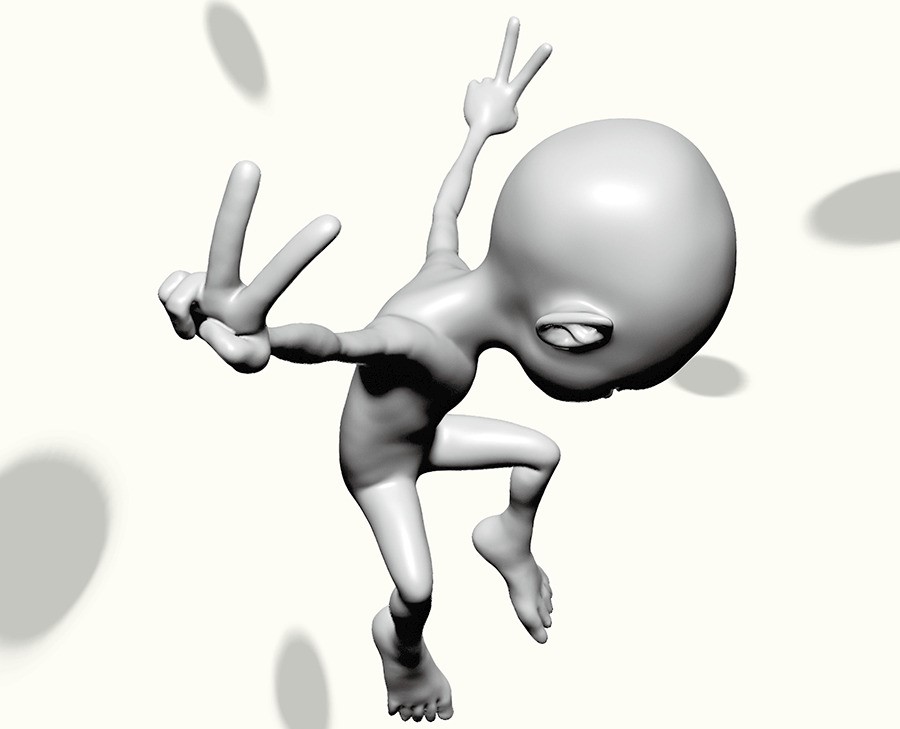
At this point, 《Odorama City》 diverges into two versions: the Korean Pavilion exhibition in Venice and the homecoming exhibition in Seoul. Due to the small scale of the pavilion and its architectural structure—a semicircular glass façade tucked into a corner of the Giardini—the presentation and realization of the works faced limitations. As a result, Koo Jeong A and the artistic directors concentrated the scent narratives of the open call participants—the dramatic foundation of the exhibition—online, while exercising curatorial ingenuity in the pavilion space by presenting posthuman sculptures resembling cosmic embryos or young Zen monks, alongside wooden sculptures in the form of a Möbius strip.

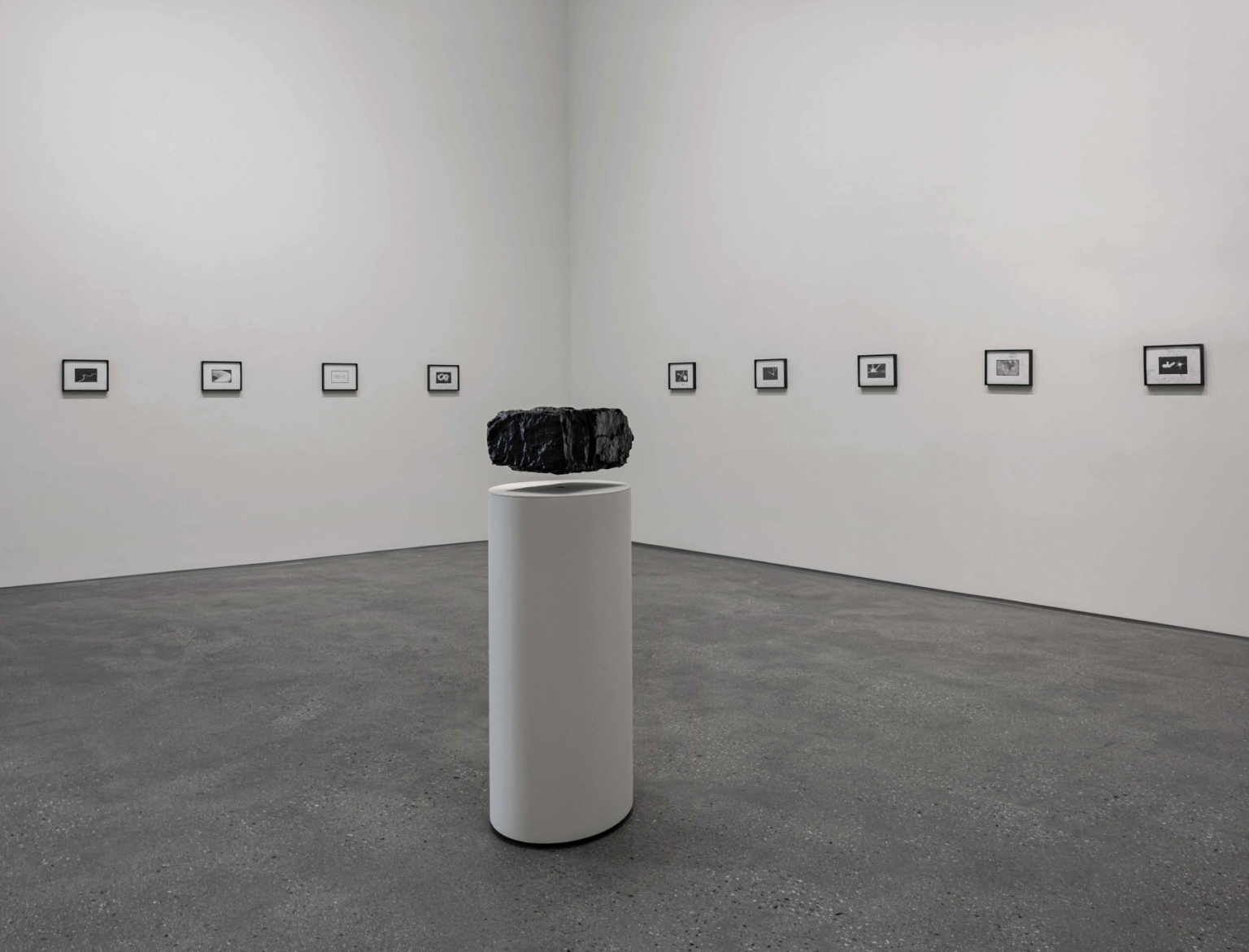
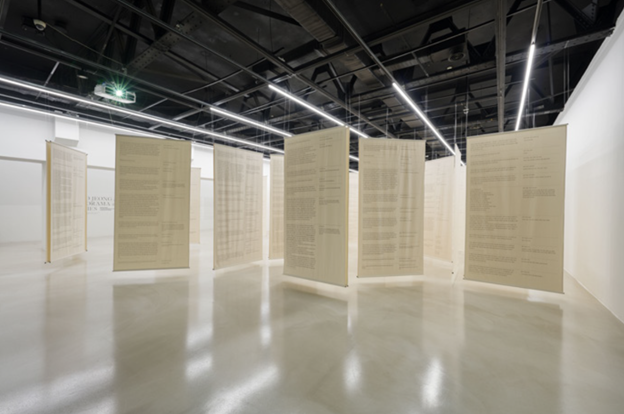
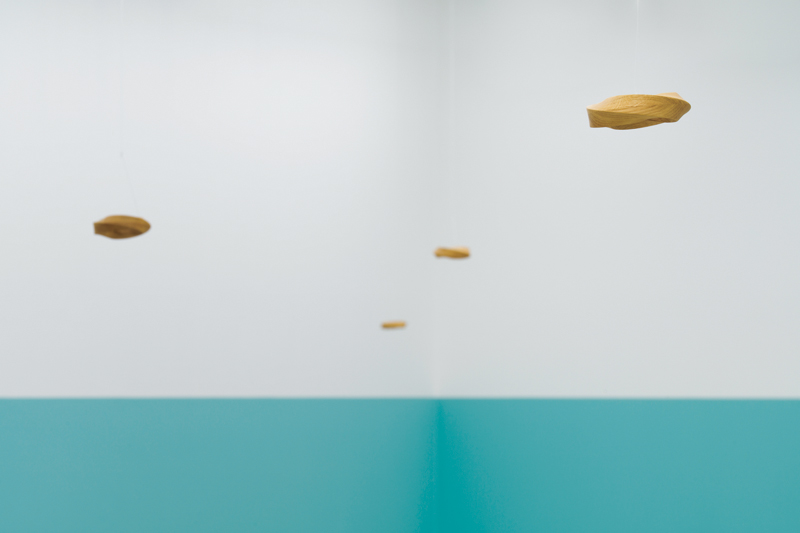
By contrast, the homecoming exhibition carefully and precisely inscribed the stories and sentences of over 600 participants onto 120 banners, allowing visitors to read and view them throughout the expansive first-floor exhibition space of Arko Art Center. Interest in these stories—described as the exhibition’s “behind-the-scenes storytelling” during the Venice Biennale—continued, and upon returning to Korea, they were no longer relegated to the background of the artwork but foregrounded as language on ivory fabric. Meanwhile, on the second floor of the museum, very small Möbius-strip wooden sculptures floated in the air like constellations in the cosmos, emitting faint scents and drawing viewers into moments of enchantment.

Installation view of 《Koo Jeong A – Odorama City》, Korean Pavilion Homecoming Exhibition, 2024, Arko Art Center © Arts Council Korea

Smelling Life and Absence: Over 600 Korean Scent Memories

In fact, I myself am one of the more than 600 participants in the open call. When I received the request email from the two artistic directors, it had been less than a year since my father passed away, and not even three months since my mother died six months later. Around that time, I kept my father’s white undershirt and my mother’s thin scarf on either side of my bed, pressing them to my nose each night, inhaling their scent and weeping. By clinging to the bodily traces and life smells embedded in their belongings, I believe I endured the grief of the present.

Thus, when I was asked to participate in Koo Jeong A’s 《Odorama City》 by sharing a scent/smell story, I felt grateful and even happy. How wonderful it would be if my parents could be commemorated within an artwork. But more deeply, as someone engaged in aesthetics and art criticism, I hoped—through the art of Koo Jeong A, whom I have long acknowledged as possessing the clearest sculptural language and the most abstract mode of thinking among contemporary Korean artists—to sustain the impossible relationship between my parents’ absence and my own presence. That is, my here-and-now of smelling life in the objects that once enveloped their bodies.

Although my story has grown long, what I wish to emphasize is the non-conceptual and non-volitional impact of Koo Jeong A’s art, as well as the present time that becomes possible through her works and installations. At first glance, the hundreds of scent/smell memories might seem like a recollection of accumulated past experiences. In reality, however, like all immaterial beings, they are intermittent and present. Stimulated by a particular smell, we recall something and then lose it; we laboriously distinguish between past, present, and future tenses, yet we always find ourselves already situated in the sheer existence of the present.

Tibetan Buddhism teaches that “pure and transparent awakening” is neither a transcendent life beyond this world nor a realm of layered old memories, but the moment of seeing oneself as one is.⁸ I believe that this is the artistic potential Koo Jeong A was able to secure by embracing the scents of present memories—filtered through others’ experiences—as a non-formal source of her work. Whether it is the future value of the artwork projected by the artist’s intention or the past experiences evoked by the contributors’ memories, 《Odorama City》 becomes, for viewers, a set of spatiotemporal conditions for pure and transparent awakening—reading the words on the banners and inhaling the composed scents.

Early in her career, Koo Jeong A presented a work titled Wardrobe of a Sweater, in which mothballs were installed inside a small wardrobe in her Paris studio. Over the course of more than thirty years, she has varied and deepened the theme of “scent” through installations such as block-shaped chewing gum (strawberry, green tea, mint, lemon), an 80-centimeter-diameter mothball installation, and diffusers installed on a disused platform of the London Underground. The two artistic directors of the Korean Pavilion wrote that “[Koo Jeong A’s] interest in exploring the essence of scent and the process of inhaling and exhaling molecules connects to her themes of immaterialism, weightlessness, infinity, and levitation.”⁹

In this light, I would like to quote curator and architect Frank Boehm and describe Koo Jeong A as creating, through the universal genre of “art,” a cosmos that affirms “the action of various forces and other immaterial effects.”¹⁰ Because these forces and effects are unique to each of the more than 600 stories, Koo Jeong A’s 《Odorama City》 forms a singular “cosmos of scent-memory.” Smells stored within someone’s inner self or sensory memory are utterly unrepresentable and nearly impossible to share with others. Yet they are as real as the fact of our existence itself—diverse in proportion to the multiplicity of our beings, and capable of empathy insofar as we live under the same spatiotemporal conditions. In this sense, Koo Jeong A elevates others’ scent memories from the level of singularity to that of universality. It is a procedure as delicate and respectful as it is abundant.

Finally, I wish to remember someone else who cherished scent under different conditions. That person is the late Taehui Kang, a respected art historian and critic in the Korean art world. She passed away several years ago, and I understand that she departed quietly and neatly, much like her character in life. The first volume of the “Museum-in-a-Book” series, which she personally curated and published by inviting artists, was devoted to “scent.” In the editor’s note included at the end of Scent, published in 2009, she wrote her own story of scent.

She recounted how she had long intended to revisit a beach on the East Sea coast she had visited decades earlier, but never managed to find it; later, upon traveling to the South Sea, she realized that the East Sea beach was connected to her as a “scent.” In the book, she writes: “The fresh smell of the sea that exists nowhere now (…) That smell—unrelated to fishiness and difficult to describe precisely—touched the apex of memory through absence, and in an instant I realized that my clumsy journey of memory had likewise ended in confirming absence: a journey of seeking my own sea’s scent, one that transcended the gap of time and space.”¹¹ Here, once again, we encounter a subject of pure and transparent awakening.


Notes
1. Padmasambhava, The Tibetan Book of the Dead, trans. Robert A. F. Thurman (English), Jung Chang-young (Korean), Sigongsa, 2000, p. 97.
2. Han Kang, “Han Kang’s Nobel Lecture, Nobel Prize in Literature Laureate 2024,” Svenska Akademien, The Nobel Foundation, 2024, https://www.nobelprize.org/uploads/2024/12/han-lecture-korean.pdf3. Biennial Foundation, https://www.biennialfoundation.org/network/biennialmap/ (January 14, 2025).
4. Arts Council Korea, “List of Past Commissioners and Participating Artists of the Korean Pavilion at the Venice Biennale,” https://www.arko.or.kr/biennale/content/643 (January 21, 2025).
5. The Latin etymology of odor means “scent” or “smell,” while the Ancient Greek etymology of drama means “action.”
6. Seolhee Lee & Jacob Fabricius, “Preface,” Korean Pavilion, The 60th International Art Exhibition – La Biennale di Venezia: Koo Jeong A – Odorama City, Arts Council Korea, DISTANZ Verlag, 2024, p. 30.
7. “Index of Scents,” ibid., pp. 478–486.
8. Ibid.
9. Seolhee Lee & Jacob Fabricius, “Preface,” ibid., p. 25.
10. Frank Boehm, “Landscape in the Work of Koo Jeong A,” ibid., p. 105.
11. Taehui Kang, “Editor’s Note: A Story of Scent,” in Scent, curated by Taehui Kang, Sigongsa, 2009, no page number.

References