/Form, Matter
For Shin and Kim, who have been
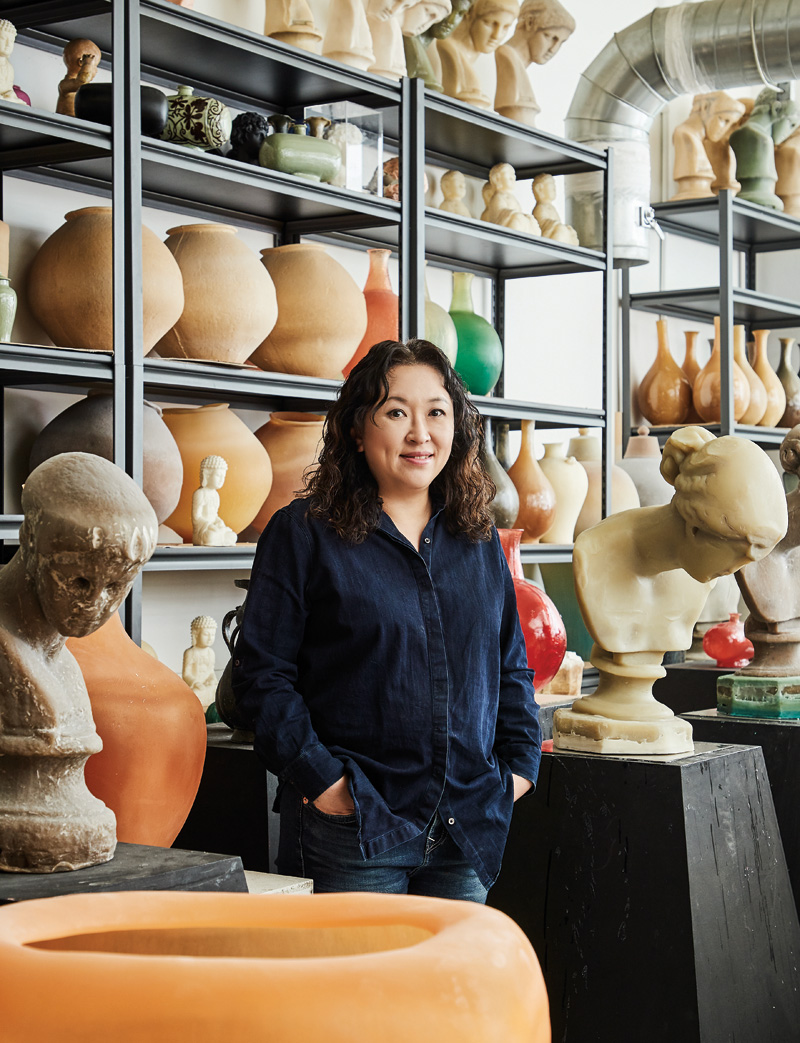
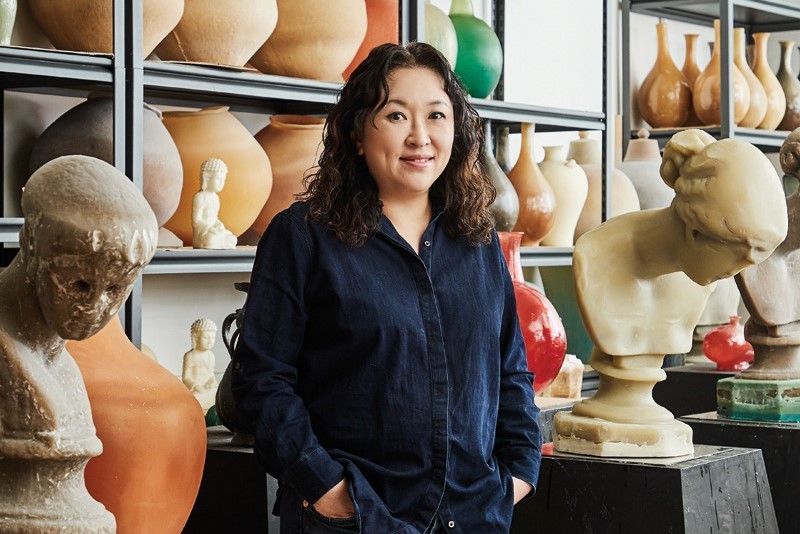
long dealing with soap and resin, respectively, as their work medium, the
material properties form the basis of their work and proceed to the realms of
sculpture and painting. Shin has tightly woven the relationship between form
and matter in regard to temporality. Since 1998, she has been drawing attention
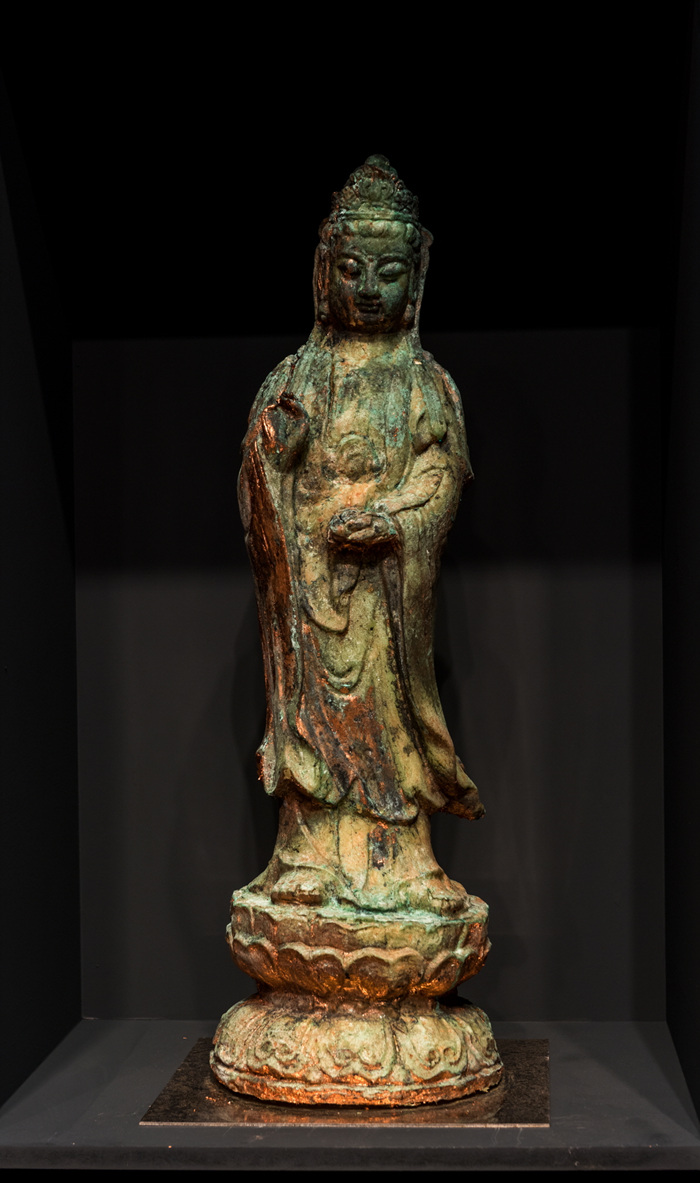
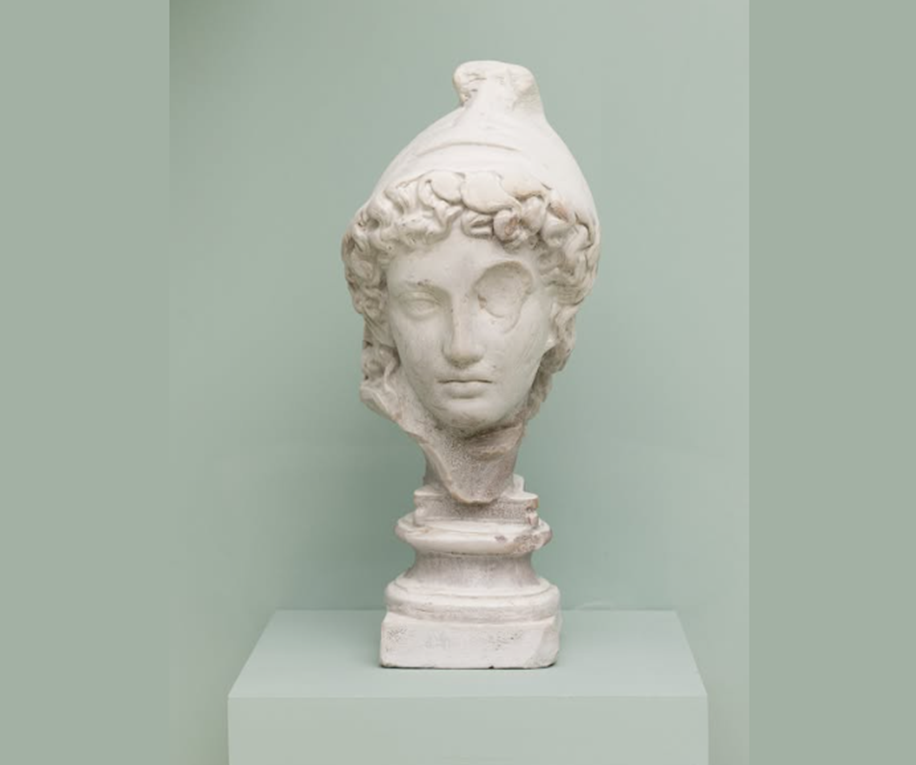
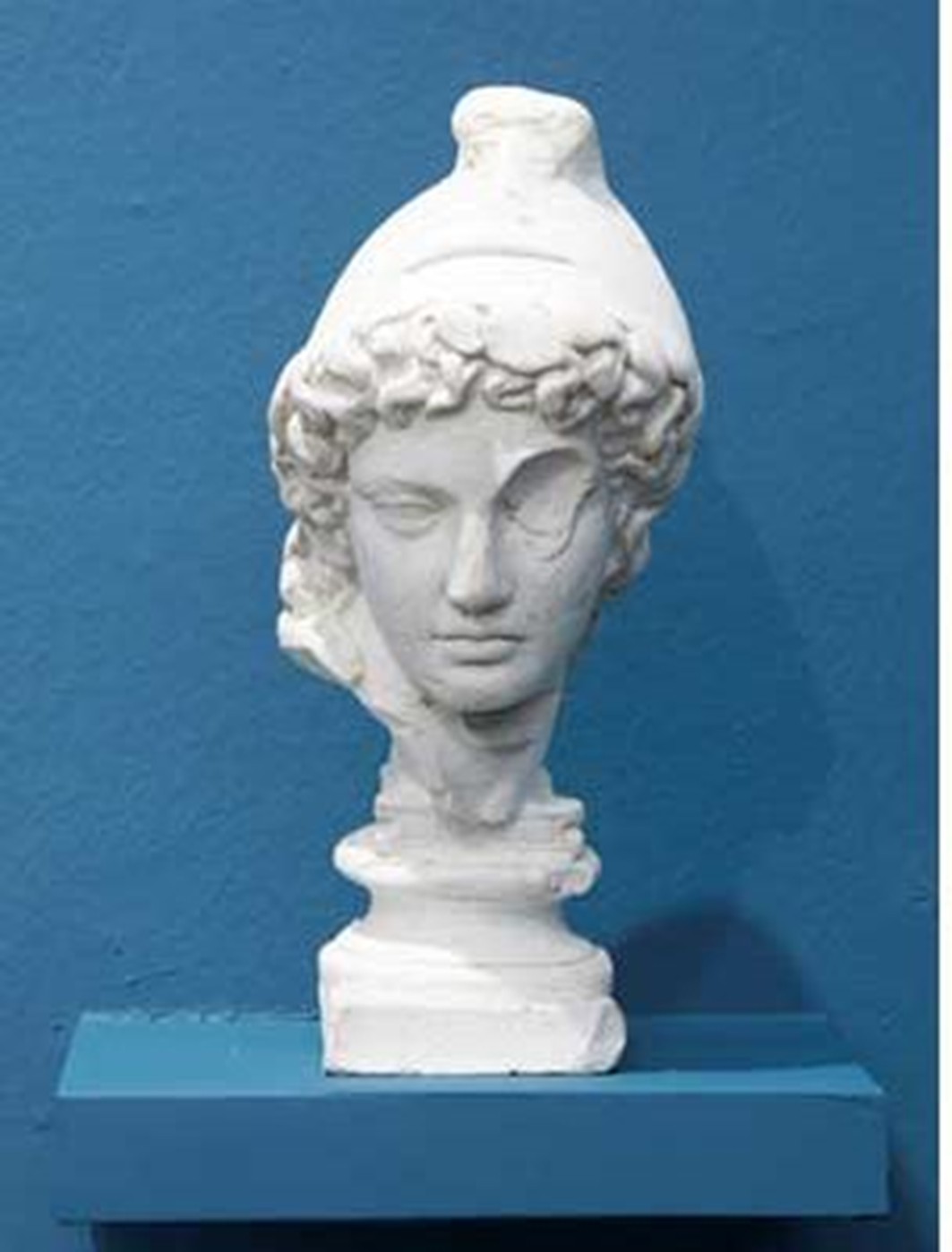
as a 'soap artist' by using soap meticulously (yet incompletely) to create
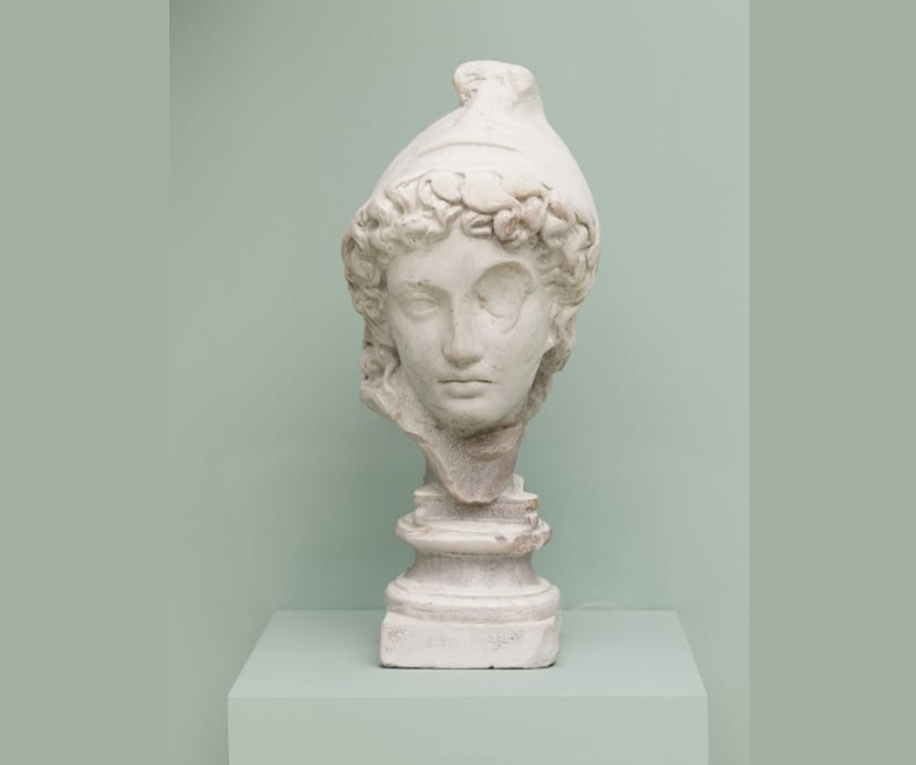
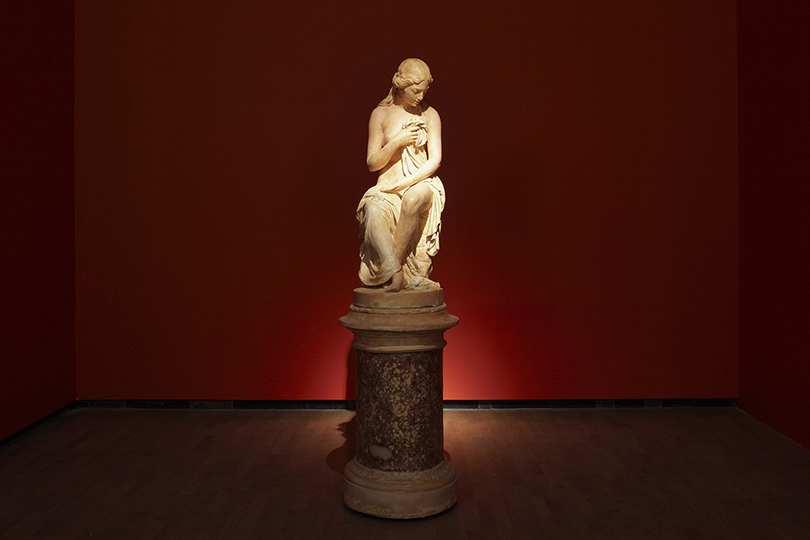
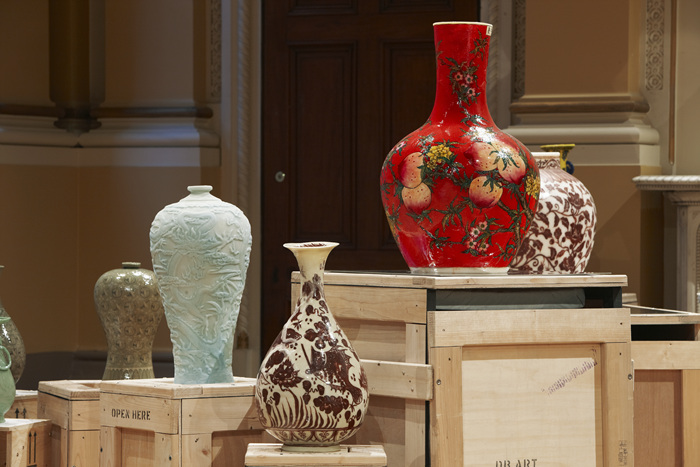
Buddha statues, Western classical sculptures, ceramics, and things that are
representative of certain cultures.
The work translates historical relics and
artworks prone to wear and vanishing over time, utilizing soap as a medium that
easily deforms and disappears depending on the surrounding conditions
emphasizing the material specificity in her work. In addition to the problems
of presentation and authenticity from a replica or original copy, the
physicality of soap, a daily consumable used as a substituting material for
sculpture, conflicts with the authority of sculptural form and questions the
iconic or absolute value of relics, and civilization. By observing the
condensed time in her work, the meaning of sculpture can be redefined.
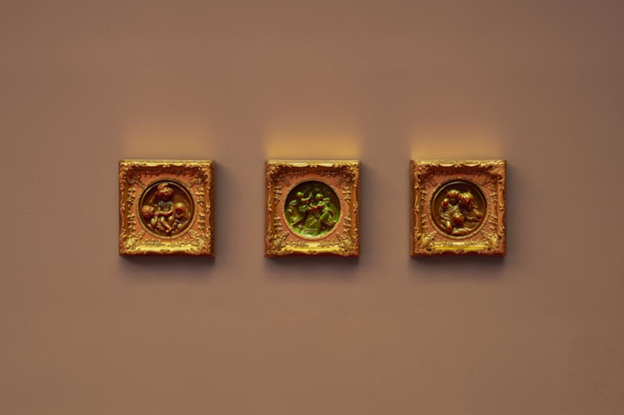
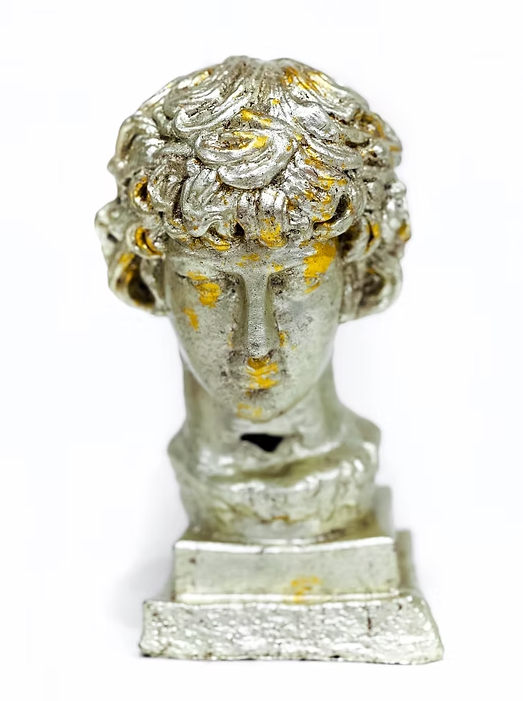
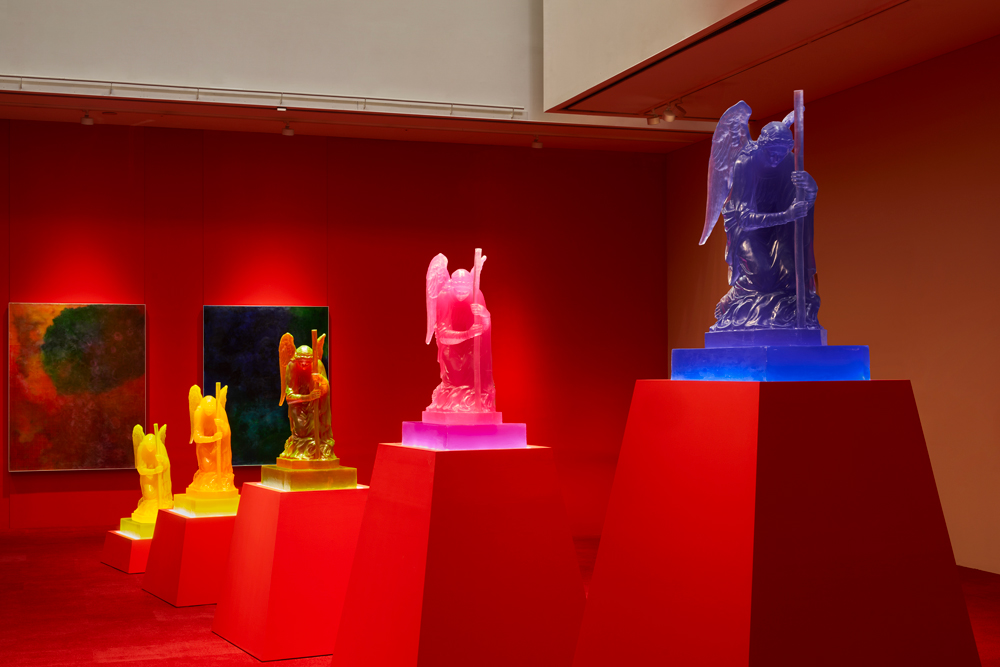
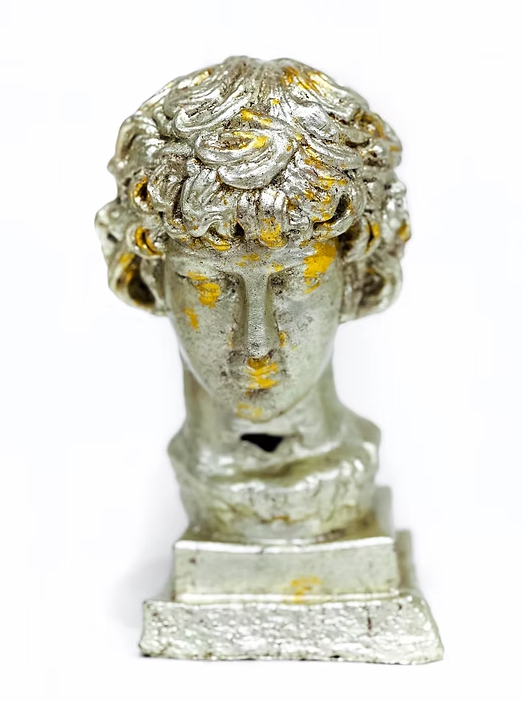
As evident in the latest ‘Petrified
Time’ series, she symbolically reproduces relics that yield value to
disappearing materials by putting effort into unsustainable things such as
carefully gilding or drawing on the soap. Meanwhile, in the ‘Abstract Matter’
series, the matière liberated from such means and forms reveals its abstract
materiality and becomes the protagonist.
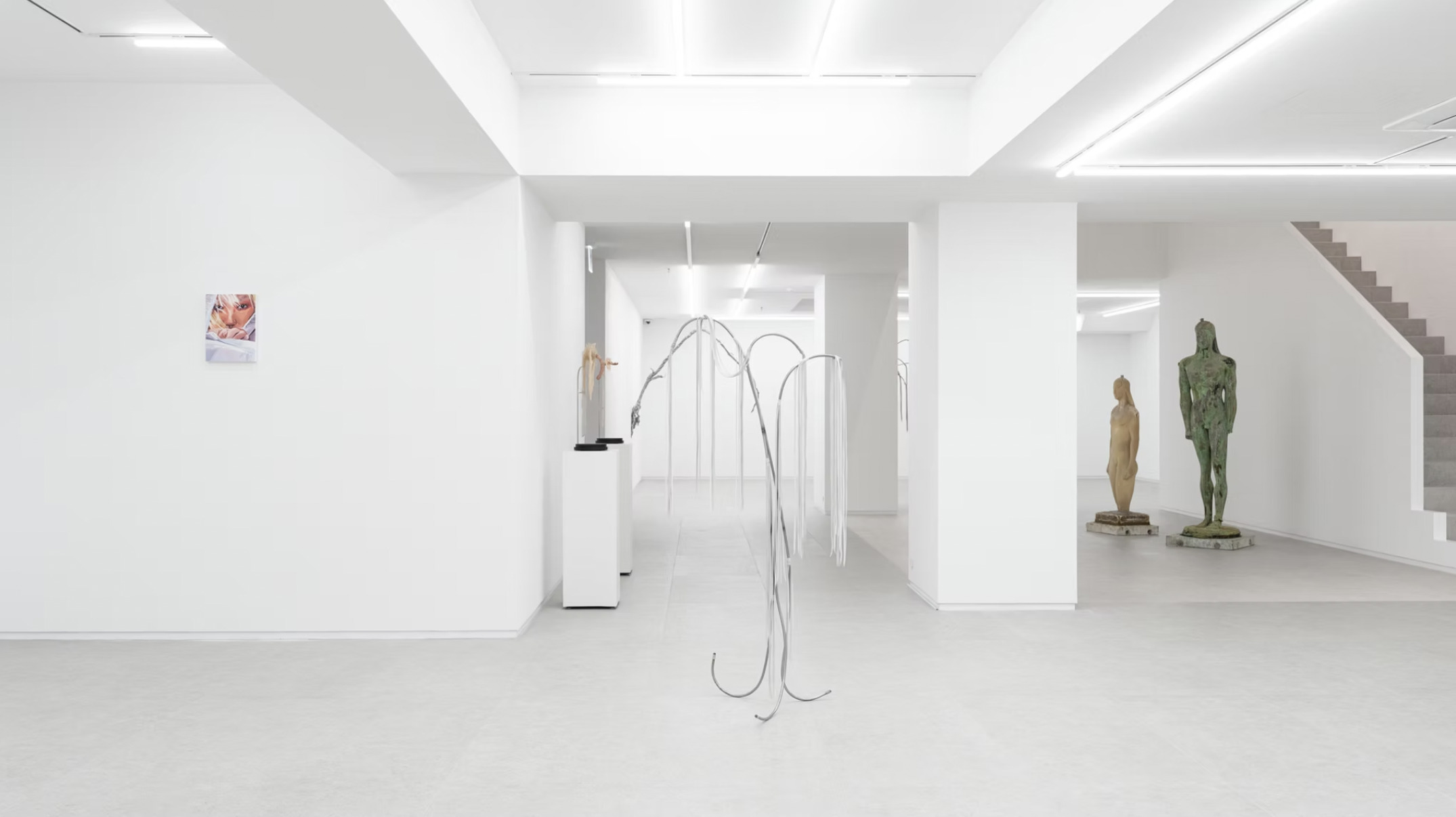
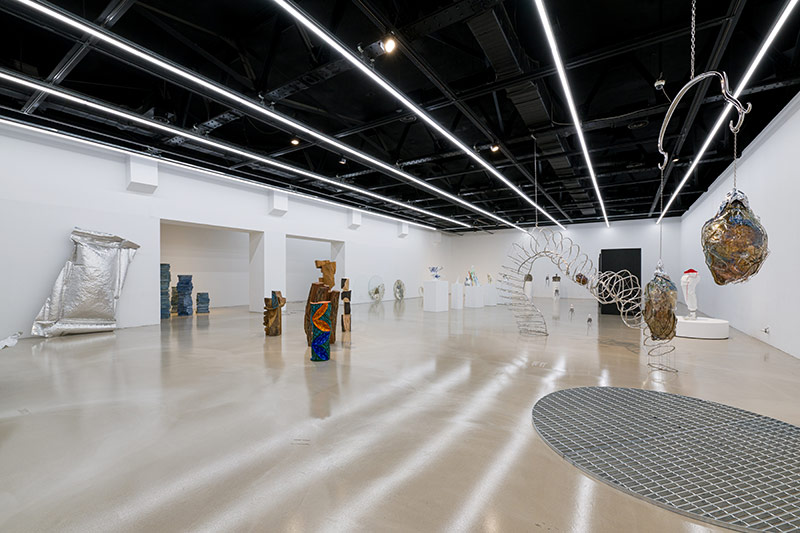
In this exhibition, her works
establish a connection between specific shapes such as ancient statues and
ceramics that she has been executing so far with planar forms and abstract
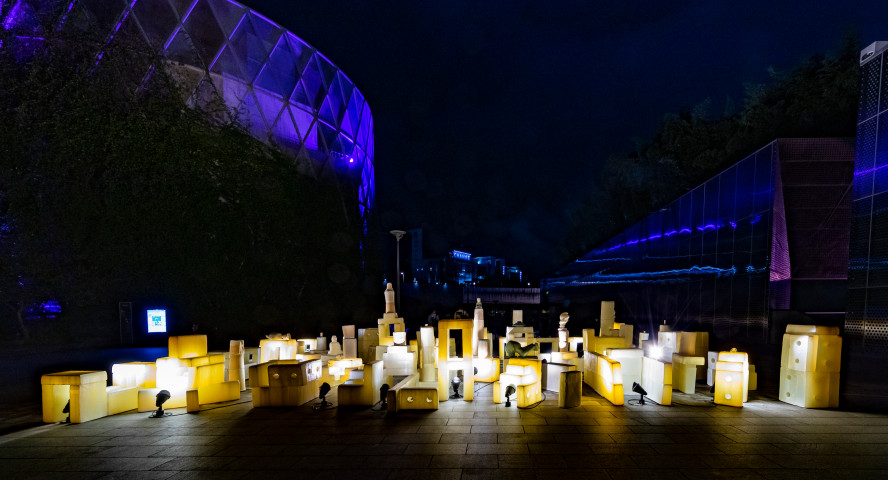
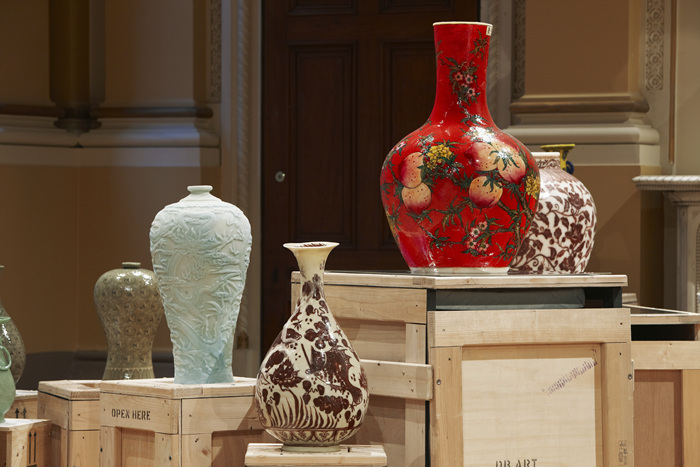
sculptural matters. The soap sculptures in the ‘Translation’ series
appropriate the original works that exist. In Weather Project and Toilet
Project, the medium used, the soap, reveals its materiality in
the shape of worn-out and distorted as people continue using them as soap.
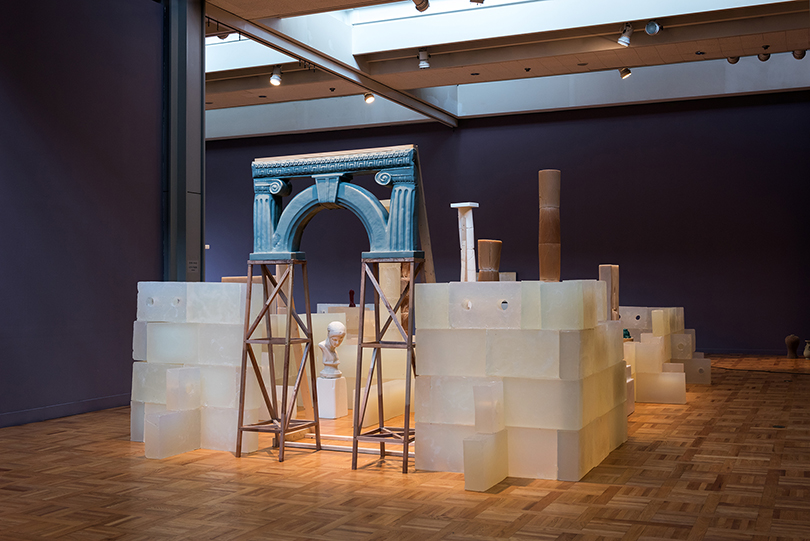
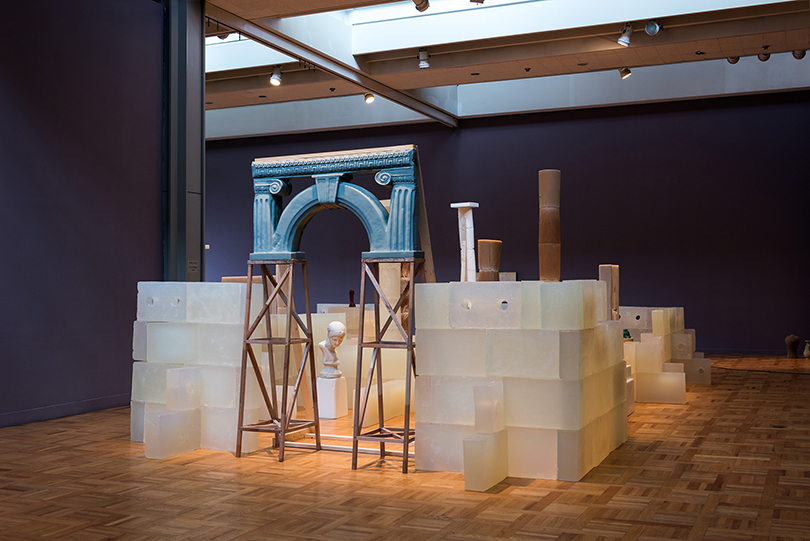
Subsequently, in Ruinscape (2018), reminiscent of an ancient
historic site, the physical properties of soap that crack and deform in time
are manifested in a built environment, revealing the traces of weathering and
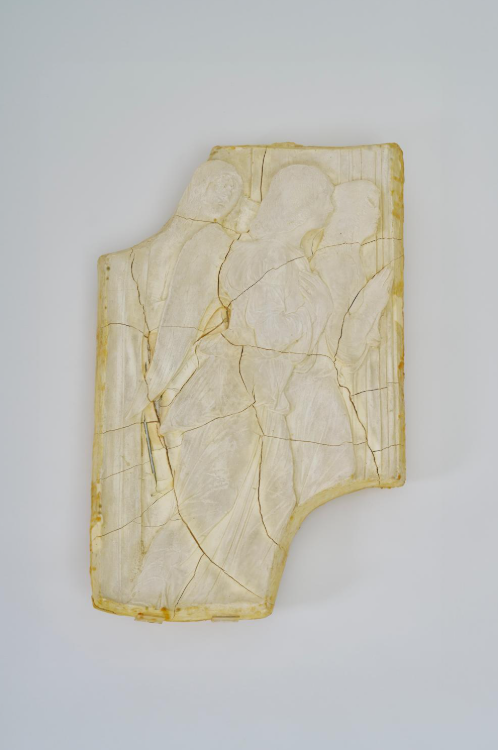
disappearing form as a sculptural material. The planar soap works on view also
reveal the naturally split lines and painting-like surfaces. They are the
vestige of matière separated from the form.
In her earlier soap sculptures,
as in Western aesthetics, if the material held secondary and only a mediating
role in developing a form, inversely, now the form returns to materiality and
appears as the trace of material’s movement constituting itself. Moreover,
the ‘Abstract Matter’ series puts forward fortuity over necessity,
and matter over form. That is, without references to any shape from the
beginning, the material manifests itself as a sculptural surface through a
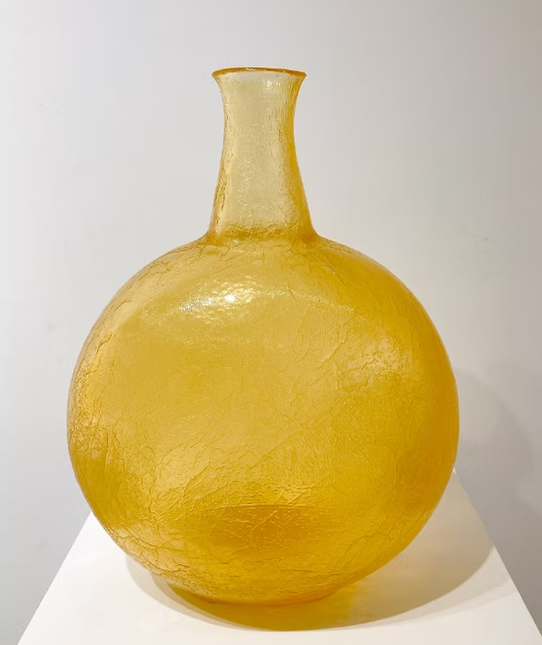
sculptural method, jesmonite casting. Just as the crushed soap bottle has
translated into bronze relics, Shin relooks anew at things thrown away or
disappeared.
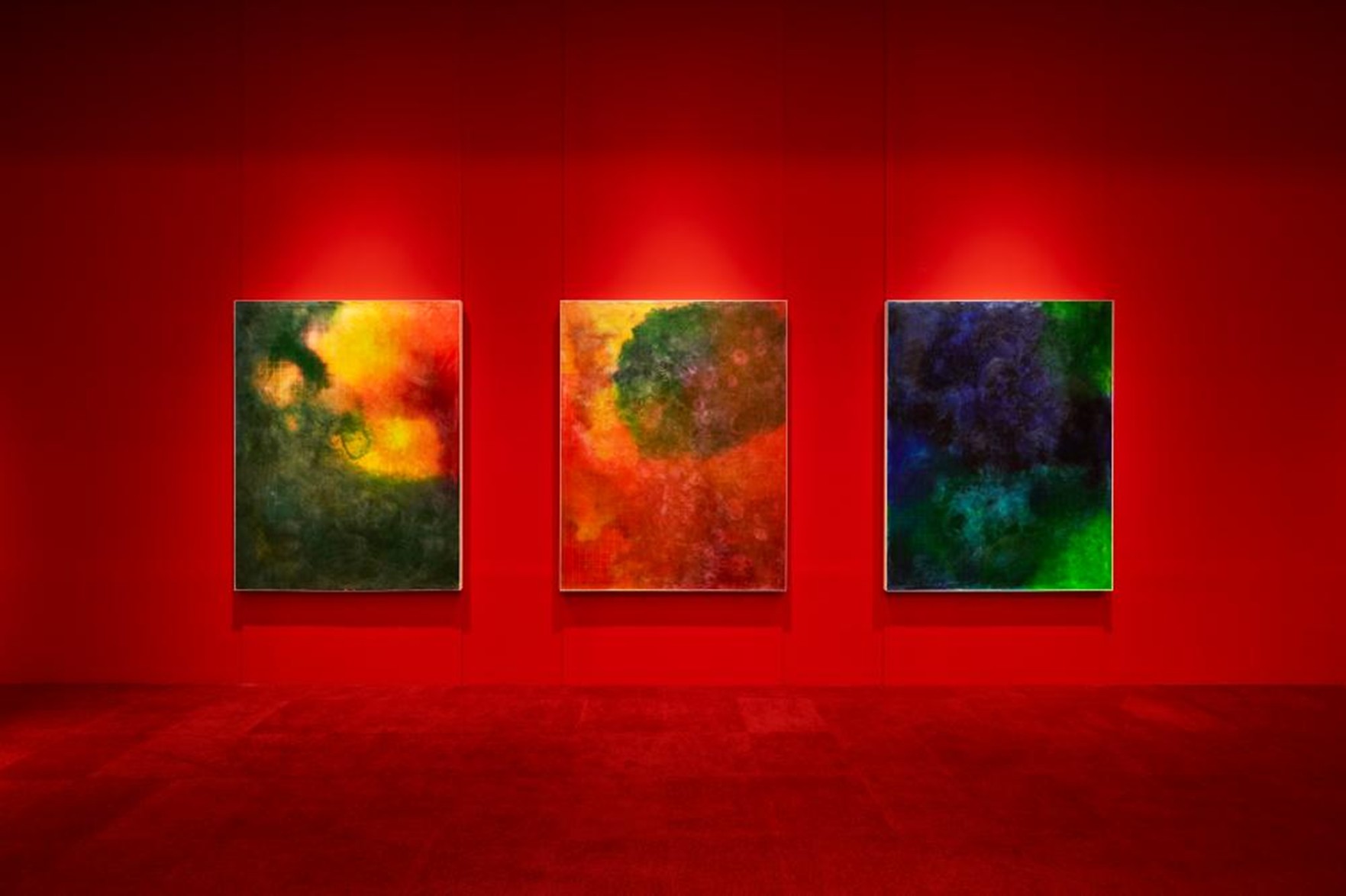
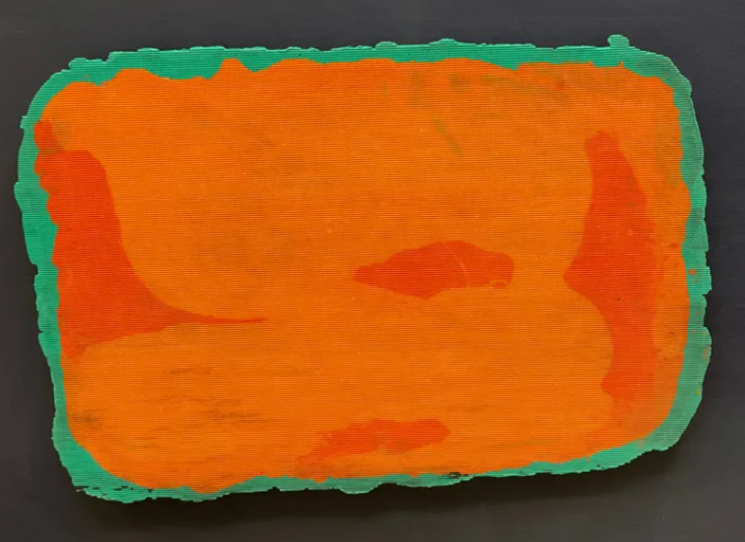
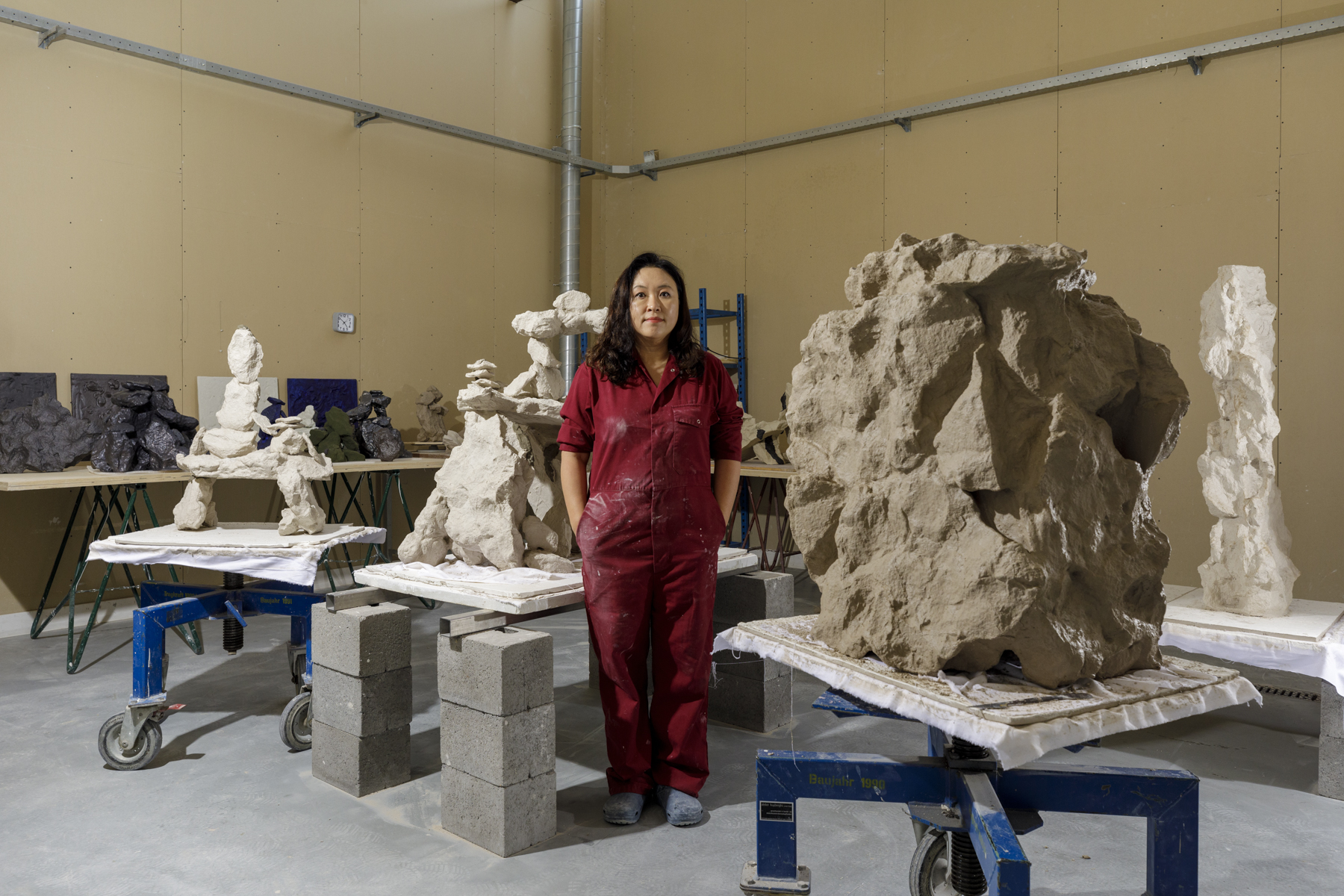
She casts jesmonite in a mold made by discarded rubber plates,
styrofoam, and glass plates. Jesmonite is a non-toxic water-based acrylic resin
developed as an alternative to existing resin, which can express many textures
by mixing dyes and various ingredients. As a result of applying paints and
mixing pigments such as pulverized stone, iron powder, gilt, and silver leaf on
the inner surface of the mold, an unexpected effect emerges like an abstract
painting. After a laborious process of grinding the surface relatively flat, it
appears ancient and corroded due to unforeseen pleats, crumples, and tears. As
if it were a trace of overlapping on parchment, we can see the compressed
space-time arising from the old because they derive from the traces remaining
in ruins, the boundaries between what remains and disappears, and thoughts on
the passage of time.
Rather than deliberately
conceiving a form, she creates it as if it were born by containing an extended
history and condensing its duration. The artist allowed the material to create
its own form with minimal sculptural intervention. Unlike those produced per
representation intent, materials generate forms by their own abstraction and
coincidence. The work thus far has shown traces and disappearance of matter
through weathering and deformation over time, but now it is reversed to witness
from the origin that form comes from matter.
In her previous works using soap,
she has offered us to experience its material deformation and its aroma and
showed us the condensed duration in which such performative form evolves into a
relic, whereas her current jesmonite work looks at it from a micro-perspective
and represents the sense of time induced from the matter. In this regard, Shin
responds, "I have eliminated sculptural expressions, and existing
forms and materials as far as I can” Rather than try creating something entirely
new, rethinking and reinterpreting the existing is ‘newness’ for her.
/Difference, Movement
Sculptures that have been with
human civilization were not distinguished from engraving or depicting long
before the field of sculpture was established, thus painting and sculpture are
much more closely related, regardless of their conventions. Unlike Shin, Kim
Hyunsik begins the work with a flat picture plane, the traditional painting
surface, but speculates it through a repetitive three-dimensional work process
of solidifying, scraping, or etching, expanding the boundaries of painting.
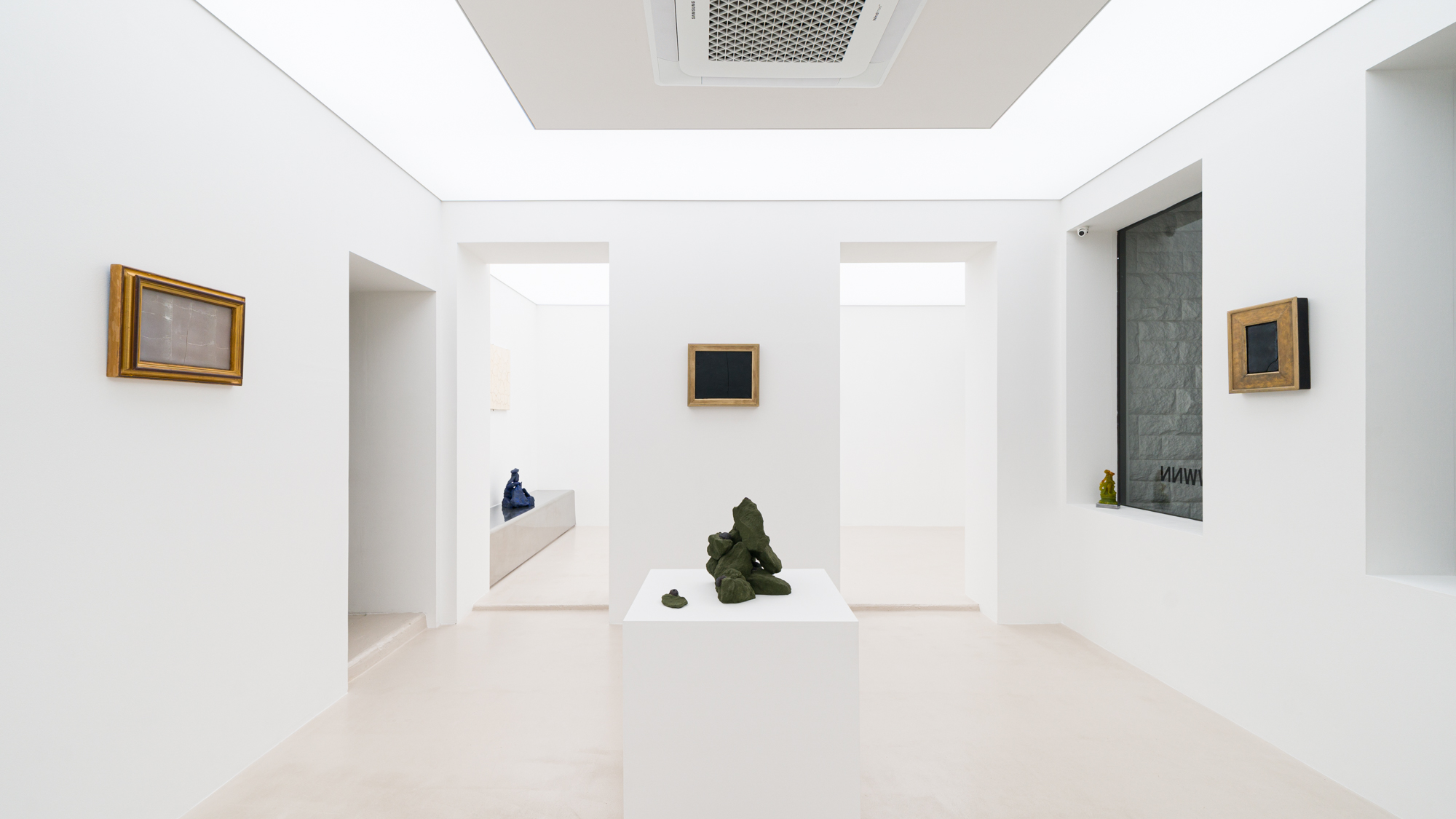
When comparing how their works are displayed, Kim's frame contains space in the
plane while Shin's jesmonite work dilates into the space beyond its mass.
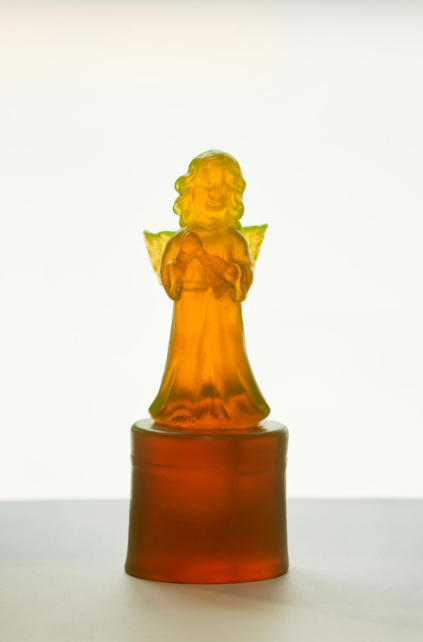
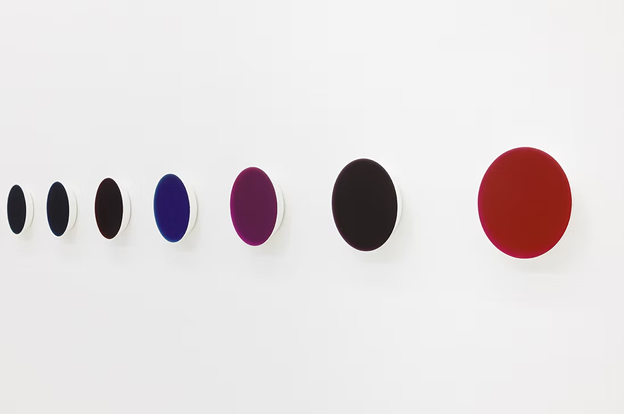
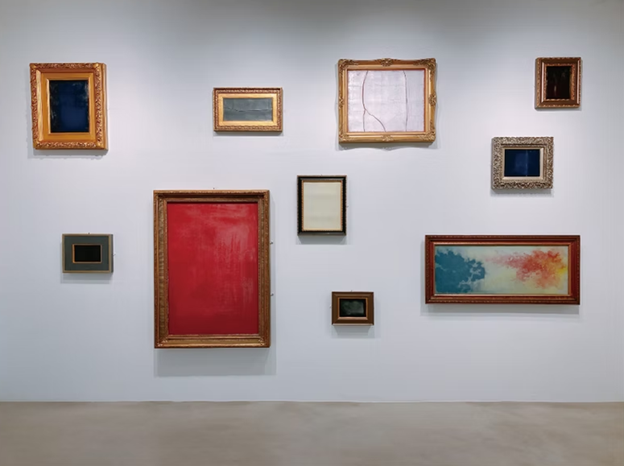
At first glance, Kim Hyunsik's
work is smooth and transparent, and the light and colors vary depending on the
viewpoint. The monochrome picture plane by the simple composition of lines and
colors surprisingly leads the gaze into an unceasing abyss within its frame. He
has been working for years on creating space in the plane as a new methodology
in contemporary painting. It assumes the flatness of painting. He pours resin
into the frame, hardens it flat, and then scrapes numerous lines with awls. The
grooves are revealed in thin color lines after applying pigments on the surface
and wiping them off. He repeats the same process several times in a meditative
manner. As a result, countless lines, and the fine gaps between lines and
layers, the in-between spaces emerge.
Meaning arises at the
intersection of spatial differences and temporal delays. The lines consciously
drawn by him ultimately result in uncontrollable differences among the myriad
gaps and infinite recurrence. Matters and spacetime influence one another. A
beautiful and profound place is created by the interaction of light in its
reprised reflections and passages through the materiality of transparent resins
and pigments. As an incident in which the minute gaps contain the movement of
light and seize time, critic Hong Ga Yi says that Kim's work is an artistic
practice on light and ‘optical physical aesthetics.’ The movement of light
inherent in the spaces between layers is comparable to the cosmic principles of
light energy wavelengths.
On the other hand, the stopped time directs to the
origin, not the object that changes in continuous time in reality. It is both a
shadow of the essence and a vitality embracing the universe. As the title of
the work, Delve into the Profound, points to, Kim
says that the unknown transparent space in the painting is the 'space of
profundity' that embraces everything. "Profundity (玄) is a rhythm that flows between the essence and its revealed
phenomenon, and is a colorless space containing light." Such deep
territory within the plane is a trace of nothingness and the origin that cannot
be reached as it perpetually slips between presence and absence.
He reifies such intricacy
visually. In other words, through the physical phenomenon of matter and modus
operandi, he presents before our eyes the play of phenomenal differences
transitioned to the realm of the mind as if it were an impossible presence of
an inexistent being. Apart from metaphysics and scientific understanding, we
can perceive the infinite space created by differences, not a mere stagnant and
empty space, but the resonance of light transmitted in silence, the sense of
movement it generates, and the vigor of life.
What he creates is a place of
immersion and mediation, and an experience of time different from the secular
world. His work is a new type of painting that embodies the movement of the
substance itself by detouring the illusion of representation on the surface.
Amid the noise of reality now, he still has found a space calm yet animated in
small picture planes. They reconceive the category of painting, encompass the
aesthetics of the East and the West, and prompt us to think beyond the visible.
While wearing out, casting,
hardening resin or jesmonite, unmolding, and engraving, some unknowns leave
traces, and every incident bears an imprint. At the junction of static and
dynamic times, it becomes an unstable trace that cannot fully exist from its
unreachable origin as perpetually repeating differences that exist but are
invisible.
Juyeon Kang, Gallery JJ Director
Translated by Brett Lee