Women
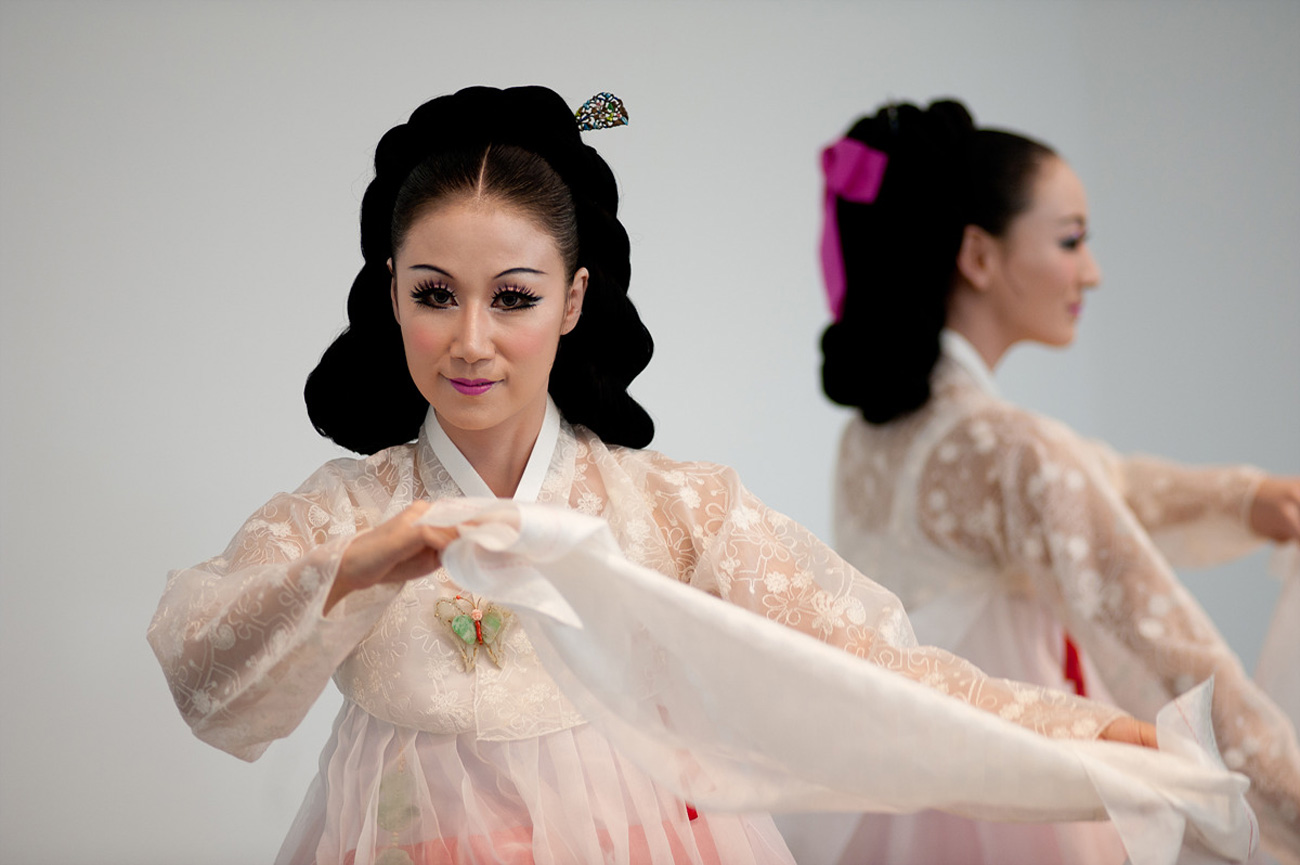
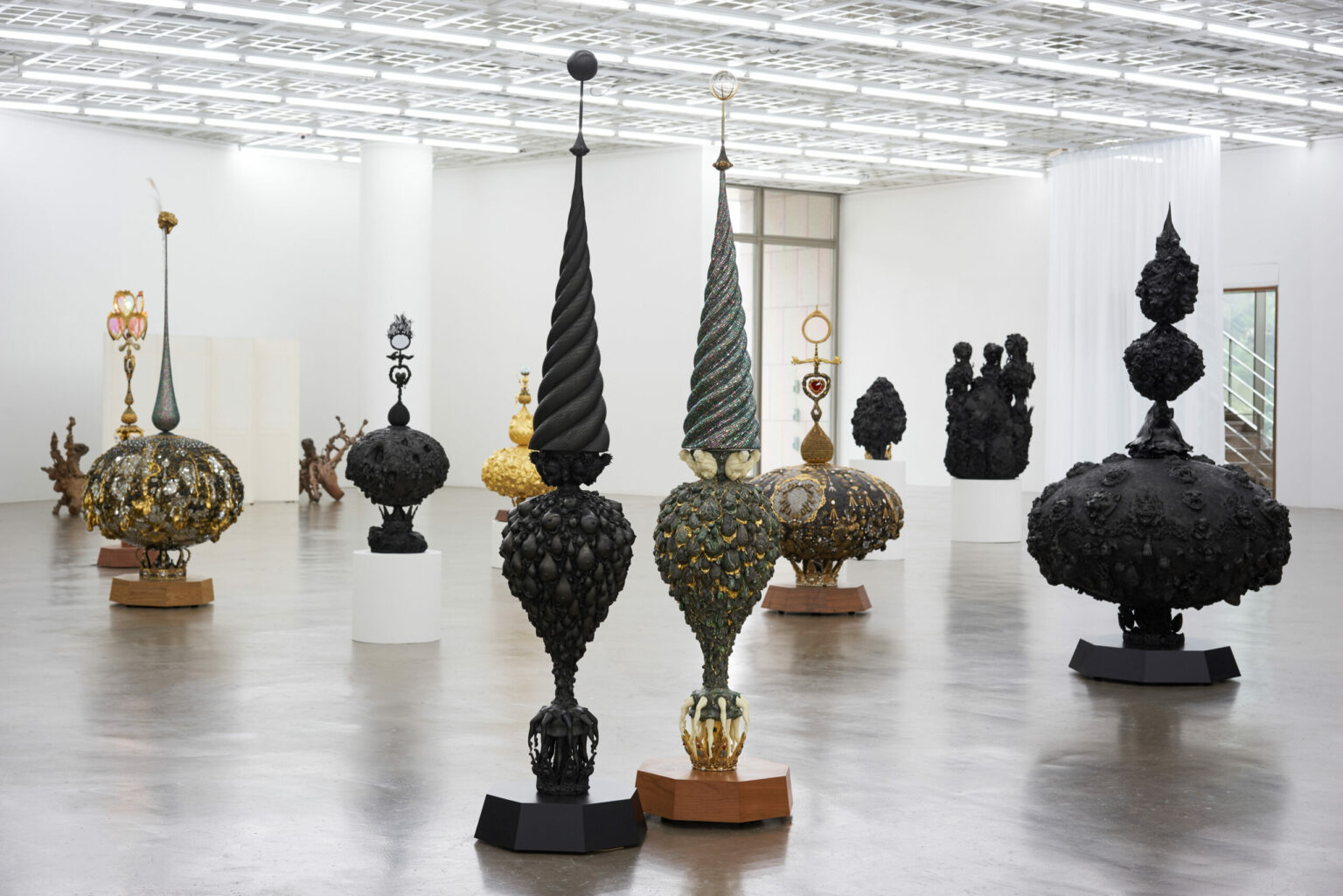
wearing wide, billowing skirts line up and perform a dance in ensemble. Their
hair, adorned with elaborate jewelry, rise up like the spires of temples or the
shapes of flames, below which faces of young girls, innocent and youthful, sit
as if in prayer. They are Princess Bari, Guseul Halmang, Tara (a female
bodhisattva in Tibetan Buddhism), and at the same time, The Virgin Mary.
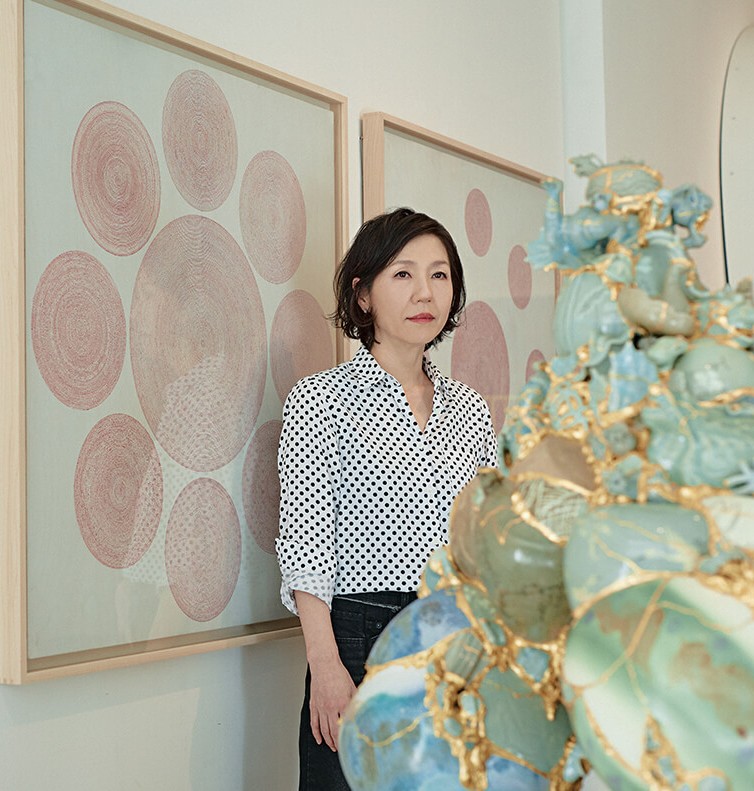
In her 2021 exhibition Moonlight Crowns, the artist
Yeesookyung selected these women from both Eastern and Western religious and
mythological narratives and depicted them as a sort of deities, arranging them
to present a scene where they cluster in solidarity. A year later, in her
twenty-ninth solo exhibition, she named them ‘Intimate Sisters.’ Here, the term
‘intimate’ conveys a feminine attitude of affection and ‘sisters’ implies
solidarity among women.
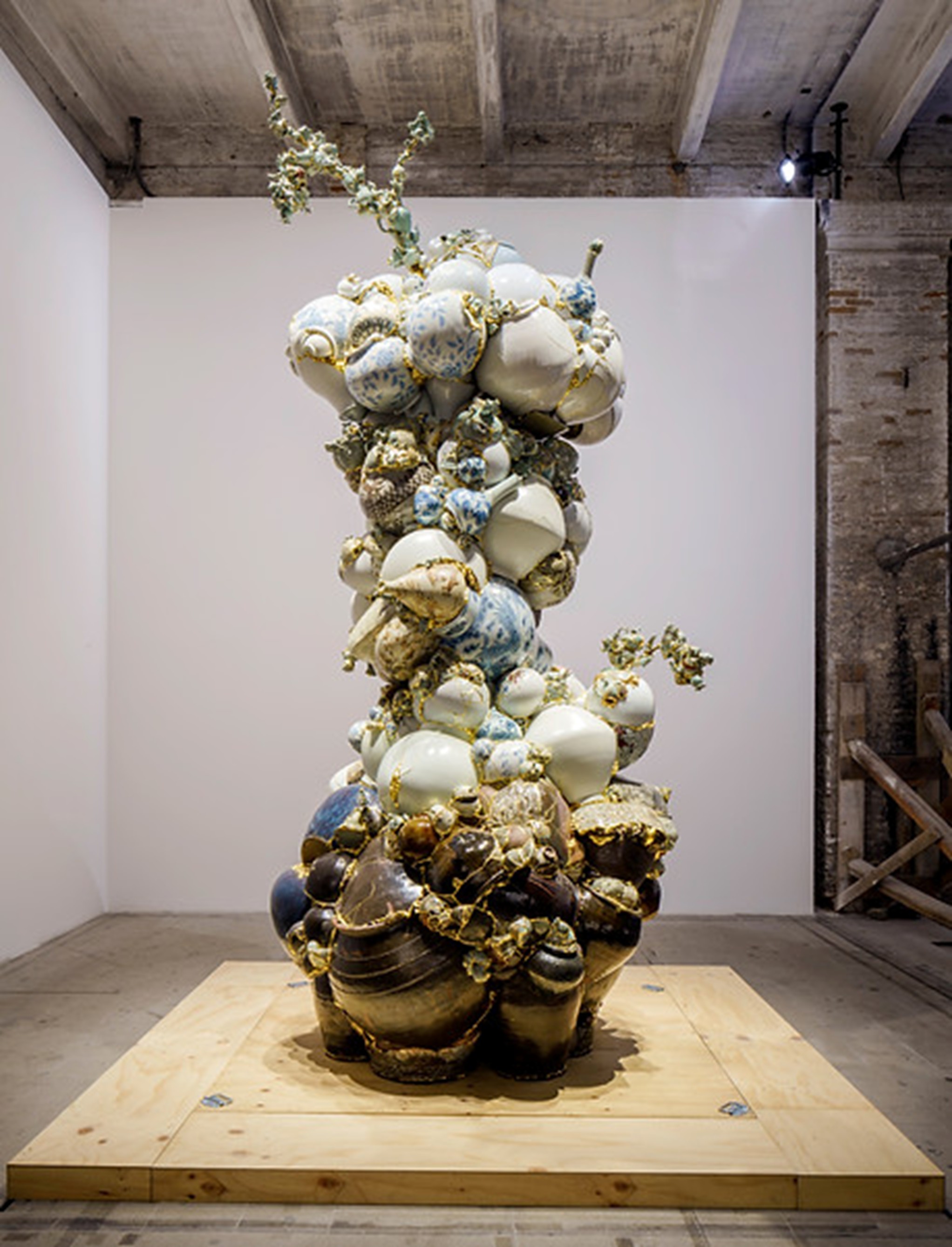
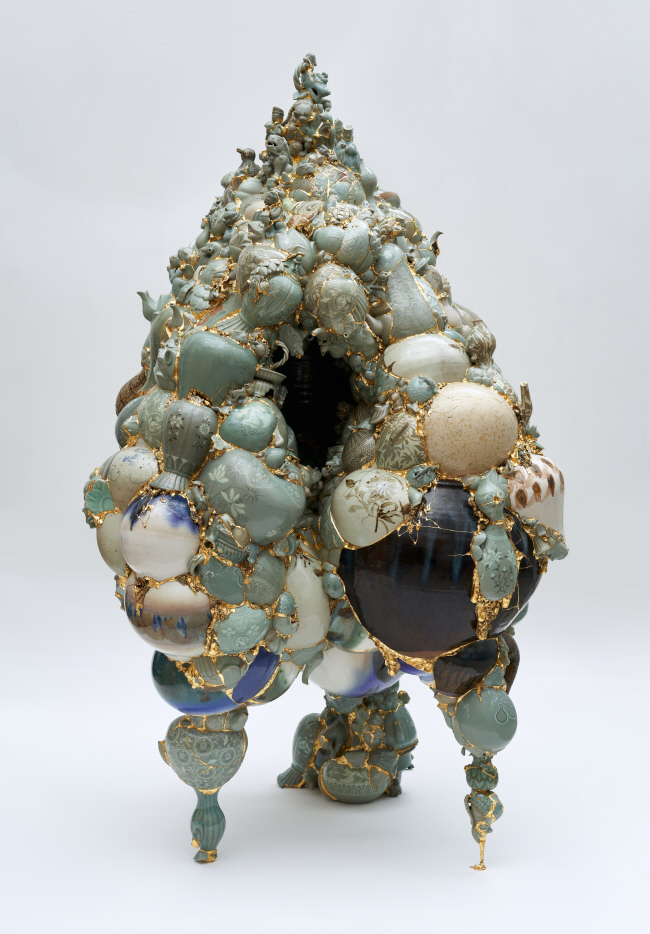
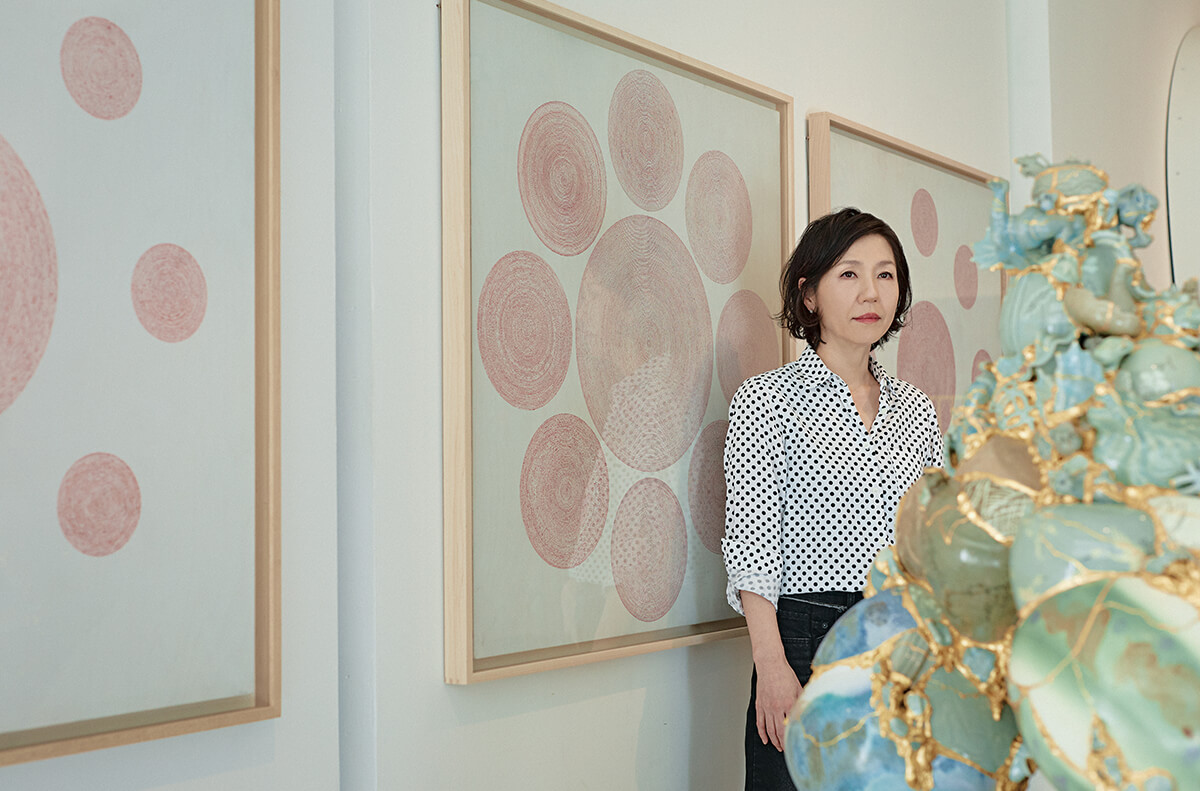
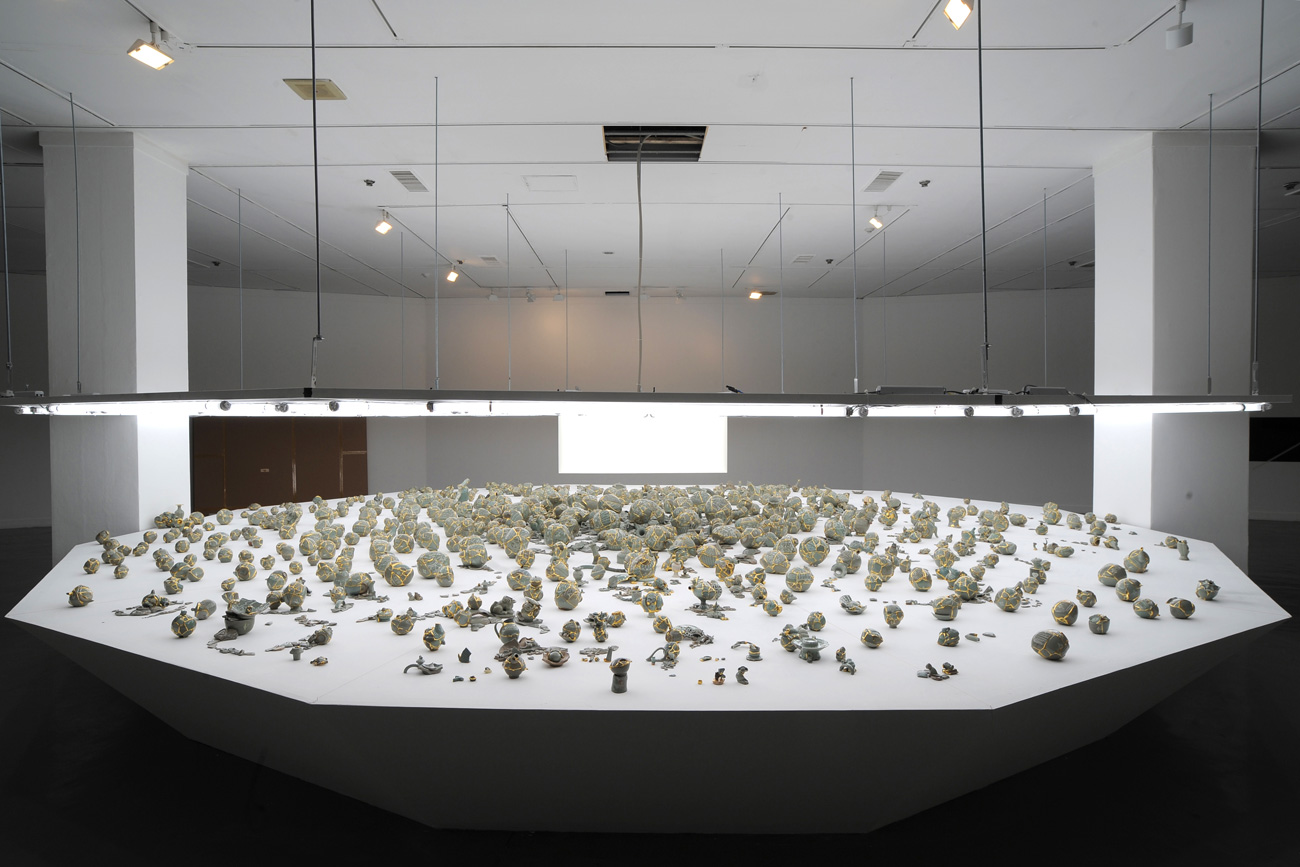
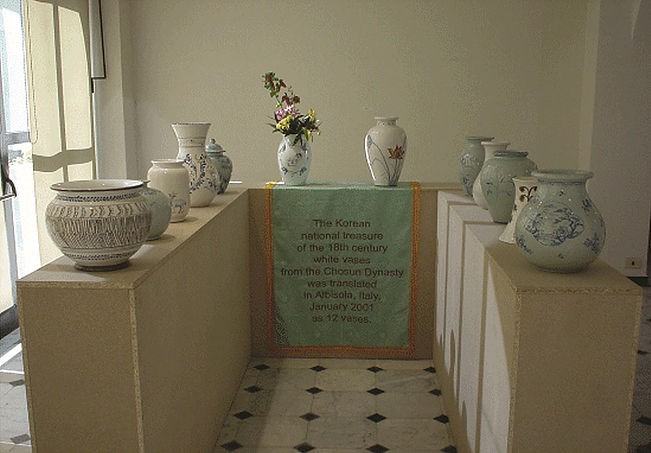
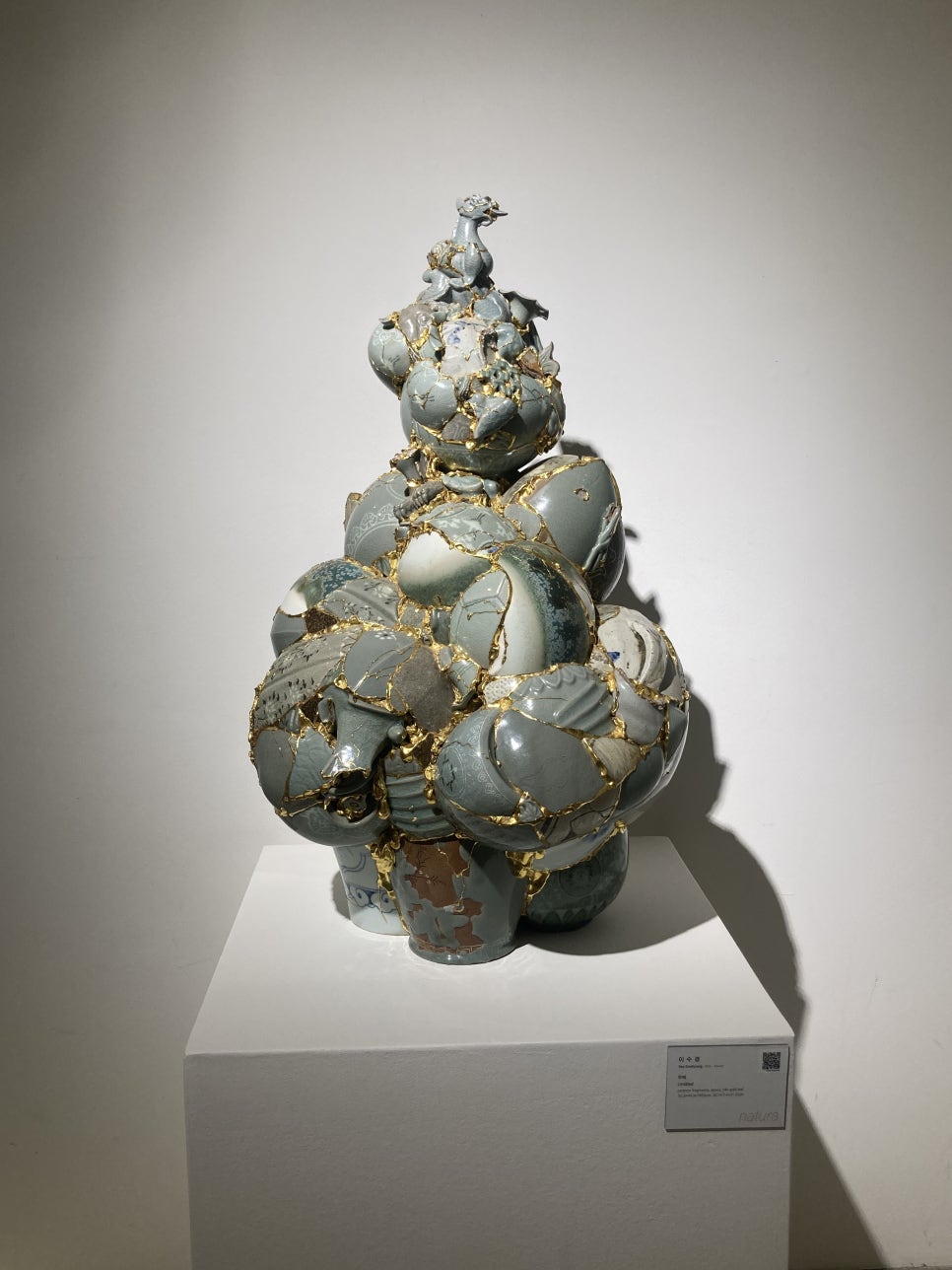
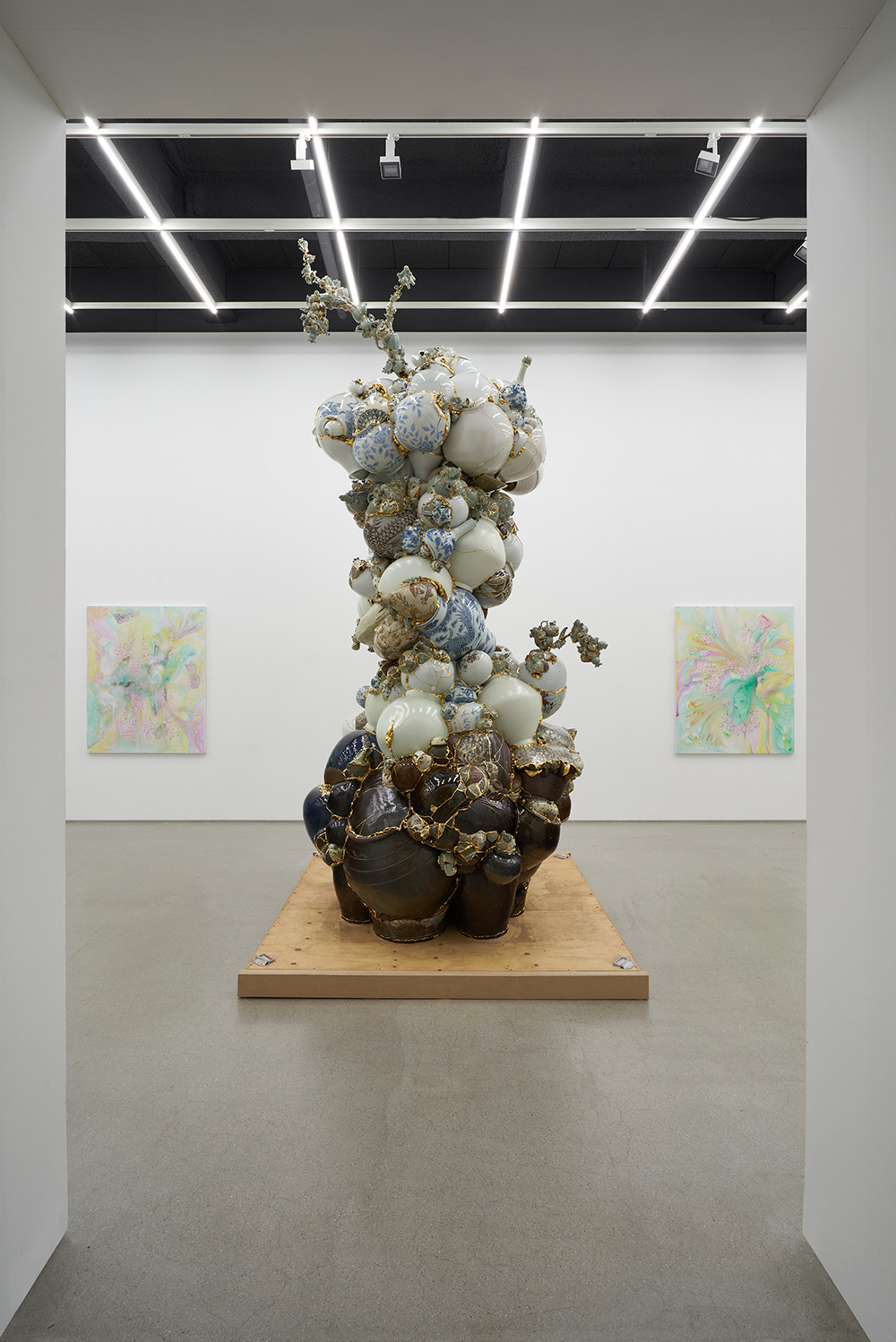
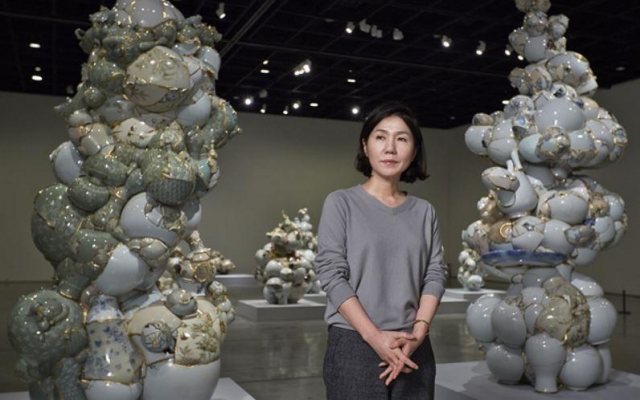
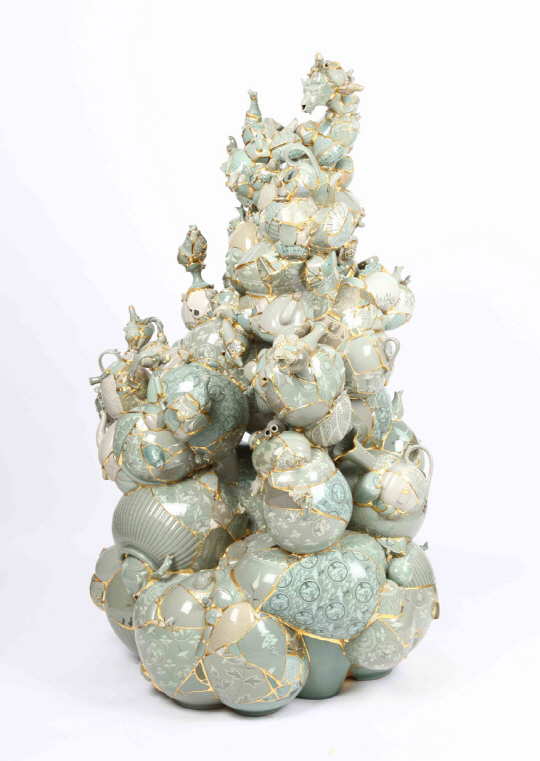
While Yeesookyung is well-known for her Translated Vase series
(2002–present), her work has long delved into themes of women’s lives and
identities. In her first solo exhibition, Getting Married to
Myself, in 1992, she portrayed real-world desires and struggles of
women in a cynical manner through a display of photographs in which she played
both bride and groom and glamorous high heels that cannot be worn due to broken
straps .
Yeesookyung belongs to the generation of Korean artists influenced by the
extensive influx of Western feminism beginning in 1988. Unlike the first
generation of feminist artists in Korea who emerged within the Minjung Art
Movement of the 1980s, she embraced feminist art through a more theoretical
approach and a diverse range of themes. As she spent her twenties and thirties
in the 1990s, her experiences of marriage, childbirth, and parenting brought
her to confront the real-world challenges that women face as well as the
complexities of her identity as an artist. In her efforts to reconcile these
aspects, she naturally wove women’s narratives into her work.
In Vases and Crowns, and All Objects, Lies History and Meaning
According
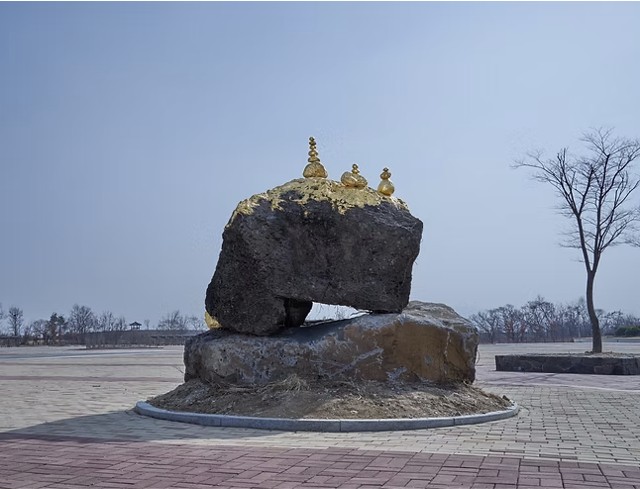
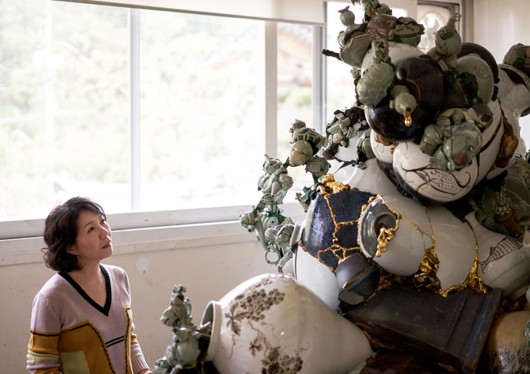
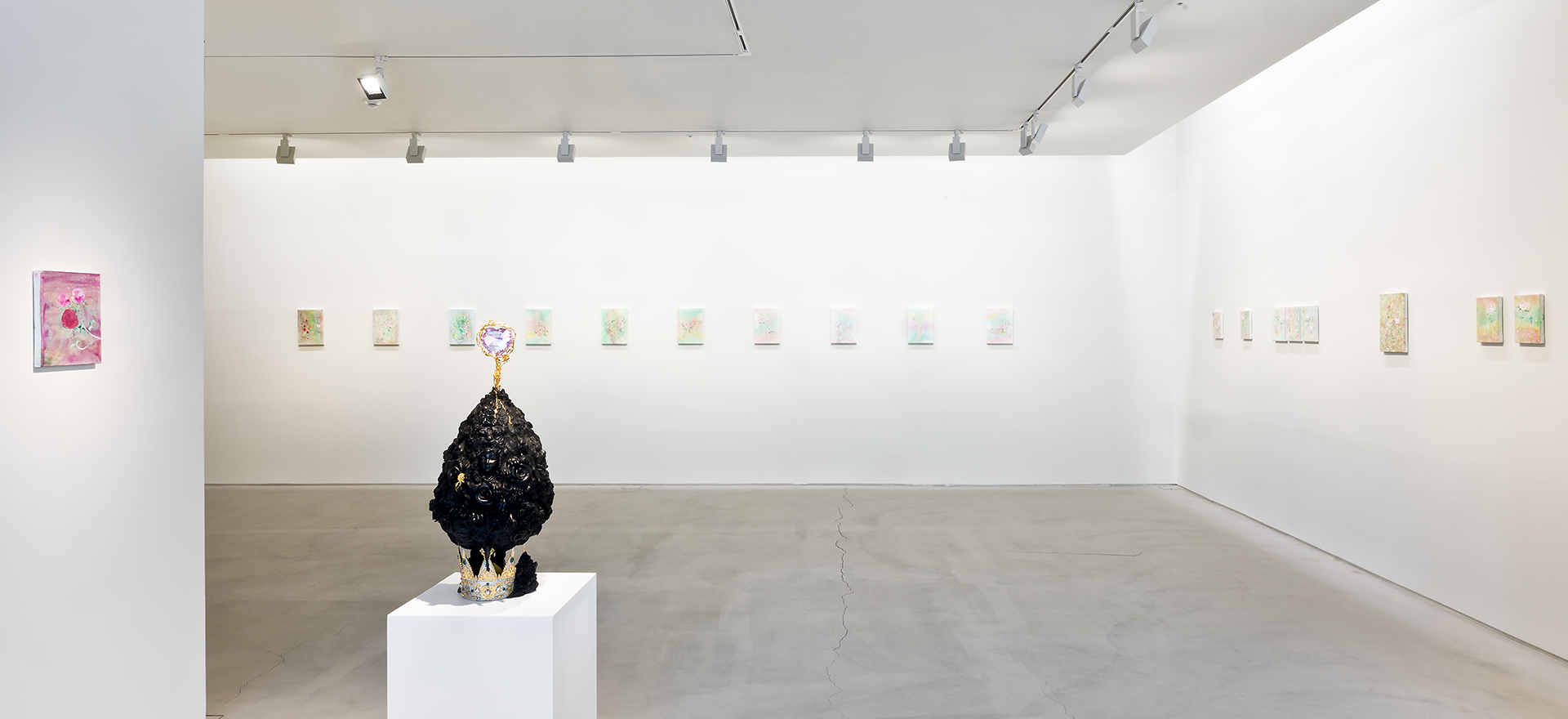
to the artist, the Moonlight Crown series is
described as “works where the crowns have become bodies themselves, too large
and heavy to ever be worn on the head.” Rather than placing crowns, symbols of
power, atop heads, she uses them as pedestals from which fragments of all kinds
of objects sprout up like plants. As a result, the crowns embody the female
figure, as well as the image of a deity. Their surfaces are covered with iron,
bronze, glass, mother-of-pearl, gemstones, and mirrors. Also visible are
angels, praying hands, crosses, dragons, tigers, and Baroque-style botanical patterns.
These fragments are primarily metal ornament pieces used in jewelry that bear
traces of old beliefs but are now abandoned and secularized, having lost their
original place. They hold a similar meaning to the ceramic shards used in
the Translated Vase series, which come from
ceramic pottery that have been destroyed by master potters because they were
deemed imperfect. The artist gathers these discarded objects and shards to
create new forms, new organisms. Most of these artworks bloom into shapes
rounded at the center and are densely packed with objects, which can be viewed
as a symbol of female fertility and abundance, comparable to the Venus of
Willendorf or Rubens’ Three Graces.
Reflecting on the title, the moon represents a feminine space that shines
serenely in the darkness, which stands in contrast with the masculine sun that
illuminates and reveals all things. It is also a mystical presence that
embraces darkness in its shadows and harbors infinite imagination since the
beginning of time. Moonlight, then, functions in Yeesookyung’s artworks as an
energy that allows objects to transcend their past wounds and restore their
sacredness, enabling them to shine once more. This very energy serves to
resurrect a shattered ceramic pot into a complete vase once more, and empower a
forsaken angel to rise above the authority of the crown, reclaiming its
spirituality.
Yeesookyung's creations are predominantly crafted through a meticulous process
of expertly controlling and delicately shaping a variety of materials. Her
emphasis on craft over traditional sculpture and her technique of weaving
together precious gemstones from both the East and West with broken and
discarded objects reveals her intent to transcend not only the traditional
hierarchies of art but also prejudices of the typical world, while
demonstrating her determination to redeem and revive all things beautifully.
Classics of Korean Female Narratives: Princess Bari and Guseul
Halmang
Presiding
over all of this is the face of Princess Bari. The artist frequently depicts
female figures bearing faces of young girls, each of whom can be interpreted as
portrayals of Bari, the heroine of the eponymous Korean folktale. Having freed
themselves from the grime and struggles of the secular world, they come to
signify the idea of purification. Ultimately, through this journey of
purification, they become spiritual beings.
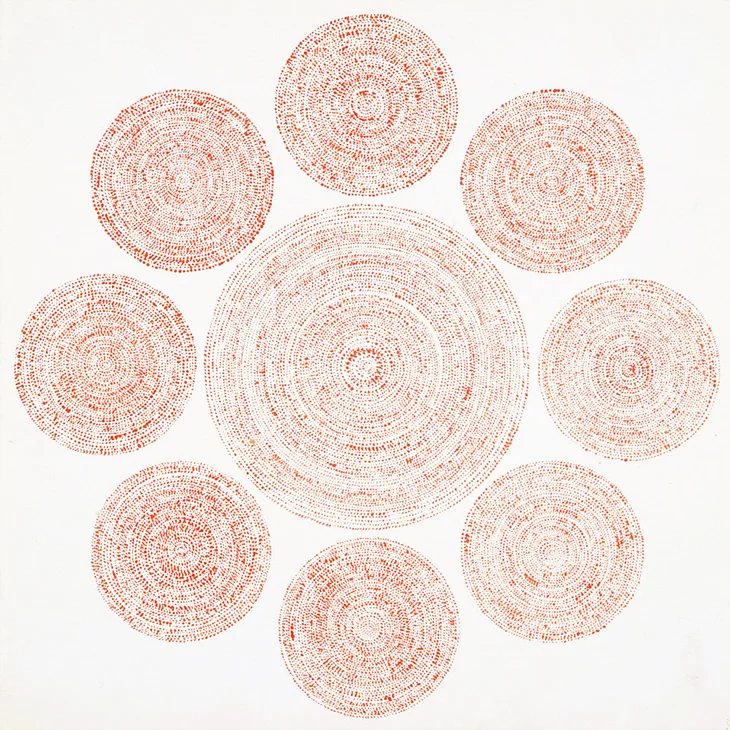
Around 2003, in an effort to awaken her senses, Yeesookyung began creating Buddhist
drawings using cinnabar, which led her to explore religious and mythological
themes. Among these, the Tale of Bari stands out as one of the artist's
longest-standing subjects, first addressed in her 2005 series Breeding
Drawing and later more explicitly in her 3D printing work All
Asleep in 2015. As the story goes, Bari, abandoned by her
parents for being a daughter, embarks on a journey to the underworld to find
the water of life in order to save them. After enduring numerous trials, she
succeeds in reviving her parents and chooses the fate of becoming a mudang (shaman),
who bridges the realms of the living and the dead, human and divine, thereby
becoming the ancestor of all shamans in Korea. The folktale is regarded as a
critique of the patriarchal societal structure and the Confucian ideology
of nam-jon-yeo-bi (male superiority), illustrated
through the life of Bari, who was oppressed simply for being a woman.
Likewise, Guseul Halmang, featured in Moonlight Crown_Guseul
Halmang (2021), stands as a prominent figure in Korean female
mythology. A young girl, abandoned by her parents, encounters a boatman and
drifts to Jeju Island, where she becomes a haenyeo (female
diver). With her exceptional prowess, she harvests abalones and pearls and
presents them to the king, receiving multicolored beads in return. Thereafter,
she became known as Guseul Halmang (Bead Grandmother) and is still regarded
today as the indigenous guardian deity of Jeju, symbolizing fertility and
abundance, and bestowing blessings upon her descendants. While her narrative
parallels that of Princess Bari, Guseul Halmang distinguishes herself by
actively shaping her own destiny, independent of fate. This legend, which
reflects the aspirations of Jeju's haenyeo who led
arduous lives, is reimagined by the artist using old glass buoys and a
3D-printed head of Bari.
Yeesookyung frequently incorporates the imagery of hands in her oeuvre, drawing
inspiration from Tara, the Tibetan female bodhisattva. Tara’s hands, with eyes
on their palms, enables her to perceive all human suffering, safeguarding the
lives of all beings and guiding them toward enlightenment. In Polaris (2012),
the delicate hands of young girls are portrayed in gestures of embrace and
prayer, nurturing both humans and animals. Meanwhile, the women adorned with
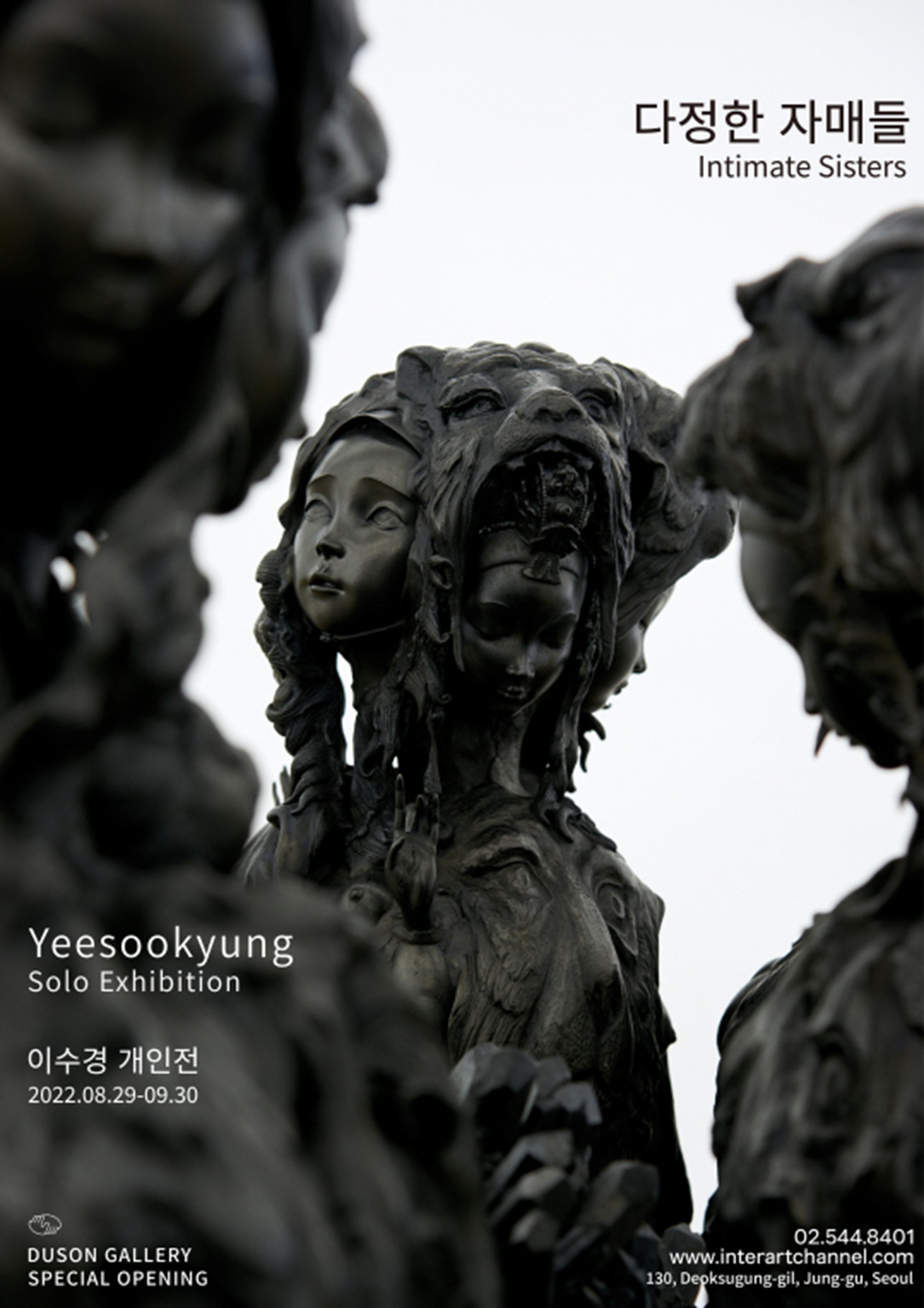
tiger skins in Moonlight Crown_Intimate Sisters (2021)
trace their origins to the tiger tribe from the Myth of Dangun. The women of
the tiger tribe, who were overlooked by Dangun, establish their own kingdom and
flourish in infinite proliferation through their solidarity, cooperation, and
mutual care among themselves. The assembly of girls, rising by leaning on each
other's shoulders and adorned with a myriad of women’s breasts embodying the
imagery of a powerful maternal deity, epitomizes the formidable strength of
female solidarity.
Yeesookyung’s recurrent depiction of heroines from classic female
narratives—Princess Bari, Guseul Halmang, Tara, and the women of the tiger
tribe—serves not only to illuminate the discrimination and challenges women
still face in contemporary society but also to celebrate their strength,
resilience, and healing powers in overcoming such adversities.
Affectionate Solidarity: Spirituality Beyond Healing
Yeesookyung
has often been noted for conveying the meaning of ‘healing’ through her method
of filling the geum (cracks) in broken ceramics
with geum (gold). Her recent work on the Moonlight
Crown series, however, appears to have transcended the concept
of ‘healing,’ reaching a higher realm of spirituality.
The artist recalls that while working on the series, she deeply felt that
“spirituality exists equally in all of us.” She suggests that all beings are
interconnected, and therefore, inherently complete. The Moonlight
Crown series communicates a profound belief that encourages us
to let go of the fears and anxieties of reality, as “we are already complete
beings, and our bodies are sacred temples, our spirits the resplendent crowns
themselves.”
The artistic process whereby broken objects intertwine and rely on each other
to form a complete shape embodies a sense of mutual affection or tenderness
that seeks reconciliation over conflict, and coexistence over exclusion.
Yeesookyung's artistic world, which harmonizes the masculine and feminine,
traverses Eastern and Western cultures, and bridges the realms of art and
craft, encapsulates a feminist worldview that cherishes the intrinsic value of
all humanity and all things.