"I am an artist working with various media. I believe
that art is a dynamic process of life experimenting on yet another possibility
of life breaking down social prejudices and forced formality…" (Yongbaek
Lee)
1.
Yongbaek Lee works in all fields of contemporary art, from media art,
sculpture, and photography, to painting, and he has achieved artistic triumph,
freely manipulating formations characterized by sensibility, form, and
behavior. Lee achieved a global formality with a mechanism of his own
development, which is a highly unusual feat for an Asian artist. However,
Korea’s art community regards him too abstractly as a postmodern
artist. Declaring that Yongbaek Lee is a postmodern artist is absurd in
light of the fact that postmodernism is an ideology or movement that denies
values such as totality, universality, historical macro discussion, the firm
ground of existentialism, and the undoubted possibility of knowledge.
In
art as defined by Yongbaek Lee, the artist sets the scope of self-actualization
and self-limitation and clashes against these walls with the strongest
determination and energy so as to disclose his artistic view to the outside
world, that is, art is an indescribable shock wave. Here, the scope of
self-actualization and self-limitation may be thought of
as seinsverbundenheit (existential boundedness)' as Karl Manheim
describes it. Existential boundedness means that a thinking and acting
subject cannot be free from the ground where he/she is rooted. However, we
are well aware that when an ideal that one dreams of is based on limited
nourishment and turns into a form, boundedness is not a negative value but
reveals the circumstances of the era and is transformed into sympathy that
transcends time.
Yongbaek Lee was born at a time of military dictatorship, and the
art community was then beholden to very black and white ideas. Art must
not be created from any political impetus. Korean artists tried to interpret
the forms of monochrome, minimalism, and abstract expressionism by connecting
them with the spirit of Zen Buddhism, the moral training of Confucianism, and
the elegant appreciation (of art) of Taoism. In other words, it is a dual
structure in which the artists laid the newly translated language of an Asian
style onto Western forms.
Secondly, Minjung art (art about the lives of
people as historical subjects after the Gwangju democratic uprising) became
prolific and analyzed the capitalist pathology of the military dictatorship
using the shamanism of the Korean Peninsula, an indigenous religion of
exorcism, and the realism of socialism. Meanwhile, the Korean government
liberalized its policy on travel and study abroad in 1985. However, as the
socialist states began to collapse in succession in 1989 onwards and power was
peacefully transferred to a civilian government in Korea in 1993, the
intellectuals who had studied abroad returned to Korea and the two forces
faded. In the 1990s, Western art flooded into Korea.
Media, video,
photography, and installation works were all new to the Koreans. Viewers
could not at first decide what they thought of them, and critics lost their own
point of view and instead depended on the rules of Western
postmodernism. The 1990s was a period of transition in which the two
centers of power let the world fall to pieces and the world became divided
multilaterally. At the same time, plural individualism became pronounced,
and the division between good art and bad art disappeared. That is, the
model and example disappeared during this period. In such a confusing
situation, Yongbaek Lee appeared in the Korean art world at the end of the
1990s. He was one of the artists who contemplated the voluntary creation
of artistic forms and the meaning of Korea’s contemporary art.
2.
In the 1990s, Yongbaek Lee
refused all conditions of postmodernism. He considered postmodernism
nothing but shock treatment to escape the lethargy and weariness of modernism,
and the third degenerated body germinating from the body of modernism, as if
capitalism and socialism were ideological twins that were inevitably born from
Western history. He absorbed the historical and social context of Korea and
Asia as his nourishment. When one compares his art with modernism and
postmodernism, the characteristics become clear. Since modernism is a
perfectly rationalized art created according to existing rules and orders that
request an artist to seek the ultimate nature of a genre that cannot be
restored, it always reveals reproductions.
Thus, modernism is a rational
method of thinking that is both colorless and odorless. On the contrary,
the art of Yongbaek Lee is essentially voluntary creation and
formation. His creation is not ‘a creation from nothing’ but a creation
from a given historical and social reality. For this reason, his art shows
that he is not a passive observer of the world, but a discoverer actively
seeking values in the world, and an activist who tries to realize his discovery
into the concrete form of art. Thus, the reality of Asia, the history of
Korea, the relationship between the region and the world, and the global trend
of the 21st century can be found in Lee’s works.
The method used to form
these characteristics is based on symbols that leave an empty space for
interpretation rather than concrete messages. While the sensibility of
material and the diversity of meaning in his pieces are in a relationship of
constant pulling and pushing, the two forces maintain a taut balance, forming
an extreme tension. As the peculiar meaning of a specific region and the
universal sensibility of matters with a global sense encounter each other, he
creates a new energy, one that can at the very least be said to have never
existed before in Korea.
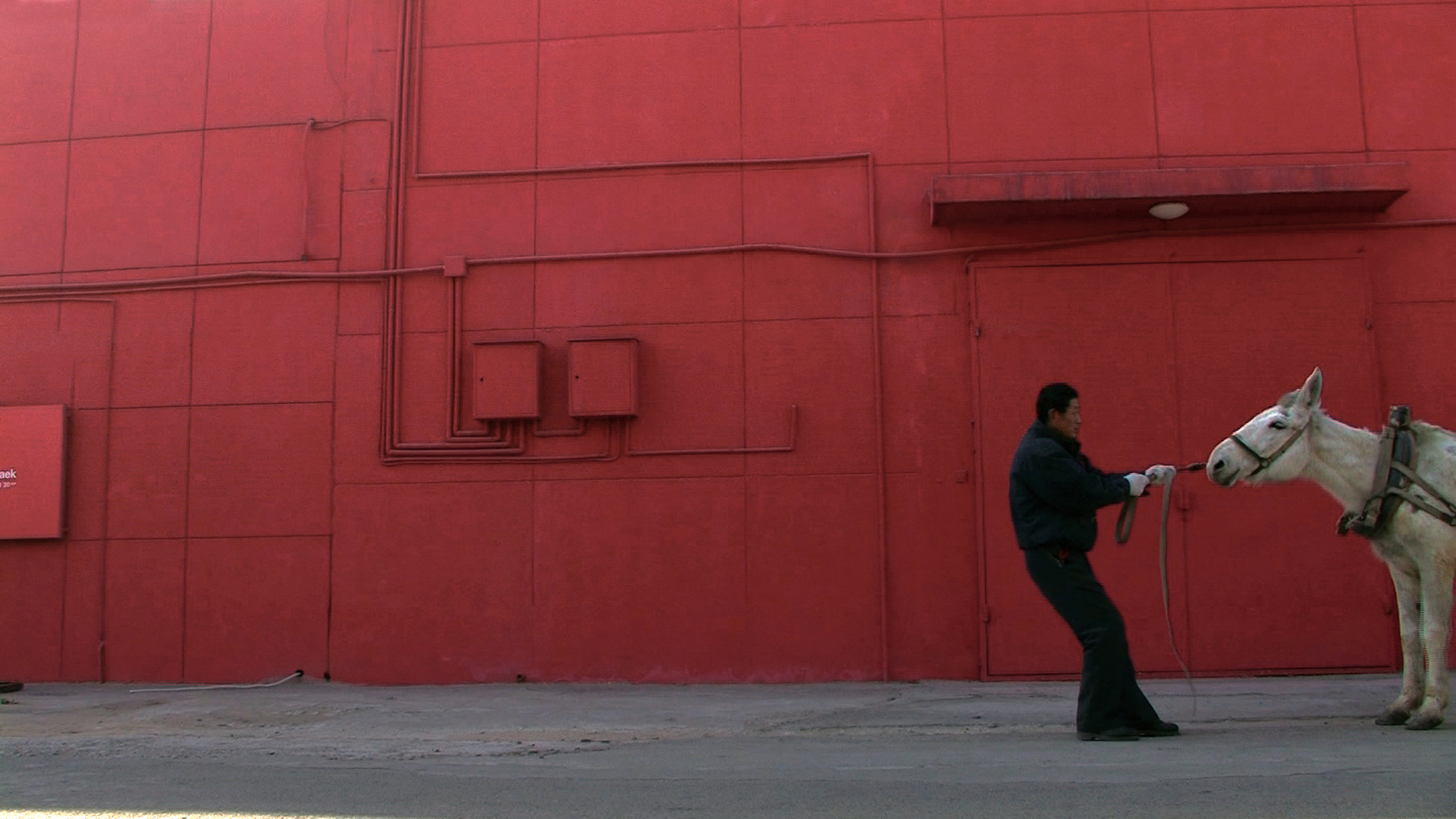
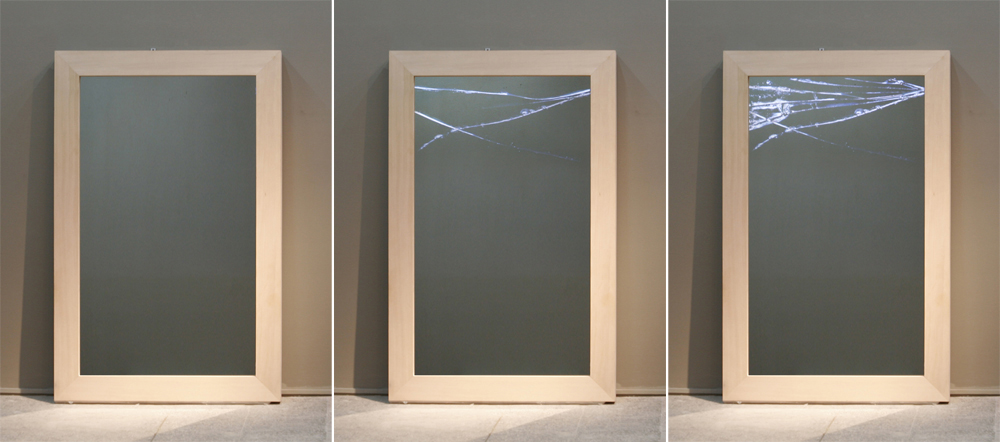
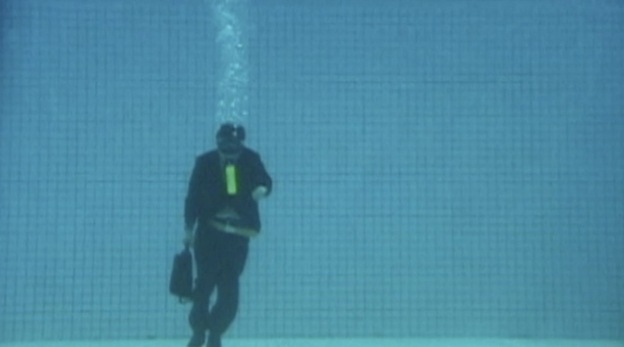
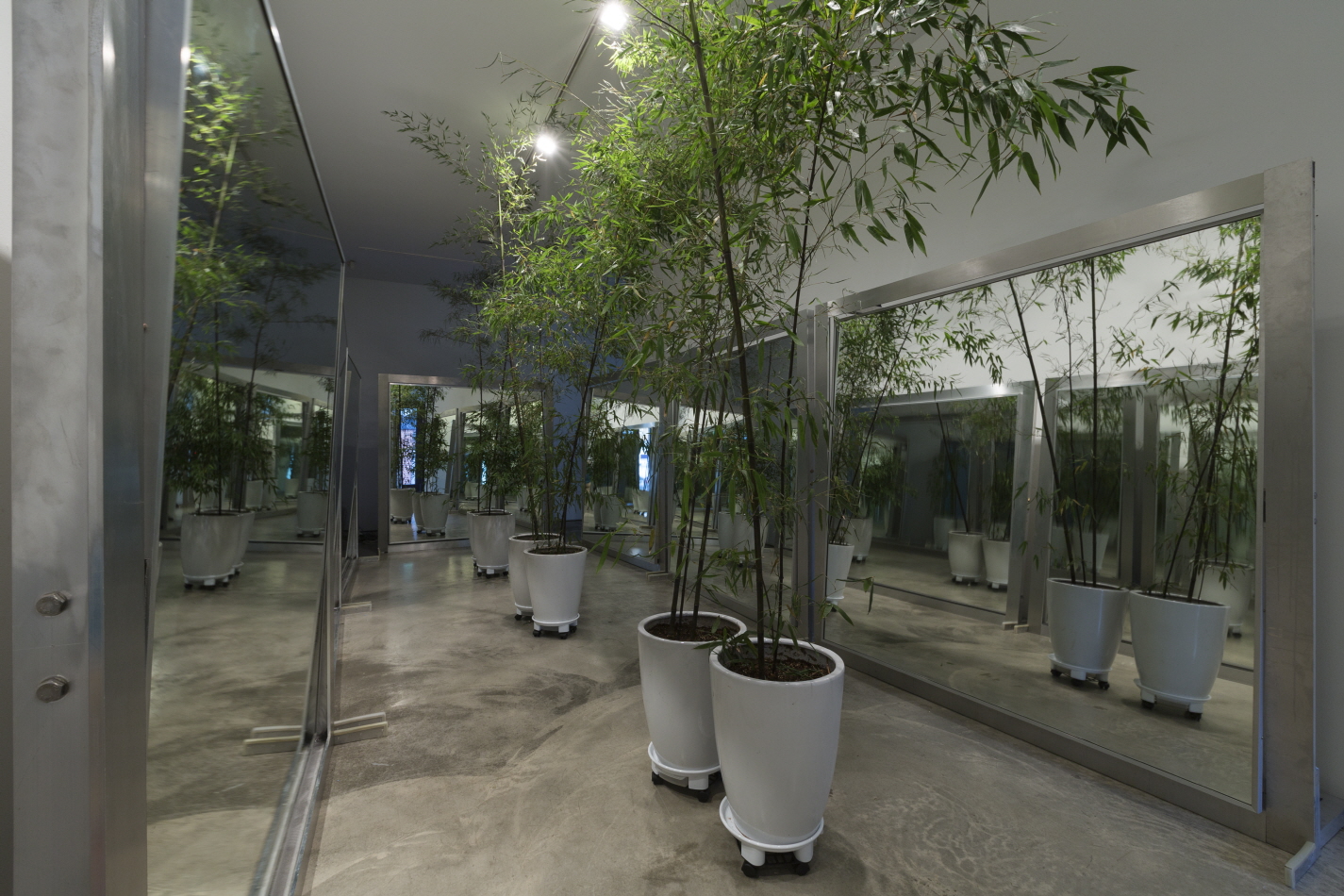
Yongbaek Lee had already built the foundation of another piece
transcending New Folder-Drag, which generated a great
deal of buzz when shown to the public in Beijing, in 2005. After spending six
years in self-reflection and development, he completed at last the final
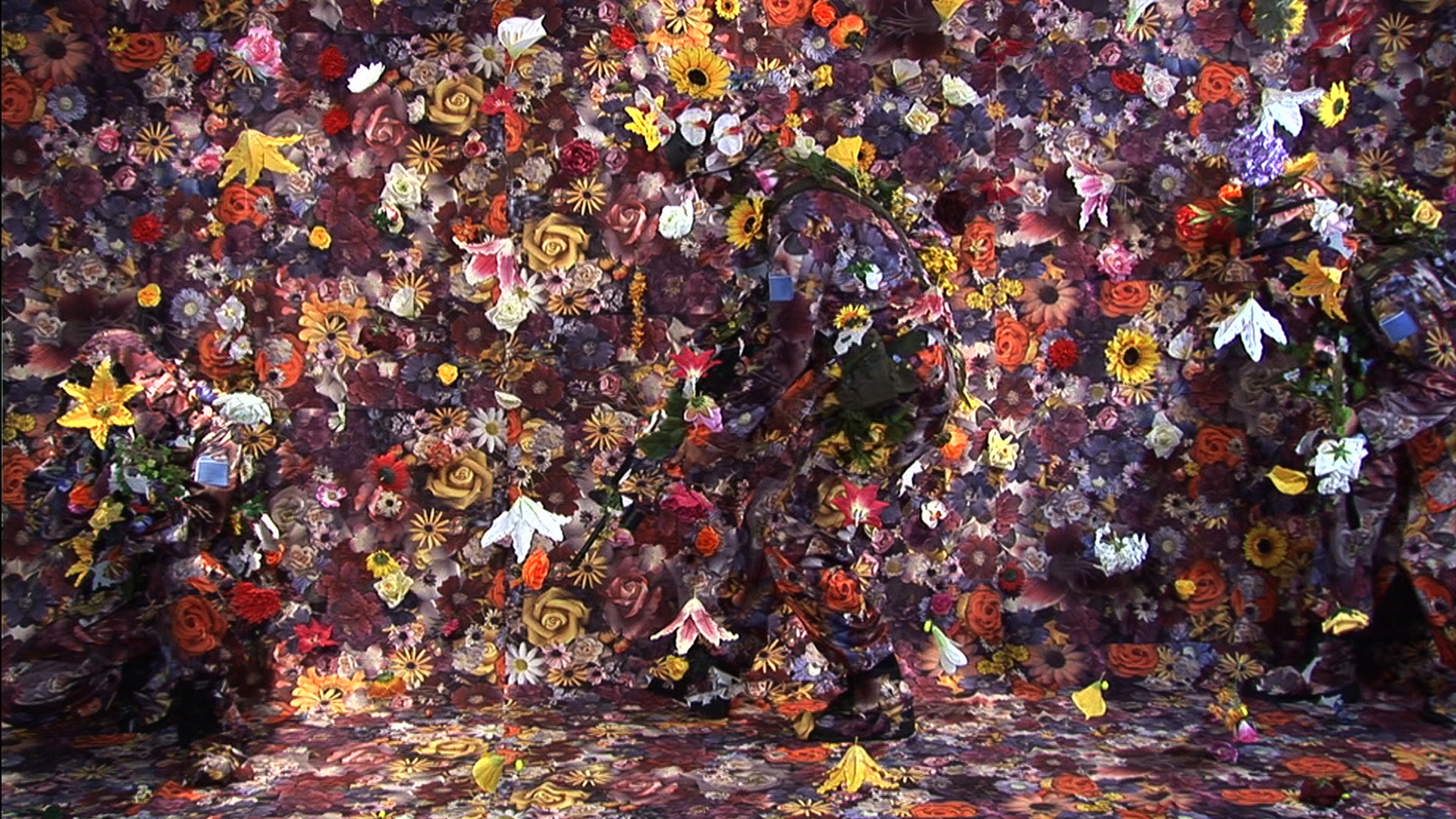
edition of Angel-Soldier in 2011. This work
presents the essence of camouflage used by humans. It shows that the means of
survival in the animal world are apply to the human world, at least to Korea’s
situation. Korea can be defined in two words: wartime capitalism.
The
immoral and unjustifiable ruling ideology has deceived people. The rulers have
claimed that there is no way to defeat brutal socialist enemies except by
economic pressure. Thus, they have closed their eyes to the disparity in
wealth, social discrimination, human rights abuses, and lack of freedom of
thought and freedom of assembly of labor, always promising to deal with these
issues in the future. Although most people, except for a
few chaebeol (conglomerates), high-ranking government officials, and
privileged social leaders, have been driven into invisible isolation, few
people are aware of their situation. The mainstream media, the hegemony of
sports, the feast of corruption, inhumane TV dramas, the morbid myths of
fetishism, large Korean-style churches that gained power by tapping
anti-communism, and the fabulous faces and bodies of TV entertainers are not
only Korea’s angels but also its soldiers.
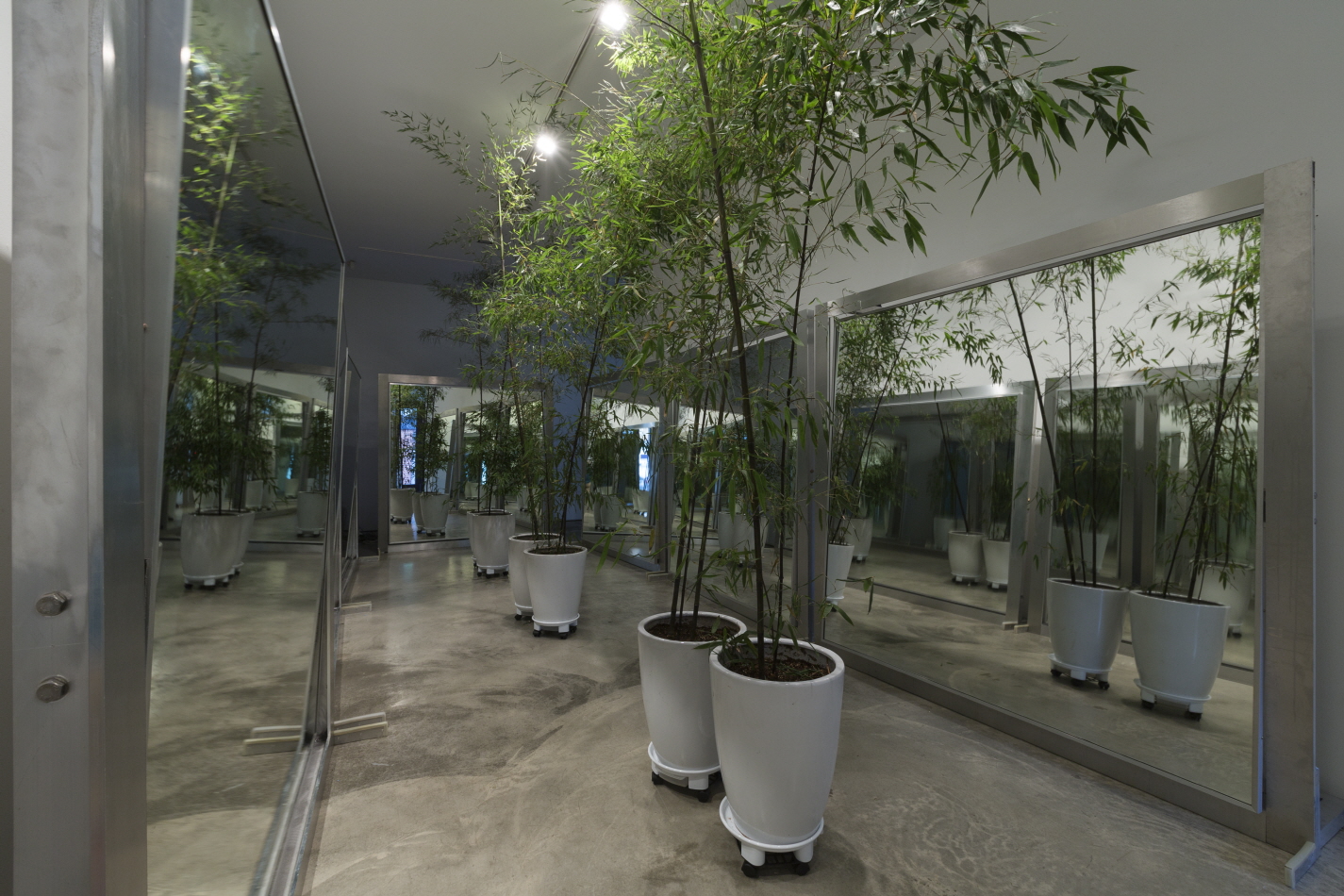
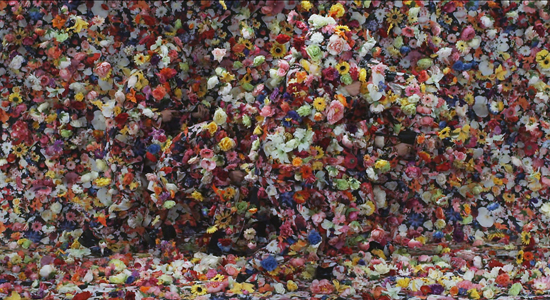
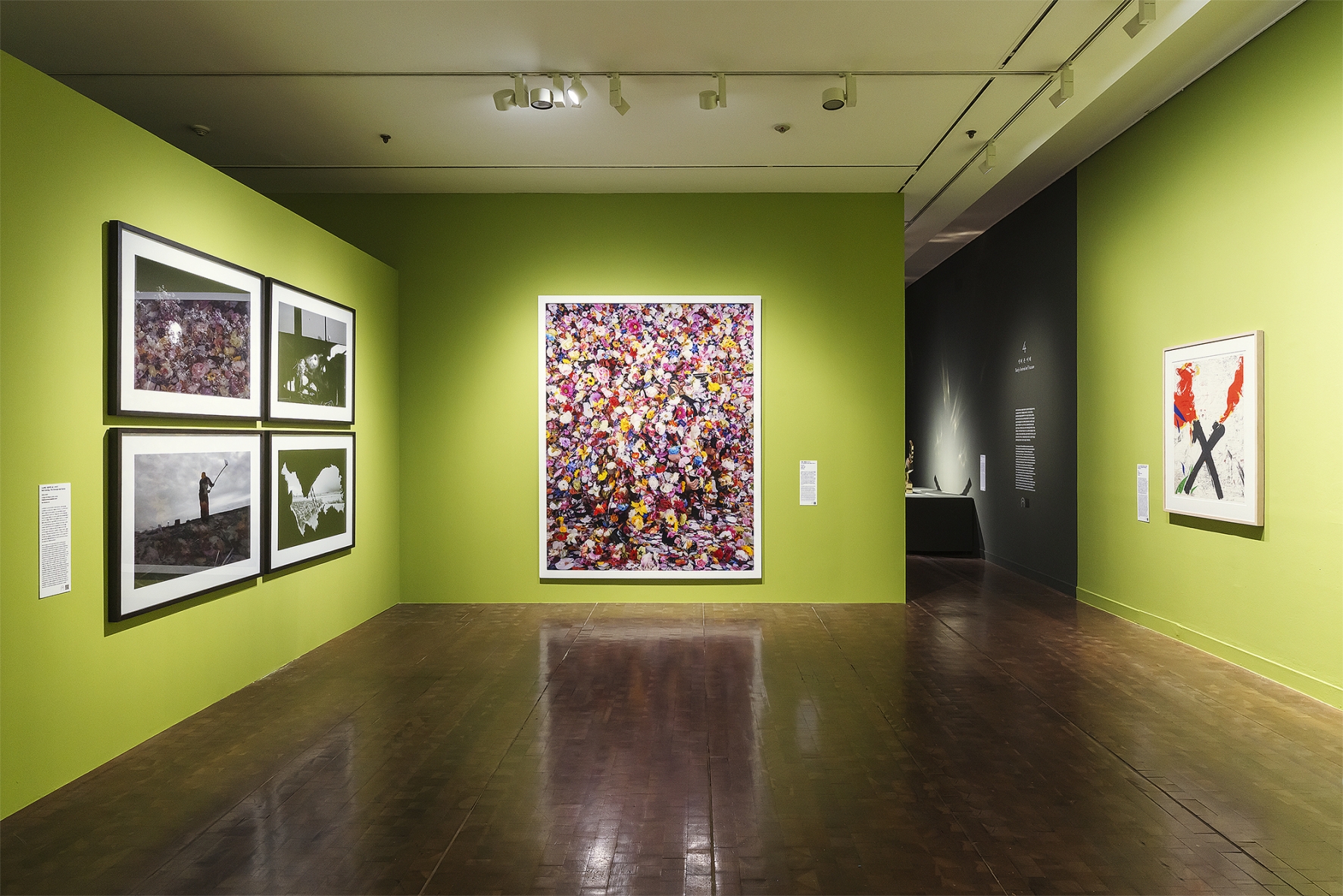
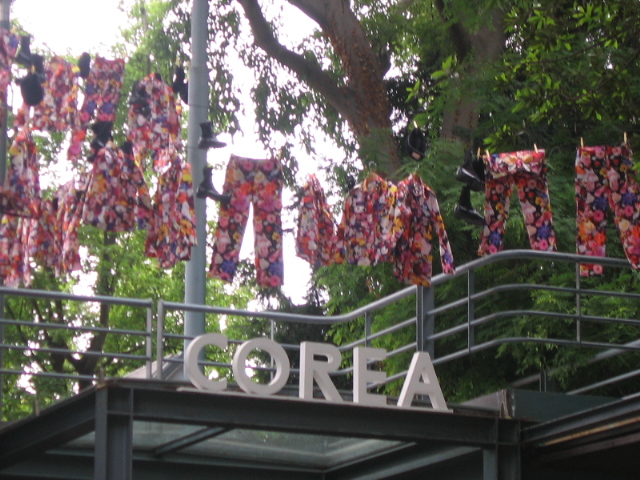
People wearing a flower-patterned
military uniform, who are angels and soldiers at the same time, slowly sneak
through a fake flower jungle. The strategy to hide an uneasy truth with a
splendid appearance of oblivion really is similar to what we see in the animal
world. When this piece appeared, the relationship between South Korea and
North Korea was rather peaceful, and thus the true quality of this piece was
not well understood. By 2011, the South and the North had nervously had a
number of incidents, revealing the nature of both. To the extent that
their relationship is characterized by hostile coexistence and the hiding of
nature, both nations exist with the camouflage of allomorphism, an angel and a
soldier. Apart from the complex social dynamic symbolized by this work,
the sound effects of the work, the sounds of grass insects and wind, are quite
pleasant.
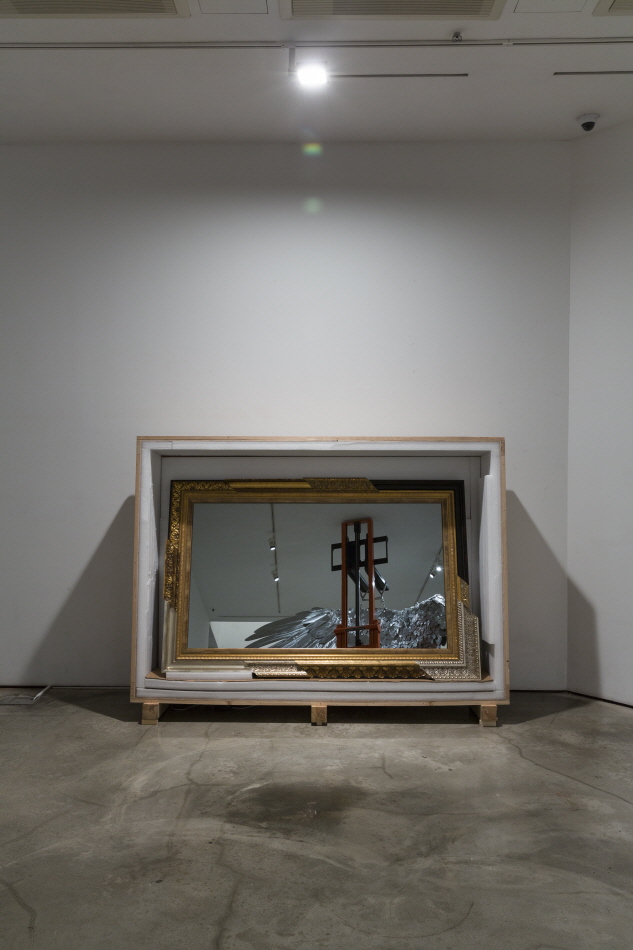
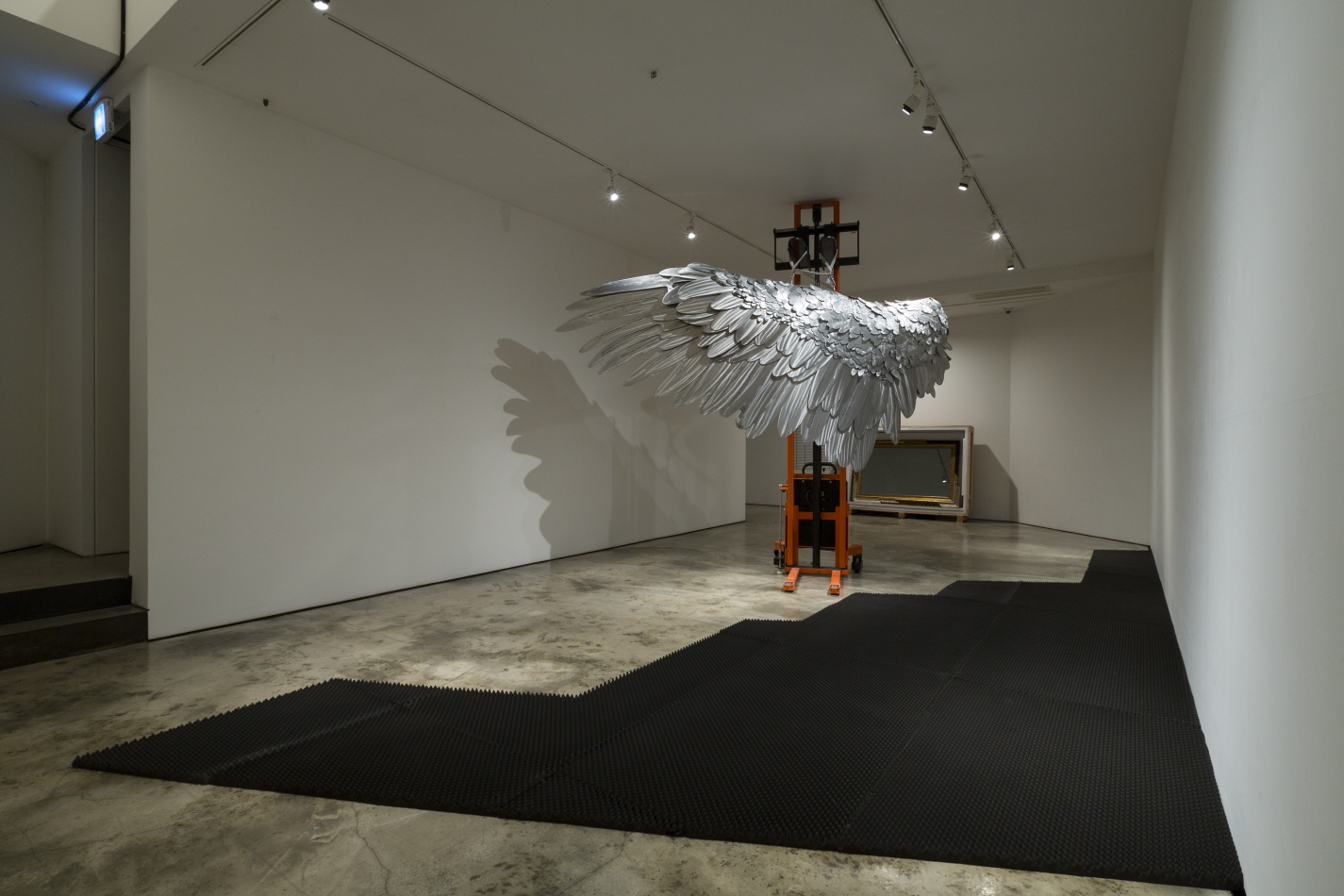
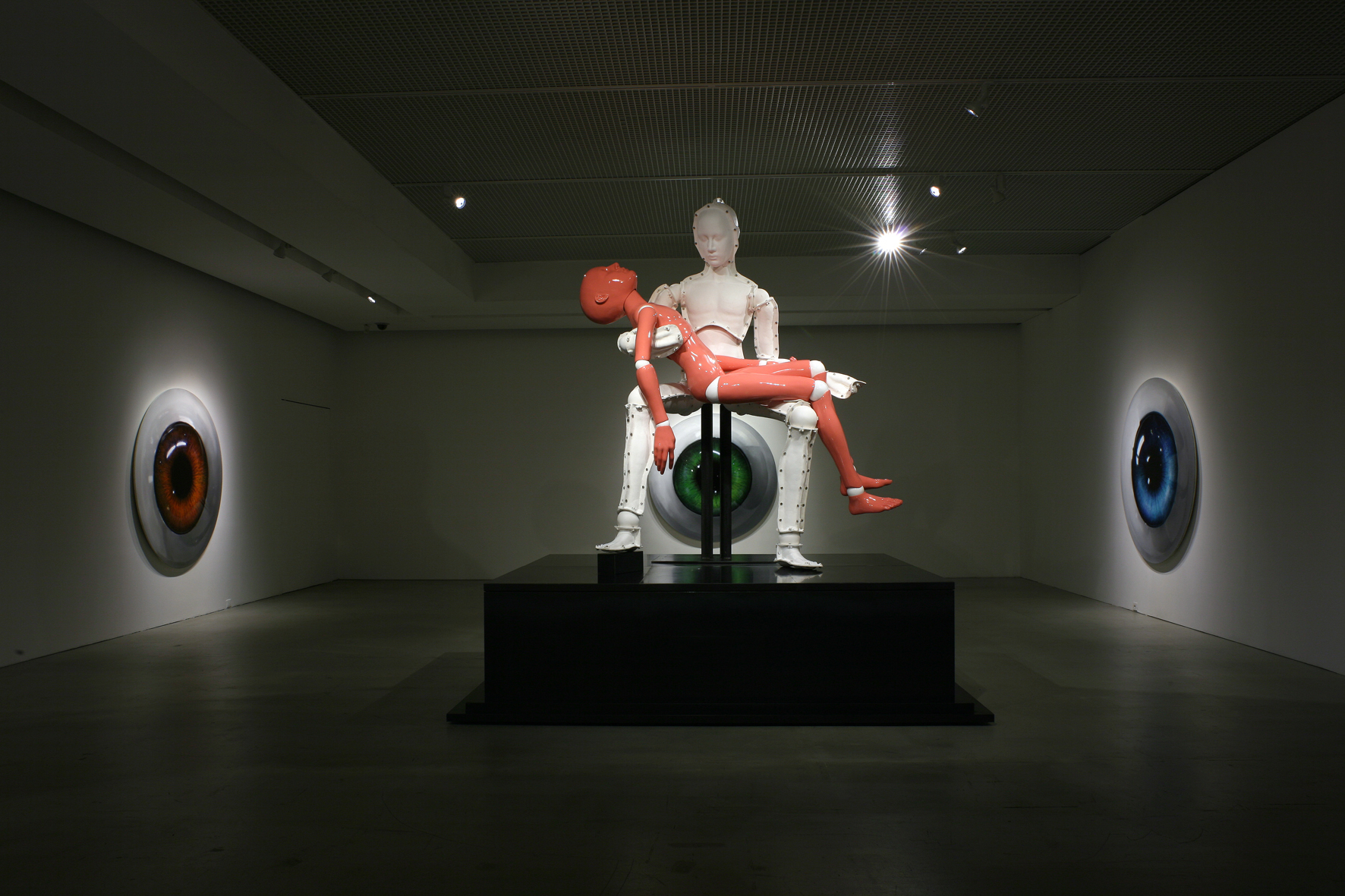
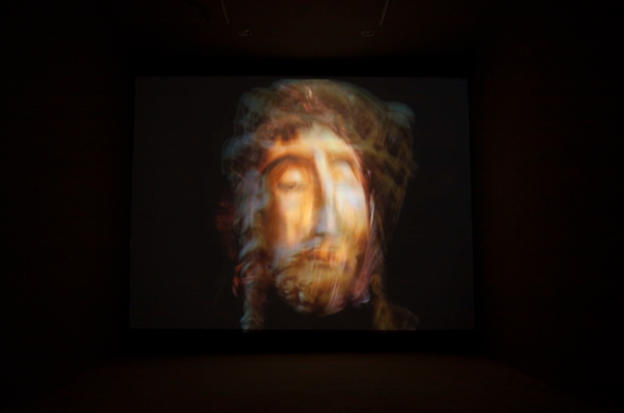
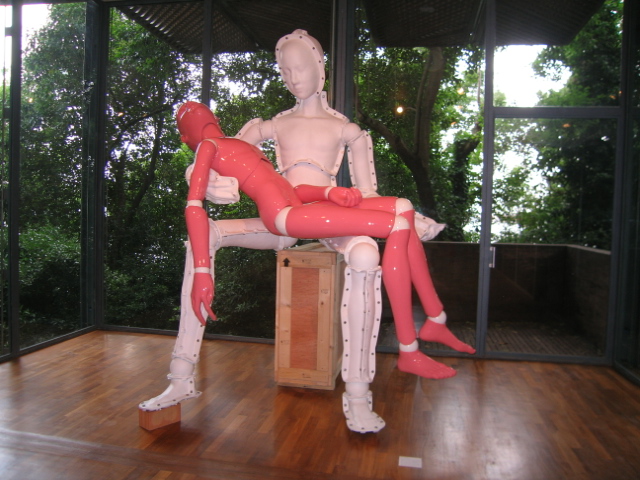
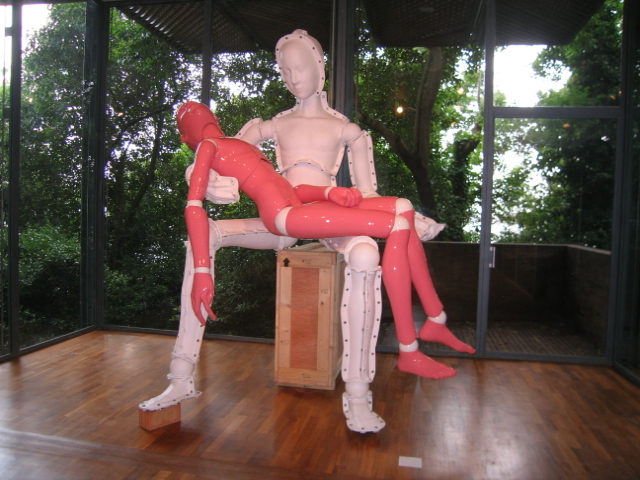
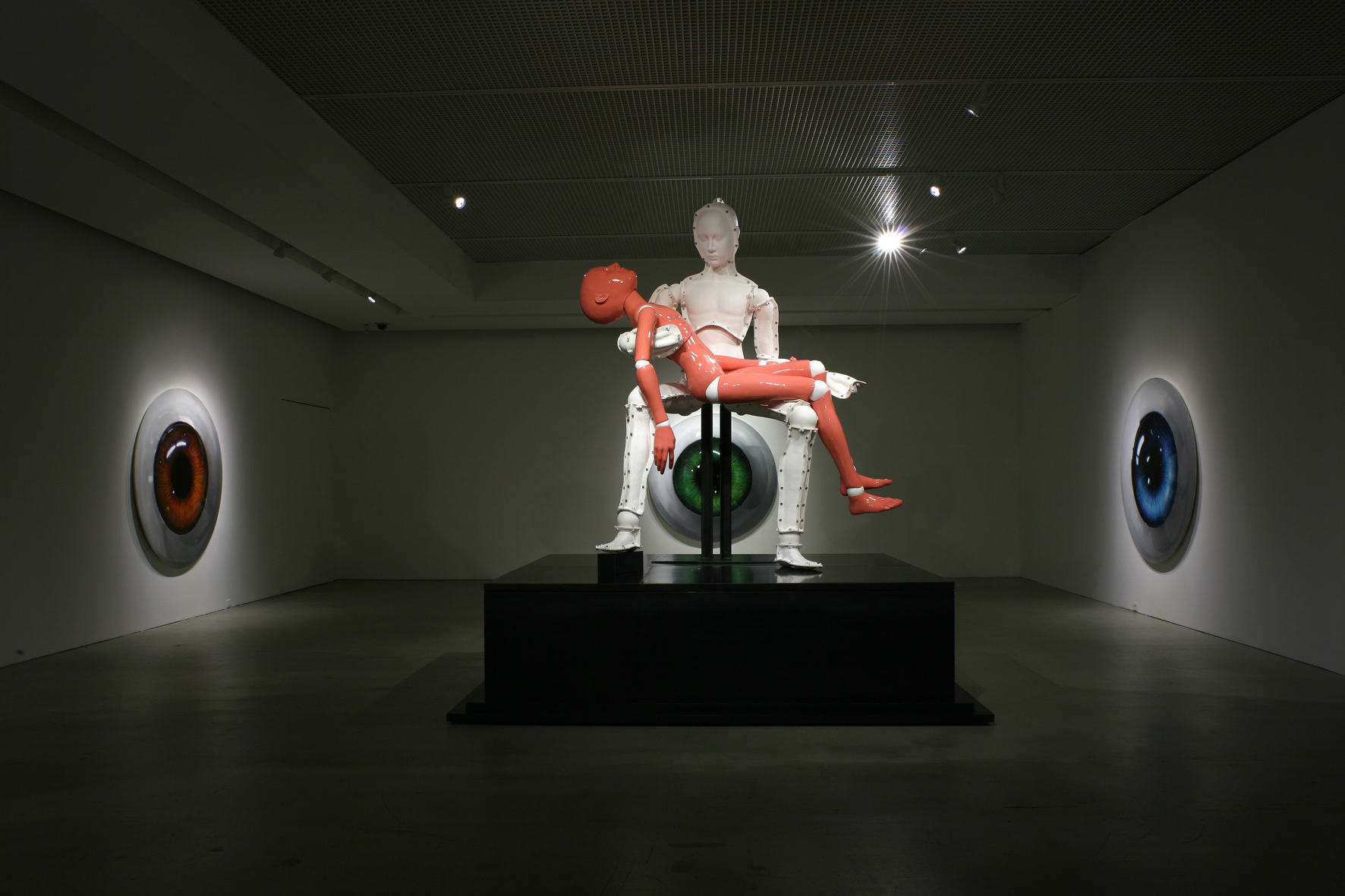
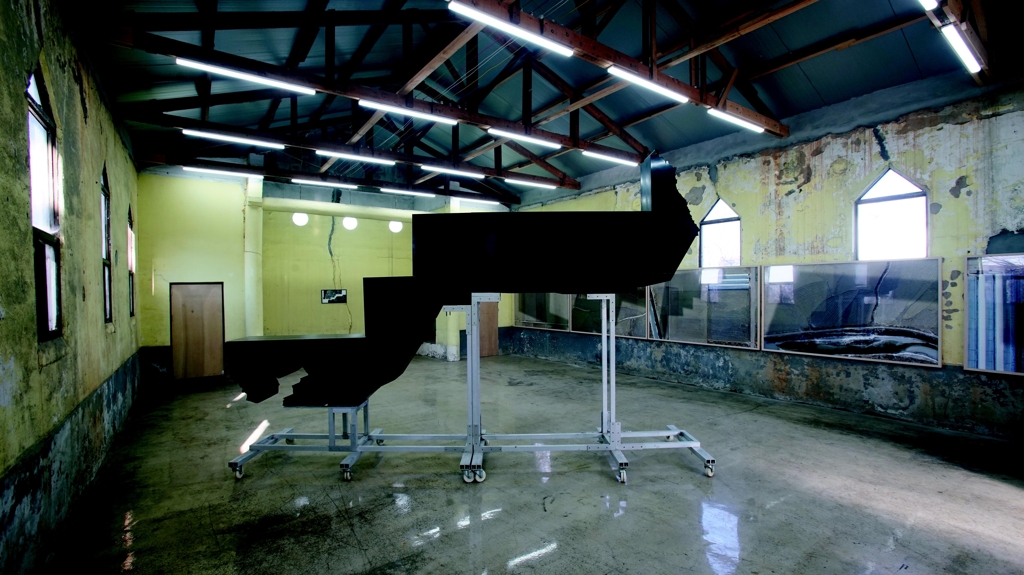
Another monumental work by Yongbaek Lee is Pieta. The
original form of all religions and cultures has the mechanism of a victime
emissaire, a scapegoat. The mechanism of a victime emissaire is
a kind of charm against evil influence that tries to prevent the possibility of
many sacrifices by choosing a sacrificing target. It conducts an economic
function that prevents the sacrifice of humans by using animals and the
function of spells that block bad violence with good violence. Also,
a victime emissaire offered as an object of sacrifice becomes perfectly
passive. As all members of a community fervently react to a victime
emissaire, it serves to prevent the violence of a larger disaster.
That
is, it is not dedicated to a symbolic god but to widespread violence.
Examples of this rite include the Holocaust, which occurred in Europe during a
period in which economic conditions had worsened and fascism was complete; the
slaughter of native Americans, which is hidden in the history of western
settlement of the US; the massacre of 6,000 Koreans by Japan after the great
Kanto earthquake of 1923; and the 1980 Gwangju civilian uprising. These
tragedies show a common point: when a community or civilization develops, the
leadership class makes members positively accept their role or passively remain
as spectators by killing opposing forces, and the members end up contributing
to a societal mood that is excited with rising development.
We need to remember
that any civilization at any time is a physical accumulation built on
widespread suffering and pain. Today’s civilizations and communities are no
different from past ones. The moral training for a complete personality is
impossible in a society of limitless competition in the era of
globalization. Contemporaries have become tools as quantified individuals. They
are guaranteed institutional freedom as individual beings, but their affluent
lives end with sentences of execution. This contemporary era provides us a hint
that it is an era of self-sacrifice That is, the reasoning as to why
Pieta by Yongbaek Lee recalls the image of a cyborg should be read.
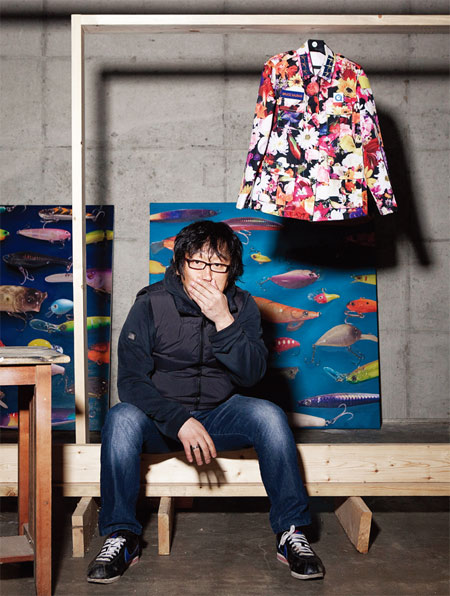
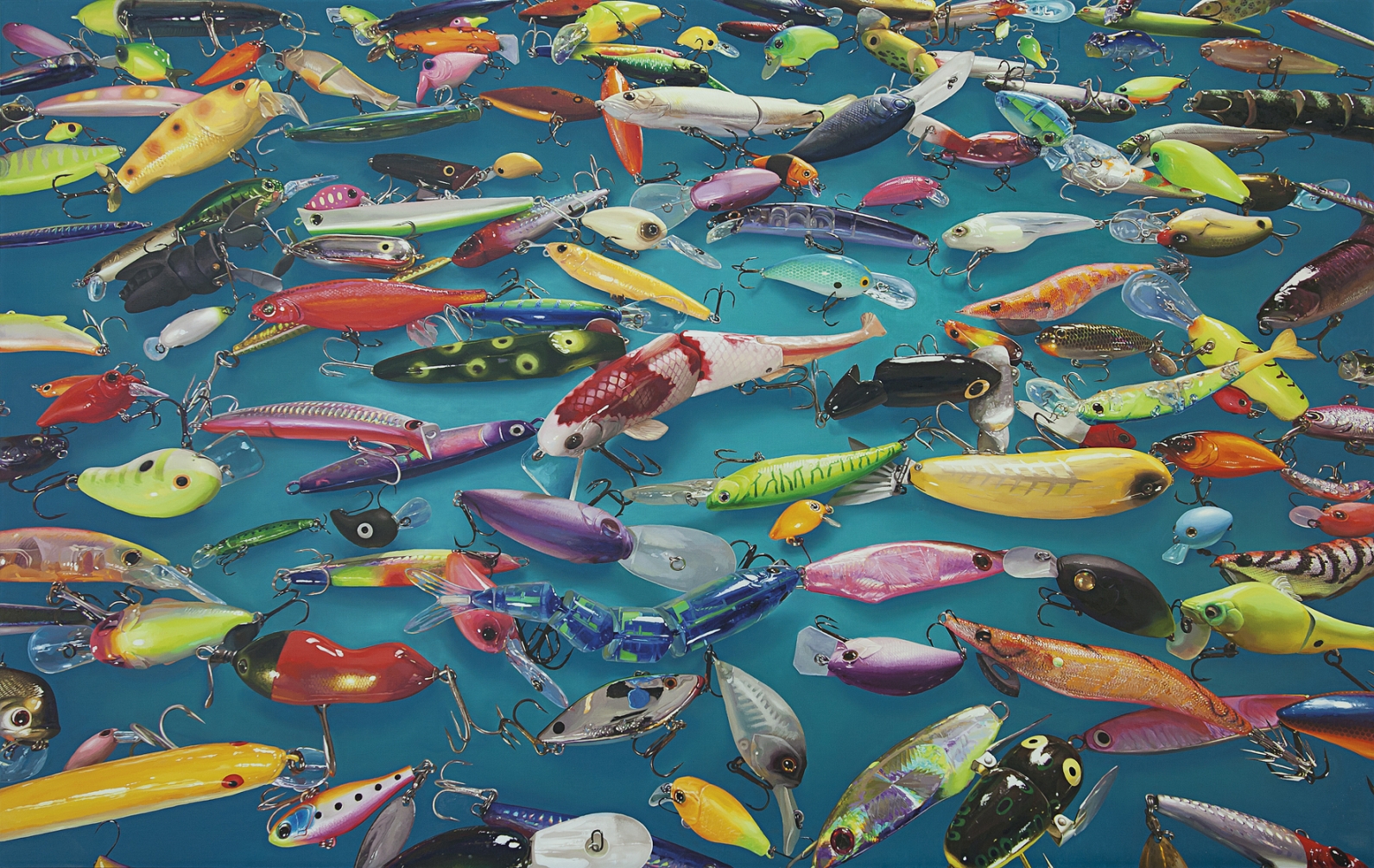
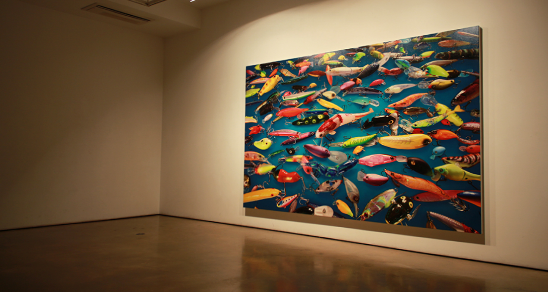
Now, let's look at a series of paintings: ‘Plastic Fish’. In
this series, plastic fish simply fill up the canvases. The pieces have an
equal system without a main theme or discrimination. This equality is in fact a
source of confusion itself. It is a fatal gesture of fake items that tries to
assume the value of genuine ones. The word ‘honor’ in the West denotes a life
that establishes morality, pursues universal values, and is dedicated to a
community. However, the word is misunderstood in Korea, which is blindly loyal
to Western culture, as a word indicating the rich regardless of their tools and
methods.
The word ‘sorry’ in the West connotes a strong sense of personal
responsibility. However, the word in Korea implies behavior inconsistent with
the word itself, and is a double-faced attitude without responsibility. A
society in which moneyed success achieved in any possible way is thought of as
honor has no future. On the other hand, in addition to a misfortunate
premonition, viewers can find in the series an indication of hope. The series
shows that the dissolution of centralism, that is, a society of multilateral
values, is being introduced to Korea and Asia. Totalitarianism is a horror
play in a secret room, and its society is controlled by coercion in a closed
space.
Now, the curtain has come down on the final act of the horror
play. Recently, the democracy of multilateral values and the mood that
equally admits an individual life and the cause of an entire society were
formed in Korea. This new movement is quite splendid. This work by Yongbaek
Lee also effectively manifests the meaning of the present era rooted in the
region of Korea. As can be seen through his works, the strongest asset of
Yongbaek Lee is that he does not remain in personal sentimentalism or habit.
All of his pieces reveal that he is existentially confident about the
world. Finally, I will discuss the position of Yongbaek Lee’s art in
Korea’s art world.
In the 1990s, when the civil government came to power, after black
and white ideas such as monochrome art and minimalism and the modernism of
abstract expressionism and Minjung art had lost their power, Korea’s art had no
forms of its own. Instead, the Korean art world uncritically accepted Western
art and Korea became flooded Western-style art of various
movements. Criticism had to be deferred for some time. However, Yongbaek
Lee clearly recognized the wall of his possibility and limitations and made
efforts to knock it down. He has made his efforts at his own initiative
constantly for the last 20 years.
Looking at his artistic journey, it
becomes clear that the first criterion of quality art during the confusing
period of Korea’s art is form that is consistent with the life of the artist
who realized the form, and when the artist’s work is the result of a journey
made through rough times and trial and effort, the art has genuine
value. The second criterion is an avant-garde spirit. Avant-garde is
defined as the art of an artist confronting the history of existing arts,
clearly examining the inner necessity between existing arts and past times,
keenly understanding the secret relationship between their lives and their era,
and finally realizing this keen understanding as a form. The third
criterion is the artist’s spirit in creatively germinating the seeds of all
problems of the era and society of the artist based on his/her sensibility that
his/her contemporaries can respond to.
The last and most important criterion
is that a macroscopic view should always be maintained according to which the
weight and depth of life that an artist recognizes should come before the
formal excellence of his/her artworks. These criteria are small but great
virtues that, thanks to the 25-year art career of Yongbaek Lee, people have
finally started to recognize.