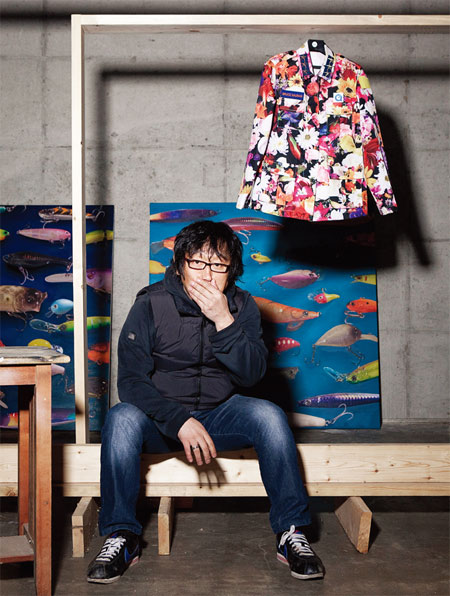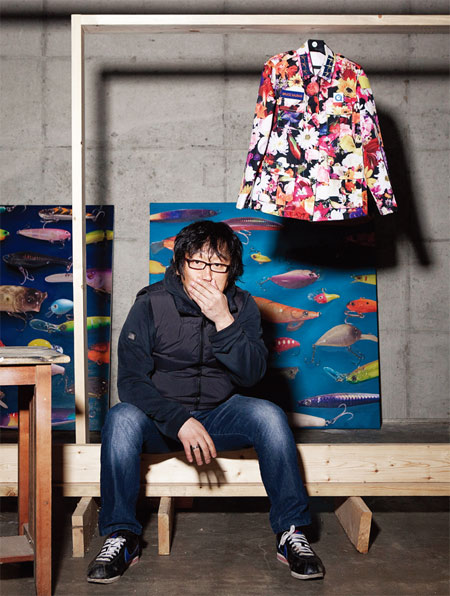

Born in Gimpo, Korea, Lee Yongbaek graduated from the Department of Painting at Hongik University in Korea in 1990, the Department of Painting at Stuttgart State Academy of Art and Design in Germany in 1993, and the Department of Sculpture at the Graduate School of the same university in 1995. Since graduation, he has been actively working in Korea and abroad.
Lee Yongbaek (b. 1966) has established
his own framework by visualizing stories about human existence and inner life,
along with political and cultural issues unique to Korea, through media art,
sculpture, installation, photography, and painting.
Since the early 90s, the artist has
been experimenting with various technologies, from single-channel video to
interactive art, sound art, and kinetic art, and has been regarded as a
representative of Korean media art. However, the high praise for his work comes
not from these technological experiments, but from his ability to express the
socio-cultural issues and artistic imagination of the time in these
technological forms.
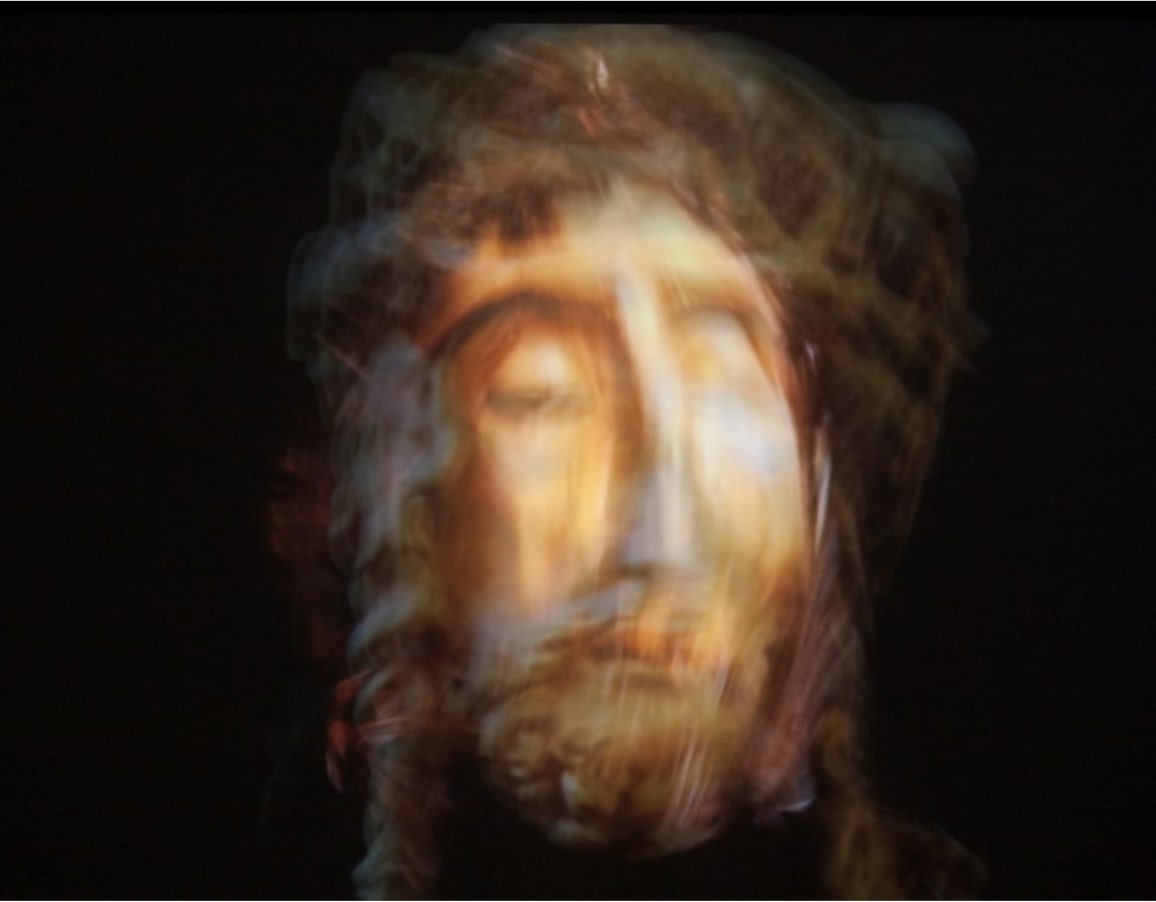
Lee Yongbaek, Inbetween
Buddha and Jesus, 1999-2002 ©MMCA\In the 1980s, when Lee Yongbaek was
studying at university, the Korean art scene was divided into two axes:
minimalism and ‘Minjung art.’ However, the artist experimented with various
media and participated in a group of 'Golden Apple' artists, whose works were
heterogeneous at first glance but shared a common social context. At that time,
the artist also worked on the themes of process and environment, and his
artistic experiments began to expand when he studied abroad in Germany.
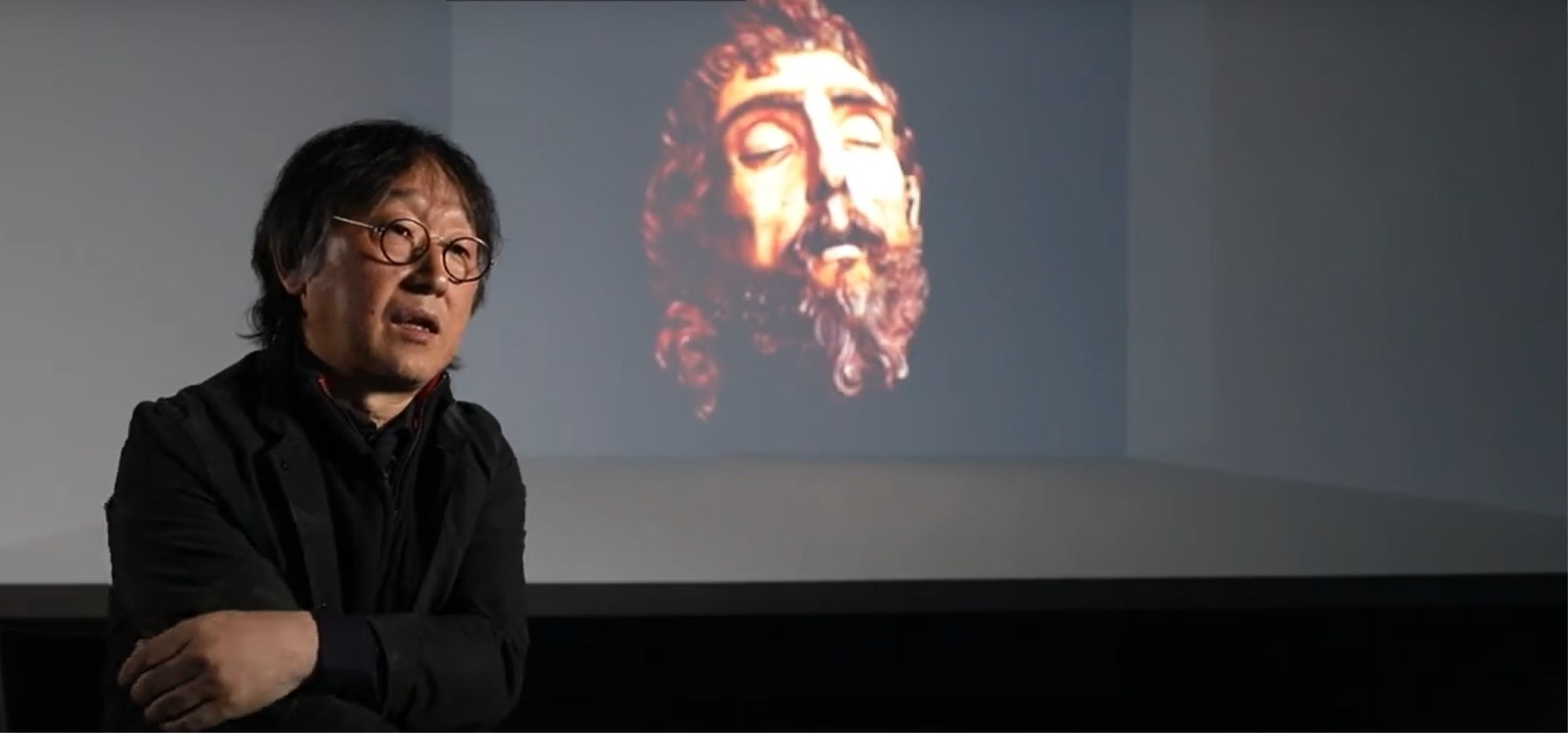
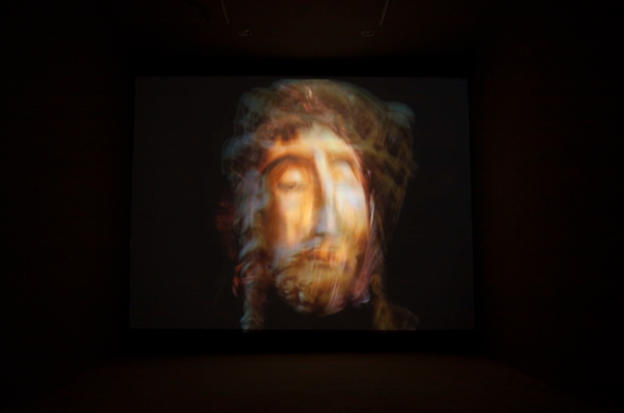
For example, the video work Inbetween Buddha and Jesus,(1999-2002), which he made while
studying in Germany, connects and switches images of Buddha and Jesus using the
morphing technique, which seamlessly transitions one image into another. In the
process of making the video, the artist deleted the original images of Jesus
and Buddha and edited only the computer-simulated images.
This process of synthesis and
transformation reflects the artist's thoughts on the way of thinking, cognitive
structure, and ontology in the age of digital technology, where the archetypes
and centers of religious iconography disappear, and heterogeneity coexist. The
work was first created as a video installation in 1994, and then re-created as
a single-channel video with better resolution in 2002.
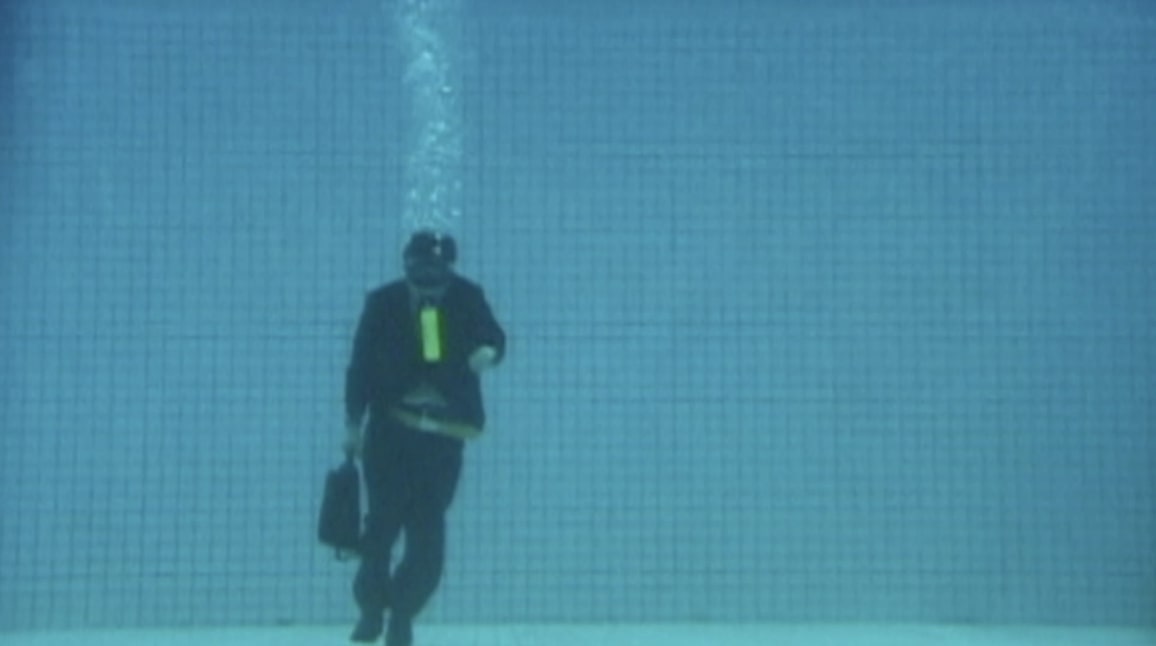
Lee Yongbaek, Vaporized
Things (Post IMF), 1999-2000 ©MMCALee Yongbaek experienced the “IMF
crisis” shortly after returning to Korea from studying abroad in Germany in
1996. At a time when office workers were being laid off one after another, the
artist was inspired by a friend of his who said, “It's hard to breathe,” to
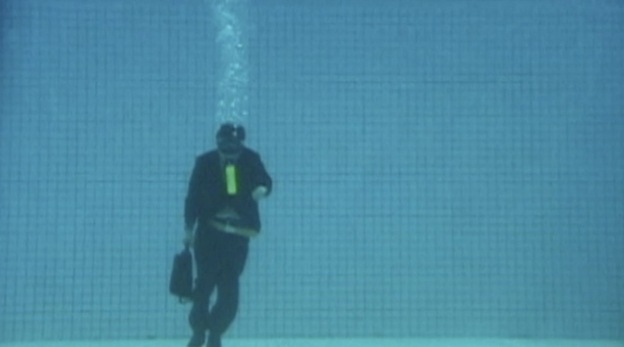
make Vaporized Things (Post IMF).
The video shows a suit-clad office
worker staggering through the water of a swimming pool while wearing an oxygen
respirator. The image of an office worker walking precariously, feeling
resistance in the water, is a metaphor for the anxious inner lives of modern
people and their portraits, which were suffocatingly precarious at the time.
The work, which was also exhibited at
the 5th Gwangju Biennale in 2002, was shown in a market greenhouse rather than
an exhibition hall. By being shown in a simple place in our daily lives rather
than in an art museum, the social reality and stories of modern people in Vaporized
Things (Post IMF) permeate and are shared with the audience and
the real space in which they stand.
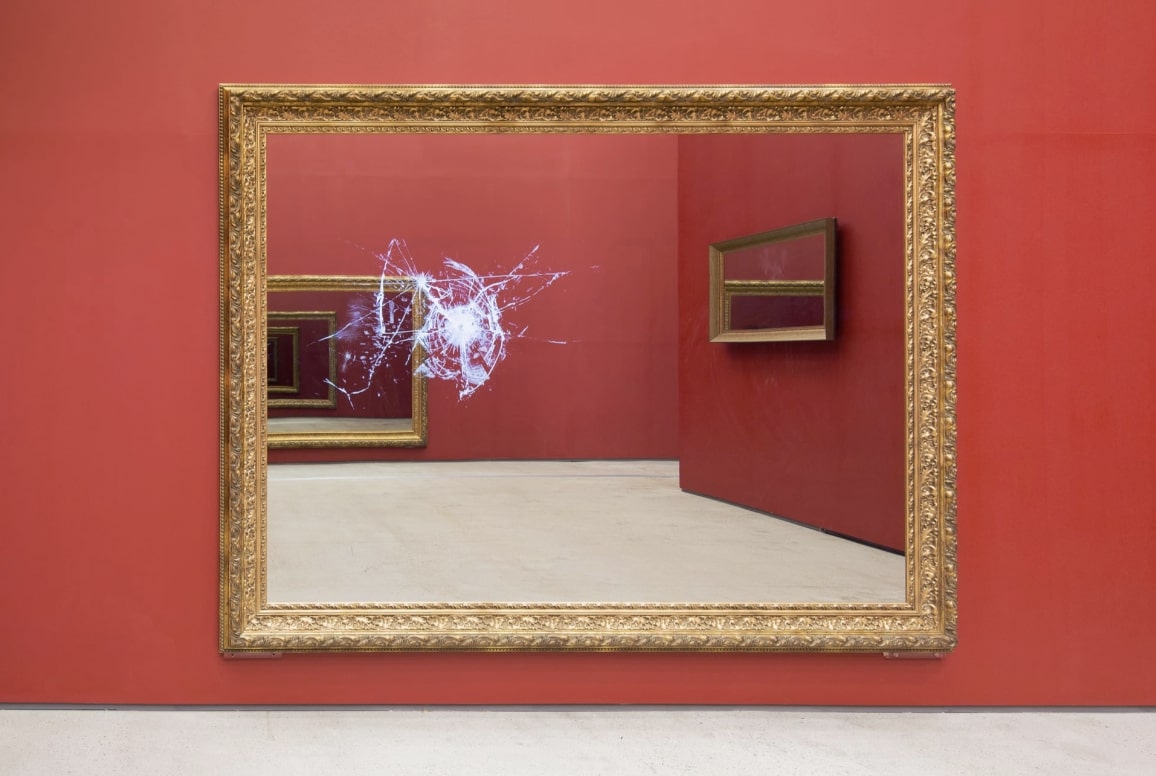
Lee Yongbaek, Broken
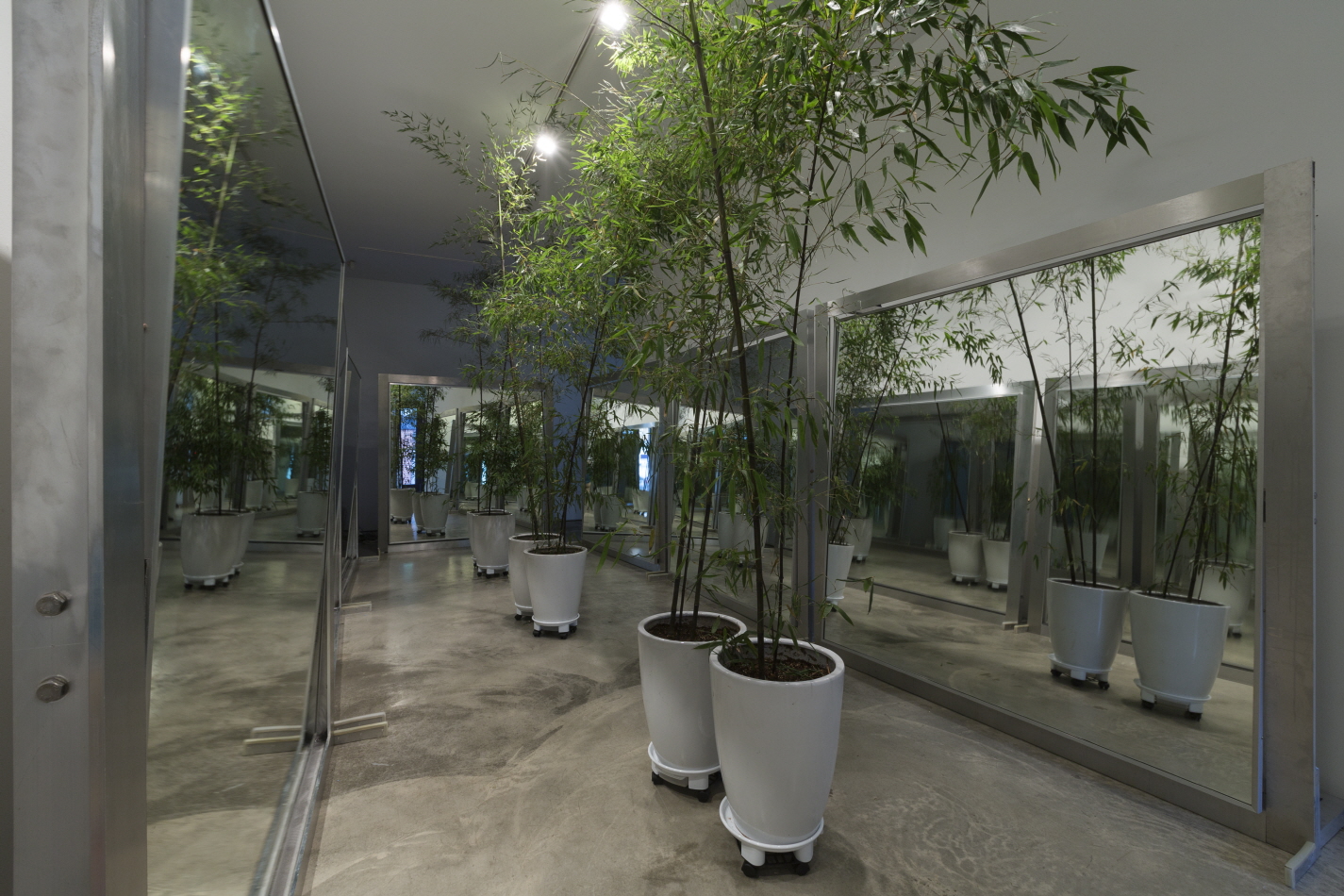
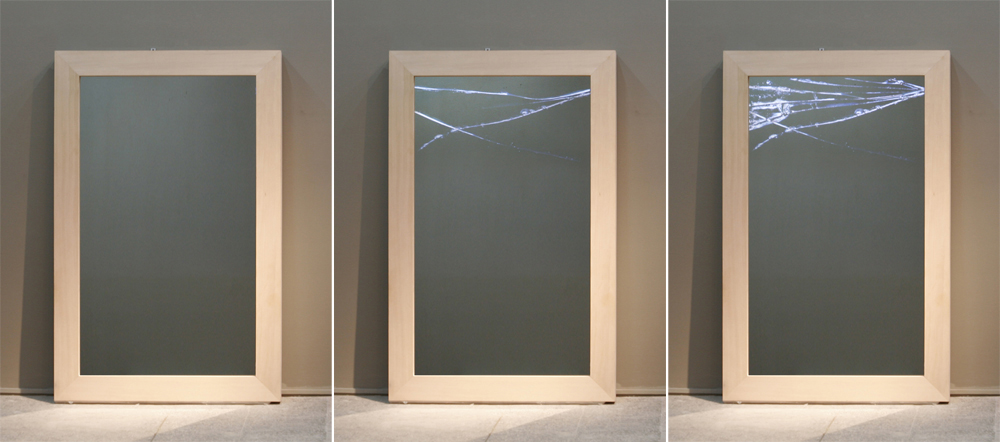
Mirror, 2011©MMCAAnother work that gives us a glimpse
into Lee’s thoughts on society and human existence through the medium of
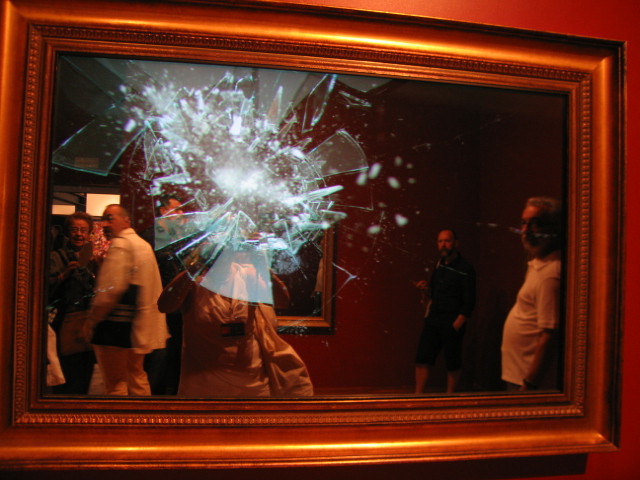
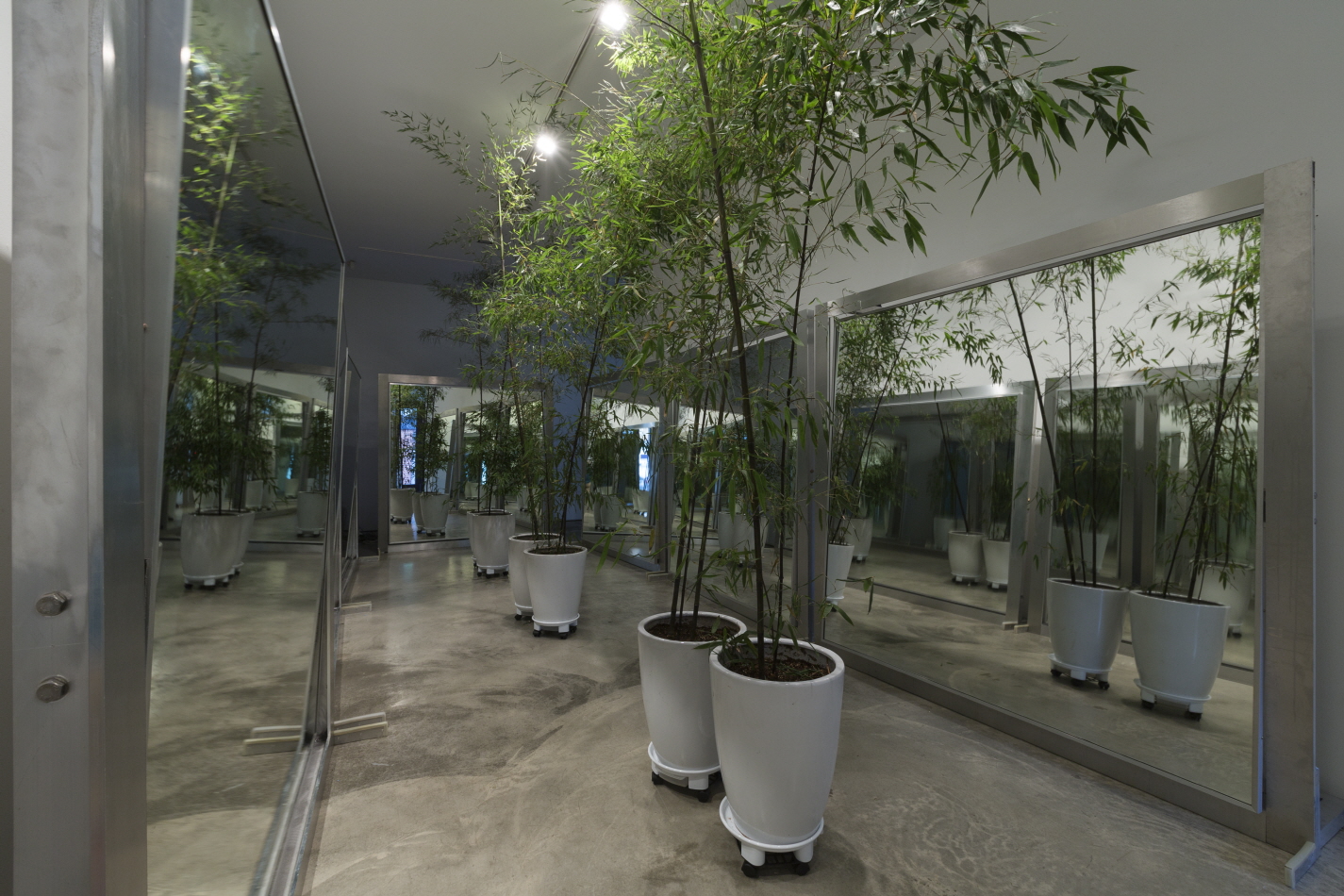
technology is Broken Mirror. Exhibited at the Korean Pavilion at
the 2011 Venice Biennale, the work is composed of giant mirrors facing each
other.
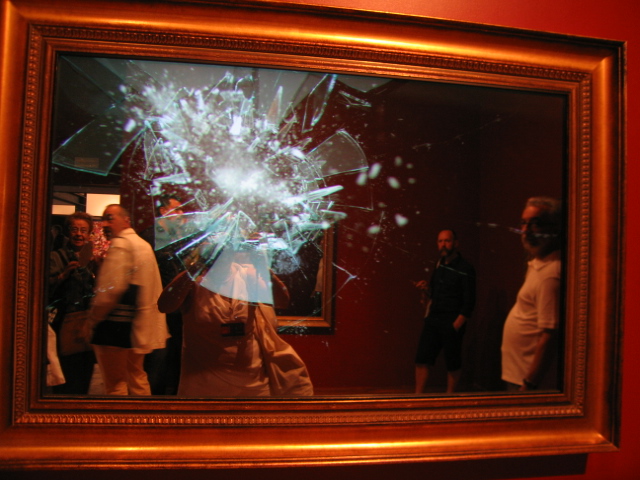
LCD monitors are attached to the back
of the mirrors, showing a bullet passing through the glass on one side and a
window shattering on the other. These visual effects are accompanied by the
sound of breaking glass.

The viewer perceives the fictional image along with the physicality of the mirror as a real object, along with their own image reflected in the mirror. This places the viewer on the blurred line between reality and fiction, raising fundamental questions about existence.

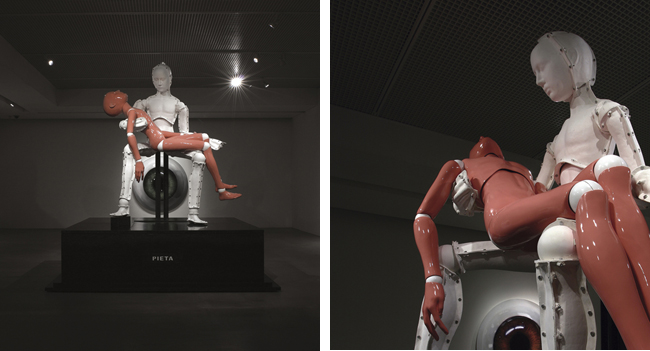
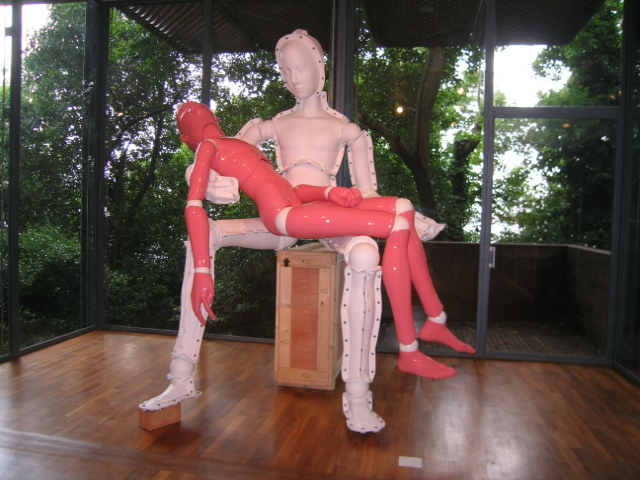
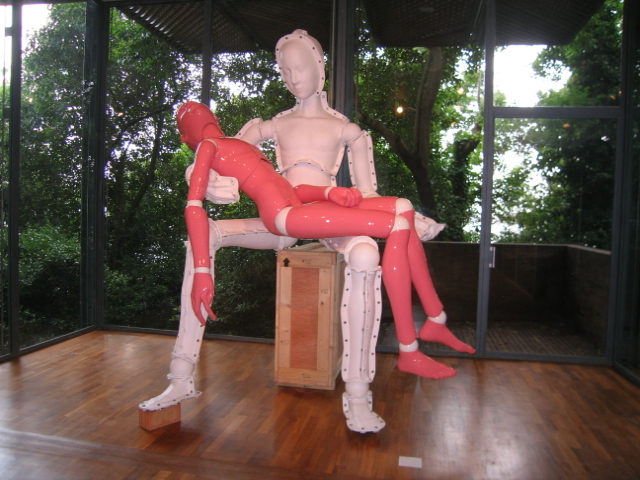
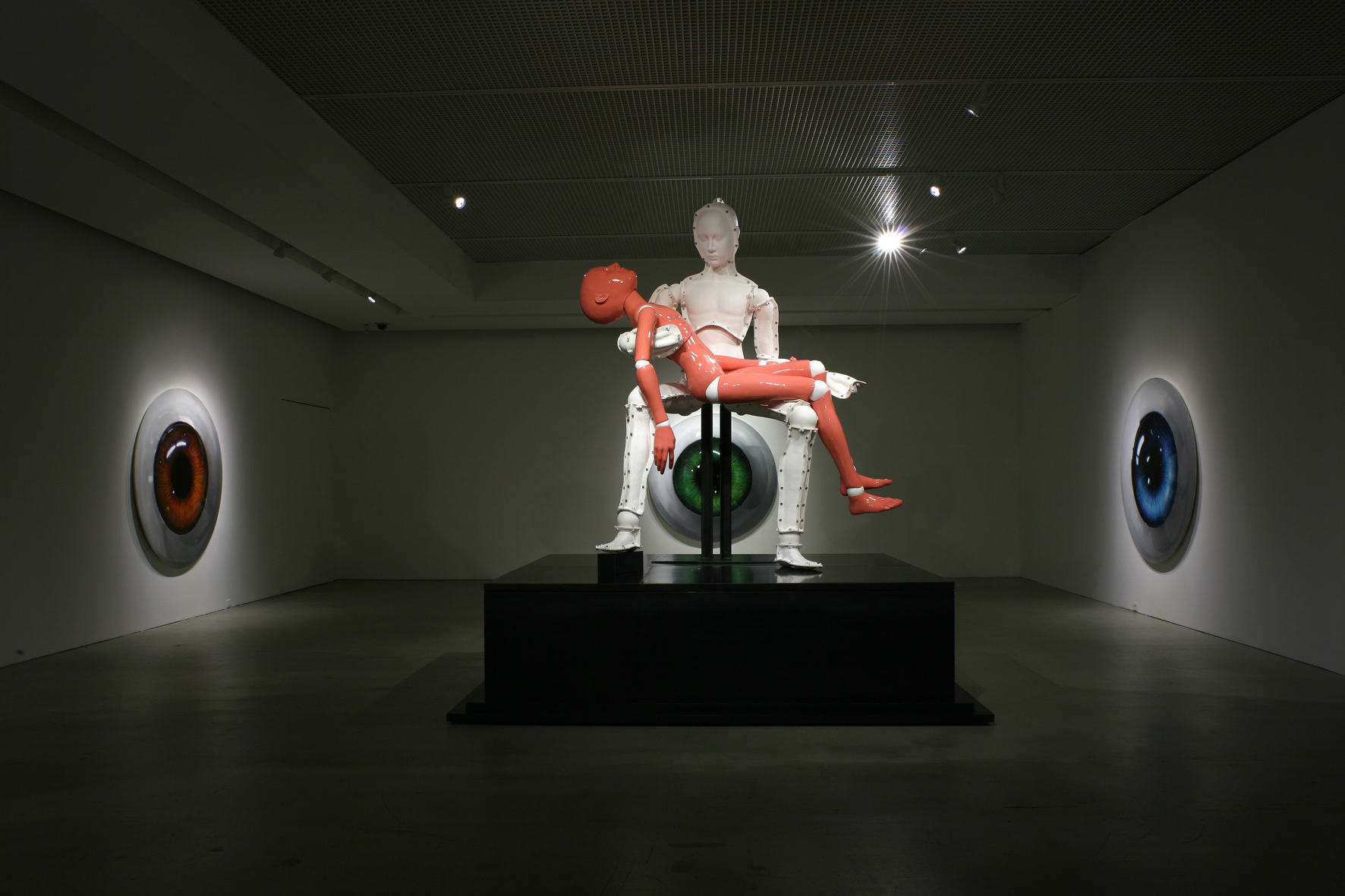
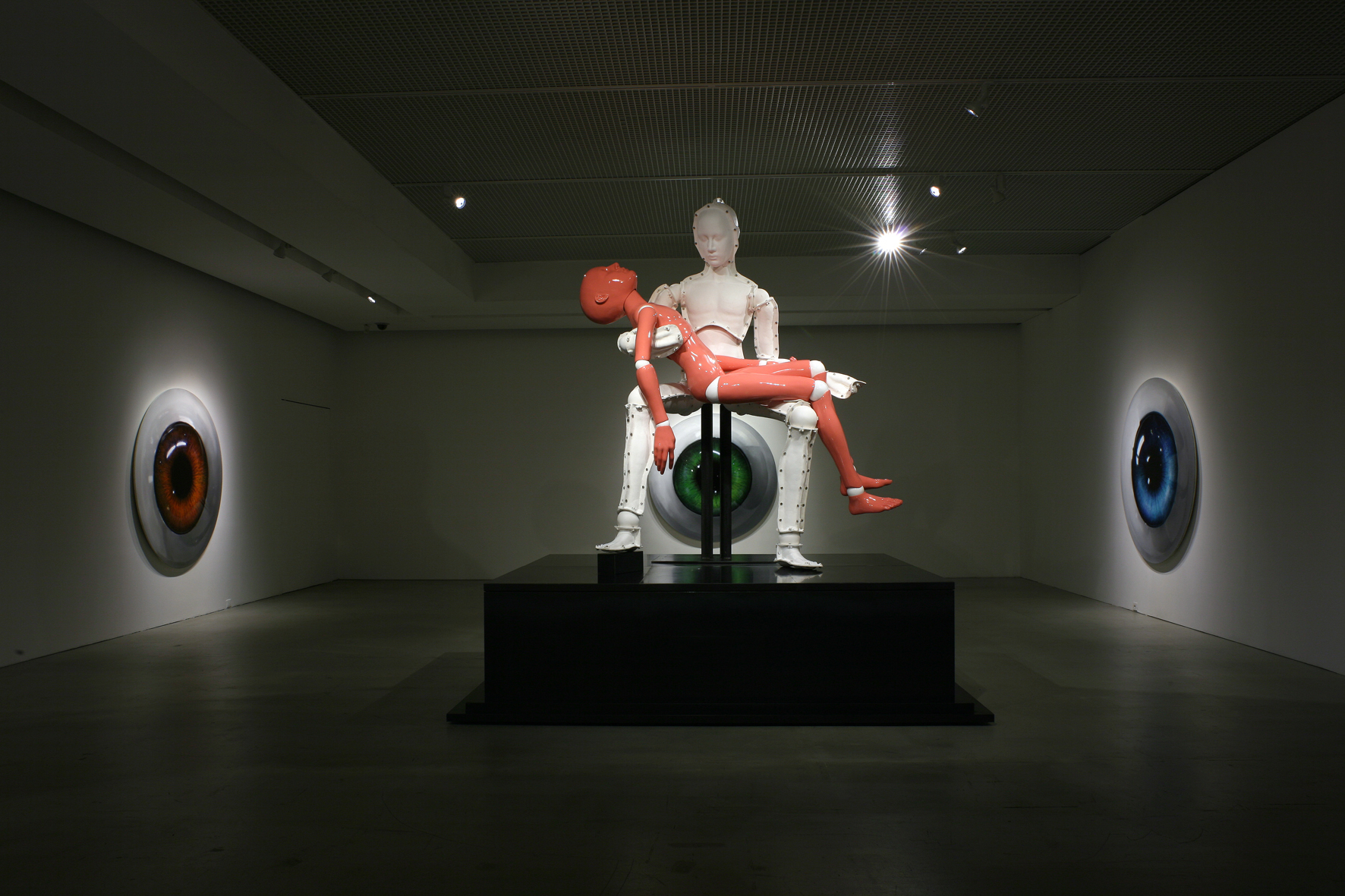
Along with Broken Mirror the artist presented two works from the Pieta series at the Korean Pavilion of the Venice Biennale in 2011. The Pieta series is a trilogy consisting of 'Self-love,' 'Self-hatred,' and 'Self-death,' and at the Venice Biennale, the artist presented 'Self-hatred,' in which a doll and its mother, a mold, fight each other to the death, and 'Self-death,' which borrows from Michelangelo's Pieta, in which the Virgin Mary looks down at the scalpel of Jesus on her lap.

The cyborg or robotic form of the mold
archetype and the doll born from it love and fight with each other, and with
the doll's death, the doll falls back into the arms of its archetype, the mold.
“What is born from the mold is the alter ego of the mold, but it can also be
the real thing itself,” Lee Yongbaek explains.
The Pieta
series is a story about the contradictions of the existence of 'I,' the
self-love, self-hatred, and self-death of the fragmented subject of today's
modern people, and the reality that humanistic humans and gods have disappeared
and are replaced by hybrid cyborgs, robots, and biotechnological beings as
products of technology.

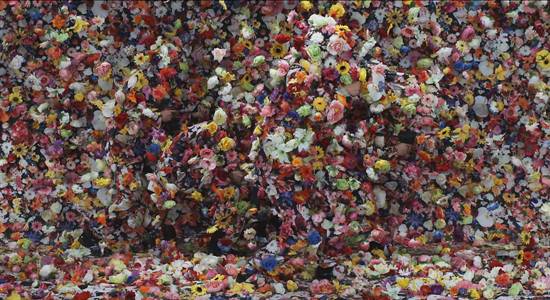
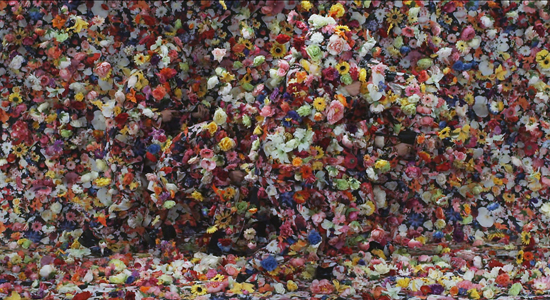
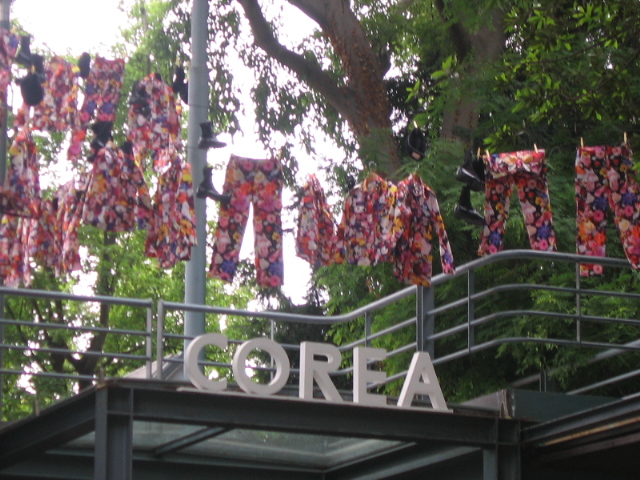
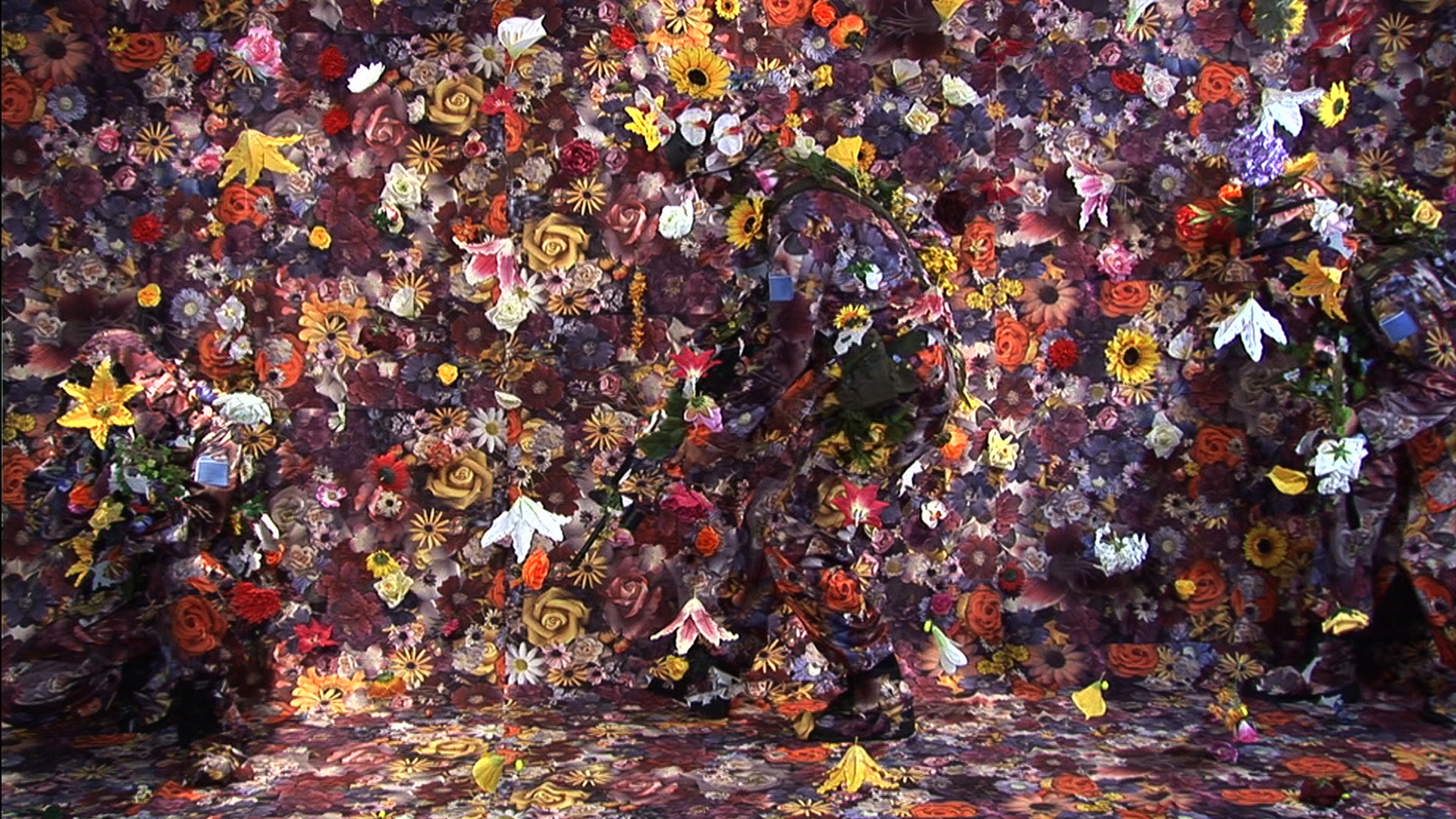
Angle-Soldier (2005-), another of Lee Yongbaek's
representative works, expresses the society of our generation through the
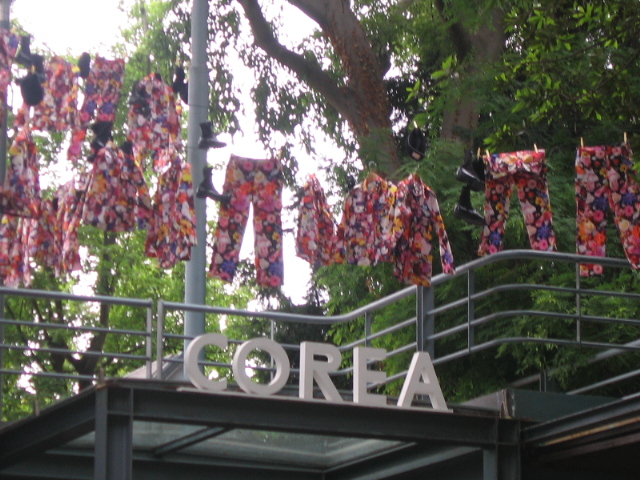
contrasting themes of angels and soldiers. Angle-Soldier, presented in 2005, combines various
media and methods, including performance, installation, and video, and consists
of a backdrop covered with a fabric printed with colorful artificial flowers,
six soldiers wearing military uniforms made of the same floral fabric, and an
installation of artificial flowers.
The work, which began with the
artist's imagination, “If the world is a field of flowers, shouldn't the
military uniforms be flowery?”, evokes an alien and unfamiliar feeling as the
soldiers in flowery uniforms march forward with their guns in a colorful and
bright background. It alludes to the reality of the division of Korea today,
and by emblazoning the military uniforms with computer program logos and the
names of masters like Picasso, it suggests that today's art is becoming a
highly strategic product of the myriad processes of reproduction, editing, and
transformation in virtual space.

Angle-Soldier was also expanded into a large-scale
performance work for the 2009 exhibition “Beginning of New Era,” held at the
former Defense Security Command Auditorium, in which 100 performers dressed in
floral military uniforms passed through a structure in the center of the
auditorium.
In this way, Lee Yongbaek has been
actively utilizing various media, including cutting-edge technology, to speak
about the contemporary world, the human condition within it, and the
possibilities of art.
“I am an artist who deals with various media. I believe that art is a dynamic process of life that experiments with other possibilities of life while breaking social prejudices and imposed forms.”

Born in 1966 in Gimpo, Korea, Lee
Yongbaek graduated from the Department of Painting at Hongik University in
Korea in 1990, the Department of Painting at Stuttgart State Academy of Art and
Design in Germany in 1993, and the Department of Sculpture at the Graduate
School of the same university in 1995. Since graduation, he has been actively
working in Korea and abroad.
He has held solo exhibitions at
domestic and international institutions such as Sungkok Museum of Art (Seoul,
1999), Alternative Space Loop (Seoul, 2005), +Gallery (Nagoya, Japan, 2005),
and Spinnerei WERKSCHAU (Leipzig, Germany, 2014), and has participated in
numerous group exhibitions. He was selected as an artist for the Korean Pavilion
at the Venice Biennale in 2011 and has participated in the Moscow Biennale in
2009, the Busan Biennale in 2008, the International Media Art Biennale – Media
City and Gwangju Biennale in 2002.