I. The Painter’s Lineage and the Formation of Artistic DNA
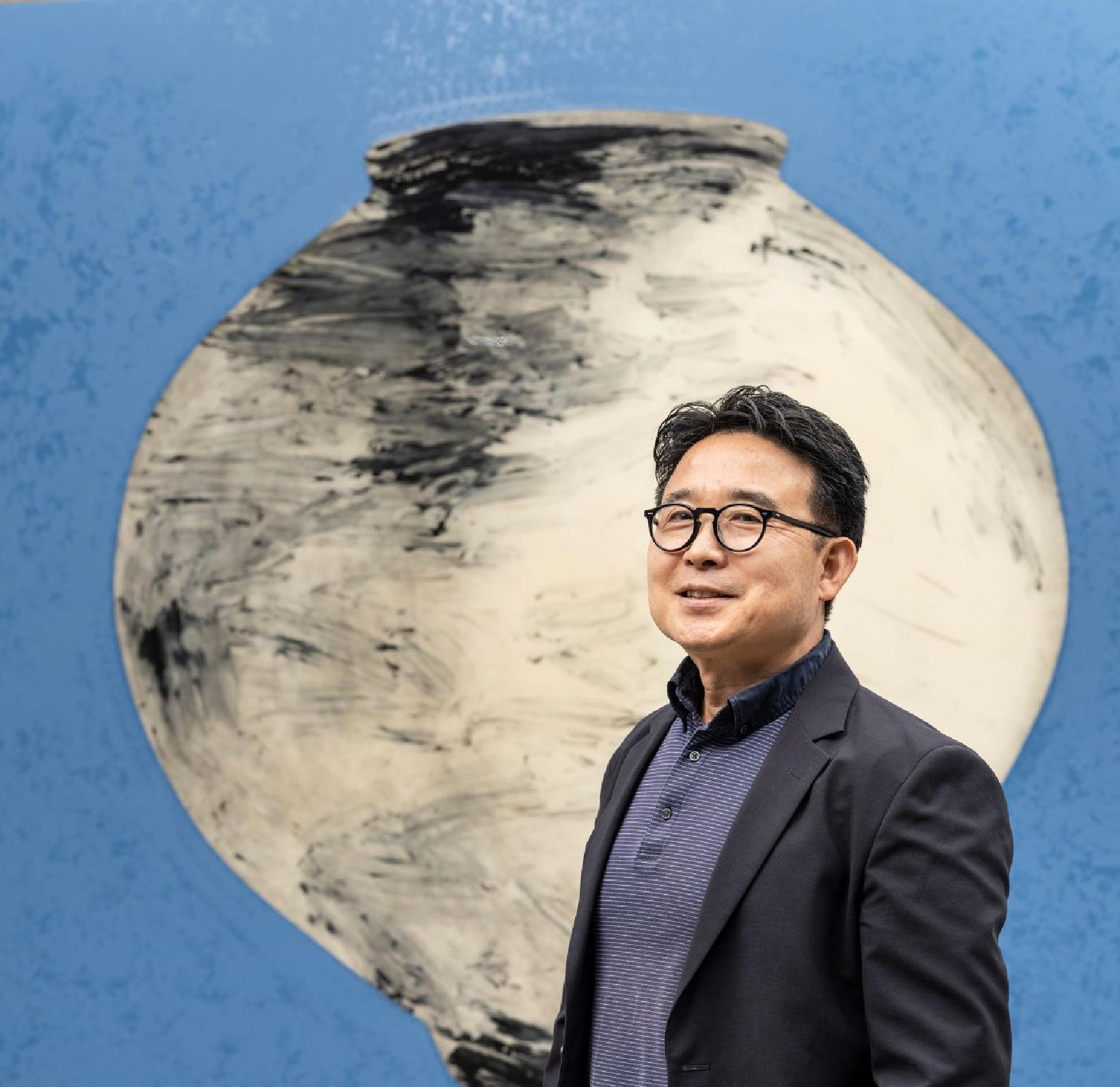
Ik-Joong
Kang was born on September 11, 1960, in Oksan-myeon, Cheongwon-gun,
Chungcheongbuk-do, as the second son among three brothers to his father Kang
Dae-cheol (1934–1989) and mother Jeong Yang-ja (b. 1933). Although the family
home was originally in Seoul, his mother had returned to her parents’ home to
give birth.
Kang’s father ran a pharmacy in Yeongdeungpo and later acquired a
pharmaceutical company named Daeil Pharmaceutical, which prospered for a time.
However, when Kang was around four years old, the company went bankrupt,
forcing him to spend his formative years in an environment marked by economic
instability—an experience that coincided with the development of his
particularly sensitive temperament.
From
early childhood, Kang was praised by relatives for his talent in drawing. This
may come as little surprise considering that he is a descendant of Gang Hui-an
(1417–1464) of the Joseon dynasty and Gang Se-hwang (1712–1791), both towering
figures in Korean art history. If one assumes that the artistic genes of these
masters flowed in Kang’s blood, his eventual establishment as a painter appears
almost inevitable.
In
1980, Kang entered the College of Fine Arts at Hongik University. Historically,
Hongik University has been synonymous with art education in Korea, producing
the core figures of Korean avant-garde art. From the Informel movement of the
late 1950s to the 1967 Joint Exhibition of Young Artists, and groups such as
A.G. and S.T., many pivotal artistic movements in Korean contemporary art were
driven by Hongik alumni.
While artists from Seoul National University also
participated, Hongik artists formed the mainstream. What unified these
movements was a strong experimental ethos. Avant-garde practice is only
possible when artists possess an intense experimental spirit, and historically,
Hongik University functioned as a gathering ground for such individuals.
When
Kang entered this environment, it was only natural that he would pursue
experimentation in art, drawing upon the traditions established by his
predecessors. However, according to recollections by art critic Juheon Lee, who
entered the university in the same year and observed Kang closely, Kang did not
find university life particularly engaging. Lee recalls the period as follows:
“Ik-Joong
Kang entered the College of Fine Arts at Hongik University in 1980. He had
taken a decisive step toward the life of a painter he had long dreamed of. Yet
student life was not as enjoyable as expected. Above all, he was dissatisfied
with the curriculum and educational content. The environment did not allow for
the free exercise of creativity and imagination. Rather than introducing
diverse artistic currents and encouraging individual expression, many
professors tended to emphasize a single dominant approach.”¹
What
was this “single approach”? One may surmise that it was the monochrome
abstraction prevalent at the time. Beginning in the early 1970s, professors
such as Park Seo-bo, Ha Chong-hyun, Choi Myoung-young, and Suh Seung-won led
the monochrome movement at Hongik’s painting department. While the department
remained a powerful incubator of experimental consciousness, it also gradually
revealed the downside of uniform abstraction.
In such an educational
environment, students with strong individuality either resisted openly or
retreated inward. Ideally, educators should motivate students to express their
unique identities while offering guidance from an objective distance. However,
when practicing artists take on teaching roles, maintaining such distance can be
difficult.
Particularly at Hongik—often described as a battleground of
personalities—the conflict between teacher and student becomes a contest of
force. Those who wish to grow as artists must either quietly endure their
studies and fight fiercely in the art world afterward, or assert their voices
loudly even while enrolled.
By
nature a quiet individual, Kang completed his student years without leaving a
strong impression—so much so that some professors later scarcely remembered
him, despite his eventual rise to stardom.
After
graduating, Kang moved to the United States in 1984 and enrolled at Pratt
Institute. Life in New York—the global heart of art shaped by
multiculturalism—provided him with the foundation for professional success as a
painter. New York is a place that ignites the artistic soul, where everything
seems possible, yet survival demands grueling daily labor.
For impoverished
artists, it is heaven and hell at once. Kang took on various jobs to survive,
including grocery clerk, street vendor selling watches, and worker at a Chinese
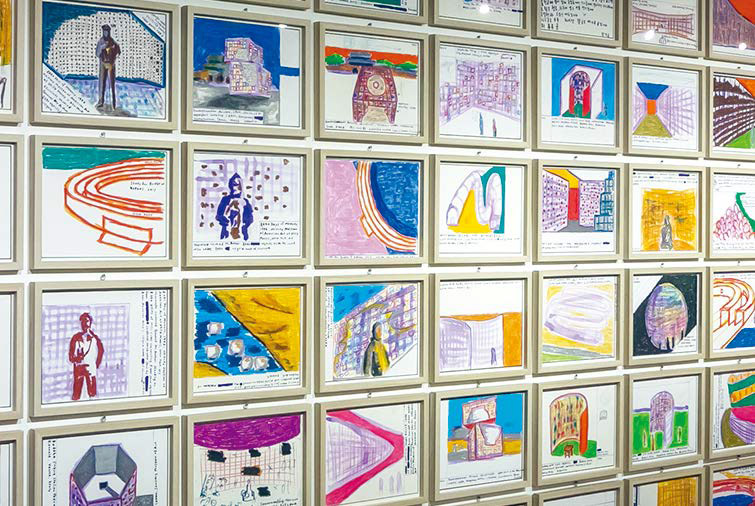
restaurant. The 3-inch square works that became his trademark emerged as a
byproduct of this period.
Time
was perpetually scarce. Between studying art and working part-time jobs, Kang’s
days were relentlessly busy. He commuted by subway and sought ways to make use
of that time, eventually settling on a format small enough to hold in his hand.
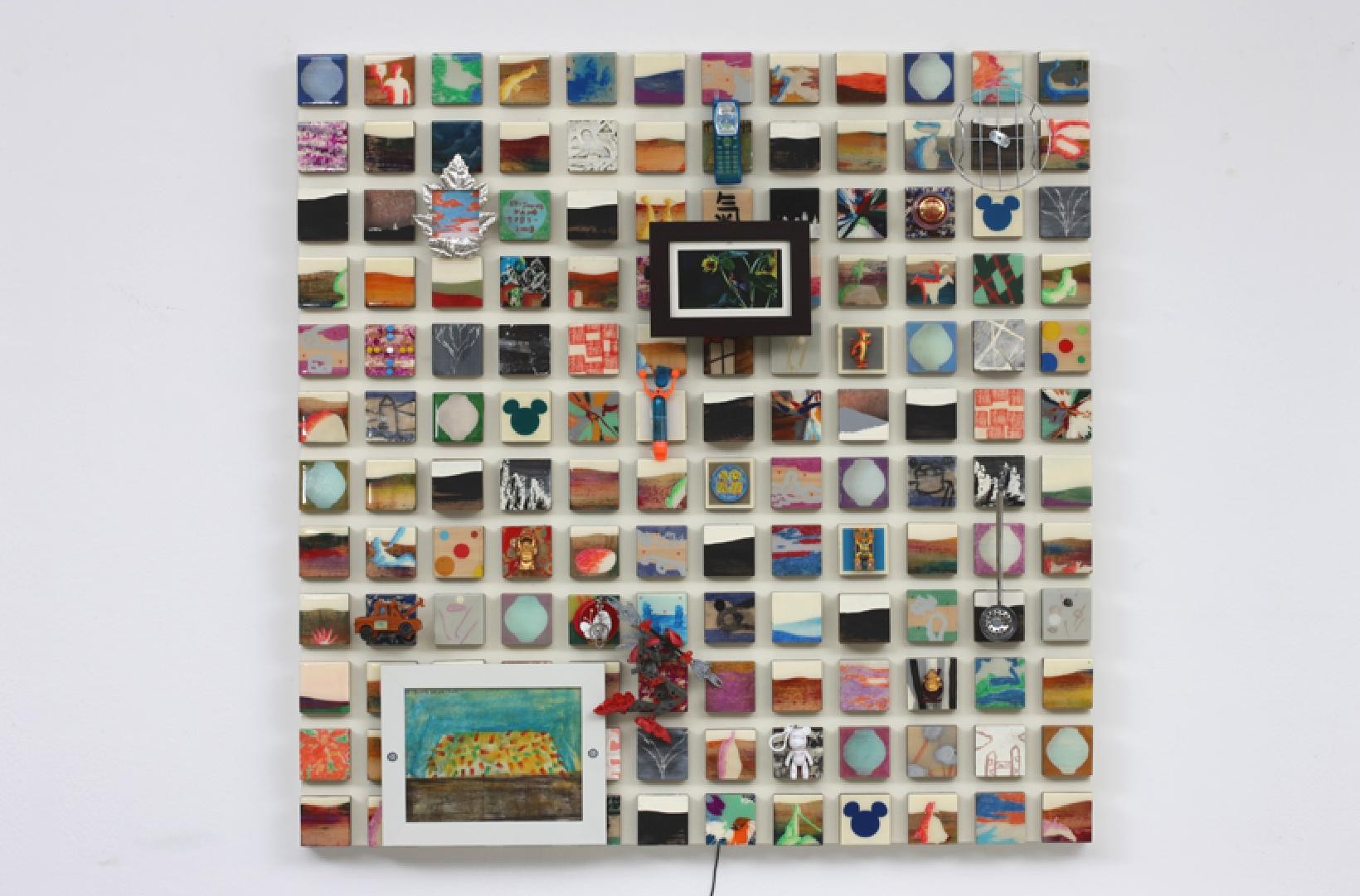
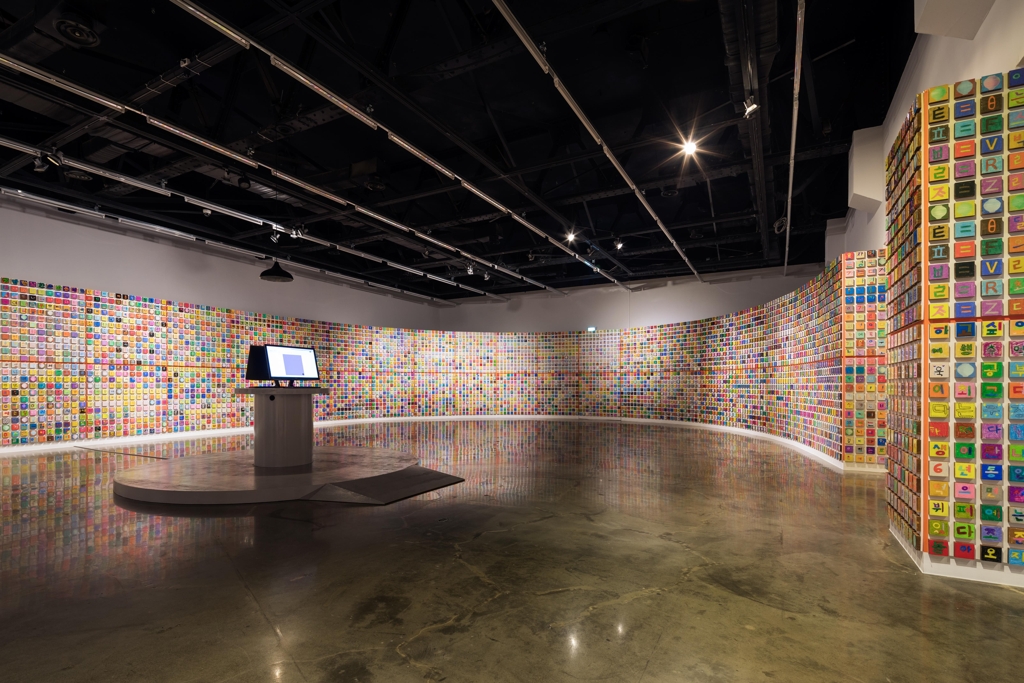
Measuring 3 inches—or 7.62 centimeters—these works were perfectly sized for
creation on the move.
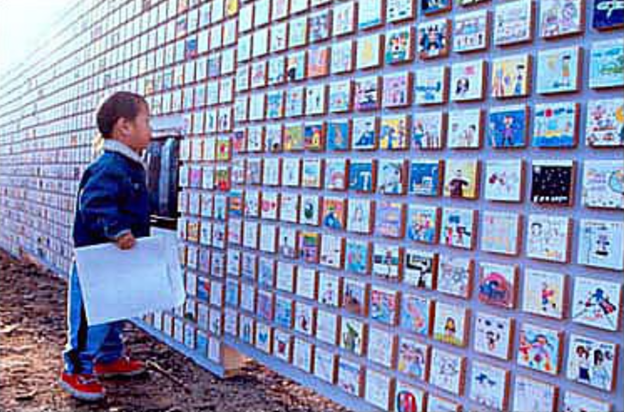
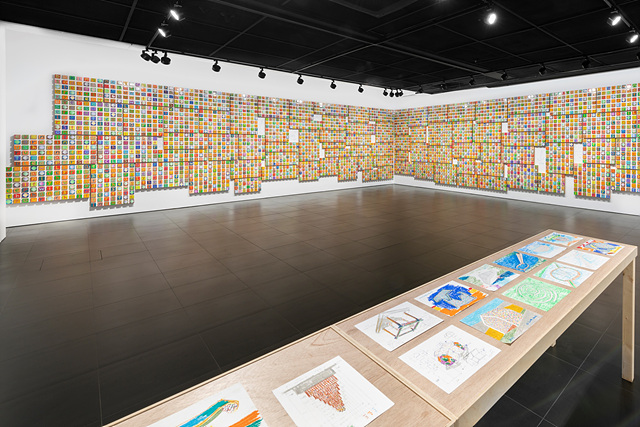
He painted during subway rides, gradually producing a
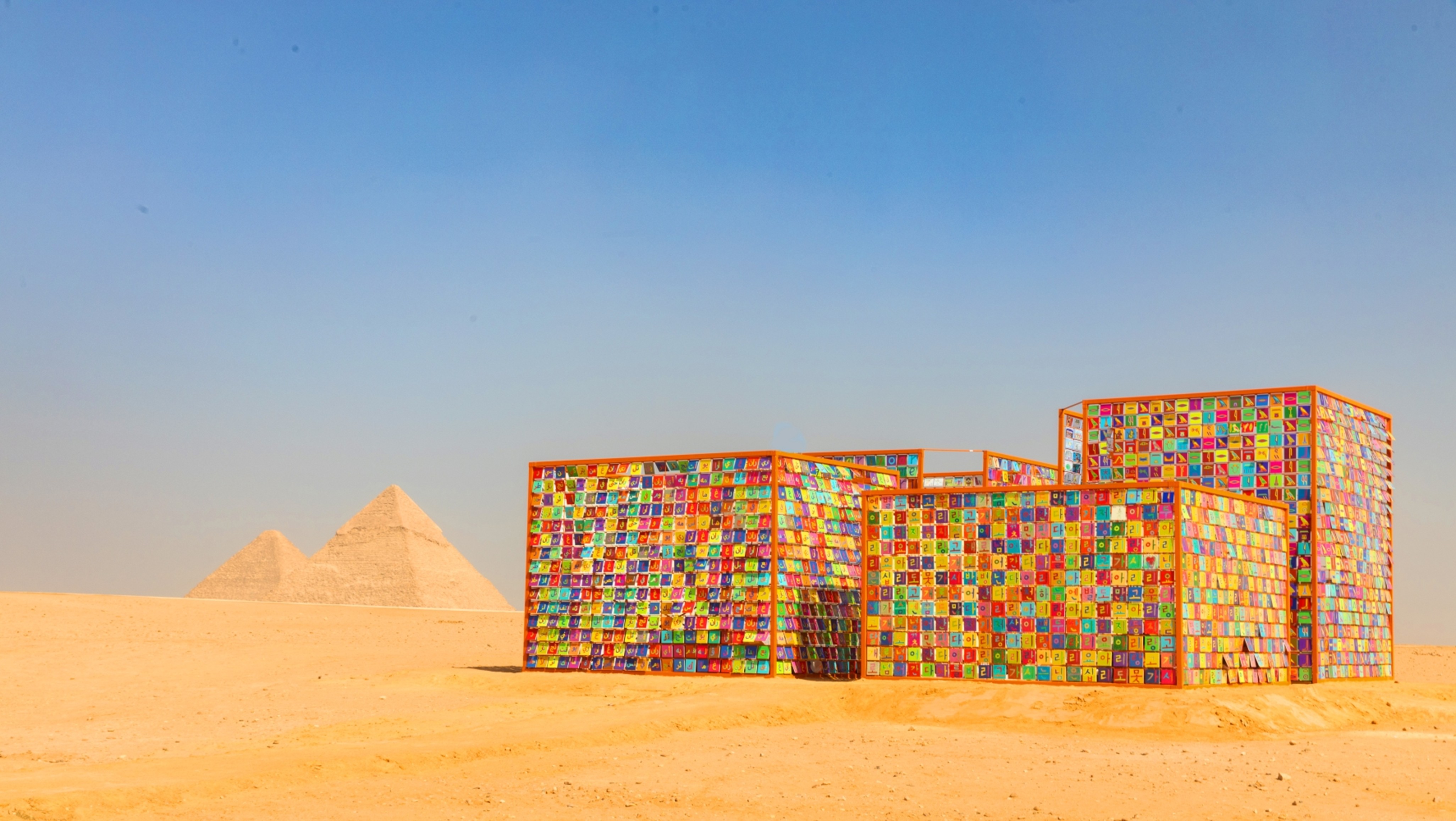
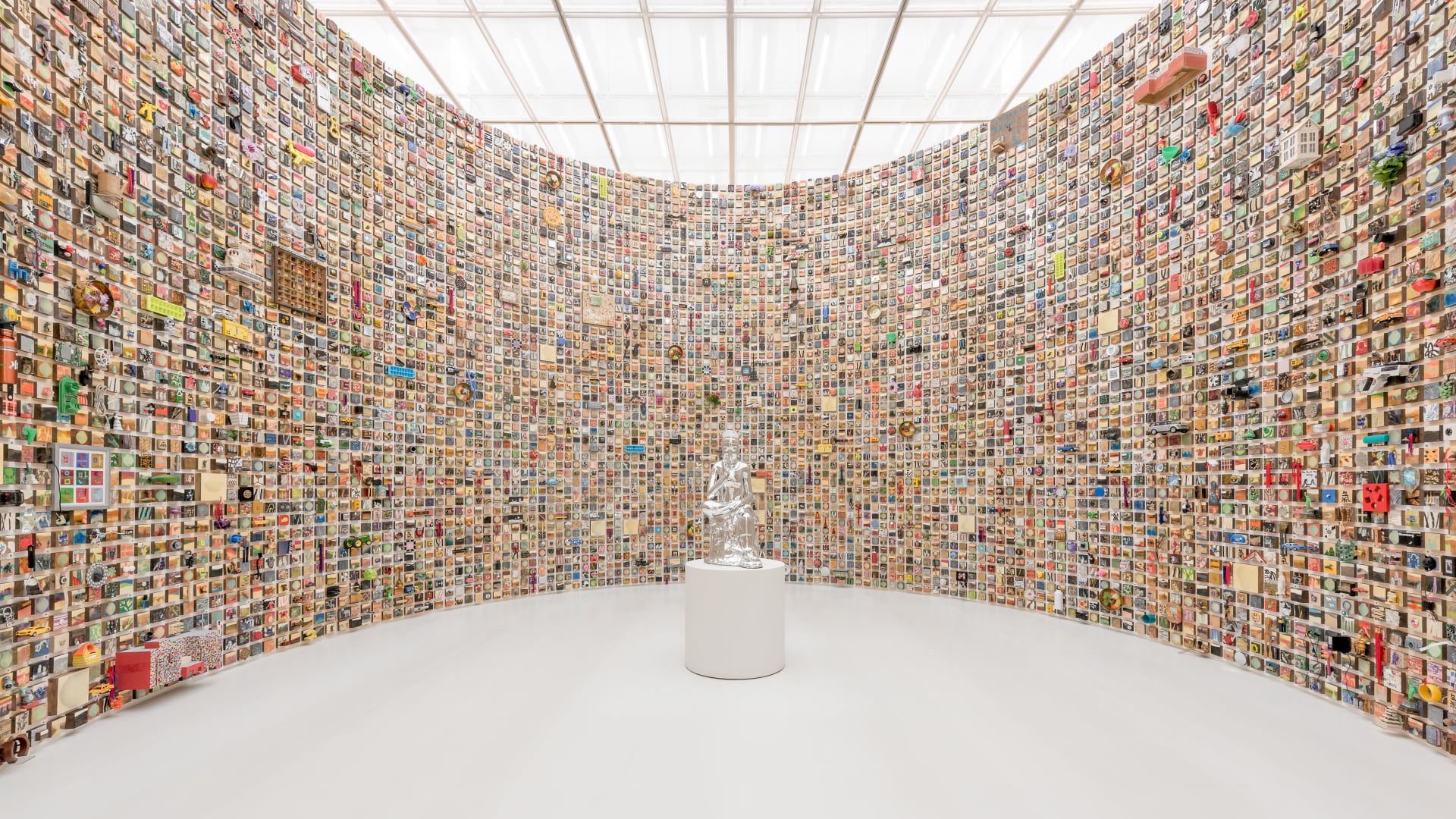
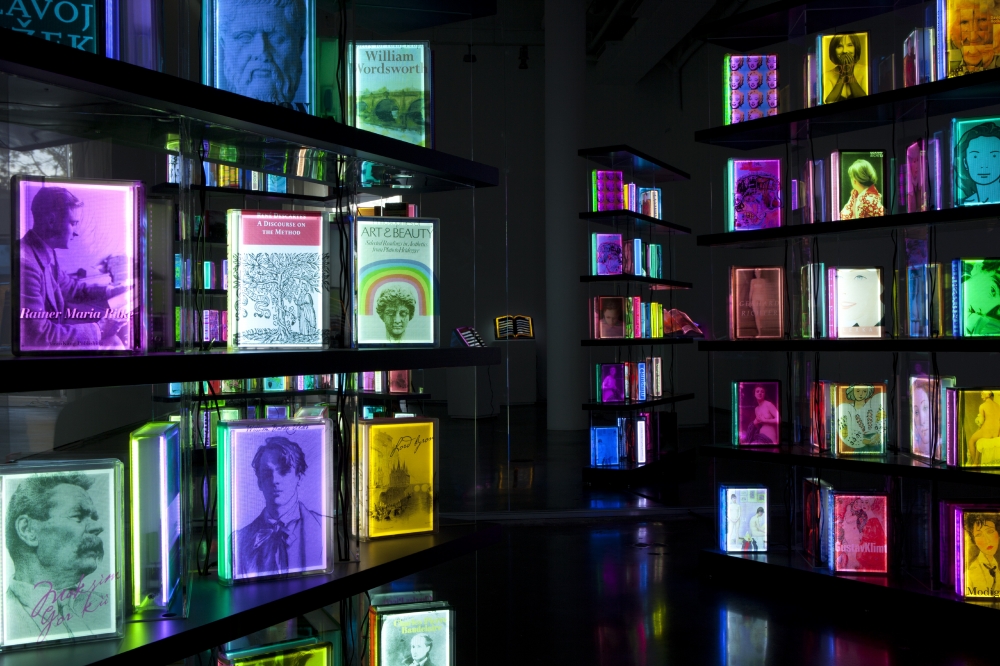
vast number of pieces. Kang’s exhibitions often consist of 7,000 or even 14,000
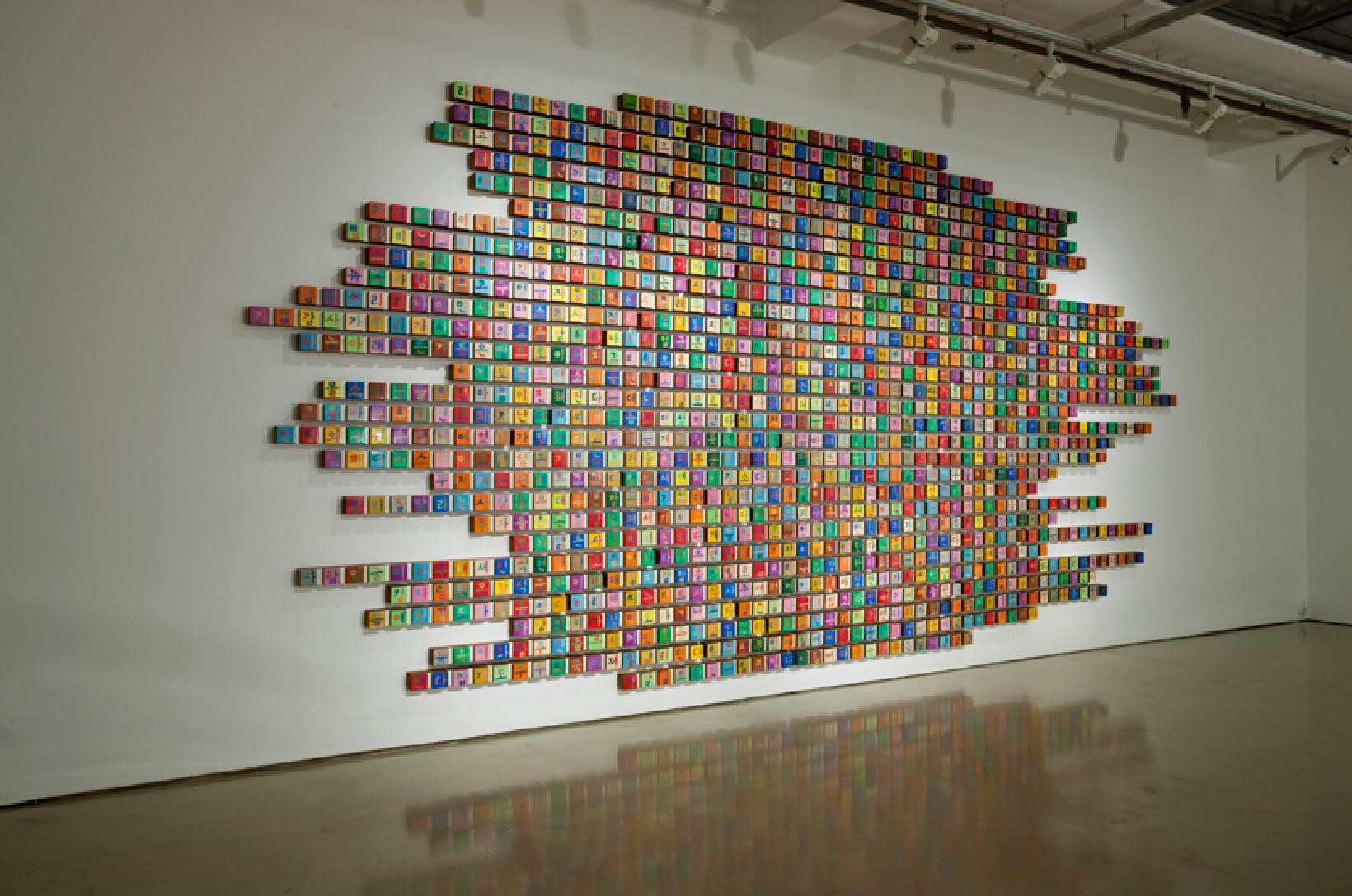
such works, an extraordinary labor by any measure. Some pieces even feature
letters painstakingly carved into hard plywood, requiring immense time and
effort.
Kang
draws material from everyday life. Words and sentences written while studying
English after settling in the U.S. became artworks. Sentences written in blue
and red ballpoint pen on paper were transformed into 3-inch works reminiscent
of the American flag, later exhibited in Seoul. English, Korean, and Chinese
characters appear alongside titles such as happy frog, happy
bread, and happy happy sock, as well as
sentences like “Someday I will leave myself.” Reflecting on these works, I
previously wrote in a review:
“The
countless symbols, signs, and images he draws—combined with numerous objects he
personally selects—offer clues into the flow of Ik-Joong Kang’s consciousness.
Each 3-inch canvas stands independently like a freeze-frame in a film, yet
together they form part of a carefully structured drama. They function as
incisive annotations on the complex multicultural reality of New York, where
diverse races coexist.
The underside of American society—where racial
discrimination, charity and exploitation, hunger and extreme affluence
coexist—is dissected through Kang’s distinctive satire. His outsider’s gaze on
American society is remarkably objective. Indeed, this objectivity has played a
crucial role in his recent rise in the U.S.
When a society incapable of objectively
portraying its own self-portrait is stripped bare by a foreigner, it can only
look on with curious eyes. Kang’s work titled Research on
Restaurant Guides for Starving Artists conveys the bleak
underside of New York, the so-called mecca of contemporary art, in a desolate
tone. It is also his past self-portrait.”²
That
Kang draws from daily life suggests the inexhaustible and infinite nature of
his work. Sounds collected from reality appear as crucial elements within
installations, functioning like concrete music. By incorporating auditory
elements into what is traditionally a visual domain, Kang achieves a fusion—and
dissolution—of artistic genres.
II. Small Panels as Windows onto the World
Kang’s
small panels function as metaphors for windows through which the world is
viewed. His first homecoming exhibition in 1996—held simultaneously at three
venues: Chosun Ilbo Gallery, Hakgojae, and Art Space Seoul—was monumental in
many respects.
Following the momentum of his two-person exhibition with Nam
June Paik at the Whitney Museum’s Champion branch in Connecticut (《Multiple/Dialogue》, 1994), Kang’s
small-panel works were introduced to Korea for the first time. The Korean press
responded with widespread coverage. While the attention did not rival that of
Paik’s first return, it nonetheless marked Kang’s official introduction to
Korea as a painter.
The
exhibition catalog featured a particularly intriguing photograph: a Japanese
samurai peering through a pair of wooden clogs pressed together, their
protruding soles forming a grid-like structure akin to a telescope. Like these
clogs, Kang’s grid-based canvases function as windows through which the artist
observes the outside world. Images, objects, and events that he sees, hears,
feels, and thinks in daily life are recorded through diverse forms. Fragmentary
impressions gathered on the street, at school, at work, on the subway, in
markets and restaurants are transformed into images through Kang’s
characteristic wit and satire.
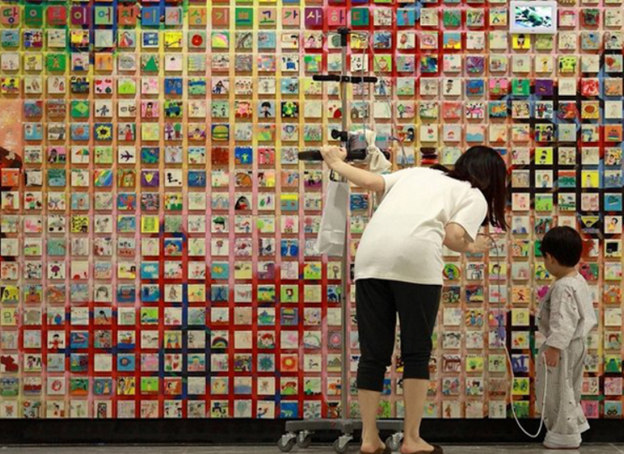
Through
canvases that fit snugly in his hand, Kang observes—and communicates with—the
world. Like Microsoft Windows, or the spiderweb implied by the World Wide Web,
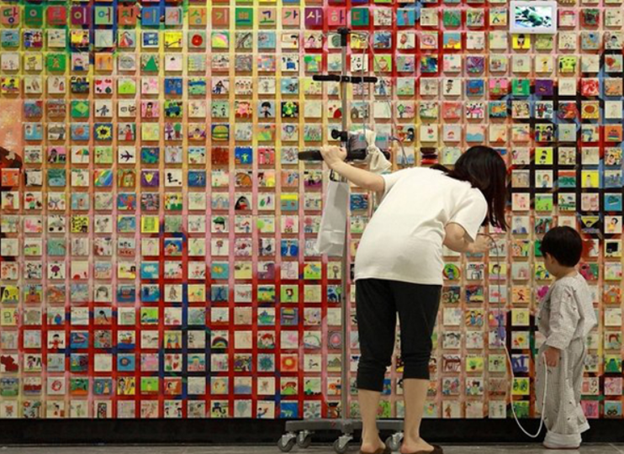
Kang connects with children around the globe through art. Installed in the
visitor lobby of the United Nations headquarters in 2002, Amazing
World followed the participatory children’s program 《100,000 Dreams》 held in 1999 at Heyri Art
Valley in Paju.
When I visited Kang’s studio in New York, it was filled with
drawings sent by children from around the world. At that time, Kang was not
only a painter but also a curator, collecting these individual “windows” via
fax and the internet. These windows were organized into exhibitions and
presented to audiences, creating a cyclical process of exchange.
III. Encounter with Nam June Paik and the Venice Biennale Special
Prize
Nam
June Paik once remarked that behind his success stood Joseph Beuys and John
Cage—a statement equally applicable to Kang. Without his encounter with Paik,
who treated Kang like a son, one might question whether Kang’s success would
have been possible. Their exhibition at the Whitney Museum marked a decisive
moment in establishing Kang’s presence in the U.S. Another pivotal event was
his receipt of a Special Prize at the 1997 Venice Biennale. Commissioner
Kwangsu Oh selected Kang as one of the Korean representatives, enabling him to
receive this honor.
Buoyed
by the Whitney exhibition and the Venice award, Kang went on to participate in
major international exhibitions, including the Gwangju Biennale, further
enhancing his reputation. His small panels—born from the constraints of his
environment—multiplied like viruses, expanding their territory.
Juheon Lee once
described Kang as possessing a childlike innocence, a trait that likely
influenced his later engagement with children’s participatory projects
worldwide. Children communicate transparently, and Kang’s exhibitions involving
children clearly function as bridges connecting the world.
Rather than a linear
system symbolizing adult-centered power, his approach aligns with rhizomatic
thinking—an endlessly expanding network resembling underground roots. Remarkably,
this structure anticipates contemporary social networking platforms such as
Facebook and Twitter. Long before their global spread, Kang had already
practiced such networked exchange through his small panels and their pure
window-like logic.
IV. A March of Imagination Toward an “Amazing World”
Kang’s
installations astonish viewers with their agile imagination. Like seeds growing
into vast fields, they result from viral proliferation. Just as Kang pursued
his dream in the U.S. through relentless effort, his tens of thousands of works
are products of collective participation and devotion. Without genuine care
from participants, even the noblest intention would remain hollow. In this
sense, Kang stands as an exemplary leader of collective creation.
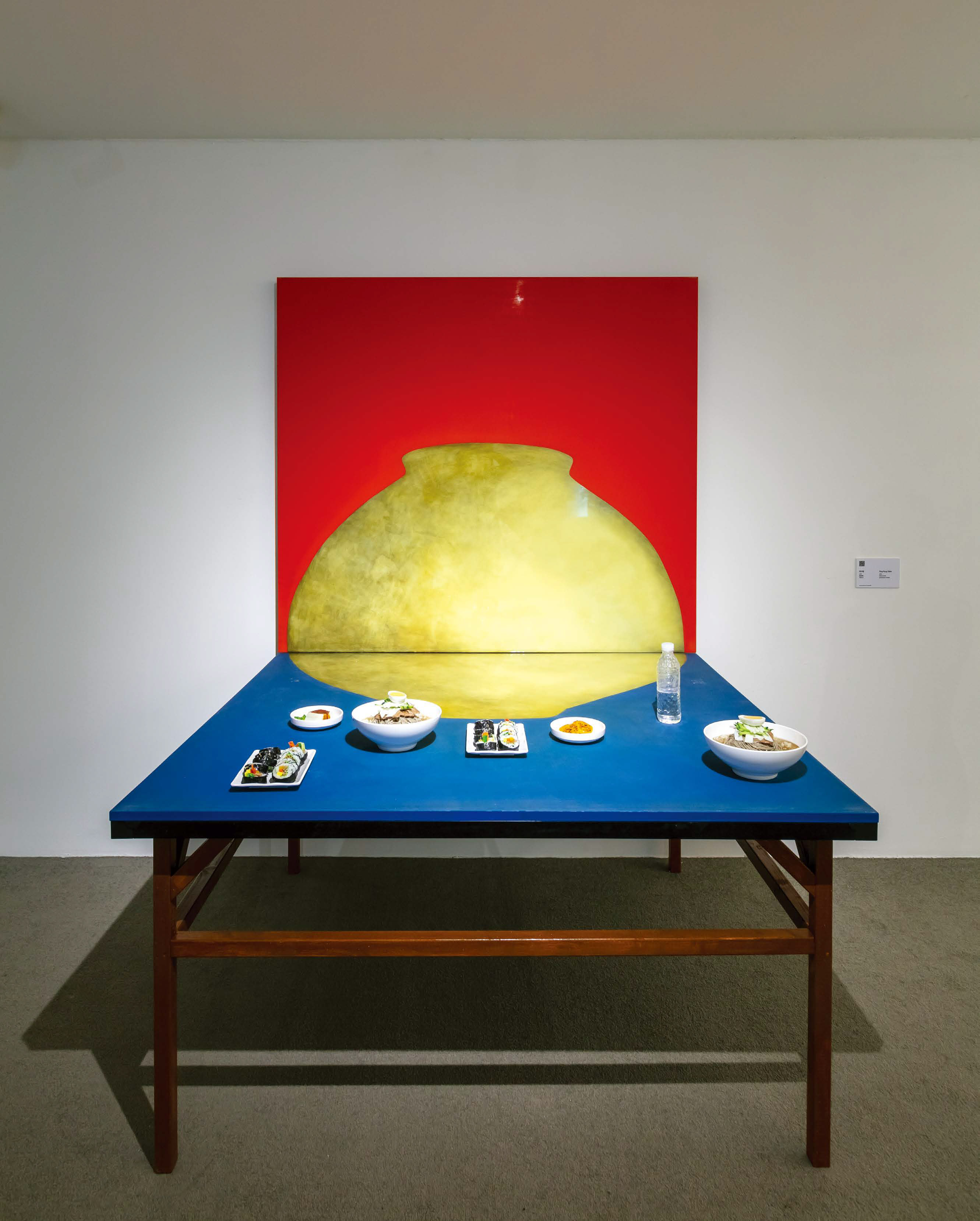
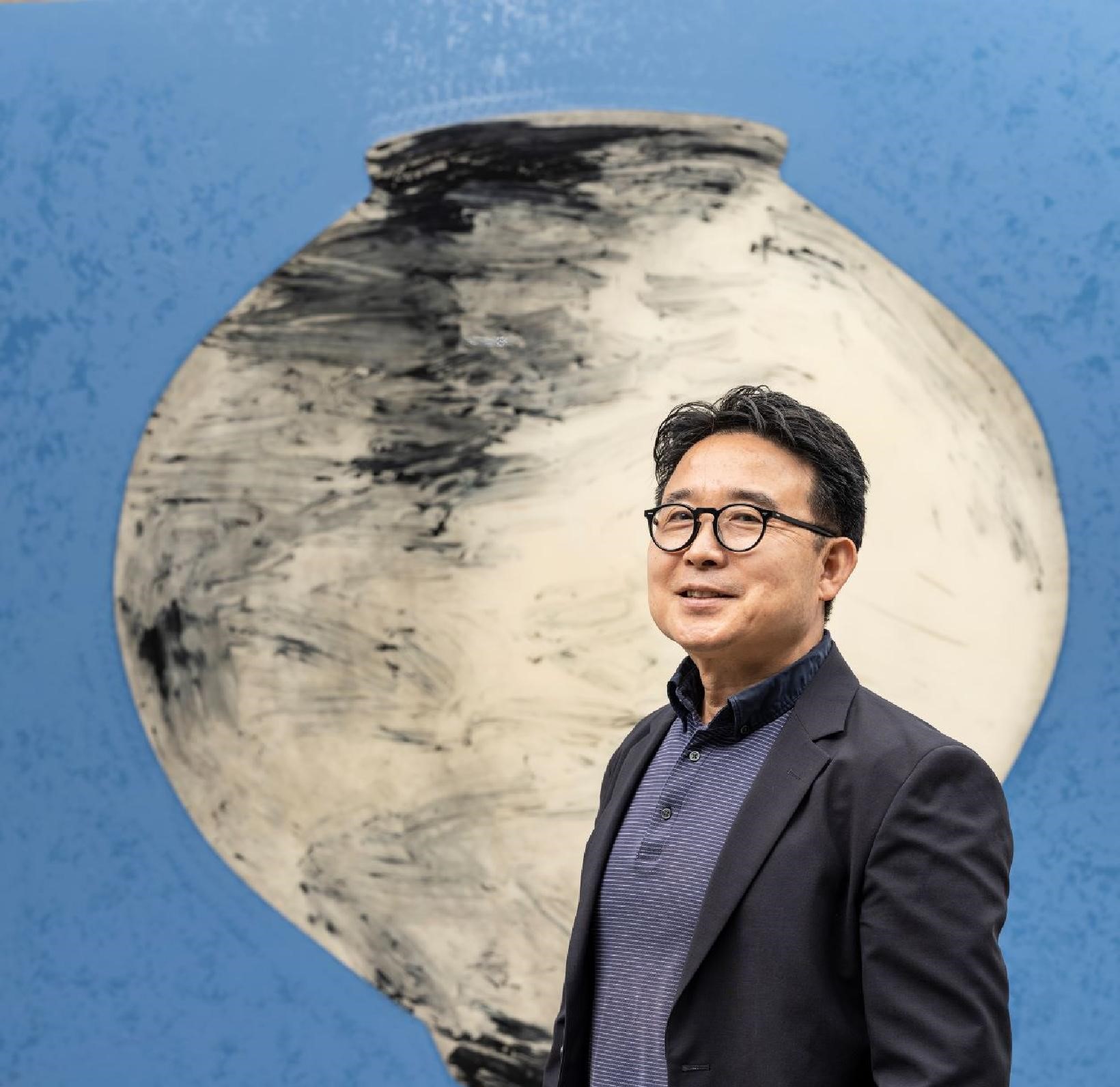
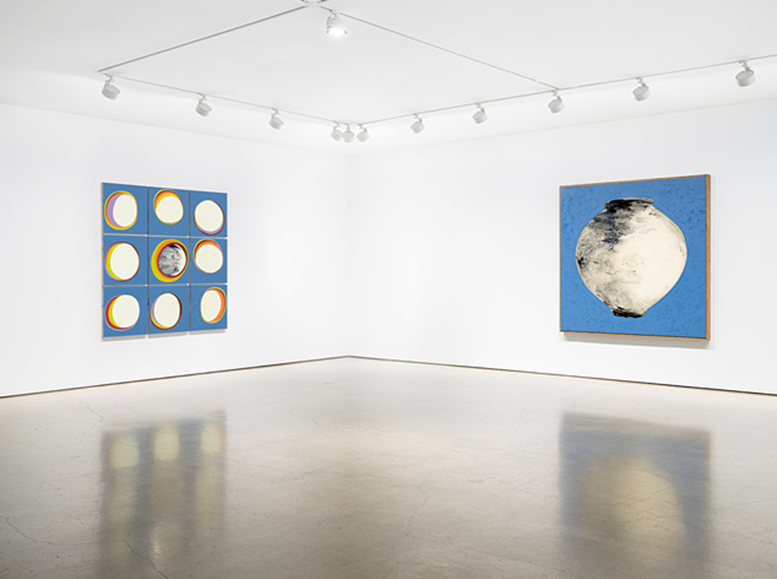
As
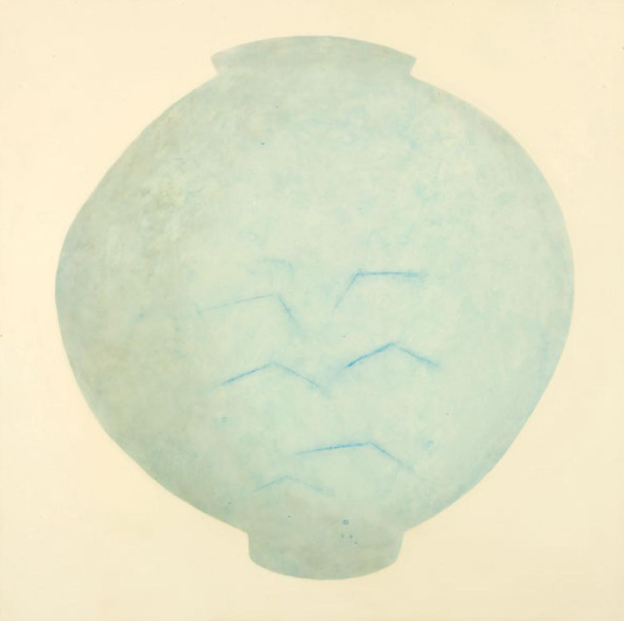
he ages, Kang increasingly gravitates toward Korean motifs, particularly moon
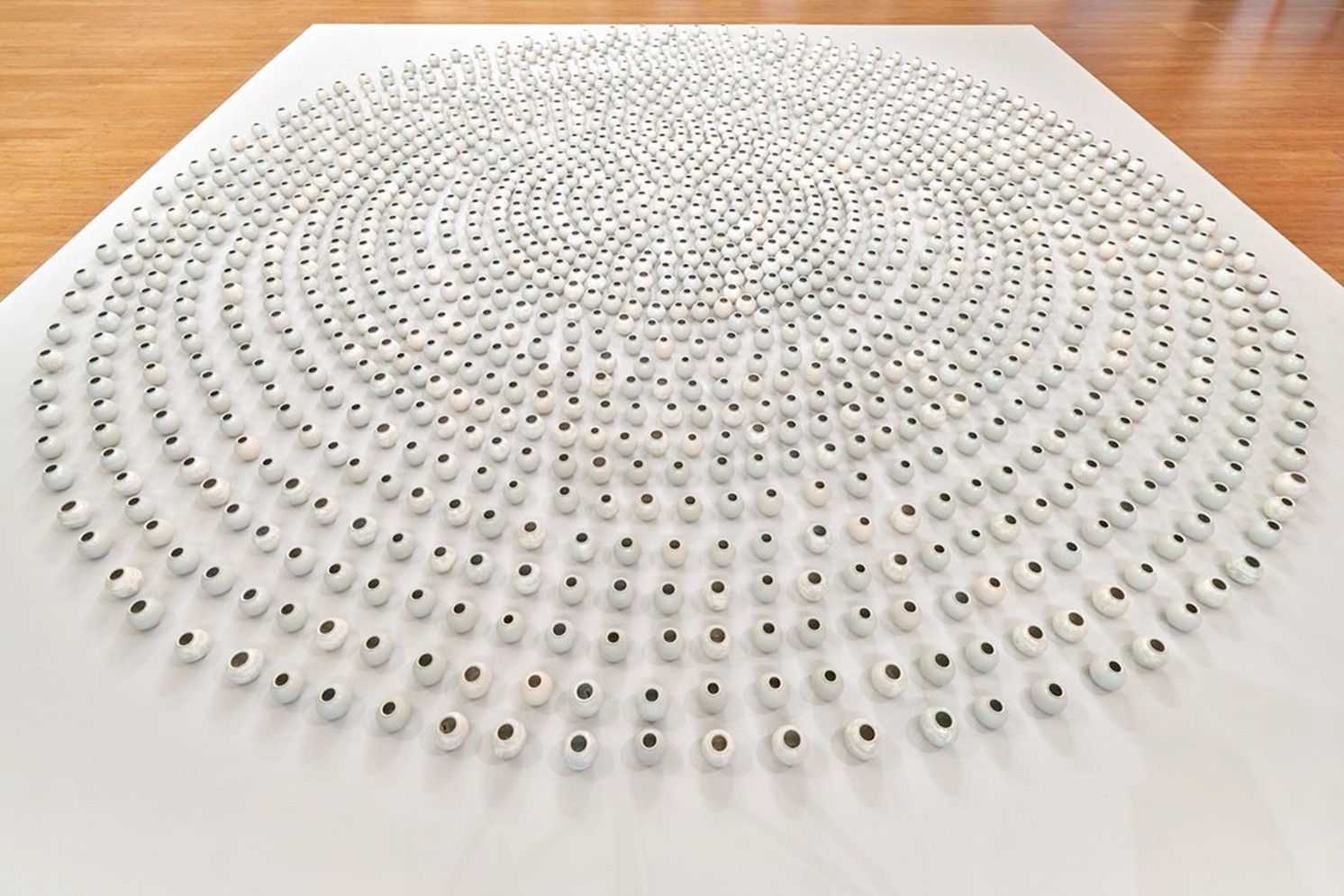
jars and Hangeul. Examples include works quoting Baekbeomilji and
the large-scale installation Moon Rising over Gwanghwamun (2007),
composed of 1.2-meter canvases. Texts such as “I wish Korea to be the most
beautiful country in the world, not necessarily the most powerful” reveal the
direction of his thinking.
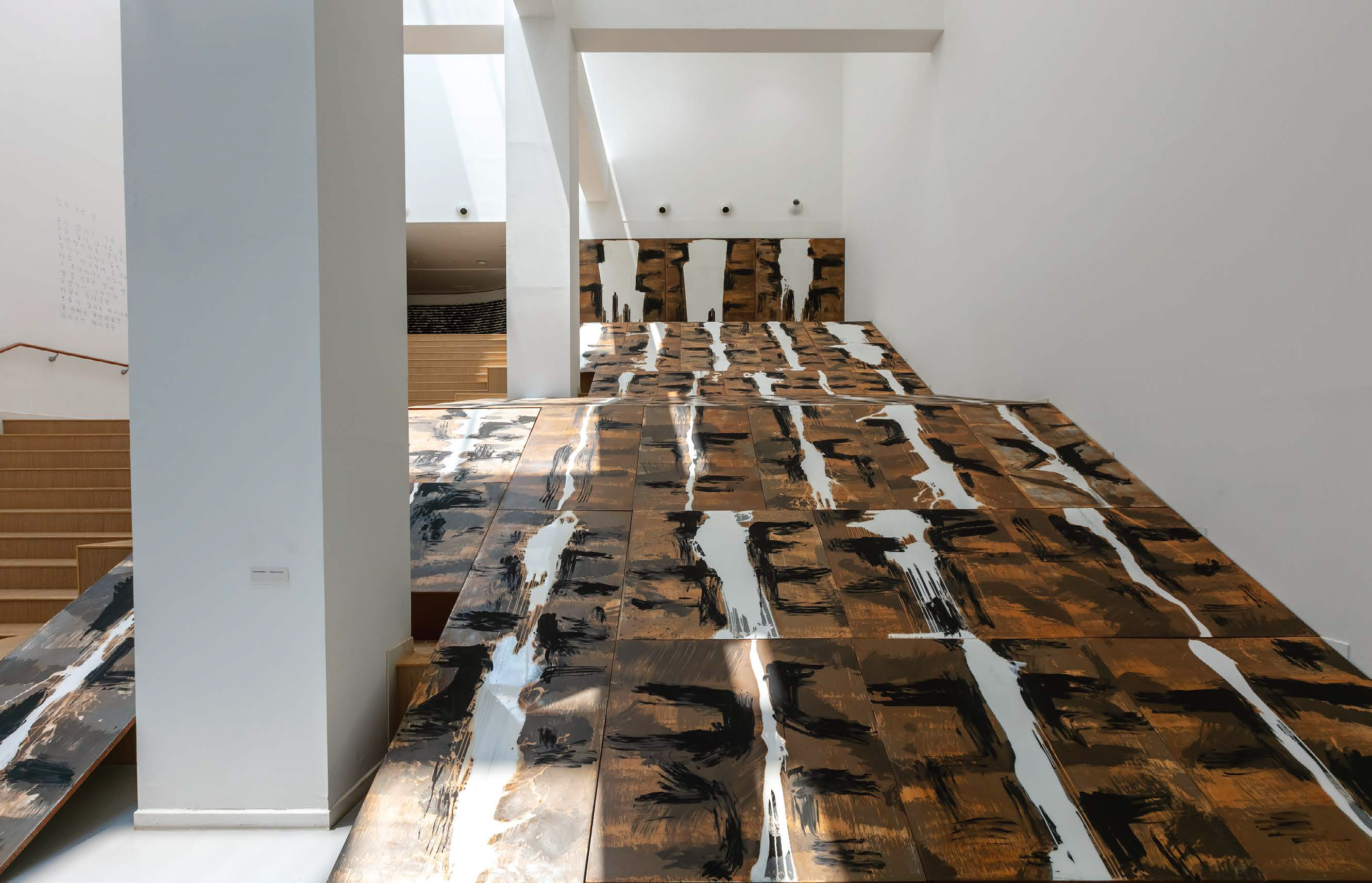
Currently,
the National Museum of Modern and Contemporary Art in Gwacheon is hosting 《Ascending the Mountain: Multiple Dialogue》
(February 6, 2009 – February 7, 2010) to commemorate its 40th anniversary.
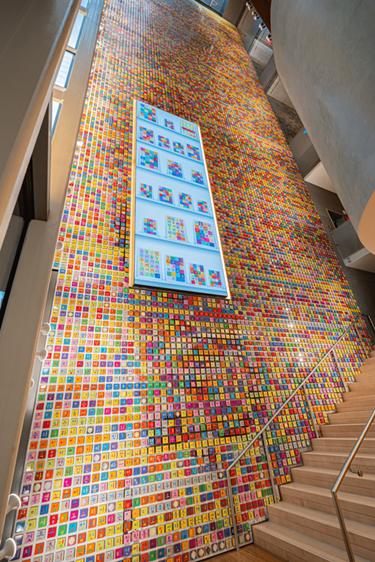
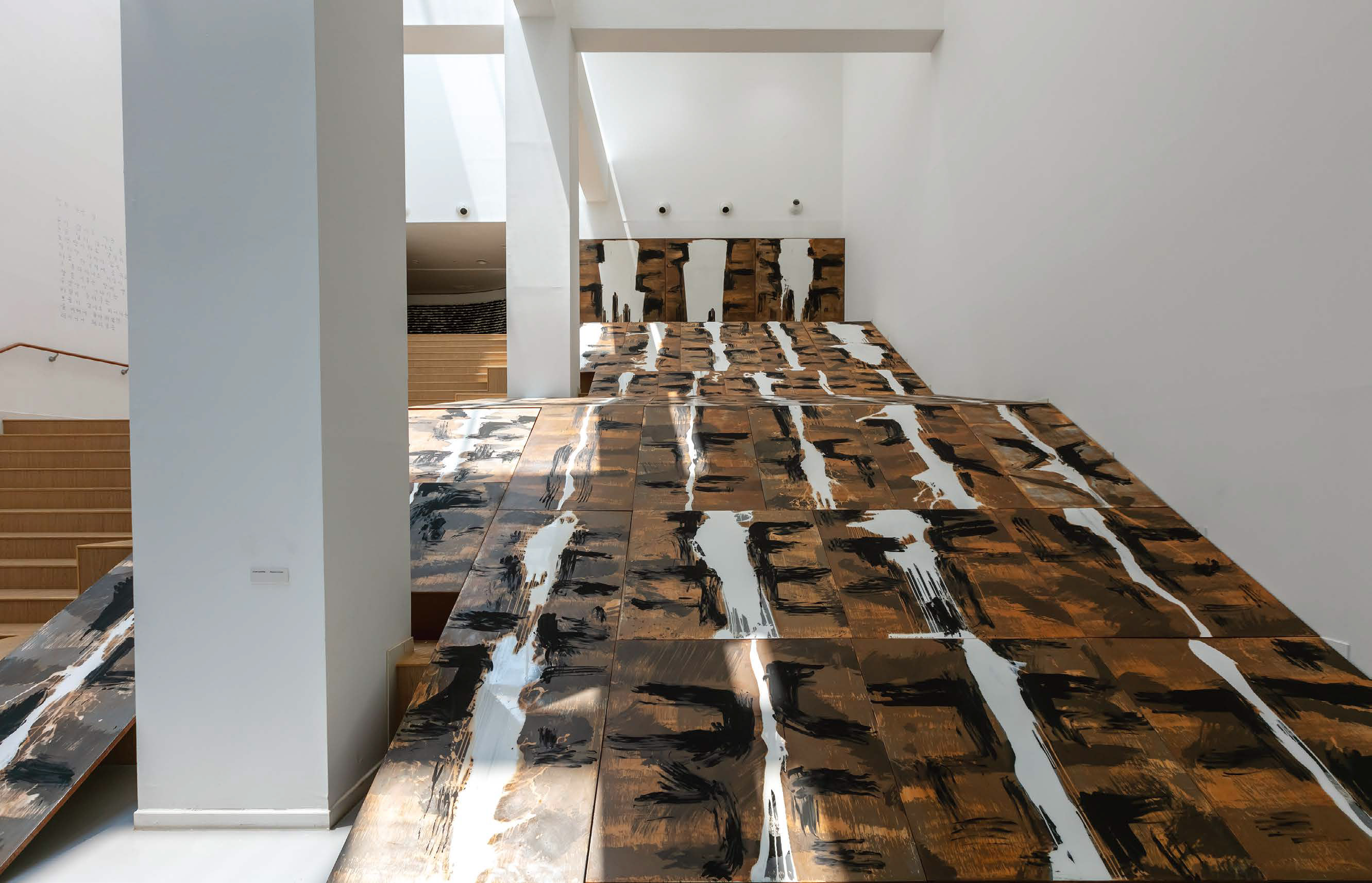
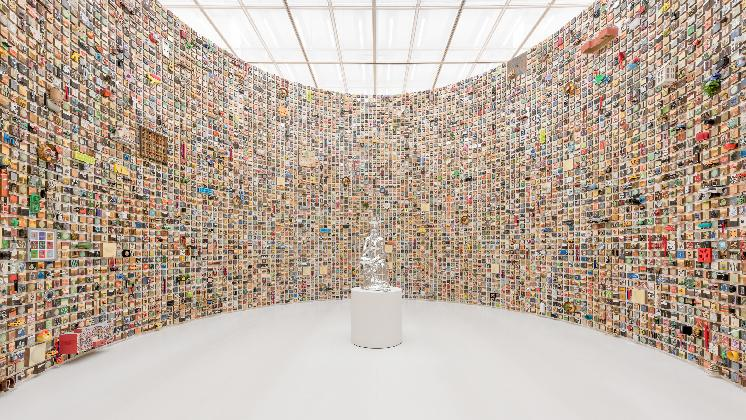
Installed on the ramp core wall beneath Nam June Paik’s The More,
The Better is Kang’s Samramansang,
composed of approximately 60,000 pieces—an homage to Paik, whom Kang regarded
as a father figure.
As
Kang himself notes, his work resembles bibimbap. In this traditional Korean
dish, rice forms the foundation upon which various ingredients are mixed. That
rice corresponds to the totality of “Koreanness” underlying Kang’s work—Korean
ways of thinking, history, customs, culture, and lived experience. These form
the viral core that drives the expansion of his art. Where these viruses will
head next remains unknown. Yet one already longs for the ecstatic ritual led by
Kang, helmsman of an endless voyage.
Notes
1. Juheon
Lee, Ik-Joong Kang, Marronnier Books, 2009, p. 13.
2. Jinseop
Yoon, “Culture and Bibimbap—On Ik-Joong Kang,” There Is No Threshold at
Museums, Jaewon, p. 113.