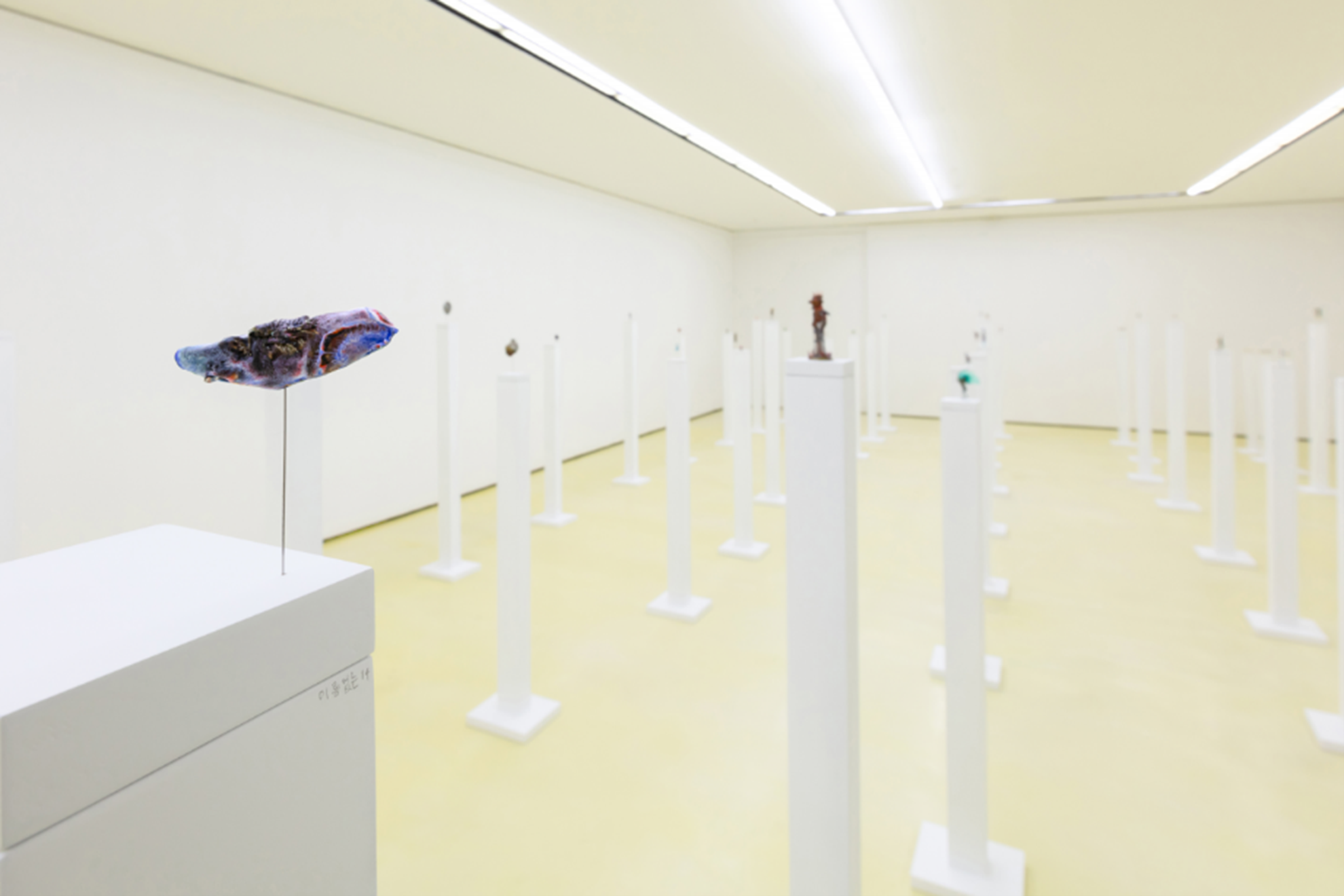
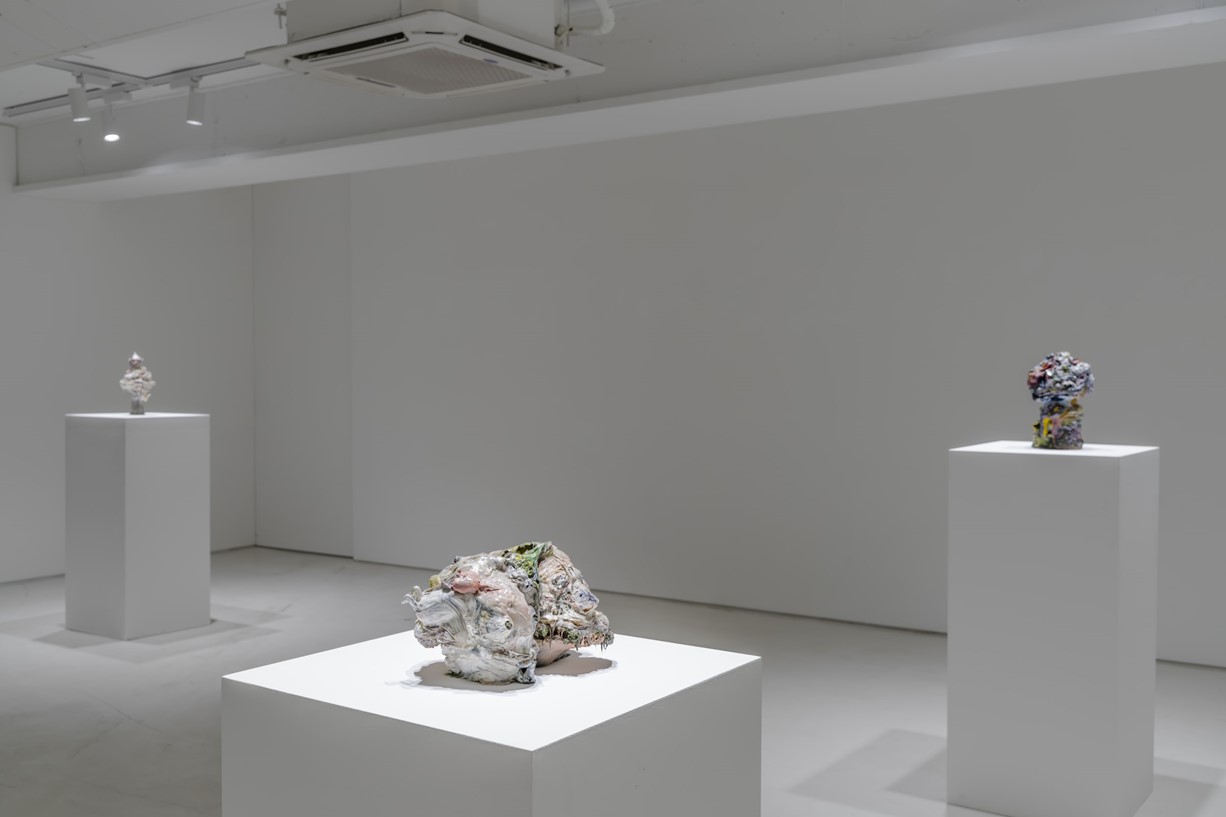
What
once stood as a temporary wall has now been laid on its side to serve as a
pedestal, leaning against which are a few diminutive objects.
Accordingly,
one’s gaze must lower below eye level, and then look across. Some objects
prompt the viewer to shift their vantage point. In the act of bending down to
see what is placed low and rising again to walk around, the body may experience
the freedom of movement, relishing a continuous and rhythmic sensation of
motion. Yet, within that flow, there are moments of leap. When approached
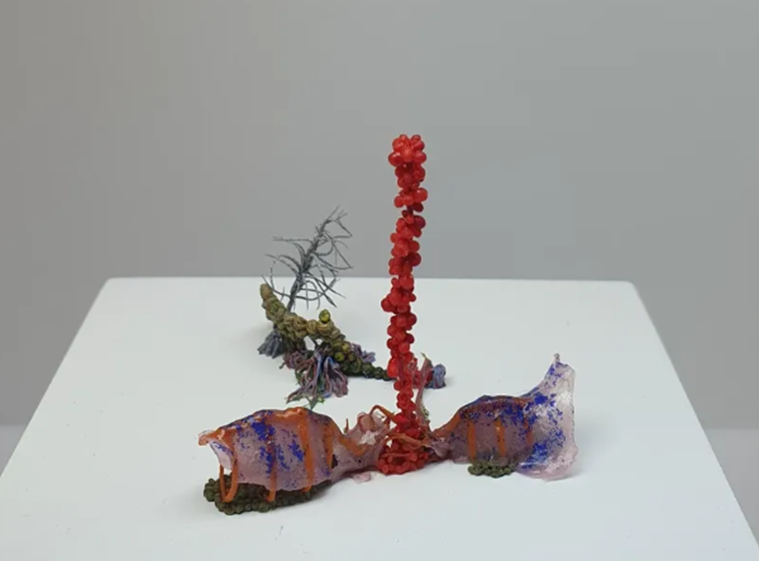
closely enough, Dajeong Jeong’s palm-sized sculptures reveal themselves as
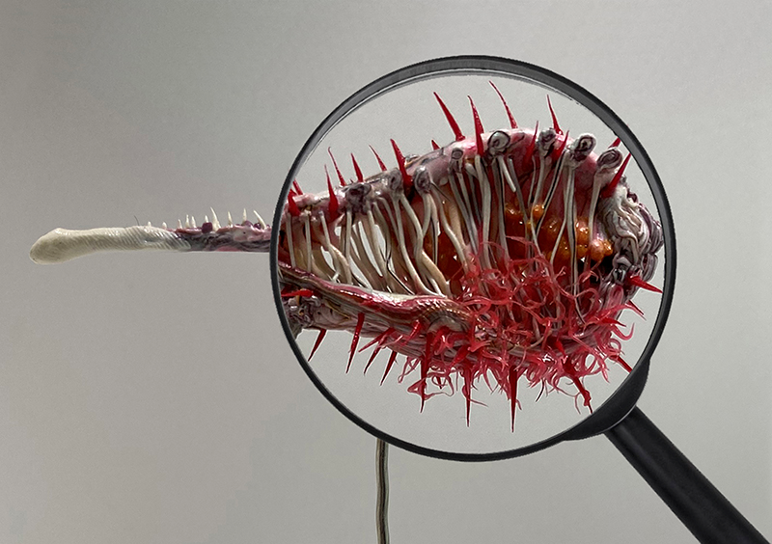
miniature stages where her memories are enacted and transformed. Similarly, Ham
Jin’s sculptures, mere smudges at first glance, extend protrusions to unveil a
monstrous vitality.
Dajeong
Jeong constructs specific scenes by layering images of places seen on maps with
memories of physically visiting those sites, combining industrial metal goods
and natural objects. This process includes stepping back from something too
emotionally or physically close to observe it from a distant, surveying
perspective, and then approaching it again to enlarge or reduce it based on how
it is sensed. Unlike maps that schematize topographical relationships in
precise proportions, the scenes she fabricates sometimes present an absurd
scale—a ground too narrow, a dried flower branch absurdly magnified. In recent
works, she has begun using plaster instead of plywood: small sculptures rest on
concave panels, or conversely, solid panels overlay fractured fragments.
Layering one material atop another, she experiments at the most fundamental
level of form. This practice of juxtaposing and stacking disparate materials
and perspectives may be a way of interrogating the density—or hardness—of the
time and space we inhabit.
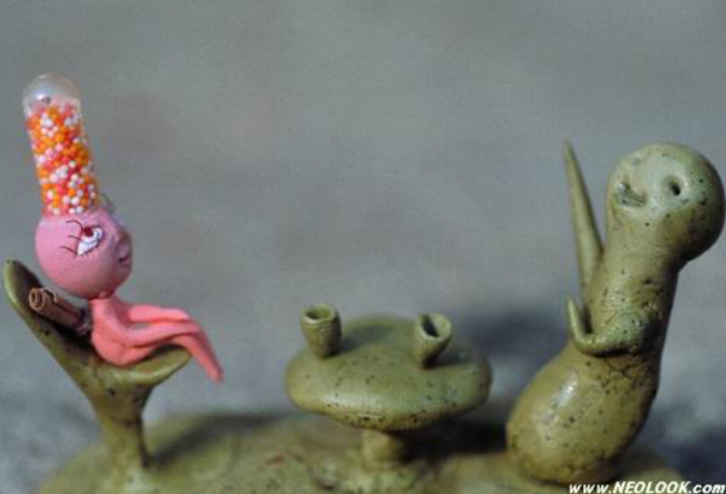
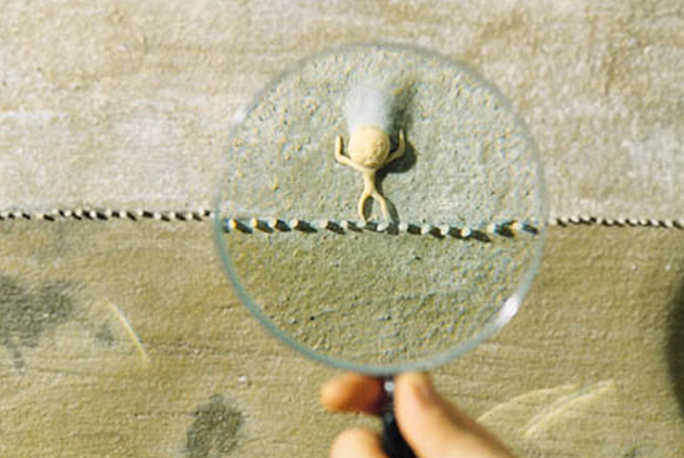
In
his first solo exhibition "Imaginative Diary"—which also marked the
opening of Sarubia—Ham Jin inserted miniature scenes into the cross-sections of
carved toy figures, and joined together tiny body parts sculpted from clay to
construct bizarre forms. These tiny creatures were placed in the holes of
charcoal briquettes, on the fringes of objects, or nestled in cracks throughout
the exhibition space, enacting imaginary situations. Later, these micro
clusters evolved into more abstract formations that migrated to the surface of
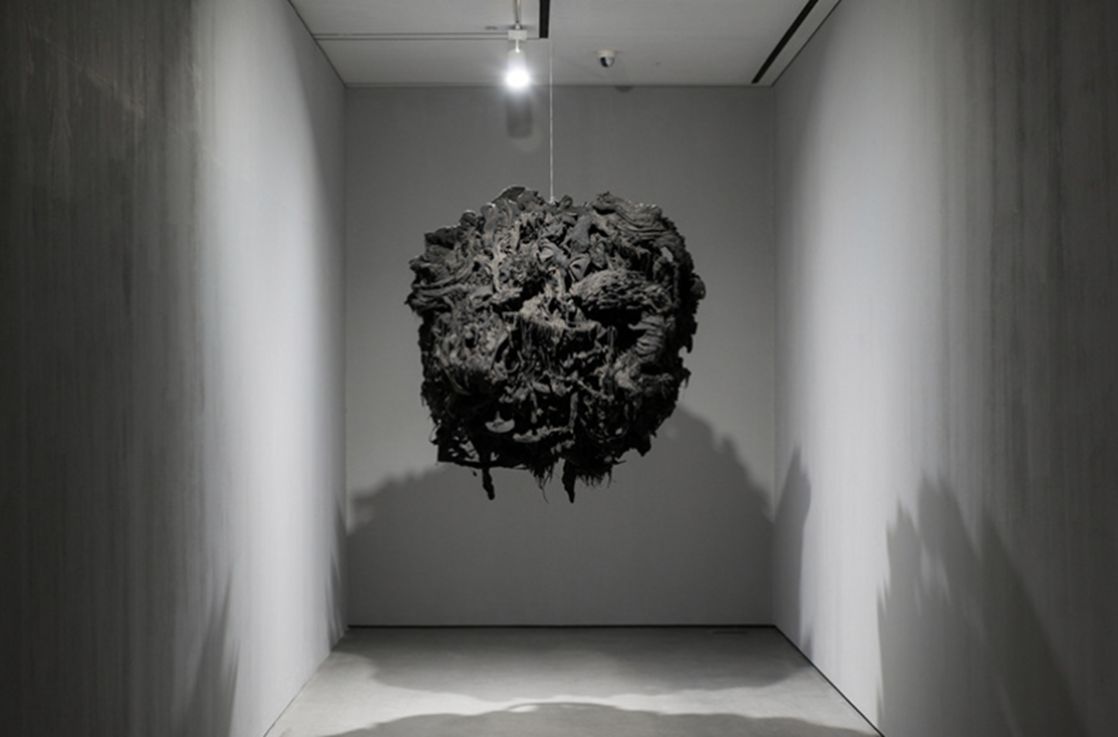
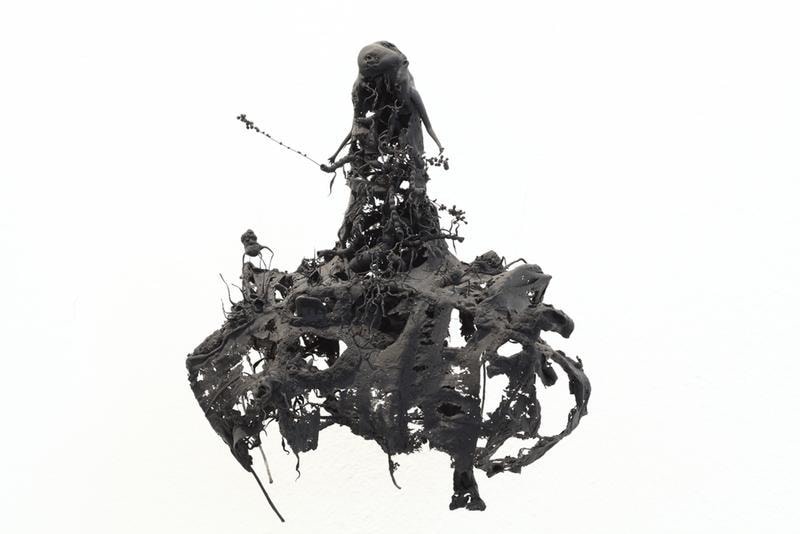
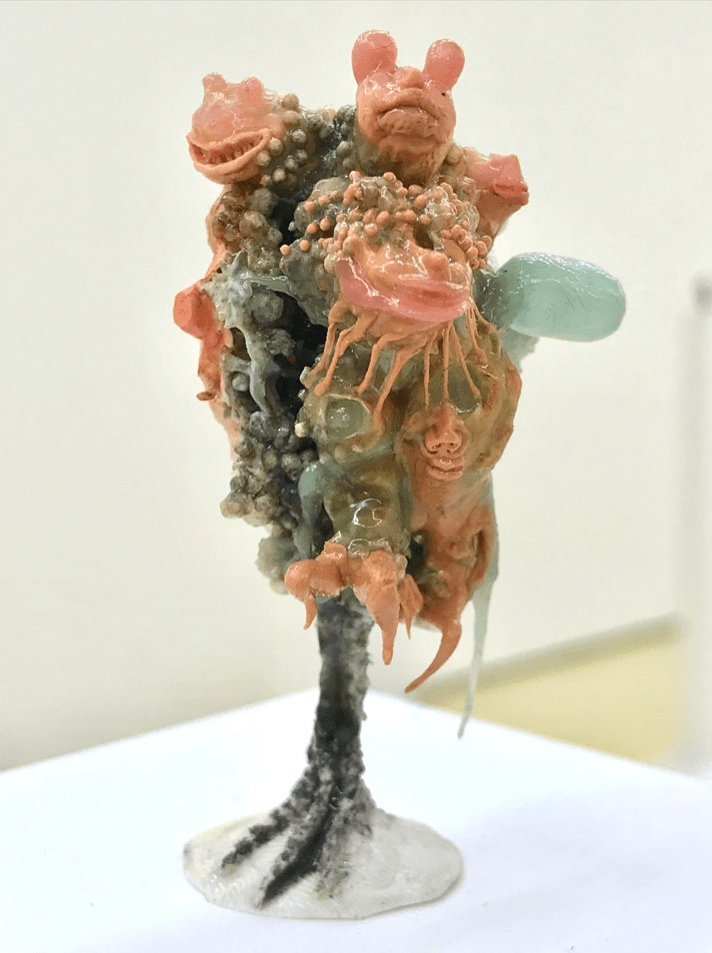
individual pieces. At times, he molded large black sculptures using polymer
clay—his primary medium—each resembling a city or a planet. At others, he
created smaller figures again: non-human forms engulfed by an overgrowth of
organs. As seen in the trajectory of his practice—and in his comment that he
doesn't quite understand the difference between large and small—the artist
known for "miniature" sculptures is not merely dealing with scale.
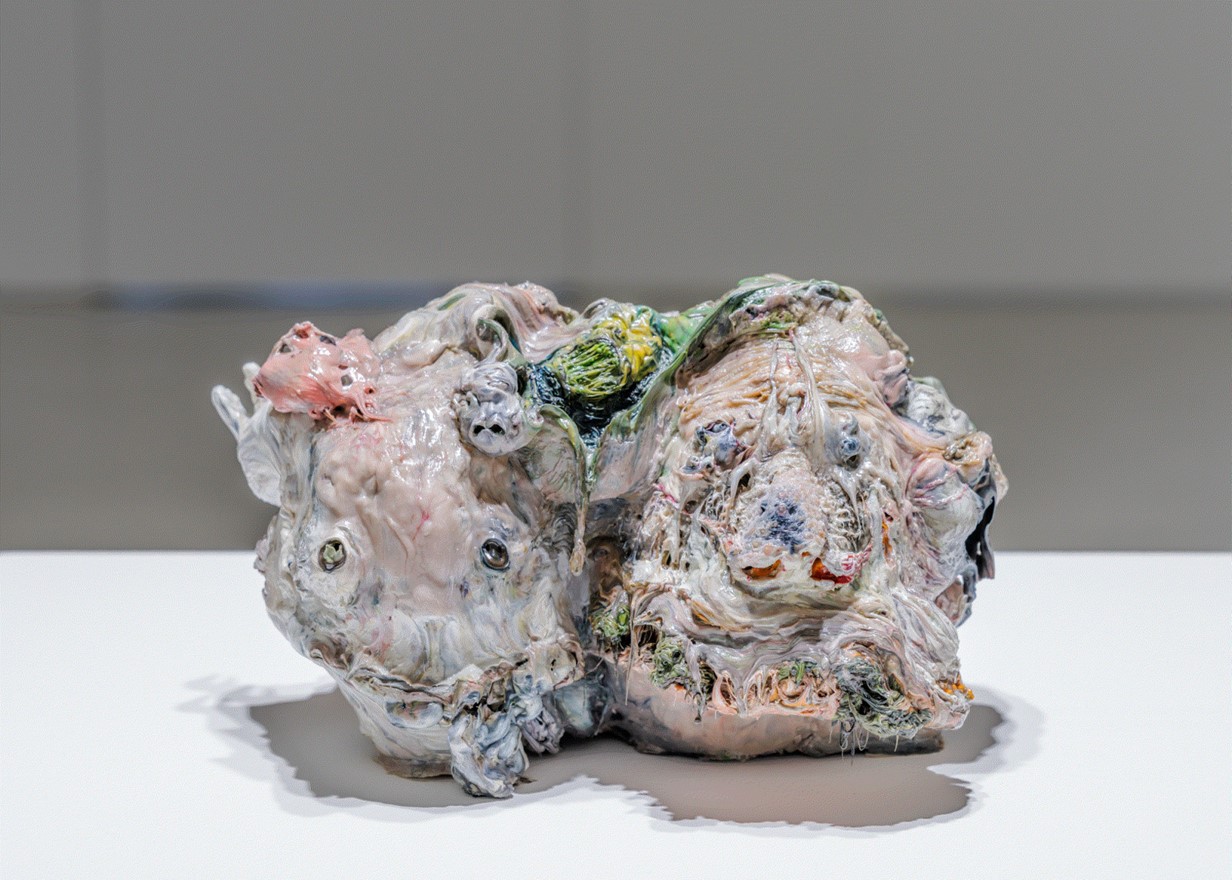
His recent small sculptures take on egg-like forms, where abstract organic
shapes are intertwined and condensed. These small eggs connect expansively with
the surrounding space and surface, continually withholding a part of themselves
from being fully grasped at once.
Both
artists' works distort the scale of the time and space the body inhabits,
inviting viewers into other worlds. Yet, the exhibition does not tell the story
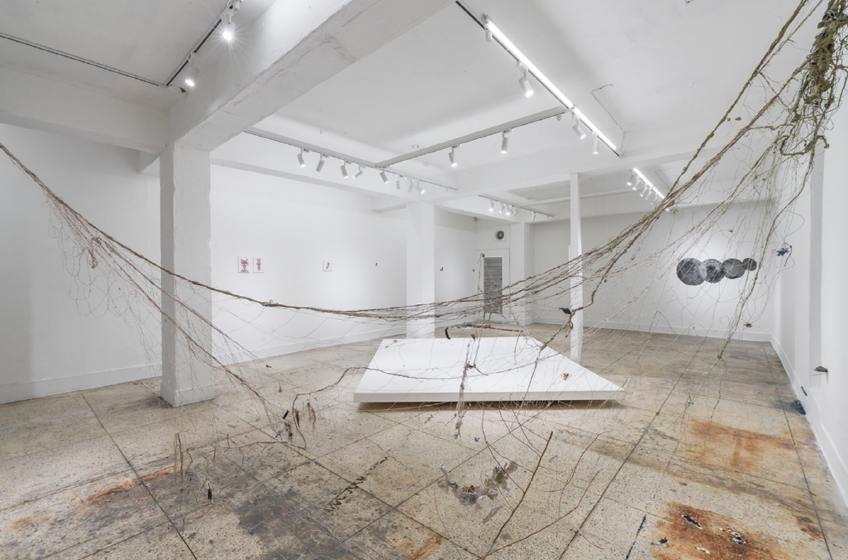
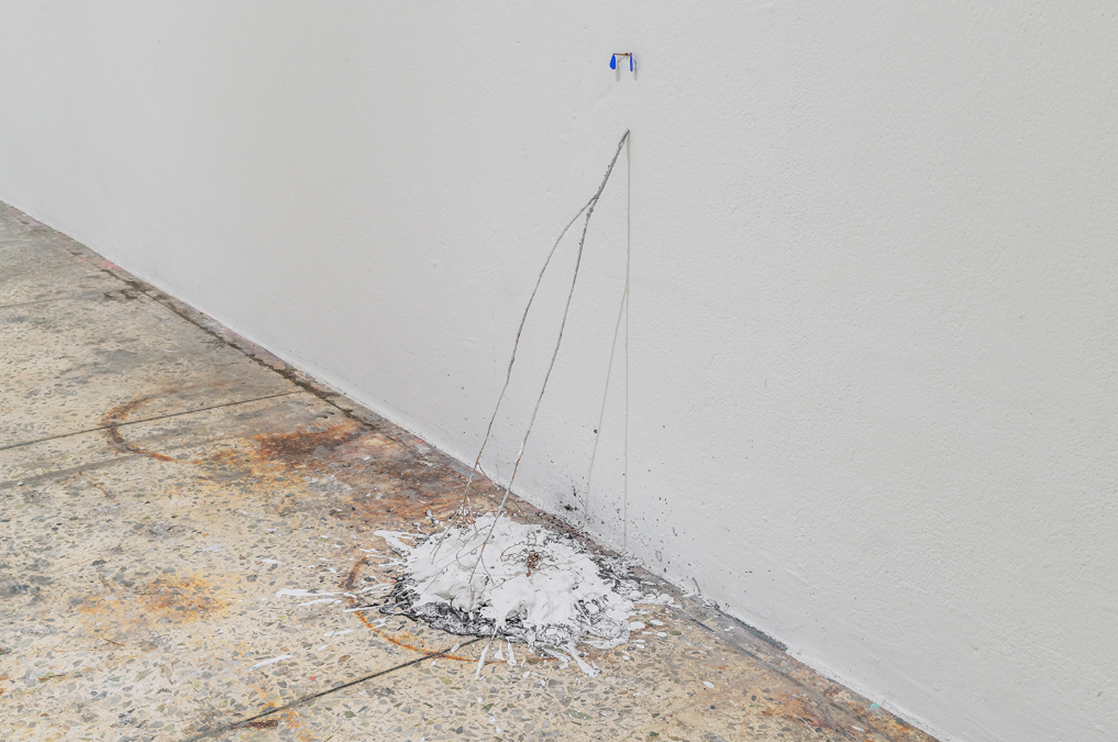
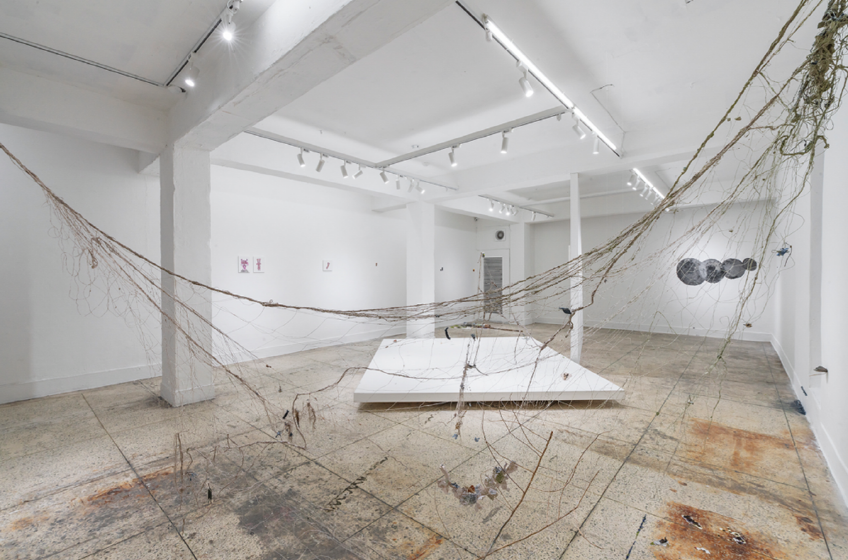
of mutually exclusive parallel realms. Dajeong Jeong applies plaster directly
onto the gallery walls, confronting viewers with the foundational surface of
her work. Pigments that flow beneath her floor-placed sculptures solidify
ambiguously, extending the boundary between work and space. Fragments of
plaster panels, which could have served as alternate stages, are caught in nets
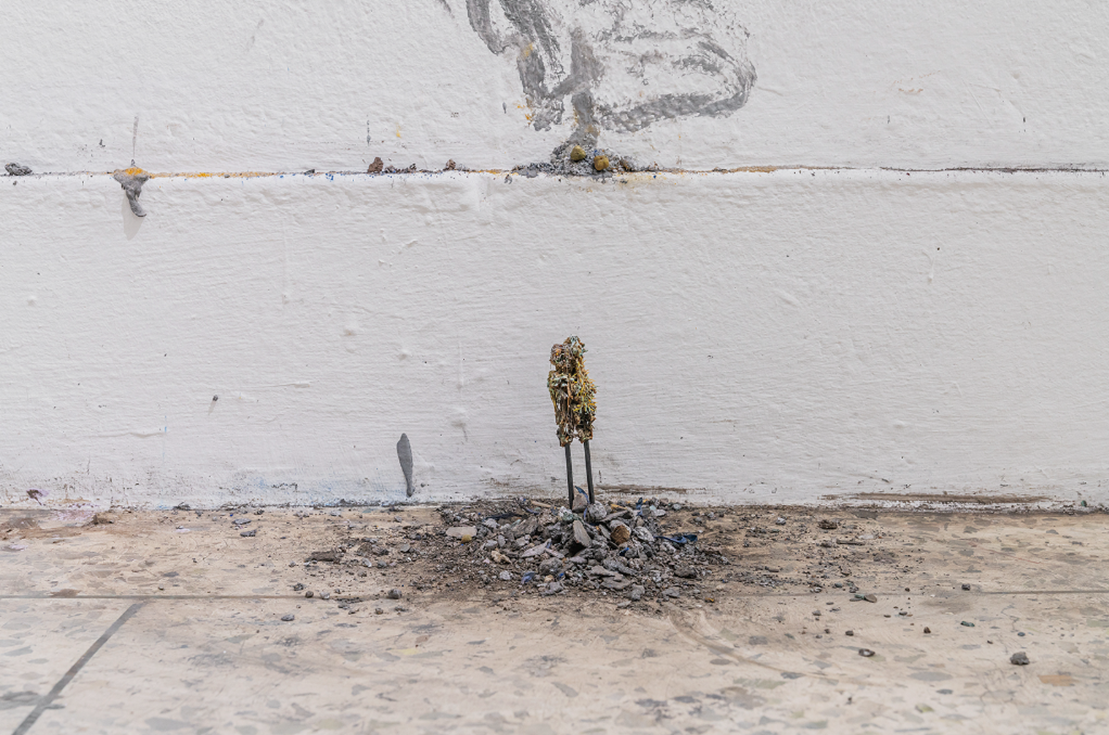
in the corners of the gallery. The powder-like debris of even more fragmented
works fills the narrow molding gaps near the floor. Likewise, Ham Jin's
sculptures, no longer confined to individual pedestals, are arranged separately
or together on a larger platform, mindful of their interrelations. Some hang in
midair, closely engaging with the gallery’s background space. Beneath the
plaster painting by Dajeong Jeong that spreads across the wall visible
immediately after descending the stairs, Ham Jin’s sculpture is placed, forming
a point of contact between the two artistic worlds. Once given physical form, a
work can no longer remain merely within memory or imagination; it must unfold
its own life within the space.
Even
if we hold onto the pure belief that every work is its own small world, what we
ultimately experience in the exhibition is the sense of transition between
different worlds. The body repeatedly enters and exits small worlds. This world
implies something about that world, and that world in turn about this one.
Perhaps passing through all these worlds is, ultimately, a way to return—again
and again—to the world we live in. But who are we, and where is this place? The
works of both artists prompt us to reacquaint ourselves with the ground upon
which we cast our gaze, and the surfaces on which we stand and move. That
subject might be tiny or immense, and that ground might be incredibly fragile
or unexpectedly solid.
Lee
Junhyeong | Intern Curator at PS Sarubia