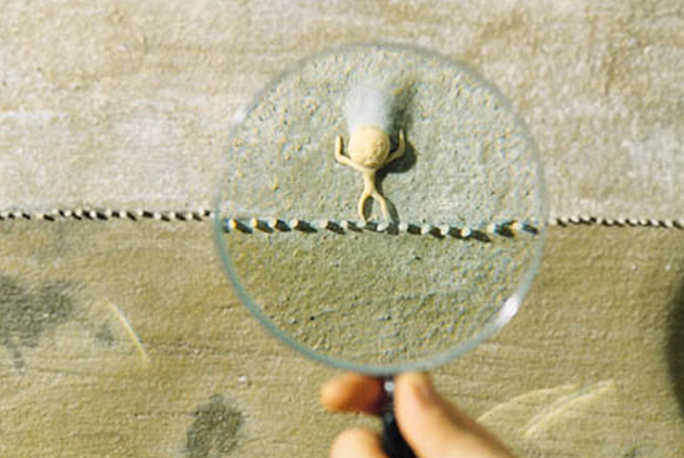
In a café near Hongdae, a man is meticulously crafting tiny sculptures that have garnered international acclaim.
 
Ham Jin

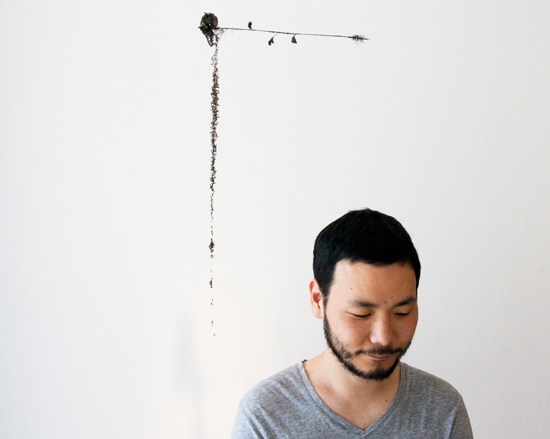
Ham Jin is a sculptor born in 1978, who graduated from Kyungwon University's College of Fine Arts. At the age of 22, in 1999, he held his first solo exhibition at Sarubia Project and has since presented five solo exhibitions, including at PKM Gallery. His work has been featured in significant group exhibitions at institutions such as the Minsheng Art Museum in Shanghai, Union Gallery in London, Espace Louis Vuitton in Paris, the Korean Cultural Center in Beijing, De Oude Warande Park in Tilburg, Netherlands, Rodin Gallery in Seoul, MUDAC in Lausanne, Switzerland, the Fukuoka Asian Art Triennale, Fondation Cartier pour l'art contemporain in Paris, Mori Art Museum in Tokyo, Art Sonje Center in Seoul, Gwangju Biennale, Busan Biennale, Total Museum of Contemporary Art in Seoul, and Busan Museum of Art. In 2005, he was selected as a participating artist for the Korean Pavilion at the 51st Venice Biennale. Currently, he uses a café near Hongdae as his workspace.


Ham Jin ©Artist

"This recent work is quite large for me. Others might still consider it small," says Ham Jin.

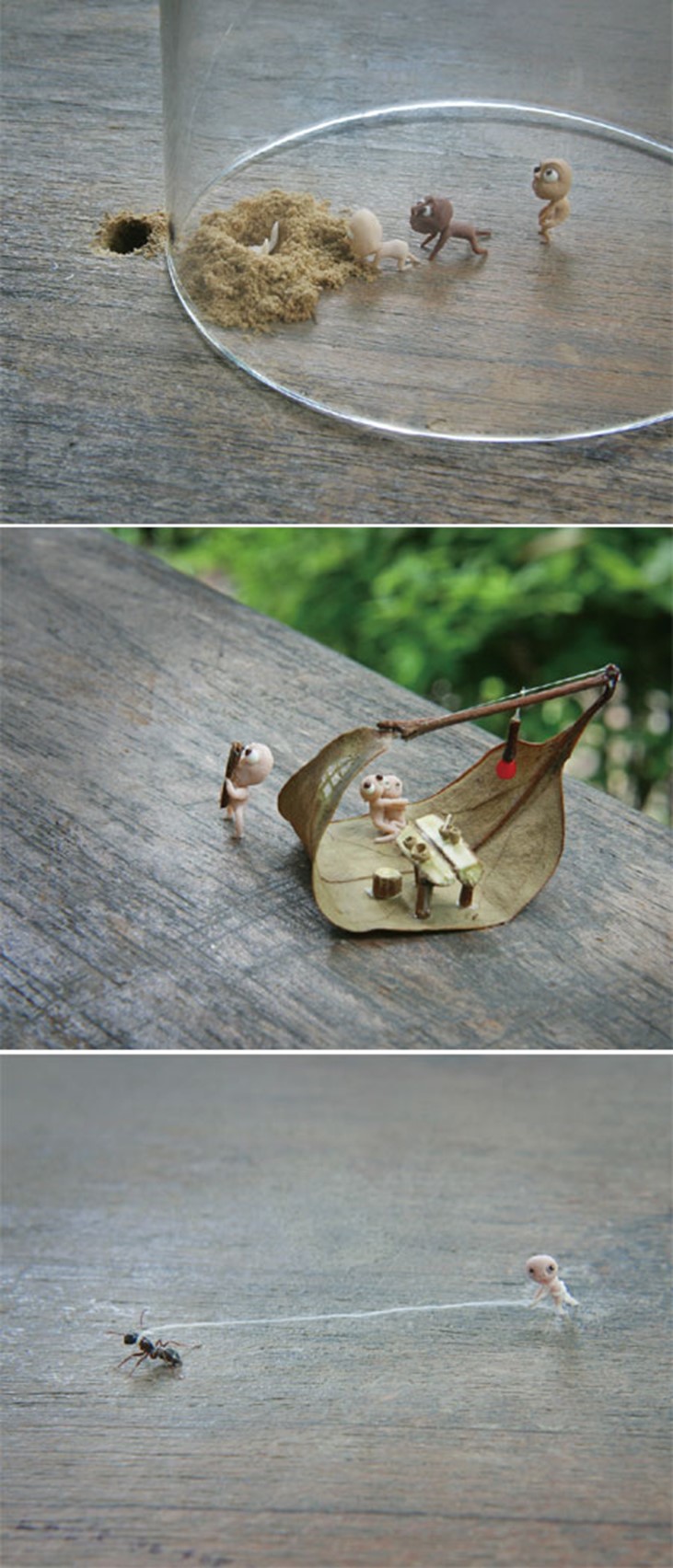
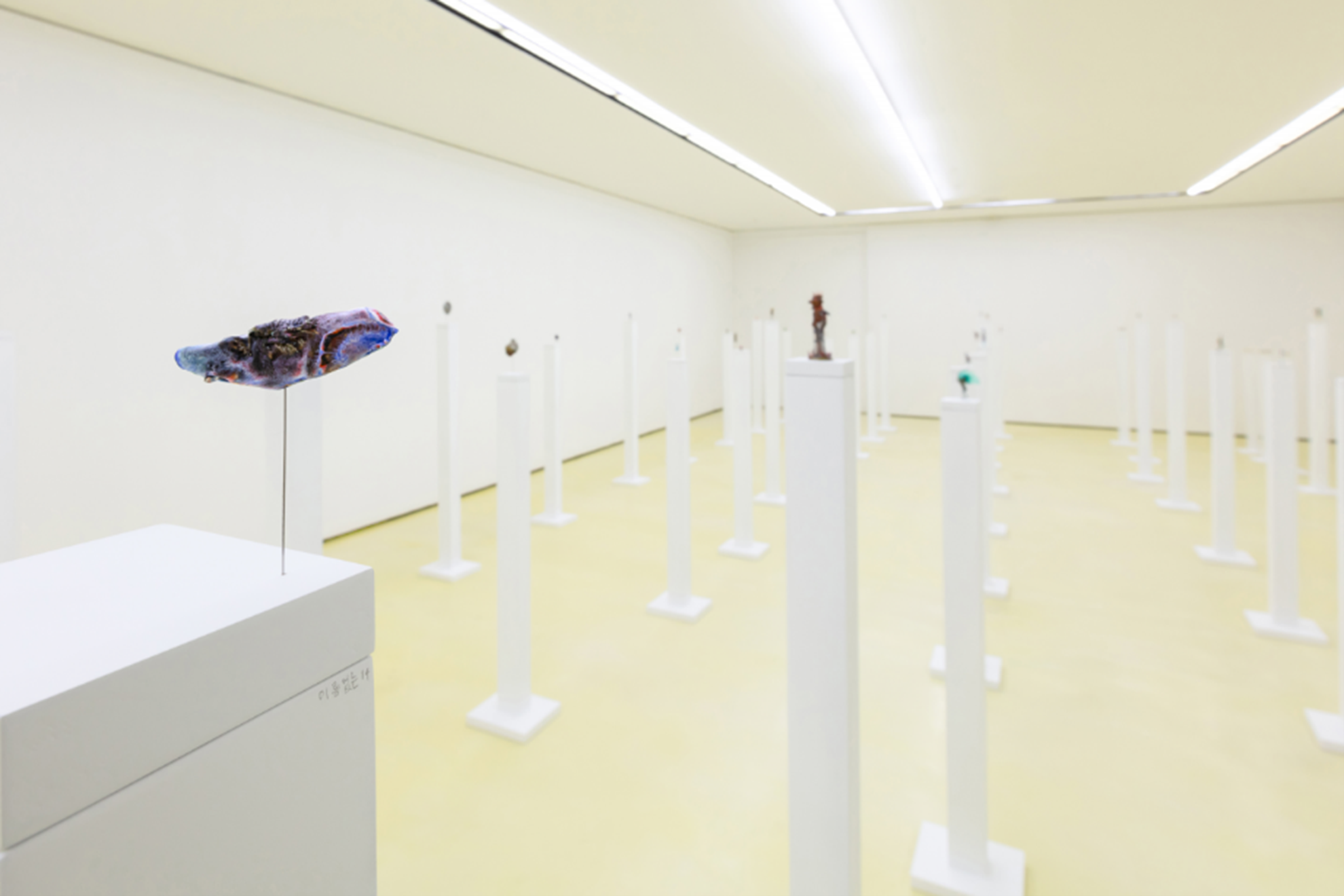
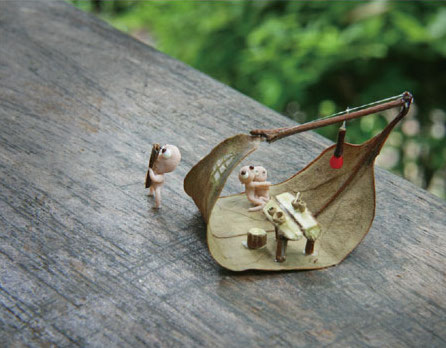
The "large" works he refers to are approximately 30 centimeters in size. Considering that many sculptures are often monumental, his pieces are indeed small. However, compared to his earlier works, these are significantly larger. Ham Jin is renowned for his miniature sculptures, some less than a centimeter in size, depicting scenes like tiny figures clinging to fingertips or small enough to fit into a navel—creating entire worlds within a centimeter.​

The meticulous detail in his work is astonishing. Photographs of his pieces make it hard to believe they are so minuscule. Both his past and recent works are filled with intricate details that captivate viewers, drawing them in for closer inspection. His miniature worlds are rich and complex, featuring elements finer than spider silk and smaller than specks of dust. He often installs these tiny sculptures in narrow gaps between walls and floors, on stairs, electrical wires, or near ceilings. At the Fukuoka Asian Art Triennale, for instance, visitors were seen lying on the floor to get a closer look at his diminutive creations. The effort required to view these pieces underscores the dedication involved in their creation. Ham Jin embraces the beauty of smallness.​

"I turned to smaller works for comfort. Tiny things are approachable. Creating large pieces doesn't feel natural to me; it seems more like a technical endeavor. Delving into the miniature, I discovered a vast world within. There's an infinite universe in there," he explains.

Ham Jin, Untitled 27, 2011, Polymer clay, glue, wire and fishing line, 13.5×12×8.5cm ©Ham Jin

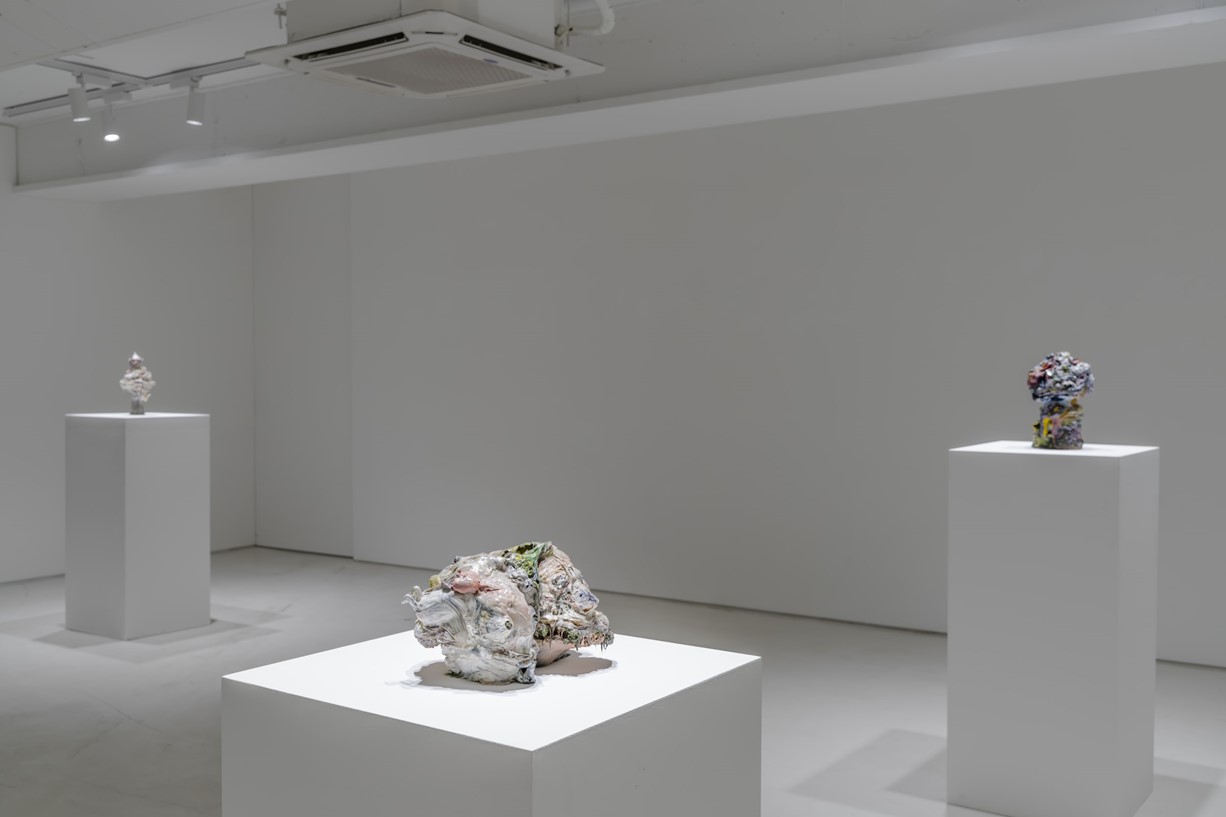
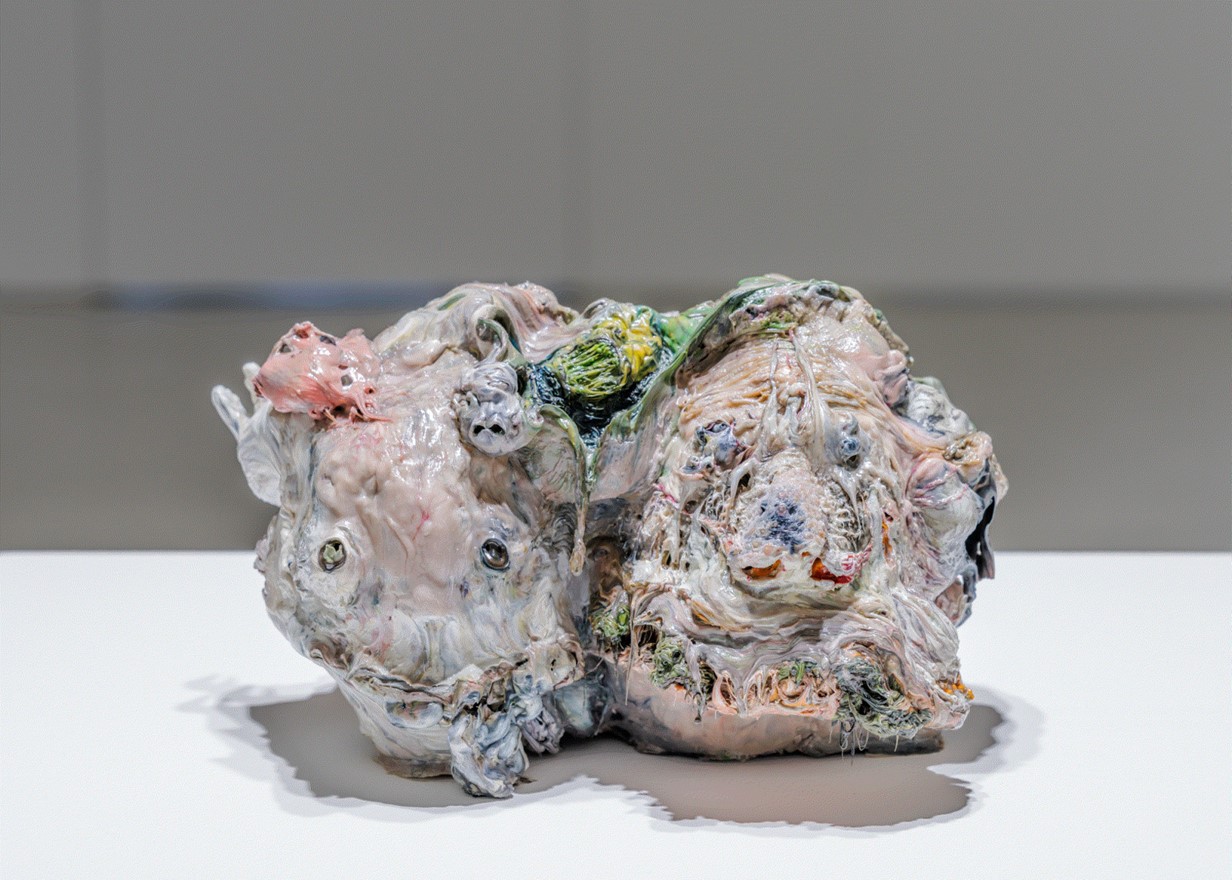
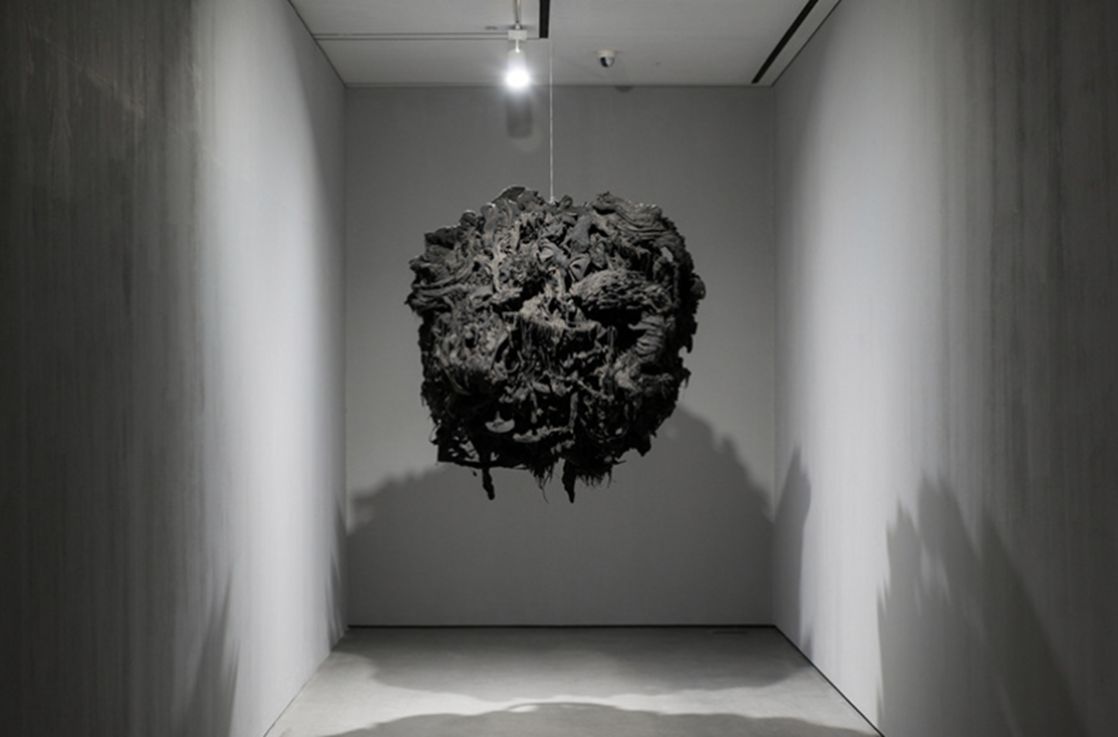
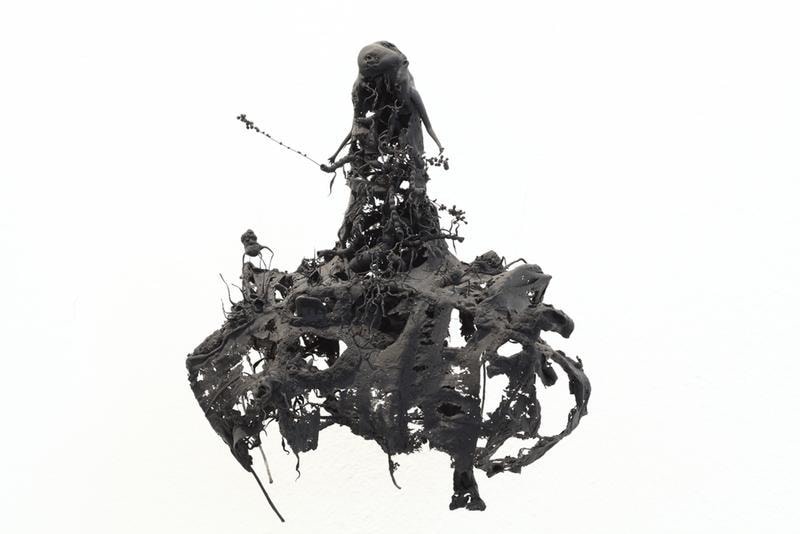
Currently, Ham Jin is holding a solo exhibition at PKM Gallery in Hwa-dong until July 15. This marks his first solo exhibition in four years since his 2007 show at the Aomori Contemporary Art Center in Japan, and his first in Korea in seven years. Unlike his previous figurative works, this exhibition showcases abstract black sculptures, reflecting a matured artistic vision. Park Kyung-mi, director of PKM Gallery, noted in an interview, "When an artist gains early recognition, they might face periods of stagnation or struggle. It's gratifying to see Ham Jin, who gained attention at 21, overcome challenges and present evolved works."


Venice Biennale Korea Pavillion (Installation view), 2005 ©Ham Jin

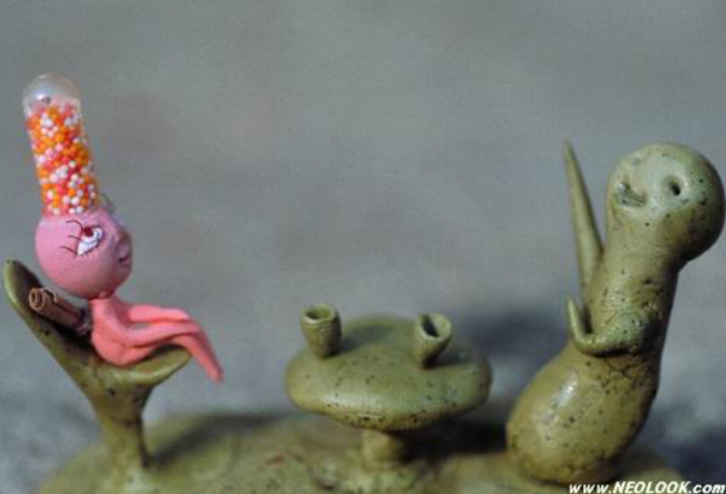
Born in 1978, Ham Jin began attracting attention during his senior year at university in 1999 when he was awarded in a competition hosted by Project Space Sarubia Dabang. The following year, he participated in the Busan Biennale, and in 2001, the Gwangju Biennale. In 2005, he was selected as a participating artist for the Korean Pavilion at the 51st Venice Biennale. Subsequent exhibitions at Fondation Cartier pour l'art contemporain, Mori Art Museum in Tokyo, Espace Louis Vuitton in Paris, and Samsung Rodin Gallery further established his reputation. His earlier works featured meticulously crafted figurative sculptures with unique narratives. For example, in his "Aewan (Love)" series, a sculpture of a boy embracing a fly atop a flower reflects his personal experiences during courtship.​

"The fly represents me, and the boy represents my wife. During our courtship, I felt that the differences between men and women were not just about gender but almost like differences between species. It's a continuous journey of observing and understanding each other," he shares.


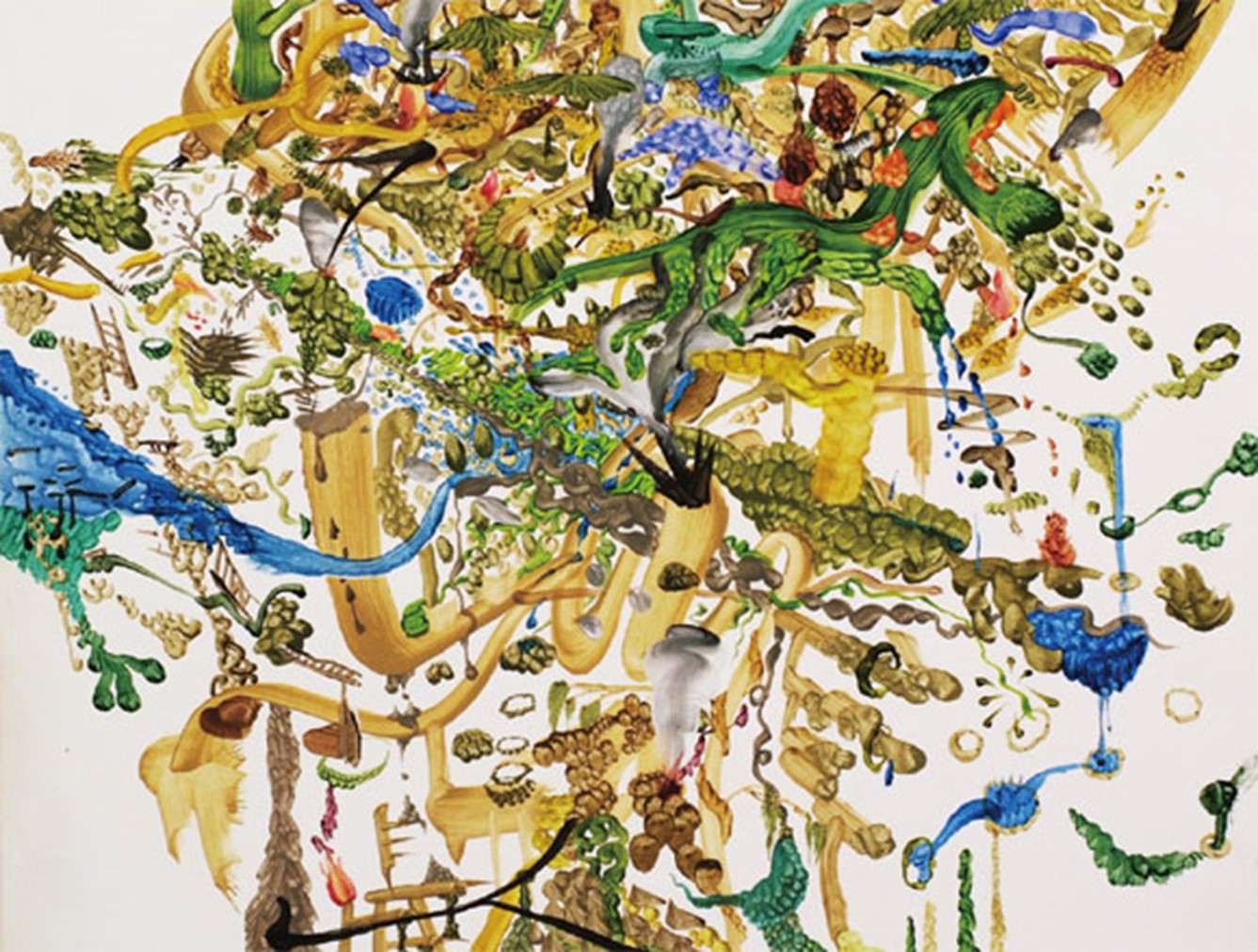
Ham Jin, Untitled 5, 2011, Acrylic on canvas, 53×45.5cm, 2011 ©Ham Jin

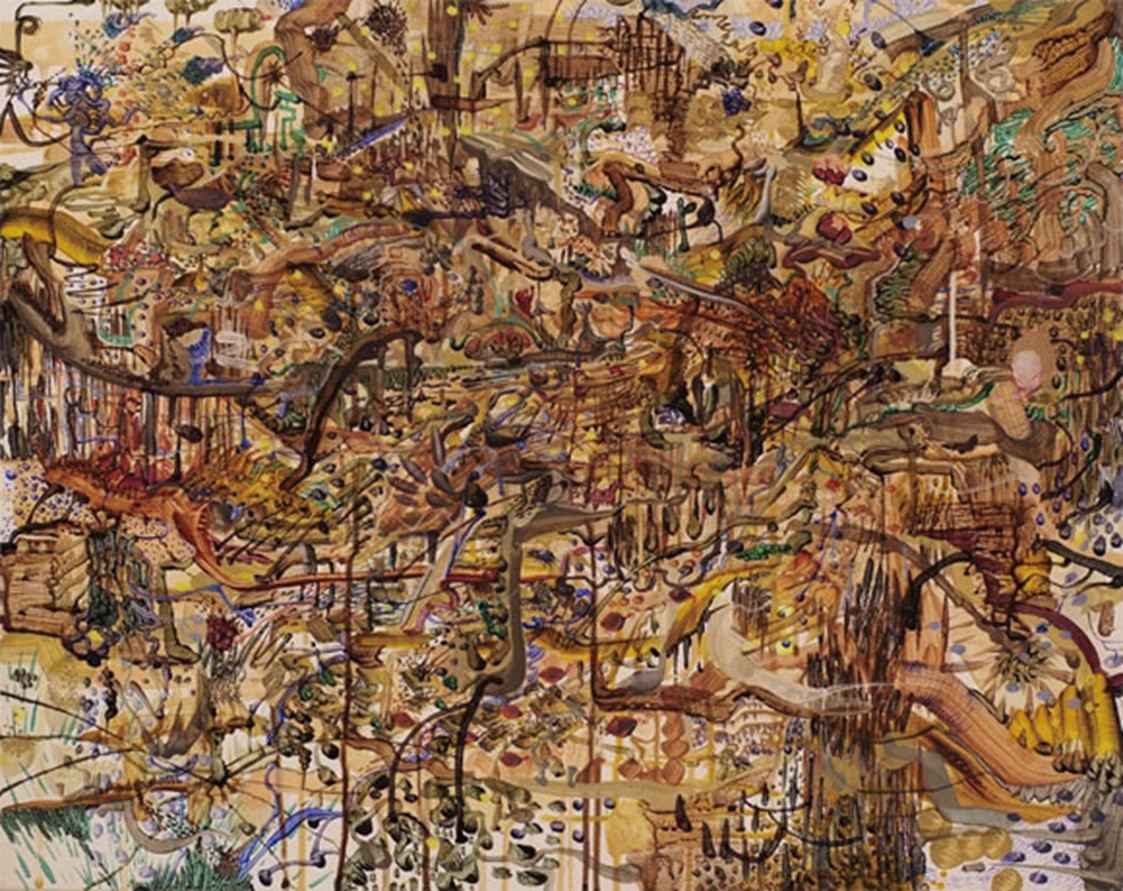
Ham Jin, Untitled 6, 2011, Acrylic on canvas, 60.5×50cm ©Ham Jin

Ham Jin, Untitled 7, 2011, Acrylic on canvas, 60.5×50cm, 2011 ©Ham Jin

His imaginative and candid storytelling, combined with deep insights into objects and relationships, sets his work apart. City on a Bombshell features a cityscape atop an unexploded bombshell he found at the U.S. Air Force bombing range in Maehyang-ri, humorously and satirically portraying human figures living in a city on the brink of disaster. Despite widespread acclaim, Ham Jin found himself losing interest. Like many artists, he faced a creative crisis. At that moment, he boldly changed direction—a move that appears to have been successful.


Ham Jin, City on a Bombshell – Second story, 2008, Mixed media on bombshell, 220×40×30cm ©Ham Jin

The turning point came with painting. Trained in sculpture, he began exploring painting, focusing on free brushstrokes rather than concrete forms. This exploration sparked new inspiration for his sculptures.​

"Previously, I created detailed, narrative-driven figurative pieces. Now, I pursue purely formative abstract shapes without specific stories. The key to this change is the disappearance of a set goal. I enjoyed the process of creating freely without aiming for a particular outcome. Life feels similar. Even when it seems aimless, consistently doing something, living each day earnestly, can lead to unexpectedly brilliant moments," he reflects.


Ham Jin, Aewan (Love #3), 2004 ©Ham Jin

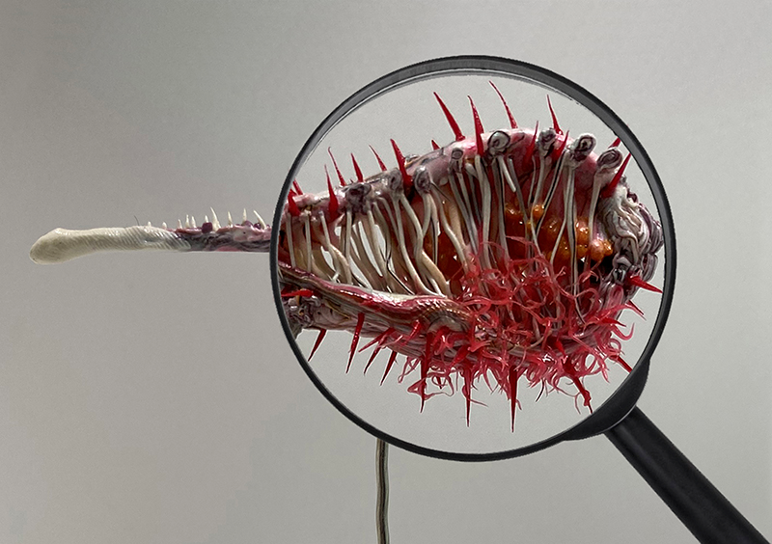
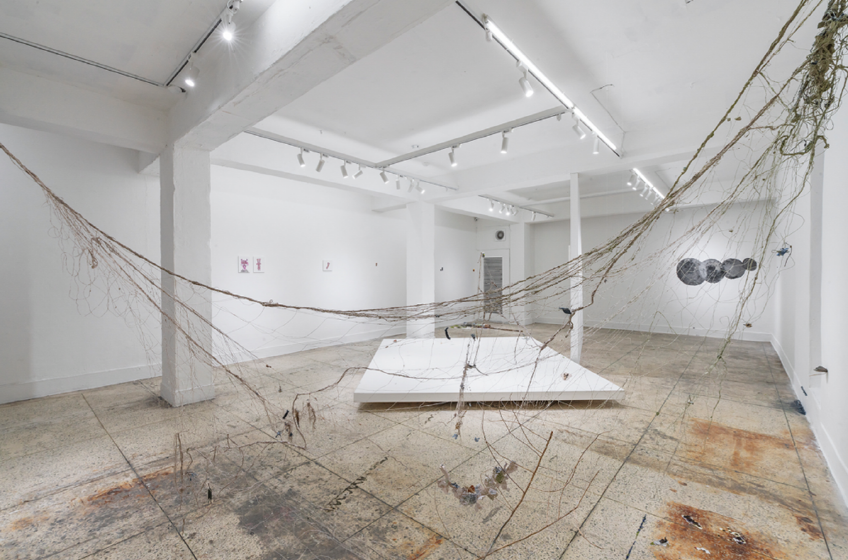
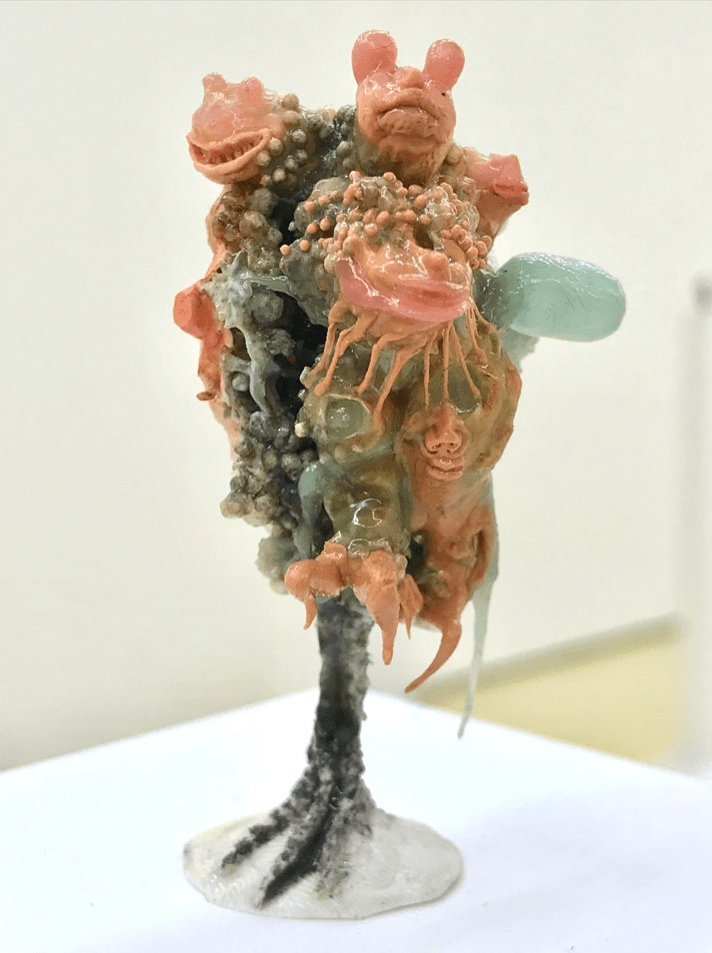
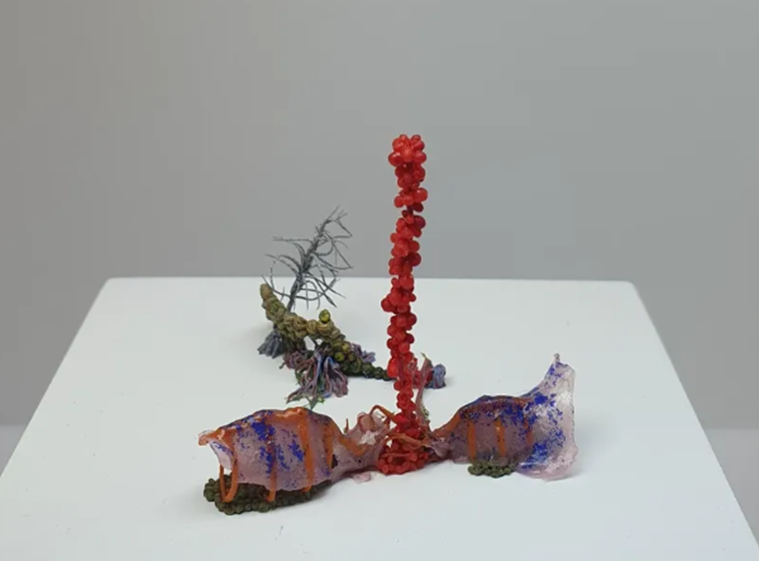
Only someone who has overcome hardship can say such a thing. Even during the interview, Ham Jin rolls a paper straw wrapper in his hand and starts crafting something. It’s an impulsive and playful fidget. The freedom and joy he finds in making naturally translate into the viewer’s enjoyment. His new works, made from black clay mixed with rubber material, have become more abstract, yet they offer even more to see. Slender and delicate flowers bloom like udambara blossoms, and bizarre, fantastical landscapes unfold, woven with entities thinner than spiderwebs and finer than dust—indescribable beings entangled with one another. The realms of plants and animals merge, the atmosphere and the earth intermingle, creating a world of infinite self-propagation.

Looking closely at one of the works hanging from the ceiling, you’ll find a bizarre creature: a pig’s torso with a split belly, pubic hair thinner than 0.5mm, fragile toes that seem ready to break, and a head shaped like a tree.


Ham Jin, Aewan (Love #1), 2004 ©Ham Jin

“I’m not good at seeing things as a whole. Even when doing plaster figure drawing, I always fixate on drawing just one eye. When I look at a person, I don’t see the whole—I focus on pores, hairs, strands of hair. I pick out those fun details, like the texture of fabric, and make works from them. I think I’ll continue to produce lots of interesting pieces in the future.”


Ham Jin, Aewan (Love #1015), 2004 ©Ham Jin

He is well known as a “café artist.” Due to the nature of his work, he doesn’t feel the need for a separate studio. He simply orders a cup of coffee and works in a café near Hongdae. As long as he can endure the curious stares of those around him, it’s the perfect place—cool in the summer, warm in the winter. As the scale of his ideas grows, he does feel the need for a studio, but for now, he says he’ll keep working in cafés. So if you happen to see a man with a happy expression, intently kneading clay in a café near Hongdae, that’s probably Ham Jin.

References