Accordingly, its space and time are not merely imaginary, but
leave some names and traces on natural objects as evidence for such a
narrative. Such creation myths have incessantly been inherited to future
generations through religions and tales. However, any mythic imagination found
in his work is based on his own personal experience, rather than on any
concrete characters in a myth or any painful event like the Passion. He just
puts emphasis on an act of creation that newly makes what’s nothing in this world and completely recreates the original. Of
course, what comes out from my inside cannot be viewed as my own thing in its
entirety. The present ‘I’ has
derived from a connection with innumerable parents I have before I was born,
and a combination of intangibly transmitted social, cultural information. In
addition to this, the artist sufficiently encapsulates his personal childhood
memories and influences of what he has experienced in this world. And yet, what
he highlights is not any comic or tragic pleasure of a narrative brought about
by a special event he has gone through. He concentrates rather on his creative
activity itself about how to condense such various empirical elements and make
them exist again.
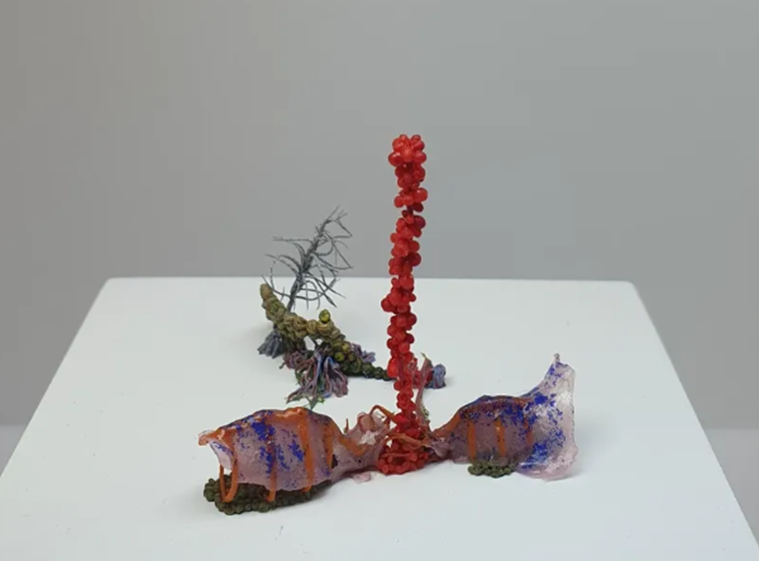
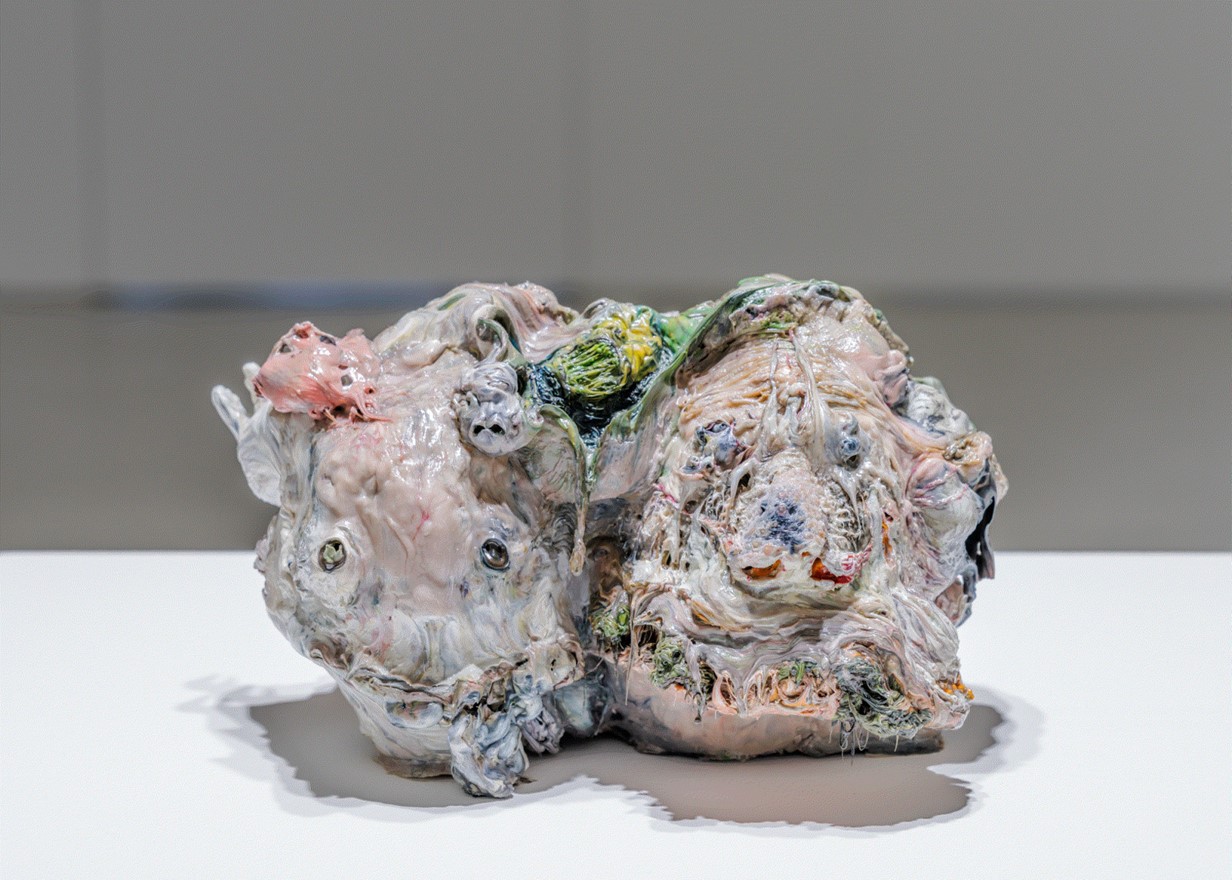
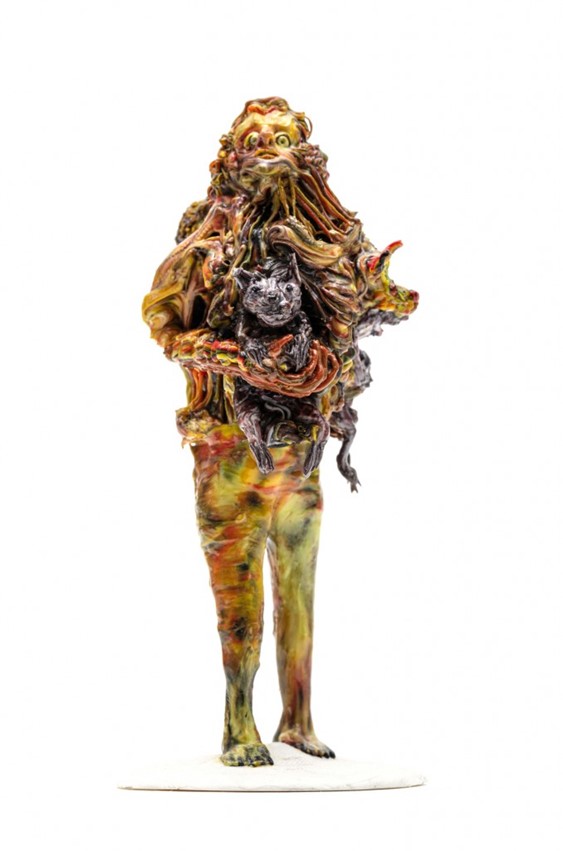
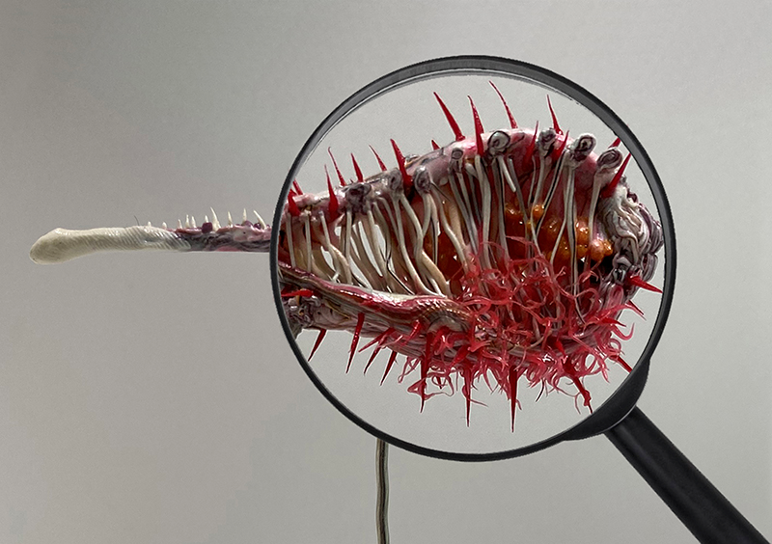
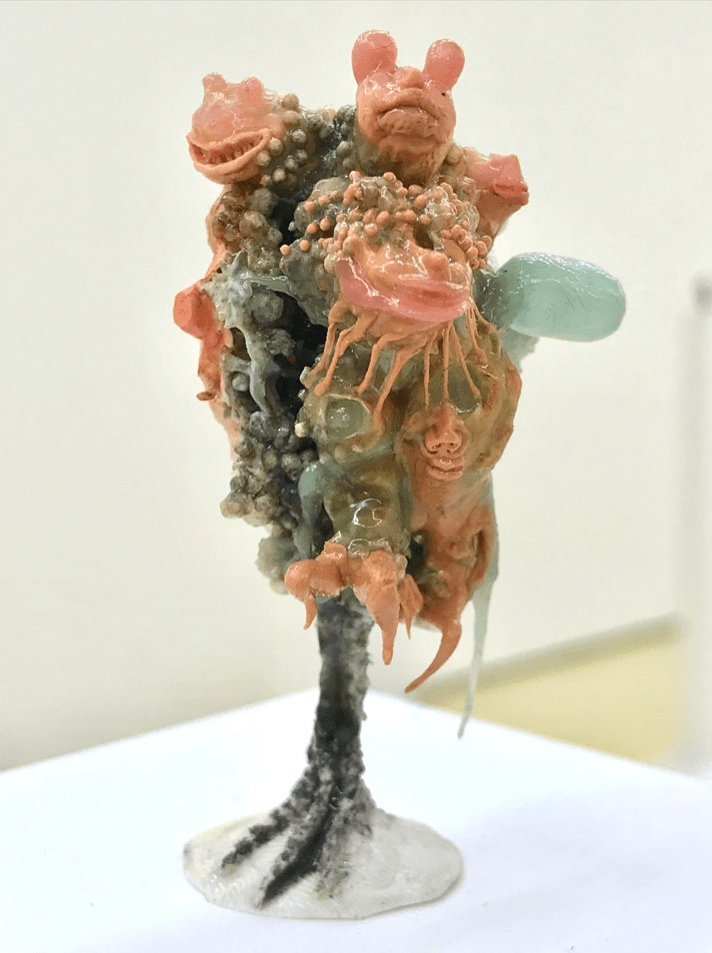
If so, how about his creations? His creations consisting of a diversity of
images and colors look like uncanny monsters combined with living things,
microorganisms, or cells. Or, they seem to just be mottled abstract clods. Such
disorderly yet intricate images and colors feel like a neurotic expression of
fear and anxiety he feels toward the world, displaying the pellucid beauty any
fantastic, mythic object retains. Seeing his works before our eyes, they appear
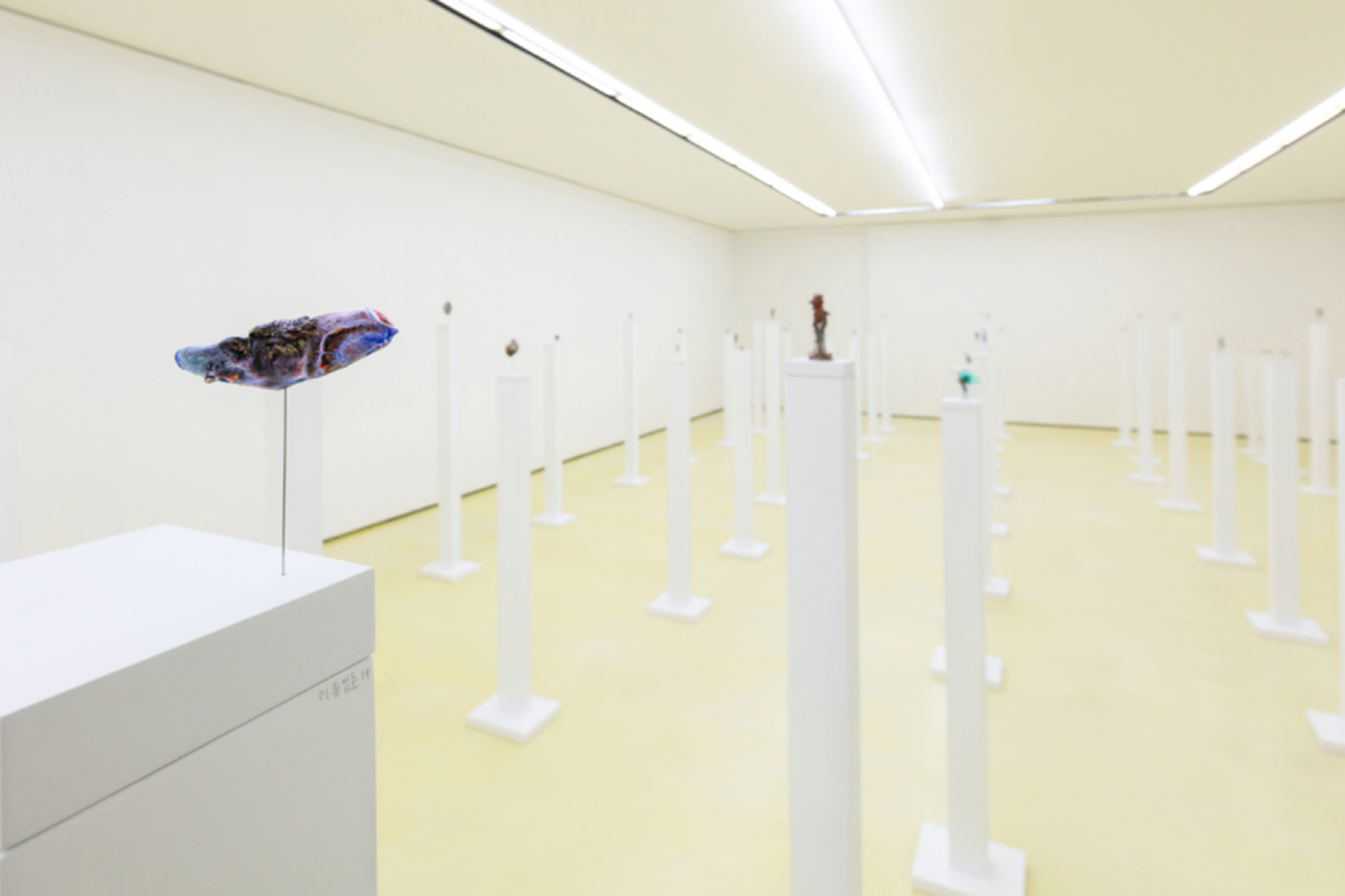
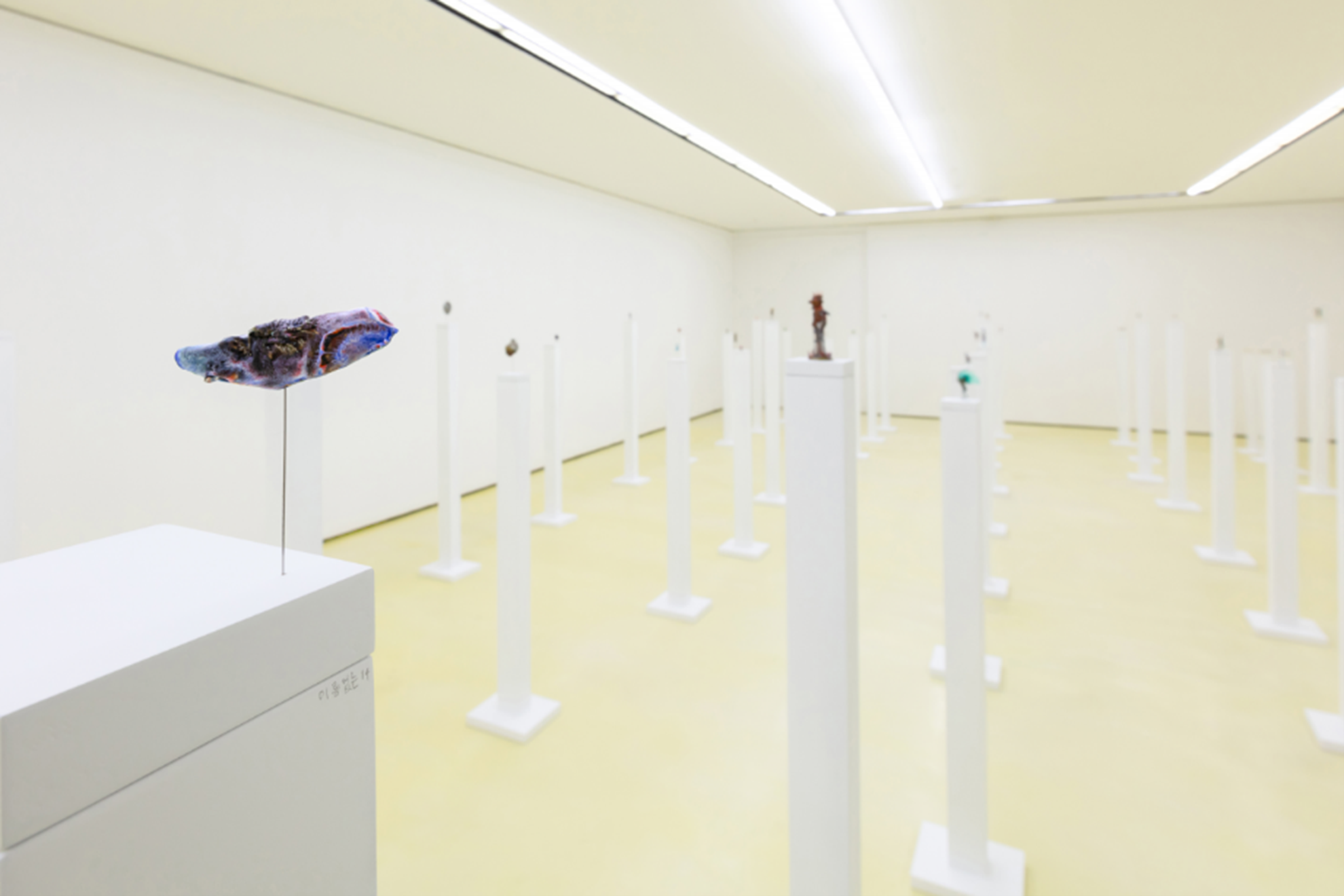
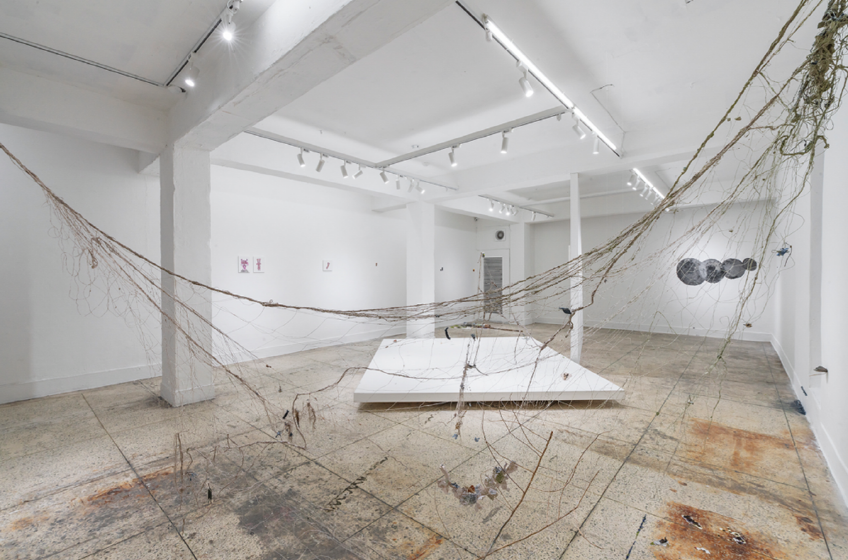
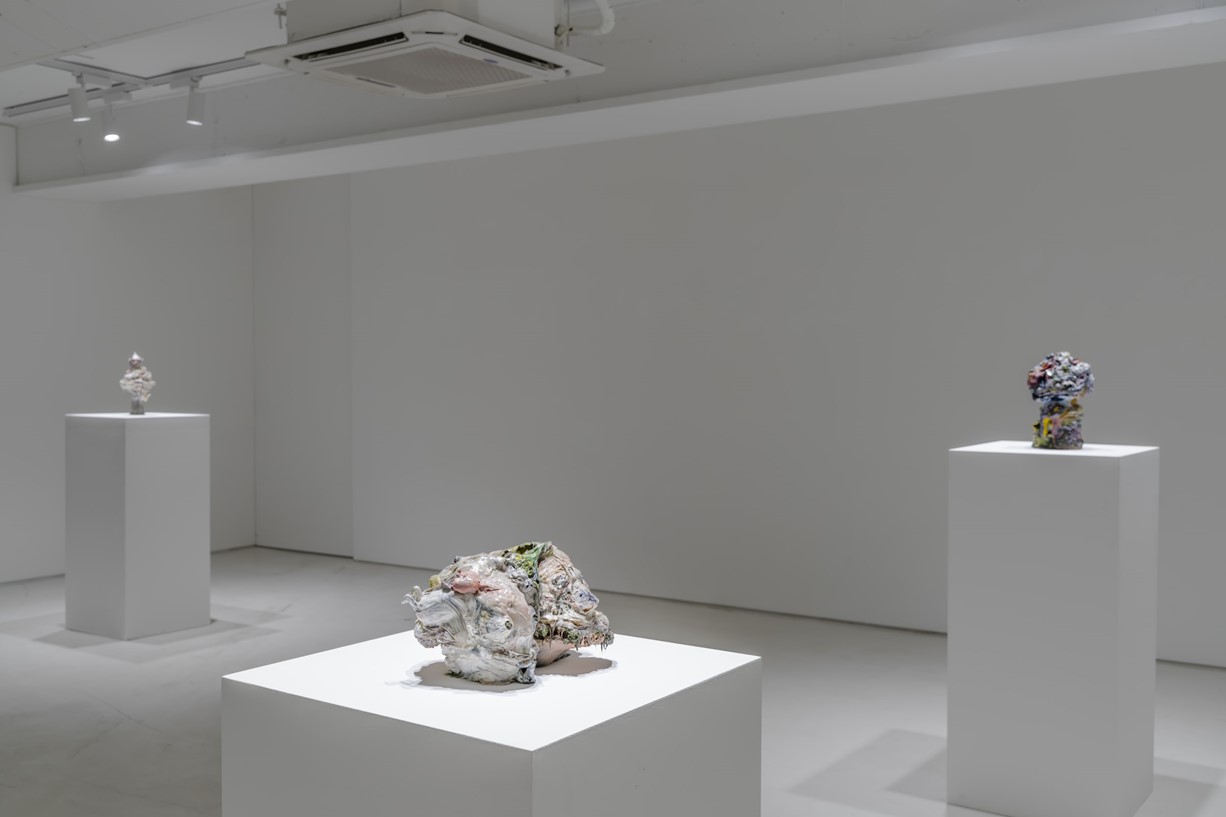
attractive rather than embarrassing. In this exhibition, he also displays his
pieces as freestanding works on pedestals, not arranging them in the way he did
previously. His creations in the venue are not placed as constituents for the
infrastructure of the world, but loom as small and large individual beings each
of which has their own universe. This is because each of Ham’s works is filled with a desire to become something in the process
of kneading and honing them, and the artist works to make each piece exist in
that way, depending on the material’s physical
property, color, form, texture, and his fingertips. So nothing is the same in
his works. Each piece appears replete with life force. The object condensed in
this way shows the something different from presence couched in the sculptural
sense of volume. Thus, his work concentrates on a mix of colors, changes in
form, and the flow of added pieces as well as any expression revealed on the
surface. Accordingly, we view such works from an omniscient viewpoint as the
artist does. And this action of the viewer moves on to a new dimension,
furtively passing through an invisible passage through each object in the
gallery.
This work approximates the question the artist asks himself, “Who am I?” An act of making an artwork by ‘I’ is seen as lending some form to his
identity. Let’s expand this to the sense of looking
down from a higher viewpoint, as the artist does. Born by chance, we are living
by chance. We try to live subjectively of course. Our lives flow in this way,
enduring, filling, and emptying everything. This is to the artist inexplicable
and disorderly. Just as one secures their own identity through this process of
life, Ham produces his creations packed with new life force, tracing through
his material’s physical properties with his fingertips.
His finger movements are an action that takes place in the ritual space and
time of creation. Ham creates a dimension different from reality through this.
All the same, this is an outgrowth of our common comprehension we have
accumulated and our experience with a host of creatures and things often found
in our surroundings. Therefore, his work is something brought about through an
overlap of several dimensions and layers encompassing our reality. This is also
evidence of his life and views, gazing lovingly at all living things.
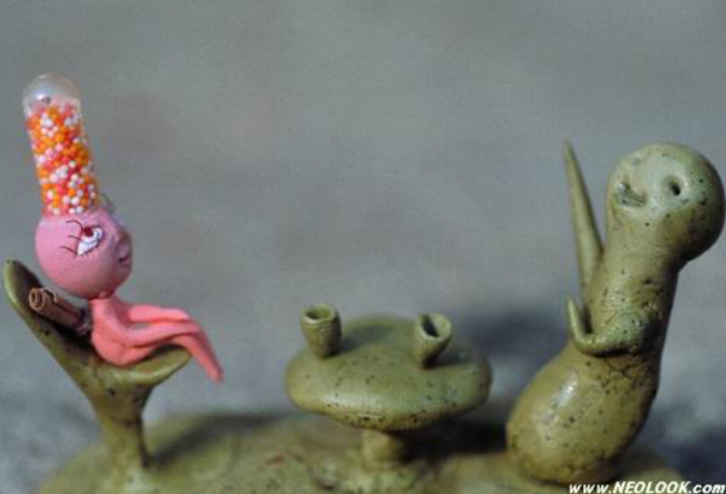
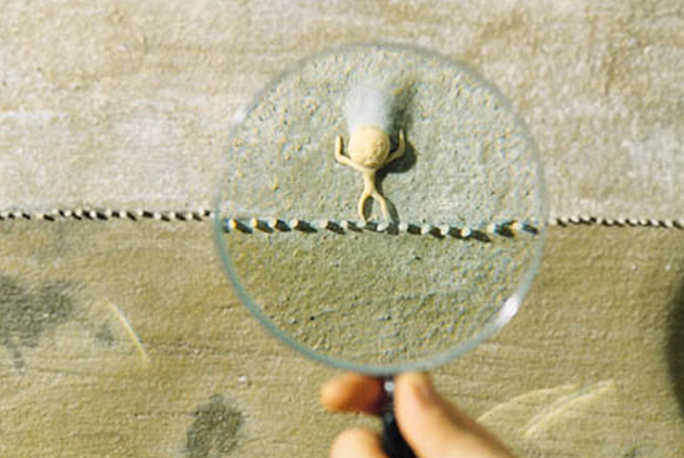
As reviewed thus far, Ham is making a variety of hybrid creations in visible
forms by tapping into life’s invisible force. His work
appears disorderly yet beautiful, condensing infinite energy within it. This is
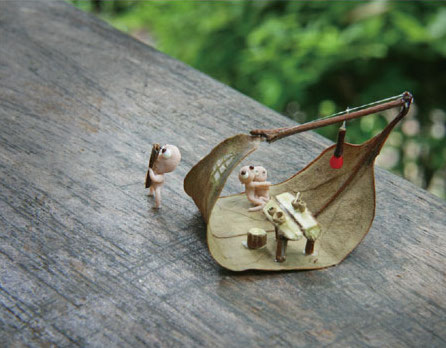
different from his previous work’s subminiature form,
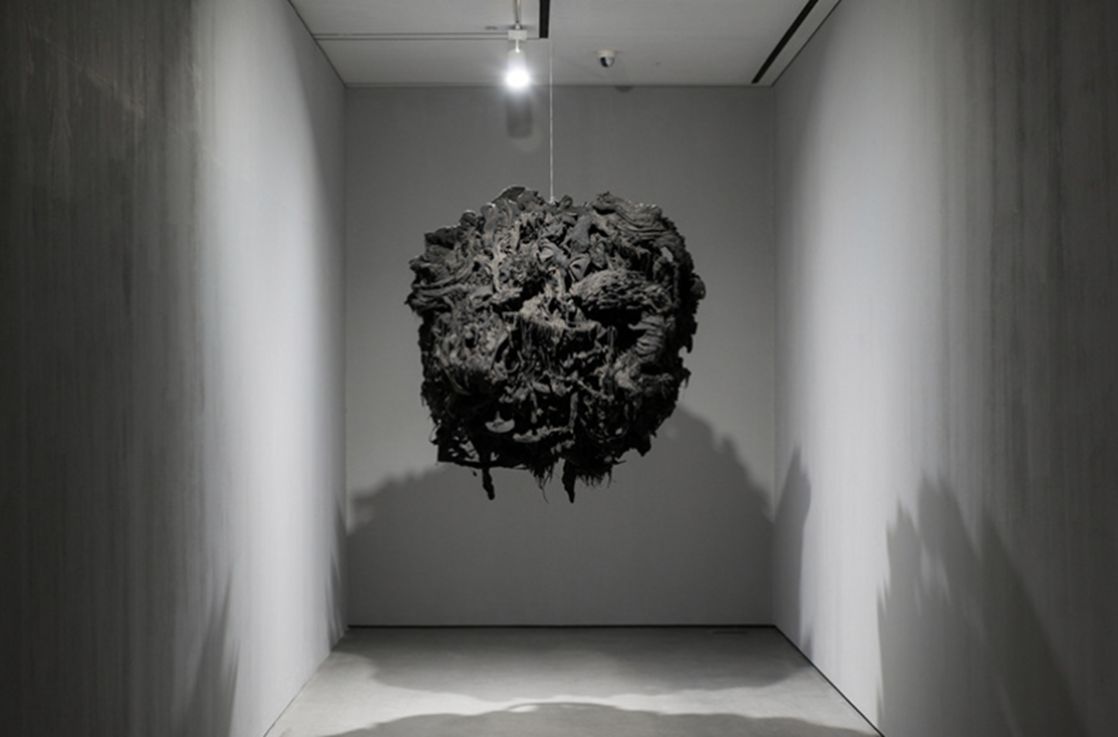
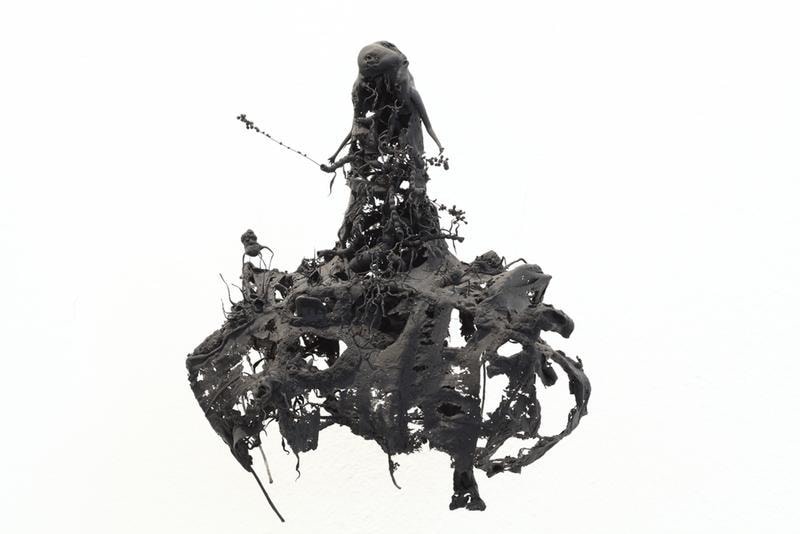
precision, and formative amusement couched in black idioms. His facture in this
exhibition has the viewer take note of the action of producing creations with a
new life force based on the sensations he feels with his fingertips. So, the
work on show at this exhibition can be referred to as ‘fingertip
sculpture.’ This art show will serve as an opportunity
for us to come across microcosmos through forms with diverse images and colors,
brimming with life force, and fashioned with his fingertips.